

Top 12 Social Emotional Learning Resources for 2026
The demand for effective social emotional learning (SEL) has never been higher. As educators and parents navigate the complexities of supporting student well-being, choosing the right tools is critical. This guide cuts through the noise, offering a deep dive into 12 of the best social emotional learning resources available today for K-8 schools and families.
Instead of a simple list, we provide a detailed analysis of each option. You'll find practical examples for implementation in the classroom and at home, honest assessments of strengths and weaknesses, and direct links to each resource. For instance, when searching for tools that support older students, you might prioritize platforms offering structured guidance on specific skills, such as these practical social skills activities for teens that focus on conversational strategies.
Our goal is to equip school leaders, teachers, and caregivers with the clear insights needed to select and implement programs that foster genuine connection, build resilience, and create environments where every child can thrive. We will explore everything from comprehensive, whole-school programs like Soul Shoppe and CharacterStrong to targeted assessment and check-in tools like Panorama Education. This article is your roadmap to finding the right fit for your specific grade levels, school context, and student needs, ensuring your investment in SEL has a meaningful and lasting impact.
1. Soul Shoppe
As a veteran in the field with over two decades of experience, Soul Shoppe offers a deeply integrated, whole-school approach to social emotional learning. It stands out by moving beyond one-off lessons to cultivate a sustainable campus-wide culture of safety and belonging. The organization provides research-based, experiential programs that equip K-8 students, staff, and families with a shared language and practical skills for real-world challenges.
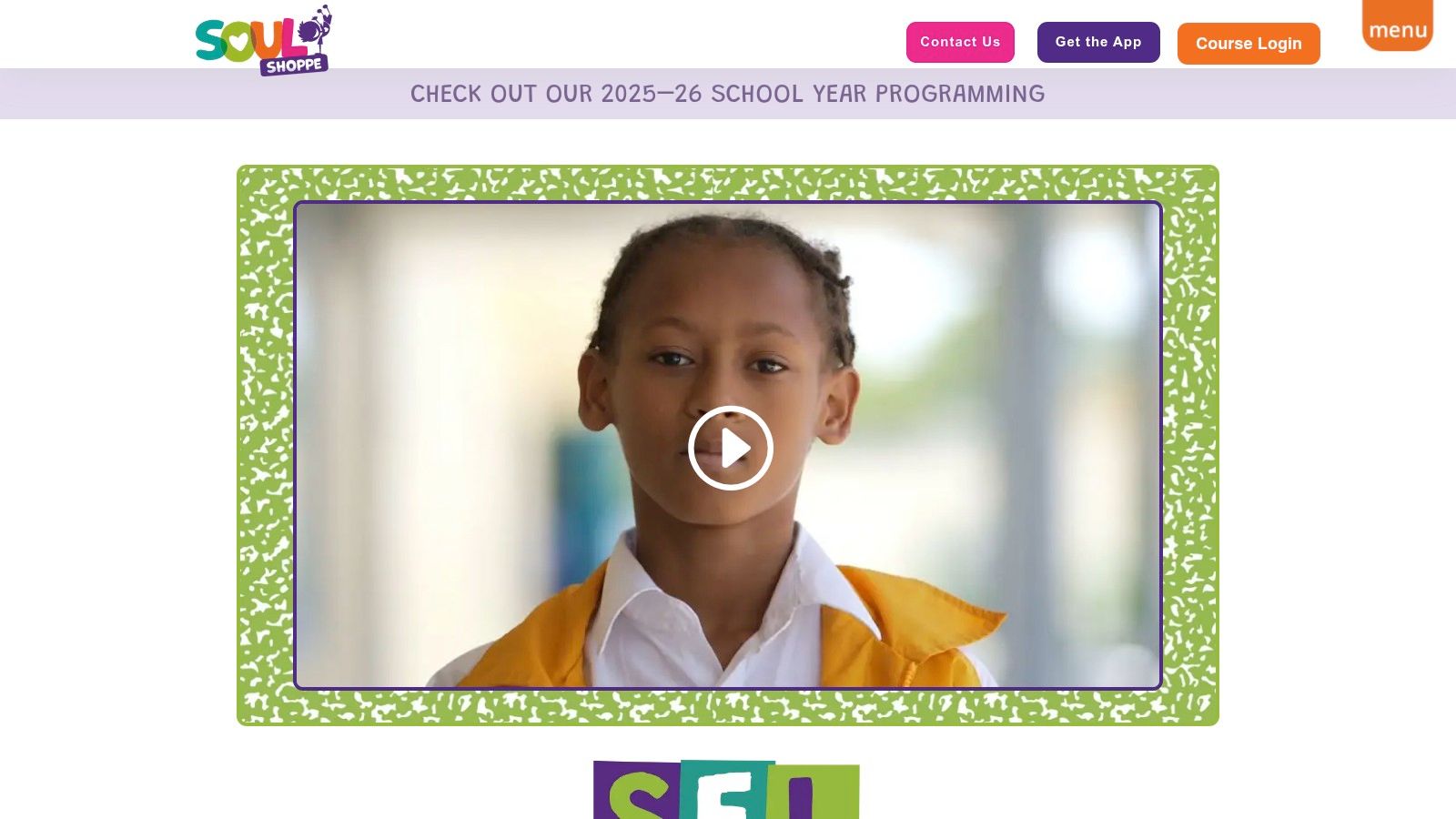
What makes Soul Shoppe a premier choice is its focus on creating psychological safety and peer support systems. Instead of just delivering content, its model is built to change school dynamics. Programs are designed to be interactive and memorable, teaching concrete tools for self-regulation, communication, and conflict resolution that students can apply immediately. For example, during their Peacemaker Program, students are trained to mediate playground disputes. When two younger students are arguing over a ball, a trained 5th-grade Peacemaker can guide them through a script to help them share their feelings and find a solution, reducing yard-duty escalations.
Key Takeaway for Administrators: Soul Shoppe acts as a long-term strategic partner, not just a curriculum vendor. The goal is to build a lasting, positive school climate by embedding SEL skills into daily interactions, which can lead to measurable reductions in conflict and improved student well-being.
Key Features & Program Highlights
- Experiential Learning: Soul Shoppe uses interactive workshops and assemblies that actively involve students. A practical example is their "I-Message" activity, where students practice using "I feel…" statements to express needs without blaming others, a foundational skill for resolving peer conflicts. For example, instead of saying "You always take the good swing," a student learns to say, "I feel frustrated when I don't get a turn on the swing."
- Flexible Delivery: Programs are available through on-site visits, live virtual sessions, and a library of digital resources, including an app and online courses for families. This mixed-model delivery makes it adaptable for various school budgets and logistical needs.
- Whole-School Implementation: The approach extends to staff coaching and family engagement events. By providing a common vocabulary, such as tools for "peace corners" or "brave talks," everyone in the community learns to reinforce the same positive behaviors. A parent might use the "brave talk" script at home to help their child address a conflict with a sibling.
- Community Credibility: With a 20+ year track record, significant partnerships like the Junior Giants' "Strike Out Bullying" campaign, and founder Vicki Abadesco's TEDx talk, the organization demonstrates proven expertise and public trust.
Implementation & Access
Best for: K-8 schools and districts seeking a comprehensive, campus-wide SEL program. It is particularly effective for schools aiming to build a common language around conflict resolution and emotional regulation.
Cost: Pricing is not publicly listed. Schools and districts must contact Soul Shoppe directly for a customized quote based on program selection and implementation scale.
Pros:
- Focuses on practical, lasting skills like self-regulation and conflict resolution.
- The whole-school model fosters a consistent and supportive environment.
- Established credibility with over two decades of experience and community partnerships.
Cons:
- The need to request a quote adds a step to the evaluation process.
- Primarily designed for K-8, requiring adaptation for high school settings.
Website: soulshoppe.org
2. CASEL District Resource Center + Program Guide (Collaborative for Academic, Social, and Emotional Learning)
CASEL stands as the authoritative source for districts planning and executing systemic social emotional learning. Rather than providing a single curriculum, its website offers a free, research-backed framework for leaders to audit their current SEL efforts, select evidence-based programs, and plan multi-year implementations. For a school leader, this is the starting point for making informed decisions that align with long-term school improvement goals.
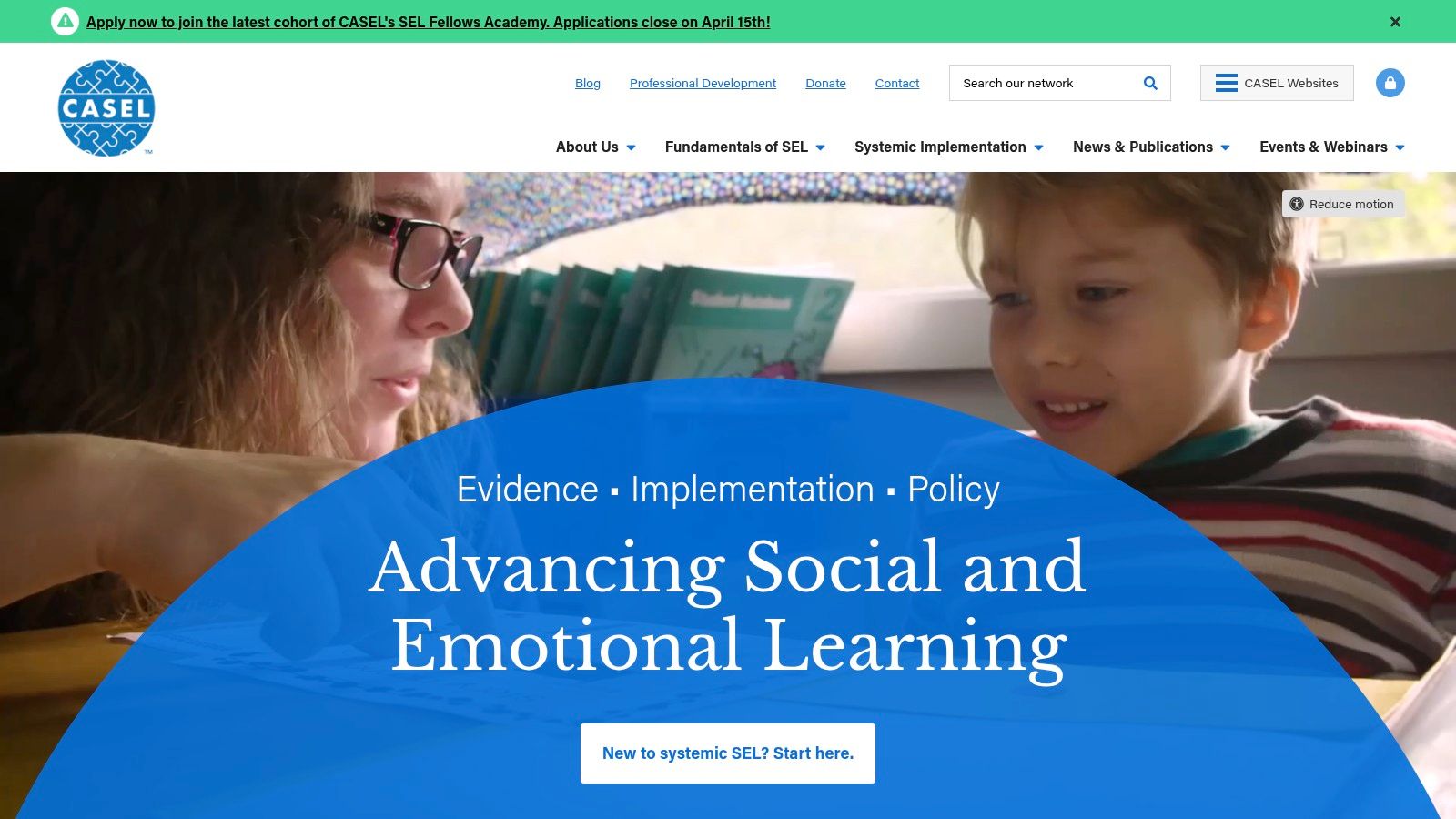
The platform's core strength lies in its Program Guide, a searchable database that helps schools compare vetted, evidence-based SEL programs. This neutral tool saves administrators countless hours of research and reduces the risk of adopting a program that isn't a good fit. For instance, a middle school principal can use the Guide to filter programs specifically designed for grades 6-8, view their evidence rating (like "SELect" or "Promising"), and see how each one addresses CASEL's five core competencies. This allows them to compare three top-rated programs based on their approach to relationship skills before scheduling demos, helping in choosing from a variety of social-emotional learning programs for schools with confidence.
Key Considerations
Cost & Access: The District Resource Center and Program Guide are completely free to access. However, it's a planning tool, not a curriculum. Schools must still purchase the specific programs they select, and CASEL does not list pricing information; you must contact vendors directly.
Best For:
- District and school leaders building a strategic, system-wide SEL plan.
- SEL committees tasked with evaluating and recommending curricula.
- Educators seeking to understand the research behind effective SEL implementation.
Limitations: The sheer volume of information can be a lot for a single teacher or parent to process. It is best used by teams at the school or district level.
Website: https://casel.org
3. Second Step (Committee for Children)
Second Step is a widely adopted, research-based K–8 digital SEL curriculum known for its clear, sequential lesson plans. Committee for Children provides a fully built-out program with grade-banded materials, making it a turnkey solution for schools seeking a structured approach to social emotional learning resources. Its digital format includes multimedia, student handouts, and scripted lessons that ensure consistent delivery across classrooms.
The program’s core strength is its scripted, grade-specific lessons that build skills year over year. A third-grade teacher, for example, can use a ready-made digital lesson on empathy that includes a short video of a relatable scenario, like one child feeling left out at recess. The lesson then provides guided questions for discussion ("How do you think Maria felt when no one asked her to play?") and a partner activity where students practice inviting someone new to join a game. For administrators, the leader dashboard offers a schoolwide view of implementation progress, while optional add-ons for bullying prevention and child protection create a more comprehensive safety net for students.
Key Considerations
Cost & Access: Second Step is a subscription-based program. Pricing is tiered and depends on the number of students and grade levels, which may require careful budgeting for smaller schools. Access is through an online portal after purchasing a school or district license.
Best For:
- Schools and districts wanting a complete, ready-to-implement K-8 curriculum.
- Teachers who prefer structured, scripted lessons with all materials provided.
- Administrators looking for data-driven tools to monitor SEL implementation.
Limitations: The highly scripted nature, while ensuring fidelity, can feel restrictive to some educators who prefer to create or adapt their own lessons. Local adaptation may be needed to make scenarios more relevant to a specific student population.
Website: https://www.secondstep.org
4. RULER (Yale Center for Emotional Intelligence)
RULER is a whole-school social emotional learning approach from the Yale Center for Emotional Intelligence, grounded in decades of emotion science. The acronym stands for Recognizing, Understanding, Labeling, Expressing, and Regulating emotions. Instead of a standalone curriculum, RULER focuses on shifting the entire school climate by prioritizing adult SEL skills first, then equipping staff with concrete tools to embed emotional intelligence into daily routines and academic instruction.
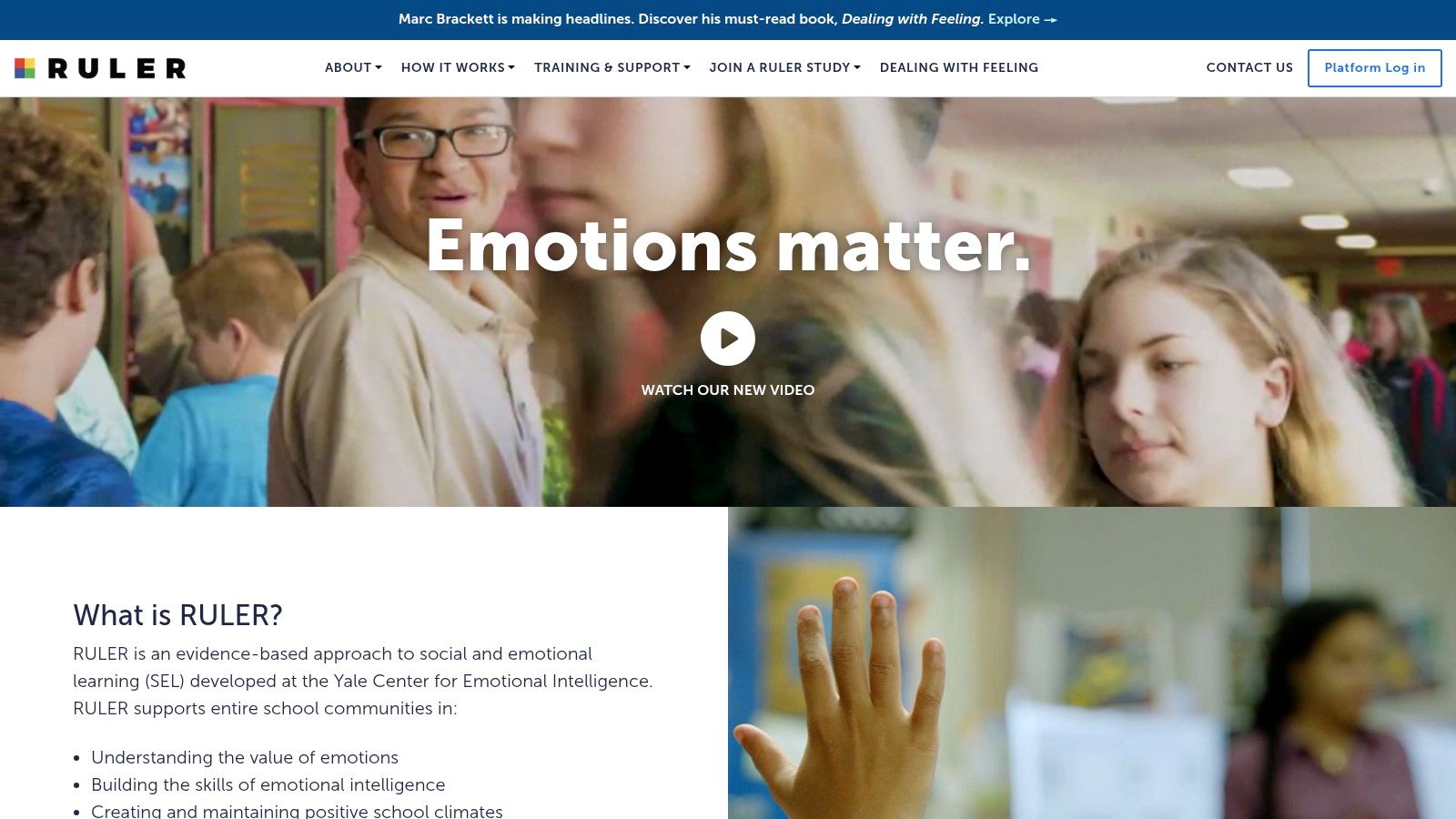
The system’s power comes from its practical tools that become part of the school's shared language. For example, classrooms create a Charter, a collaboratively developed document outlining how everyone wants to feel at school, and the Mood Meter helps students and staff identify and label their feelings throughout the day. A teacher might use the Mood Meter during morning meeting, asking students to point to where they are on the grid (e.g., "high energy, low pleasantness" in the red quadrant) and discuss why. A student might share they are in the red quadrant because they are anxious about a test, which creates an opportunity for support. This builds a foundation for meaningful emotional intelligence activities for kids. The Meta-Moment tool teaches a six-step process for pausing and making better choices during emotionally charged situations. These are valuable social emotional learning resources for any school community.
Key Considerations
Cost & Access: RULER requires a two-year training and implementation package for a school-based team, with transparent pricing published on their website for both online and in-person models. This includes access to the RULER Online platform. It is a significant investment in professional development and system-wide change, not a one-off curriculum purchase.
Best For:
- Schools and districts committed to a deep, long-term culture shift around emotional intelligence.
- Leaders who believe adult SEL is a prerequisite for student SEL.
- Educators looking for practical, research-backed tools to integrate into existing school structures.
Limitations: The model requires substantial buy-in and active participation from the entire staff, as it's not a simple lesson-based program. The upfront cost and time commitment for training can be a barrier for some schools.
Website: https://rulerapproach.org
5. Harmony Curriculum (Harmony Academy)
Harmony Academy offers a complete PreK-6 social emotional learning curriculum at no cost, making it a powerful resource for schools looking to implement a high-quality, research-based program without straining their budget. The digital platform provides everything an elementary teacher needs to get started, from lesson plans and activity guides to interactive games. Its design is focused on fostering positive peer relationships, empathy, and effective communication from an early age.

The curriculum's strength is its ready-to-use, practical structure. A second-grade teacher, for example, can use the "Meet Up" and "Buddy Up" activities to build community and practice problem-solving skills daily. In a "Buddy Up" activity, pairs of students might discuss a question like, "What is one way you can show a classmate you care?" before sharing their ideas with the class. Interactive "Harmony Games" provide a fun, digital way for students to apply concepts like diversity and inclusion. Furthermore, the inclusion of at-home resources makes Harmony one of the more family-inclusive social emotional learning resources, helping to reinforce classroom lessons with parents and caregivers.
Key Considerations
Cost & Access: The entire digital curriculum, including all lessons, activities, and training materials, is completely free after a simple registration. Physical material kits may have associated costs, but the core program is accessible without a financial investment.
Best For:
- Elementary school teachers and principals looking for a comprehensive, no-cost SEL curriculum.
- Schools with limited budgets that need a CASEL-aligned program.
- Out-of-school-time programs seeking structured activities that build social skills.
Limitations: The curriculum is designed specifically for PreK-6. Middle schools will need to find a different program for older students. While digital access is excellent, schools that prefer extensive physical materials may need to supplement the program.
Website: https://harmony-academy.org
6. Responsive Classroom (Center for Responsive Schools)
Responsive Classroom is an evidence-informed teaching approach that weaves social emotional learning into the fabric of daily school life. Rather than providing a separate, weekly SEL lesson, it offers practical strategies for integrating SEL competencies into every interaction and academic task. This approach focuses on creating a positive, engaging classroom climate where students feel safe, valued, and ready to learn, making it a foundational piece for proactive behavior management and academic engagement in K-8 settings.

The platform's strength is its collection of applicable, day-to-day practices like the Morning Meeting, a cornerstone routine that builds community through greeting, sharing, group activities, and a morning message. A teacher can use this 20-minute daily structure to explicitly model and practice listening, empathy, and cooperation. For example, during the "sharing" component, one student shares about their weekend while another student practices active listening by paraphrasing what they heard. Other core strategies include using specific teacher language to reinforce positive behaviors ("I see you're using a quiet voice during independent reading") and interactive modeling to explicitly teach procedures, from how to turn in homework to how to join a group discussion respectfully. These tools make it one of the most practical social emotional learning resources for immediate classroom use.
Key Considerations
Cost & Access: The website offers free articles and introductory information. However, full implementation requires purchasing books, resource kits, and professional development courses. Multi-day workshops (both virtual and in-person) have clear, published fees, and schoolwide training packages are available by quote.
Best For:
- K-8 classroom teachers looking for concrete strategies to improve classroom management and culture.
- School leaders aiming to build a consistent, schoolwide approach to discipline and community.
- New educators seeking a structured framework for establishing a positive learning environment.
Limitations: This is not a scripted, "open-and-go" curriculum for explicit SEL skill instruction. Schools may want to pair it with another program that teaches specific SEL concepts more directly. Effective implementation also depends on staff buy-in and investment in professional training.
Website: https://www.responsiveclassroom.org
7. Open Circle (Wellesley Centers for Women)
Open Circle is a well-established, evidence-based social emotional learning program specifically designed for elementary schools. Rather than just offering a set of lessons, it provides a comprehensive K–5 curriculum built around structured classroom meetings. This approach focuses on creating routines that embed SEL directly into the school day, making it a foundational part of the classroom culture. For an elementary principal, this program offers a clear path to building a safe, communicative community from the ground up.
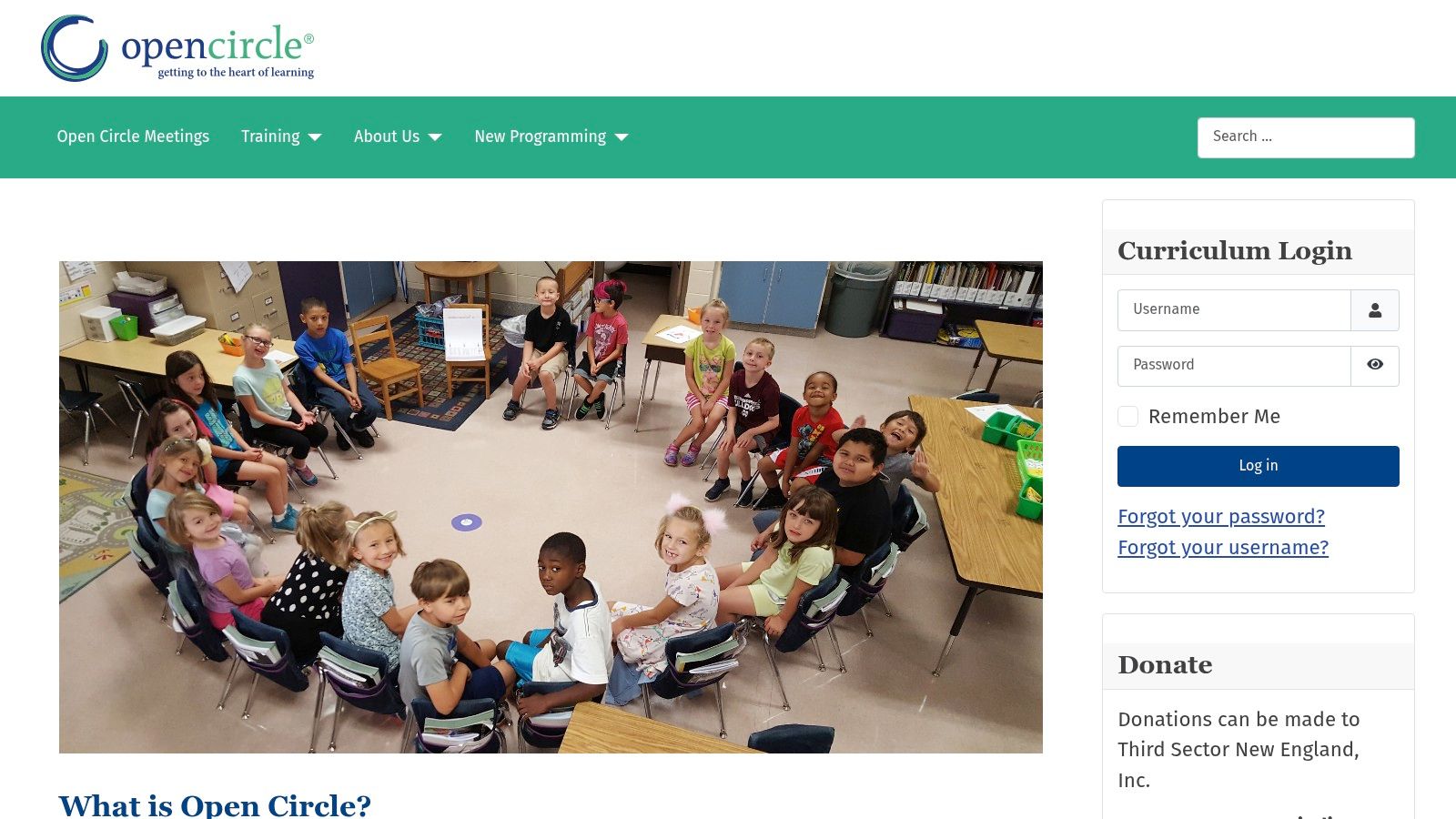
The program's core strength is its emphasis on practical routines and teacher training. The classroom meetings provide a consistent format for students to practice self-awareness, relationship skills, and responsible decision-making in a group setting. For example, a second-grade class might use the Open Circle meeting structure to collectively brainstorm solutions to a recurring playground conflict. The teacher would pose the problem, "What can we do when multiple people want to use the same swing at once?" and facilitate as students offer and evaluate ideas like taking turns or setting a timer. This consistent practice makes social problem-solving a familiar and expected part of their day. With its focus on direct instruction and application, the curriculum offers a wealth of kids' social skills activities that are directly tied to classroom life.
Key Considerations
Cost & Access: Program details and pricing are provided after submitting a training inquiry on their website. Open Circle is not a free resource; it is a full curriculum and professional learning package that requires a school or district-level purchase.
Best For:
- Elementary school leaders aiming to implement a whole-school SEL model in grades K-5.
- K-5 teachers who want a structured, routine-based approach to teaching SEL.
- Districts looking for a program with a long history and strong evidence of effectiveness in early grades.
Limitations: The program is specifically designed for the K-5 grade band, meaning middle schools would need to find a different solution. Its effectiveness is closely tied to the professional learning component, so simply buying the materials without the training would not be sufficient.
Website: https://www.open-circle.org
8. CharacterStrong
CharacterStrong provides a comprehensive PreK-12 curriculum suite focused on integrating social emotional learning with character development. Rather than being just another set of lesson plans, it offers a vertically aligned framework designed to create a common language and consistent culture across an entire school or district. This whole-child approach bridges elementary, middle, and high school experiences, ensuring students build upon SEL skills year after year.
The platform’s strength is its dual focus on Tier 1 universal instruction and Tier 2 targeted interventions. For example, a 7th-grade advisory teacher can use the core secondary curriculum for weekly lessons on empathy and responsible decision-making. If a counselor identifies a small group of students struggling with conflict, they can use CharacterStrong's specific Tier 2 small-group curriculum to work on those particular skills. A practical activity might involve role-playing a scenario where one friend posts an embarrassing photo of another, and the group practices how to respond assertively and respectfully. This layered support helps schools meet diverse student needs within one system, an essential component for building resilience in children. The inclusion of family newsletters and implementation resources also helps extend learning beyond the classroom.
Key Considerations
Cost & Access: Access is provided through a school or district-level license. Pricing is not publicly listed and requires schools to request a quote. This model simplifies budgeting for administrators by covering an entire site rather than charging per student.
Best For:
- Schools and districts seeking a unified, PreK-12 SEL and character curriculum.
- Counselors in need of structured Tier 2 small-group intervention materials.
- SEL leadership teams aiming to build a consistent, school-wide culture and vocabulary.
Limitations: The curriculum is designed for regular, structured implementation, not as a drop-in resource. Schools that prefer fully scripted, daily SEL lessons may find they need to supplement CharacterStrong’s advisory or weekly model.
Website: https://www.characterstrong.com
9. Move This World
Move This World delivers a dynamic, video-based SEL curriculum for grades PreK-12, built around short, daily practices. Its core philosophy is that emotional wellbeing is built through consistent, manageable routines rather than occasional, lengthy lessons. For teachers juggling packed schedules, the platform offers a "plug-and-play" solution that integrates social emotional learning into the school day with minimal preparation, making it an accessible entry point for school-wide implementation.
The platform’s standout feature is its library of on-demand, high-energy videos designed as daily rituals. A second-grade teacher, for example, could start the day with a 3-minute "Emotion Motion" video where students physically act out feelings like excitement or frustration, helping them build an emotional vocabulary through movement. A practical application for parents could be using a similar "calm down" video from the family resources to help a child manage big feelings at home before bedtime. By providing these consistent micro-practices, Move This World helps schools establish a shared language and routine around emotional health, which is a key component of effective social emotional learning resources.
Key Considerations
Cost & Access: Access requires a school or district-level subscription, and pricing is provided via a custom quote. It is not available for individual teacher or parent purchase. Reliable internet bandwidth and classroom devices are necessary to stream the video content.
Best For:
- Schools seeking a low-prep, daily SEL routine that is easy to implement consistently.
- Teachers who prefer guided video content over creating lessons from scratch.
- Districts aiming to build a common emotional language across all grade levels.
Limitations: The reliance on video may not suit all teaching styles or student needs. Schools looking for deep, project-based SEL work might find the micro-practice format less extensive than other curricula.
Website: https://www.movethisworld.com
10. Aperture Education (DESSA System)
Aperture Education offers a strengths-based approach to SEL data, moving beyond simply identifying deficits to actively measuring and growing student competencies. Its platform is built around the well-regarded Devereux Student Strengths Assessment (DESSA), providing schools with a robust system for universal screening, progress monitoring, and targeted intervention planning. This is an essential tool for districts aiming to implement a data-driven Multi-Tiered System of Supports (MTSS) for social emotional well-being.
The platform’s standout feature is the direct link between assessment data and actionable strategies. After a teacher completes a DESSA rating for a student, the system generates a report highlighting areas of strength and need. More importantly, it provides a "strategy playbook" with specific, evidence-based activities to address those needs. For example, if a student’s assessment shows a need in self-management, the platform might suggest a "stop-and-think" breathing exercise or a goal-setting worksheet. The teacher can then implement that strategy for two weeks and use the platform's progress monitoring tool to see if it's making a difference, directly connecting data to practical classroom support. This integration makes it a valuable collection of social emotional learning resources.
Key Considerations
Cost & Access: Access to the DESSA System is subscription-based, with pricing dependent on district size and package selection. Schools must contact Aperture Education directly for a quote. While the platform is a paid service, the company often provides free webinars and resources.
Best For:
- School counselors and psychologists implementing data-driven SEL interventions within an MTSS framework.
- District leaders seeking a valid, reliable tool for universal screening and program evaluation.
- Teachers who need practical, data-informed strategies to support individual student needs in the classroom.
Limitations: Aperture Education provides the assessment and strategy framework, not a core Tier 1 SEL curriculum for daily instruction. Schools will need to pair it with a separate instructional program to build foundational skills for all students.
Website: https://apertureed.com
11. The Zones of Regulation
The Zones of Regulation is a widely adopted self-regulation framework that provides a systematic, cognitive-behavioral approach to teaching emotional control. Its core strength is a simple, visual system using four color-coded zones to help students identify their feelings and level of alertness. It offers a structured curriculum and professional learning that gives schools a common, non-judgmental language to discuss emotions and the tools needed to manage them, making it one of the most practical social emotional learning resources for immediate classroom use.
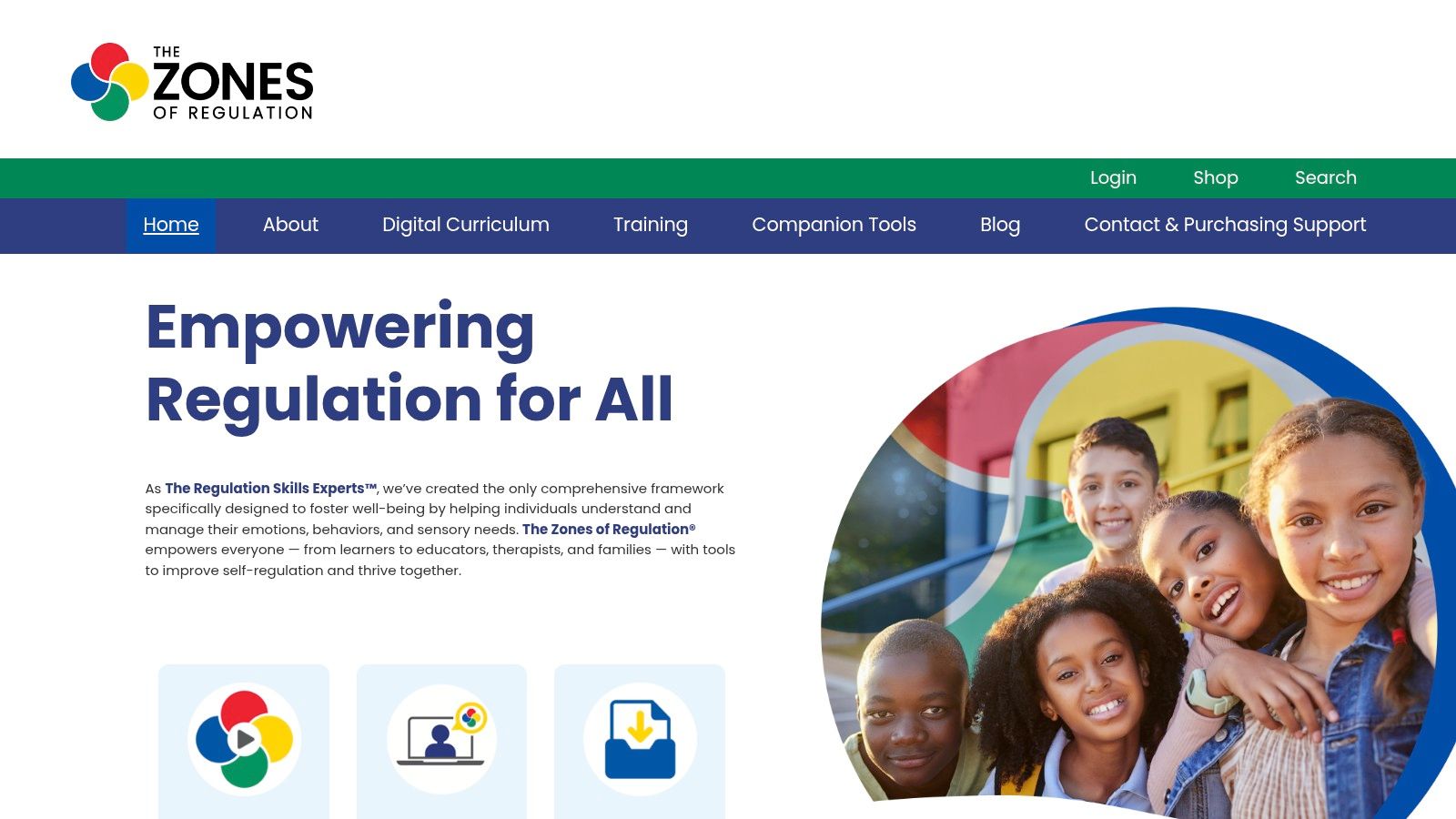
The platform provides a digital curriculum subscription with extensive implementation guides and fidelity checklists to ensure proper school-wide rollout. For example, a teacher can introduce the Blue Zone (sad, sick, tired) and have students identify what that feels like in their bodies. Then, the class co-creates a list of tools to use when in the Blue Zone, like getting a drink of water, taking a brief rest in the calm-down corner, or asking to talk to an adult. At home, a parent can create a similar "Zones" poster and help their child identify they are in the "Yellow Zone" (frustrated, anxious) before a challenging homework assignment, and then practice a calming strategy together. This concrete connection between an internal state (the Zone) and an actionable strategy is what makes the framework so effective for students across general and special education populations.
Key Considerations
Cost & Access: The website offers many free resources and samples to get started. The full curriculum, books, and posters require purchase. A digital subscription is available with per-user licenses, which can become costly for larger staff teams without institutional pricing. Professional learning is also offered in on-demand bundles and live training formats for an additional fee.
Best For:
- Special and general education teachers needing a concrete visual system for self-regulation.
- School counselors using a common language in small groups or individual sessions.
- Schools aiming to build a tiered system of support (MTSS) for behavior and emotional management.
Limitations: The framework is most effective when integrated with broader SEL instruction on empathy, relationship skills, and responsible decision-making. It is a tool for self-regulation, not a complete SEL program on its own.
Website: https://zonesofregulation.com
12. Panorama Education (Surveys, Check-Ins, and Playbook)
Panorama Education is a data platform designed for K-12 districts to measure, understand, and act on social emotional learning and school climate information. Instead of providing a direct SEL curriculum, it offers a suite of tools that help leaders gather perception data from students, families, and staff. For a district administrator, this is the engine for a data-driven approach, allowing them to pinpoint needs, monitor progress, and provide targeted support at a systemic level.
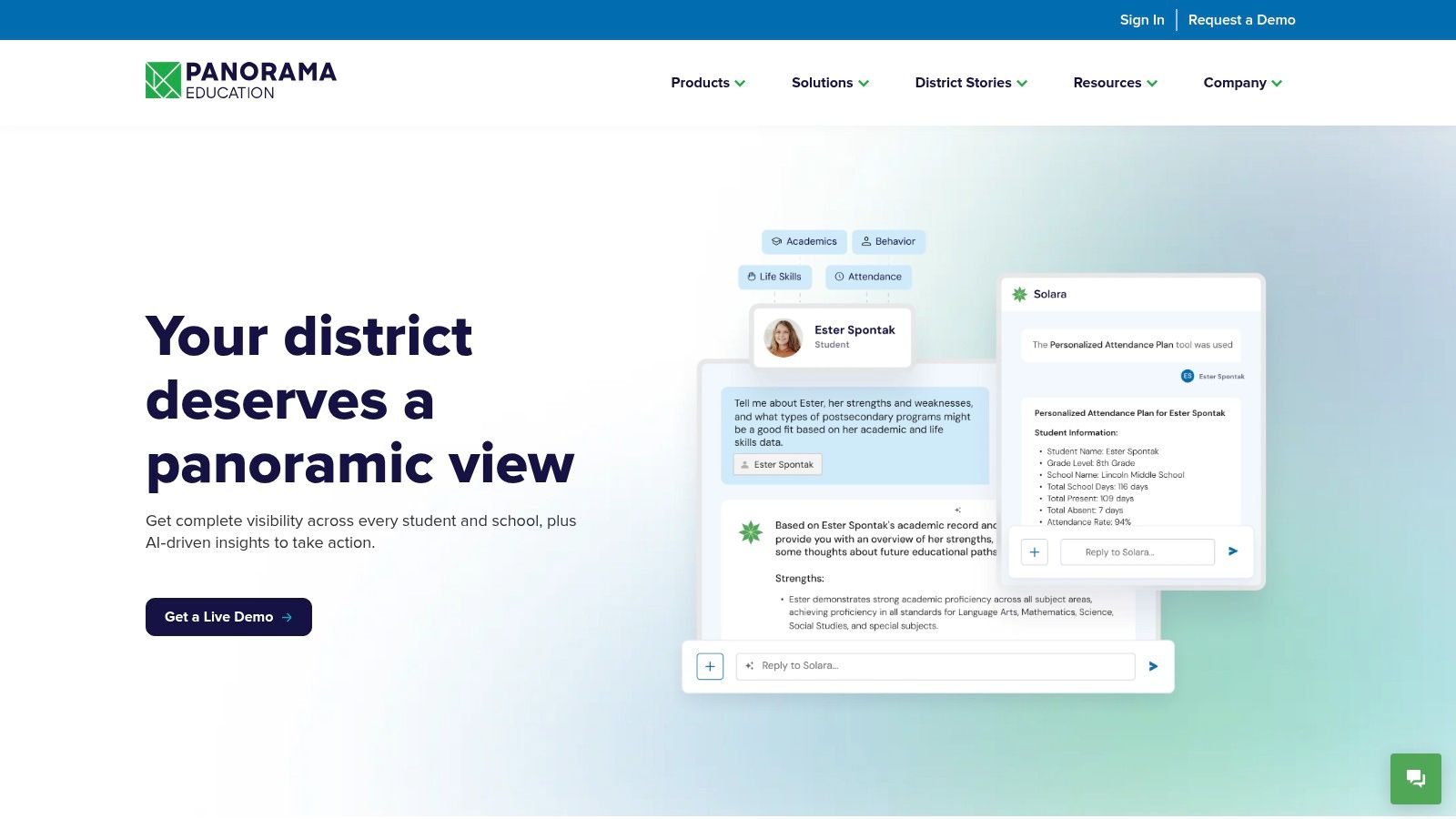
The platform’s standout feature is its combination of robust, research-backed Surveys with actionable tools. For example, after a district-wide survey reveals that 7th-grade students are struggling with self-management, a teacher can use Quick Check-Ins to get real-time feedback from specific students on that topic. A student might respond to a prompt like, "How well were you able to manage your time this week?" The integrated Playbook then suggests evidence-based strategies, like a "Two-Minute Check-In" activity or a "Weekly Goal Setting" worksheet, that a teacher can immediately use to support those students. This makes it a powerful resource among social emotional learning resources for connecting large-scale data to individual student support.
Key Considerations
Cost & Access: Access is priced at the district level and requires a custom quote based on student enrollment and selected modules. While the platform itself is a paid service, Panorama makes its validated survey instruments available open-source for any educator to use.
Best For:
- District leaders implementing a large-scale SEL and school climate measurement strategy.
- Principals and school counselors looking to connect student data to MTSS/intervention tiers.
- Teachers seeking quick, data-informed ways to support individual student well-being.
Limitations: This is a measurement and response tool, not a standalone SEL curriculum. It tells you what to address but does not provide the core instructional lessons to teach SEL skills comprehensively.
Website: https://www.panoramaed.com
12 SEL Resources Comparison
| Program | Core approach & key features | Delivery & implementation | Target audience & fit | Evidence & credibility | Pricing & value |
|---|---|---|---|---|---|
| Soul Shoppe | Experiential SEL tools: self-regulation, mindfulness, communication, conflict resolution | Workshops, assemblies, staff coaching, app, online courses; digital + on‑site; whole‑school programming | K–8 schools, families, community partners seeking campuswide change | 20+ years, partnerships (e.g., Junior Giants), Peaceful Warriors Summit, founder TEDx talk | Quote-based; positioned as long‑term whole‑school partner |
| CASEL District Resource Center + Program Guide | Research-based planning tools, program comparisons, equity guidance | Free online templates, DRC tools, Program Guide with designations | District leaders planning multi‑year systemic SEL | Field leader nonprofit; widely used, regularly updated resources | Free for tools; curricula still require vendor purchase/quotes |
| Second Step (Committee for Children) | Grade-banded scripted digital curriculum with bullying & child protection units | Subscription model, leader dashboards, multimedia student supports | K–8 schools needing structured, lesson‑by‑lesson curriculum | Multiple independent studies show positive outcomes | Subscription pricing (tiered); quotes or published tiers vary |
| RULER (Yale Center for Emotional Intelligence) | Emotion‑science approach: Mood Meter, Charter, Meta‑Moment for adult + student SEL | Two‑year training + coaching, RULER Online platform, ongoing PD | Schools emphasizing adult learning and culture change | Research-grounded; transparent training & subscription pricing | Published training/subscription fees; upfront time/cost commitment |
| Harmony Curriculum (Harmony Academy) | CASEL‑aligned PreK–6 digital lessons, interactive games, family resources | Ready-to-teach digital lessons and at‑home materials; low prep | PreK–6 schools seeking no‑cost, ready-to-use SEL | CASEL alignment; designed to increase access | No license cost for digital curriculum; limited physical kits/supports |
| Responsive Classroom | Classroom-embedded practices (Morning Meeting, teacher language, modeling) | Multi-day educator courses (CE hours), books and schoolwide pathways | K–8 teachers wanting immediate classroom strategies | Evidence‑informed approach; national trainings and resources | Training fees published; full staff onboarding requires time/cost |
| Open Circle (Wellesley Centers for Women) | K–5 curriculum focused on classroom meetings, routines, relationship skills | Grade-banded lessons + teacher professional learning | Elementary schools building safe, caring classroom communities | Longstanding use; external evidence reviews support effectiveness | Program/pricing via training inquiry; details by request |
| CharacterStrong | PreK–12 SEL + character development suite with tiered interventions | Digital curricula, Tier 2 small-group materials, family newsletters | PreK–12 schools seeking continuity across grades | CASEL-aligned maps; regular content updates | License model (often per site); pricing by quote |
| Move This World | Short video-based daily rituals for emotional vocabulary & regulation | On‑demand videos, micro‑practices, coaching for rollout | Schools wanting low‑prep, consistent daily SEL routines | Practical implementation focus; classroom‑friendly format | Quote-based pricing; depends on district scale and bandwidth needs |
| Aperture Education (DESSA System) | SEL assessment + playbook: universal screening, progress monitoring | DESSA assessments, staff dashboards, strategy playbook, PD | Districts using MTSS/data-driven SEL to target supports | Widely recognized, strengths‑based assessment suite | Package pricing varies by district; quotes required |
| The Zones of Regulation | Visual self‑regulation framework using color "zones" and strategies | Digital curriculum subscription, fidelity supports, trainings | General and special education; MTSS tiers from whole-class to small groups | Widely used; extensive free samples and training options | Per-user licenses for digital content; costs scale with staff size |
| Panorama Education | Survey & analytics platform for student/family/staff well‑being | Validated surveys, Quick Check‑Ins, Playbook strategies, multilingual support | Districts measuring climate, SEL, family engagement at scale | Research-backed instruments; robust reporting and disaggregation | Enrollment/module-based pricing; quotes required |
Putting It All Together: Building a Thriving School Community
Navigating the extensive landscape of social emotional learning resources can feel like an overwhelming task. This guide has presented a curated collection, from comprehensive programs like Second Step and CharacterStrong to specialized tools like The Zones of Regulation and assessment systems from Aperture Education. The goal was not simply to list options but to provide a clear framework for selecting and implementing the right resources for your unique school community.
The central takeaway is that there is no single "best" SEL resource. The most successful schools often create a mosaic of tools, blending a foundational curriculum with school-wide cultural initiatives and targeted support systems. An effective SEL strategy is not an add-on; it is woven into the very fabric of the school day.
From Selection to Successful Implementation
Choosing the right tool is just the beginning. The real work lies in thoughtful implementation, which requires a clear understanding of your starting point. Before committing to a program, consider what your specific data tells you.
- For schools noticing increased conflicts on the playground: A program like Soul Shoppe, which focuses on peer mediation and conflict resolution skills through assemblies and workshops, could be a powerful, high-impact intervention.
- For educators wanting to integrate SEL into daily academics: Methodologies like Responsive Classroom offer practical strategies for morning meetings and academic choice that build community without requiring a separate block of instruction time.
- For administrators seeking a data-driven approach: Using Panorama Education's surveys to gather baseline student voice on school climate can pinpoint specific areas of need, such as a sense of belonging or emotion regulation, guiding your selection of a targeted program like RULER or Harmony.
Successful implementation also depends on buy-in and support. It is essential to provide teachers with high-quality professional development, ongoing coaching, and the time to collaborate. When educators feel confident and equipped, they are better able to model SEL skills for their students, creating a ripple effect throughout the school.
The Critical Home-School Connection
A truly supportive ecosystem for children extends beyond the classroom walls. For students to truly thrive in a school community, a supportive home environment is crucial. When SEL principles are reinforced at home, the skills students learn in school become more deeply ingrained.
Families can play a significant role by actively setting family goals that improve communication and connection, fostering social-emotional skills from a young age. This partnership is vital. Consider hosting parent workshops or sharing resources that help caregivers understand the language and concepts being taught at school. When a child uses a term like "being in the blue zone," a parent who understands the framework can provide more effective support.
Ultimately, the journey of building a thriving, emotionally intelligent school community is a continuous one. It requires patience, collaboration, and a commitment to seeing every student as a whole person. The social emotional learning resources detailed in this article are powerful tools, but their true potential is only unlocked when wielded by dedicated educators and engaged families who believe in the profound importance of teaching skills for life, not just for the classroom. By taking a strategic and heartfelt approach, you can create a place where every child feels seen, heard, and equipped to navigate their world with kindness, confidence, and resilience.
Ready to move from resource selection to cultural transformation? Soul Shoppe provides the assemblies, parent workshops, and on-site support to unite your entire community around a shared language of empathy and respect. See how we can help build a climate of kindness and psychological safety at your school by visiting Soul Shoppe.