

A Practical Guide to Confronting Negative Peer Pressure
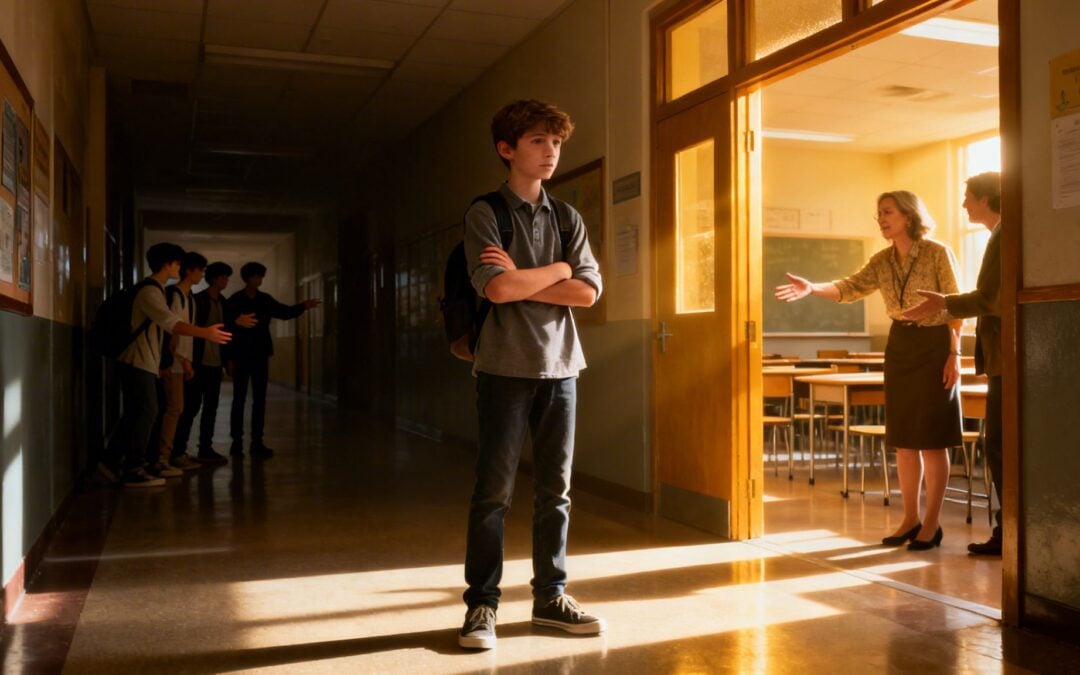
Negative peer pressure is that social tug-of-war that pushes kids to act against their own gut feelings, their family’s rules, or what they know is right. It’s often driven by a deep need to fit in and a powerful fear of being left out, which can lead to choices that are unsafe, unkind, or just plain unhealthy. This force is more than just a passing influence; it can quietly steer a child’s decisions on everything from small social moments to big life choices.
Understanding Negative Peer Pressure in Daily Life
Think of negative peer pressure as a strong social current. It can pull kids toward group behaviors, whether those are positive or not. It’s not always about dramatic dares or obviously risky stuff. More often, it shows up in small, everyday moments that slowly chip away at a child’s sense of who they are and where they belong.
For a younger kid, a practical example might be the sting of being excluded for not having the “right” light-up sneakers or the popular brand of backpack. A teacher might overhear a child say, “You can’t play with us unless you have a Sparkle Pony backpack.” By middle school, this pressure morphs into more complicated situations, like feeling forced to join in on gossip about a classmate just to stay on the right side of a friend group, or getting roped into a risky online challenge.
The Core Drivers of Peer Influence
At the heart of it all are two of our most basic human needs: the desire to belong and the fear of being left out. Kids are wired to seek connection and acceptance. When they’re stuck between sticking to their own values and getting approval from their friends, that social pull can feel impossible to resist. This makes them especially vulnerable to influence, particularly during those key developmental years when their identity is still taking shape.
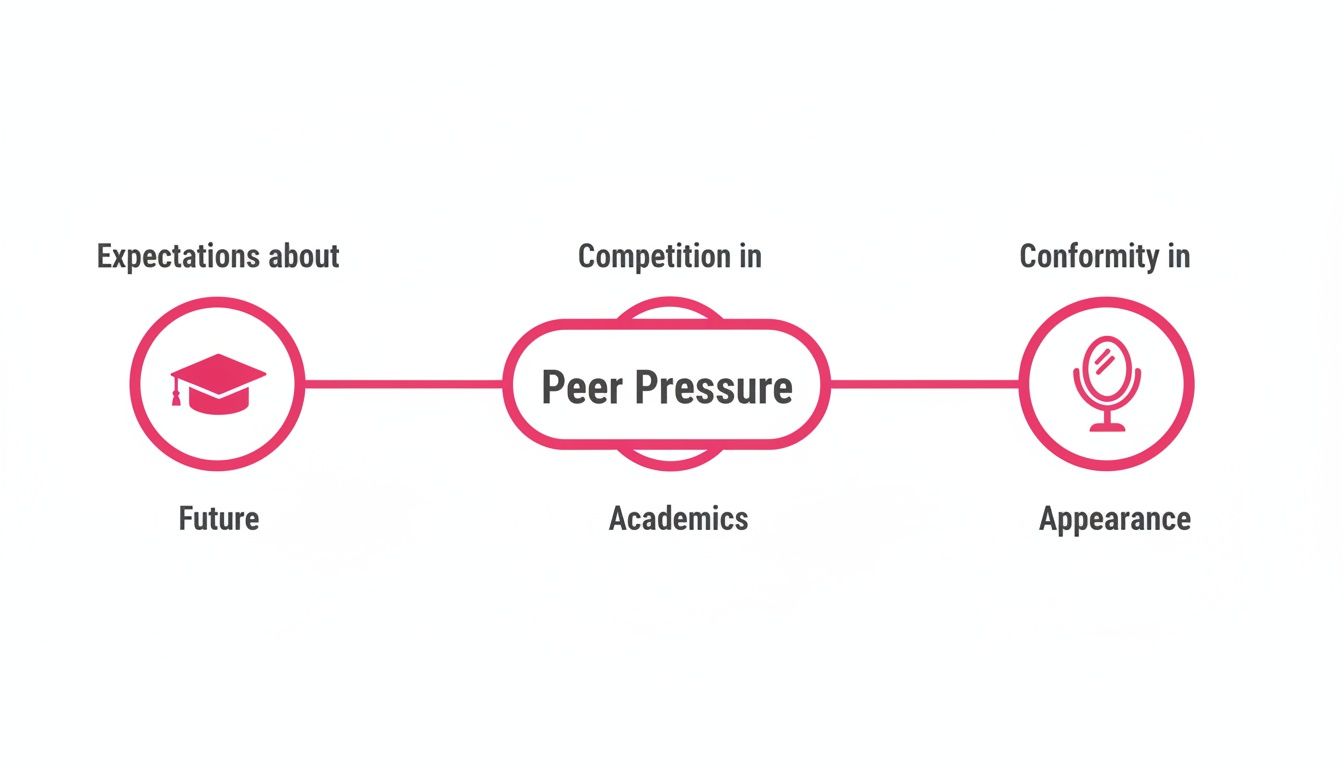
Recent research shows just how widespread this is. A study from Indiana University’s Lilly Family School of Philanthropy, working with Harvard’s Center for Digital Thriving and Common Sense Media, found that a staggering 81% of American teenagers have felt negative pressure in at least one part of their lives. The study zeroed in on three main sources of this stress: pressure about future plans, academic performance, and physical appearance.
The image below breaks down these key areas where students often feel the heat from their peers.
Recognizing Negative Peer Pressure at Different Ages
The way negative peer pressure shows up changes as kids get older. What worries a first-grader is very different from what a seventh-grader faces. This table offers a quick look at some common signs and scenarios you might see in elementary and middle school.
| Type of Pressure | Example in Elementary School (K-5) | Example in Middle School (6-8) |
|---|---|---|
| Social Exclusion | Not letting a classmate play a game because they don’t have a specific toy or brand-name item. For instance, “Only kids with the latest trading cards can join our club.” | Intentionally leaving someone out of a group chat or social plans because they aren’t “cool” enough. A parent might see a text like, “Don’t invite Alex to the movies.” |
| Behavioral Pressure | Daring a friend to break a classroom rule, like talking out of turn or taking something that isn’t theirs. A child might say, “I dare you to write on the desk. The teacher won’t see.” | Pressuring a friend to try vaping, skip class, or post something inappropriate online. For example, “Come on, just one puff. No one will find out.” |
| Appearance & Conformity | Teasing a child for wearing clothes that are not in style or for having a different haircut. A common taunt could be, “Why are you wearing baby shoes?” | Making critical comments about a peer’s body, clothes, or acne, creating pressure to look a certain way. This might sound like, “You’d be prettier if you lost weight.” |
| Academic Pressure | Making fun of a student for getting a good grade (“teacher’s pet”) or for needing extra help. A child might be told, “Stop raising your hand so much, you’re making us all look bad.” | Encouraging a classmate to cheat on a test or sharing answers to avoid studying. A direct message might say, “Just send me your answers for the history homework.” |
Spotting these signs early helps adults step in with the right support, tailored to the child’s developmental stage.
Why Children Are Vulnerable to Peer Influence
It’s a question that baffles parents and teachers everywhere. Why would a smart kid who knows right from wrong suddenly make a terrible choice just to fit in with a group?
The answer isn’t a flaw in their character. It’s rooted in the fascinating, and sometimes frustrating, science of brain development. Understanding this helps us shift our focus from blame to supportive guidance.
Children, and especially pre-teens and teenagers, are not just small adults. Their brains are actively under construction, and the parts responsible for social connection and smart decision-making develop at very different speeds. This mismatch creates a perfect storm for negative peer pressure to take hold.
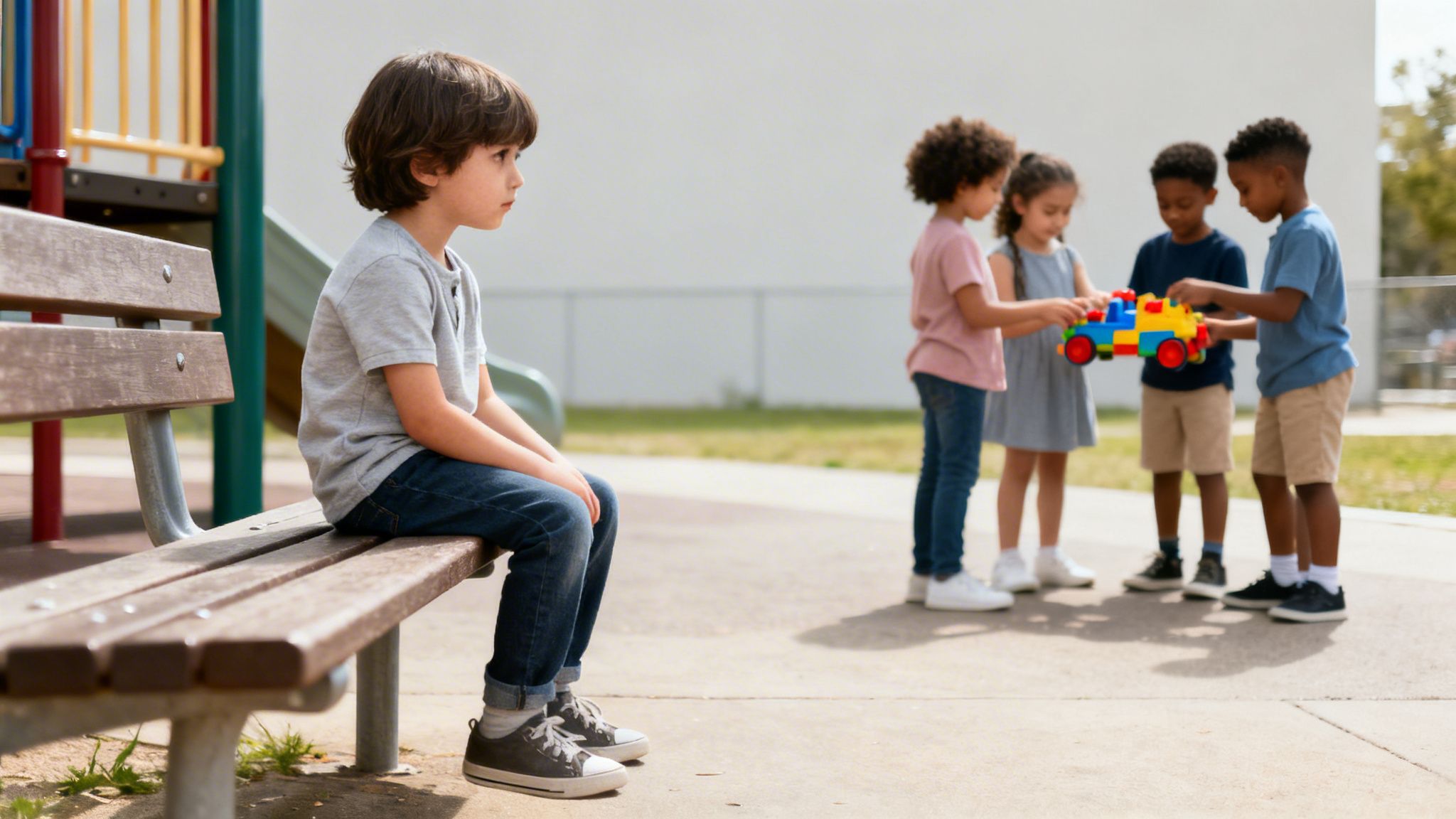
The Developing Brain on Social Autopilot
Think of an adolescent’s brain like a high-performance car with a super-sensitive gas pedal and brakes that are still being installed. The gas pedal is the limbic system—the brain’s emotional and social hub. It’s fired up during these years, making social rewards like acceptance, laughter, and belonging feel incredibly powerful and exciting.
The brakes, on the other hand, are the prefrontal cortex. This is the brain’s “CEO,” in charge of logic, impulse control, and thinking through long-term consequences. Here’s the catch: this part of the brain doesn’t fully mature until the mid-20s.
This developmental lag explains why the immediate thrill of fitting in can so easily overpower that quiet, logical voice warning against a bad idea. This biological reality is a key factor in a child’s emotional development, shaping how they navigate their social world.
Practical Examples of Brain Development in Action
This imbalance isn’t just a textbook theory; it shows up in everyday situations that parents and teachers see all the time. The intense need for social approval, driven by the brain’s reward centers, can lead to choices that seem completely out of character.
Let’s look at how this plays out:
- The Little Lie: A fifth-grader’s friends are all buzzing about a new PG-13 movie they saw over the weekend. Even though she wasn’t allowed to see it, she chimes in, “Oh yeah, I saw it! The ending was crazy.” In that moment, the immediate social reward of being part of the conversation completely outweighs the value of telling the truth.
- The Sudden Style Change: A middle schooler who has always loved bright colors suddenly insists on wearing only black, baggy outfits, just like a new group of friends. This isn’t just about fashion; it’s a powerful, non-verbal way of signaling, “I belong with them.” The drive for group identity is a potent force.
- The Classroom Disruption: A teacher sees a normally well-behaved student, Mark, laugh and encourage another student who is throwing paper wads. Mark knows it’s wrong, but the immediate reward of getting a laugh from his peers overrides his better judgment.
For a child, the fear of social rejection can feel as threatening as physical danger. Their brain actually processes social pain in the same regions that process physical pain, making the sting of being left out a very real and powerful motivator.
This deep-seated need to avoid social pain explains why a kid might participate in excluding another classmate, even if they feel awful about it later. The immediate benefit of securing their own spot in the group temporarily silences their empathy.
From Survival Instinct to Social Strategy
This all goes way back. Historically, being part of a group was essential for survival. Being cast out meant danger and a lack of resources. While the stakes are different in a middle school cafeteria, that ancient wiring remains. A child’s brain is still primed to prioritize group acceptance as a fundamental, non-negotiable need.
Understanding these developmental drivers is the first step toward helping them. When we see a child succumbing to negative peer pressure, we can recognize it not as defiance, but as a predictable developmental stage. This empathetic viewpoint allows us to teach them the skills they need to manage their powerful social instincts and make choices that align with their true selves.
It’s all about helping them strengthen their “brakes” to match their powerful “gas pedal.”
How to Spot the Warning Signs and Impacts
Negative peer pressure often works in whispers, not shouts. For parents and educators, recognizing it means tuning into the subtle shifts in a child’s world. The signs can be easy to dismiss as typical growing pains, but when they start to form a pattern, they often point to a deeper struggle.
These warning signs are like a quiet distress signal from a child who may not have the words to ask for help directly. They’re clues that the social currents around them are becoming too strong to navigate alone. Paying close attention is the first and most critical step in offering support.
A Checklist of Red Flags for Adults
Identifying negative peer pressure isn’t about spotting one single behavior but noticing a collection of changes. If a child begins to show several of these signs at once, it’s a strong indicator that they may be struggling to hold their own.
Here are some key warning signs to watch for:
- Sudden Academic or Behavioral Changes: A student who once enjoyed school now complains about going, their grades slip, or they suddenly get into trouble. Example: A child who used to love math now says the class is “boring” and fails a test, which could be a sign they are being teased for being smart.
- Shifting Friend Groups: It’s normal for friendships to evolve, but a sudden and complete change in friends can be a red flag—especially if the new group has very different values. This is often paired with the child pulling away from old, positive friendships. Example: Your son stops hanging out with his soccer teammates and now only spends time with a group of kids known for skipping school.
- Increased Secrecy and Defensiveness: Your child might become guarded with their phone, hide who they are talking to, or get unusually defensive about their day. This often comes from a fear of disapproval from the adults in their life. Example: When you ask, “Who were you texting?” your daughter quickly turns off her phone and replies, “Just a friend. It’s nothing.”
- Changes in Appearance and Interests: A sudden, dramatic change in clothing, music taste, or language that mirrors a new group shows a strong desire to conform. You might also see a child abruptly drop hobbies they once loved. Example: A middle schooler who loved playing the violin for years suddenly quits, saying it’s “not cool anymore.”
- Unexplained Mood Swings: While moodiness is part of growing up, persistent anxiety, sadness, irritability, or unusually low self-esteem can be symptoms of the stress caused by trying to fit in. Example: Your child is cheerful one moment but becomes withdrawn and sullen after receiving a notification on their phone.
The Immediate and Long-Term Consequences
When negative peer pressure goes unaddressed, its effects can ripple outward, impacting a child’s present and future. The consequences range from immediate emotional distress to long-term damage to their sense of self.
The link between social stress and mental health is undeniable. Research shows that peer pressure contributes to higher rates of depression, anxiety, and stress among young people. With nine out of ten teens reporting they have experienced peer pressure, understanding these impacts is crucial.
A Story from the Hallways: Liam, a bright seventh-grader, loved his robotics club. But when a new group of friends started making fun of it, he quietly quit. Soon, his parents noticed his grades dropping and he started faking sickness to miss school. It wasn’t until a counselor stepped in that they discovered Liam was terrified of this group labeling him a “nerd.” He was choosing to fail rather than face social rejection.
Liam’s story shows how quickly the impacts can escalate. The immediate consequences were anxiety and academic decline. Left unchecked, this could have led to more severe, long-term issues.
Understanding the Full Scope of Impact
The damage from negative peer pressure isn’t just about making a few bad choices. It can fundamentally alter how children see themselves and their place in the world.
Short-Term Impacts:
- Heightened Anxiety and Stress: The constant worry about fitting in or being judged is mentally exhausting.
- Academic Struggles: Social stress makes it tough to focus on schoolwork, leading to lower grades.
- Damaged Friendships: Kids may push away positive friends to gain acceptance from a more “desirable” but negative group.
- Risky Behaviors: This can include experimenting with substances, cheating, or participating in bullying to gain social status. For parents, this guide on recognizing signs of bullying provides key indicators that shouldn’t be ignored.
Long-Term Risks:
- Diminished Self-Worth: Constant pressure to be someone else can erode a child’s sense of identity and self-esteem.
- Mental Health Challenges: Chronic social stress is a significant contributor to long-term anxiety disorders and depression.
- Difficulty with Healthy Relationships: A history of negative peer dynamics can make it harder to form trusting, authentic relationships in adulthood.
Recognizing these signs isn’t about creating panic. It’s about empowering adults to step in early and effectively, providing the guidance kids need to find their footing again.
Actionable Classroom Strategies for Educators
Building a classroom that’s resilient to negative peer pressure isn’t about trying to get rid of social influence entirely. It’s about creating a strong, positive culture where every single student feels seen, valued, and safe.
When a deep sense of belonging is the foundation of your classroom, the fear of rejection—which is the main fuel for peer pressure—starts to lose its power. The goal is to give students more than just the words to say “no”; it’s to give them the unshakeable confidence that their “no” will be heard and respected.
The best strategies are the ones you weave into the daily fabric of your classroom life, not just the ones saved for a special lesson. By consistently reinforcing empathy, assertive communication, and community, you can create an environment where positive influence naturally wins out. Your classroom becomes a training ground for the real-world social challenges they’ll face.
Fostering Community and Belonging
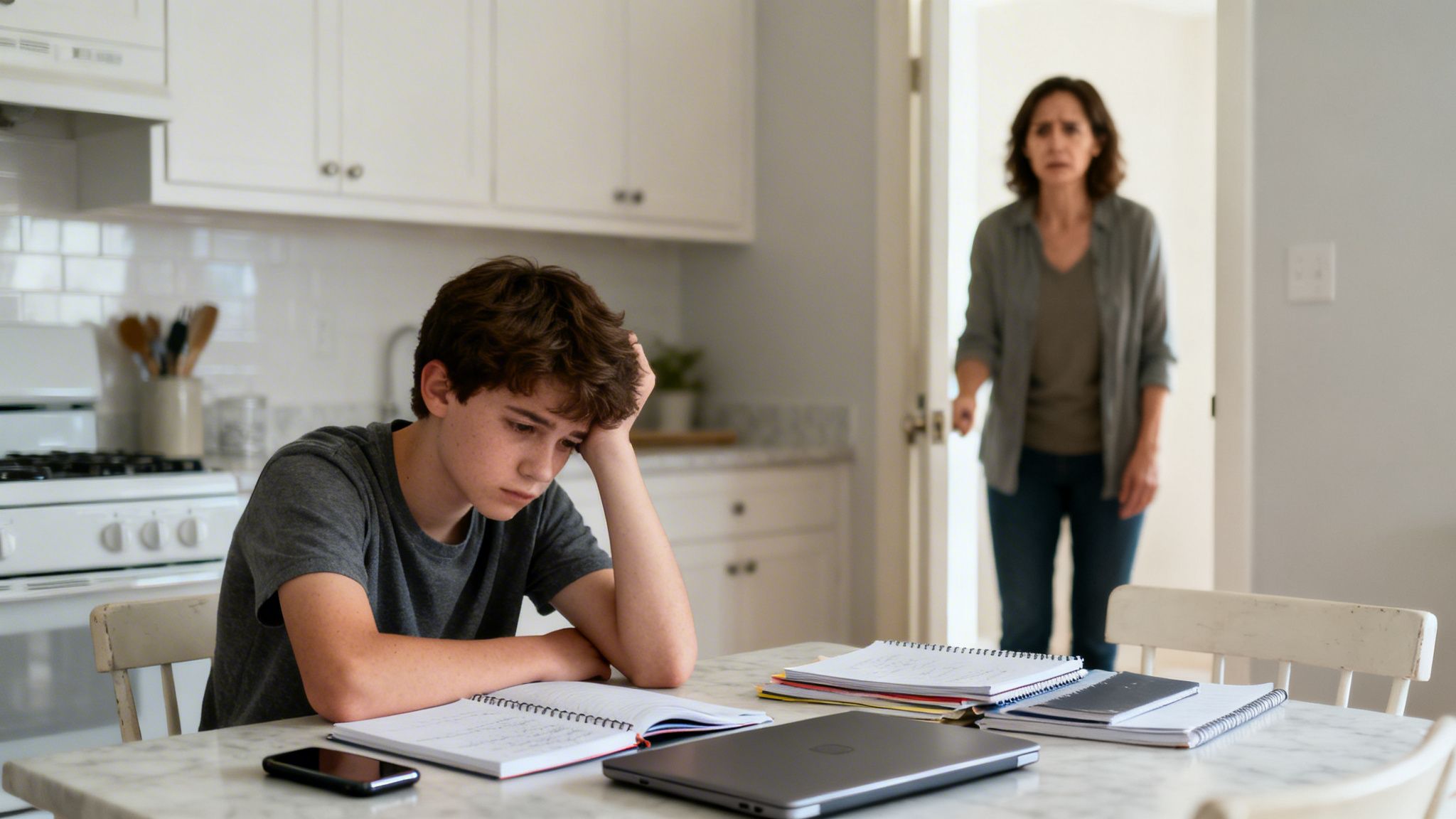
A student who feels like a genuine member of the classroom community is far less likely to bend their values just to fit in. That sense of belonging acts as a powerful anchor against the pull of negative peer pressure. Creating this kind of environment takes intentional and consistent effort.
Start with simple, regular rituals that reinforce connection. Things like morning meetings, community circles, or even a simple “high-five line” at the door can set a positive tone for the entire day. These small acts build a shared identity and mutual respect.
Another fantastic strategy is to assign meaningful classroom jobs that require students to collaborate. When kids have to depend on each other to keep the classroom running, they start to see one another as capable, contributing members of a team. For example, a “Tech Team” of two students can be responsible for setting up the projector, or a “Librarian Duo” can manage the classroom library. This shifts the social dynamic from a hierarchy of “cool” to a network of shared responsibility. To dig deeper into creating this kind of supportive space, you might explore trauma-informed teaching strategies, which are all about creating psychological safety for every child.
Teaching Assertive Communication with I-Statements
One of the most practical skills you can teach is how to express feelings and needs without blaming or attacking someone else. Assertive communication is the perfect antidote to both passive compliance and aggressive reactions. At Soul Shoppe, we love teaching “I-Statements”—a simple but incredibly powerful tool for respectful self-expression.
An “I-Statement” follows a basic, four-part structure:
- I feel… (State the emotion)
- when you… (Describe the specific, observable behavior)
- because… (Explain how it impacts you)
- I need/would like… (State what you want to happen)
For example, instead of a student blurting out, “You’re so annoying! Stop copying my work!” they can learn to say, “I feel frustrated when you look at my paper because I worked really hard on these answers myself. I need you to do your own work.” This simple shift de-escalates conflict and teaches kids to take ownership of their feelings.
By framing a concern around their own feelings (“I feel…”) instead of an accusation (“You are…”), a student can set a clear boundary while keeping the relationship intact. It’s a skill that will serve them far beyond the classroom, helping them navigate complex social situations for the rest of their lives.
Using Role-Playing to Build Refusal Skills
Just telling a student to “say no” is rarely enough. They need to practice it. They need to feel the words in their mouth and build muscle memory for those high-stakes moments. Role-playing is an incredibly effective—and safe—way to make that happen.
Create realistic scenarios that your students might actually encounter. Make sure they’re age-appropriate and focused on common challenges they face. The goal is to help them practice saying “no” firmly, respectfully, and confidently.
Practical Role-Playing Scenarios for the Classroom:
- The Test Answer Scenario: One student tries to get answers to a test from a classmate, who must practice saying no.
- Student A: “Psst! What’s the answer to number 5? The teacher isn’t looking.”
- Student B (Practice Response): “I can’t share my answers. We can study together for the next one if you want.”
- The Exclusion Scenario: A group of students is talking about leaving someone out of a game at recess.
- Student A: “Let’s not ask Sarah to play. She’s too slow.”
- Student B (Practice Response): “I feel uncomfortable with that. I think everyone should be invited to play.”
- The Online Gossip Scenario: A friend wants to show another student a mean post about a classmate.
- Student A: “Look at this picture of Alex! Let’s share it in the group chat.”
- Student B (Practice Response): “No, I don’t want to be part of that. It feels unkind.”
After each role-play, lead a short debrief. Ask the students how it felt to say no. What made it hard? What made it easier? This reflection helps the learning stick and empowers students to use these skills when they face real negative peer pressure.
A Parent’s Guide to Building Resilience at Home
While teachers and administrators are hard at work building a resilient culture at school, the real training ground for a child’s inner strength is at home. The bond you share with your child is a powerful anchor, giving them the stability they need to navigate the sometimes-turbulent waters of social pressure.
When you create a home where your child feels safe, heard, and unconditionally loved, you’re giving them the most effective defense against the pull of negative peer pressure. It all starts with open, non-judgmental conversations where they feel comfortable sharing their struggles and their wins. That foundation of trust is what makes you the person they turn to when facing a tough choice.
Starting the Conversation About Social Challenges
Getting kids to open up isn’t always easy, but asking the right questions can unlock the door. Instead of a direct, “Are you feeling peer pressure?”—which can feel like an interrogation—try more subtle, open-ended prompts that invite sharing.
Here are a few conversation starters, broken down by age:
-
For Younger Children (Ages 5-8):
- “Did anything at recess make you feel a little sad or confused today?”
- “What’s the kindest thing a friend did for you this week? How about something that wasn’t so kind?”
- “If a friend asked you to do something you knew was against the rules, what do you think you would do?”
-
For Older Children (Ages 9-13):
- “I’ve noticed some kids are really into [mention a popular trend]. What do you think about it?”
- “Have you ever felt like you had to go along with your friends, even if you didn’t really want to?”
- “What makes someone a good friend? What are some things a good friend would never ask you to do?”
The goal here is to listen more than you speak. Validate their feelings with simple phrases like, “That sounds really tough,” or “I can see why that would be upsetting.” This kind of empathetic listening reinforces that home is their safe harbor. For more strategies on this, explore our guide on building resilience in children.
‘What to Say When…’ Practical Scripts for Parents
Sometimes, you need a quick, effective response right in the moment. Having a few phrases in your back pocket can help you address common situations calmly and constructively.
When your child says: “But everyone else is doing it!” or “Everyone has one!”
- Your Response: “I get that it feels that way, and it’s hard when you feel left out. In our family, we make decisions based on our values, not just what everyone else is doing. Let’s talk about why this is so important to you.”
- Practical Example: If the issue is a smartphone, you could say, “I understand all your friends have phones. Our rule is no phones until 7th grade, but let’s talk about what you feel you’re missing out on so we can find other ways for you to connect with them.”
When your child is hesitant to go against the group:
- Your Response: “It takes a lot of courage to be the one who says ‘no’ or stands up for what’s right. I will always be proud of you for listening to your gut, even when it’s the harder choice.”
- Practical Example: After they tell you about a tough situation, you can add, “Remember that time you told your friends you couldn’t play video games because you had to finish your project? That was you being a leader. I was so proud of you for that.”
Modeling this behavior is just as crucial. Let your kids see you set healthy boundaries in your own life. When you confidently say no to a commitment you don’t have time for or stand by a personal decision, you’re showing them what resilience looks like in action.
A comprehensive WHO/Europe report revealed that peer support among adolescents dropped from 61% in 2018 to 58% in recent years. This highlights that strong family support is more critical than ever for a child’s mental well-being.
To get a fuller picture of your child’s social world, it helps to connect with the other adults in their life. By mastering parent communication with coaches and activity leaders, you build a stronger support network around your child, reinforcing the same values at home, at school, and on the field.
Frequently Asked Questions About Peer Pressure
When it comes to guiding kids through the tricky social world they live in, parents and educators often have the same pressing questions. Below, we’ve tackled some of the most common concerns with clear, actionable answers to help you navigate the challenges of negative peer pressure.
What Is the Difference Between Positive and Negative Peer Pressure?
The real difference comes down to the outcome. Negative peer pressure pushes a child toward choices that are unsafe, unkind, or go against their own values. It’s all about conformity, often at the expense of their well-being.
Positive peer pressure, on the other hand, is the complete opposite. It’s the kind of influence that encourages growth, inspires healthy choices, and helps a child reach their full potential.
Let’s look at a couple of real-world examples:
- Negative Example: A group of friends dares a classmate to cheat on a math test, saying things like, “Everyone does it, don’t be a goody-goody.” The pressure here is to break rules and be dishonest just to fit in.
- Positive Example: A study group agrees to finish their homework before they play video games, holding each other accountable. This influence promotes responsibility and academic success. Another example is when a soccer team encourages a hesitant teammate to try out for a more challenging position, saying, “You’ve got this! We’ll practice with you.”
At Soul Shoppe, a big part of what we do is teach students how to spot this difference and become a source of positive influence within their own friend groups.
How Can I Teach My Child to Say No Without Losing Friends?
The key is to teach assertive, not aggressive, refusal skills. This approach helps a child state their boundaries clearly and firmly while still being respectful of the other person. Role-playing different scenarios at home is a fantastic way to build this skill and muscle memory.
Give them some simple, direct phrases they can pull out when they need them. For instance, if a child is being pressured to join in on gossip, they could practice saying, “No thanks, I’m not really into talking about people like that.”
A powerful strategy is to reject the behavior without rejecting the person. Encourage your child to offer an alternative, like saying, “I’m not going to skip class, but let’s definitely hang out at lunch.” This shows they value the friendship, just not the risky choice.
It’s also incredibly helpful to encourage friendships across different groups. When a child’s entire social world doesn’t depend on the approval of just a few kids, saying “no” when they need to becomes a lot less scary.
At What Age Should I Start Talking About Peer Pressure?
You should start these conversations much earlier than you might think, using language and concepts that fit their age. Building this foundation early makes navigating the tough teen years so much easier.
Long before you even use the words “peer pressure,” you can frame conversations around core values like kindness and making good choices.
- Young Children (Ages 5-7): Keep it simple. Talk about “being a good friend” or “making kind choices.” You can ask questions like, “What would you do if a friend wanted you to take a toy from another classmate?” Use characters from books or shows. For example: “Remember how that character in the cartoon shared his snack even when his other friend didn’t want him to? That was a kind choice.”
- Older Elementary (Ages 8-10): Now you can start introducing the term “peer pressure.” You can discuss more complex scenarios, like being dared to tell a small lie or exclude someone from a game. For example: “Let’s imagine your friends want to play a game, but they say Maya can’t play. What would feel right to do in that moment?”
- Middle School (Ages 11-13): By this age, these conversations should be ongoing. You can start covering more serious topics like online behavior, social risks, and the negative peer pressure tied to things like vaping or skipping school.
My Child’s School Lacks a Strong SEL Program. What Can I Do?
Even if there isn’t a formal program at school, you can still make a huge impact. The most important work starts right at home when you consistently practice the communication and resilience strategies we’ve outlined in this guide.
From there, you can become an advocate. Try connecting with other parents who share your concerns and approach the school as a united, supportive group. It’s best to frame your request not as a complaint, but as a collaborative effort to improve well-being for all students.
Come prepared with helpful resources, like this article or information on proven programs like Soul Shoppe, to show the administration the clear benefits of social-emotional learning. Sometimes, a well-informed and organized parent-led initiative is the exact catalyst a school needs to prioritize these essential life skills.
At Soul Shoppe, we provide schools and families with the tools needed to build resilient, empathetic, and confident kids. Our research-based programs equip entire school communities to foster connection and stand up to negative peer pressure. Learn more at https://www.soulshoppe.org.