

8 Cooperative Games for Families You Should Know
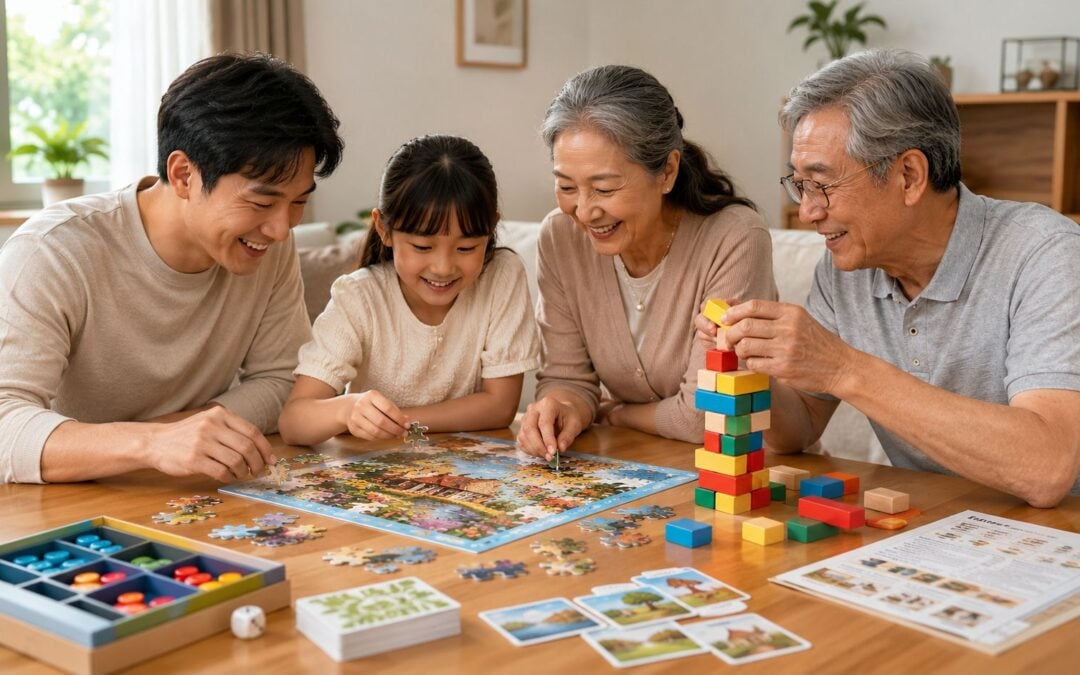
You're probably looking for something better than another family game night that ends with one child crying, one child gloating, and an adult saying, “Let's just clean up.” That's exactly where cooperative games for families can help. Instead of putting players against each other, they put everyone on the same side of the problem.
That simple shift changes the tone of play. Kids can practice taking turns, sharing ideas, and handling frustration without the pressure of beating a sibling. Adults can guide the experience without feeling like referees. For mixed-age groups, that matters even more, because a good co-op game gives younger children a real role instead of asking them to keep up with older players.
There's a broader reason these games keep showing up in homes, classrooms, and school counseling spaces. Historians widely describe The Landlord's Game as the first commercial cooperative board game, and in digital gaming, annual co-op releases on Steam rose from 647 in 2020 to 799 in 2023, a gain of 152 releases, or about 23.5 percent over three years, according to the historical overview summarized in this cooperative games history video. The format isn't a niche anymore. Families now have many more options across ages and skill levels.
The list below focuses on games that parents and educators can use. Each one includes practical examples, likely sticking points, and simple ways to keep all players involved.
1. Pandemic Board Game
Pandemic works well for families who want a true team challenge. Every player takes on a specialist role and the group tries to contain outbreaks and discover cures before the board spirals out of control. Because the game rewards planning out loud, it creates natural chances to practice listening, turn-taking, and shared decision-making.
In older elementary, middle school, or family groups with adults and tweens, this can become more than a board game. One child notices where the biggest threat is building, another tracks cards, and an adult helps the group think ahead without taking over. That division of attention gives each player a meaningful job.
For readers looking for simpler entry points before trying a strategy game like this, Soul Shoppe also shares cooperative games for kids that work well for younger groups.
Here's a quick look at the game in action:
2. Structured Partner and Small Group Dialogues
Structured partner and small group dialogues are facilitated conversations that use specific frameworks and prompts to guide interaction. This approach moves beyond unstructured “talk time” by implementing clear turn-taking protocols, active listening requirements, and guided reflection. By creating a predictable and safe format, participants can practice articulating their thoughts, validating others’ perspectives, and engaging in respectful discourse without fear of being interrupted or unheard.
This method, with roots in practices like Marshall Rosenberg’s Nonviolent Communication (NVC) and mindfulness-based dialogues, transforms conversation into a deliberate practice. The explicit structure helps de-escalate potential conflicts and ensures equitable participation, making it one of the most foundational activities for communication skills for building a respectful community.
Implementation Examples
- Partner Listening Exercises: In Soul Shoppe workshops, students are often paired up. One student (the speaker) shares for a set time (e.g., 60 seconds) about a specific prompt, while the other (the listener) listens without interrupting. The listener then reflects back what they heard. For example, after the speaker shares, the listener might say, “What I heard you say was that you felt really proud when you finished your art project because you worked hard on it.”
- Peer Mentoring Conversations: Older students can mentor younger ones using a structured protocol, such as asking questions like, “What is one thing that went well this week?” and “What is something you’re finding tricky?” A practical script for the mentor could be: “First, let’s talk about a success. Then, we can brainstorm one small step to help with the tricky part.”
- Dinner Table Question Cards: A family can use cards with prompts like, “Share a time today you felt proud,” to guide a more intentional and inclusive dinner conversation where everyone gets a turn to share and listen. For instance, a card could say: “Describe a moment today when someone was kind to you.” Each person answers while the others practice listening.
Actionable Tips for Success
To ensure these dialogues are effective, facilitators should focus on creating clarity and safety.
- Provide Written Prompts: Keep conversation prompts, sentence starters, or listening guidelines visible on a whiteboard or handout so participants can easily reference them.
- Model the Dialogue Format: Before asking students to practice independently, demonstrate a structured conversation with another adult or a student volunteer. Explicitly point out the turn-taking and listening steps.
- Start with Lighter Topics: Begin with low-stakes prompts, such as “What’s your favorite thing to do on a weekend?” before moving to more personal or sensitive discussions.
- Rotate Partners Regularly: Encourage students to practice with different peers. This builds their comfort and ability to communicate effectively with a wider range of personalities.
- Debrief as a Group: After the dialogues, facilitate a group reflection. Ask questions like, “What did it feel like to be listened to without interruption?” or “What made a conversation feel successful?”
6. Peer Feedback and Fishbowl Coaching
Peer feedback and fishbowl coaching are structured exercises where participants give and receive feedback using specific, kind, and constructive protocols. This approach teaches individuals how to deliver actionable, respectful critiques and how to receive input with openness and a growth mindset. It transforms feedback from a source of anxiety into a valuable tool for improvement.
This method, supported by the principles of growth mindset pedagogy from Carol Dweck and formative assessment research, reframes communication as a skill that can be developed through practice and reflection. By making the feedback process transparent and collaborative, it becomes one of the most effective activities for communication skills for building self-awareness and interpersonal trust.
Implementation Examples
- Fishbowl Discussion: A small group of students sits in an inner circle (the “fishbowl”) to practice a communication skill, such as active listening or debating a topic. The outer circle observes and prepares to give structured feedback on what they saw and heard.
- Peer Coaching for Presentations: After students give a short presentation, they meet with a designated “peer coach” who uses a simple framework (e.g., “One thing that was really clear was…” and “One thing you could try next time is…”) to provide feedback. For example, a coach might say, “Your voice was really strong and confident. Next time, maybe you could try to make more eye contact with everyone in the audience.”
- “Two Stars and a Wish” Writing Review: In a writing workshop, students exchange papers. They are instructed to leave two positive comments (“stars”) and one suggestion for improvement (“a wish”) for their partner. A practical example of feedback could be: “Star 1: I love your descriptive words! Star 2: Your opening sentence is very engaging. Wish: I wish I knew more about how the character felt.”
Actionable Tips for Success
To ensure peer feedback is productive and positive, a clear framework is crucial.
- Teach Feedback Frameworks: Explicitly teach and model simple structures like “I notice…” and “I wonder…” to guide students. Provide sentence starters to help them formulate their thoughts constructively.
- Start with Positives: Always begin feedback rounds by focusing on strengths. This builds trust and makes participants more receptive to suggestions for growth.
- Frame Feedback as a Gift: Teach students to view feedback not as criticism, but as a gift that helps someone improve. This mindset shift is key to creating a supportive environment.
- Allow for Reflection: Give the recipient a moment to process the feedback and ask clarifying questions. The goal is dialogue, not a one-way critique.
10. Mindfulness-Based Communication and Emotional Awareness Practices
Mindfulness-based communication integrates present-moment awareness with the act of speaking and listening. Instead of focusing solely on external actions, this approach builds the internal foundation necessary for healthy interaction. Participants learn to notice their own thoughts, feelings, and bodily sensations before and during conversations, which helps them respond thoughtfully rather than react impulsively.
This method, rooted in practices popularized by Jon Kabat-Zinn and adapted for Social-Emotional Learning, empowers individuals to manage their internal state first. By cultivating self-awareness, participants can engage in dialogue with greater empathy, clarity, and control, making this one of the most transformative activities for communication skills. As part of developing mindful communication, understanding and enhancing your connection to your emotional regulation skills is incredibly beneficial.
Implementation Examples
- Mindful Listening Circles: Students sit in a circle and pass a “talking piece.” Only the person holding the object may speak, while others practice listening fully without planning their response. The focus is on receiving the speaker’s words and energy.
- Pause-and-Respond Practice: Before a potentially difficult conversation (like giving peer feedback), students are guided through a one-minute breathing exercise. A teacher could say: “Before we start, let’s all take a ‘tummy breath.’ Put your hand on your belly, breathe in and feel it rise, then breathe out slowly. This helps us speak from a calm place.”
- Family “Weather Report”: At home, family members can start a conversation by sharing their internal “weather.” For example, “I’m feeling sunny and calm today,” or “My mind feels a bit stormy and distracted.” This practice normalizes emotional awareness as part of communication.
Actionable Tips for Success
To effectively integrate mindfulness into communication practice, focus on consistency and accessibility.
- Start Small: Begin with very short practices, such as three conscious breaths before circle time or a one-minute body scan. Build duration as students become more comfortable.
- Normalize the Wandering Mind: Remind participants that it’s natural for their minds to wander. The goal isn’t an empty mind, but gently returning focus to the present moment without judgment.
- Frame it as a Tool: Connect mindfulness directly to communication goals. Explain, “We’re doing this breathing exercise to help our brains get ready for respectful listening.”
- Offer Multiple Entry Points: Not everyone connects with sitting still. Provide options like mindful walking, listening to a bell, or gentle stretching. You can find more calming activities for the classroom that support these practices.