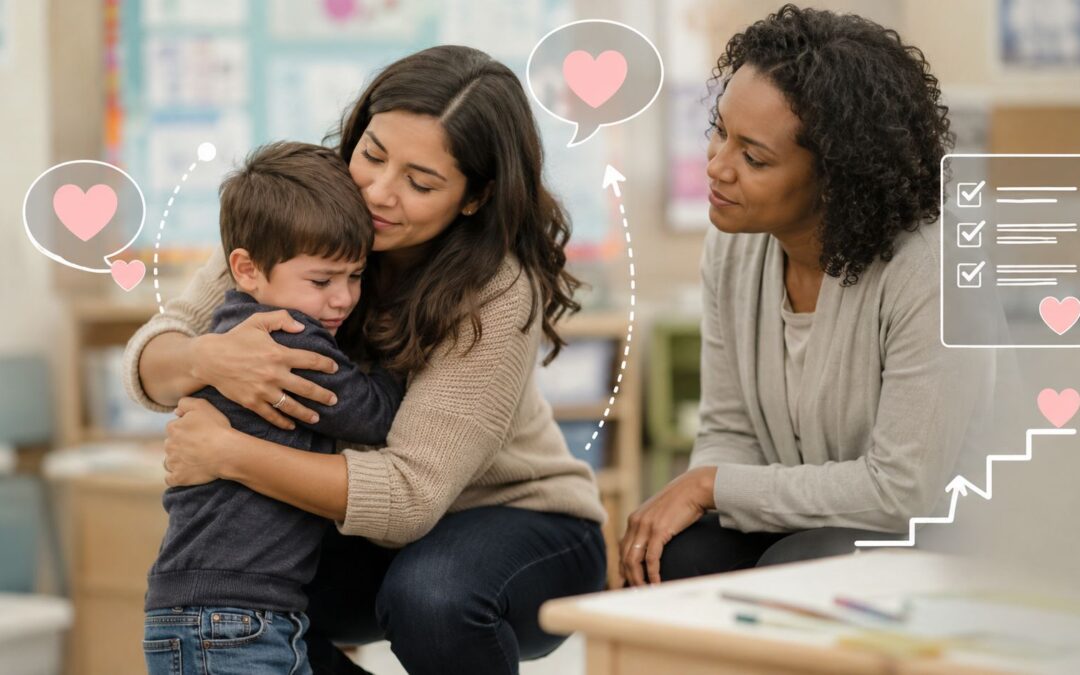
A student arrives at school unusually quiet, a child bursts into tears after losing a game, or a classmate sits alone while everyone else joins a group. In each moment, the adult has a choice. You can rush toward advice, correction, or reassurance, or you can pause long enough to understand what the child is experiencing.

Showing empathy means noticing another person's experience, communicating that it matters, and responding in a way that supports safety and connection. It doesn't mean agreeing with every action or solving every problem immediately. It means helping a child feel seen before guiding them toward a safer, kinder, or more useful next step.

Empathy also gives social-emotional learning a practical shape. Shared language, such as naming feelings, asking perspective-taking questions, and repairing harm, helps children and adults respond more consistently at school and home. The examples below offer short scripts, realistic K–8 situations, age-appropriate adjustments, and repeatable practices that turn empathy into something children can hear, see, and use.

1. Active Listening with Reflective Responses

Active listening begins with a simple shift: stop planning your response before the child finishes speaking. Give the words your full attention, whether that means setting down a grading pen, turning away from your phone, or pausing a household task. Children are more likely to explain what happened when they sense that an adult is listening to understand rather than preparing to correct.

Reflect the child's message and feeling before offering advice. A teacher might say, “I see you're disappointed about that math test. You studied hard and expected a better result. Tell me more about what happened.” This leaves room for the student to describe embarrassment, confusion, or worry before the teacher discusses mistakes or study plans.

At home, a parent could say, “It sounds like you felt left out when your friend didn't invite you to the birthday party. That must have hurt.” Then wait. Silence may feel uncomfortable, yet it can give a child time to find the words they could not say immediately.

Practical rule: Reflect first, solve second.

A school counselor supporting presentation anxiety might respond, “You're worried about tomorrow because you're afraid you'll forget your lines. That's a real concern. What would help you feel more prepared?” The counselor recognizes the fear without promising a perfect outcome. Adults can practise this sequence with an active listening activity.

Adjust the response to the child

Younger children may need a brief reflection paired with a visual cue, such as pointing to a feelings chart. Older students may prefer less eye contact, a quieter setting, or extra time before answering. Match the child's pace and emotional tone. Watch for a tight jaw, lowered shoulders, or restless movement, which may signal that the conversation needs more space.

Useful prompts include:

  • Reflect the message: “So what I'm hearing is that the group changed the plan without telling you.”
  • Reflect the feeling: “It sounds like you felt embarrassed when everyone laughed.”
  • Leave room: “I'm listening. Take your time.”
  • Move toward support: “Your feelings make sense, and we can think about what might help.”

Listening becomes more useful when it is practised during ordinary moments, not reserved for major distress. A brief, undistracted conversation after recess or at bedtime can help adults deepen your bond by closing the gap. Reflecting a feeling does not approve unsafe behavior. It helps the child feel understood before the adult sets a limit or works on a solution.

A gentle teacher crouches down to talk with a young boy in a classroom setting.

2. Naming and Validating Emotions

Children often act before they can explain what they feel. Naming the emotion gives the experience language, much like adding labels to a map, while still leaving room to guide unsafe behavior.

A teacher might notice a student withdrawing during group work and say, “You seem disappointed because the plan changed without you. That feeling makes sense. We still need to speak respectfully and decide how you can participate.” The statement validates exclusion or disappointment without approving refusal, insults, or disruption.

At home, a parent could respond to a tantrum with, “You're angry because your brother took your toy. Anger tells us something important was lost. Hitting and grabbing are not safe, so let's find another way to ask for it back.” The adult accepts the emotion as real while setting a clear limit on the action.

Give feelings a clear structure

A sentence pattern helps adults respond calmly under pressure:

“You seem [emotion] because [situation]. That makes sense.”

For example, “You seem anxious because tomorrow is your first day at a new school. Those feelings make sense, and they do not mean something is wrong with you.” A counselor can adapt the wording for an older student by saying, “It sounds like the change is making you uneasy. Do you want to name what part feels hardest?”

Younger children may choose from a feelings chart, point to a face, or use colors before they can explain the cause. Older students may prefer a private conversation or time to write. At home and in class, add words such as disappointed, jealous, relieved, lonely, proud, worried, and frustrated to a visible chart. Use stories and ordinary moments to ask, “What might this character be feeling?” Adults seeking more ideas can read ways to help kids find the words they need.

Adults should model the same practice: “I'm frustrated, so I'm going to pause before I answer.” For trauma-informed support strategies, consult the Homeless Engagement Lift Partnership care guide. Keep validation specific. “You're upset because your project was damaged” offers more support than “Don't be sad,” while avoiding “It's not a big deal” or “You're overreacting.”

3. Perspective-Taking Questions

Perspective-taking helps children consider what another person may have noticed, felt, or needed. The adult's job isn't to announce the correct answer. Ask questions that help the child investigate another viewpoint, then accept that their first answer may be incomplete.

After a playground conflict, a teacher might ask, “When your classmate said she didn't want to play with you, what do you think might have been going on for her? Have you ever felt that way?” This question leaves room for possibilities. Perhaps the classmate was tired, wanted a different game, or felt hurt by something that happened earlier.

A parent whose child hit a sibling could ask, “Your brother was playing with your toy. How do you think he felt when you hit him?” followed by, “What do you think he needed?” The questions focus on impact and need rather than turning the conversation into a lecture about sharing.

Keep curiosity ahead of judgment

Use “What do you think?” instead of “I think you should know.” If the child says, “She was just being mean,” ask, “What makes you think that?” or “What else might have been happening?” You're not required to accept an unkind interpretation, but correcting too quickly can shut down reflection.

In a group-project conflict, a counselor might say, “Put yourself in their shoes for a moment. How would you feel if your peers didn't want to work with you on something important?” For younger children, use dolls, drawings, or two chairs to represent different viewpoints. Older students can write a short message from each person's perspective.

Perspective-taking works best during calm moments, not only after harm. Discuss a character in a story, a disagreement in a film, or a passing moment in the hallway. Adults seeking additional activities can use these perspective-taking activities to make the practice concrete.

Keep the exchange open-ended. A child doesn't have to produce a perfect empathetic answer immediately. Repeated questions, patient follow-up, and connections to the child's own experiences gradually make other viewpoints easier to recognize.

4. Nonverbal Empathy Cues and Physical Presence

Before an adult says anything, children often read the adult's face, posture, distance, and voice. A teacher who kneels beside a crying student communicates something different from a teacher who speaks across the room while continuing to sort papers. Physical presence can say, “I'm here with you,” even before a conversation begins.

A teacher might sit beside a child at eye level, soften their expression, and wait. A parent welcoming a child home after a difficult school day could crouch down, make gentle eye contact, and stay nearby without asking a rapid series of questions. The child may talk once their body feels less pressured.
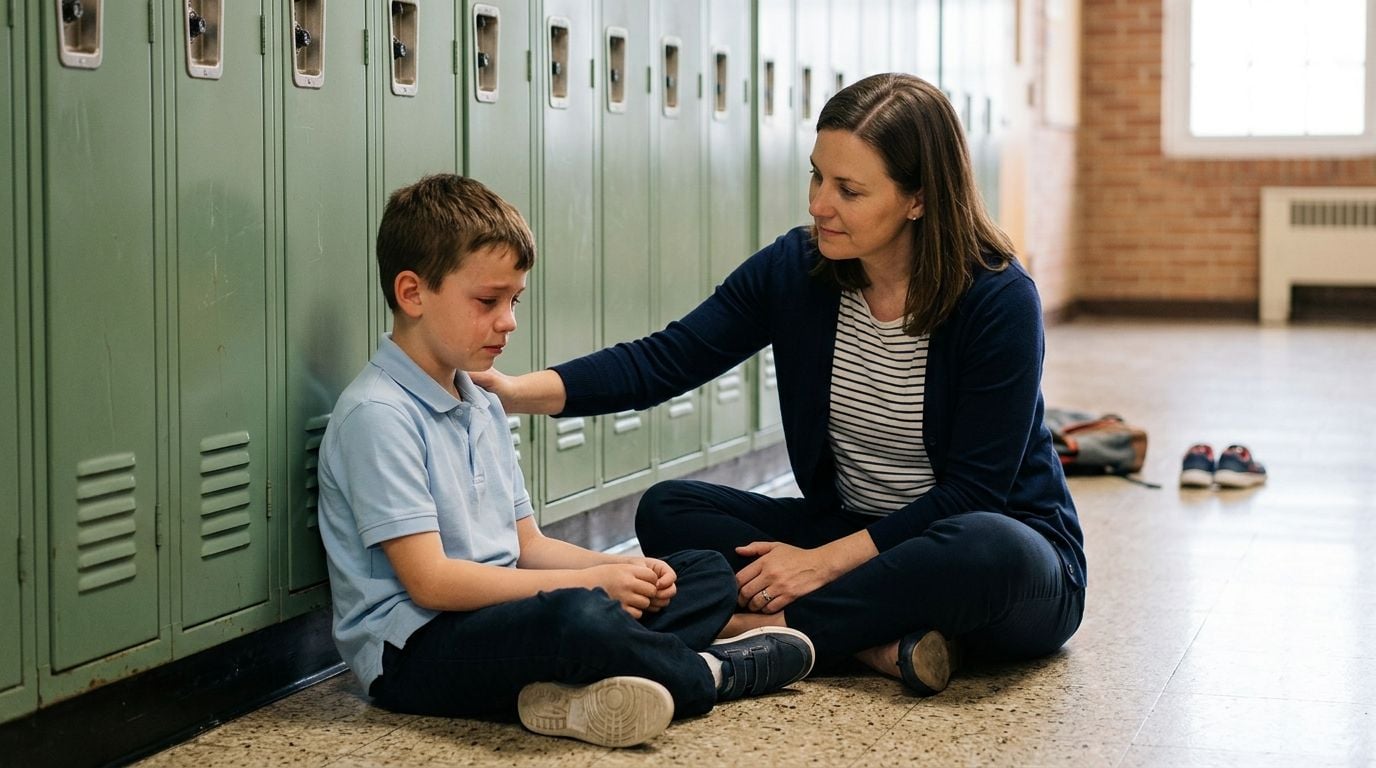
A concerned adult female teacher comforts a crying young elementary school student sitting on the floor.

A school counselor supporting an anxious student might sit at a slight angle rather than directly face-to-face, relax their shoulders, and speak in a calm, measured voice. That position can feel less confrontational, especially when the student is already guarded.

Let the child guide closeness

Touch must be appropriate, welcomed, and sensitive to the child's needs. Ask, “Would a hug help?” or “Would you like me to sit here?” A child who steps away, avoids eye contact, or stiffens may be asking for more space. Respecting those signals is itself an act of empathy.

Adults should also check their own tension. Children notice hurried movements, clenched hands, sharp volume, and forced smiles. Slow your speech, lower your volume, and take a breath before approaching. You can reflect a child's emotion with a concerned expression without copying their distress or becoming overwhelmed by it.

“Sometimes being present is more helpful than finding the perfect words.”

Use silence intentionally. A child may need time to cry, draw, breathe, or sit before explaining. After a short pause, offer a low-pressure statement such as, “I'm staying with you,” or “You don't have to talk yet.” The video below can support a staff or family discussion about communicating care through presence.

5. Apology Coaching and Repair Modeling

A quick “sorry” does not repair harm by itself. Repair requires understanding, not just words. Children need help connecting their action to its impact, then choosing a response that can begin restoring trust. A meaningful apology may include acknowledgment, responsibility, concern for the other person, and a plan to act differently.

After a student excludes a peer, a teacher can guide reflection with questions such as, “Tell me what happened. What did you do? How do you think that felt for them? What could you do or say to help?” The teacher then supports the student in approaching the peer, offering a sincere apology, and allowing the peer to respond. The goal is learning, not a scripted performance.

At home, an adult's own repair often teaches more than a lecture. A parent who yelled might later say, “I yelled at you, and that was wrong. I was stressed and took it out on you. You didn't deserve that. I'm going to work on using my calm voice. I'm sorry.” The parent takes responsibility without blaming the child for the adult's reaction.

A father and son having a heartfelt conversation while sitting at a kitchen table together

Make repair active

A counselor might explain, “When you said they were too slow for your game, they felt hurt and embarrassed. That might keep them from trying sports. What could help make this right?” Possible repairs include inviting the student back, changing the game, or speaking privately with the person harmed.

Use coaching rather than force. A child who remains defensive may need time before an apology can be sincere. Ask, “What can we do?” instead of treating the apology as a ticket out of trouble. Repair addresses the other person's experience, while a forced “sorry” may only end the conversation.

Validation also needs a clear boundary. Adults can acknowledge embarrassment, anger, or frustration without approving exclusion, insults, or damaged property. “You were upset” explains the feeling. It does not excuse the behavior.

Support children in considering impact without shaming them. “Picture yourself in their shoes” can open reflection, while “You're a bad friend” attacks identity and often creates defensiveness. Adults supporting trust after conflict can explore how to earn trust back.

Notice effort, including imperfect attempts. When a child returns a damaged item, checks on a classmate, or tries a more respectful phrase, name the action. Repeated practice helps children make repair part of classroom and family life.

6. Empathetic Limit-Setting and Compassionate Boundaries

Empathy and firmness belong together. An adult can accept a child's emotion while setting a clear boundary around behavior. The message is, “Your feelings are welcome here. Unsafe or harmful actions still need to stop.”

Suppose a student throws paper during work time. A teacher might say, “I see you're feeling bored and wiggly. Those feelings are real. And right now we need quiet focus time. You can move to the standing desk or take a five-minute break, then return. Both options help your body get what it needs and keep our focus.”

The word “and” matters because “but” can make the first statement sound cancelled. A parent handling a difficult transition could say, “You're not ready to stop playing. It's hard to stop something fun. And we need to go now. Would you like to walk to the car or skip, or should I help you?”

Separate emotion from conduct

A counselor addressing rumors might say, “I hear that you're upset with them. Your feelings matter. And talking about people behind their back isn't how we handle conflict here. Let's address it directly or ask an adult for help.” The counselor neither dismisses the upset nor permits harmful conduct.

Use choices within the boundary:

  • Offer two safe options: “You can work at your desk or at the quiet table.”
  • State the limit plainly: “I won't let you hit. I'll help you move away.”
  • Ask about the need: “Are you looking for movement, help, or a break?”
  • Follow through calmly: “The game is paused until everyone can play safely.”

A limit should teach, not humiliate. Consequences may still be necessary, but the adult's tone can communicate that the child remains valued. When a child accepts a limit, recognize the effort: “You were disappointed, and you moved to the calm space without arguing. That took control.”

This approach also protects adults from a false choice between kindness and authority. Validation doesn't approve unsafe behavior, and a boundary doesn't have to reject the child.

7. Perspective Shifts Through Storytelling and “In Their Shoes” Exercises

Stories make invisible experiences easier to discuss. Children can examine a character's choices with enough distance to think carefully, then connect the story to real situations at school or home.

During a read-aloud, a teacher might ask, “How did the pigeon feel when that happened?” and “How do you think the boy felt?” Using a children's book, including a title from the Pigeon series, allows students to notice that two characters can have different but understandable feelings.

A counselor leading a bullying-prevention discussion could place students in different chairs representing the excluded student, the friends of that student, the person excluding them, and a bystander. Each student considers what that person noticed, felt, and needed. Participation should remain voluntary, especially for children with personal experience of bullying.

Keep the role-play safe and brief

At home, a parent might revisit a sibling conflict by saying, “Here's what happened from your view. Now let's hear it from your sister's view.” The point isn't to decide that one child owns the entire truth. Both perspectives may contain important information.

Pause during stories and ask children to predict feelings or motivations. Use names and specific details so the discussion doesn't remain abstract. After a role-play, ask, “What did you notice or learn?” rather than “So now do you understand?” The first question invites reflection; the second can feel like a test.

For younger children: Use puppets, drawings, or a short pretend scene.
For older students: Ask them to write two brief internal monologues or propose a repair from each viewpoint.

Adults can connect a story to real life carefully: “This reminds me of what happened at lunch yesterday. What part feels similar, and what part is different?” Don't force a child to disclose personal experiences. Perspective-taking should expand understanding, not pressure children into reliving distress.

8. Noticing and Naming Acts of Kindness and Empathy

Children need adults to notice empathy while it's happening, not only respond when someone is hurt. Specific recognition helps children connect an action with its effect on another person.

A teacher who sees a student helping a struggling peer might say, “I noticed you stayed with Marcus while he was frustrated about the math. You understood that learning something new can feel hard, and you didn't give up on him. That's what real friendship looks like.” The teacher names the action, the likely understanding behind it, and the difference it made.

At home, a parent could tell a child, “You noticed your brother was sad and came to sit with him without being asked. You have a tender, caring heart. Your compassion makes our family stronger.” Avoid turning every kind act into a reward or performance. The purpose is to help children recognize caring as part of how they contribute to relationships.

Build a culture of visible care

During a morning meeting, a counselor might say, “Yesterday at lunch, I saw four of you make space at your table for someone sitting alone. That brave kindness created a sense of belonging for them. That's the character we're building here.” The statement celebrates a shared norm rather than placing one child above others.

Use concrete observations:

  • Name the behavior: “You moved your chair so she could join.”
  • Name the impact: “That helped her feel included.”
  • Notice growth: “You usually walk away when someone is upset, and today you stayed.”
  • Invite peer recognition: “Who noticed someone showing care this week?”

Weekly gratitude circles, kindness spotlights, or short family check-ins can make this practice routine. Share meaningful observations with caregivers so children hear consistent messages across settings. Notice small gestures, such as waiting, listening, sharing materials, checking in, or using a respectful tone.

A young boy and girl sitting on the classroom floor, kindly arranging books together while their teacher watches.

Comparison of 8 Empathy Practices

Technique Implementation complexity Resource requirements Expected outcomes Ideal use cases Key advantages
Active Listening with Reflective Responses Moderate, requires practice and emotional regulation Low, time per interaction; some training/coaching Stronger trust, clearer root-cause understanding, reduced escalation 1:1 conversations, counseling, de-escalation Validates feelings and models healthy communication
Naming and Validating Emotions Low–Moderate, learn emotion vocabulary and timing Low, feelings charts, brief training Improved emotional literacy, lower emotional intensity Classroom routines, parenting, moments of dysregulation Builds vocabulary and reduces shame; normalizes feelings
Perspective-Taking Questions Moderate–High, skillful questioning and developmental fit Low, prompts and time for reflection Increased cognitive empathy, reduced blame, greater reparative motivation Conflict resolution, moral lessons, older children Develops theory of mind and encourages self-driven insight
Nonverbal Empathy Cues and Physical Presence Low–Moderate, requires body-language awareness and trauma sensitivity Very low, presence, posture; possible staff training on trauma/culture Rapid calming, sense of safety, better co-regulation Young or nonverbal children, acute distress, initial engagement Communicates safety quickly without words; effective for regulation
Apology Coaching and Repair Modeling Moderate, coaching skills and timing important Low–Moderate, time, adult modeling and guidance Greater accountability, repaired relationships, fewer repeat harms After incidents of harm, restorative circles, relationship repair Teaches meaningful apologies and models adult accountability
Empathetic Limit-Setting and Compassionate Boundaries High, requires consistency, calm enforcement across adults Moderate, coaching, aligned adult practices Secure attachment with clear expectations; fewer power struggles Classroom management, behavioral correction, transitions Balances warmth and structure; reduces mixed messages
Perspective Shifts Through Storytelling & "In Their Shoes" Moderate, planning and facilitation skills needed Moderate, books, role-play materials, time Durable perspective-taking, memorable empathy lessons Curriculum units, bullying prevention, group activities Engaging, concrete practice that supports long-term understanding
Noticing and Naming Acts of Kindness and Empathy Low, habit-building and specificity required Low, rituals, brief recognition time Increased prosocial identity and more frequent kind acts Culture-building, morning meetings, reinforcement routines Reinforces identity-based empathy with specific, actionable feedback

Turn Empathy Into a Shared Daily Practice

The eight examples work best as a connected sequence rather than isolated scripts. First, regulate yourself and listen. Then name the feeling, explore another viewpoint, set a compassionate boundary when behavior needs direction, and guide repair when harm has occurred. Finally, notice caring actions so children learn that empathy isn't only something adults demand during conflict. It's part of how a classroom or family functions.

Research supports treating empathy as a practical behavior, not merely a pleasant attitude. A 2025 meta-analysis in the Australian Journal of Social Issues found positive associations between prosocial behavior and both cognitive empathy, r = .32, and affective empathy, r = .30 in its pooled evidence. In everyday terms, understanding another person's experience and responding to their feelings are connected with observable helping, cooperation, and comfort. That supports teaching concrete actions, such as listening, perspective-taking, and responding to distress.

Schools can build these practices gradually. A 10-week empathy curriculum across 10 schools in 6 countries reported average empathy scores rising from 5.55 to 7.00 and behavior scores from 6.52 to 7.89, with 900 students and teachers reporting positive changes in conduct, emotional awareness, and curiosity about other cultures in the Cambridge account of the program. A separate cluster randomized trial of Roots of Empathy found a small statistically meaningful improvement in prosocial behavior, Hedges' g = 0.20, p = 0.045, while difficult behavior decreased with Hedges' g = -0.16, p = 0.060. The researchers also reported some evidence that difficult-behavior reductions persisted up to 36 months after the program ended in the published trial record.

A manageable starting plan

Choose one script that matches a recurring moment. For example, write “It sounds like you felt left out” on a classroom prompt card, place it near the family calendar, or practice saying it aloud during a staff meeting. Use it once in a real interaction, then reflect privately: Did I pause? Did the child have room to respond? Did my tone communicate safety? What helped the child feel heard?

Adults can also use a simple progression when emotions run high:

  1. Listen: “Tell me what happened.”
  2. Name: “You're frustrated and embarrassed.”
  3. Understand: “What do you think the other person needed?”
  4. Limit: “I won't let you hurt anyone.”
  5. Repair: “What can we do to make this safer or kinder?”
  6. Reinforce: “You stayed and worked through that.”

Empathy doesn't require approving unsafe behavior, ignoring a harmed child, or solving every problem immediately. It requires enough attention to separate the feeling from the action and enough patience to guide the next step. Schools and families seeking consistent SEL language and practical tools can explore Soul Shoppe's programs and resources, including approaches that support connection, safety, communication, conflict resolution, and empathy across school and home. Adults can also extend this work through a human centered leadership guide that keeps relationships central to daily decisions.


Soul Shoppe offers programs, courses, workshops, coaching, and resources that help school communities practice empathy, self-regulation, communication, and conflict resolution. Visit Soul Shoppe to find practical SEL support for classrooms, families, and whole-school communities.