

Acrostic Poem for Winter: 8 Engaging Ideas
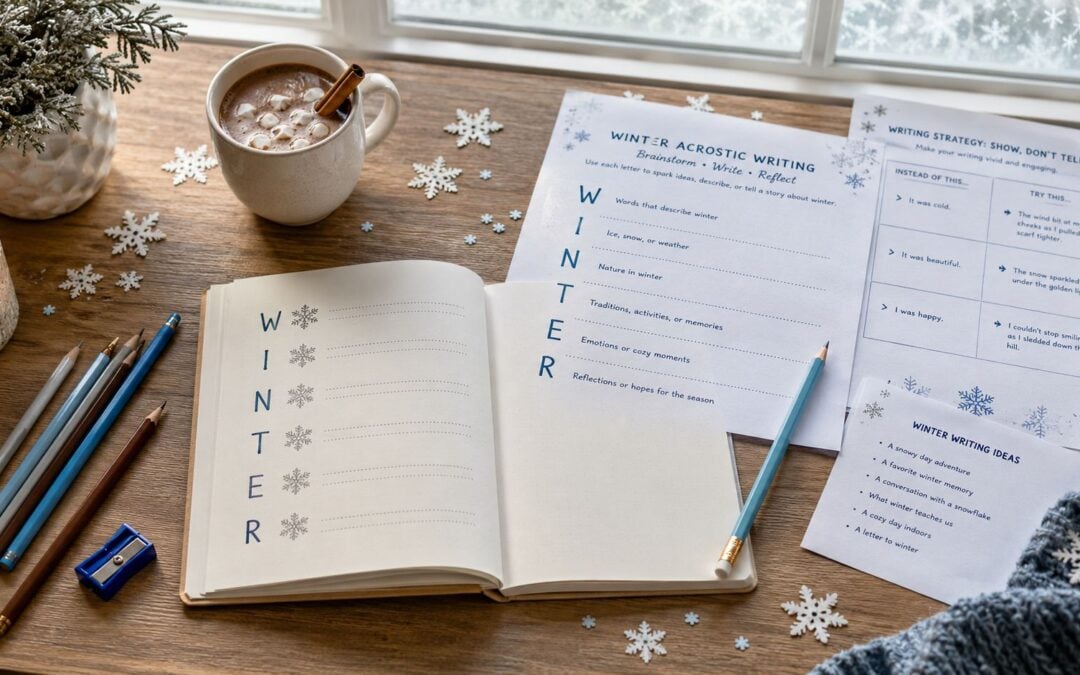
Your classroom is already feeling the pull of winter. Some students are restless after recess, some are quieter than usual, and a few need a gentle way to talk about what they're feeling without turning it into a big, direct conversation. An acrostic poem for winter gives you that opening. It is simple enough for beginners, flexible enough for older writers, and strong enough to connect seasonal language with empathy, belonging, and calm.
The Poetry Foundation explains that acrostics are built by writing a word vertically and using each letter to begin a line, which gives young writers a clear scaffold Poetry Foundation. In winter-themed classrooms, the word WINTER is especially useful because it gives children a clear six-line structure and a seasonal vocabulary path filled with snow, ice, and cold-weather ideas. Teachers can turn that structure into a writing routine, a partner share, or a social-emotional learning moment that helps students notice how the season shapes mood, routines, and community. Parents can use the same format at home with a notebook, a word bank, and a few minutes after dinner.
This approach can enhance your writing creativity and also build classroom community. Like a row of small windows in a winter house, each letter gives students one place to look, one idea to name, and one feeling to share.
1. WINTER as the Classic Starting Point
Start with WINTER when you want a poem that feels welcoming, not intimidating. The six-letter word naturally creates a six-line poem, so students can focus on one idea per line instead of worrying about a long draft. That structure makes the activity a strong fit for elementary writers, and it works just as well for older students who need a quick reset between heavier lessons.
A useful classroom move is to connect each letter to both a seasonal image and a feeling. One line might describe snowflakes, while another names warmth, kindness, or courage. The result is more than a spelling pattern, it becomes a gentle reflection on how winter affects people differently.
Practical rule: give students a feeling word bank before they write. Words like cozy, peaceful, grateful, and brave help them move from obvious winter images to emotional meaning.
A simple sample can sound like this, and you can adapt it for the age group in front of you:
- W, Watching snowflakes fall, we feel wonder
- I, Inside we gather, building community
- N, Noticing how cold teaches us compassion
- T, Together we find warmth and belonging
- E, Everyone deserves kindness in winter's chill
- R, Resilience grows when we support each other
That kind of poem gives you a quick SEL entry point. Ask students which line feels most like their classroom, and which line they'd change if they wanted to describe the room on a hard day. For a simple extension, display the finished poems with student art on a bulletin board so the room shows both writing growth and community care.
For a classroom-friendly example of how acrostic writing is introduced with shared discussion and publishing, see the winter lesson approach from Soul Shoppe.
2. SNOWFLAKE and the Power of Being Different Together
A SNOWFLAKE poem works beautifully when you want to talk about individuality without separating students from the group. Snowflakes are unique, but they also belong to a larger winter pattern. That makes the form useful for lessons about acceptance, inclusion, and the way differences can strengthen a class rather than divide it.
You can open with a visual. Show a snowflake image or invite students to look closely at real snowflakes if the weather allows. Then ask what makes each one special. The conversation often moves naturally toward identity, friendship, and how everyone contributes something different to the community.
Here's a sample that keeps the tone warm and accessible:
- S, Special in our own unique ways
- N, Never needing to be like someone else
- O, Our differences create beauty
- W, When we accept each other, we shine
- F, Friendships form across our many colors
- L, Learning that different means stronger
- A, All of us matter in this community
- K, Kindness makes our connections crystalline
- E, Everyone belongs here
This poem also works well for bullying prevention. If one student feels pushed out, the snowflake metaphor lets the class discuss how mocking differences harms the whole group. You can ask, “How would you respond if someone tried to make your snowflake feel less beautiful?” That question invites repair, not shame.
To make the activity visible, let students write their own snowflake poems on separate paper cutouts, then hang them together as a mobile or wall display. At home, parents can use the same idea to talk about sibling differences or how a family makes room for different personalities. For a related visual, use the detailed snowflake image in your slide deck or print set: 
3. FROSTBITE for Emotional Harm and Repair
A student blurts out a sharp comment, and the room goes quiet. That is the moment FROSTBITE can help. The word gives students a concrete image for emotional harm, something that feels cold, stiff, and hard to move through. It also opens the door to repair, because winter feelings can thaw when students learn how hurt, responsibility, and care connect.
Use this poem after the class has settled. Students need enough safety to sort out what happened and to separate harm from accountability. A restorative lens works well here, because the poem can guide them toward awareness, responsibility, and a repair plan that feels real enough to try.
A sample version might look like this:
- F, Freezing words that cut like winter wind
- R, Recognizing when our actions hurt others
- O, Observing the damage we can cause
- S, Seeing the pain in someone's eyes
- T, Time needed for hearts to warm again
- B, Building awareness through grounding and mindfulness, using grounding techniques for kids when feelings feel too big
- I, Intentional kindness as the remedy
- T, Thawing frozen friendships with care
- E, Empathy, the warmth we all deserve
Use this as a repair prompt, not a punishment prompt. Students can reflect on what happened, who was affected, and what a real apology or follow-up action might look like.
A companion poem about healing can follow this one, especially if you want students to compare the feeling of being shut out with the feeling of being welcomed back in. Pair the activity with your communication lessons, then use it in conversations about peer conflict or online teasing. If students need a steadier start before writing, the mindfulness guidance from Soul Shoppe can help frame the conversation without raising tension.
4. ICICLE and Small Actions That Build Strength
An ICICLE poem is a strong choice when you want students to notice how small, repeated actions create something lasting. Icicles form drop by drop, so the metaphor naturally fits habits like kind greetings, steady effort, and daily self-regulation. That makes the poem useful for goal-setting, morning meeting rituals, and classroom culture work.
The writing process can stay simple. Ask students to think of one positive action for each letter, then revise each line so it sounds purposeful. The strongest poems don't just name ideas, they show persistence. A student might write about kindness, another about patience, and another about showing up even when a day feels hard.
A sample version can sound like this:
- I, Intentional acts of kindness, one by one
- C, Courage growing with each practice moment
- I, Inclusion offered repeatedly, until it's natural
- C, Commitment to showing up for others
- L, Layer upon layer of connection builds
- E, Everyone stronger when we persist together
Here's a classroom example that students understand fast. If your class spends five minutes each morning greeting one another, naming a feeling, and setting a small goal, those routines begin to feel like the layers of an icicle. The habit is small, but the culture it creates becomes visible over time.
Good writing grows the same way. One thoughtful word choice, one revision, one stronger line, then another.
You can create an “icicle tracker” on chart paper where students mark a daily habit they want to repeat. Parents can use the same idea at home with chores, reading time, or bedtime routines. That keeps the poem from staying abstract, and it helps children see that consistency is a form of strength, not just discipline.
5. BLIZZARD and Finding Calm When Feelings Swirl
A BLIZZARD poem helps students name overwhelm without feeling judged. The image is useful because it captures the experience of too many thoughts, too much noise, or emotions that seem to blur everything at once. When students can name that state, they're more likely to use a coping tool instead of escalating.
Teach this poem during calm moments. If you wait until a child is in distress, the writing task can feel like one more demand. Instead, introduce it as a language tool for the body and mind, then pair it with specific regulation strategies students can use.
A sample poem might read:
- B, Blinding emotions swirling all around
- L, Lost in the storm of feelings
- I, Inside, chaos and confusion
- Z, Zoning out seems easiest
- Z, Zero clarity in the whiteness
- A, Anchor yourself with breath, grounding
- R, Recognize the storm will pass
- D, Profound calm returns when we pause
Then attach the poem to concrete supports. A breathing card, a five-senses grounding routine, or a body scan can sit beside the writing. Students can also build a simple “Blizzard Plan” folder or calm-down kit with tools they already know how to use. That makes the metaphor practical instead of decorative.
Before the poem goes up on the wall, talk about warning signs. Rapid heartbeat, racing thoughts, and the urge to shut down are all clues that a child may be entering a blizzard state. Giving students shared language helps adults respond earlier and with less friction. For a related classroom focus on mindfulness and regulation, pair the poem with the guidance from Soul Shoppe.
6. MITTENS and the Safety of Mutual Support
MITTENS is an easy winter poem to use when you want to talk about friendship, help-seeking, and shared responsibility. Mittens work because they're meant to keep hands warm together. That makes them an especially good metaphor for students who need help seeing that connection isn't weakness, it's protection.
This poem works well at the start of the school year, but it's just as useful in winter when the classroom needs a reset around community values. Bring real mittens to the rug, pass them around, and let students describe what they notice. The tactile object gives the poem a concrete anchor.
A sample can look like this:
- M, Made for two, stronger together
- I, In partnership, we're safer
- T, Trust is what makes warmth possible
- T, Two hands working toward one goal
- E, Everyone needs connection to thrive
- N, Never alone when friends are near
- S, Safety found in mutual support
A helpful discussion question is simple. “Who are your mittens?” Children usually respond with names of friends, siblings, grandparents, teachers, or older buddies. That opens the door to a conversation about peer mentoring, asking for help, and noticing who makes them feel steady.
You can also create “mitten pairs” for buddy reading or partner work. Each child decorates one mitten with their name and one way they support others, then the pair hangs together on a class display. For a visual reference, use the cozy mitten image here: 
7. SLEIGH and Moving Forward as a Team
A SLEIGH poem gives students a way to talk about collective progress. Unlike a solo image, the sleigh suggests movement that depends on shared effort, direction, and trust. That makes it ideal for classroom goals, schoolwide SEL launches, and staff conversations about shared culture.
This poem works best when adults name roles clearly. Who guides? Who supports? Who keeps the rhythm going? Those questions matter because students learn that community progress doesn't happen by accident. It happens when people pull together.
A sample version:
- S, Sharing the load, we go further
- L, Leadership guides our direction
- E, Every person pulls their weight
- I, In sync, we build momentum
- G, Goals reached through united effort
- H, Heading forward, together, stronger
One useful classroom move is to connect the poem to a current goal. If the class wants calmer transitions, better listening, or more respectful group work, the sleigh image gives everyone a shared reference point. Students can answer, “What's one way you help pull our classroom sleigh forward?”
You can also use the poem for staff reflection. Teachers, counselors, and support staff can talk about how one adult's consistency affects the entire school climate. That conversation pairs naturally with team-building work, and the Soul Shoppe article on team-building activities for youth can complement a broader community-building plan.
A sleigh display works well on a bulletin board, too. Let each child add a paper sled or snow track with one contribution they made that week. The visual reminds everyone that movement feels easier when no one is pulling alone.
8. AURORA and Hope in Darker Days
AURORA is the strongest winter poem for hope, especially when students are moving through darker, quieter months. The Northern Lights give children a vivid image of beauty that appears against darkness, not instead of it. That matters, because many students need permission to name hard feelings while still looking for bright moments.
You can begin with an image, a video clip, or a short observation prompt. Ask students what they notice about light, color, and movement. Then connect those observations to the kind of hope that helps people keep going through a difficult season.
A sample poem might read:
- A, Against the darkness, light still shines
- U, Underneath the frozen sky, beauty persists
- R, Rare moments of wonder warm our hearts
- O, Often we forget to look for light
- R, Resilience means finding hope in winter
- A, Aurora inside us, ready to glow
This poem works especially well as a gratitude practice. Students can name “aurora moments,” which are small sparks of joy that help them through a long day. Those moments might be a kind note, a favorite song, a quiet lunch break, or a time when someone noticed their effort.
Hope doesn't erase hard feelings. It gives students one more thing to hold onto while they work through them.
For a classroom display, create a “Lights of Our Community” board where students and adults add sources of hope, comfort, or inspiration. Parents can use the same idea during winter evenings as a family reflection ritual. If you want a visual to make the metaphor concrete, use the Northern Lights image here: 
8 Winter Acrostic Themes Comparison
| Title | Implementation complexity | Resource requirements | Expected outcomes | Ideal use cases | Key advantages |
|---|---|---|---|---|---|
| WINTER: Classic Seasonal Acrostic | Very low, simple 6-line structure | Minimal, paper, word bank, basic art supplies | Letter recognition, emotional awareness, sense of belonging | K–2 introduction to acrostics; classroom community building | Highly accessible, quick, supports SEL for young learners |
| SNOWFLAKE: Celebrating Individuality and Connection | Low–medium, metaphorical thinking required | Moderate, images/observations, teacher scaffolding | Empathy, acceptance, social awareness, belonging | Grades 2–6; anti-bullying and diversity lessons | Memorable natural metaphor reinforcing inclusion |
| FROSTBITE: Exploring Emotions Through Physical Sensations | High, sensitive content needs careful facilitation | Moderate–high, restorative framework, counselor support | Recognition of emotional harm, responsibility, repair, resilience | Grades 4–8; conflict resolution, restorative justice | Powerful metaphor for consequences and healing when well scaffolded |
| ICICLE: Building Strength Through Small, Consistent Actions | Low–medium, repeated-pattern poem, connects to practice | Minimal–moderate, observation, trackers or visuals | Growth mindset, habit formation, self-management | Grades 1–5; goal-setting and practice-based SEL | Clear accumulation metaphor; versatile across SEL topics |
| BLIZZARD: Understanding Overwhelm and Finding Calm | Medium, emotional intensity requires safe framing | Moderate, grounding tools, calm-down kits, follow-up plans | Self-regulation, mindfulness, recognizing overwhelm | Grades 3–8; anxiety management, trauma-informed regulation lessons | Validates intense feelings and teaches concrete grounding strategies |
| MITTENS: The Value of Togetherness and Mutual Support | Low, concrete, child-friendly metaphor | Minimal, props (mittens), buddy-pair activities | Help-seeking, interdependence, relationship skills | Grades K–5; community building, peer support programs | Tangible metaphor that normalizes asking for help and connection |
| SLEIGH: Moving Forward Together on the Journey | Low–medium, concise, system-focused message | Minimal–moderate, visual goal displays, staff alignment | Collective responsibility, leadership, systems thinking | Grades 3–8; school-wide initiatives, leadership development | Effective for motivating shared goals and school-wide commitment |
| AURORA: Finding Beauty and Hope in Darkness | Medium, abstract metaphor; pairs best with supports | Moderate, images/videos, guided reflection, therapeutic context | Hope-building, resilience, gratitude, seasonal emotional support | Grades 2–8; seasonal mental health, mindfulness, resilience lessons | Uplifting metaphor that acknowledges struggle while fostering hope |
Putting Your Winter Poems Into Action
The best way to use an acrostic poem for winter is to treat it as a living classroom routine, not a one-time craft. A poem can open morning meeting, support a counseling conversation, or give families a low-pressure way to talk about feelings at home. When children write about snow, warmth, resilience, or belonging, they're also practicing emotional language that helps them understand themselves and one another.
Download printable templates, invite families to join the fun at home, and fold these poems into the parts of the day that already matter. A quick writing block before lunch can reset the room. A partner share after recess can help students name mood changes without turning the moment into a discipline issue. A family night activity can turn a simple winter worksheet into a shared conversation about kindness, inclusion, or asking for support.
The strongest poems often come from small prompts. Ask, “What does winter feel like in your body?” or “Which line sounds most like your classroom?” or “What helps you warm up when life feels cold?” Those questions keep the writing concrete and personal. They also make room for students who need extra support, including multilingual learners, younger children, and students who benefit from SEL-friendly entry points.
The winter season gives you a natural metaphor for community. Some days feel bright and easy, some feel quiet and heavy, and some feel like a storm. Acrostics help children name all of it, then move toward connection, reflection, and repair. That's why they work so well in elementary classrooms, middle school advisory, school counseling, and family learning time.
Print a few templates, choose one winter word, and start with the students in front of you. Let them write, read aloud, revise, and notice how their words change the room. If you want more support for building connection, safety, and empathy through practical SEL, explore Soul Shoppe's programs, resources, and school community tools today.