

Define Relational Aggression: A Guide for Schools & Homes
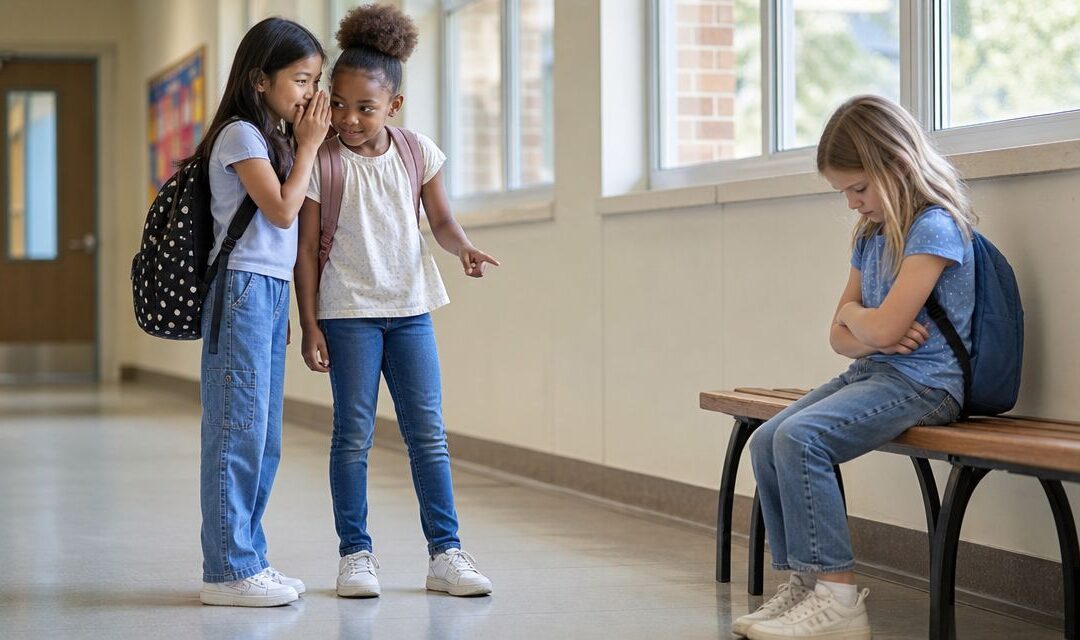
A child walks up to a lunch table with their tray, and nobody says “you can't sit here.” Instead, backpacks slide into the empty seat. Eyes meet, then look away. Someone whispers. Another child shrugs as if nothing happened.
Most adults recognize physical bullying right away. Relational aggression is different. It often happens inside ordinary moments, with ordinary voices, in places where grownups are standing only a few feet away. That's why so many teachers and parents feel unsettled by it. You can sense the hurt, but the behavior can be hard to name.
When people ask me to define relational aggression, they're usually not asking for a textbook answer. They're asking, “Is this bullying, or just friendship conflict?” “Should I step in?” “What does this look like in kindergarten, and how does it change by middle school?” Those are the right questions.
The Unseen Hurt That Happens in Plain Sight
On the playground, four students are planning a game. A fifth child runs over and asks to join. One student says, “We already started,” even though they clearly haven't. Later, the same child finds out everyone was invited to a weekend playdate except them.
In a classroom, a rumor starts. Nobody shouts it across the room. It travels in side comments, shared glances, and a sudden shift in who gets chosen for group work. By dismissal, one student feels like the floor has moved under their feet, and they can't explain why.
That kind of social pain is easy to minimize because it doesn't leave a bruise. But children feel it sharply. They know when they're being iced out, manipulated, or treated like their place in the group is suddenly uncertain.

What makes this especially important is that relational aggression isn't rare, and it doesn't automatically vanish with age. In a study of college women, 68.3% reported being a target of sustained, ongoing relational aggression within the past three years, and 71.2% admitted to engaging in it themselves, showing how widespread this pattern can be beyond middle school in the Alverno conference paper on relational aggression.
What adults often miss
Many caring adults miss relational aggression because it can look like:
- Normal social sorting: Kids do change friend groups. That alone isn't aggression.
- Quiet behavior: Silence can be weaponized, but silence also happens during ordinary disagreements.
- Plausible deniability: A child can say, “I didn't do anything,” and technically mean, “I never said it out loud.”
Practical rule: If a child repeatedly uses belonging, friendship, or group access to hurt someone, control them, or lower their social standing, pay attention.
What it feels like to a child
Children often don't say, “I'm experiencing relational aggression.” They say:
- “They keep leaving me out.”
- “She said I can't play if I talk to him.”
- “Everybody knows something about me, and I don't know what happened.”
- “Nothing happened, but I know they're mad at me.”
Those are useful clues. They point to a kind of harm that lives in relationships themselves.
Defining Relational Aggression Beyond Mean Girls
Relational aggression is a nonphysical form of aggression that aims to harm someone's friendships, peer acceptance, social standing, or sense of belonging. Instead of using fists, the aggressor uses the social group. Common tactics include exclusion, rumor-spreading, silent treatment, and manipulating who is “in” or “out,” as described in this SAGE overview of relational aggression.
A simple way to explain it to adults and kids is this: physical aggression tries to hurt the body. Relational aggression tries to hurt a person's place in the group.
That distinction matters in schools. A student may follow every hallway rule, use a calm voice, and still do real harm by turning friendships into tools of control.

Why this definition changed bullying prevention
The concept was formally defined in the 1990s by Crick and Grotpeter, which helped shift bullying prevention beyond physical harm and direct insults to include exclusion and rumor-spreading that damage social standing, as noted in this dissertation review of relational aggression research.
That shift was a big deal for schools. Before that, many adults saw these behaviors as “drama,” “girl drama,” or ordinary friendship ups and downs. The research gave educators language for something they had been seeing all along.
When friendship becomes the weapon, the injury is social. That doesn't make it smaller. It makes it easier to miss.
What relational aggression is not
It helps to separate this from a few look-alikes.
- It's not the same as one-time conflict. Two children disagreeing about game rules is conflict.
- It's not the same as direct verbal aggression. “You're stupid” is overt verbal harm. “Don't invite her, nobody likes her” is relational harm.
- It's not limited to girls. The old “mean girls” frame is too narrow and often keeps adults from seeing the behavior in boys, mixed groups, and online spaces.
A plain-language definition for school and home
If you need a sentence you can use tomorrow, try this:
Relational aggression is when someone uses friendship, inclusion, exclusion, or social information to hurt another person on purpose.
That definition works well in parent meetings, staff trainings, and student conversations because it's clear without being clinical.
If you want language that helps students respond with more care during hard conversations, teaching skills like empathetic listening can help reduce the indirect patterns that fuel group harm.
Recognizing the Signs from Kindergarten to Middle School
In kindergarten, relational aggression often sounds simple. In middle school, it gets more layered. The core pattern stays the same. A child uses connection, access, or status to cause harm.
Adults often get confused because not every exclusion is aggressive. Kids are allowed to have preferences, private friendships, and moments when they need space. The concern rises when exclusion is deliberate, repeated, and tied to humiliation, control, or social punishment.
What it looks like by age
In early elementary, the behavior is usually concrete and easy to hear once you know the pattern. A child says, “You can't come to my birthday party if you play with her,” or “We're best friends now, so you can't be her friend.” Another common version is announcing rules that seem to apply to only one child.
In upper elementary, the social chessboard gets bigger. Students may control who gets invited to sit together, pair up, join a game, or enter a group chat. They may spread a secret, distort a private conversation, or use “everyone thinks” language to pressure someone.
By middle school, the tactics can become sharper and more public. Students may create private chats without one peer, post subtle digs online, share screenshots, or set up social situations where one student is embarrassed in front of others. The same social-harm pattern can extend into digital spaces, where the audience is wider and the message can travel fast.
For families trying to understand the difference between ordinary friendship struggles and controlling behavior, resources on protecting emotional well-being in relationships can offer helpful language that overlaps with what we see in peer groups.
Identifying aggression types in school settings
| Aggression Type | Core Intent | Example in Early Elementary (Ages 5-7) | Example in Upper Elementary/Middle School (Ages 8-14) |
|---|---|---|---|
| Physical aggression | Hurt the body or threaten physical safety | Pushing a child out of line | Shoving in the hallway or threatening to fight |
| Overt verbal aggression | Hurt directly with words | “You're dumb” shouted during centers | Public insults, mocking, name-calling |
| Relational aggression | Damage belonging, friendship, or status | “You can't play with us because she likes you” | Excluding someone from a group chat, spreading rumors, turning peers against one student |
| Ordinary peer conflict | Solve or react to a disagreement, not destroy status | “I had it first” during block play | Arguing over project roles, then cooling off with support |
Phrases that should get your attention
Listen for repeated language like:
- “You can't be friends with both of us.”
- “Don't tell her we're doing this.”
- “If you sit with them, we're done.”
- “It was just a joke,” after public embarrassment
- “Everyone thinks you're annoying.”
Those phrases matter because they reveal the mechanism. The child isn't just upset. They're trying to influence the target's place in the peer group.
What teachers and parents can observe
A child may be dealing with relational aggression if you notice:
- Sudden social drop-offs: A student who used to join easily now hovers at the edge.
- Conditional friendships: One child frequently sets loyalty tests.
- Whisper networks: Secrets, side conversations, and repeated “nothing” when an adult approaches.
- Patterned exclusion: The same child is regularly left out of games, tables, chats, or partner work.
- Behavior changes: School avoidance, clinginess, irritability, or tears after social events.
If you're supporting younger students, it also helps to ground your observations in the larger picture of social-emotional development in children. Many children need direct teaching in friendship skills, but skill gaps and aggression aren't the same thing. Intent and pattern matter.
The Lasting Impact on Social and Emotional Health
When adults dismiss relational aggression as “drama,” children learn two painful lessons. First, their hurt doesn't count. Second, the social world is unsafe unless they can protect themselves by joining in, staying silent, or disappearing.
Research has linked repeated relational aggression with serious outcomes, including depression, low self-esteem, poor social skills, and lower academic performance, and educational guidance also notes that it can escalate into broader violence risk if adults don't address it, as summarized in this relational aggression overview.

The impact on the child being targeted
Targets often become hyperaware of social cues. They scan faces, replay conversations, and worry about what's happening when they aren't present. In school, that can look like trouble concentrating, reluctance to participate, or sudden avoidance of lunch, recess, or group work.
The academic effect makes sense. It's hard to focus on math when you're trying to figure out whether your tablemates are about to freeze you out again.
A child who feels socially unsafe rarely has full attention available for learning.
The impact on the child doing the harm
Children who use relational aggression also need intervention, not just consequences. If a student learns that gossip, exclusion, and alliance-building are effective tools, they may keep using them instead of learning direct communication, repair, and empathy.
That doesn't mean we excuse the behavior. It means we treat it as a developmental warning sign. The child needs accountability and skill-building, not a label that says, “This is just who you are.”
Here is a short video you can use to start reflection with staff or caregivers.