

Behavior Chart for 3 Year Old: A Positive Guide
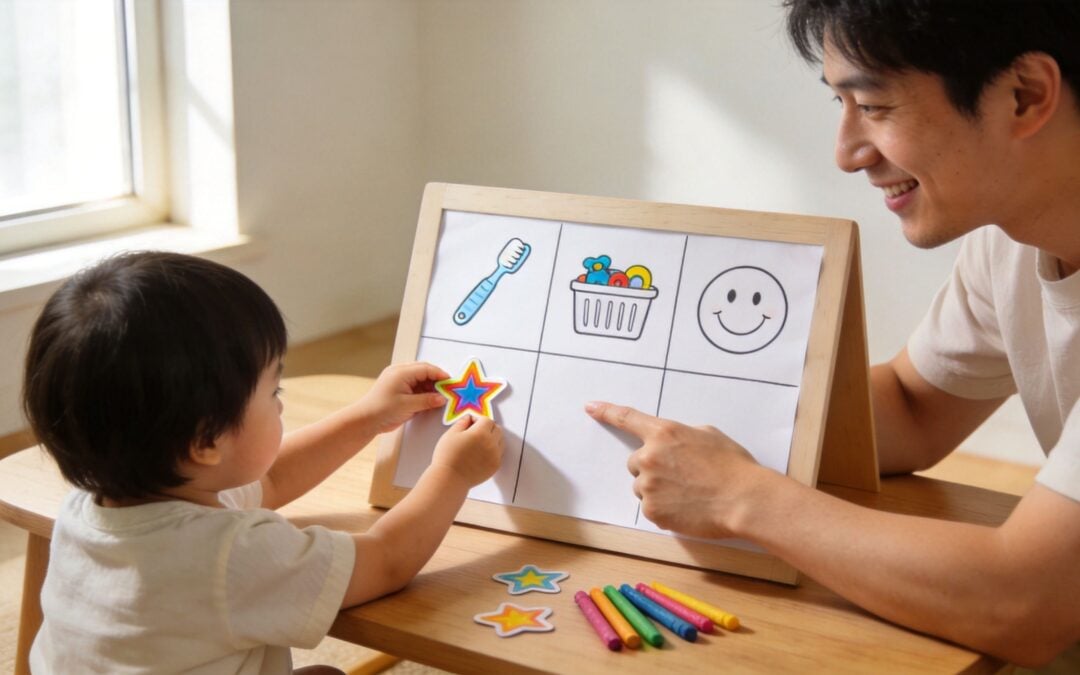
Some days with a 3-year-old feel sweet and connected. Other days feel like you've repeated “shoes on,” “gentle hands,” and “time to clean up” so many times that your own voice starts to sound far away.
That doesn't mean your child is “bad,” stubborn, or trying to make life hard. At this age, kids are still learning how to understand expectations, manage big feelings, and move from one task to another. A behavior chart for 3 year old children can help, but not because it forces obedience. It works best when it gives a young child something concrete to see, touch, and succeed with.
Used well, a chart becomes less about control and more about communication. It says, “Here's what we're practicing. I'm with you. I notice your effort.” That shift matters. It turns the chart from a reward board into a small daily tool for self-awareness, confidence, and connection.
Why Use a Behavior Chart for a 3-Year-Old?
A 3-year-old usually knows more than they can consistently do. They may understand “please put your cup on the table,” yet still melt down when you ask during a busy morning. That gap is normal. Young children benefit from visual reminders because pictures and simple routines are easier to hold onto than long verbal directions.

Behavior charts have been around for a long time, and they didn't start as a social media parenting trend. Visual reward systems have been used in early-childhood settings for decades, for the same reason they work at home: a picture is easier for a young child to hold onto than a spoken instruction. If you are unsure whether what you are asking is realistic yet, the CDC’s milestones for three-year-olds is a useful reality check on what most children this age can actually do.
A chart works best as a visual bridge
A chart helps a young child connect three things:
What the grownup expects
“Toys go in the bin.”What the child did
“You put the blocks away.”How success feels
“You did it. You look proud.”
That's why a chart works better as a routine than a scoreboard. Treat it as something you and your child do together. If you're looking for a broader foundation for calm, connected guidance at home, these positive parenting tips can support the same approach.
A chart won't replace connection. It gives connection a visible place to land.
Why families often feel relief
Many adults feel immediate relief when they stop relying on repeated verbal correction. The chart carries part of the message. Instead of saying “I told you three times,” you can point, smile, and say, “Let's check what comes next.”
Some caregivers also appreciate outside perspectives on what strong early learning support looks like at home. This guide on educational advice for elite families offers a useful reminder that consistency, emotional safety, and developmentally appropriate expectations matter just as much as academics.
Choosing Behaviors That Build Skills Not Just Compliance
The most important part of any behavior chart happens before you make it. If you pick the wrong goals, the chart will feel frustrating fast.
A lot of adults start with what they want to stop. Stop whining. Stop hitting. Stop refusing bedtime. But young children do better when we name what to do instead. A behavior chart for 3 year old children should focus on teachable actions, not vague commands.
Start very small
Child development specialists recommend starting with only 1 to 3 specific, positively framed behaviors to avoid cognitive overload. More than that and a three-year-old cannot hold the whole chart in mind at once, which is usually where charts fall apart. The CDC’s guidance on using rewards makes the same point from the other direction: pick behaviors your child is actually able to do right now, and adjust if they cannot.
That means “fewer targets” isn't lowering the bar. It's giving your child a real chance to succeed.
What to choose
Look for behaviors that are:
Visible
You can tell right away if it happened.Simple
One action, not a chain of tasks.Positive
State the skill you want.Relevant
Pick routines that matter in your day.
Here's a quick way to reframe common goals.
| Choosing Effective Target Behaviors for a 3-Year-Old | ||
|---|---|---|
| Instead of this (Vague/Negative) | Try this (Specific/Positive) | SEL Skill Being Built |
| Be good at bedtime | Stay in bed after story time | Self-regulation |
| Stop making a mess | Put toys in the bin | Responsibility |
| Don't yell | Use a calm voice to ask for help | Communication |
| Stop grabbing | Gentle hands with the cat | Empathy |
| Listen better | Come when I say “bath time” | Cooperation |
| Stop fighting | Take turns with one toy | Social awareness |
Let your child help choose
A 3-year-old doesn't need full control, but they do need some ownership. You might say, “Should we practice toys in the bin or gentle hands first?” That small choice helps the chart feel collaborative.
For example, if cleanup is hard after preschool, let your child choose the picture for that row. Maybe they want a block drawing, a toy basket photo, or a purple sticker next to it. That's not a small detail. It tells them, “This belongs to us.”
Practical rule: If a behavior is too abstract to draw, it's probably too abstract for the chart.
If your child needs more support with the underlying social skills behind chart goals, these social skills activities for preschoolers can help you practice the same abilities through play.
Creating a Simple and Visual Behavior Chart
Once you know the target behaviors, keep the chart itself very plain. Adults often over-design these. A 3-year-old doesn't need a complicated system. They need a clear picture of what success looks like today.

What the chart can look like
Use whatever is easy for your home or classroom:
- A laminated sheet with a marker and wipe-off stars
- A magnetic whiteboard with simple icons
- Construction paper on the fridge with sticker spots
- Photos of routines taped in sequence
- A folder chart that travels between school and home
Add one row for each behavior. Include a picture if possible. A toothbrush icon for brushing teeth. A bed for staying in bed. A toy bin for cleanup.
Make it with your child
Children are more invested in tools they help create. Let them choose the paper color, draw a symbol, or place the picture labels. Keep that help manageable. You're inviting participation, not asking them to design a spreadsheet.
A simple script can sound like this:
“We're making a helper chart. This shows the things you're practicing. Do you want a star sticker or a dinosaur sticker for the toy cleanup spot?”
That small conversation turns the chart into a shared project.
Keep the layout uncluttered
For a child this age, less is better:
- Use 1 to 3 behaviors on the chart
- Place it at eye level in one consistent spot
- Choose one marker type such as stars, stamps, or magnets
- Avoid crowded language and use simple words or pictures
If your child already responds well to visual emotion supports, a feelings chart for kids can pair nicely with the behavior chart so routines and emotions are both visible.
A good chart doesn't need to be cute enough for a bulletin board. It needs to be understandable in two seconds.
Using Your Chart to Nurture Positive Habits
The power of the chart isn't in the sticker. It's in the moment around the sticker.
When adults use the chart warmly and consistently, children start linking effort, action, and emotional safety. That's where habit-building happens. Not through pressure, but through repeated, supported success.

What this sounds like in real life
Morning example:
Your child puts their shoes by the door after one reminder.
You say, “You put your shoes in the right spot. You remembered what to do.”
Then add, “Let's put your sticker on the chart.”
Cleanup example:
Your child starts whining when it's time to put blocks away. You kneel down and point to the chart. “We're practicing toys in the bin. I'll do the first two with you.” After they join in, you name the effort. “You kept going even when it felt hard.”
Bedtime example:
Your child stays in bed after stories. In the morning you return to the chart and say, “You stayed in bed all night. Your body learned the bedtime plan.”
Use rewards that increase connection
At this age, the best rewards are often shared experiences. Try:
- Extra story time before bed
- A silly dance party in the kitchen
- Choosing the next family game
- A walk with a grownup
- Picking the bedtime song
These rewards keep the adult-child relationship at the center. They also reduce the chance that the chart becomes only about getting stuff.
“You did it” is good. “You did it, and I noticed how hard you worked” is better.
Build the chart into a routine
The chart works best when it shows up at predictable moments, not only after conflict. Good times to check it include:
- After breakfast
- After preschool pickup
- Before bath
- At bedtime
- The next morning for overnight goals
If routines feel shaky overall, these routines for kids that help children feel emotionally grounded can help create the stability that makes chart use easier.
A simple chart check-in should feel short, warm, and calm. It's not a performance review.
Troubleshooting When Your Chart Isn't Working
Sometimes adults try a chart for three days, hit a rough patch, and decide the child “doesn't respond to charts.” Usually the problem isn't the child. It's the setup.
The biggest misconception is that the sticker does all the work. It doesn't. Young children stay engaged when the chart includes relationship, voice, and immediate feedback.
The CDC’s guidance on using rewards is clear that the words matter as much as the sticker. It recommends specific, labeled praise — naming exactly what your child did, rather than a general “Great job” — and giving the reward straight away rather than saving it for later.
When this happens, try this
Your child doesn't care about stickers
Try a different marker. Some kids prefer stamps, magnets, Velcro dots, or moving a small character along a path. The point is visible progress, not the sticker itself.Your child melts down when they don't earn one
Stay calm and coach the feeling first. “You're upset. You really wanted the star.” Then return to the skill. “Let's practice together so you can try again later.” The chart should never become a shaming tool.Your child keeps forgetting the goal
That usually means the behavior is too abstract or the chart is too far removed from the moment. Move the chart closer to where the routine happens, and use a clearer image.Your child argues that they did the task
Choose more observable goals. “Put pajamas in the hamper” is easier to verify than “be helpful.”
Two fixes that solve many problems
First, involve your child again. Ask, “Should we use stars or animal stamps?” or “Do you want to practice bedtime or cleanup first?” Ownership matters more than many adults realize.
Second, increase your words, not just your tracking. A sticker without connection can feel mechanical. A sticker paired with, “You remembered all by yourself,” helps a child feel capable.
Sometimes a chart “fails” because it's asking for a skill the child hasn't learned yet. Teaching comes before tracking.
Moving Beyond the Chart to Intrinsic Motivation
A behavior chart should be a scaffold, not a forever system. If it stays in place too long, the child may focus more on the reward than the meaning behind the behavior.
That concern is worth taking seriously. It is a long-standing finding in psychology that rewarding a child for something they already enjoy can reduce their own motivation to keep doing it once the reward stops. The practical answer is not to avoid charts, but to decide from the start how you will retire one.
A simple four-week fade-out plan
Use the chart fully at first, then gradually shift the focus from external reward to internal pride.
Weeks 1 and 2
Keep the chart visible and consistent. Give the sticker or marker each time the target behavior happens, along with warm praise.
Say things like:
- “You put your toys away.”
- “You kept trying.”
- “You look proud of yourself.”
Week 3
Start giving the marker less often while keeping praise every time. You might say, “You did it. I noticed right away,” and give a sticker at some check-ins rather than all of them.
This is also a good time to ask reflective questions:
- “How did your body feel when you cleaned up?”
- “What helped you stay calm?”
- “What are you proud of?”
Week 4
Move to praise and connection only. The chart can still hang there, but it becomes a reminder rather than the main event.
Use language that builds self-awareness:
- “You remembered without the chart.”
- “That was responsible.”
- “You worked through frustration.”
- “You helped your body follow the routine.”
What you're aiming for
You want your child to slowly think less about “Do I get a star?” and more about “I know how to do this” and “I feel good when I succeed.”
That shift won't look perfect. Some children ask for the sticker again. Some protest when the system changes. Stay calm and steady. If the chart has been used with warmth, your child has already learned something bigger than the target behavior. They've learned that effort gets noticed, feelings can be named, and routines can become manageable.
If you want more support building connection, empathy, and self-regulation at home or at school, Soul Shoppe offers practical social-emotional learning resources that help children and grownups create calmer, more connected communities.