

10 Practical Relationship Building Activities for Students in 2026
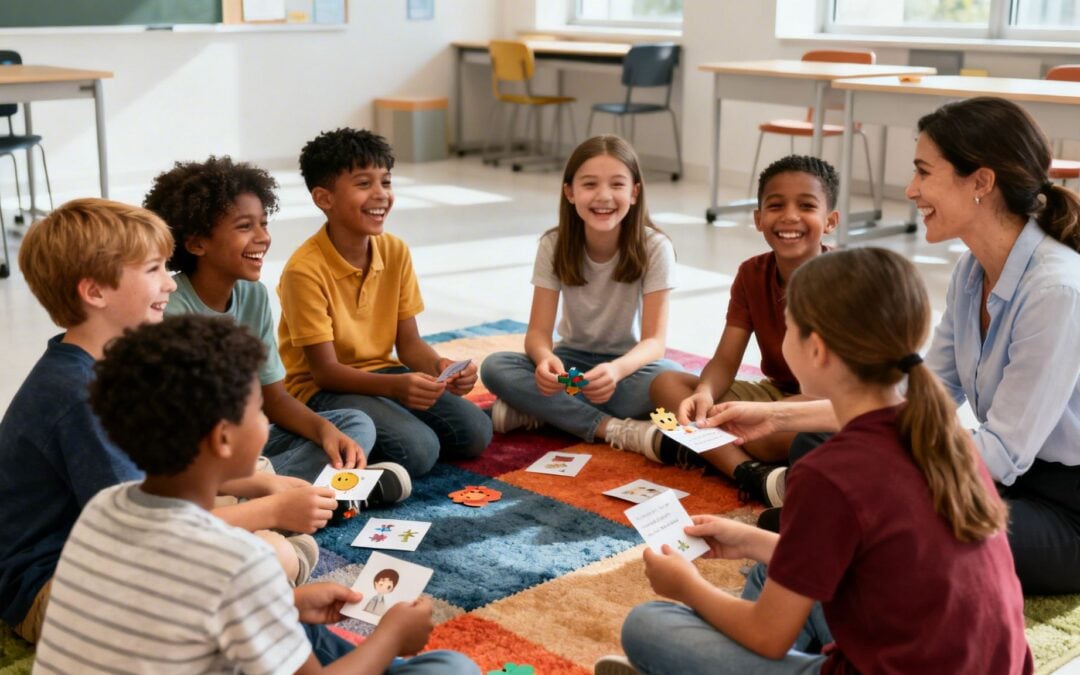
In today's classrooms and communities, the ability for students to connect, empathize, and collaborate is more than a 'nice-to-have'—it's foundational to academic success and emotional well-being. Strong peer relationships create the psychological safety necessary for students to take risks, ask for help, and engage fully in their learning. When students feel a sense of belonging, they are more likely to participate, cooperate, and support one another.
For parents and teachers, fostering these connections isn't about forcing friendships; it's about intentionally creating opportunities for positive interaction. This guide moves beyond generic advice to provide a curated roundup of 10 powerful, research-based relationship building activities. Each entry is designed for practical implementation, complete with age-differentiated examples, clear instructions, and alignment with core Social-Emotional Learning (SEL) competencies.
Whether you are a teacher building a supportive classroom culture, a school counselor leading a small group, or a parent helping your child navigate social dynamics, these activities offer concrete tools to help every student feel seen, valued, and connected. From Cooperative Games that teach teamwork to Empathy Mapping that encourages perspective-taking, this list provides specific, actionable strategies to strengthen the bonds that underpin a thriving learning environment. You will find practical examples for various age groups, helping you adapt each exercise for your specific needs.
1. Two Truths and a Lie
This classic icebreaker is one of the most effective and adaptable relationship building activities for any age group. It fosters a climate of psychological safety and shared discovery with minimal setup. Participants share three statements about themselves: two that are true and one that is false. The group then guesses which statement is the lie, leading to surprising revelations and genuine connections.
The activity’s strength lies in its participant-led nature. Each person controls the level of personal information they disclose, making it a low-stakes way to practice vulnerability. For example, a student might share, "I have a pet tarantula," "I have been to Hawaii," and "My favorite food is broccoli." This simple format sparks curiosity and helps peers find common ground in a playful, non-threatening manner.
How to Implement "Two Truths and a Lie"
- Objective: To build rapport, foster active listening, and create a safe space for sharing.
- Best For: All ages (K-8+), opening new groups, warm-ups before deeper discussions.
- Time: 10-20 minutes.
- Materials: None required (optional: whiteboards, index cards, or paper for writing).
Step-by-Step Instructions:
- Model First: The facilitator (teacher, counselor, or parent) should always go first to set a clear example. Share three interesting but not overly obvious statements about yourself.
- Give Thinking Time: Allow students 1-2 minutes to silently prepare their three statements. For younger students (K-2), provide sentence starters like, "My favorite animal is…" or "I have visited…" to guide them.
- Share in Small Groups: Have students share in pairs or small groups of 3-4. This increases participation and reduces the pressure of presenting to a large audience.
- Guess Respectfully: Instruct students to listen carefully to each person's three statements before discussing and making a group guess.
- Reveal and Elaborate: After the group guesses, the sharer reveals the lie and can briefly elaborate on one of the true statements, adding context and personality.
Key Insight: The debrief is as important as the activity itself. After a round, ask questions like, "What did we learn about our classmates today?" or "What made a lie believable?" This reflection reinforces the goal of getting to know one another beyond surface-level assumptions. Soul Shoppe, a social-emotional learning organization, frequently uses this activity to establish a safe, playful tone at the beginning of their classroom workshops.
2. Circle of Trust / Talking Circles
This intentional gathering is one of the most powerful relationship building activities for establishing equity and deepening connections. Rooted in indigenous wisdom and restorative practices, Talking Circles create a space where participants sit in a circle and take turns speaking and listening without interruption. This structured format promotes authentic dialogue and ensures every person has an equal voice and visibility.

The circle's strength is its ability to build empathy and understanding of diverse perspectives. By using a "talking piece" (an object that grants the holder the right to speak), the dynamic shifts from a free-for-all debate to focused, respectful listening. It is used effectively in restorative justice circles to address peer conflict, as well as in daily morning meetings to build a positive classroom community from the start.
How to Implement "Circle of Trust / Talking Circles"
- Objective: To build empathy, cultivate respect for diverse perspectives, and create a brave space for authentic sharing.
- Best For: All ages (K-8+), community building, conflict resolution, daily check-ins.
- Time: 15-30 minutes (adaptable).
- Materials: A designated "talking piece" (e.g., a decorated stone, a small stuffed animal, a special stick).
Step-by-Step Instructions:
- Establish Circle Agreements: Before the first circle, collaboratively create agreements with the group. These often include principles like "Listen with respect," "Speak from the heart," "What is said in the circle stays in the circle," and "It's okay to pass."
- Introduce the Talking Piece: Explain that only the person holding the object may speak. This simple rule is key to ensuring everyone is heard and interruptions are eliminated.
- Pose an Open-Ended Prompt: The facilitator starts by asking a question that invites reflection, not a simple "yes" or "no" answer.
- Practical Example (K-2): "Share one thing that makes you smile."
- Practical Example (3-5): "Talk about a time you showed kindness to someone."
- Practical Example (6-8): "Describe a challenge you are proud of overcoming."
- Model and Pass: The facilitator answers the prompt first, then passes the talking piece to the next person in the circle. Remind participants they can pass if they do not wish to share.
- Allow for Silence: Do not rush to fill pauses. Silence gives participants time to think and shows respect for the person who just spoke.
- Close with Intention: End the circle with a closing ritual. This could be a shared quote, a moment of silent reflection, or a collective thank you to honor what was shared.
Key Insight: The structure itself teaches social-emotional skills. The act of waiting for the talking piece builds impulse control, while listening to every peer's perspective cultivates empathy. As a core component of restorative practices, circles shift the focus from punishment to understanding, helping communities repair harm and strengthen bonds after a conflict.
3. Cooperative Games and Team Challenges
Cooperative games shift the focus from individual competition to shared success, making them powerful relationship building activities. In these exercises, groups work together toward a common goal, requiring communication, problem-solving, and mutual support. This approach builds group cohesion while teaching practical collaboration skills that are essential in both academic and social settings.

The value of cooperative play is evident in its application across various youth settings. An elementary PE class might use the "Human Knot" to encourage physical problem-solving, while a middle school advisory period could feature a digital escape room to foster strategic thinking. Furthermore, a variety of energising indoor team building activities can effectively boost cooperation and communication among students, particularly in diverse learning environments. The shared struggle and eventual success create strong bonds and positive memories.
How to Implement Cooperative Games and Team Challenges
- Objective: To improve communication, build trust, and develop group problem-solving skills.
- Best For: All ages (K-8+), breaking down cliques, building team identity, applying SEL skills.
- Time: 15-30 minutes.
- Materials: Varies by activity (e.g., rope for Human Knot, building blocks for a tower challenge, or just open space).
Step-by-Step Instructions:
- Select an Appropriate Challenge: Choose a game that fits the group's developmental level.
- Practical Example (K-2): "Keep the Balloon Up." Students work together to keep one or more balloons from touching the floor.
- Practical Example (3-5): "Group Juggle." Students stand in a circle and toss a soft ball to one another, aiming to establish a pattern and see how quickly they can complete it without dropping the ball.
- Practical Example (6-8): "Spaghetti Tower." Groups get 20 sticks of spaghetti, a yard of tape, and a marshmallow. The goal is to build the tallest freestanding tower with the marshmallow on top.
- Clearly State the Cooperative Goal: Before starting, explicitly state that the goal is to succeed as a team. For example, "The goal is for everyone in your group to untangle the knot, not to see which group finishes first."
- Facilitate, Don't Direct: Your role is to monitor group dynamics. Watch for students who may be excluded or for individuals who dominate the conversation. Gently intervene with questions like, "Let's hear what Maria thinks," or "How can we make sure everyone has a chance to help?"
- Allow for Productive Struggle: Don't be too quick to offer solutions. Let students experience the challenge of working together. This is where the most significant learning and bonding occurs.
- Debrief with Reflection: After the game, lead a discussion. Ask questions like, "What was the hardest part?" "What did someone do that helped the group succeed?" and "How can we use this teamwork in our classroom?" Soul Shoppe provides many excellent ideas for cooperative games that build community.
Key Insight: The primary goal is the process, not the outcome. Whether a team "wins" or "loses" the challenge is less important than how they communicated, supported each other, and managed frustration. Emphasize that these skills are the same ones needed to be a good friend, a helpful classmate, and a supportive teammate in any situation.
4. Guided Reflection and Journaling Prompts
Structured writing or drawing exercises provide a quiet, introspective path toward stronger relationships, starting with the one we have with ourselves. By using guided prompts, individuals reflect on their experiences, emotions, and interactions, creating a powerful foundation for empathy and connection. This method is especially valuable for introverted students who may process their thoughts more effectively internally before sharing with others.
Journaling’s effectiveness comes from the safe, private space it creates for honest self-expression. A student can explore complex feelings about a peer conflict or celebrate a moment of kindness without the pressure of an immediate audience. For instance, a prompt like, "Describe a time you felt proud of how you treated a friend," allows a child to connect positive actions to their own emotions, building both self-awareness and social-emotional skills.
How to Implement "Guided Reflection and Journaling Prompts"
- Objective: To develop self-awareness, practice self-regulation, and create a safe outlet for emotional processing before sharing with others.
- Best For: All ages (K-8+), introverted learners, after-conflict resolution, morning meetings, or individual check-ins.
- Time: 10-15 minutes.
- Materials: Journals or notebooks, paper, writing/drawing tools (optional: digital tools like the Soul Shoppe app).
Step-by-Step Instructions:
- Introduce the Prompt Clearly: Present a single, open-ended prompt.
- Practical Example (K-2): "Draw a picture of a time you felt happy with a friend. What were you doing?"
- Practical Example (3-5): "Write about a time it was hard to be a good friend. What happened and what did you learn?"
- Practical Example (6-8): "Reflect on a time you disagreed with a friend. How did you handle it, and what might you do differently next time?"
- Offer Multiple Formats: Emphasize that there is no "right" way to respond. Students can write sentences, use bullet points, draw a picture, or create a mind map. This accommodates different learning styles and expressive preferences.
- Create Quiet Reflection Time: Build in 5-10 minutes of uninterrupted, quiet time for students to work in their journals. The focus is on reflection, not production. Ensure the space feels calm and free of pressure.
- Make Sharing Voluntary: If sharing is part of the activity, make it optional and low-stakes. Use partner sharing or a "talking circle" where students can pass if they choose. Never force a student to read their private reflections aloud.
- Connect to a Theme: Use themed journals (e.g., Gratitude, Friendship, Managing Big Feelings) to give the practice structure over time and track growth in specific areas.
Key Insight: The primary goal is honest reflection, not writing quality. To build trust, keep initial journal entries private. As a facilitator, your role is to create the conditions for safety and underscore that journaling is a tool for understanding ourselves, not an assignment to be graded. Programs like Soul Shoppe integrate journaling to help students master self-regulation, turning internal reflection into a cornerstone of healthy peer relationships.
5. Peer Mentoring and Buddy Systems
Pairing experienced students with younger or socially isolated peers is a powerful strategy for building an inclusive school climate. These structured buddy systems create authentic opportunities for support, modeling, and friendship. By creating a formal program, schools can nurture prosocial behaviors, reduce bullying, and give students a profound sense of belonging.
The effectiveness of this approach comes from its peer-led foundation. A mentor relationship feels more natural and less intimidating than adult intervention. For instance, a school might pair a confident 5th grader with a shy kindergartener to help them navigate the lunchroom, or train a group of 8th graders to act as peer allies for new students. These connections build genuine peer bonds that increase feelings of safety and community.
How to Implement "Peer Mentoring and Buddy Systems"
- Objective: To build empathy, foster leadership skills, reduce social isolation, and create a supportive peer culture.
- Best For: All ages (K-8+), school-wide initiatives, supporting new students, and bullying prevention.
- Time: Ongoing throughout the school year or a semester.
- Materials: Training materials, mentor applications, and a clear role description.
Step-by-Step Instructions:
- Define the Program's Goal: Be clear about the purpose. Is it to help new students adjust, support academic skills, or improve social dynamics at recess? This will guide your mentor selection and training.
- Train Your Mentors: Explicitly teach mentors key skills. Provide training on active listening, confidentiality, problem-solving, and knowing when to get an adult involved. Use frameworks like Soul Shoppe’s communication tools to give mentors specific language to use.
- Match Pairs Intentionally: Thoughtfully pair students based on personality, shared interests, and specific goals. Avoid random pairings. A quiet, artistic 6th grader might be a great match for a new 4th grader who loves to draw.
- Structure Low-Pressure Activities: Start the relationships with fun, informal activities.
- Practical Example (K-5): "Reading Buddies." Older students read picture books to their younger buddies once a week.
- Practical Example (6-8): "Lunch Buddies." Mentors meet their mentees for lunch once a month to chat and help them connect with other peers.
- Provide Ongoing Support and Check-Ins: Schedule regular check-ins with the mentors. Give them a safe space to share their experiences, ask for advice, and discuss any concerns. This prevents mentor burnout and ensures the program's health.
Key Insight: A mentor’s role is to be a supportive friend, not to fix another student’s problems. Clarify this boundary from the start with a role description that states, “Your job is to be a friendly peer support and a positive role model.” This empowers mentors to act within their capacity and helps them understand that their primary contribution is building a trusting relationship.
6. Empathy Mapping and Perspective-Taking Exercises
These structured relationship building activities guide students to analyze another person's experience by considering what they might see, hear, think, and feel. By mapping out another's perspective, whether it's a fictional character, a peer, or a public figure, students practice the foundational SEL skill of empathy. This process builds a deeper understanding of others, reduces conflict, and encourages supportive behaviors in the community.

The power of empathy mapping lies in its structured approach to a complex emotional skill. It moves students beyond simple sympathy toward genuine perspective-taking. For instance, after reading a story, a first-grade class might map out how a character felt when they were left out. In middle school, students could use an empathy map to analyze the perspective of someone who engaged in bullying, exploring the potential needs or pressures that led to their actions. This helps dismantle assumptions and fosters a more compassionate school climate.
How to Implement "Empathy Mapping"
- Objective: To develop empathy, improve social awareness, and promote pro-social problem-solving.
- Best For: All ages (K-8+), conflict resolution, literature analysis, anti-bullying initiatives.
- Time: 15-30 minutes.
- Materials: Whiteboard, chart paper, or individual worksheets with an empathy map template (sections for See, Hear, Think, Feel, Needs/Wants).
Step-by-Step Instructions:
- Introduce the Subject: Select a subject for the empathy map. This could be a character from a book, a historical figure, a student in a hypothetical scenario, or even a real but anonymized situation from the school community.
- Explain the Map: Draw or distribute the empathy map. Guide students through each quadrant: What does this person See in their environment? What do they Hear from others? What might they Think to themselves? How do they Feel?
- Brainstorm Collaboratively: As a class or in small groups, have students brainstorm ideas for each quadrant.
- Practical Example (K-2): After reading The Recess Queen, create a class empathy map for the character "Mean Jean." What did she see (kids running away)? What did she feel (lonely, angry)?
- Practical Example (3-5): Use a map to explore the perspective of a new student on their first day of school. What might they be thinking and feeling?
- Identify Needs and Pains: After filling out the main quadrants, discuss the person’s underlying needs, wants, or pains. What is their core challenge or desire in this situation?
- Connect to Action: Ask students, "Now that we understand this perspective, how could we support this person?" or "What is one kind thing we could do?" This step turns empathy into compassionate action. More perspective-taking activities can help build this skill.
Key Insight: The goal is understanding, not necessarily agreement or forcing a conclusion that "we are all the same." After mapping, focus reflection on how this new perspective might change future interactions. In its conflict resolution curriculum, Soul Shoppe uses role-play and perspective-taking to help students understand the impact of their actions, a crucial step in restorative practices after harm has occurred.
7. Social-Emotional Learning (SEL) Skill-Building Workshops and Assemblies
Moving beyond brief icebreakers, structured SEL skill-building workshops and assemblies are powerful relationship building activities that directly teach core competencies. These are not one-off events but intentional, interactive presentations designed to equip students with practical tools for self-awareness, conflict resolution, and social awareness. By focusing on experiential learning, these programs make abstract concepts like empathy concrete and memorable.
The effectiveness of this approach comes from its direct instruction model. Instead of hoping students absorb skills implicitly, organizations like Soul Shoppe create signature assemblies that explicitly teach students how to use "I-statements" to resolve conflicts or how to recognize and regulate their emotions. These skills become a shared language for the entire school community, fostering a culture of mutual respect and understanding that reduces bullying and improves classroom dynamics.
How to Implement SEL Skill-Building Workshops
- Objective: To explicitly teach, model, and practice specific SEL skills (e.g., conflict resolution, emotional regulation) in a structured, school-wide format.
- Best For: All ages (K-8+), whole-school culture initiatives, targeted interventions for specific grade levels or behavioral challenges.
- Time: 45-60 minutes for an assembly or workshop; can be a series or a single event.
- Materials: Varies by program; often includes props, visuals, take-home resources, and follow-up lesson plans for teachers.
Step-by-Step Instructions:
- Identify a Specific Need: Before booking a program, use school climate data or teacher feedback to pinpoint a precise skill gap. Are students struggling with managing frustration or resolving playground disputes? Choose a workshop that addresses that exact need.
- Select a Reputable Provider: Partner with an organization that specializes in experiential SEL, such as Soul Shoppe, which has a 20-year track record. Ensure their approach is interactive and aligns with your school’s values.
- Prepare Students and Staff: Frame the assembly as an exciting, practical learning opportunity, not a lecture on behavior. Brief teachers beforehand on the key skills that will be introduced so they can help reinforce them.
- Engage During the Event: Encourage active participation. Effective programs use student volunteers to model skills, role-play real-world scenarios, and lead call-and-response chants that make learning sticky.
- Plan for Reinforcement: A one-time assembly is a starting point. Use the provider's follow-up materials, such as posters and classroom activities, to integrate the new skills into daily routines and school-wide language.
- Practical Example: A teacher can reference a "Peace Path" poster taught in the assembly when two students have a disagreement. They can walk the students through the steps on the poster: 1. Cool down. 2. Use "I-statements." 3. Brainstorm solutions.
Key Insight: To get leadership buy-in, frame SEL workshops as a direct investment in academic achievement. Explain that when students learn to manage their emotions and relationships, they are more available for learning, leading to improved attendance, focus, and test scores. Presenting SEL as a cornerstone of a successful academic environment, not just a "nice-to-have" program, is critical for securing resources and support.
8. Restorative Practices and Repair Circles
When conflict causes harm, restorative practices shift the focus from punishment to accountability, healing, and community repair. Unlike punitive measures that isolate individuals, these practices bring together those affected to understand the impact of actions and collaboratively find a path forward. This process is one of the most profound relationship building activities because it rebuilds trust after it has been broken.
The core of this approach is the repair circle, a facilitated meeting that includes the person who caused harm, the person harmed, and supporters for each. For instance, after a bullying incident, a restorative circle allows the student who was targeted to explain the emotional impact, and the student who did the bullying to understand the consequences beyond a simple disciplinary action. This structured dialogue helps rebuild the social fabric and prevents future harm by addressing root causes.
How to Implement "Restorative Practices and Repair Circles"
- Objective: To repair harm, rebuild trust, and teach accountability and empathy after a conflict.
- Best For: All ages (K-8+), responding to peer conflict, bullying, or community disruptions.
- Time: 30-60 minutes, depending on the complexity of the situation.
- Materials: A talking piece (an object to signify whose turn it is to speak), a quiet and private space.
Step-by-Step Instructions:
- Invest in Training: Facilitating a repair circle requires skill. Seek professional development from organizations like Soul Shoppe to learn how to manage difficult conversations and guide participants toward resolution.
- Conduct Pre-Meetings: Meet with the person who caused harm and the person who was harmed separately. Prepare them for the process, listen to their perspectives, and ensure they are willing to participate.
- Set the Stage: Begin the circle by clearly stating its purpose: "Our goal today is to understand what happened and work together to make things right." Establish ground rules, such as using the talking piece and listening without interrupting.
- Use Restorative Questions: Guide the conversation with specific, non-blaming questions:
- What happened?
- What were you thinking at the time?
- Who has been affected by what you did, and how?
- What do you think you need to do to make things right?
- Create a Repair Agreement: Collaboratively develop a concrete plan of action.
- Practical Example: After a student repeatedly interrupted a classmate's presentation, a repair agreement might include: 1) A sincere, specific apology to the presenter. 2) The student practices active listening skills with a counselor. 3) The student writes a short reflection on why respecting others' work is important.
Key Insight: Restorative practices are most effective when they are also used proactively to build community from the start, not just reactively after harm. Soul Shoppe coaches teachers to use circle formats for daily check-ins, creating a foundation of trust that makes repair conversations more successful when conflicts arise. To learn more, see this detailed overview of what restorative practices in education are and how they can be implemented.
9. Gratitude and Strength-Based Recognition Activities
These structured activities create a culture where students regularly acknowledge peer strengths, express gratitude, and celebrate positive contributions. This practice combats isolation by ensuring every student feels seen and valued for their unique qualities. By making recognition a daily habit, schools build an environment of belonging and mutual respect.
The power of these relationship building activities comes from their consistency. When students are taught how to spot and name specific strengths in others, it shifts their focus from deficits to assets. For instance, instead of a generic "good job," a student might learn to say, "I appreciated how you included Sarah in our game at recess; that was really kind." This level of specificity makes the recognition more meaningful and helps students see positive behaviors in concrete terms.
How to Implement "Gratitude and Strength-Based Recognition"
- Objective: To build a culture of appreciation, improve self-esteem, and help students recognize positive qualities in themselves and others.
- Best For: All ages (K-8+), morning meetings, classroom community building, restorative practices.
- Time: 5-15 minutes, depending on the activity.
- Materials: Sticky notes, index cards, a "gratitude jar," or a designated bulletin board.
Step-by-Step Instructions:
- Teach Genuine Recognition: Model how to give specific and sincere appreciation. Explain the "what and why" format: "I noticed you (specific action), and it mattered because (specific impact)."
- Integrate Into Routines: Make recognition a predictable part of the day or week. Use a "Gratitude Circle" during morning meetings, asking, "Who did you see being a good friend yesterday and what did they do?"
- Offer Multiple Formats: Accommodate different comfort levels.
- Practical Example: Create a "Shout-Out" bulletin board where students can write positive notes about classmates on sticky notes and post them publicly.
- Practical Example: Use a "Gratitude Jar" where students drop in private notes of thanks for others. The teacher can read a few aloud (with permission) at the end of the week.
- Celebrate Diverse Strengths: Ensure a wide range of contributions are celebrated, including academic, social, creative, and athletic skills. Highlight qualities like kindness, perseverance, and leadership.
- Model Receiving Gratitude: Teach students how to accept a compliment gracefully. Practice simple responses like, "Thank you, that means a lot to me," to avoid deflecting positive feedback.
Key Insight: To ensure every student is seen, facilitators should discreetly track who receives recognition. If certain students are consistently overlooked, find opportunities to "spotlight" their strengths publicly or prompt peers to notice their contributions. This intentional approach ensures that recognition activities are truly inclusive and reinforce the value of every single member of the community.
10. Social Skills and Conversation Coaching
This targeted approach moves beyond general activities to provide direct instruction in specific social skills that are foundational to forming relationships. It involves modeling, role-playing, and guided practice in areas like initiating conversations, reading social cues, or managing disagreements. This coaching is especially helpful for socially isolated students, those with social anxiety, or anyone needing explicit support to build peer connections.
The power of this method is in its precision. Instead of hoping social skills develop on their own, coaching breaks them down into small, achievable steps. For instance, a counselor might role-play with a student how to join a group at recess, starting with observing the group, finding a natural opening, and using a simple phrase like, "Hi, what are you playing?" This makes the abstract goal of "making friends" a concrete, repeatable process.
How to Implement "Social Skills and Conversation Coaching"
- Objective: To teach, practice, and reinforce specific social behaviors required for building and maintaining positive relationships.
- Best For: All ages (K-8+), students struggling with social isolation, small groups, or one-on-one intervention.
- Time: 15-30 minute sessions, ongoing as needed.
- Materials: Role-play scenarios, video modeling examples, checklists for specific skills.
Step-by-Step Instructions:
- Assess the Specific Need: Identify the precise skill gap. Is the student struggling with eye contact, asking questions, or joining a group? Start with one small, observable goal, such as, "Ask one follow-up question during a conversation."
- Model and Explain: Explicitly model the skill. The adult should think aloud to reveal the internal process. For example, "I see they are talking about video games. I also like video games, so I will wait for a pause and then ask, 'Which game is your favorite?'"
- Practice in a Safe Setting: Use role-play in a counselor's office or a quiet corner of the classroom to practice the skill.
- Practical Example: A parent can practice with their child how to ask a friend to play at the park. Role-play both a "yes" scenario and a "no, maybe later" scenario so the child feels prepared for either outcome.
- Provide Specific Feedback: Offer immediate and positive feedback. Say, "You did a great job making eye contact when you asked that question. That helped your friend feel heard."
- Plan for Generalization: Help the student apply the skill in a real-world setting. Before lunch, you might say, "Remember how we practiced asking a question? Let’s try to do that with one person at your table today."
Key Insight: Acknowledge the student's feelings throughout the process. Coaching social skills can feel vulnerable, so it's important to validate their anxiety by saying, "I know this feels new and a bit scary, and I am proud of you for trying." Celebrating small wins and connecting them to real-life success helps build the confidence needed for these relationship building activities. You can find more strategies for successful social skills training and implementation.
Comparison of 10 Relationship-Building Activities
| Activity | Implementation complexity | Resource requirements | Expected outcomes | Ideal use cases | Key advantages |
|---|---|---|---|---|---|
| Two Truths and a Lie | Low — simple instructions, short time | None or minimal (none prep) | Quick rapport, laughter, light psychological safety | Warm-ups, mixed groups, virtual or in-person sessions | Easy, low-risk, inclusive icebreaker |
| Circle of Trust / Talking Circles | Medium–High — needs structure and facilitation | Talking piece, quiet space, trained facilitator, time | Deep listening, equity of voice, strengthened trust | Community-building, restorative work, SEL lessons | Equitable participation; fosters empathy and reflection |
| Cooperative Games and Team Challenges | Medium — activity design and facilitation | Physical space, materials, facilitator, adaptations for access | Improved communication, collaboration, shared memories | Team-building days, PE, kinesthetic learners, small groups | Engaging, experiential, builds practical teamwork skills |
| Guided Reflection and Journaling Prompts | Low–Medium — prompt design and privacy safeguards | Paper/devices, curated prompts, optional facilitator support | Greater self-awareness, emotion regulation, private processing | Quiet reflection times, introverted learners, longitudinal growth tracking | Honors introverted styles; creates artifacts of growth |
| Peer Mentoring and Buddy Systems | Medium–High — matching, training, monitoring required | Trained mentors, schedule, coordinator oversight | Sustained peer support, reduced isolation, leadership growth | Cross-grade support, newcomer orientation, anti-bullying programs | Sustainable peer-led support; cost-effective and scalable |
| Empathy Mapping & Perspective-Taking | Medium — guided facilitation and debriefing | Visual templates, sticky notes, facilitator time | Increased perspective-taking, reduced othering, concrete language | Literature units, anti-bullying lessons, restorative prep | Concrete framework for empathy; transferable across subjects |
| SEL Skill-Building Workshops & Assemblies | Medium–High — curriculum design and integration | Skilled facilitators, materials, possible coaching and budget | Shared vocabulary, skill acquisition, potential culture shift with follow-up | Whole-school initiatives, teacher training, scalable SEL rollout | Wide reach; research-aligned and memorable when reinforced |
| Restorative Practices & Repair Circles | High — intensive facilitation and prep | Highly trained facilitators, time, institutional commitment | Repair of harm, accountability, reduced repeat incidents | Post-conflict resolution, alternatives to punitive discipline | Evidence-based for healing and behavior change; keeps students connected |
| Gratitude & Strength-Based Recognition | Low–Medium — consistency and modeling needed | Minimal materials, routines, facilitator modeling | Increased belonging, positive culture, improved wellbeing | Morning meetings, daily routines, recognition rituals | Low-cost, frequent reinforcement that increases visibility |
| Social Skills & Conversation Coaching | Medium–High — individualized instruction and practice | Trained coach, structured lessons, time for in vivo practice | Improved observable social behaviors, confidence, better peer interactions | Small-group interventions, students with social anxiety or ASD | Targeted, skill-based coaching that boosts real-world success |
From Activities to Culture: Making Connection a Daily Practice
The journey through this extensive list of relationship building activities reveals a powerful truth: fostering connection is not about isolated events but about intentional, consistent practice. We’ve explored a variety of methods, from the introductory fun of Two Truths and a Lie to the deep, healing work of Restorative Practices. Each activity, whether it's a quick Cooperative Game or a structured Peer Mentoring program, serves as a vital tool in your toolkit. However, the real impact emerges when these tools are no longer seen as special occasions but as integral parts of your school or home's daily rhythm.
The activities detailed in this guide, such as Empathy Mapping, Gratitude Circles, and Social Skills Coaching, are designed to be more than just fillers in a schedule. They are foundational blocks for building a culture where students feel seen, heard, and valued. The key is to move from doing activities to being a community that embodies the principles behind them. This requires a fundamental shift in mindset, championed by the adults in the environment.
Bridging the Gap: From One-Off Exercises to Daily Habits
To make this cultural shift a reality, consider how these activities can be woven into the fabric of your daily and weekly routines. The goal is to make positive social interaction the default, not the exception.
- Morning Meetings: Instead of a simple roll call, start the day with a quick round of a Gratitude and Strength-Based Recognition activity. A simple prompt like, "Share one person you're grateful for today and why," can set a positive tone for the entire day.
- Academic Integration: Embed these practices directly into your curriculum. When studying a historical conflict, use an Empathy Map to help students understand the different perspectives involved. When starting a group science project, kick it off with a Cooperative Game to build team cohesion before the academic work begins.
- Conflict Resolution: Move away from punitive measures and toward a restorative approach. When a disagreement arises on the playground, don't just separate the students. Guide them through a mini-Repair Circle, giving each a chance to speak and be heard, fostering mutual understanding and a path forward.
True connection isn't built in a single assembly or a one-time workshop. It is cultivated in the small, consistent, and intentional interactions that happen every single day. It’s the teacher who models active listening, the administrator who champions peer mentoring, and the parent who facilitates a Talking Circle at the dinner table.
The Lasting Impact of Strong Relational Skills
Investing the time and resources into these relationship building activities yields benefits that extend far beyond a peaceful classroom or a harmonious home. You are equipping children with essential life skills. The ability to perspective-take, communicate needs clearly, resolve conflict constructively, and build supportive networks are predictors of long-term well-being, academic success, and career fulfillment.
To foster a culture where connection is a daily practice, implementing robust and effective community building strategies is essential for creating a sustainable and supportive environment. When students feel a deep sense of belonging, they are more engaged, more resilient, and more available for learning. They learn to trust others and, just as importantly, to trust themselves. By prioritizing these practices, you are not just managing behavior; you are nurturing compassionate, capable, and connected human beings who will positively shape their communities for years to come.
Ready to move from simply implementing activities to building a thriving, connected school culture? Soul Shoppe provides the expert training, curriculum, and ongoing support needed to embed these powerful relationship building activities into the very DNA of your school. Learn more about how Soul Shoppe can help your community today.