

Top 10 SEL Activities for Elementary Students in 2026
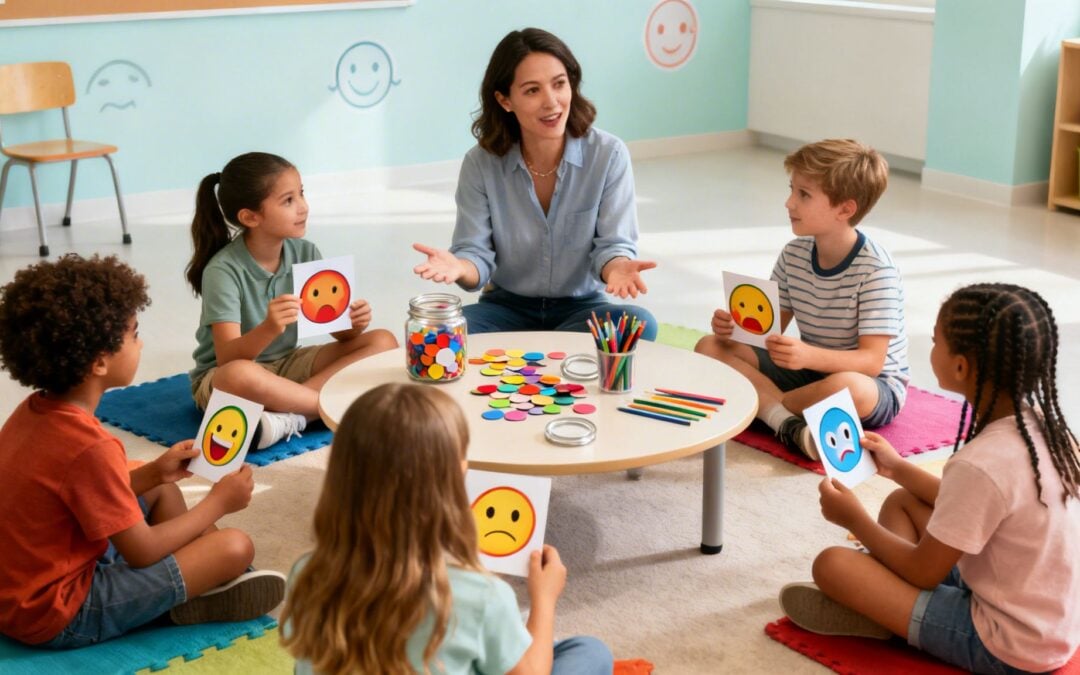
Welcome to our practical guide to Social-Emotional Learning (SEL) for elementary students. In an environment where emotional intelligence is as critical as academic knowledge, providing young learners with tools to understand their feelings and connect with others is essential. This article offers a deep dive into powerful sel activities for elementary students, designed to be practical, engaging, and effective for teachers, counselors, and parents alike.
We move beyond abstract ideas to give you actionable steps, specific examples, and adaptations for different age groups. For instance, instead of just suggesting "breathing exercises," we detail how a "Bear Breath" technique can calm a first grader's pre-test jitters, while a "4-7-8 Breathing" script can help a fifth grader manage frustration during a group project. This guide is your roadmap to implementing these important practices.
Our goal is to help you cultivate resilient, emotionally intelligent learners who are ready to collaborate, solve problems, and succeed. The following curated collection of activities will help build a strong foundation for lifelong well-being and academic success. You will find detailed instructions for everything from peer empathy exercises to growth mindset lessons, all organized to be easily implemented in a classroom or at home. Let's explore the activities that will foster a more connected, safe, and empathetic community for your students.
1. Mindfulness and Breathing Exercises
Mindfulness and breathing exercises are structured practices that teach students to anchor their attention in the present moment. These foundational SEL activities for elementary students help them develop self-awareness and self-management by learning to calm their own nervous system, particularly during moments of high energy, stress, or conflict. The core idea is simple: by focusing on the physical sensation of breathing, a child can create distance from overwhelming emotions and respond more thoughtfully.

To deepen the understanding of these practices, educators can explore resources that explain in detail what mindfulness meditation entails. These exercises are not about emptying the mind but rather about paying attention on purpose, without judgment. This skill is critical for building emotional intelligence and resilience.
How to Implement in Your Classroom
Effective integration relies on consistency and modeling. You can introduce these practices as "brain breaks" between subjects, as a centering routine to start the day, or as a cool-down activity after recess.
- Belly Breathing: Have students place a hand on their belly and feel it rise and fall like a balloon as they inhale and exhale slowly. Practical Example: Before a spelling test, say, "Let's take three balloon breaths. Put your hand on your belly. Breathe in and feel the balloon get bigger… now breathe out and let the air out slowly."
- Box Breathing: Guide students to inhale for a count of four, hold for four, exhale for four, and hold for four. Drawing a square in the air with their finger can help them track the steps. Practical Example: When the class is noisy after recess, say, "Let's get our focus back with box breathing. Trace a square in the air. Breathe in… hold… breathe out… hold."
- Five Senses Grounding: When a student is anxious, ask them to name five things they can see, four things they can feel, three things they can hear, two things they can smell, and one thing they can taste. Practical Example: If a child is crying over a scraped knee, you could say, "Okay, let's calm our body. Can you tell me five blue things you see in the room right now?"
Classroom Tip: Practice alongside your students. When they see you taking deep breaths before a challenging lesson, it normalizes the strategy and demonstrates its practical application in everyday life. Start with sessions as short as one minute and gradually increase the duration as students become more comfortable.
For more ideas on integrating these practices, see these additional mindfulness activities for elementary students designed for various age groups and classroom settings.
2. Emotion Identification and Feelings Vocabulary Activities
Emotion identification activities are interactive lessons and games designed to expand students' emotional vocabulary, helping them name and understand feelings in themselves and others. These foundational SEL activities for elementary students build emotional literacy, a critical component of self-awareness and social awareness. The goal is to give children the specific words they need to move beyond "mad" or "sad" to more nuanced feelings like "frustrated," "disappointed," or "anxious," enabling better communication and self-regulation.

Pioneered by experts like Marc Brackett at the Yale Center for Emotional Intelligence, this work emphasizes that if you can name an emotion, you can begin to manage it. By making feelings vocabulary a regular part of classroom conversation, educators create a safe environment where all emotions are acknowledged as valid, even if the behaviors they cause need guidance.
How to Implement in Your Classroom
Integrating these activities works best through consistent, playful practice rather than a single lesson. Use them during morning meetings, as transitions, or in response to social situations that arise naturally.
- Feelings Wheel or Chart: Create a large, visible feelings wheel in the classroom. During check-ins, students can point to the emotion that best describes how they feel, providing a low-pressure way to share. Practical Example: During morning meeting, have students put a clothespin with their name on it next to the feeling on the chart that best matches their mood.
- Emotion Charades: Write different emotions on cards. A student picks a card and acts out the feeling without words, while classmates guess. Practical Example: A student picks "frustrated." They might stomp their foot lightly and cross their arms. Another student guesses, "Are you angry?" The teacher can then ask, "What's the difference between angry and frustrated?"
- Literature-Based Discussion: During read-alouds, pause and ask, "How do you think this character is feeling right now? What clues in the story or pictures tell you that?" Practical Example: While reading Where the Wild Things Are, pause and ask, "When Max was sent to his room, what feeling was he showing? Look at his face. Is it just anger, or maybe disappointment too?"
Classroom Tip: Collaboratively create a classroom "emotions anchor chart" with your students. As you introduce new feelings words throughout the year, add them to the chart with simple definitions or drawings. This co-created resource fosters ownership and makes the vocabulary more meaningful.
To find more games, charts, and tools for your classroom, you can find further resources for teaching emotional vocabulary to kids that make learning about feelings engaging and effective.
3. Gratitude and Positive Reflection Practices
Gratitude and positive reflection practices are simple yet powerful exercises that teach students to intentionally notice and appreciate the good in their lives. These foundational SEL activities for elementary students build self-awareness and social awareness by shifting focus from problems to positives. The core principle, supported by positive psychology research, is that training the brain to look for what's working builds resilience, strengthens relationships, and improves overall well-being.
By consistently identifying things they are thankful for, students learn to recognize the value in everyday moments, people, and their own abilities. This practice counters negativity bias and helps children develop a more balanced and optimistic outlook, which is crucial for managing challenges and building strong emotional health.
How to Implement in Your Classroom
Integrating gratitude into your daily routine can be simple and quick, making it a sustainable practice. The key is modeling authentic appreciation and providing structured opportunities for students to share. You can add these activities to your morning meeting, use them as a calm-down transition, or conclude the day on a positive note.
- Gratitude Journals: Provide notebooks where students can write or draw something they are grateful for each day. Practical Example: At the end of the day, prompt students: "Today, draw or write about one person who was kind to you." For younger students, provide the sentence starter, "I am thankful for…"
- Appreciation Circles: During a morning meeting, have students go around the circle and complete the sentence, "Today, I am grateful for…" This builds community as students listen to their peers' appreciations. Practical Example: On a Monday, you might ask, "Share one thing you are grateful for that you did this weekend."
- Thank You Letters: Guide students in writing and delivering letters of appreciation to classmates, school staff, or family members. This directly practices relationship skills and empathy. Practical Example: Before a holiday break, have students write a short thank-you note to the school custodian, librarian, or a cafeteria worker, telling them one specific thing they appreciate.
Classroom Tip: Expand the concept of gratitude beyond material things. Use sentence starters to help students appreciate experiences ("I'm grateful for learning how to…"), people ("I'm thankful for my friend because…"), and personal strengths ("I'm proud that I was able to…"). This teaches them to find value in a wide range of life experiences.
For additional guidance on fostering a culture of thankfulness, explore these practical ways to show gratitude that can be adapted for both school and home environments.
4. Cooperative Learning and Team-Building Games
Cooperative learning and team-building games are structured group activities designed to build collaboration, communication, and problem-solving skills. These essential SEL activities for elementary students create an environment where interdependence is necessary for success, which helps foster a sense of belonging and reduces feelings of isolation. The focus is on shared goals, requiring students to listen to peers, negotiate ideas, and work together, thereby strengthening relationship skills and social awareness.

By participating in these activities, students learn to appreciate diverse perspectives and contribute to a common objective. The process helps them understand the give-and-take of working in a group, a critical life skill. To better understand the framework behind these interactions, educators can find value in exploring resources that explain what collaborative problem-solving is and how it supports student development. These games are not just about fun; they are carefully designed practice for real-world social navigation.
How to Implement in Your Classroom
Successful integration depends on clear structure and intentional debriefing. You can use these games as icebreakers, brain breaks, or dedicated time during morning meetings to build a strong classroom community from the very beginning of the school year.
- Human Knot: Have a small group of students stand in a circle, reach across to grab the hands of two different people, and then work together to untangle themselves into a single circle without letting go. Practical Example: Split the class into groups of 6-8. After they form a "knot," tell them, "Talk to your teammates to figure out who needs to move where. You might have to go under someone's arms!"
- Silent Sequencing: Give each student in a small group a card with a number, a letter of the alphabet, or part of a picture sequence. The group must line themselves up in the correct order without speaking. Practical Example: Give a group of five students cards showing the life cycle of a butterfly. They must use gestures and observation to line up in the correct order: egg, caterpillar, chrysalis, butterfly, etc.
- All Aboard: Mark a small area on the floor with tape (the "ship"). Challenge a group of students to fit entirely inside the space. Gradually make the ship smaller in each round, requiring more creative problem-solving and cooperation. Practical Example: Start with a hula-hoop. Challenge a group of 8 to get both feet inside. Then, fold a large towel in half and challenge them again.
Classroom Tip: After each activity, lead a short debrief session. Ask questions like, "What was challenging about that?" or "What did your team do well to succeed?" This reflection is where the most significant SEL learning occurs, as it connects the game to real-life teamwork and communication skills.
5. Peer Empathy and Perspective-Taking Activities
Peer empathy and perspective-taking activities are structured exercises designed to help students understand and share the feelings of others. These essential SEL activities for elementary students focus on building social awareness and relationship skills by encouraging children to see situations from another person’s viewpoint. The main goal is to develop both the cognitive ability to imagine another's experience and the emotional capacity to connect with their feelings, which is foundational for kindness, conflict resolution, and positive relationships.
This approach is central to the work of experts like Daniel Goleman, who identifies empathy as a key component of emotional intelligence. Programs like Soul Shoppe's bullying prevention curriculum put these ideas into practice, teaching students that understanding someone else's perspective is the first step to resolving conflicts peacefully. These activities move beyond simply telling students to "be nice" and give them the tools to actually understand why their actions affect others.
How to Implement in Your Classroom
Integrating empathy-building exercises requires creating a safe space where students feel comfortable sharing and exploring different viewpoints. You can use literature, real-life scenarios, or structured role-plays as a springboard for these discussions.
- Character Perspective Switch: During a read-aloud, pause the story and ask students to act out how a different character might feel. Practical Example: After reading The Three Little Pigs, ask, "How would the story be different if the wolf told it? What might he say about why he was blowing the houses down? Maybe he was just cold and had a bad cough?"
- Empathy Interviews: Pair students and provide them with gentle, open-ended questions to ask each other, such as "Can you tell me about a time you felt really proud?" or "What is something that makes you feel happy?" This builds active listening skills and mutual understanding. Practical Example: Give partners three minutes each. Student A asks Student B, "What's your favorite thing to do on the weekend and why?" Student A can only listen and then summarizes what they heard.
- Scenario Role-Play: Present a common, low-stakes conflict, like two students wanting to use the same playground ball. Have them role-play the situation and then switch roles to experience the other side. Debrief with questions like, "What did it feel like to be in their shoes?" Practical Example: Set the scene: "Maria and Leo both want the red ball at recess." Ask two students to act it out. Then say, "Okay, switch! Now, Leo, you're Maria. How does it feel to see someone else grab the ball you wanted?"
Classroom Tip: Start with fictional characters or hypothetical situations before moving to real classroom conflicts. This creates a safe distance, allowing students to practice empathy skills without feeling personally targeted. Regularly celebrate and point out instances where students show genuine understanding or compassion for a peer.
For more resources on fostering empathy and peaceful conflict resolution, explore the tools offered by the Junior Giants Strike Out Bullying partnership, which provides excellent models for youth programs.
6. Social-Emotional Learning Circles and Community Meetings
Social-Emotional Learning (SEL) circles and community meetings are structured group discussions where students share experiences, solve problems, and build a sense of belonging. These dedicated times create a predictable space for voice, connection, and collective problem-solving. This practice is one of the most effective SEL activities for elementary students because it directly develops relationship skills, social awareness, and responsible decision-making in a safe, peer-supported environment. The core idea is that by sitting in a circle, every member is equal and visible, fostering a community where listening is as important as speaking.
These meetings establish a consistent rhythm for relationship-building and maintenance, moving beyond academic instruction to nurture the whole child. Concepts like the soul circles developed by Soul Shoppe emphasize creating psychological safety, allowing students to express themselves without fear of judgment. This routine practice strengthens the classroom ecosystem, making it more resilient to conflict and more conducive to learning.
How to Implement in Your Classroom
Success with community circles depends on consistency and clear expectations. You can hold them daily as a morning meeting to set a positive tone or weekly to address emerging classroom issues. They can also be used as needed for problem-solving or celebrating successes.
- Establish a Routine: Begin each day with a 10-15 minute morning meeting. Include a greeting, a sharing component, a group activity, and a brief message for the day to build predictability. Practical Example: Start with a "Handshake Greeting" where students walk around and shake 3 classmates' hands. Then have them share one thing they're excited to learn today.
- Use a Talking Piece: Introduce a special object, like a small decorated stone or a soft ball, as a "talking piece." Only the person holding the object may speak, which teaches patience and respectful listening. Practical Example: Hold up a "talking stone" and say, "We are going to pass this around the circle. When it's your turn, please share one goal you have for this week. If you don't want to share, you can just pass it to the next person."
- Set Clear Norms Together: Co-create guidelines with your students. Examples include: "Listen with your heart," "Speak your truth," "Respect the talking piece," and "What's said in the circle stays in the circle."
- Provide Sentence Starters: Support reluctant speakers with prompts like, "I feel happy when…" or "One challenge I'm facing is…" This lowers the barrier to participation. Practical Example: Write on the board: "I'm proud that I…" and invite students to complete the sentence when it's their turn.
Classroom Tip: Start with low-risk topics. Ask students to share their favorite weekend activity or something they are proud of. As trust builds, you can gradually move toward more complex conversations, such as resolving a playground conflict or discussing ways to make the classroom more inclusive.
For additional guidance on facilitating these powerful conversations, explore the principles of restorative circles in schools which offer frameworks for repairing harm and strengthening community bonds through structured dialogue.
7. Growth Mindset and Resilience-Building Lessons
Growth mindset and resilience-building lessons teach students that intelligence and skills can be developed through dedication and hard work. These critical SEL activities for elementary students shift the focus from fixed traits to the power of effort, practice, and learning from mistakes. Popularized by researchers like Carol Dweck, these lessons help children build resilience by reframing failure as an essential part of the learning process, empowering them to persist through challenges.
The core principle is teaching students about neuroplasticity, the brain's ability to form new connections. When children understand their brain can grow stronger with effort, they see challenges not as roadblocks but as opportunities. This fosters self-management and a positive, motivated approach to learning that extends far beyond the classroom walls.
How to Implement in Your Classroom
Integrating a growth mindset requires intentional language, celebratory framing of mistakes, and consistent reinforcement. You can weave these concepts into daily instruction, feedback, and classroom culture.
- Introduce "The Power of Yet": When a student says, "I can't do this," add the word "yet." This simple linguistic shift frames the task as an achievable goal rather than an impossible one. Practical Example: A student says, "I can't tie my shoes." You respond with a smile, "You can't tie your shoes yet. Let's practice one step."
- Create a "Mistake Wall" or "Productive Struggle" Board: Dedicate a space in the classroom to celebrate mistakes as learning opportunities. Have students share what they learned from an error, normalizing the experience and highlighting its value. Practical Example: Post a sticky note that says, "I kept getting 15 instead of 16, but I learned I was forgetting to carry the one!"
- Use Process-Focused Feedback: Instead of praising intelligence ("You're so smart!"), praise the process and effort. Practical Example: Instead of "You're a great artist," say, "I love how you used so many different colors in your drawing and how you kept working on the details."
- Share Stories of Resilience: Discuss famous figures or even your own personal stories of overcoming challenges through persistence. This shows students that struggle is a universal part of success. Practical Example: Read a picture book about Michael Jordan being cut from his high school basketball team and talk about how he used that failure to motivate himself.
Classroom Tip: Model a growth mindset yourself. When you make a mistake in front of the class, acknowledge it openly and talk through how you will fix it or what you learned. This authentic modeling is powerful and shows students that everyone is a learner.
For a deeper dive into the research and practical applications, Carol Dweck's work on mindset theory provides foundational knowledge for educators aiming to build resilient, motivated learners.
8. Conflict Resolution and Peer Mediation Training
Conflict resolution and peer mediation training are structured programs that equip students with the skills to manage disagreements constructively. These essential SEL activities for elementary students focus on relationship skills and responsible decision-making by teaching a clear, step-by-step process for peaceful problem-solving. Instead of relying on adult intervention for every dispute, students learn to become active agents in creating a positive and supportive school climate.
The goal is to shift the classroom culture from one of tattling and escalation to one of communication and mutual respect. Programs like those developed by Soul Shoppe provide research-based training that empowers students to handle peer conflicts on their own. By learning to listen, identify needs, and find common ground, children build confidence and empathy.
How to Implement in Your Classroom
Consistency is key to making conflict resolution a part of your school's DNA. Start by teaching a simple, school-wide framework that all students and staff can use. This creates a common language for solving problems.
- Introduce 'I-Statements': Teach students to express their feelings without blaming others. Practical Example: Instead of a student yelling, "You always take the blue crayon!" teach them to say, "I feel frustrated when the blue crayon is gone because I wanted to use it for the sky. Can I use it when you're done?"
- Role-Play Scenarios: Use common classroom conflicts (e.g., cutting in line, disputes over game rules) as role-playing exercises. Have students practice walking through the conflict resolution steps, from active listening to brainstorming solutions. Practical Example: Set up a scenario where two students disagree on the rules of a game. Have them practice saying, "Let's take a break," listening to each other's side, and then suggesting a compromise, like, "How about we play your way this time and my way next time?"
- Establish a Peace Corner: Designate a quiet area in the classroom where two students can go to work through a problem using a scripted "peace path" or conversation guide. Practical Example: The "Peace Corner" could have a sand timer and posters with prompts like: 1. Cool down. 2. Use an I-Statement. 3. Listen. 4. Find a solution.
- Train Peer Mediators: Select and train older elementary students to act as neutral facilitators during recess or lunch. These mediators help younger students talk through their problems but do not solve the issues for them.
Classroom Tip: Model the conflict resolution process in your own interactions. When a disagreement occurs between students, calmly guide them through the steps rather than simply assigning a consequence. Acknowledge and celebrate when you see students successfully resolving a conflict on their own to reinforce the behavior.
9. Self-Care and Wellness Activities
Self-care and wellness activities are practices that teach students to intentionally care for their physical, mental, and emotional well-being through healthy habits. These foundational SEL activities for elementary students build self-management and responsible decision-making skills by connecting daily actions to overall health. The core concept is to empower children with the understanding that caring for themselves is a fundamental responsibility that supports their ability to learn, grow, and interact positively with others.
Teaching wellness helps students recognize the critical link between their physical state and their emotional responses. By understanding how sleep, nutrition, and movement affect their mood and focus, they gain the tools for self-regulation and resilience. This approach is central to the work of organizations like CASEL and others that promote a complete view of student well-being as a precursor to academic and social success.
How to Implement in Your Classroom
Effective integration means weaving wellness into the fabric of the school day, not just treating it as a separate lesson. Frame these activities as tools for success, helping students feel their best so they can do their best.
- Movement and Brain Breaks: Integrate short, structured movement breaks between lessons. This could be a two-minute dance party, a series of simple yoga poses, or stretching exercises led by a student. Practical Example: After a long period of quiet seat work, put on a fun song and say, "Okay, two-minute dance break to wake up our bodies and brains!"
- Nutrition and Hydration Stations: Create a classroom culture that encourages healthy habits. Designate a water bottle refill station and have "hydration breaks." Discuss healthy snack choices and how they provide "brain fuel." Practical Example: After recess, announce a two-minute "Water Break" where everyone takes a sip from their water bottle before starting the next lesson.
- Self-Soothing Toolkits: Help each student create a personal "calm-down kit" with items like a small stress ball, a comforting object, or a card with breathing exercise instructions. Practice using these kits when feeling overwhelmed. Practical Example: A student who is feeling anxious before a presentation can quietly take out their stress ball and squeeze it under their desk.
Classroom Tip: Model self-care openly and without apology. You might say, "I'm feeling a little scattered, so I'm going to take a few deep breaths before we start math." This normalizes self-care and shows students that everyone needs these strategies to manage daily challenges.
For more resources on building a culture of well-being, explore the holistic approaches to student thriving offered by programs like Soul Shoppe, which emphasize the connection between inner wellness and positive community behavior.
10. Identity Exploration and Belonging Activities
Identity exploration and belonging activities guide students to understand and celebrate their unique backgrounds while fostering connections across differences. These powerful SEL activities for elementary students focus on building self-awareness and social awareness, creating an inclusive classroom where every child feels seen, valued, and safe. By examining the multiple dimensions of their identity-from culture and family to personal interests-students learn to appreciate diversity and recognize their shared humanity.
This approach is informed by the work of scholars like Gloria Ladson-Billings on culturally relevant pedagogy, which emphasizes connecting curriculum to students' lived experiences. The goal is to move beyond surface-level celebrations and embed a genuine sense of belonging into the school's fabric. When students feel psychologically safe, they are more willing to engage, learn, and form positive relationships.
How to Implement in Your Classroom
Creating a safe space is the first step. Explicitly teach about inclusive language and establish clear norms for respectful dialogue. Integrate diverse perspectives and literature throughout your curriculum, not just during designated heritage months.
- Identity Maps: Give students a large piece of paper with their name in the center. Have them draw spokes outward to different aspects of their identity, such as "family," "hobbies," "culture," "favorite foods," and "languages." This visual tool helps them see how multifaceted they are. Practical Example: A student might write "soccer player," "big brother," "loves tacos," and "speaks Spanish and English" on their map.
- Cultural Heritage Sharing: Invite students (and their families, if possible) to share a story, tradition, food, or object that is important to their cultural heritage. This builds pride and educates peers. Practical Example: A student brings in a matryoshka doll from home and explains how the stacking dolls represent generations of their family.
- "I Am From" Poems: Use a template to guide students in writing poems that describe their unique origins, memories, and personal histories. These poems can be shared to build empathy and understanding. Practical Example: A student might start their poem with the line "I am from Saturday morning pancakes…" or "I am from the sound of my grandma's laugh…"
Classroom Tip: Model vulnerability by sharing aspects of your own identity and how it shapes your perspective. When you visibly celebrate the diverse backgrounds present in your classroom and address microaggressions promptly, you reinforce the message that every student belongs.
To further encourage a sense of self-worth and belonging, a personalized nursery rhyme book can make children feel truly special by featuring them as the hero of their own story. For additional support, look to resources from Soul Shoppe, which offer practical strategies for building psychological safety and belonging for all students.
Comparison of 10 SEL Activities
| Practice | Implementation complexity | Resource requirements | Expected outcomes | Ideal use cases | Key advantages |
|---|---|---|---|---|---|
| Mindfulness and Breathing Exercises | Low — short sessions; teacher modeling recommended | Minimal — quiet space, scripts/audio | Faster calming, improved focus and self-regulation | Transitions, de-escalation, quick centering | Immediate calming effect; portable skills; scalable |
| Emotion Identification & Feelings Vocabulary | Low–Moderate — ongoing reinforcement needed | Visual aids, feeling charts, books, cards | Greater emotional literacy, empathy, fewer behavior incidents | SEL lessons, read‑alouds, classroom routines | Builds shared language for feelings; improves communication |
| Gratitude & Positive Reflection Practices | Low — simple routines but requires consistency | Journals/prompts, sharing time, display space | Enhanced mood, resilience, positive classroom climate | Morning meetings, closures, community-building | Boosts belonging and positive focus; research-backed |
| Cooperative Learning & Team-Building Games | Moderate — needs structure and facilitation | Game materials, space, planning time | Stronger collaboration, engagement, peer support | Group projects, icebreakers, community-building sessions | Highly engaging; links academics and social skills |
| Peer Empathy & Perspective-Taking Activities | Moderate–High — requires safe facilitation | Scenarios, literature, facilitator guidance | Increased empathy, reduced bullying, better conflict skills | Literature units, conflict prevention, SEL modules | Deepens social understanding; promotes prosocial behavior |
| SEL Circles & Community Meetings | High — skilled facilitation and time commitment | Regular schedule, norms, facilitator training | Stronger belonging, early issue detection, voice | Morning meetings, restorative practices, problem-solving | Builds democratic participation and classroom accountability |
| Growth Mindset & Resilience Lessons | Moderate — consistent reinforcement across contexts | Lessons, reflection tools, role models | Greater persistence, motivation, improved learning outcomes | Goal-setting, academic challenges, feedback cycles | Increases self-efficacy; reframes failure as learning |
| Conflict Resolution & Peer Mediation Training | High — thorough training and ongoing coaching | Training curriculum, supervision, time for practice | Fewer referrals, empowered students, peaceful culture | Conflict-prone settings, recess/lunch, peer mediation programs | Student-led solutions; builds leadership and scalable culture change |
| Self-Care & Wellness Activities | Low–Moderate — integrated across the day | Space for movement, curriculum, self-care toolkits | Better well‑being, reduced stress, healthy habits | PE/health, movement breaks, wellness weeks | Holistic wellbeing focus; practical lifelong skills |
| Identity Exploration & Belonging Activities | Moderate–High — requires cultural competence | Diverse materials, family partnership, safe space | Increased belonging, reduced identity-based harm, self-worth | Diversity units, community-building, restorative dialogue | Promotes inclusion, affirms identity, strengthens psychological safety |
Bringing It All Together: Your Next Steps in Building an SEL-Powered Community
The journey toward a more emotionally intelligent and connected learning environment is built on small, consistent actions. This article has provided a detailed roadmap with numerous sel activities for elementary students, spanning from mindfulness exercises to cooperative games and conflict resolution strategies. These aren't just one-off lesson plans; they are foundational tools for cultivating a culture of empathy, resilience, and belonging.
The true impact of these activities comes from their thoughtful integration into the daily fabric of your classroom, school, or home. Success isn't about implementing all ten ideas at once. It's about choosing what resonates most with your students' needs and your community's goals, and starting there.
Key Takeaways and Actionable Next Steps
Mastering social-emotional learning is not a race; it is a developmental process for both adults and children. As you move forward, keep these core principles in mind to guide your efforts.
1. Start Small and Build Momentum:
Instead of feeling overwhelmed by the variety of options, select one or two activities to introduce. For example, you might decide to begin every day with a simple two-minute breathing exercise (from our Mindfulness section) for a month. Once that becomes a comfortable routine, you could introduce a weekly "Gratitude Circle" on Fridays. This gradual approach makes the integration feel manageable and sustainable.
2. Model, Model, Model:
Children learn social and emotional skills by observing the adults around them. When a conflict arises, model "I-statements" yourself. If you feel frustrated, narrate your own self-regulation process out loud: "I'm feeling a little overwhelmed by this task, so I'm going to take a few deep breaths before I continue." Your vulnerability and authenticity give students permission to do the same.
Expert Insight: The most powerful SEL instruction happens when educators and parents embody the skills they are teaching. Your actions provide a living curriculum that is more impactful than any worksheet or formal lesson.
3. Integrate, Don't Isolate:
Look for natural opportunities to weave SEL into your existing schedule.
- During Reading: Use a perspective-taking activity when discussing a character's motivations. Ask, "How do you think that character felt? What clues in the story tell us that?"
- On the Playground: When a disagreement over a game occurs, guide students through the conflict resolution steps you've practiced in the classroom.
- At Home: During dinner, use a prompt from the "Emotion Identification" activities. Ask everyone to share a "rose" (a positive part of their day) and a "thorn" (a challenging part of their day).
The Broader Impact: Why This Work Matters
Investing in these sel activities for elementary students pays dividends that extend far beyond the classroom walls. When children develop strong self-awareness, they become better learners, more capable of managing frustration and persevering through academic challenges. When they practice empathy and responsible decision-making, they build healthier relationships and contribute to a safer, more inclusive school climate.
You are not just teaching students how to be better students; you are equipping them with the essential life skills to become compassionate friends, engaged community members, and resilient adults. Every gratitude journal entry, every cooperative game, and every successfully mediated conflict is a building block for a more caring and connected world. The work you are doing is profound.
Take a moment to acknowledge the importance of this commitment. Choose your first step, implement it with intention, and trust in the process. You have the tools to begin transforming your community today.
Ready to deepen your school's commitment to social-emotional learning with expert guidance? Soul Shoppe provides research-based programs, from dynamic assemblies to on-site professional development, designed to build a positive school climate and give your staff the tools for lasting success. Explore how Soul Shoppe can support your community's SEL journey.