

10 Practical Examples of Prosocial Behavior for School and Home in 2026
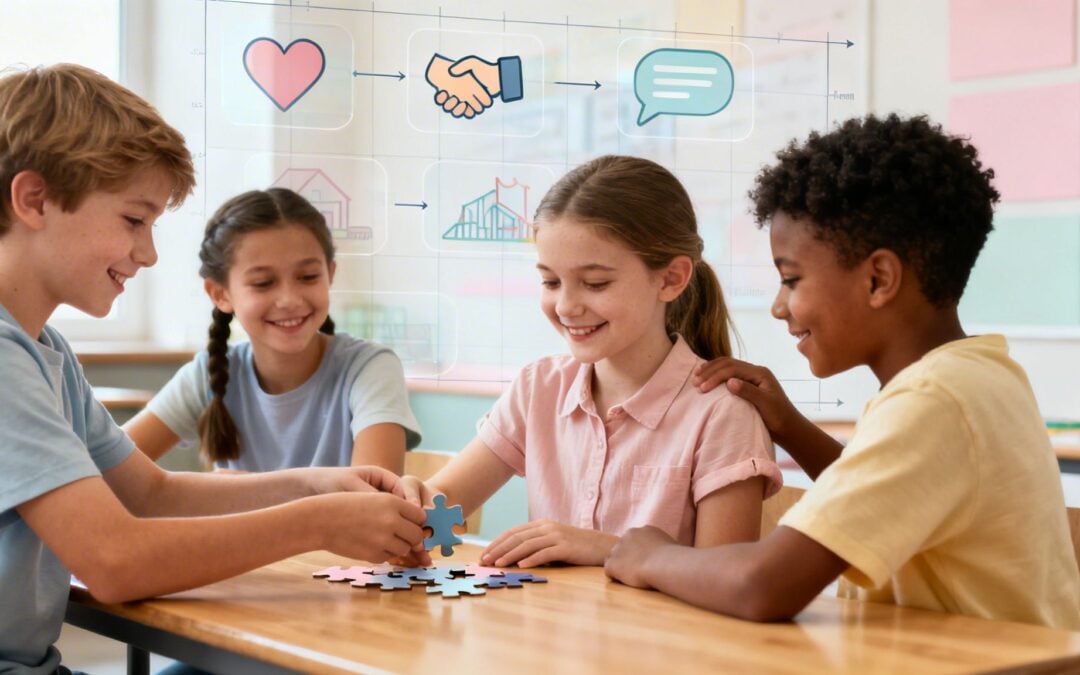
Prosocial behavior, which consists of actions intended to help others, is the bedrock of a kind, safe, and collaborative community. For parents and educators, fostering these skills is more critical than ever. It is about moving beyond simply telling children to 'be nice' and instead giving them a concrete toolkit for empathy, cooperation, and support. To begin cultivating a prosocial mindset, it is essential to understand the core principles of social responsibility and how individual actions contribute to the well-being of the group.
This guide provides a detailed look at ten powerful examples of prosocial behavior, offering practical, grade-appropriate strategies for K-8 students. We will break down not just what these behaviors are, but exactly how to teach, model, and reinforce them in various settings. You will find actionable takeaways for implementing peer support, conflict resolution, kindness campaigns, and more. The goal is to provide a clear roadmap for building connected, empathetic school cultures where children are equipped with the skills they need to thrive both socially and academically. From the classroom to the playground and into the community, these strategies are the building blocks for creating a more supportive environment for every child.
1. Active Listening and Empathetic Responding
Active listening is a foundational prosocial behavior where a person focuses entirely on what someone else is saying, rather than just waiting for their turn to speak. This practice involves paying attention to verbal and non-verbal cues, reflecting back what was heard to confirm understanding, and responding with empathy. It requires suspending judgment and validating the other person's feelings before offering solutions, creating a sense of psychological safety and belonging.

This skill is a cornerstone of positive social interaction and a powerful tool against isolation and conflict. When students learn to truly listen, they build stronger, more meaningful connections with their peers. This is one of the most powerful examples of prosocial behavior because it directly builds empathy and community.
Practical Applications and Tips
To put active listening into practice, educators and parents can model it and provide structured opportunities for children to learn.
- Model the Behavior: During classroom discussions or family meetings, adults should demonstrate active listening by making eye contact, nodding, and paraphrasing what a child says. For example: "It sounds like you felt frustrated when your tower fell. Is that right?"
- Use Sentence Starters: Provide scaffolding with phrases like, "What I hear you saying is…" or "It seems like you're feeling…" to help children structure their empathetic responses. For instance, have students practice this after a partner shares something about their weekend.
- Practice with Role-Play: Use role-playing scenarios to give students a safe space to practice. A teacher can set up a scenario where one student pretends they lost their favorite pencil and the other student practices listening and responding with empathy. For a hands-on guide, check out this simple and effective active listening activity.
2. Peer Support and Buddy Systems
Structured peer support programs intentionally pair students to offer academic help, emotional encouragement, and social companionship. These buddy systems are a powerful way to connect isolated or struggling students with empathetic peers who can model positive behaviors and provide informal mentorship. This approach reduces student isolation, fosters a sense of belonging, and uses the strong influence of peer relationships for positive growth.

These programs formalize the act of helping one another, transforming it into a reliable school resource. By creating structured opportunities for students to connect, schools can build a more inclusive and supportive community. This is one of the most effective examples of prosocial behavior because it systematically builds social skills and a network of support for all students involved.
Practical Applications and Tips
To implement a successful buddy system, clear structure and training are essential for both students and supervising adults.
- Define Clear Roles: Provide written guidelines that outline the purpose and expectations for all participants. For example, a "New Student Buddy" might be tasked with showing a new classmate around, sitting with them at lunch for the first week, and explaining classroom routines.
- Train Your Buddies: Equip student volunteers with the necessary skills. Training should cover active listening, maintaining role boundaries, and knowing when to seek help from a trusted adult. For example, role-play a scenario where a buddy doesn't know the answer to a question and needs to ask a teacher for help.
- Match for Success: Pair students based on compatible personalities and shared interests, not just academic standing. A good character fit is often more important for building a genuine connection than matching high-achievers with struggling students.
- Schedule Regular Check-ins: A teacher can hold a 5-minute meeting with the buddy pair once a week to ask, "What's one good thing that happened this week?" and "Is there anything you need help with?" This helps address any challenges and reinforces the program's value.
3. Cooperative Learning and Collaborative Projects
Cooperative learning moves beyond simple group work by structuring activities so students must rely on one another to succeed. This approach requires interdependence to achieve shared academic and social goals. By working together, students naturally develop empathy, perspective-taking, and mutual support as they navigate group dynamics, assign tasks based on strengths, and solve problems as a team.
This method is one of the most effective examples of prosocial behavior because it integrates social skill development directly into academic learning. When students see that their individual success is tied to the group's success, they become more motivated to help, listen to, and encourage their peers. This builds a classroom culture where collaboration is valued over competition.
Practical Applications and Tips
To successfully integrate cooperative projects, educators should intentionally teach and reinforce the necessary social skills alongside the academic content.
- Assign and Rotate Roles: Structure group projects with specific roles like "Researcher," "Recorder," "Presenter," and "Materials Manager." For a history project, one student researches dates, another writes down the group's findings, a third manages the art supplies, and a fourth presents the final poster. Rotating these roles ensures every student develops different skills.
- Use Structured Protocols: Implement strategies like "Jigsaw," where each student becomes an expert on one piece of information and then teaches it to their home group. For a science unit on planets, each student in a group could learn about a different planet and then teach the others, ensuring equal participation and individual accountability.
- Build in Reflection Time: After a project, guide groups to discuss their collaborative process. A parent can do this at home after a family chore by asking, "What went well when we cleaned the kitchen together?" and "What could we do differently next time?"
- Practice at Home: For students learning to work together, engaging in activities like playing the best cooperative board games or building a large LEGO creation together can be an excellent way to practice teamwork in a low-stakes, fun environment.
4. Kindness Campaigns and Recognition Programs
Kindness campaigns are organized school-wide initiatives that encourage, track, and celebrate acts of kindness. These programs use positive reinforcement and peer recognition to make prosocial behavior a visible and valued part of the school culture. By creating a system to highlight helpfulness, schools show students that these actions are both expected and appreciated.
These programs make empathy and care tangible and public. Initiatives like a "kindness chain," where each link represents a kind act, or a gratitude wall for thank-you notes, provide visual proof of a caring community. These are powerful examples of prosocial behavior because they shift the school's focus toward positive actions, building a culture of mutual support and belonging.
Practical Applications and Tips
To implement a successful kindness campaign, the focus should be on accessibility, inclusion, and extending the practice beyond the school walls.
- Define Kindness Broadly: Encourage students to notice quiet acts, not just grand gestures. For example, a student might be recognized for inviting someone to play at recess, offering help with a difficult math problem, or giving a genuine compliment.
- Create Simple Systems: Use low-barrier methods for recognition. A classroom "kindness jar" where students drop notes describing a kind act they witnessed is a great example. A "Kindness Rocks" project, where students paint positive messages on rocks and hide them around the playground for others to find, is another easy and engaging activity.
- Connect to SEL: Tie the campaign directly to social-emotional learning competencies. For example, during a unit on social awareness, challenge students to notice and report acts of kindness they observe. At home, a parent could start a "Caught Being Kind" chart on the fridge.
5. Conflict Resolution and Restorative Practices
Conflict resolution and restorative practices shift the focus from punishment to accountability and healing. Instead of simply penalizing a student who caused harm, this approach brings together all affected parties to discuss the impact of the actions and collaboratively decide on a path to repair relationships. This structured method teaches students to understand the consequences of their behavior, take responsibility, and work together toward a positive resolution.
By centering on dialogue and mutual understanding, these practices transform conflict into an opportunity for growth. This is one of the most powerful examples of prosocial behavior because it equips students with the tools to manage disagreements constructively, fostering a school culture rooted in empathy, respect, and community repair rather than retribution.
Practical Applications and Tips
To implement restorative practices, schools and parents can start with small, manageable conflicts and build capacity over time.
- Start with Peer Mediation: Train a group of students as peer mediators to handle low-stakes conflicts. For example, two students arguing over a game could meet with a trained mediator who guides them to explain their perspectives and agree on new rules for sharing the game.
- Establish Restorative Circles: Use restorative circles to address classroom-wide issues. If a student's property was damaged, the teacher could facilitate a circle where everyone, including the person responsible, discusses how it affected the class and what can be done to make things right. At home, a family meeting can resolve a sibling dispute over a shared toy.
- Provide Comprehensive Training: Ensure teachers, administrators, and student mediators receive thorough training. A practical example is teaching them to use "I-statements" ("I felt hurt when…") instead of "you-statements" ("You were mean…") to de-escalate tension and create a safe environment for all participants. Learn more about the foundations of what restorative practices are in education.
6. Inclusive Friendship, Leadership, and Accessibility Advocacy
This advanced form of prosocial behavior moves beyond simple kindness to actively dismantling social and environmental barriers. It involves intentionally creating social opportunities, such as "lunch bunch" groups or shared-interest clubs, where students can develop friendship skills in a supported setting. More importantly, it empowers students, particularly those with disabilities or from marginalized groups, to become leaders who advocate for accessibility and inclusion, ensuring the school community is welcoming for everyone.
These initiatives combine direct social skill instruction with real-world advocacy. For example, a student accessibility committee might evaluate whether school events are sensory-friendly or a neurodiversity-affirming buddy system might pair students to navigate social situations together. This is one of the most impactful examples of prosocial behavior because it fosters both individual friendships and systemic change, creating a culture of genuine belonging.
Practical Applications and Tips
To cultivate this deep level of inclusion, educators must create structured opportunities that empower student voice and leadership.
- Form Interest-Based Groups: Instead of labeling a group "social skills," a teacher can create a "Gaming Club" or "Art Crew." This recruits students based on genuine shared interests, reducing stigma and naturally fostering connection while a teacher provides social coaching on turn-taking and positive communication.
- Empower Student Leadership: Create a student-led accessibility committee. Task them with conducting a "school walkthrough" to identify physical barriers (like a blocked ramp) or with creating a guide for inclusive recess games that kids in wheelchairs can play. This positions students as expert problem-solvers.
- Teach and Model Advocacy: Provide students with sentence starters for advocating for themselves and others. A student can learn to say, "Could we try playing it this way so everyone can join?" or "I need a quiet space for a few minutes." A teacher models this by asking, "Is the music too loud for everyone?"
7. Gratitude and Appreciation Practices
Gratitude practices involve creating structured routines for students to notice and express appreciation for others' actions, character, or presence. From simple thank-you notes to daily gratitude circles, these habits shift focus toward recognizing the good in a community. This regular acknowledgment of others' contributions strengthens relationships, improves school climate, and helps students develop a more positive outlook.
These routines are powerful examples of prosocial behavior because they move beyond passive feelings of thankfulness and turn gratitude into an active, shared experience. When students consistently see and name the positive actions of peers and adults, it reinforces those behaviors and builds a culture of mutual respect and kindness.
Practical Applications and Tips
To cultivate gratitude, educators and parents can integrate simple, consistent practices into daily and weekly schedules.
- Model Specific Thanks: Adults should model expressing genuine, specific gratitude. Instead of a generic "thanks," a parent could say: "Thank you, Sarah, for helping me carry in the groceries. That was really helpful and kind."
- Create Gratitude Rituals: Establish a regular time for sharing. A teacher could create a "Harvest of Thanks" wall where students post gratitudes on paper leaves. At home, a family can start each dinner by having everyone share one good thing that happened that day.
- Teach Meaningful Appreciation: Guide students to understand the difference between a general compliment and specific appreciation. A practical exercise is to have students write thank-you notes to a school custodian or lunch staff member, mentioning one specific thing they appreciate. For more ideas on how to foster this skill, explore these practical ways to show gratitude.
8. Peer Tutoring and Academic Support
Peer tutoring involves students providing academic help to their classmates, a process that merges teaching with relationship-building. This prosocial behavior not only boosts academic achievement for both the tutor and the tutee but also cultivates patience, empathy, and clear communication skills. Tutors often find they can explain concepts in a more relatable way, while also experiencing the personal reward of helping a peer succeed.
This practice is one of the most effective examples of prosocial behavior because it creates a supportive learning environment where students see each other as resources, not just competitors. When students teach students, they reinforce their own knowledge and build a stronger, more collaborative school culture.
Practical Applications and Tips
Educators and parents can create structured opportunities for peer tutoring to flourish, ensuring it's a positive experience for everyone involved.
- Provide Tutor Training: Before starting, train tutors on more than just the subject matter. Teach them how to explain concepts in multiple ways, offer positive encouragement ("You're so close! Try it this way."), and practice patience. A simple role-play activity can help them practice.
- Establish Clear Structures: Create formal programs like a "Homework Help Club" during lunch or after school. A great practical example is implementing "Buddy Reading," where a fourth-grade class partners with a first-grade class weekly to read books together and support literacy.
- Recognize the Effort: Celebrate the contributions of tutors publicly. A teacher can acknowledge their hard work in a school assembly, a classroom newsletter, or with a "Tutor of the Month" certificate. This recognition validates their effort and encourages others to participate.
9. Community Service and Service-Learning Projects
Community service and service-learning projects involve student-led initiatives where young people address real community needs. These efforts go beyond simple volunteering by integrating meaningful service with structured reflection, directly connecting the prosocial action to specific learning outcomes. This approach helps students develop empathy for those they serve and a sense of personal agency in solving problems larger than themselves.
When students participate in a school-wide food drive or a neighborhood beautification project, they are not just helping; they are learning about social responsibility firsthand. These initiatives are powerful examples of prosocial behavior because they bridge the gap between abstract concepts like compassion and tangible, real-world action, building a foundation for lifelong civic engagement.
Practical Applications and Tips
To successfully implement service-learning, educators should focus on authentic needs and student ownership of the process.
- Partner with Community Organizations: Connect with local groups to identify genuine needs. For instance, a class could partner with a local animal shelter to make chew toys for dogs or hold a blanket drive in the winter. This ensures the project has a real impact.
- Encourage Student Leadership: Empower students to help identify the problem and design the solution. If students are concerned about litter on the playground, a teacher can help them research the issue, create posters, and organize a cleanup day.
- Integrate Structured Reflection: Create consistent opportunities for students to discuss their experiences. Use journal prompts or classroom discussions after the activity. A teacher can ask, "How did it feel to help?" or "What did you learn about our community from this project?"
10. Mindfulness and Perspective-Taking Exercises
Mindfulness and perspective-taking exercises are structured practices that guide students to mentally place themselves in another person's situation. By using tools like guided visualization, literature discussions, and role-play, students can explore different viewpoints, feelings, and experiences. These activities help build the neural pathways necessary for empathy, allowing children to see beyond their own lens and reducing personal bias.

These skills are vital for developing a compassionate and inclusive mindset. When students regularly practice seeing the world from multiple viewpoints, they become more thoughtful and understanding peers. This makes it one of the most important examples of prosocial behavior because it directly cultivates the cognitive side of empathy, which is crucial for genuine connection.
Practical Applications and Tips
Educators and parents can integrate these exercises into daily routines to make perspective-taking a natural habit for children.
- Model the Behavior: When a conflict arises, model curiosity about others' feelings. A parent can say, "I wonder what your brother was experiencing that made him get so upset," instead of assigning blame.
- Use Literature and History: When reading a book, a parent or teacher can pause and ask, "What do you think that character is feeling right now? Why?" or "How would the story be different if it were told from the villain's point of view?"
- Practice with Scenarios: Use social-emotional scenarios and ask probing questions. A teacher can present a situation like, "A new student is sitting alone at lunch." Then ask, "What might they be feeling?" and "What's one small thing you could do to help?" For more ideas, explore these powerful perspective-taking activities.
10-Point Prosocial Behavior Comparison
| Program / Practice | Implementation complexity | Resource requirements | Expected outcomes | Ideal use cases | Key advantages |
|---|---|---|---|---|---|
| Active Listening and Empathetic Responding | Low–Moderate (training and modeling) | Low (teacher time, practice sessions, role-play) | Increased trust, reduced conflict, psychological safety | Classroom discussions, peer mentoring, de-escalation | Quickly builds empathy and stronger relationships |
| Peer Support and Buddy Systems | Moderate (matching and oversight) | Low–Moderate (volunteer peers, training, coordination) | Reduced isolation, increased belonging, informal mentoring | New student integration, lunch buddies, peer mentors | Cost-effective; peers often more trusted than adults |
| Cooperative Learning and Collaborative Projects | High (planning, facilitation skill) | Moderate (planning time, classroom management supports) | Higher achievement, teamwork skills, cross-group friendships | Project-based lessons, STEM teams, literature circles | Integrates academics with SEL; regular practice of collaboration |
| Kindness Campaigns and Recognition Programs | Low (simple structures) | Low (materials, tracking tools, publicity) | Increased prosocial acts, visible culture shift | School-wide engagement, themed weeks, recognition events | High engagement and immediate positive visibility |
| Conflict Resolution and Restorative Practices | High (extensive training, culture change) | High (trained facilitators, time for circles/conferences) | Repaired relationships, reduced suspensions, meaningful accountability | Bullying incidents, discipline alternatives, repeat conflicts | Restorative accountability and long-term behavior change |
| Inclusive Friendship, Leadership, Accessibility Advocacy | High (specialized facilitation, policy alignment) | High (trained staff, schedule time, accommodations) | Genuine inclusion, reduced isolation for marginalized students | Social skills groups, accessibility committees, leadership programs | Empowers diverse students and drives systemic inclusion |
| Gratitude and Appreciation Practices | Low (routine integration) | Low (journals, bulletin boards, brief class time) | Improved climate, stronger relationships, wellbeing boosts | Morning meetings, advisory, gratitude walls | Low-cost; supports emotional wellbeing and positivity |
| Peer Tutoring and Academic Support | Moderate (training and scheduling) | Moderate (tutor training, supervision, matching) | Improved academic outcomes, tutor leadership, confidence | Homework clubs, cross-age tutoring, study partners | Combines academic gains with relationship-building |
| Community Service and Service-Learning Projects | High (partnerships and curriculum integration) | High (planning, community partners, logistics) | Deepened empathy, agency, applied learning and civic ties | Long-term projects, civic education, community partnerships | Authentic real-world learning that strengthens community bonds |
| Mindfulness and Perspective-Taking Exercises | Moderate (skilled facilitation) | Low–Moderate (training, curricular materials) | Foundational empathy, reduced bias, better self-regulation | SEL lessons, literature/historical analysis, bias reduction work | Builds durable perspective-taking skills adaptable across contexts |
Putting It All Together: Building a Culture of Prosocial Behavior
Throughout this article, we have explored a wide range of practical examples of prosocial behavior, from active listening in the classroom to community service projects that extend learning beyond the school walls. We've seen how simple acts, when intentionally taught and consistently reinforced, can build a foundation of empathy, cooperation, and respect. The journey from understanding these concepts to seeing them flourish in children is not about a single, grand gesture; it's about the cumulative power of small, consistent actions.
The examples provided, whether it's a second grader sharing their crayons without being asked or a seventh grader organizing a peer tutoring session, all point to a core truth: prosocial skills are not innate for everyone. They must be modeled, taught, and practiced. For educators and parents, this means creating an environment where these behaviors are the norm, not the exception.
Key Takeaways for Sustainable Change
Moving forward, the goal is to weave these threads into the fabric of your daily interactions. The most impactful strategies are those that become routine.
- Consistency is Crucial: A one-off kindness assembly is a good start, but a daily gratitude circle at the beginning of class creates a lasting habit. When children see and experience prosocial actions every day, these behaviors become internalized.
- Intentionality Drives Results: Don't just hope for kindness; plan for it. Structure a collaborative project with clear roles to teach cooperation. Explicitly teach conflict resolution steps instead of just intervening. Intentional teaching turns abstract virtues into concrete skills.
- Modeling is Your Most Powerful Tool: Children are keen observers. When they see adults actively listening, admitting mistakes, and showing appreciation, they learn that this is how members of a community treat one another. Your actions provide the most compelling and memorable examples.
Start by selecting one or two strategies that feel manageable and relevant to your setting. Perhaps it's introducing a "buddy bench" on the playground or starting each family dinner by sharing one thing you are grateful for. As these small practices take root, they build momentum.
Strategic Insight: The most effective approach is creating a positive feedback loop. An act of kindness strengthens a relationship, which builds trust. A trusting environment makes children feel safe enough to take social risks, like offering help or standing up for a peer, which in turn generates more positive interactions. This cycle is the engine of a truly prosocial culture.
Ultimately, by providing children with a shared language for empathy and a toolbox of practical social skills, we do more than just improve classroom management or reduce bullying. We are equipping them with the essential tools for a connected, compassionate, and fulfilling life. These examples of prosocial behavior are not just items on a checklist; they are the building blocks of a better community and a more hopeful future.
Ready to bring a structured, engaging, and powerful social-emotional learning framework to your school? Soul Shoppe provides dynamic programs and practical tools designed to help students master the very skills discussed in this article, creating safer and more connected school communities.
Explore Soul Shoppe's Programs and discover how to build a culture of compassion and respect on your campus.