

12 Best Impulse Control Worksheets for K-8 Students (2026 Update)
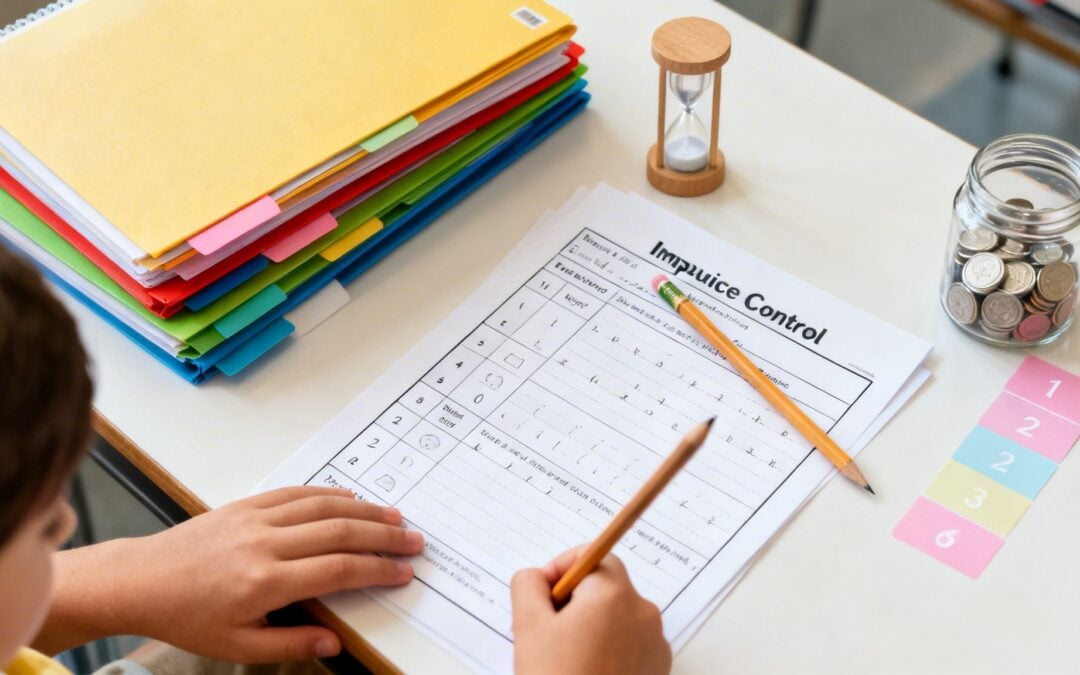
Impulse control is more than just telling students to “stop and think.” It’s a core executive function skill essential for classroom learning, peer relationships, and emotional well-being. When students struggle to manage their impulses, it can manifest as blurting out, difficulty waiting their turn, or reacting emotionally to small frustrations. This not only disrupts the learning environment but also hinders a child’s ability to engage with complex tasks and build meaningful connections.
Social-Emotional Learning (SEL) provides the framework for teaching these skills explicitly. By using structured activities, we can help students recognize their internal cues, pause before acting, and choose more thoughtful responses. This article provides a curated list of 12 effective impulse control worksheets and resources designed for K-8 educators and parents. We move beyond simple lists to give you practical, classroom-ready tools and concrete examples of their use.
For instance, we’ll show you how a “Stop, Think, Act” printable can be used during a specific classroom conflict or how a “Size of the Problem” worksheet helps a student re-evaluate an emotional outburst after recess. Each resource includes a direct link, a brief analysis of its strengths, and ideas for adapting it to meet the needs of diverse learners. Our goal is to equip you with a collection of targeted tools to help build a more regulated, focused, and supportive classroom environment for every student.
1. Tools Of The Heart Online Course
While not a direct source for standalone impulse control worksheets, Soul Shoppe’s Tools of the Heart Online Course earns its place as our featured choice because it provides the foundational, evidence-based framework needed to make those worksheets effective. This digital offering translates over two decades of in-person, experiential Social-Emotional Learning (SEL) into a scalable online format. It’s designed for educators and families who want to move beyond simple printables and build a consistent, school-wide (or home-wide) culture of self-regulation and emotional intelligence.

The course’s strength lies in its focus on creating a shared language and repeatable practices. Instead of just handing a child a worksheet, educators learn how to introduce and model core concepts like mindful awareness and compassionate communication first. For example, a teacher might use the course’s “Peace Corner” strategy to establish a safe space in the classroom. When a student later struggles with blurting out, a worksheet on “thinking before speaking” becomes a supportive tool for that established practice, not an isolated disciplinary action.
Key Strengths and Use Cases
The program is especially valuable for school leaders planning SEL rollouts for the 2025–26 academic year. It equips staff with a unified vocabulary and practical, trauma-informed strategies that create psychological safety. This shared foundation ensures that any supplementary materials, including impulse control worksheets, are applied consistently and effectively from one classroom to the next.
- Practical Application: A school counselor can use the course’s conflict resolution modules to train peer mediators. The strategies learned, such as “I-statements,” can then be reinforced with role-playing worksheets to help students practice their new skills in a controlled setting. For example, after learning the format, students could fill out a worksheet with a real-life conflict: “I feel upset when you take my pencils without asking. I would like you to ask me first.”
- Home-School Connection: The course provides families with the same tools used at school, creating a cohesive support system. A parent can use the “feelings thermometer” concept to discuss emotional intensity, which directly connects to anger management activities for kids and helps them better understand their triggers before they act impulsively. A practical example would be a parent and child coloring in the thermometer to show how the child felt when their sibling wouldn’t share a toy, and then discussing what a “cooler” reaction could be.
- System-Wide Integration: Tools of the Heart complements Soul Shoppe’s other offerings, including in-person workshops, coaching, and a dedicated app, allowing for a layered approach to building a positive school climate.
Access and Implementation
The online course is designed for flexible adoption by entire schools or individual educators. However, the website lacks specific details on pricing, course duration, or certification. Prospective users will need to contact Soul Shoppe directly to get a quote and discuss implementation logistics tailored to their needs. While this digital course is powerful, schools facing significant behavioral challenges may find that it works best when paired with Soul Shoppe’s on-site coaching for more intensive support.
Visit the Tools Of The Heart Online Course Website
2. Therapist Aid
Therapist Aid is a gold standard resource library widely used by clinicians and school counselors, offering evidence-informed worksheets grounded in therapeutic approaches like CBT and DBT. While not exclusively focused on impulse control, its strength lies in the clinical quality of its materials, which target the root causes of impulsivity such as emotional dysregulation and poor executive functioning. The platform provides a rich collection of tools applicable to teaching self-regulation.

This site stands out because its worksheets directly translate complex therapeutic concepts into kid-friendly formats. Instead of a generic search for “impulse control worksheets,” educators can find targeted tools by looking up related skills. For example, the “Urge Surfing” worksheet is perfect for helping a student with ADHD learn to tolerate the impulse to blurt out answers, while the “Anger Stop Signs” printable provides a concrete visual for a child who struggles with physical impulsivity when frustrated. These resources are part of broader self-management skills, which are crucial for student success. A teacher could use the “Anger Stop Signs” worksheet by having a student identify their personal “yellow light” feelings (like feeling hot or clenching fists) before they get to a “red light” outburst.
Implementation and Access
The website offers a mix of free and premium content. Many high-quality worksheets are available for free download as printable PDFs, and some have interactive fillable versions. A PRO membership (starting at $59/year) unlocks the full library, including video resources and advanced tools. A practical approach is to start with their free materials, which are substantial, and curate a small, effective collection before considering a subscription.
Key Features & User Experience:
- Evidence-Informed: Worksheets are based on established methods like Cognitive Behavioral Therapy (CBT) and Dialectical Behavior Therapy (DBT).
- Dual Formats: Many resources are available as both printable PDFs and digitally fillable versions.
- Ease of Use: The website is well-organized, allowing users to search by topic (e.g., anger, ADHD), modality (e.g., CBT), or audience (e.g., kids, teens).
- Limitations: The best content is often behind a paywall, and you must search across multiple categories to build a complete impulse control toolkit.
3. Centervention
Centervention is an excellent source for free, classroom-ready social-emotional learning (SEL) resources specifically designed for elementary and middle school students. Its strength lies in providing straightforward, one-page printable worksheets bundled with mini-lessons. These materials explicitly teach impulse control by contrasting thoughtful actions with impulsive ones, making the concept concrete for younger learners. The platform’s focus on practical, school-based scenarios makes its content highly relevant and easy to implement.

This site stands out because of its grab-and-go lesson format. Instead of just a worksheet, educators get facilitation notes that guide a brief discussion. For example, the “Think Before You Act” worksheet presents scenarios like a classmate taking your favorite crayon. The lesson plan prompts a discussion about an impulsive reaction (yelling) versus a thoughtful one (using an “I statement”). These impulse control worksheets are perfect for short morning meetings or small-group interventions, directly addressing behaviors seen on the playground or in the classroom. A teacher could say, “Let’s look at scenario #2: Someone cuts in front of you in the lunch line. What’s an impulsive ‘react’ choice? What’s a thoughtful ‘respond’ choice?”
Implementation and Access
Centervention offers a significant number of its worksheets and lesson plans completely free with no paywall; users simply provide an email to download the PDFs. The free library is extensive enough to build a solid foundation for SEL instruction. The company’s core products are paid, game-based digital programs that offer a more in-depth curriculum, but their free printables are high-quality, standalone resources.
Key Features & User Experience:
- Classroom-Ready: Worksheets come with accompanying mini-lessons and clear facilitation notes.
- Relevant Scenarios: Content is grounded in real situations kids encounter at school, such as waiting in line or managing frustration during group work.
- Explicit Instruction: The materials clearly distinguish between impulsive and thoughtful responses, a key concept for K-5 students.
- Limitations: The visual design of the PDFs is simple, and the site’s most robust, interactive content is reserved for its paid digital programs.
4. The OT Toolbox – Impulse Control Worksheets & Journal
The OT Toolbox brings a unique, occupation-therapy-informed perspective to impulse control, focusing on the underlying executive functions and sensory processing needs that often drive impulsive behavior. Created by a pediatric OT, these resources are less about simple behavior charts and more about building foundational skills like emotional awareness, habit formation, and practical coping strategies. The platform offers a direct solution for educators and parents seeking a structured program.

This site stands out for its practical, routine-based tools. The worksheets and journal pages are designed for consistent carryover between school and home. Instead of just identifying feelings, a student might use a worksheet to map out what happens before an outburst and create a visual plan for what to do instead. For example, a student who impulsively rips their paper when frustrated can use the journal pages to identify that trigger (e.g., “I get mad when my letters don’t look right”) and practice a replacement behavior, like using a stress ball or taking three deep breaths, with visual cues to support them. These concrete, sensory-based strategies are a hallmark of the OT approach.
Implementation and Access
The website provides a free 5-page sampler of its impulse control worksheets, which requires an email opt-in to download. This sampler is an excellent starting point to test the materials. For a more complete program, the full Impulse Control Journal is available as a paid digital download (around $15-20). This ~80-page printable journal offers a more structured, long-term tool for building self-regulation skills through reflection, tracking, and strategy practice.
Key Features & User Experience:
- OT-Informed Strategies: Activities are grounded in occupational therapy principles, targeting executive function and sensory needs.
- Structured Journaling: The paid journal provides a cohesive program rather than a collection of one-off worksheets.
- Practical for Carryover: The visual routines and reflection pages are designed for use in both classroom and home settings.
- Limitations: The most substantial resource is a paid product, and the free sampler requires providing an email address.
5. Your Therapy Source
Your Therapy Source offers a unique blend of occupational therapy (OT) and psychoeducational resources, making it a great stop for practical, action-oriented tools. The site provides a free three-page “Think Before You Act” PDF packet alongside a more structured “Stop–Think–Act” scenario set. Its approach connects cognitive self-regulation with physical movement, which is highly effective for kinesthetic learners and students who need to burn off excess energy before they can focus.

This platform stands out by integrating multi-sensory learning into its impulse control worksheets. For example, the “Stop–Think–Act” materials come with a song to help students memorize the sequence, reinforcing the habit through auditory channels. Instead of just discussing scenarios, a teacher could have students physically act them out: hop on one foot for “Stop,” touch their head for “Think,” and then perform the correct action. A practical example for parents could be using the worksheets at home: before reacting to a sibling taking a toy, the child is prompted to stop, think of three possible solutions (ask for it back, tell a parent, play with something else), and then choose one to act out. This OT-friendly method helps embed the pausing mechanism in a child’s muscle memory.
Implementation and Access
The core impulse control resources are available as free, direct-download PDFs, making them easy to access and distribute in a school setting. While these freebies are brief, they are designed for quick, repetitive practice in small groups or as classroom brain breaks. For more extensive units, you will need to browse the site’s larger catalog of paid products. The simple graphics and layout make the worksheets approachable and not overstimulating for younger students.
Key Features & User Experience:
- Multi-Sensory Approach: Reinforces learning with songs, visuals, and suggested physical movements.
- OT/PE Integration: Materials are designed by therapists and can be easily used in physical education or occupational therapy sessions.
- Free and Accessible: Key printables are completely free, lowering the barrier to trying them out.
- Limitations: The free offerings are short and serve more as an introduction; the visuals are more basic compared to premium resources from other sites.
6. Twinkl USA
Twinkl USA is a massive teacher-created resource library offering a wide array of classroom management and SEL printables. While its scope is broad, it contains specific and practical impulse control worksheets designed for direct classroom application. The platform’s main advantage is that its resources are made by educators for educators, ensuring they are grade-aligned and relevant to common classroom challenges like blurting or off-task behavior.

This site stands out because its materials often come in editable formats, a key feature for differentiation. A teacher can easily adapt the language or scenarios in a resource like the ‘Impulse Control (Think It or Say It?)’ worksheet to match the specific needs of students with IEPs or 504 plans. For example, a teacher could change the scenarios to reflect a recent playground conflict, making the lesson highly personal and relevant. The ‘Impulse Control Activity Sheet’ provides relatable situations, such as “You see a cookie on the counter before dinner.” Students then write or draw the impulsive action (eating it now) and the controlled action (waiting until after dinner), prompting a discussion about consequences.
Implementation and Access
A subscription is required to download most resources, though a limited number of free materials are available. The platform operates on a membership model (starting around $5/month for the Core plan), which grants access to its entire library of printables, lesson plans, and digital activities. Educators should verify that resource terminology aligns with U.S. standards, as some content may reflect UK or Australian conventions. The search function is the best way to find specific impulse control worksheets within the huge database.
Key Features & User Experience:
- Editable Formats: Many resources are available in formats like PowerPoint or Google Slides, allowing for easy customization.
- Teacher-Created: Content is designed by fellow educators, ensuring it is practical and classroom-ready.
- Grade-Aligned: Resources are clearly marked for specific grade levels, simplifying lesson planning.
- Limitations: Full access requires a paid subscription, and users may need to filter through a large volume of content to find the perfect worksheet.
7. Teach Starter (US)
Teach Starter is a teacher-created platform offering a U.S.-focused collection of classroom-ready resources, including materials that build the foundational skills for impulse control. While it’s not a specialized therapeutic site, its strength lies in integrating social-emotional learning into standard academic contexts. The platform groups impulse control under the broader umbrella of “self-management,” alongside goal-setting and organizational skills, making it easy to find complementary materials.

This site stands out for its practical, print-and-go design, with resources made by educators for educators. Instead of complex clinical jargon, you will find accessible tools aligned with classroom routines. For example, the “Size of the Problem” worksheet helps students contextualize their reactions. A teacher can use this after recess with a student who is upset, asking them to rate the problem (e.g., “Liam didn’t want to play my game”) as a small, medium, or large problem, and then match their reaction to it. Another useful tool is their “Self-Control Mazes,” which provide a fun, game-like activity for younger students to practice pausing and thinking before acting.
Implementation and Access
Teach Starter operates on a freemium model. A limited number of free downloads are available, but full access to their entire library, including editable formats, requires a subscription. Individual teacher plans start around $7.50 per month (billed annually), and they offer transparent pricing for school-wide licenses. The ability to download resources as editable Google Slides or PowerPoint files is a significant advantage, allowing for easy customization to meet specific student needs.
Key Features & User Experience:
- Classroom-Focused: Materials are teacher-reviewed, standards-aligned, and designed for immediate classroom use.
- Multiple Formats: Resources are available as printable PDFs and editable Google Slides or PowerPoint files.
- Organized for Educators: Content is sorted by grade level, subject, and resource type, making it simple to find what you need.
- Limitations: The most effective impulse control worksheets are part of a paid subscription, and users must search within the broader “self-management” category to locate them.
8. K5 Learning – Self-Control Worksheets
K5 Learning provides printable self-control and self-discipline worksheets specifically designed for the K-5 age group. Its materials use simple language and clear visuals to present foundational strategies, such as understanding the cause and effect of one’s choices. This straightforward approach makes the worksheets incredibly easy for teachers and parents to deploy with minimal preparation, serving as quick, targeted practice for younger learners.

The platform stands out for its laser focus on early elementary skill-building. While other sites cover a broad spectrum of SEL topics, K5 Learning offers short, structured practice pages that directly address impulse control in a way young children can grasp. For example, a worksheet might ask a first-grader to draw a line connecting a scenario like “I want the toy my friend has” to a positive choice like “I can ask for a turn” versus an impulsive one like “I will grab it.” A parent could use another worksheet at home by asking, “The worksheet shows a girl about to interrupt her mom on the phone. What’s a better choice she could make?” These exercises are fundamental building blocks for more complex self-regulation strategies for students they will learn later.
Implementation and Access
K5 Learning offers a selection of free sample worksheets, but the majority of its social-emotional learning content is accessible through a subscription. The membership (starting at $14.95/month) provides full access to its entire library of reading, math, and other academic worksheets in addition to the SEL materials. The best way to use the site is to download the free samples to see if the format works for your students before committing to a plan.
Key Features & User Experience:
- Age-Specific Design: Content is created explicitly for kindergarten through fifth grade, ensuring developmental appropriateness.
- Minimal Prep: The printable PDF format allows for quick implementation in classrooms or at home.
- Clear Skill Labeling: Worksheets are clearly titled with skills like “self-control” or “self-discipline.”
- Limitations: A subscription is required for most of the SEL worksheets, and the scope is narrower than that of a dedicated SEL curriculum provider.
9. Teachers Pay Teachers (TPT) – Curated Impulse Control Packs
Teachers Pay Teachers (TPT) is an enormous online marketplace where educators create and sell their own classroom resources. Its value lies in the sheer volume and specificity of materials available, offering thousands of impulse control worksheets, social stories, and activity packs designed by teachers for teachers. Unlike clinical sites, TPT content is born from direct classroom experience, often tailored to specific grade levels (K-5) and common behavioral scenarios.

This platform stands out for its niche, scenario-based resources. Instead of a general worksheet on “thinking before acting,” you can find a complete lesson pack for a second grader who impulsively shouts out answers, or a social story bundle for a kindergartener who struggles with taking turns. A practical example is using a social story from TPT called “My Mouth is a Volcano” with a student who blurts out. The teacher and student read the story together and then complete a corresponding worksheet where the student practices raising their hand in different illustrated scenarios. Many sellers bundle materials into comprehensive units, providing a multi-faceted approach to teaching a single skill.
Implementation and Access
TPT operates on a per-product model, with most resources available as instant digital downloads after purchase. Prices for individual worksheet packs are generally affordable, often falling in the $2 to $8 range. To use it effectively, it’s crucial to read product reviews and check previews carefully, as quality varies significantly between sellers. Searching for terms like “impulse control social story” or “executive functioning worksheet pack” yields highly specific results.
Key Features & User Experience:
- Classroom-Tested: Resources are created by practicing teachers and counselors, making them practical and relevant.
- Grade-Specific: Materials are often designed for very specific grade bands (e.g., K-1, 3-5), ensuring developmental appropriateness.
- Affordable Pricing: Single-classroom licenses make it accessible for individual teachers to purchase what they need without a subscription.
- Limitations: Quality is inconsistent across the platform, requiring careful vetting of sellers. Licensing typically restricts sharing resources with other staff members.
10. GoZen! – Printable Kits & Library
GoZen! is a well-regarded resource that offers research-based printable kits and a subscription library focused on building social-emotional skills like self-regulation and executive functioning. Instead of single, isolated worksheets, GoZen! provides comprehensive, visually engaging kits like the “Executive Functioning Activity Kit” or the “Calm Down Corner Kit.” These collections are designed to give students a concrete toolkit for managing difficult emotions and impulsive behaviors.

This platform stands out by packaging impulse control tools within broader skill sets that resonate with elementary and middle schoolers. For example, a teacher can use the calm-down cards from a kit to help a student practice pausing before reacting angrily to a peer. A practical application would be creating a “calm-down” space in the classroom using the kit’s visuals; when a student feels impulsive, they can go to that corner and use a worksheet from the kit to trace a breathing pattern or identify their emotion. The journaling pages encourage reflective thinking, a key component of improving foresight and reducing impulsivity.
Implementation and Access
Access to GoZen!’s materials is primarily through purchases or a subscription. The printable kits can be bought individually, while the extensive Printable Library, containing over 200 downloads, requires an annual subscription. This model is best for educators or parents who are ready to invest in a structured, long-term SEL curriculum rather than just looking for a few quick impulse control worksheets.
Key Features & User Experience:
- Structured Kits: Provides themed collections of printables, games, and visual aids that work together.
- Research-Based: Content is grounded in psychological principles for building resilience and emotional regulation.
- High-Quality Design: The printables are professionally designed, colorful, and highly engaging for children.
- Limitations: Many resources are bundled into paid products, and users must search within broader topics like “executive function” to find tools for impulsivity.
11. PositivePsychology.com – Self-Control for Kids
PositivePsychology.com offers a unique, research-backed article that serves as both professional development for educators and a curated collection of activities. Rather than just a list of downloads, this resource explains the “why” behind self-control strategies, connecting psychological principles to practical classroom applications. It effectively bridges the gap between academic research and actionable tools for teaching impulse control skills.

This site stands out by contextualizing its activities within established theories of child development and self-regulation. The article presents several easy-to-implement exercises, like “Think It or Say It,” which directly addresses verbal impulsivity, and “Body Signals Mapping,” a great tool for helping students connect physical sensations to emotional reactions. For example, a parent could use the “Body Signals Mapping” activity by giving their child a body outline and asking, “When you get really excited about a new toy, where do you feel it in your body? Let’s color that spot.” This helps the child recognize the physical precursors to impulsive actions, like jumping or grabbing.
Implementation and Access
The article and its core activity descriptions are completely free to access. However, many of the linked printables or supplementary materials are hosted on partner sites or require an email sign-up to download. Educators should be prepared to gather materials from multiple sources rather than accessing a single downloadable pack. A great approach is to use the article as a guide, implementing the core concepts with your own classroom materials before seeking external printables.
Key Features & User Experience:
- Research Context: Activities are explained with clear connections to psychological principles and child development.
- Practical Directions: The instructions for each exercise are written for easy implementation by teachers or parents.
- Varied Activities: Includes tools for addressing verbal impulsivity, emotional awareness, and delayed gratification.
- Limitations: The linked impulse control worksheets are not centrally located; users must click through to various external sites, some of which require sign-ups.
12. Mylemarks
Mylemarks provides a large catalog of counseling resources, featuring over 750 worksheets, workbooks, and journals designed for social-emotional learning. While its scope is broad, the platform contains excellent tools for addressing impulsivity by focusing on self-regulation routines, trigger identification, and practicing replacement behaviors. The materials are designed with kid-friendly visuals and clear, step-by-step instructions that work well in individual, group, or classroom settings.
This site’s value comes from its sheer volume and targeted support for tiered interventions. A school counselor can use a “Size of the Problem” worksheet with a whole class, pull a small group to work through a “Thought Changing” workbook, and provide an individual student with a “Behavior Tracker” for specific impulse control goals. A practical example is using the “My Choices” worksheet with a student after an incident. The worksheet prompts them to describe what happened, identify their impulsive choice, and then brainstorm two better choices they could make next time. The availability of many resources in Spanish is a significant asset for multilingual school communities.
Implementation and Access
Mylemarks operates on a per-product model, with digital downloads available for individual purchase. Prices vary, and more in-depth workbooks or bundles are priced higher. Users can also subscribe to the Mylemarks All-Access Pass (starting at $12.99/month or $99/year), which grants unlimited downloads. A practical strategy is to browse the free resources section first to assess the style and quality before purchasing specific tools or committing to a subscription.
Key Features & User Experience:
- Tiered Support: The catalog contains materials suitable for whole-class lessons, small group counseling, and intensive individual support.
- Spanish-Language Options: A substantial portion of the library is available in Spanish, increasing accessibility.
- Visually Engaging: Worksheets use child-friendly graphics and layouts to maintain student interest.
- Limitations: Finding specific impulse control worksheets requires navigating a very large catalog; the per-product pricing can become costly without a subscription.
Impulse Control Worksheets — 12-Resource Comparison
| Item | Core features | Target audience | Unique selling points | Access & Price | Limitations |
|---|---|---|---|---|---|
| Tools Of The Heart Online Course | Online SEL course with practical tools: self‑regulation, mindfulness, communication, conflict resolution; integrates with workshops/coaching/app | Educators, school staff, districts, families; whole‑school adoption | 20+ years Soul Shoppe research-based; focus on belonging & psychological safety; schoolwide scalability | Online course — syllabus/pricing not public; contact Soul Shoppe for details | Limited public detail on duration/pricing; online only may not replace in‑person coaching |
| Therapist Aid | Large library of printable/fillable worksheets; CBT/DBT/ACT tools for impulse/anger management | School counselors, clinicians, K–12 educators | Clinically trusted; broad evidence‑informed tools for many impulse-related needs | Many free resources; PRO membership gates premium downloads | Some downloads paywalled; not packaged as a single impulse‑control kit |
| Centervention | Classroom‑ready 1–2 page printables + mini‑lessons and facilitation notes | Elementary & middle school teachers | High‑quality free downloads; explicit stop‑and‑think lessons | Many free PDFs; some deeper game‑based programs are paid | Simple PDF styling; advanced content sold separately |
| The OT Toolbox – Impulse Control Worksheets & Journal | OT‑informed impulse control worksheets; visual routines; reflection pages; sampler + full journal | OTs, teachers, parents, pediatric settings | Designed by pediatric OT; practical routines for school/home carryover | Free 5‑page sampler (email opt‑in); paid ~80‑page journal available | Sampler requires opt‑in; full journal is a separate purchase |
| Your Therapy Source | Short practice‑heavy printables; Stop–Think–Act song/lesson; movement variations | Classroom teachers, small groups, OTs/PE instructors | Multi‑sensory routines (song + movement); quick rehearsal activities | Free downloads for trial/use; broader catalog to browse | Free sets are brief; visuals simpler than premium marketplaces |
| Twinkl USA | Large teacher‑created editable resources (PowerPoint/Word/PDF) and grade‑aligned worksheets | Teachers needing editable, differentiated materials | Editable files for IEP/504 adaptation; vast, frequently updated library | Subscription required for full access | Subscription cost; some resources use non‑US terminology |
| Teach Starter (US) | U.S. aligned SEL/self‑management resources; editable Google Slides/PowerPoints | U.S. teachers and schools | Common Core/state alignment; teacher‑reviewed materials; school licensing | Subscription with school & individual plans; limited free tier | Impulse items are within broader library and require searching |
| K5 Learning – Self‑Control Worksheets | Short, simple K–5 printable practice pages focused on self‑control | Early elementary teachers and parents | Very easy to deploy; minimal prep for classrooms and home | Some free PDFs; many resources behind subscription | Narrower scope; many PDFs members‑only |
| Teachers Pay Teachers (TPT) – Curated Packs | Marketplace of digital impulse‑control packs, social stories, role‑play cards | Teachers seeking grade‑specific, classroom‑tested resources | Immediate downloads; many grade‑specific and affordable options | Pay‑per‑download (commonly $2–$8); single‑teacher licenses | Quality varies by seller; licensing often restricts staff sharing |
| GoZen! – Printable Kits & Library | Printable kits for executive function & calm‑down: cards, games, journals | School counselors, teachers, parents (elementary/middle) | Polished, research‑based printables with clear instructions | Some free items; library subscription or paid kits for full access | Many items labeled by EF/regulation rather than explicitly “impulse control” |
| PositivePsychology.com – Self‑Control for Kids | Evidence‑informed article with 6+ activities and links to worksheets | Counselors, teachers, parents for PD and classroom strategies | Strong research-to-practice guidance; clear activity directions | Article free; linked printables may require sign‑ups or partner sites | Not a single downloadable pack; requires assembling materials |
| Mylemarks | Large catalog of worksheets, workbooks, journals, Spanish resources and videos | Counselors, multilingual campuses, teachers needing tiered supports | Extensive Spanish options; supports individual, group, classroom interventions | Per‑product pricing varies; many paid downloads | Impulse‑control items require searching in large catalog; bundles can be costly |
Putting Worksheets into Practice: Building Lasting Impulse Control Skills
Navigating the landscape of impulse control worksheets can feel overwhelming, but as we’ve explored, the right tool can be a powerful catalyst for student growth. From the scenario-based activities offered by Therapist Aid to the gamified approach of Centervention, each resource provides a unique entry point for teaching self-regulation. The key takeaway is not just to find a worksheet, but to understand how it fits into a student’s individual learning journey and the broader classroom culture.
Remember, these printable resources are most effective when they are not used in isolation. True, lasting skill development comes from integrating these concepts into the fabric of the school day. A worksheet on identifying emotional triggers becomes far more meaningful when followed by a class discussion about a recent conflict on the playground, allowing students to apply the abstract concept to a real, lived experience. The goal is to move from passive learning on paper to active, real-world application.
Selecting the Right Tool for the Moment
Choosing the most suitable resource depends entirely on your specific goals and your students’ needs. Are you introducing the basic “stop and think” concept to a kindergarten class? The visually engaging and simple worksheets from K5 Learning or Twinkl might be the perfect fit. Do you need to help a fourth-grader connect their physical sensations to emotional responses? The OT Toolbox’s journal prompts or GoZen!’s printables offer a more nuanced approach.
Consider these factors when making your selection:
- Skill Deficit vs. Performance Deficit: Is the student lacking the knowledge of what to do (a skill deficit), or do they know the skill but struggle to use it in the heat of the moment (a performance deficit)? Worksheets are excellent for building foundational knowledge, but performance deficits require role-playing, coaching, and in-the-moment reminders.
- Student Engagement: A worksheet that resonates with one child may not connect with another. Offering a choice between a few curated options from a source like Teachers Pay Teachers can increase buy-in and ownership of the learning process.
- Time and Preparation: Some resources, like those from Mylemarks or PositivePsychology.com, are print-and-go. Others may require more context-setting or follow-up activities to be truly effective.
Creating a Supportive Ecosystem for Self-Regulation
The most successful interventions occur when the language and strategies are consistent across different environments. A “pause button” visual cue from a worksheet is exponentially more powerful when the librarian, the recess monitor, and the classroom teacher all use the same term to prompt a student. This creates a predictable and supportive ecosystem where self-regulation is a shared community value, not just a 15-minute lesson.
For educators and administrators looking to build this kind of unified system, creating a cohesive strategy is key. This often involves staff training to ensure everyone is equipped with the same language and tools. Exploring various professional development workshop ideas can provide the structure needed to turn a collection of great worksheets into a school-wide framework for emotional intelligence.
Ultimately, the journey of teaching impulse control is a marathon, not a sprint. The impulse control worksheets detailed in this guide are not magic wands; they are tools. They are conversation starters, practice arenas, and visual aids that empower students to understand their own minds. By pairing these resources with consistent reinforcement, real-world application, and a compassionate, supportive environment, we equip children with the foundational skills they need for academic achievement, healthy relationships, and lifelong well-being.
Ready to move beyond individual worksheets and build a comprehensive, school-wide culture of emotional intelligence? Soul Shoppe provides evidence-based social-emotional learning programs that equip entire communities with the tools and common language needed for lasting change. Explore how our programs can transform your school at Soul Shoppe.