

What Are Self Management Skills: A Practical Guide for Students
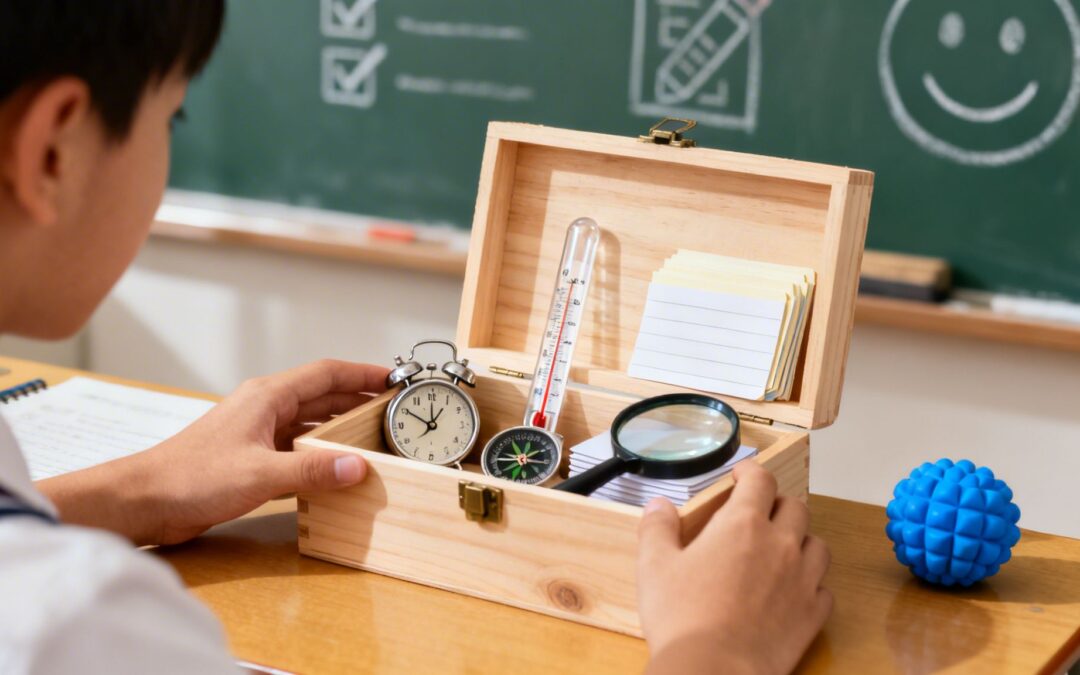
When we talk about self-management, we’re really talking about the practical tools students use to take charge of their own thoughts, feelings, and actions to get where they want to go. It’s the ability to steer their own ship, whether they’re navigating tricky homework, managing big emotions, or working towards a personal milestone. This isn’t just a “nice-to-have”—it’s a core skill for success both in and out of the classroom.
Understanding Your Student’s Inner Toolkit
Think of self-management not as one single skill, but as a personal toolkit every child carries with them. Inside are all the specific instruments they need to handle daily challenges and build a strong foundation for whatever comes next. Just like a builder needs a hammer for one job and a measuring tape for another, a student needs different self-management skills for different situations.
For example, when a student gets frustrated with a tough math problem, their emotional regulation tool helps them take a deep breath instead of just giving up. When they’d rather be playing video games but have a project due, their impulse control tool helps them stay focused. Developing these skills isn’t about turning kids into perfect, rule-following robots; it’s about empowering them to make thoughtful choices for themselves.
Self-management is the bridge between knowing what to do and actually doing it. It empowers students to take ownership of their learning, behavior, and emotional well-being, turning potential into real-world competence.
This internal toolkit has a huge impact on every part of a student’s life. A child with strong self-management skills is much better equipped to:
- Succeed Academically: They can map out study time, stay focused during lessons, and push through when subjects get tough. A practical example is a student using a planner to schedule 30 minutes for homework before playing, ensuring it gets done.
- Build Healthy Friendships: They’re able to manage their reactions during disagreements and really listen to another person’s side of things without getting overwhelmed. For instance, a student who feels upset can say, “I need a minute,” instead of yelling at their friend.
- Develop Resilience: They can handle stress, bounce back from setbacks, and walk into new situations with a sense of confidence. A resilient student who fails a test might think, “Okay, that didn’t work. I’ll ask the teacher for help and try a new study method.”
The Core Components of Self Management
To really get what’s inside this toolkit, let’s break down the key skills that all work together. Each one plays a unique role in helping a student navigate their world with more confidence and control.
Here’s a quick look at these essential components. As parents and teachers, our job is to help students recognize which tool is needed for the job and give them chances to practice using it.
The Core Components of Self Management
| Skill Component | What It Looks Like in a Student |
|---|---|
| Emotional Regulation | Taking a moment to calm down after a disagreement on the playground. |
| Impulse Control | Raising their hand instead of shouting out the answer in class. |
| Goal-Setting | Breaking a large book report into smaller, manageable steps. |
| Organization | Keeping their backpack tidy and remembering to bring home their homework folder. |
| Stress Management | Using a breathing exercise before a test to reduce anxiety. |
| Attention Control | Finishing their reading assignment even when siblings are playing nearby. |
When we see these skills as distinct but connected tools, it becomes much easier to pinpoint where a student might need extra support and how we can provide it. Building these skills one by one gives students the foundation they need to manage themselves effectively in any situation.
Exploring the 6 Pillars of Self Management
It helps to think of self-management as a “toolkit” a student carries with them. Let’s open that toolkit and look at the 6 essential instruments inside. These are the pillars that hold up a student’s ability to navigate their world with intention and control.
Each is a distinct skill, but they all work together—much like you need different tools to build a sturdy house. To make these ideas real, we’ll explore each pillar with a simple analogy and practical examples that parents and teachers can spot in everyday life. This helps turn abstract concepts into behaviors you can actually see, support, and encourage.
This diagram shows how a student’s success toolkit connects their thoughts, feelings, and actions, turning them into a powerful cycle for achievement.

The visual reminds us that self-management isn’t just about what kids do. It’s about helping them understand the powerful link between what they think, how they feel, and the choices they make.
1. Emotional Regulation: The Feelings Thermostat
Think of emotional regulation as a child’s internal “feelings thermostat.” It helps them notice when their emotional temperature is rising—from cool and calm to warm and annoyed, or even hot and angry. The goal isn’t to get rid of big feelings, but to learn how to keep them in a comfortable, manageable range.
A child with a well-calibrated thermostat can sense frustration building and use a strategy to “cool down” before a full-blown meltdown. This is absolutely foundational for learning and getting along with others.
- Example for a Teacher: A kindergartener, accidentally pushed in line, feels their “thermostat” spike. They remember the class breathing exercise, put a hand on their belly, and take three slow breaths instead of pushing back.
- Example for a Parent: An eight-year-old is about to lose a board game. They start to feel angry, but instead of flipping the board, they say, “I’m feeling frustrated, I need a minute,” and step away.
- Example for a Student: A student gets a lower grade on a quiz than they wanted. Instead of crumpling the paper in anger (hot), they feel a pang of disappointment (warm), take a deep breath, and decide to ask the teacher how they can improve for the next one.
2. Impulse Control: The Mental Brakes
Impulse control is like having a reliable set of “mental brakes.” It’s the ability to hit pause between feeling an urge and acting on it. For a student, this means stopping to think before speaking, acting, or making a choice—especially when a more immediate, less helpful option is so tempting.
Without these brakes, a student might blurt out answers, grab a toy from a friend, or get sidetracked by their phone instead of finishing homework. Learning to use these brakes is crucial for classroom conduct and making safe, thoughtful decisions.
This skill is all about creating a moment of choice. It’s the pause that allows a student to ask, “Is this a good idea right now?” and steer toward a better outcome.
- Example for a Teacher: A student is so excited they know the answer that they start to shout it out. They catch themselves, put their mental brakes on, and raise their hand instead.
- Example for a Parent: A teenager sees a new video game they desperately want. Their first impulse is to spend all their allowance money. Instead, they pause and decide to save half of the money and put the other half toward the game.
- Example for a Student: A fifth-grader is working on a group project, and a classmate suggests an idea they strongly disagree with. Their first impulse is to say, “That’s a stupid idea!” Instead, they apply their mental brakes, pause, and rephrase: “I see what you’re saying, but what if we tried this instead?”
3. Goal Setting: The Personal Roadmap
Goal-setting is a student’s “personal roadmap.” It helps them see where they’re going and plan the steps to get there. This skill transforms huge, overwhelming tasks—like a science fair project or learning a new instrument—into a series of smaller, more achievable milestones.
A good roadmap doesn’t just show the final destination; it highlights the route, potential stops, and the progress made along the way. This builds a sense of agency and teaches students how to work toward future accomplishments. It’s also tightly linked to motivation; as you can learn in this guide on how to develop self-discipline, breaking down goals makes it possible to keep going.
- Example for a Teacher: To prepare for a spelling bee, a teacher helps a student set a goal of learning 5 new words each day, rather than trying to memorize 50 words the night before.
- Example for a Parent: A child wants to save up for a new bike. A parent helps them create a “roadmap” by figuring out how much they need to save from their allowance each week and creating a chart to track their progress.
- Example for a Student: A middle schooler wants to get a B in math but currently has a C. They create a “roadmap” with a parent that includes:
- Destination: Earn a B or higher.
- Route: Complete all homework, study for 20 minutes each night, and ask for help once a week.
- Milestone: Check their grade every Friday to see if they’re on track.
4. Organization: The Tidy Backpack
Organization is about creating order in a student’s physical and mental worlds. Think of it as keeping a “tidy backpack”—both literally and figuratively. When a student’s backpack, desk, and schedule are organized, they can find what they need, remember deadlines, and approach their work with a clear head.
The opposite is a chaotic, overflowing backpack where homework gets lost and important papers are crumpled. This disorganization creates a ton of unnecessary stress and wastes mental energy that should be going toward learning.
- Example for a Teacher: A teacher shows the class how to use a color-coded folder system: a red folder for math, a blue one for reading. This helps students visually sort their work and find materials quickly.
- Example for a Parent: Before bedtime, a parent and child do a “backpack check” together, making sure homework is packed, old papers are taken out, and gym clothes are ready for the next day.
- Example for a Student: A student knows exactly where their homework folder is. They have a specific pocket for important papers, so they hand in the permission slip calmly and start their day ready to learn. This reduces anxiety and builds independence.
5. Stress Management: The Pressure Valve
Stress management works like a “pressure valve.” Everyone feels pressure from school, friends, and home life. This skill allows a student to safely release that pressure before it builds up and leads to an explosion of anxiety, anger, or just shutting down completely.
Learning to spot the signs of stress (like a racing heart or tense shoulders) and use healthy release strategies is one of the most important self-management skills for long-term well-being. It goes hand-in-hand with self-awareness, which gives students the ability to recognize their feelings in the first place. You can read more about building that crucial foundation in our detailed guide on self-awareness skills.
- Example for a Teacher: A teacher notices students are getting antsy before a test. They lead the class in a one-minute “chair stretch” to release physical tension and reset their minds.
- Example for a Parent: A teenager is stressed about a social situation at school. Instead of letting them bottle it up, a parent suggests going for a walk together to talk it out, releasing emotional pressure.
- Example for a Student: A high schooler feels overwhelmed by an upcoming exam. Instead of panicking, they use their “pressure valve” by taking a five-minute break to listen to music or talk to a friend. This helps them return to studying with a clearer mind.
6. Attention Control: The Focus Flashlight
Finally, attention control is like having a “focus flashlight.” In a world overflowing with distractions, this skill allows a student to shine a bright beam of concentration on what matters most in the moment—whether it’s the teacher’s voice, a book, or a math problem.
It also means noticing when the flashlight has drifted away and gently guiding it back to the task. This isn’t about forcing concentration for hours on end, but about learning to manage and direct one’s focus with intention.
- Example for a Teacher: During silent reading, a teacher quietly prompts a daydreaming student by saying, “Shine your flashlight on your book,” providing a simple, non-judgmental cue to refocus.
- Example for a Parent: A child is trying to do homework while the TV is on. A parent helps them manage distractions by saying, “Let’s turn the TV off for 20 minutes so you can use your full focus flashlight on this worksheet. Then you can watch.”
- Example for a Student: A student is reading at home while their younger sibling watches cartoons in the same room. They feel their “flashlight” drifting toward the TV. They recognize this, stand up, and move to a quieter spot at the kitchen table to finish their work. They didn’t just notice the distraction—they took action to manage it.
Tracking Self Management Skills by Grade Level
How can you tell if a student’s self-management skills are on track? It’s a lot like learning to read or ride a bike—these skills grow over time and look totally different from one age to the next.
Knowing what’s developmentally appropriate is the key. It helps us provide the right kind of support without causing frustration for the child (or for us!). Think of this as a practical roadmap to understanding what “normal” behavior looks like and how to gently guide students toward the next milestone.
Early Elementary Milestones (Grades K-2)
For our youngest learners in kindergarten through second grade, it’s all about building the absolute basics of self-management. Kids at this age are just starting to move from being completely reliant on adults to taking their very first wobbly steps toward independence. Their self-control is very much a work in progress.
Our expectations should center on simple, concrete actions we can practice every day, with plenty of reminders and positive praise. Success isn’t about perfection; it’s about the effort.
- Impulse Control Example: A first-grader wants the classroom’s special glitter crayon right now. Instead of grabbing it, they are learning to ask, “Can I use that when you’re done?”
- Emotional Regulation Example: A second-grader feels tears coming after losing a game of kickball. They are learning to go get a drink of water to calm down instead of yelling.
- Attention Control Example: A teacher asks a kindergartener to “put your drawing in your cubby and join us on the rug.” The child successfully completes both steps without getting sidetracked.
- Organization Example: A student learns to put their crayons back in the box and hang their coat on their designated hook with a little bit of guidance.
At this age, self-management is a team sport. Think of it as co-regulation, where the adult acts as the external “brakes” or “thermostat” while the child’s internal system is still under construction.
When a first-grader manages to sit quietly for ten minutes during story time, that’s a huge win for their attention control. And when a second-grader remembers to put their homework folder in their backpack after just one reminder, they are mastering a crucial organizational skill.
Upper Elementary Milestones (Grades 3-5)
By the time students reach upper elementary, they are primed for more independence. Their brains have developed a greater capacity for planning and reasoning, which means they can start managing more complex situations and tasks. The training wheels are starting to come off.
Now, they can begin to see the direct connection between their actions and the results. This is the perfect time to introduce more structured planning and goal-setting.
- Goal-Setting Example: A third-grader wants to learn their multiplication tables. A parent helps them set a goal to practice for 10 minutes each night using flashcards. Our guide on goal-setting for students offers more practical ways to build this crucial skill.
- Organization Example: A fifth-grader starts using a simple weekly planner to write down assignments and due dates, checking it each afternoon.
- Stress Management Example: A fourth-grader feels overwhelmed by a tough math problem. They are learning to name that feeling (“I’m frustrated!”) and use a simple strategy, like taking a few deep breaths or asking for a short break.
- Impulse Control Example: A student gets better at thinking before they speak in a class discussion, showing more respect for what their classmates have to say, even when they disagree.
Middle School Milestones (Grades 6-8)
Middle school throws a whole new level of complexity at students—multiple teachers, changing schedules, and long-term deadlines. This is when self-management skills go from “helpful” to “absolutely essential” for both school success and personal well-being.
The focus shifts from simply completing single tasks to managing a whole system of ongoing responsibilities. They’re now expected to be the main drivers of their own learning.
- Long-Term Planning Example: A seventh-grader has a research project due in two weeks. They create a timeline: week one for research and outlining, week two for writing and editing.
- Advanced Organization Example: An eighth-grader uses a digital tool like Google Calendar or a school app to track their homework, sports practices, and social plans.
- Emotional & Stress Management Example: A sixth-grader has a conflict with a friend. They are able to talk through the issue with the friend directly, using “I feel” statements, without needing an adult to step in every time.
This progression isn’t just about making school life easier. Strong self-management skills are consistently ranked among the top qualities employers look for. Building these skills in the classroom is one of the best ways we can set our kids up for a successful and fulfilling future.
Actionable Strategies for the Classroom
Okay, so we’ve talked about what self-management is, but how do we actually teach it in a busy classroom? This is where the real magic happens. By weaving simple, consistent routines into the school day, teachers can create an environment where students actively build and strengthen their own self-management toolkits.
The great news is, this doesn’t require a total curriculum overhaul. It’s about small, intentional actions that yield huge results.
The goal is to shift from correcting a lack of self-management to proactively teaching the skills. Instead of just reacting to a student’s outburst, we can give them the tools for emotional regulation before the feelings get too big. This simple shift empowers kids, cuts down on disruptions, and frankly, just makes the classroom a better place to be for everyone.

Create a Calm-Down Corner
One of the most effective, hands-on ways to teach emotional regulation is to set up a designated “Calm-Down Corner” or “Peace Corner.” This isn’t a punitive time-out spot. It’s a safe, inviting space where students can choose to go when they feel their emotions starting to bubble over. It gives them a physical place to practice self-soothing.
Stock this area with simple tools that help students manage their feelings and reset. The key is to frame it as a helpful resource, not a place of shame.
- Practical Example: A student feels frustrated during math. They signal the teacher, walk to the Calm-Down Corner, squeeze a stress ball for three minutes while watching a sand timer, and then return to their desk ready to try again.
- Sensory Tools: Think stress balls, soft pillows, or small containers of putty. These tactile objects give a student a quiet, non-disruptive way to channel anxious or angry energy.
- Visual Aids: Post an “emotions chart” with faces showing different feelings. This helps kids identify and name what they’re experiencing—the crucial first step to managing it.
- Breathing Guides: Simple visual cues work wonders. A picture of a flower to “smell” (inhale) and a candle to “blow out” (exhale) can guide a student through calming breaths without you having to say a word.
- Timers: A sand timer or a simple visual timer provides structure. It allows a student to take a designated two or five minutes to regulate before rejoining the group.
Use Visual Timers and Schedules
So many self-management challenges, especially around attention and organization, come from a fuzzy sense of time. For a child, a 30-minute work period can feel endless and overwhelming. Visual timers are a game-changer because they make abstract time concrete and manageable.
By making time visible, you give students a powerful tool to manage their own energy and attention. It answers the constant question of “How much longer?” and helps them learn to pace themselves.
- Practical Example: A teacher sets a visual countdown timer on the board for 20 minutes of independent work. Students can glance up and see exactly how much time is left, which helps them stay on task and manage their pace instead of asking the teacher repeatedly.
- Practical Example: A clear visual schedule of the day’s activities is posted on the wall. Before transitioning from reading to math, the teacher points to the schedule. This helps kids anticipate the change, reducing the stress and disruption that can come from uncertainty. For students who might need a bit more support, you can explore other self-regulation strategies for students that build on these foundational classroom structures.
Implement Goal-Setting Routines
Make setting goals a regular, low-stakes part of your classroom culture. This gives students constant practice in breaking down tasks and builds their sense of accomplishment. These don’t have to be massive academic undertakings; small, personal objectives work wonders.
Here are a few practical ways to weave this in:
- “One-Thing” Morning Check-in: Start the day by having each student write down one small, achievable thing they want to accomplish on a sticky note. It could be “finish my math worksheet,” “read one chapter,” or even “ask a question in class.” They put the note on their desk as a visual reminder.
- Project Roadmaps: For longer assignments, work with students to create a simple “roadmap.” Break the project into three or four steps with target dates. For a book report, the steps might be: 1. Finish book by Friday. 2. Write outline by Tuesday. 3. Complete rough draft by Thursday.
- End-of-Day Reflection: Take two minutes before dismissal for students to reflect on their “one thing.” Did they do it? If not, what got in the way? This builds metacognition—the ability to think about their own thinking and learning.
How to Foster Self Management Skills at Home
The classroom is a fantastic learning ground for self-management, but the real practice—the kind that truly sticks—happens at home. When parents and teachers are on the same team, they create a consistent world where kids can strengthen these essential skills in every part of their lives.
Don’t worry, reinforcing these ideas at home doesn’t have to be complicated. It’s really just about weaving simple, supportive routines into the natural rhythm of your family life.
Your role as a parent is incredibly powerful. By modeling and encouraging self-management, you’re handing your child a blueprint for success they’ll carry with them long after they’ve left the classroom. The key is to be supportive and realistic, always celebrating the effort, not just perfection.

Establish Predictable Daily Routines
Let’s be honest: kids thrive on structure. Predictable routines act like guardrails, guiding them through their day with far less stress and fewer power struggles. A consistent schedule for waking up, doing homework, and going to bed helps children internalize time management and take on more responsibility.
Think of it as creating a family rhythm. When a child knows what to expect, they can start to manage their own transitions between activities, which is a huge boost for both their confidence and their autonomy.
A consistent routine is the scaffolding that helps a child build their own internal sense of order. It reduces anxiety by answering the question, “What’s next?” before it’s even asked.
An after-school routine, for example, could be as simple as this:
- Unpack & Snack (15 mins): Empty the backpack and grab a healthy snack. This gives them a moment to decompress.
- Homework Time (30 mins): Settle in and work on assignments in a designated quiet space.
- Free Play (Until dinner): Once responsibilities are handled, it’s time for fun and relaxation.
Create a Dedicated Homework Zone
An organized workspace is a game-changer for learning how to focus. Designate a specific spot for homework—whether it’s a desk in their room or a corner of the kitchen table. What matters is that it’s consistent, quiet, and stocked with all the supplies they’ll need.
This simple act of creating a “work zone” sends a clear signal to a child’s brain: “This is where I focus.” It cuts out the wasted time spent searching for a pencil or a quiet place to think, letting them dive right into their tasks. For any parent looking for ways to empower their children, figuring out how to motivate kids to study effectively is a huge piece of the puzzle.
- Practical Example: Create a “homework caddy” with pencils, crayons, scissors, and glue. When it’s homework time, the child can bring the caddy to the kitchen table. When they’re done, everything goes back in the caddy, keeping the space organized and supplies easy to find for next time.
Use Chore Charts to Teach Responsibility
Chore charts are a classic for a reason—they are a brilliant, visual tool for teaching organization, goal-setting, and accountability. A good chart breaks down bigger responsibilities (like the dreaded “clean your room”) into small, manageable steps.
The trick is to make it a collaborative process. Sit down with your child to decide on a few age-appropriate chores and any potential rewards. This gives them a sense of ownership over the process and makes them much more invested in the outcome.
- Practical Example (Ages 5-7): A chart with pictures for non-readers: a picture of a dog for “feed the dog,” a picture of a toy box for “put away toys.” They can put a sticker next to each task they complete.
- Practical Example (Ages 8-12): A weekly chart on the fridge where they can check off multi-step chores like “sort and bring down laundry” or “help set the table for dinner.”
Practice Mindfulness Together
Stress management is a skill that benefits the entire family. Bringing simple mindfulness activities into your home can help everyone learn to hit the “pause” button and handle stress in a healthier way. You don’t need to be an expert; the goal is simply to practice paying attention to the present moment together.
- Practical Example: Try “belly breathing” at bedtime. Have your child lie down and place a small stuffed animal on their belly. Ask them to breathe in slowly and watch the animal rise, then breathe out and watch it fall. This gives them a visual, calming focus point. For some family-friendly ideas to get you started, check out these simple self-care activities for students.
These efforts pay off in the long run. Workplace studies show that employees with strong self-management skills are 15% more productive because they are better at setting goals and managing their time. By building these skills at home, you’re not just helping with homework—you’re laying a foundation for their future success.
Connecting Self-Management to Lifelong Success
The skills we work on in childhood don’t just stay in the classroom. They become the bedrock of a successful and fulfilling adult life. When we teach a student what self-management skills are, we’re not just preparing them for the next test—we’re getting them ready for the real, complex world waiting outside the school gates.
Think of it this way: every small win in self-management is a building block for the future.
When a student learns to manage their frustration during a group project, they’re practicing the exact same skills they’ll need to navigate a tough conversation with a coworker one day. The organized backpack and homework planner of a middle schooler is the direct ancestor of the project management and deadline-driven work of a future career.
From Classroom Lessons to Career Readiness
This isn’t just a nice idea; it’s exactly what employers are looking for.
In its Future of Jobs Report 2025, the World Economic Forum pointed to self-management skills like motivation and self-awareness as top-five core competencies. With 39% of workers’ skills expected to change by 2030, companies are desperate for agile, resilient talent. You can dig into more of the data in the Future of Jobs Report on the WEF website.
- Practical Connection: A student who uses a planner to manage five different subjects is learning the time management skills needed to juggle multiple projects in a future job. The ability to prioritize tasks, meet deadlines, and plan ahead is a direct outcome of practicing organization in school.
This really highlights how vital early SEL instruction is. By nurturing these skills now, we’re setting students up to thrive in the collaborative, fast-paced environments that future jobs will demand.
By guiding a child to manage their inner world, we empower them to shape their outer world. We are preparing them to be resilient problem-solvers, empathetic colleagues, and confident leaders.
The lessons learned from creating a study schedule or calming down after a playground disagreement are more profound than they seem. They are the very seeds of resilience, responsibility, and emotional intelligence.
As parents and educators, our guidance has a ripple effect that lasts a lifetime. By investing in these skills today, we’re giving the next generation the tools they need to build not just a successful career, but a well-managed, intentional, and meaningful life. Your support on this journey is one of the greatest gifts you can give.
Common Questions About Self-Management
We’ve covered a lot of ground, but you might still have some specific questions about what these skills look like day-to-day. Here are a few of the most common ones we hear from parents and educators.
How Can I Tell if It’s Defiance or a Skill Gap?
This is a critical distinction and one that can completely change how you respond to a child’s behavior. The key is to look at how they respond to a task, not just if they do it.
A student who can do the work but flat-out refuses is showing defiance. But a student who is genuinely overwhelmed by the steps involved—where to start, what to do next—is showing a skill gap. They might look frozen, frustrated, or just give up.
- Practical Example: A teacher asks a student to clean their desk area. A defiant response might be, “No, I don’t want to.” A skill gap response might look like the student just moving papers around aimlessly, unsure of where to begin. This student doesn’t need discipline; they need a parent or teacher to break it down: “First, put all the loose papers in your folder. Next, put the crayons back in the box.”
What’s the Best Age to Start Teaching Self-Management?
Honestly? The best time to start is right now.
Self-management skills begin developing from the moment a child is born through co-regulation with a caregiver. When a toddler learns to wait a minute for a snack, that’s the earliest form of impulse control, guided by a trusted adult.
- Practical Example (Ages 3-5): Focus on simple, concrete skills. Think two-step directions (“Pick up your toys and put them in the box”) and helping them use words for big feelings (“You’re feeling sad because playtime is over”).
- Practical Example (Ages 6-8): You can start introducing basic organizational tools, like a homework folder, and simple goal-setting for tasks like cleaning their room. For instance, “Your goal is to make your bed every morning this week.”
The key is to start with small, age-appropriate expectations and build from there. You can’t expect a kindergartener to manage a weekly planner, but you can absolutely teach them to hang up their coat when they come inside.
What if a Student Struggles with Just One Specific Skill?
That’s completely normal! It’s very common for a student to be a rockstar at organization but struggle with emotional regulation, or vice versa.
The first step is to pinpoint the specific challenge and provide targeted support. If impulse control is the issue, try practicing games that require waiting for a turn. If they get easily overwhelmed by stress, introduce some simple breathing exercises they can do at their desk.
- Practical Example: A student is well-organized but shouts out answers in class (a challenge with impulse control). The teacher can set a small, private goal with them: “Let’s see if you can raise your hand three times this morning. I’ll give you a quiet thumbs-up when you do.” This focuses on building one skill without overwhelming the student.
Soul Shoppe provides schools and families with the practical tools and shared language needed to build these essential life skills. Our research-based, experiential programs cultivate connection and resilience in every child. Discover how our assemblies, workshops, and digital resources can support your community at https://www.soulshoppe.org.