

8 Essential Activities for Kids with Anxiety: Your Guide for 2026
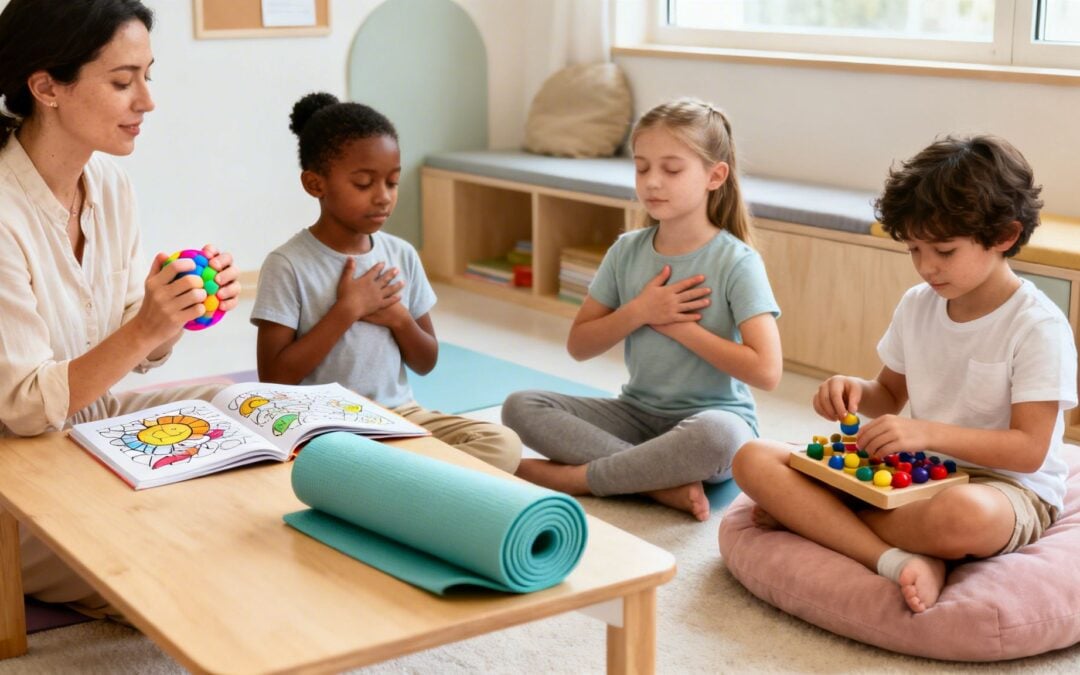
Anxiety in children can feel like an overwhelming storm of emotions, making it difficult for them to learn, connect with others, and feel secure in their environment. For parents, caregivers, and educators, finding effective ways to help can be a significant challenge. The goal is not to eliminate worry entirely, but to equip children with a practical toolkit to navigate these feelings successfully. This article moves beyond generic advice to provide a curated collection of eight evidence-based, actionable activities for kids with anxiety.
Each strategy is designed for easy implementation in both classroom and home settings, supported by specific examples and trauma-informed tips. We will explore a range of approaches that address the whole child, from grounding mindfulness and breathing exercises to expressive creative arts and purposeful movement. You will find concrete methods that help children externalize their feelings through journaling, connect with nature, and build social skills through structured games.
This resource provides a comprehensive guide for building resilience and emotional regulation skills. It focuses on empowering children by teaching them how to recognize their emotional triggers and respond with confidence. We are not just aiming to calm the immediate storm; we are teaching children how to become their own anchors in any weather, fostering a sense of agency over their emotional well-being. Let’s begin building a versatile toolkit filled with practical and effective strategies.
1. Mindfulness and Breathing Exercises
Mindfulness and breathing exercises are foundational activities for kids with anxiety, teaching them to anchor themselves in the present moment and consciously calm their nervous system. These structured practices interrupt the body’s automatic stress response, or “fight-or-flight” mode, by activating the parasympathetic nervous system, which promotes rest and relaxation. By focusing on the physical sensation of their breath, children gain a powerful, portable tool they can use anywhere to manage overwhelming feelings.
This approach empowers children with a sense of control over their internal state, turning an abstract feeling like anxiety into a manageable physical process. The work of pioneers like Jon Kabat-Zinn and Thich Nhat Hanh has shown that consistent practice can reshape neural pathways, making self-regulation a more accessible skill over time.
Why It Works for Anxiety
Anxiety often pulls a child’s focus toward future worries (“What if I fail the test?”) or past events (“Why did I say that?”). Breathing exercises immediately redirect their attention to the present. The slow, deep breaths signal safety to the brain, lowering heart rate and blood pressure, and providing immediate physiological relief.
Practical Examples and Implementation
- Belly Breathing (or “Balloon Breathing”): Ask the child to place a hand or a small stuffed animal on their belly. Instruct them: “Breathe in slowly through your nose for four counts and watch the stuffed animal rise as you fill your belly like a big balloon. Then, breathe out slowly through your mouth for four counts and watch it go back down.”
- Box Breathing: Use a visual aid or have them trace a square on their desk or leg with their finger. Guide them: “Breathe in for four seconds as you trace the top side, hold your breath for four seconds as you trace down, breathe out for four seconds as you trace the bottom, and hold for four seconds as you trace back up.”
- Snake Breath: This makes exhaling fun. Have the child take a deep breath in and then hiss it out slowly and steadily like a snake, trying to make the “ssssss” sound last as long as possible.
- Classroom “Calm Corner”: Schools like those using Soul Shoppe’s peer mediation programs often designate a quiet space with visual breathing guides (like a poster of box breathing), glitter jars, and soft seating. A child feeling overwhelmed can use the corner for a 3-minute reset.
Actionable Tips for Adults
- Practice Proactively: Introduce these techniques during calm moments, such as circle time in the morning or before bedtime at home. Say, “Let’s practice our Balloon Breaths to help our bodies feel calm and ready for the day.”
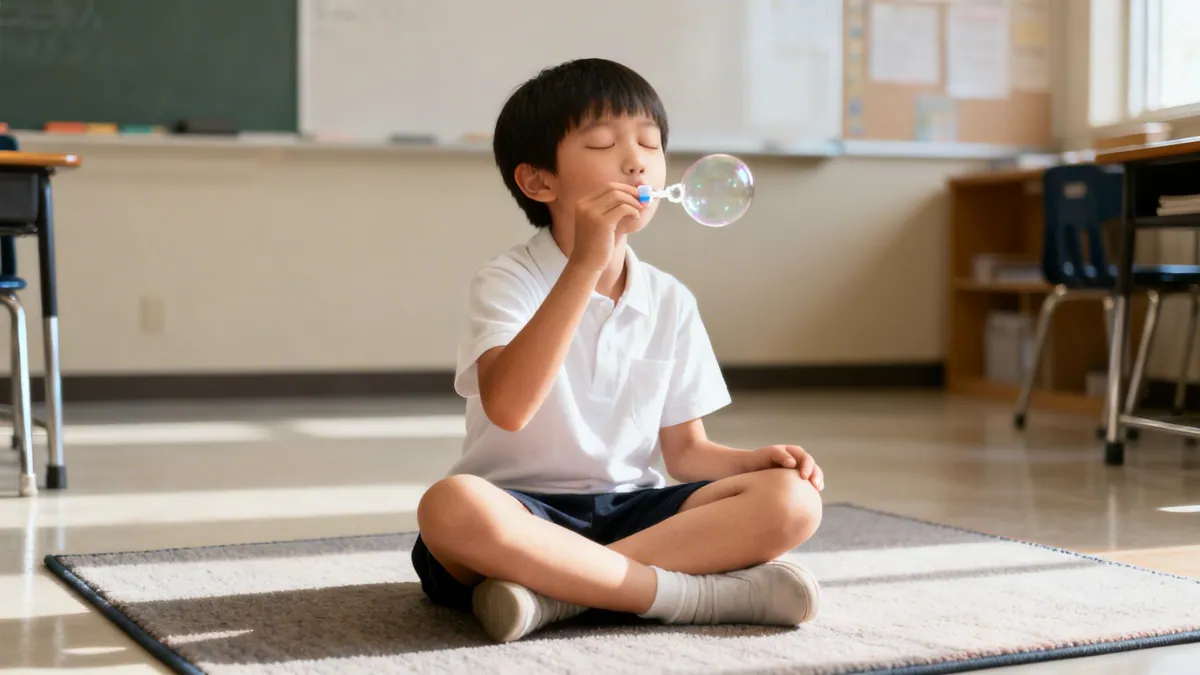
- Use Visuals: For younger children, use a pinwheel or bubbles to provide a concrete visual for their exhale. This makes the concept of a long, slow breath less abstract. Challenge them to see how slowly they can make the pinwheel spin.
- Model It Yourself: When you feel stressed, say aloud, “I’m feeling a little overwhelmed, so I’m going to take three deep belly breaths.” This normalizes the practice and shows its real-world application.
- Keep It Short: Start with just 30-60 seconds of focused breathing for younger kids and gradually increase the duration as they become more comfortable.
To explore a wider range of exercises, you can find more mindfulness activities for kids that build on these foundational breathing techniques.
2. Creative Arts and Expression (Drawing, Painting, Sculpting)
Creative arts provide a powerful non-verbal outlet for children to process complex emotions like anxiety. Activities such as drawing, painting, or sculpting bypass the analytical parts of the brain that can get stuck in worry loops, allowing children to access and express their feelings directly. The tactile and sensory nature of art-making itself is inherently grounding, making it one of the most effective activities for kids with anxiety.
This approach is championed by art therapists and trauma-informed educational practices, which recognize that giving form to a feeling makes it less overwhelming and more manageable. The focus is not on artistic skill but on the act of creation, which provides a sense of agency and a safe container for difficult emotions.
Why It Works for Anxiety
Anxiety can be hard for children to put into words. Art offers a different language, one of symbols, colors, and shapes. This externalization process allows a child to see their anxiety as separate from themselves, reducing its power. The repetitive, rhythmic motions involved in drawing or sculpting can also be meditative, helping to calm a racing mind and an activated nervous system.
Practical Examples and Implementation
- Worry Monsters: Provide paper, markers, and modeling clay. Instruct the child: “Draw or build what your worry looks like. Does it have big teeth? Spiky hair? Give it a name.” Afterward, they can draw a cage around it, give it a silly hat, or physically lock a clay version in a box to symbolize taking control.
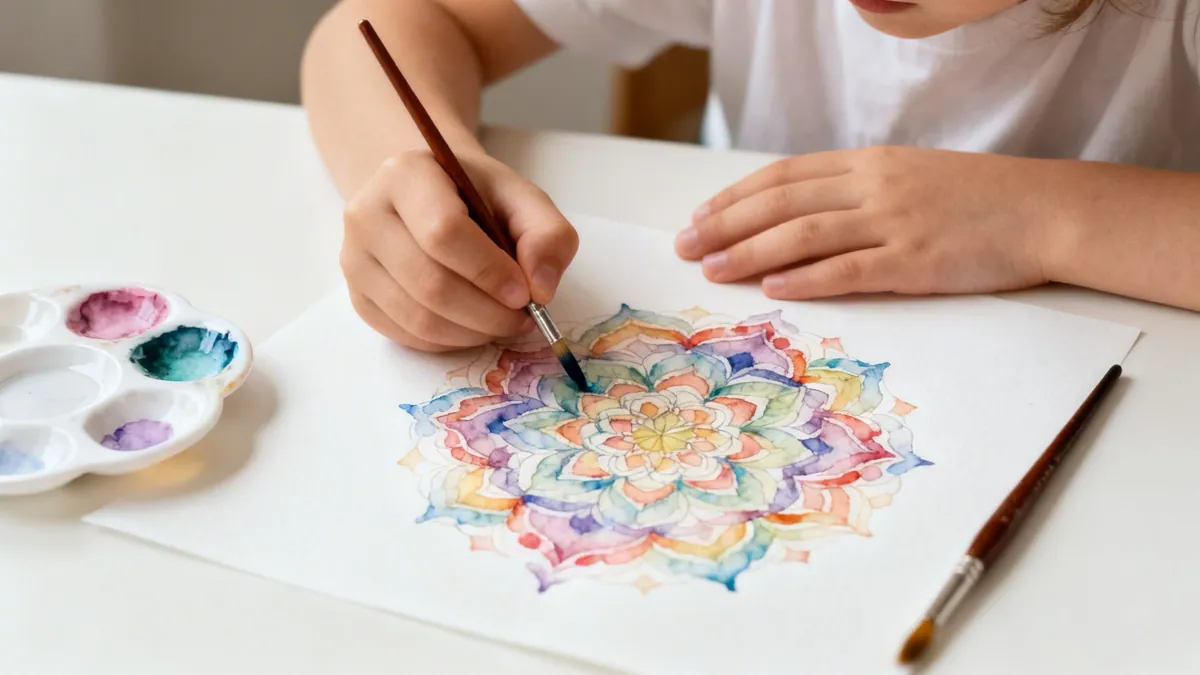
- Mandala Coloring: Provide printed mandala templates for children to color. The structured, symmetrical patterns are known to promote focus and calm, making them a perfect tool for a classroom “calm-down corner.” Suggest they start from the center and work their way out.
- “Feelings” Painting: Set out paints and paper with the simple prompt to “paint what your worry feels like” or “paint what calm looks like.” For example, a child might paint anxiety as a chaotic scribble of black and red, while calm might be a smooth wash of blue and green.
- Clay Squishing and Sculpting: The sensory act of kneading, rolling, and squishing clay is very grounding. Prompt them: “Squeeze the clay as hard as you can when you think of a worry, then smooth it out to make it feel calm.”
Actionable Tips for Adults
- Focus on Process, Not Product: Emphasize that there is no “right” way to create. Use phrases like, “Tell me about the colors you chose,” instead of asking, “What is it?”
- Offer a Variety of Materials: Provide options like clay, paint, markers, and collage materials. Different textures and mediums will appeal to different children and sensory needs.
- Use Specific Prompts: Guide their expression with gentle prompts like, “Draw a picture of a place where you feel totally safe,” or “If your anger had a color, what would it be today?”
- Validate Their Expression: Display their artwork (with their permission) to show that their feelings and creative expressions are valued and seen.
Expanding on creative outlets, it’s worth exploring the developmental benefits of beginner guitar lessons for kids, which can contribute to a child’s emotional well-being through structured musical expression.
3. Movement and Somatic Activities (Yoga, Dance, Stretching)
Physical activities that integrate mind-body awareness help anxious children release stored tension and reconnect with their bodies in a safe, non-judgmental way. Movement practices like yoga, dance, and stretching activate the parasympathetic nervous system, reducing the physiological symptoms of anxiety while building body awareness and confidence. These are powerful activities for kids with anxiety because they offer a non-verbal outlet for expressing complex emotions.