

8 Essential Communication Skill Activity Ideas for K-8 Students in 2026
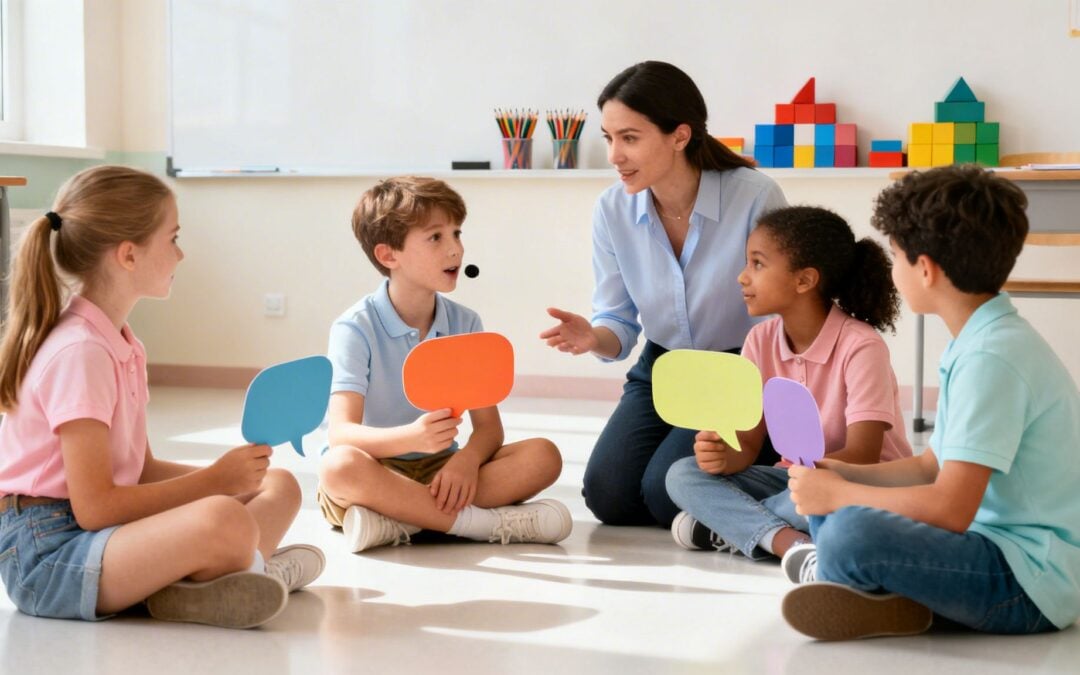
In any K-8 classroom, the ability to communicate effectively is more than just a ‘nice-to-have’. It’s the foundational skill that underpins academic success, emotional well-being, and a positive school climate. When students can listen with empathy, express their needs clearly, and navigate disagreements constructively, the entire learning community flourishes. These abilities are not innate; they must be intentionally taught, modeled, and practiced. At the heart of all effective communication, especially in building a thriving classroom, lies a deep understanding of emotional intelligence, which enables students to manage their feelings and understand others’.
For educators and parents seeking to cultivate these core competencies, finding the right communication skill activity can feel overwhelming. This guide cuts through the noise. It offers a curated collection of eight powerful, research-backed activities designed for the modern K-8 classroom and easily adaptable for home use. We will move beyond generic advice to provide concrete, actionable strategies that foster genuine connection.
This article provides a clear roadmap for each activity, including:
- Learning Objectives: What students will achieve.
- Step-by-Step Instructions: How to implement the activity.
- Grade-Level Differentiation: Tips for adapting to K-2, 3-5, and 6-8 students.
- SEL Connections: Aligning activities with key social-emotional learning goals.
- Assessment and Reflection: Simple ways to measure understanding.
Our goal is to equip you with the practical tools needed to build a culture of connection, safety, and mutual respect, one conversation at a time. Let’s dive into the activities that will transform how your students communicate.
1. Active Listening Circles
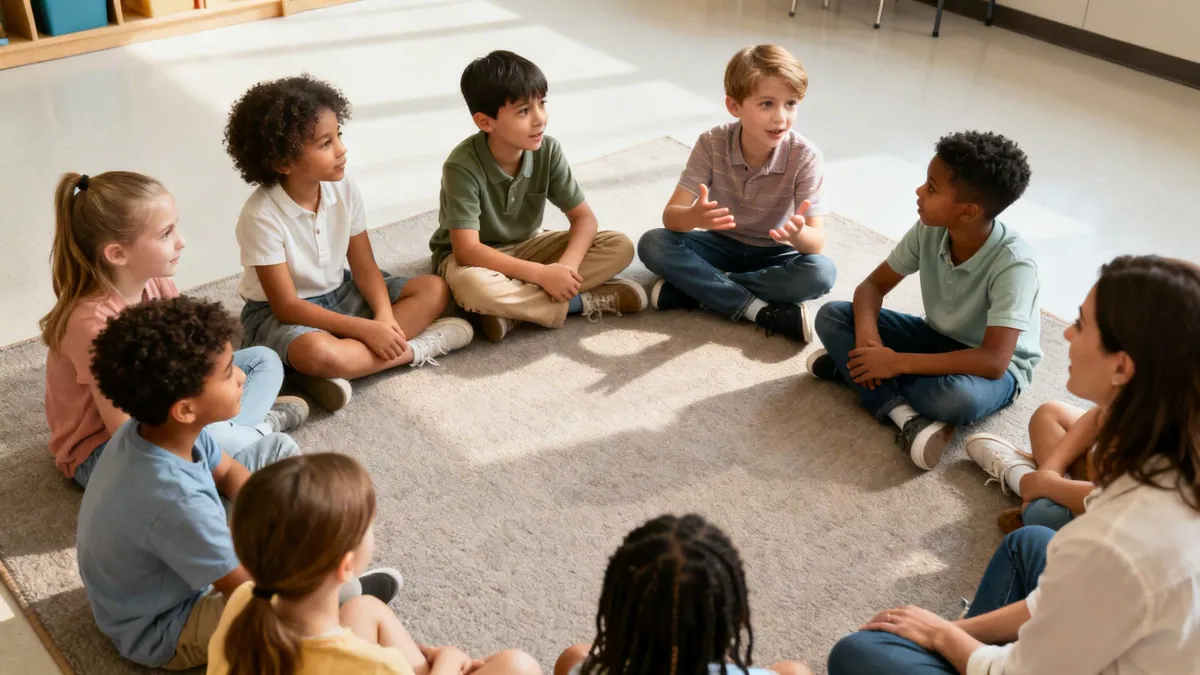
Active Listening Circles are a structured and powerful communication skill activity designed to cultivate focused listening and empathy. In this format, participants sit in a circle, and one person speaks at a time without interruption, often holding a “talking piece” to signify their turn. The core practice involves the other members giving their complete attention, not just to hear the words, but to understand the speaker’s perspective and feelings.
This activity is foundational because it creates a space of psychological safety. When students know they will be heard fully and without judgment, they are more willing to share openly and honestly. The listener’s role is not to immediately respond or problem-solve, but to first reflect back what they heard, validating the speaker’s experience.
Why It Works
This method, rooted in restorative practices and indigenous traditions, slows down communication and prioritizes understanding over reacting. It directly counters the common habit of formulating a reply while someone is still speaking. For students, this builds crucial social-emotional skills like self-awareness, social awareness, and responsible decision-making. The circle format itself is symbolic, promoting equality and community by placing every participant on the same level.
Implementation Tips for Educators and Parents
To successfully implement this activity, start small and be consistent.
- Establish Clear Norms: Co-create ground rules with participants. Key rules include: speak from the heart, listen from the heart, no interruptions, and respect confidentiality.
- Use a Talking Piece: Introduce an object (like a ball, a decorated stone, or a stuffed animal) that grants the holder the exclusive right to speak. This physical cue helps manage turn-taking.
- Model and Scaffold: Begin by modeling the process. Use sentence stems to guide listeners, such as, “What I heard you say is…” or “It sounds like you feel…” before they share their own thoughts. For example, if a student says, “I was sad because no one played with me at recess,” the next student could practice by saying, “What I heard you say is you felt lonely during recess because you wanted someone to play with.”
- Start with Low-Stakes Topics: Begin with simple prompts like, “Share one good thing that happened this weekend,” or “What is a challenge you are proud of overcoming?” before moving to more sensitive subjects.
- Adapt for Different Ages: For younger students (K-2), keep circle time short and use simple prompts like, “What is your favorite animal and why?” For older students (6-8), circles can address more complex issues like peer conflicts, social pressures, or community problem-solving. A parent could use this at home by asking, “What was the best part of your day?” at the dinner table, passing a “talking spoon” to each family member.
This deliberate practice of focused attention is a cornerstone of effective communication. For more ideas on building these foundational skills, explore these listening skills activities that can complement circle work.
2. Role-Playing and Perspective-Taking Scenarios
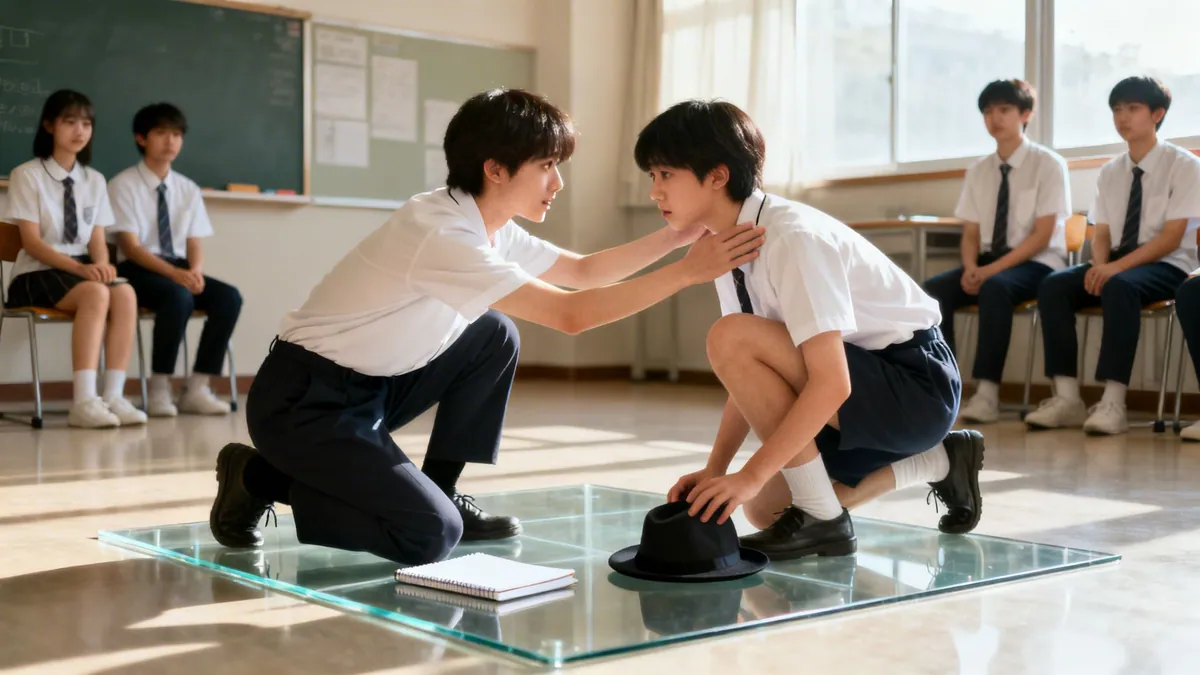
Role-Playing and Perspective-Taking Scenarios are an experiential communication skill activity where students act out realistic social situations to practice communication strategies and develop empathy. Participants take on various roles, such as a bystander, a peer, or an adult, to experience conflicts from multiple angles. This approach helps them navigate challenges like exclusion, peer pressure, or disagreements in a safe, controlled environment.
This activity is powerful because it moves communication skills from theory to practice. By stepping into someone else’s shoes, students internalize the emotional impact of words and actions. This experiential learning is crucial for developing emotional intelligence and building a toolkit of effective responses for real-life situations, such as those addressed in anti-bullying programs that feature bystander intervention scenarios.
Why It Works
Grounded in drama-based learning and methodologies like Augusto Boal’s Theater of the Oppressed, this activity makes abstract concepts like empathy tangible. It allows students to experiment with different communication styles, like assertive versus aggressive language, and see the immediate outcomes without real-world consequences. For educators, it provides a dynamic way to assess a student’s social understanding and guide them toward more constructive behaviors. The process of acting and reflecting helps cement learning in a way that lectures or worksheets cannot.