

Professional development topics for teachers to elevate classroom practice
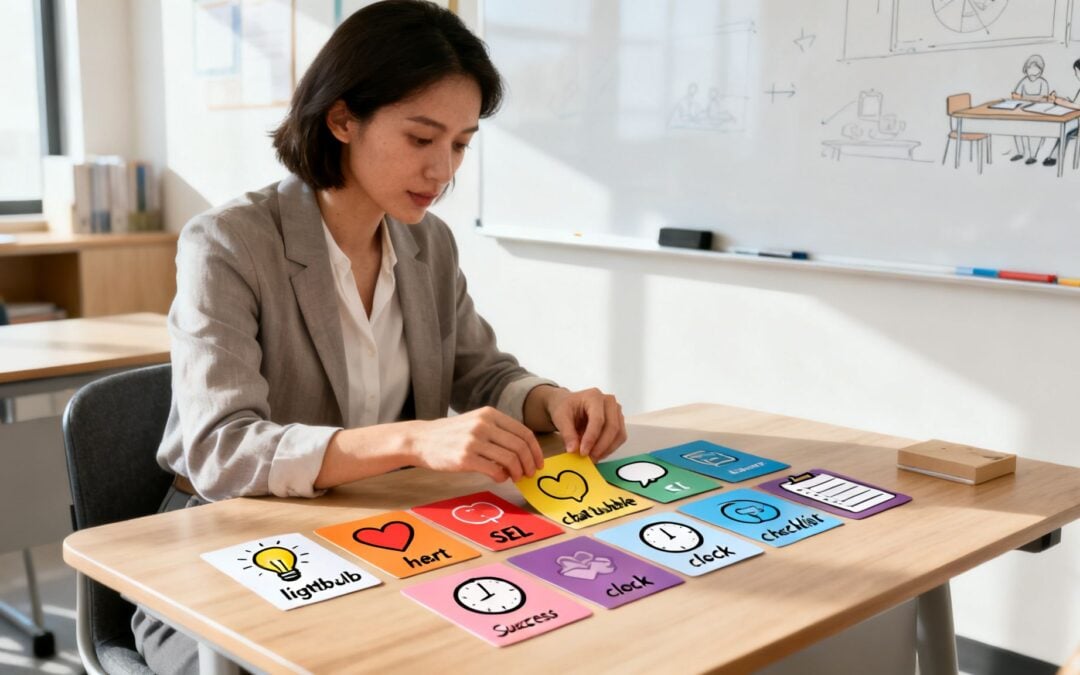
In a world where students’ needs are more complex than ever, traditional professional development often falls short. K–8 educators need more than just curriculum updates; they require practical, human-centered skills to build classrooms that are not only academically rigorous but also emotionally safe and deeply connected. This article moves beyond generic advice to offer 10 essential professional development topics for teachers, each designed for immediate and lasting impact in your school community.
School leaders, classroom teachers, and even parents will find actionable strategies and real-world examples to help students thrive. We will explore how frameworks from organizations like Soul Shoppe are transforming school cultures by prioritizing social-emotional learning (SEL), conflict resolution, and educator well-being. This guide provides a clear roadmap for creating learning environments where every student and staff member can succeed.
Each topic outlined below is presented as a comprehensive module, complete with:
- Why It Matters: The core reason this topic is critical for K-8 education.
- Sample Learning Objectives: Clear goals for what educators will be able to do.
- Suggested Activities & Formats: Practical ideas for workshops, coaching, and micro-PD.
- Measures of Success: How to know if the training is making a real difference.
This resource is structured for administrators planning their school’s learning calendar and for individual educators seeking to deepen their practice. To explore a wide array of options for ongoing professional learning, consider looking into various available professional development courses that align with these critical areas. Now, let’s explore the topics that will redefine professional learning and empower your school community.
1. Social-Emotional Learning (SEL) Framework Implementation
Social-Emotional Learning (SEL) provides a systematic framework for teaching students the practical skills needed to thrive both academically and personally. This approach focuses on developing core competencies: self-awareness, self-management, social awareness, relationship skills, and responsible decision-making. Professional development in SEL equips teachers to integrate these concepts directly into their daily instruction, fostering a classroom environment where emotional intelligence grows alongside academic knowledge. A robust SEL framework is the bedrock of a psychologically safe school, where students feel seen, supported, and ready to learn.
Why It’s a Top Priority
SEL is not just an add-on; it is foundational to student success. Schools that effectively implement SEL programs, like those developed by CASEL or Soul Shoppe, see tangible results. Research consistently shows an 11-percentile point gain in academic performance and significant reductions in disciplinary incidents. When students can identify their feelings, manage stress, and resolve conflicts, they are better equipped to engage in learning.
“When we teach children how to navigate their inner world, we give them the tools to navigate the outer world with compassion and resilience.”
Actionable Implementation Tips
To make SEL a core part of your school’s culture, focus on practical and consistent application.
- Start with Staff: Begin with professional development for all staff to ensure they understand the “why” behind SEL and can model the skills themselves.
- Integrate, Don’t Isolate: Weave SEL into existing routines. Practical Example: During morning meetings, use a “feelings check-in” where students can point to an emotion on a chart that best describes how they feel. This normalizes talking about emotions and helps the teacher understand the class’s mood.
- Use Consistent Language: Adopt a school-wide vocabulary for emotions and conflict resolution. Practical Example: When a student is upset, a teacher might say, “It looks like you’re feeling frustrated. Let’s use our ‘Calm-Down Corner’ to take a few deep breaths.” This creates a predictable and supportive environment.
- Engage Families: Provide parents with resources and workshops to extend SEL practices at home. Practical Example: Send home a one-page guide on “I-Statements” so parents can help their children express feelings without blaming, such as saying, “I feel sad when I’m left out,” instead of “You never play with me.”
- Track Your Progress: Monitor data on student behavior, attendance, and well-being to demonstrate the impact of your SEL initiatives and maintain momentum. For additional guidance, explore these powerful SEL resources for teachers to support your implementation journey.
2. Mindfulness and Self-Regulation Practices for Educators
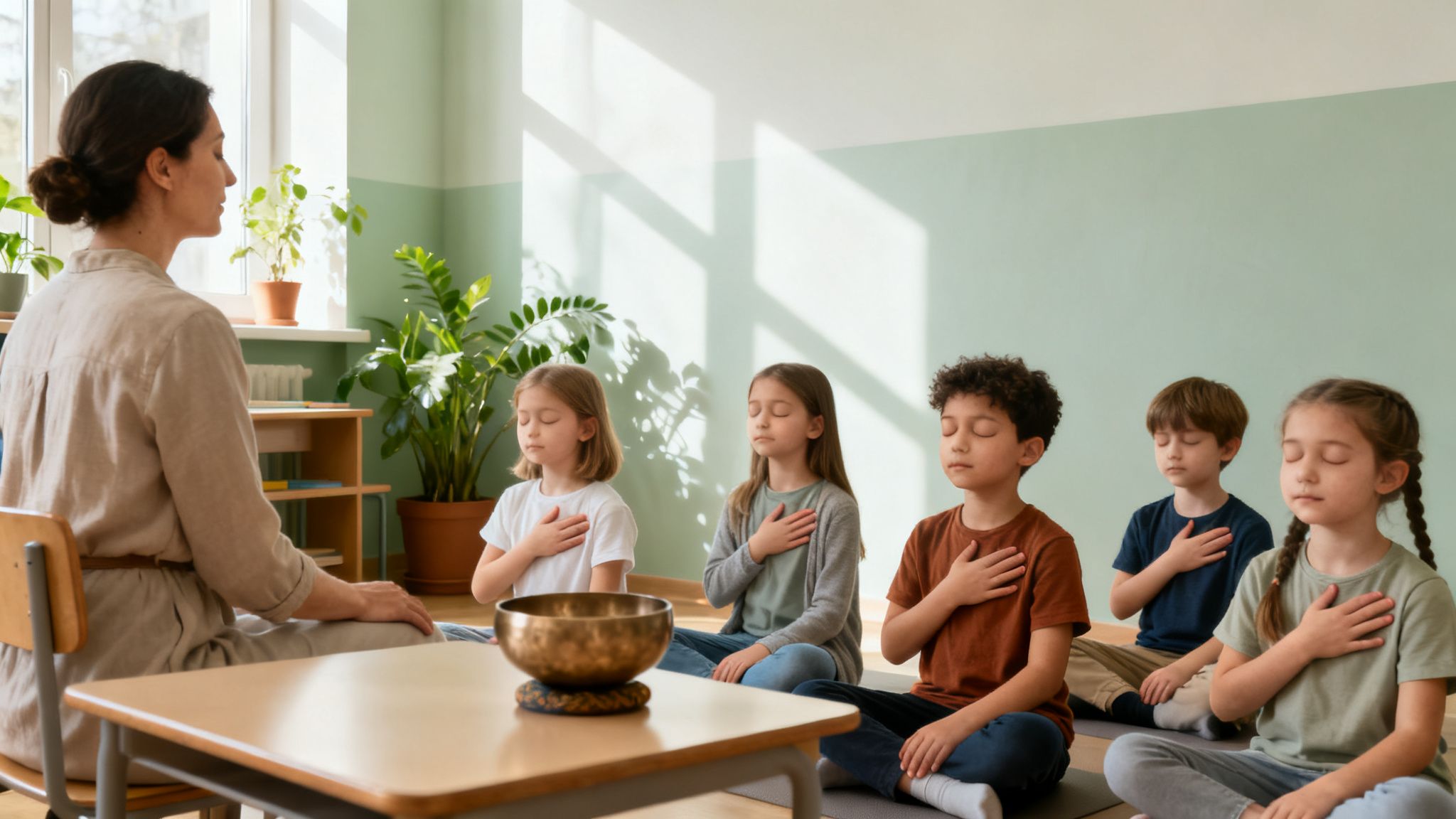
Mindfulness and self-regulation professional development provides teachers with evidence-based strategies to manage their own stress, model emotional resilience, and create calmer learning environments. This training focuses on teaching educators practical tools like mindful breathing, grounding techniques, and body awareness. By first developing their own practice, teachers can authentically guide students to use these same skills, fostering a classroom atmosphere of focus, calm, and emotional control.
Why It’s a Top Priority
An educator’s ability to remain calm and regulated directly impacts the entire classroom’s emotional climate. When teachers are grounded, they are better equipped to respond thoughtfully rather than react impulsively to student behavior. Schools using programs like the MindUp curriculum or Soul Shoppe’s mindfulness training report tangible improvements in classroom focus and reduced student anxiety. Research also supports this, with studies showing teachers who complete mindfulness training report a 40% reduction in perceived stress.
“A calm teacher is the greatest asset in a classroom. When we regulate ourselves, we create the space for our students to learn how to regulate themselves.”
Actionable Implementation Tips
To effectively embed mindfulness into your school culture, focus on making the practices accessible, consistent, and modeled by adults.
- Start Small and Consistently: Integrate brief, 2-3 minute mindfulness practices into daily routines. Practical Example: Use a chime to signal a moment of “silent breathing” after a noisy transition like coming in from recess. Students simply close their eyes and listen until the sound of the chime fades completely.
- Model First: Teachers should practice mindfulness personally before teaching it to students. This authenticity helps build student trust and demonstrates the value of the practice.
- Use Consistent Cues: Adopt school-wide language and visual or auditory cues, such as a singing bowl or a specific hand signal, to initiate mindfulness moments. This creates predictability.
- Offer Student Choice: Not every technique works for every child. Practical Example: In a “Calm Corner,” provide options like a glitter jar to watch, a soft blanket for tactile comfort, or headphones with calming sounds. This allows students to choose what helps them self-regulate.
- Share the Why: Build staff buy-in by sharing the research behind mindfulness and its positive effects on brain development and stress reduction. Explore these calming activities for the classroom to find strategies that fit your students.
3. Conflict Resolution and Peer Mediation Training
Conflict resolution and peer mediation training provide teachers and student leaders with structured approaches to address disagreements constructively. This professional development focuses on teaching negotiation skills, facilitating difficult conversations, and establishing programs where students can mediate their own disputes. By equipping educators with these frameworks, schools can shift from punitive discipline to restorative approaches that rebuild relationships and teach essential life skills. This transforms classroom conflicts into valuable learning opportunities for emotional and social growth.
Why It’s a Top Priority
Empowering students to solve their own problems is a core component of a healthy school culture. When students learn to navigate disagreements respectfully, the entire community benefits. Schools with established peer mediation programs report dramatic decreases in disciplinary referrals, sometimes by as much as 70%. These programs build empathy, improve communication skills, and reduce the burden on teachers to act as constant referees. It is a proactive strategy that addresses the root of conflict rather than just the symptoms.
“Teaching children to resolve conflicts is teaching them to build a more peaceful world, one conversation at a time.”
Actionable Implementation Tips
To embed conflict resolution into your school, focus on creating clear systems and empowering student leaders.
- Train a Core Group: Start by training a select group of student leaders and teachers to act as peer mediators. Their success and enthusiasm will build momentum for a school-wide program.
- Establish Clear Protocols: Develop a step-by-step mediation process. Practical Example: Create a “Peace Path” on the playground with designated spots for students to stop and follow steps: 1) Cool Off, 2) Talk & Listen (using “I-statements”), 3) Brainstorm Solutions. This visual guide helps students manage conflicts independently.
- Integrate Shared Language: Use consistent terms like “I-statements” and “active listening” across all classrooms. This creates a common toolkit for students to draw upon when disagreements arise.
- Debrief and Reflect: Treat every resolved conflict as a teachable moment. Practical Example: After a mediation, ask students, “What solution did you both agree on?” and “What could you try next time this happens?” This reinforces the learning and encourages future problem-solving.
- Celebrate Successes: Publicly recognize the hard work of your peer mediators. Share success stories in newsletters or school assemblies to reinforce the value of the program. For more tools, explore these effective conflict resolution strategies for kids to support your students.
4. Creating Psychologically Safe and Inclusive Classrooms
This professional development topic guides teachers in designing classroom environments where every student feels safe, valued, and empowered to take academic and social risks. It moves beyond basic classroom management to focus on foundational elements like trauma-informed practices, culturally responsive teaching, addressing implicit bias, and fostering a deep sense of belonging. A psychologically safe classroom is a space where vulnerability is met with support, allowing students to engage fully, ask questions without fear, and build authentic connections with peers and educators.
Why It’s a Top Priority
Psychological safety is the prerequisite for all other learning. When a student’s nervous system is activated by fear, anxiety, or a feeling of not belonging, their capacity for higher-order thinking diminishes. Educators like Brené Brown and Zaretta Hammond have highlighted how safety and connection unlock cognitive potential. Schools that prioritize these environments see dramatic improvements; for example, those implementing trauma-informed practices often report up to a 30% decrease in suspensions because they address the root cause of behavior rather than just the symptoms.
“A child cannot learn if they do not feel safe. Creating a sense of belonging is not a ‘nice-to-have’-it’s a neurological requirement for academic engagement.”
Actionable Implementation Tips
Building a psychologically safe classroom is an ongoing process that requires intention and consistency.
- Assess Your Environment: Walk through your classroom and view it from a student’s perspective. Do the books, posters, and materials reflect the identities and cultures of all your students?
- Establish Community Rituals: Start the day with a community circle or a brief check-in. Practical Example: Implement a “Highs and Lows” circle where each student has an opportunity to share one good thing (a high) and one challenging thing (a low) from their day or week. This builds empathy and connection.
- Learn Student Identities: Go beyond names. Practical Example: Early in the year, have students create an “Identity Map” with words and drawings about their family, culture, hobbies, and strengths. Display these to celebrate the unique makeup of the classroom community.
- Respond with Curiosity: When bias or conflict arises, approach it as a teachable moment. Respond with questions like, “What makes you say that?” instead of punishment, fostering dialogue and understanding.
- Incorporate Trauma-Informed Practices: Understand how stress impacts learning and behavior. For more on this, explore these essential trauma-informed teaching strategies to create a more supportive space.
5. Bullying Prevention and Peer Support Program Development
Effective bullying prevention moves beyond zero-tolerance policies to cultivate a school culture where empathy, respect, and peer support are the norm. Professional development in this area equips educators to proactively address bullying by teaching students how to be upstanders, not just bystanders. It focuses on building a positive school climate where all students feel a sense of belonging and know how to support one another, thus reducing the conditions in which bullying can thrive. This approach addresses root causes rather than just punishing behaviors, creating a safer and more inclusive environment for everyone.
Why It’s a Top Priority
Bullying has severe and lasting effects on the mental health and academic performance of all students involved, including targets, aggressors, and witnesses. Schools that implement comprehensive, proactive prevention programs see significant positive outcomes. For example, partnerships like Soul Shoppe’s Junior Giants Strike Out Bullying program demonstrate how teaching specific social skills can empower entire communities. Research shows that effective, school-wide programs can reduce bullying incidents by up to 40-70%, making this one of the most impactful professional development topics for teachers.
“True bullying prevention is not about creating rules; it’s about building a community where kindness and courage are more powerful than cruelty.”
Actionable Implementation Tips
To embed a culture of prevention and support, focus on consistent, school-wide strategies.
- Define and Differentiate: Create and share clear, visual definitions of bullying versus conflict. Ensure all staff, students, and families understand the difference and the school’s response protocols for each.
- Train Everyone Consistently: All staff, from bus drivers to principals, must be trained to recognize the signs of bullying and respond consistently and effectively. This prevents situations from being dismissed as “just teasing.”
- Empower the Upstander: Teach all students safe and practical upstander skills. Practical Example: Role-play a scenario where one student makes fun of another’s drawing. Teach peers three safe options: 1) Distract (“Hey, want to play tag?”), 2) Speak Up (“That’s not cool, stop it.”), or 3) Get Help (Tell a trusted adult).
- Involve Student Voice: Engage students in creating prevention campaigns, peer mediation programs, or school climate committees. When students have ownership, the initiatives are far more authentic and successful.
- Implement Restorative Follow-Up: After an incident, ensure a structured follow-up process is in place. Practical Example: A teacher facilitates a restorative circle where the student who bullied listens to how their actions affected the target and then helps brainstorm ways to repair the harm, such as offering a sincere apology or inviting the target to join a game.
6. Communication Skills and Empathetic Listening Workshops
Advanced communication skills are the engine of a positive classroom culture, enabling teachers to build strong, trust-based relationships with students, families, and colleagues. This professional development topic focuses on practical techniques like active listening, empathetic responding, and non-violent communication. By mastering these skills, educators learn to de-escalate conflicts, foster mutual respect, and create an environment where every student feels heard and understood. This foundation in effective communication directly supports all other SEL competencies and is essential for a thriving school community.
Why It’s a Top Priority
Strong communication skills are not inherent; they are taught, practiced, and refined. When teachers are trained in empathetic listening, the impact is immediate and profound. Schools utilizing structured communication frameworks, such as Non-Violent Communication, often see a significant reduction in disciplinary incidents, sometimes by as much as 30-50%. Furthermore, teachers trained in these methods report improved student engagement and a greater sense of connection in the classroom, transforming challenging interactions into opportunities for growth.
“Empathetic listening is about truly hearing what is said and, more importantly, what is left unsaid. It’s the key to unlocking genuine connection and understanding.”
Actionable Implementation Tips
To embed advanced communication skills into your school’s daily practice, focus on consistent modeling and application.
- Practice with Peers: Before trying new techniques with students, hold role-playing sessions where staff can practice active listening and empathetic responses with each other in a low-stakes environment.
- Model “I” Statements: Teach and consistently use “I” statements to express feelings without placing blame. Practical Example: Instead of saying, “You never listen!” a teacher can model, “I feel frustrated when I have to repeat instructions. Can you help me understand what’s distracting you?”
- Ask, Don’t Assume: Train staff to ask clarifying questions before jumping to conclusions. Practical Example: If a student puts their head down, instead of assuming they are defiant, a teacher might quietly ask, “It looks like something is on your mind. Is there anything you want to share?”
- Use Communication Scripts: Provide teachers with scripts and visual aids for challenging conversations, such as parent-teacher conferences or student mediations, to help them stay grounded in empathetic language.
- Schedule Connection Time: Encourage teachers to build brief, regular one-on-one check-ins with students to practice listening and strengthen individual relationships.
7. Teacher Self-Care, Resilience, and Burnout Prevention
Addressing teacher well-being is not a luxury; it is a fundamental requirement for creating a sustainable and effective educational environment. This professional development topic focuses on equipping educators with the tools to manage stress, build personal resilience, and actively prevent burnout. By learning to recognize the signs of emotional exhaustion, set healthy boundaries, and prioritize self-care, teachers can protect their own mental health. This directly translates to a more positive and stable classroom, as resilient educators are better able to model emotional regulation and support their students’ needs.
Why It’s a Top Priority
Teacher burnout has reached crisis levels, leading to high turnover rates and negatively impacting student achievement. When educators are overwhelmed, their capacity for patient, empathetic, and effective instruction diminishes. Professional development focused on self-care, like mindfulness trainings or wellness programs, has been shown to reduce burnout by significant margins. Schools that invest in their staff’s well-being see improved teacher retention, a more positive school climate, and educators who are more present and engaged with their students.
“Caring for myself is not self-indulgence, it is self-preservation, and that is an act of political warfare.” – Audre Lorde
Actionable Implementation Tips
To embed a culture of well-being, schools must move beyond one-off workshops and integrate supportive practices into daily operations.
- Normalize the Conversation: Create safe spaces, like staff meetings or professional learning communities, for teachers to openly discuss stress and mental health without judgment.
- Model Healthy Boundaries: School leaders should model and encourage practices like not sending emails after work hours. Practical Example for Teachers: Use an email scheduler to write parent communications in the evening but have them sent automatically during work hours the next morning. This protects personal time.
- Build Peer Support Systems: Facilitate peer mentoring programs or “buddy systems” where teachers can check in with one another, share challenges, and celebrate successes.
- Address Systemic Stressors: While individual strategies are important, also examine and address systemic issues. Practical Example: A school administration could create a shared bank of substitute lesson plans for emergencies, reducing the stress on a teacher who needs to take an unexpected sick day.
- Provide Tangible Resources: Offer access to confidential counseling services, host on-site yoga or mindfulness sessions, and ensure break rooms are comfortable and restorative spaces.
8. Family Engagement and Home-School Partnership Building
Building authentic partnerships with families transforms the school into a collaborative community where students are supported from all angles. This approach moves beyond traditional parent-teacher conferences to create a consistent, two-way dialogue. Professional development on this topic gives teachers the tools for culturally responsive engagement, ensuring every family feels valued and empowered to participate in their child’s education. When schools and homes work together, the impact of social-emotional learning and academic instruction is magnified significantly.
Why It’s a Top Priority
Strong family engagement is a powerful lever for student achievement and well-being. Research consistently shows that when families are actively involved, students demonstrate higher academic performance, better attendance, and improved social skills. Schools with strong family partnerships have shown up to a 30% improvement in student outcomes. This collaborative approach ensures that the skills students learn in the classroom, from managing emotions to resolving conflicts, are understood and reinforced in their home environment.
“Education is a shared commitment between dedicated teachers, motivated students, and enthusiastic parents. When that partnership is strong, anything is possible.”
Actionable Implementation Tips
To build a robust home-school partnership, focus on creating accessible and authentic connection points.
- Survey Families: Begin the year by asking families about their communication preferences, potential barriers to participation (like work schedules or transportation), and what they are most interested in learning.
- Offer Flexible Engagement: Provide opportunities at various times, both in-person and virtual. Offer practical support like childcare or translation services to remove common barriers.
- Share Practical Strategies: Use newsletters or short videos to share simple, easy-to-implement SEL strategies that families can try. Practical Example for Parents: Suggest creating a “calm-down kit” at home with items like play-doh, a coloring book, and a stress ball, mirroring the tools used in the classroom’s “Calm Corner.”
- Establish Two-Way Communication: Create channels where families can easily provide input. Practical Example: Use a simple app like Remind or ClassDojo to send quick, positive updates (“Liam was a great helper today!”) and allow parents to ask questions easily, fostering a continuous, positive dialogue.
- Celebrate Family Contributions: Acknowledge and highlight the ways families support learning, whether it’s through volunteering, helping with homework, or reinforcing school values at home. This builds a culture of mutual respect and appreciation.
9. Data-Driven SEL Implementation and Measuring Social-Emotional Outcomes
Moving beyond intuitive feelings about student well-being, data-driven SEL implementation provides a structured approach to measure, track, and improve social-emotional outcomes. This professional development topic shifts the focus from simply doing SEL to proving its effectiveness through concrete evidence. Educators learn to use valid assessment tools and systematic data collection to inform instruction, identify students needing targeted support, and demonstrate the tangible impact of their SEL programs. By quantifying growth in areas like self-regulation and relationship skills, schools can ensure accountability and drive continuous improvement.
Why It’s a Top Priority
What gets measured gets managed. Without data, SEL initiatives risk being seen as “soft” or optional, making them vulnerable to budget cuts. Schools that effectively use data, such as CASEL’s assessment toolkit, can demonstrate measurable gains in student attendance, behavior, and academic performance. This evidence-based approach helps secure sustained funding and buy-in from all stakeholders. Data transforms SEL from a well-intentioned program into a core, non-negotiable component of student success.
“Data gives a voice to student needs and a roadmap for our response, turning our commitment to SEL into a demonstrable impact.”
Actionable Implementation Tips
To embed data practices into your SEL culture, focus on making the process clear, collaborative, and purposeful.
- Select Aligned Tools: Choose assessments that directly measure the competencies in your school’s SEL framework. This could include student self-reports, teacher rating scales, or direct observations.
- Combine Data Sources: Use a mix of formal assessments and informal classroom data. Practical Example: A teacher could track the number of times students use the “Peace Path” to resolve conflicts independently each week. A decrease in teacher intervention is a clear data point showing skill development.
- Empower Student Voice: Involve students in the process through self-assessment and goal-setting. Practical Example: At the start of a unit on collaboration, students can rate themselves on a simple 1-4 scale for “listening to others’ ideas.” They can then set a goal and re-assess at the end, visually tracking their own growth.
- Analyze for Equity: Disaggregate data by student subgroups to identify and address any disparities in support or outcomes, ensuring your SEL efforts are equitable.
- Hold Regular Data Meetings: Schedule time for staff to collaboratively review SEL data, celebrate successes, identify trends, and adjust instructional strategies accordingly.
10. Experiential Learning Design and Interactive Workshop Facilitation
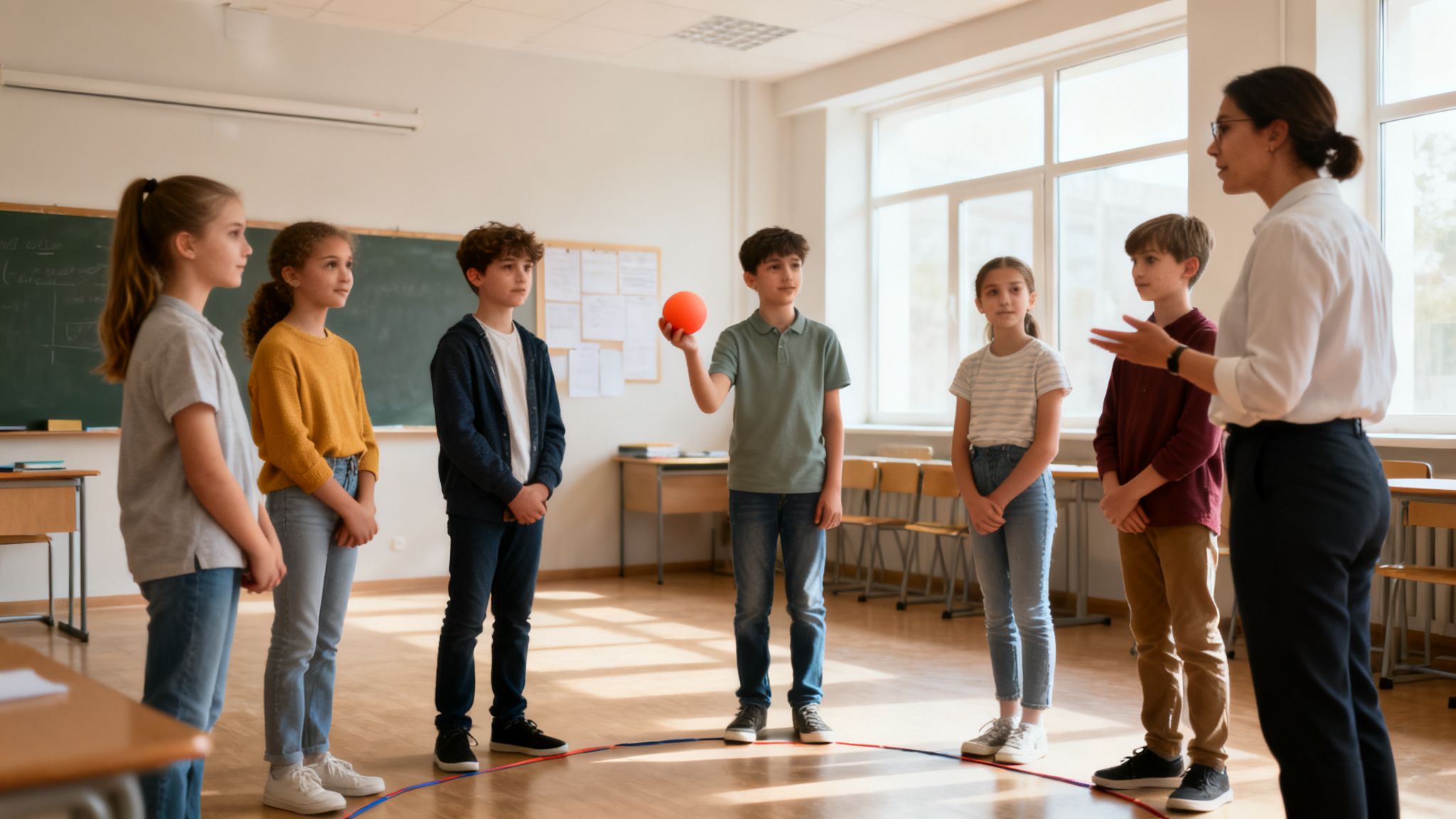
Experiential learning moves SEL instruction beyond lectures and worksheets, teaching students vital competencies through direct experience. This professional development focus trains educators to design and facilitate interactive sessions using activities, games, role-playing, and movement. By engaging students in embodied learning, teachers can create memorable, personally meaningful lessons that are more likely to be internalized and applied in real-world situations. This active, hands-on approach is foundational to creating a vibrant and effective learning environment.
Why It’s a Top Priority
Students learn best by doing. When SEL concepts are experienced rather than just explained, retention and application skyrocket. Schools that use interactive methods, like those pioneered by Soul Shoppe for over 20 years, report significantly higher student engagement and buy-in for school-wide initiatives. Shifting from passive to active learning transforms the classroom into a dynamic space where students practice empathy, communication, and problem-solving in the moment, building muscle memory for these crucial skills.
“Tell me, and I forget. Teach me, and I may remember. Involve me, and I learn.”
Actionable Implementation Tips
To embed experiential learning into your teaching practice, focus on creating structured, safe, and reflective activities.
- Start with Low-Risk Activities: Begin with simple, fun games to build trust and psychological safety before moving to more complex role-plays or discussions.
- Model and Demonstrate: Always provide clear instructions and demonstrate an activity first. This reduces confusion and encourages hesitant students to participate.
- Build in Reflection Time: The learning happens in the debrief. Practical Example: After a team-building game where students had to build a tower together without talking, ask reflective questions like, “What was challenging about communicating without words?” and “How did you show respect for your teammates’ ideas?”
- Adapt for All Learners: Modify activities to suit different age groups, physical abilities, and learning needs. The goal is participation, not perfection.
- Connect Activities to Skills: Ensure every game or role-play has a clear learning objective. Practical Example: To teach empathy, have students participate in an activity where they must guide a blindfolded partner through a simple obstacle course, forcing them to consider their partner’s perspective and needs.
10 Teacher PD Topics Comparison
| Program | Implementation complexity | Resource requirements | Expected outcomes | Ideal use cases | Key advantages |
|---|---|---|---|---|---|
| Social-Emotional Learning (SEL) Framework Implementation | High — whole-school curriculum integration and sustained PD | High — ongoing training, curriculum materials, district funding, data systems | Improved SEL skills, academic gains, reduced behavioral issues | District-wide SEL adoption, long-term school culture change | Systemic change, measurable outcomes, equity-building |
| Mindfulness and Self-Regulation Practices for Educators | Low–Medium — simple practices but requires consistency | Low — brief PD, minimal materials, short daily practice time | Reduced teacher stress, improved classroom focus and climate | Teacher wellness initiatives, classroom calming routines (K–8) | Low-cost, quick to implement, models regulation for students |
| Conflict Resolution and Peer Mediation Training | Medium — program setup, student leader training, protocols | Medium — training, coordinator time, ongoing supervision | Fewer disciplinary referrals, stronger peer leadership, restored relationships | Schools with frequent conflicts, leadership development programs | Restorative outcomes, empowers students, reduces staff behavior time |
| Creating Psychologically Safe and Inclusive Classrooms | High — deep cultural change, bias and trauma-informed work | High — sustained PD, community engagement, curricular adjustments | Increased belonging, engagement, reduced anxiety and exclusions | Equity-focused schools, trauma-informed initiatives, diverse communities | Promotes belonging, improves equitable outcomes and retention |
| Bullying Prevention and Peer Support Program Development | Medium — policy + prevention curriculum and follow-up | Medium — staff training, family outreach, program coordination | Significant reduction in bullying incidents, improved school climate | Schools with bullying concerns or prevention goals | Targeted reduction of harm, builds upstanders and peer support |
| Communication Skills and Empathetic Listening Workshops | Medium — skill acquisition needs practice and reinforcement | Low–Medium — workshops, coaching, practice time | Stronger teacher-student/family relationships, fewer misunderstandings | Improving family engagement, conflict-prone classrooms | Strengthens relationships, models healthy communication |
| Teacher Self-Care, Resilience, and Burnout Prevention | Low–Medium — individual practices plus systemic supports | Medium — PD, time allocation, access to mental-health resources | Lower turnover, better wellbeing, higher job satisfaction | High-stress schools, retention efforts, staff wellness programs | Reduces burnout, improves retention, models self-care for students |
| Family Engagement and Home-School Partnership Building | Medium–High — relationship-building and logistical coordination | Medium — outreach, translation, events, staff time | Increased family involvement, consistent home–school SEL practice | Schools seeking stronger community ties and attendance gains | Amplifies impact of SEL, builds trust and sustained support |
| Data-Driven SEL Implementation and Measuring Outcomes | High — assessment selection, data collection and analysis | High — validated tools, data systems, analyst time, training | Demonstrable program impact, targeted supports, funding leverage | Districts needing accountability, program evaluation, scaling | Evidence-based decision making, continuous improvement, accountability |
| Experiential Learning Design and Interactive Workshop Facilitation | Medium — requires facilitation skill and activity planning | Medium — materials, prep time, facilitator training | Higher engagement, practiced SEL skills, better retention | Workshops, assemblies, active-learning classrooms, student engagement drives | Memorable, practice-based learning; adaptable and highly engaging |
Putting People First: Your Next Steps in Professional Growth
Navigating the landscape of professional development topics for teachers can feel overwhelming, but the journey always leads back to a single, powerful truth: education is fundamentally a human endeavor. The most impactful growth doesn’t come from a new app or curriculum alone; it emerges from strengthening the connections between educators, students, and families. The topics explored in this article, from implementing Social-Emotional Learning frameworks to fostering teacher resilience, all share a common thread. They prioritize the people who make up your school community.
Investing in these areas is an investment in creating a culture where everyone feels safe, valued, and equipped to thrive. When we move beyond a compliance-based approach to professional development and embrace a people-first mindset, the results are transformative. We see educators who are not just managing their classrooms but are truly leading them with empathy and insight. We see students who can navigate conflict, understand their emotions, and build supportive peer relationships.
Synthesizing Your Learning and Taking Action
The path to a more connected school culture is built one intentional step at a time. As you reflect on the ten key topics we’ve covered, consider which one resonates most with your school’s current needs. Is it the foundational work of establishing a common SEL language, or is it a more targeted initiative like training peer mediators to empower students?
Here are some actionable next steps to turn inspiration into implementation:
- Conduct a Needs Assessment: Before launching a new initiative, gather feedback from your staff. A simple survey or a brief discussion at a staff meeting can reveal where your team feels they need the most support. Do they feel equipped to handle classroom conflicts? Are they struggling with burnout? Let their voices guide your focus.
- Start Small and Build Momentum: You don’t need to tackle everything at once. Success often comes from mastering one area and using that momentum to fuel the next. For example, begin by introducing a 3-minute mindfulness practice at the start of every staff meeting. This micro-PD models a technique teachers can immediately use with their students and demonstrates a commitment to educator well-being.
- Create a Cross-Functional Team: Form a small, voluntary committee of teachers, administrators, and even a school counselor to champion your chosen professional development topic. This distributed leadership model builds buy-in and ensures the initiative is a shared responsibility, not just another top-down mandate.
The Lasting Impact of Human-Centered Professional Growth
Choosing to focus on professional development topics for teachers that build emotional intelligence and relational capacity creates ripples that extend far beyond the classroom walls. When a teacher learns empathetic listening skills, they don’t just use them with a disruptive student; they apply them in parent-teacher conferences, turning potentially contentious conversations into collaborative partnerships. When a school commits to psychological safety, it doesn’t just reduce teacher turnover; it creates an environment where educators feel secure enough to innovate, take risks, and grow.
To truly elevate classroom practice, understanding the broader principles of growth is essential; for instance, exploring understanding why challenge is key to personal development can provide a powerful framework for ongoing learning. By embracing these challenges, we cultivate resilient, compassionate, and emotionally intelligent citizens prepared for a complex world. The ultimate goal is not just to improve academic outcomes but to nurture the whole child and the whole educator, creating a school community where everyone can reach their full potential.
Ready to bring experiential, transformative professional development to your school? For over 20 years, Soul Shoppe has partnered with educators to build safer, more connected school cultures through programs that teach essential SEL skills. Explore our on-site and virtual workshops at Soul Shoppe to discover how we can help you put people first.