

Top 10 Emotional Intelligence Activities for Kids (K–8) in 2026
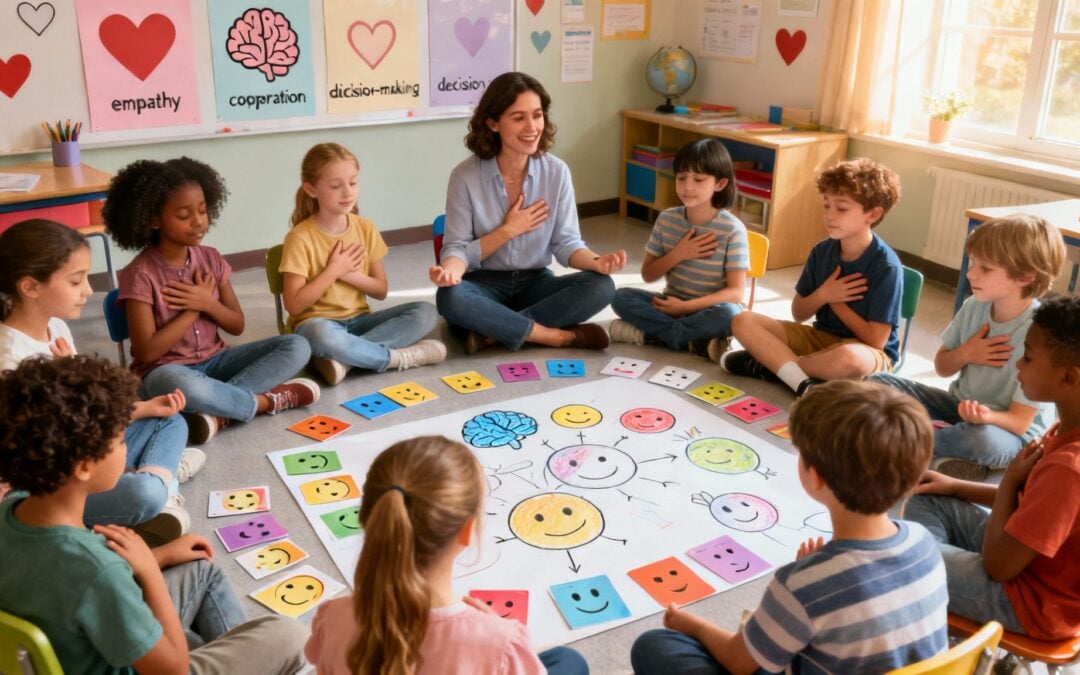
Welcome, parents and educators! In a world where academic achievement often takes center stage, we know a child’s ability to understand and manage their emotions is just as critical for a happy, successful life. This ability, known as emotional intelligence (EI), is the bedrock of resilience, empathy, and strong relationships. It’s the difference between a child who shuts down when frustrated and one who can say, “I’m feeling overwhelmed and need a moment.”
But how do we move beyond theory and actively build these essential skills? This guide provides a comprehensive collection of powerful, practical, and engaging emotional intelligence activities for kids from kindergarten through 8th grade. We believe in an experiential learning approach where children learn best by doing, so each activity is designed to be hands-on and memorable.
Inside, you will find a curated list of activities organized by core social-emotional learning (SEL) competencies. For each one, we provide:
- Clear learning goals to target specific skills.
- Step-by-step instructions for easy implementation.
- Practical examples for both home and classroom settings.
- Adaptations for different age groups and needs.
This isn’t just a list; it’s a toolkit. Our goal is to equip you with actionable strategies to foster emotionally intelligent children who can thrive in the classroom, on the playground, and in life. Let’s dive in and empower our kids with the tools they need to understand their inner world and connect meaningfully with the world around them.
1. Emotion Charades
Emotion Charades is a classic, interactive game that transforms the abstract concept of feelings into a physical, engaging activity. In this game, children act out different emotions using only facial expressions, gestures, and body language while their peers try to guess the feeling. This simple yet powerful exercise is one of the most effective emotional intelligence activities for kids because it directly targets the foundational skill of identifying and interpreting nonverbal emotional cues.
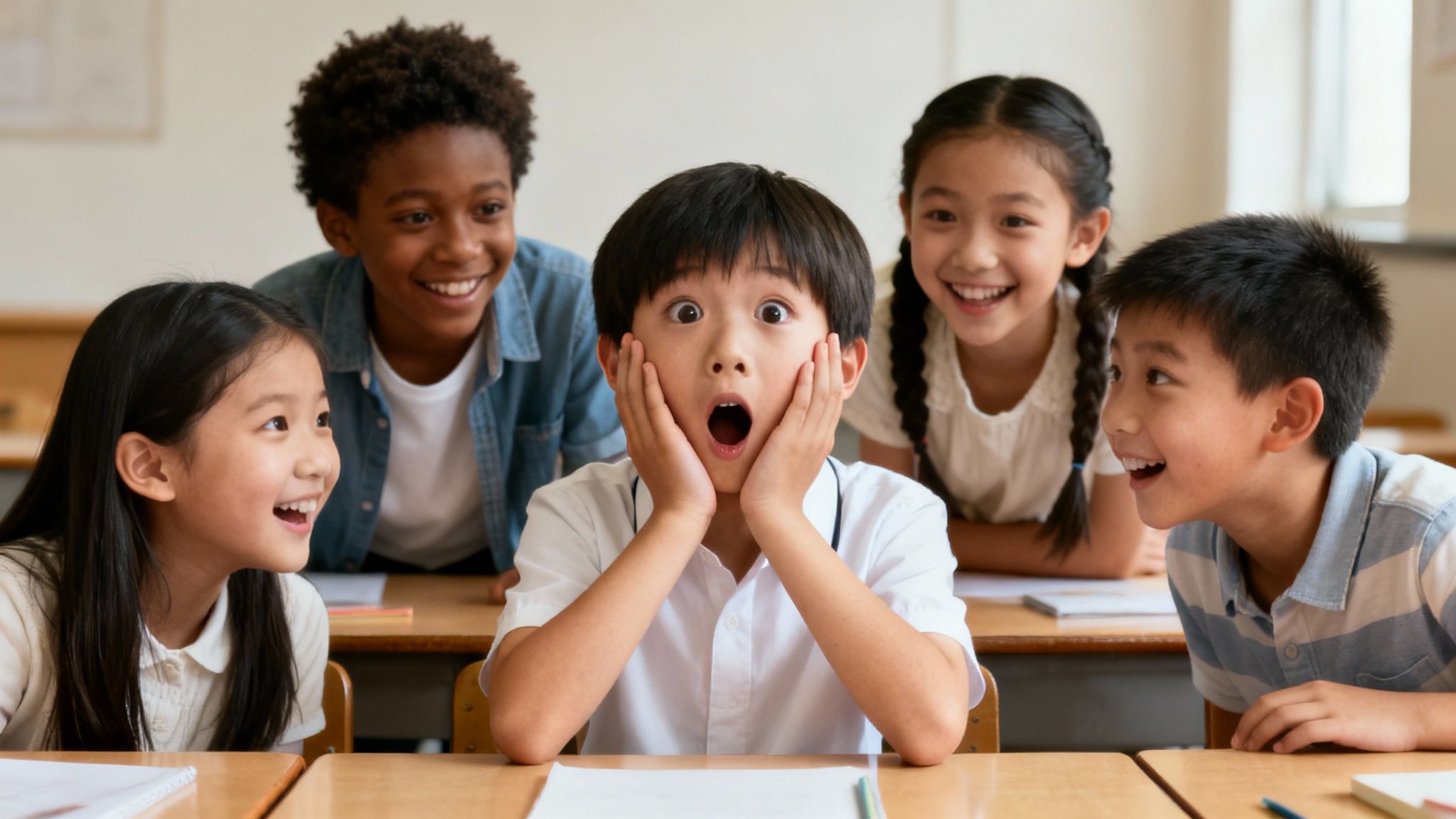
The game builds a child’s emotional vocabulary and enhances their ability to recognize feelings in themselves and others, a cornerstone of self-awareness and social awareness.
Learning Goals & Core Skills
- Primary Goal: To improve the ability to identify and label a wide range of emotions.
- Core SEL Skills: Self-Awareness (recognizing one’s own feelings), Social Awareness (interpreting others’ nonverbal cues).
- Additional Benefits: Enhances empathy, develops nonverbal communication skills, and builds a shared emotional language within a group.
How to Play: Step-by-Step Instructions
- Prepare Emotion Cards: Create a set of cards with different emotions written or drawn on them. Start with basic feelings like happy, sad, angry, and scared for younger children (K-2). For older students (Grades 3-8), introduce more complex emotions like frustrated, jealous, proud, anxious, or relieved.
- Explain the Rules: The rules are simple. One player draws a card and acts out the emotion without using words or sounds. The other players guess the emotion.
- Model the Activity: The facilitator (teacher, counselor, or parent) should go first to model how to use their face and body to express an emotion. For example, to model ‘frustrated,’ you could furrow your brow, cross your arms tightly, and make a few huffing breaths.
- Take Turns: Have students take turns drawing a card and acting. Encourage the audience to pay close attention to the actor’s facial expressions and body posture.
- Debrief and Discuss: After each round or at the end of the game, hold a brief discussion. Ask questions like, “What clues helped you guess that feeling?” or “When have you felt that way before?” For example, after someone acts out ‘disappointed,’ you could ask, “What might make someone feel disappointed at school?”
Pro-Tip: For a successful session, create a safe and supportive environment. Remind children that there are no “wrong” ways to express an emotion and that all feelings are valid.
Classroom and Home Adaptations
- Morning Meetings: Use Emotion Charades as a quick, 5-minute icebreaker to start the day on a positive, connected note.
- Small Group Counseling: School counselors can use this activity in small groups to help students who struggle with emotional expression or identification in a more focused setting.
- Family Game Night: Parents can easily adapt this at home with homemade cards. It’s a fun way to open up family conversations about feelings. For instance, after a child guesses “frustrated,” a parent could share, “I feel frustrated sometimes when I’m stuck in traffic. What makes you feel frustrated?”
For more structured social-emotional learning, Soul Shoppe’s programs often integrate dynamic activities like this to create a common language around emotions in the school environment. This simple game serves as a powerful building block for more advanced emotional intelligence.
2. Feelings Journal with Visual Prompts
A Feelings Journal is a reflective practice where children regularly record and explore their emotions using writing, drawing, or a combination of both. By using visual prompts like emotion wheels or feeling faces charts, this activity helps students identify and name their feelings, making it one of the most effective personal emotional intelligence activities for kids. This consistent practice builds a strong foundation for self-awareness and self-management by creating a private space for introspection.

The journal acts as a tangible tool for children to track their emotional patterns over time. This process helps them understand the connection between events, thoughts, and feelings, which is a critical step toward developing healthy coping strategies.
Learning Goals & Core Skills
- Primary Goal: To build the habit of self-reflection and improve the ability to label and understand one’s own emotions.
- Core SEL Skills: Self-Awareness (identifying emotions), Self-Management (managing emotions, self-motivation).
- Additional Benefits: Enhances writing and drawing skills, fosters introspection, provides a healthy emotional outlet, and helps identify students who may need extra support.
How to Play: Step-by-Step Instructions
- Introduce the Journal: Provide each child with a notebook or journal. Explain that it is a safe space to explore their feelings. Establish clear privacy expectations from the start.
- Provide Visual Aids: Offer visual prompts like an emotion wheel, a chart of feeling faces, or a color-to-emotion key. For younger students (K-2), they can simply circle or draw the face that matches their feeling.
- Use Sentence Starters: Guide the journaling process with simple, open-ended prompts. Practical examples include: “Today I felt… because…”, “Something that made me feel proud was…”, “I felt worried when…”, or “My body felt… when…”.
- Establish a Routine: Dedicate a consistent time for journaling, such as the first 10 minutes of class (a “feelings check-in”) or before dismissal. Routine helps make emotional reflection a natural habit.
- Model and Share (Optional): The facilitator can model vulnerability by sharing an appropriate, age-relevant feeling. For example, “Today, I felt a little nervous before our assembly, so in my journal, I wrote about what made me nervous and took a few deep breaths.” This normalizes expressing emotions.
Pro-Tip: Emphasize that there are no “right” or “wrong” feelings. The goal is simply to notice and name them. A judgment-free environment is essential for honest self-reflection.
Classroom and Home Adaptations
- Daily Emotion Check-ins: Teachers can use journals as a morning bell-ringer activity. A quick review can give a valuable snapshot of the classroom’s overall emotional climate.
- Small Group SEL Coaching: School counselors can use journals in small groups to track progress and guide conversations about specific emotional challenges, like managing anger or anxiety.
- Bedtime Routine at Home: Parents can incorporate a feelings journal into a child’s bedtime routine. Asking “What was the best part of your day and how did it make you feel?” opens up communication and helps children process their day before sleep.
Tools like the Soul Shoppe digital app offer guided emotional reflection features that can supplement a physical journal. By making time for this quiet, personal activity, educators and parents empower children to become experts on their own emotional worlds.
3. Restorative Circles and Talking Piece Practices
Restorative Circles are a structured practice where students sit in a circle to communicate, build community, and repair harm. Rooted in indigenous traditions, this process uses a “talking piece” (a special object) to ensure that one person speaks at a time while others listen actively and respectfully. This is one of the most profound emotional intelligence activities for kids as it shifts the focus from punishment to understanding, accountability, and connection.
This practice directly teaches children how to express their feelings, listen with empathy, and collaboratively solve problems, which are crucial skills for managing relationships and making responsible decisions.
Learning Goals & Core Skills
- Primary Goal: To build a safe community for open communication and to repair relationships after conflict.
- Core SEL Skills: Social Awareness (empathy, perspective-taking), Relationship Skills (communication, conflict resolution), Responsible Decision-Making (analyzing situations, ethical responsibility).
- Additional Benefits: Fosters a sense of belonging, promotes accountability, reduces disciplinary issues, and teaches active listening.
How to Play: Step-by-Step Instructions
- Arrange the Circle: Have participants sit in a circle where everyone can see each other. There should be no tables or desks in the middle.
- Establish Agreements: The facilitator (teacher or counselor) co-creates guidelines with the group. These often include: respect the talking piece, listen from the heart, speak from the heart, and what’s said in the circle stays in the circle.
- Introduce the Talking Piece: Explain that only the person holding the talking piece may speak. This could be a smooth stone, a small stuffed animal, or a decorated stick.
- Pose a Prompt: The facilitator starts with a question or prompt. Practical examples: For community-building, use prompts like, “Share one high and one low from your weekend,” or “Share a time someone was kind to you this week.” For conflict resolution, it could be, “What happened, and how did it affect you?”
- Pass the Piece: The facilitator starts and then passes the talking piece around the circle. Students can choose to speak or pass. The circle continues until everyone who wishes to speak has had a turn.
- Close the Circle: End with a closing sentiment or a summary of what was shared, reinforcing the sense of community.
Pro-Tip: Always allow students the option to “pass.” Forcing participation can undermine the psychological safety that is essential for a successful circle. The right to be silent is just as important as the right to speak.
Classroom and Home Adaptations
- Daily Check-Ins: Use a quick circle for morning meetings. A simple prompt like, “Share one word describing how you feel today,” can help students practice self-awareness and build empathy.
- Conflict Resolution: When a conflict arises between students, a restorative circle can be used to repair harm. The facilitator guides them through questions like, “What were you thinking at the time?” and “What do you need to move forward?”
- Family Meetings: At home, families can use a talking piece to discuss household chores, plan a vacation, or work through a disagreement. This ensures everyone, even the youngest child, has a voice.
Restorative practices are a cornerstone of Soul Shoppe’s programs, creating classroom environments where every child feels heard and valued. To dig deeper into this transformative approach, you can learn more about what restorative practices in education look like and how they build safer schools.
4. The Feelings Temperature Check (Mood Meter)
The Feelings Temperature Check, often called a Mood Meter, is a quick assessment tool where children rate their current emotional state on a visual scale. Instead of a simple “good” or “bad,” this activity encourages kids to identify the intensity and nuance of their feelings using a thermometer, color scale, or numbered range. This is one of the most practical emotional intelligence activities for kids because it builds emotional granularity, which is the ability to put feelings into specific words.
This daily practice helps children become more aware of their internal state, which is the first step toward learning how to manage their emotions effectively.
Learning Goals & Core Skills
- Primary Goal: To develop emotional granularity and self-awareness by regularly identifying and rating the intensity of feelings.
- Core SEL Skills: Self-Awareness (identifying emotions), Self-Management (recognizing the need for regulation strategies).
- Additional Benefits: Normalizes conversations about feelings, helps teachers identify students needing support, and provides a starting point for emotional regulation discussions.
How to Play: Step-by-Step Instructions
- Create a Visual Scale: Design a visual tool. For younger children (K-2), a color-coded chart (blue for low energy, green for calm, yellow for energetic, red for high-alert) or a simple 1-3 thermometer works well. For older students (Grades 3-8), use a numbered scale from 1-10 or a quadrant-style mood meter with more complex emotions.
- Introduce the Concept: Explain that feelings have different energy levels or “temperatures.” Model how to use the scale. For example, a teacher might say, “This morning, I’m feeling calm and focused, so I’m in the green zone. Yesterday, I was a little stressed about traffic, so I was in the yellow zone.”
- Incorporate into Routines: Make this a regular check-in. Students can point to their “temperature” on a classroom chart, hold up fingers (1-5), or write their number on a sticky note.
- Invite (Don’t Force) Sharing: After the check-in, ask if anyone would like to share why they chose that number or color. Keep it optional to create a low-pressure environment.
- Connect to Strategies: Use the check-in to discuss self-regulation. Ask, “If you’re feeling at an 8, what is a tool you could use to get back to a 5 or 6?”
Pro-Tip: Track responses over time (privately for individual students) to notice patterns. A student who is consistently in the “red zone” may need additional, targeted support from a teacher or counselor.
Classroom and Home Adaptations
- Morning Meetings: Start the day with a “show me your number” check-in where students use their fingers to indicate their emotional state. It gives the teacher a quick read of the room.
- School Counselor Check-ins: Counselors can use a mood meter at the beginning of each session to track a student’s emotional progress and open a conversation about their week.
- Family Dinner Conversation: Parents can use a simple 1-5 scale at the dinner table. “Let’s go around and share our number for the day.” This opens the door to family discussions about everyone’s highs and lows.
Activities like the Feelings Temperature Check are fundamental to the work we do at Soul Shoppe. By giving students a simple tool to check in with themselves, we empower them to take the first and most critical step in managing their emotional lives.
5. Empathy Interviews and Pair Shares
Empathy Interviews and Pair Shares is a structured dialogue activity where students interview each other to deepen understanding and connection. This exercise moves beyond casual conversation by using guided, open-ended questions about experiences, feelings, and values. By creating a dedicated space for one student to speak and another to listen actively, it powerfully cultivates empathy and perspective-taking.
This practice is one of the most effective emotional intelligence activities for kids as it teaches them to become genuinely curious about another person’s inner world. It directly builds the skills needed for strong, supportive relationships and effective communication, making it a cornerstone for a positive classroom or home environment.
Learning Goals & Core Skills
- Primary Goal: To develop empathy and active listening skills by understanding another person’s perspective.
- Core SEL Skills: Social Awareness (understanding others’ perspectives), Relationship Skills (communicating effectively and building positive connections).
- Additional Benefits: Fosters a sense of community, builds trust and psychological safety, and enhances conflict resolution skills.
How to Play: Step-by-Step Instructions
- Prepare Interview Questions: Create a list of thoughtful, open-ended questions. Practical examples: For younger children (K-2), use simple prompts like, “Tell me about a time you felt really happy,” or “What is your favorite thing to do with your family?” For older students (Grades 3-8), ask deeper questions such as, “Describe a challenge you overcame and how it made you feel,” or “What is something you are proud of?”
- Explain the Roles: Pair students up. Designate one as the “Interviewer” and the other as the “Storyteller.” The Interviewer’s job is to listen carefully without interrupting. The Storyteller’s job is to share openly.
- Model Active Listening: Demonstrate what active listening looks like: maintaining eye contact, nodding, and asking curious follow-up questions. Emphasize that the goal is not to talk about yourself but to learn about your partner.
- Set a Timer: Give each student 5-10 minutes to interview their partner. Announce when it’s time to switch roles so both have a chance to share and listen.
- Debrief as a Group: After both partners have shared, bring the group back together. Ask reflection questions like, “What is one new thing you learned about your partner?” or “How did it feel to be listened to so carefully?”
Pro-Tip: Emphasize confidentiality within each pair to build trust. Remind students that the stories shared are to be respected and not repeated outside of their conversation unless permission is given.
Classroom and Home Adaptations
- New Student Icebreaker: Pair a new student with a classmate for an empathy interview to help them feel seen and integrated into the classroom community.
- Conflict Resolution: After a disagreement, guide the involved students through an empathy interview to help them understand each other’s feelings and perspectives. This is a foundational practice to help teach empathy in a practical way.
- Family Dinner Connection: Parents can use prompt cards at the dinner table with questions like, “What was the best part of your day and why?” Everyone takes a turn being the “storyteller” while the rest of the family practices active listening.
Soul Shoppe programs often use pair-share exercises like this to break down social barriers and build a cohesive, empathetic school culture where every student feels heard and valued.
6. Emotion Regulation Strategy Toolbox
An Emotion Regulation Strategy Toolbox is a personalized collection of evidence-based techniques that children can use to manage big emotions and calm their nervous systems. Instead of a single “one-size-fits-all” approach, this activity empowers children to learn, practice, and choose from a menu of strategies like deep breathing, sensory tools, or cognitive reframing. This customized approach makes it one of the most effective emotional intelligence activities for kids, as it teaches them to become active participants in their own emotional well-being.
The goal is to build a child’s capacity for self-management by equipping them with practical, accessible tools they can turn to in moments of stress, anger, or anxiety. This fosters independence and resilience.
Learning Goals & Core Skills
- Primary Goal: To build a repertoire of effective, personalized coping strategies for managing difficult emotions.
- Core SEL Skills: Self-Management (regulating one’s emotions and behaviors), Responsible Decision-Making (choosing appropriate responses to feelings).
- Additional Benefits: Increases self-awareness, builds confidence, reduces reactive behaviors, and promotes problem-solving skills.
How to Play: Step-by-Step Instructions
- Introduce One Strategy at a Time: Start by introducing a simple technique, like “Box Breathing” (inhale for 4 counts, hold for 4, exhale for 4, hold for 4). Don’t overwhelm children with too many options at once.
- Model and Practice During Calm Times: Practice new strategies when children are calm and regulated. This helps encode the skill so it’s accessible during a stressful moment. For example, practice a grounding technique during a morning meeting by saying, “Let’s all practice our ‘5 Senses’ tool. Name five things you can see, four you can feel…”
- Create a Physical or Visual Toolbox: Make tangible cards for each strategy. You can use a real box, a binder, or a chart on the wall. Visual aids should include a picture and simple text (e.g., a picture of a child squeezing a stress ball with the words “Squeeze Tool”).
- Explore Different Categories: Introduce a variety of strategies over time, including:
- Breathing: 5-finger breathing, belly breaths.
- Movement: Wall pushes, jumping jacks, stretching.
- Sensory: Using putty, a weighted lap pad, listening to calming music.
- Cognitive: Positive self-talk (“I can handle this”), thinking of a happy place.
- Personalize and Debrief: Regularly ask children which strategies feel best for their bodies. Discuss why one tool might work for anger while another works better for worry.
Pro-Tip: Connect the strategies to a shared vocabulary like the “Zones of Regulation.” For example, “When you feel like you’re in the yellow zone, which tool from our toolbox could help you get back to green?”
Classroom and Home Adaptations
- Classroom Calm-Down Corner: Create a designated quiet space in the classroom stocked with visual cards and sensory tools from the toolbox. Students can independently visit this corner to self-regulate.
- Individual Student Toolkits: For students who need more support, create a small, portable toolkit with a few of their favorite strategy cards and sensory items that they can keep at their desk.
- Family “Feelings First-Aid Kit”: At home, families can create a special box decorated together. When a family member feels overwhelmed, they can go to the kit and choose a tool, normalizing the act of self-regulation for everyone.
To create a robust system of support, Soul Shoppe’s programs focus on teaching students these practical self-regulation tools, helping to establish a consistent, school-wide language for emotional management. You can explore more detailed options in this guide to self-regulation strategies for students.
7. Collaborative Conflict Resolution Role-Play
Collaborative Conflict Resolution Role-Play provides a structured and safe environment for children to practice navigating disagreements. In these scenarios, students step into different roles within a conflict, act out the situation, and then work together to find peaceful solutions. This hands-on method is one of the most practical emotional intelligence activities for kids because it moves beyond theory and allows them to build real-world problem-solving and communication skills.
This activity directly develops empathy, perspective-taking, and negotiation, which are essential competencies for building and maintaining healthy relationships. It transforms conflict from something to be feared into a manageable and even productive experience.
Learning Goals & Core Skills
- Primary Goal: To develop practical conflict resolution skills and the ability to find mutually respectful solutions.
- Core SEL Skills: Relationship Skills (communication, cooperation, conflict resolution), Social Awareness (empathy, perspective-taking).
- Additional Benefits: Enhances responsible decision-making, improves active listening, and reduces peer conflicts by equipping students with proactive strategies.
How to Play: Step-by-Step Instructions
- Choose a Relevant Scenario: Select a conflict that is common for your students. Practical examples: For younger kids (K-2), this could be a disagreement over sharing a toy (“It’s my turn!”). For older students (Grades 3-8), it might involve exclusion from a group (“Why wasn’t I invited to the party?”) or a misunderstanding on social media.
- Establish a Safe Space: Clearly state that this is a practice session. The goal is to learn, not to blame or judge. Make participation optional and create a supportive atmosphere.
- Assign Roles: Assign students roles in the scenario, such as the two people in conflict and an observer or bystander. Briefly explain each character’s perspective and what they want.
- Begin the Role-Play: Have students act out the conflict. Allow it to unfold for a minute or two, then pause the scene.
- Debrief and Brainstorm Solutions: Lead a discussion with the entire group. Ask questions like, “How did each person feel?” “What did the observer notice?” and “What is a different way this could have been handled?” Brainstorm and then role-play a more positive resolution, perhaps using “I-statements.”
Pro-Tip: Always debrief after a role-play. This is where the most critical learning happens. Focus the conversation on feelings, different viewpoints, and the impact of various actions and words.
Classroom and Home Adaptations
- Restorative Circles: Use role-play within a restorative circle to explore a real classroom conflict. This allows students to understand different perspectives and co-create a solution to repair harm.
- Peer Mediation Training: Role-playing is a cornerstone of peer mediation programs. It gives student mediators the chance to practice active listening, impartiality, and guiding peers toward a resolution.
- Family Problem-Solving: At home, parents can use this to address sibling squabbles. For example, if two children are fighting over the TV remote, pause and say, “Let’s role-play this. You can be your brother, and he can be you. How does it feel?”
Activities like these are central to Soul Shoppe’s programs, which focus on giving students the tools to resolve conflicts peacefully. By practicing these skills in a controlled setting, children build the confidence to apply them in their daily lives.
8. Acts of Kindness Challenge and Gratitude Practice
The Acts of Kindness Challenge and Gratitude Practice is a sustained activity that builds prosocial behavior by encouraging children to intentionally perform kind acts and consciously recognize things they are thankful for. This dual focus nurtures empathy and strengthens community bonds, making it one of the most impactful emotional intelligence activities for kids. By engaging in these practices, children shift their focus outward to the needs of others and inward to appreciate the positive aspects of their own lives.
This practice directly develops relationship skills and social awareness while fostering a positive, strengths-based mindset that can improve overall well-being and school climate.
Learning Goals & Core Skills
- Primary Goal: To cultivate prosocial behaviors (kindness, helping) and a mindset of gratitude.
- Core SEL Skills: Social Awareness (empathy, perspective-taking), Relationship Skills (building positive relationships, social engagement).
- Additional Benefits: Increases positive emotions, reduces feelings of isolation, builds a supportive peer culture, and enhances self-compassion.
How to Play: Step-by-Step Instructions
- Introduce the Concepts: Explain what “kindness” (doing something to help or make someone happy) and “gratitude” (feeling thankful) mean. Use age-appropriate examples.
- Set Up a Challenge or Routine: Create a system to track progress. This could be a classroom “Kindness Tree” where students add a leaf for each kind act, or a personal “Gratitude Journal” for daily entries.
- Model the Behavior: The adult must actively model both kindness and gratitude. Say things like, “I am so grateful for how you all helped clean up just now,” or perform a kind act for a student.
- Prompt for Action: Provide daily or weekly prompts. Practical examples: For kindness, suggest “give someone a genuine compliment” or “help a classmate with their work without being asked.” For gratitude, ask, “What is one small thing that made you smile today?” or “Name one person you are thankful for and why.”
- Share and Reflect: Create regular opportunities for sharing. This can be done through a morning meeting circle where students share an act of kindness they witnessed or something they wrote in their gratitude journal.
Pro-Tip: Emphasize that kindness is about the intention, not the size of the act. A small, sincere compliment can be just as powerful as a large gesture. Celebrate effort and intention to build momentum.
Classroom and Home Adaptations
- Kindness Tracker: Create a large bulletin board where the class tracks its collective acts of kindness, aiming for a shared goal (e.g., 100 acts for a class party).
- Gratitude Jar: Keep a jar in the classroom or at home. Family members or students can write down things they are thankful for on small slips of paper and read them aloud once a week.
- Family Dinner Topic: Make gratitude a regular topic at the dinner table. Each person shares one thing they were grateful for that day, fostering connection and positive reflection.
Soul Shoppe programs often integrate gratitude and connection practices to build a school culture where kindness is the norm. Sustained activities like this challenge are fundamental to creating empathetic and responsible communities.
9. Mindfulness and Body Awareness Practices
Mindfulness and body awareness practices teach children to tune into the present moment, noticing their thoughts, feelings, and bodily sensations without judgment. Activities like guided breathing, body scans, and mindful movement build the crucial skill of interoception, the ability to understand internal signals from the body. These practices are powerful emotional intelligence activities for kids because they create a vital pause between a feeling and a reaction, laying the foundation for self-regulation and thoughtful responses.
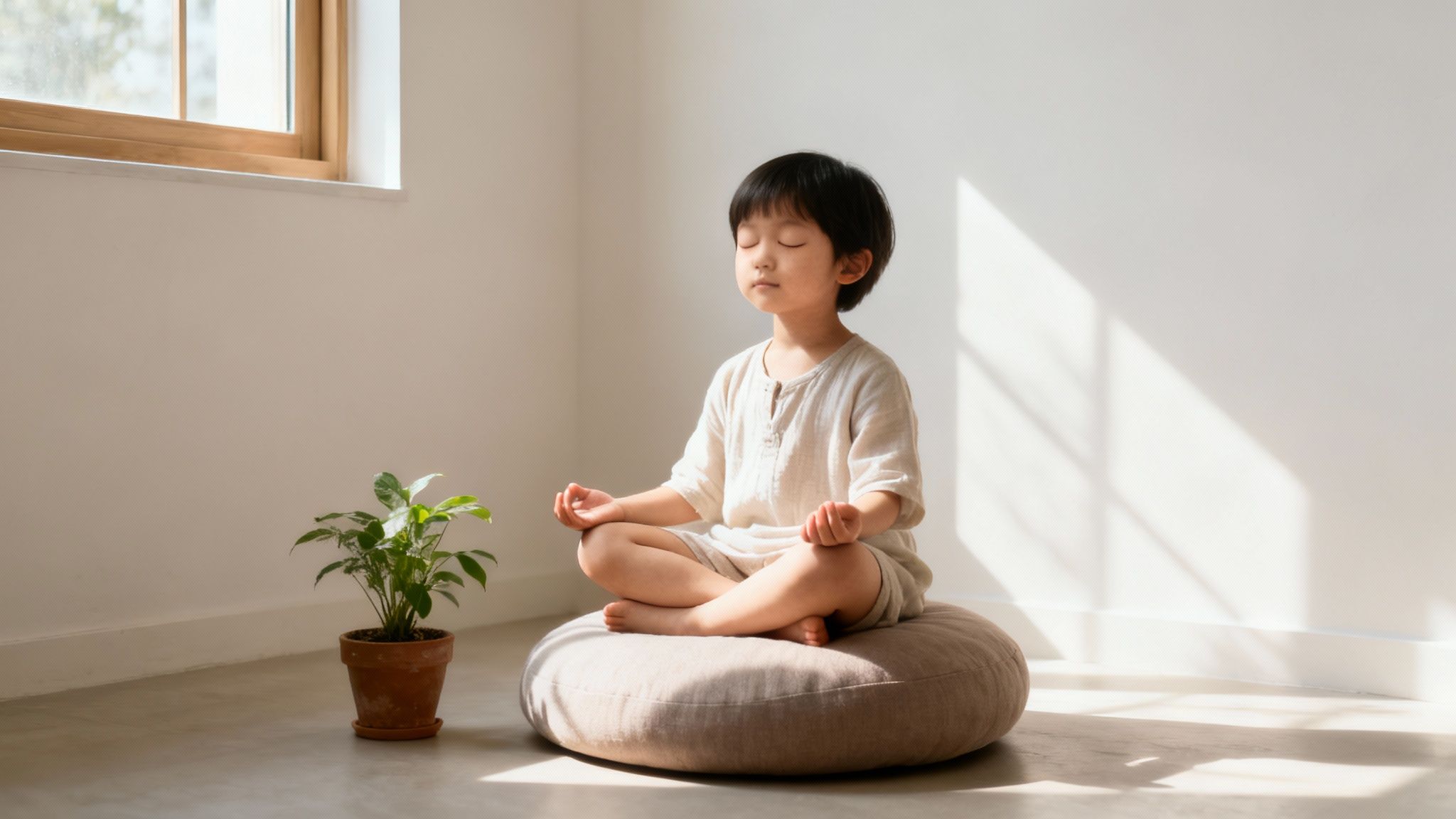
By learning to observe their inner world calmly, children develop a stronger sense of self-awareness and gain tools to manage stress, anxiety, and overwhelming emotions.
Learning Goals & Core Skills
- Primary Goal: To develop the ability to notice internal thoughts and physical sensations without immediate reaction.
- Core SEL Skills: Self-Awareness (recognizing internal states), Self-Management (regulating emotions and impulses).
- Additional Benefits: Improves focus and attention, reduces anxiety, enhances emotional regulation, and promotes a sense of calm.
How to Play: Step-by-Step Instructions
- Choose a Simple Practice: Start with a brief, accessible activity. A great one is “Belly Breathing.” Have children place a hand on their belly and feel it rise and fall as they breathe in and out slowly.
- Find a Quiet Space: Minimize distractions by dimming lights or finding a calm corner. Students can sit comfortably in a chair or on the floor.
- Guide the Practice: Use a calm, gentle voice to lead the activity. For example, to guide Belly Breathing, you could say, “Breathe in slowly through your nose, letting your belly fill up like a balloon. Now breathe out slowly, letting all the air hiss out of the balloon.”
- Keep it Short: Begin with sessions of just 1-3 minutes, especially for younger children (K-2). Gradually increase the duration as they become more comfortable.
- Debrief and Normalize: After the practice, ask students what they noticed. Reassure them that it’s normal for their minds to wander. The goal isn’t to have an empty mind but to gently bring focus back to the breath or body.
Pro-Tip: Consistency is more important than duration. A daily 2-minute practice is more effective than a weekly 15-minute session. Weave it into existing routines, like the start of the day or after recess.
Classroom and Home Adaptations
- Mindful Transitions: Use a chime or a moment of silent breathing to transition between subjects. This helps students reset their focus and calm their nervous systems.
- Counseling Groups: School counselors can use guided body scans to help students with anxiety identify where they feel stress in their bodies, building a key mind-body connection.
- Bedtime Routine: At home, parents can guide their children through a simple body scan, helping them relax before sleep. Ask them to notice how their toes feel, then their feet, then their legs, and so on.
For more ideas on integrating these practices, discover additional mindfulness activities for students. Soul Shoppe programs often incorporate these foundational skills to help students build the self-awareness needed for healthy emotional regulation.
10. Social Stories and Emotion Scenario Discussions
Social Stories and Emotion Scenario Discussions use narrative as a powerful tool to explore complex social and emotional landscapes. This method involves structured conversations around stories, videos, or real-life scenarios where children analyze characters’ feelings, motivations, and choices. It is one of the most effective emotional intelligence activities for kids because it provides a safe, indirect way to practice empathy, perspective-taking, and problem-solving.
By examining a character’s journey, children can build their emotional vocabulary and understand cause-and-effect in social situations without the pressure of personal disclosure. This approach bridges the gap between abstract emotional concepts and real-world application.
Learning Goals & Core Skills
- Primary Goal: To develop empathy and perspective-taking by analyzing characters’ emotional experiences and decisions.
- Core SEL Skills: Social Awareness (understanding others’ perspectives), Responsible Decision-Making (analyzing situations, considering consequences).
- Additional Benefits: Builds emotional vocabulary, enhances critical thinking, and strengthens communication skills.
How to Play: Step-by-Step Instructions
- Select a Relevant Story: Choose a book, a short video clip, or a prepared scenario that features a relatable emotional conflict. For younger students (K-2), use simple picture books about sharing or feeling left out. For older students (Grades 3-8), use chapter books or real-world scenarios about peer pressure, gossip, or standing up for others.
- Read or Present the Scenario: Share the story with the group, pausing at key emotional moments.
- Facilitate a Guided Discussion: Use open-ended questions to prompt reflection. Avoid questions with simple “yes” or “no” answers.
- Ask Probing Questions: Guide the conversation with questions like, “How do you think that character was feeling in that moment? What clues tell you that?” or “What might have happened right before this to make them feel that way?” and “What could they have done differently?”
- Connect to Personal Experience: Gently invite students to connect the story to their own lives by asking, “Has anyone ever felt a little bit like that character?” This step makes the learning personal and meaningful.
Pro-Tip: Focus on validating all interpretations. Emphasize that different people can feel differently in the same situation, and there is no single “right” emotional response.
Classroom and Home Adaptations
- Daily Read-Alouds: Teachers can integrate emotion-focused questions into any classroom read-aloud, turning standard literacy time into a powerful SEL lesson. For example, while reading The Giving Tree, a teacher could pause and ask, “How do you think the tree feels when the boy takes its apples? How does the boy feel?”
- Conflict Resolution Practice: Use scenarios drawn from real (but anonymized) classroom conflicts. For instance, “Let’s talk about a situation where two friends both want to use the same swing at recess. How might they both be feeling?”
- Dinner Table Conversations: Parents can discuss characters from TV shows, movies, or books the family enjoys together. Asking “Why do you think the villain was so angry?” can spark deep conversations about motivation and empathy.
To further explore the pedagogical benefits of narrative engagement, especially in fostering emotional growth, you might find valuable insights into how interactive stories can enhance empathy and critical thinking. This approach, central to many Soul Shoppe programs, uses scenarios to build a foundation for empathy and responsible choices.
10 Emotional Intelligence Activities for Kids: Side-by-Side Comparison
| Activity | Implementation complexity | Resource requirements | Expected outcomes | Ideal use cases | Key advantages |
|---|---|---|---|---|---|
| Emotion Charades | Low — simple rules, needs psychological safety | Minimal — open space, optional emotion cards | Better emotion recognition and expressive skills | Morning meetings, assemblies, SEL icebreakers | Highly engaging, low-cost, adaptable to ages |
| Feelings Journal with Visual Prompts | Moderate — requires routine and privacy norms | Low — notebooks, visual prompts, storage | Increased self-awareness, written/drawn expression, pattern tracking | Daily classroom practice, counseling, home reflection | Private reflection, adaptable for non-readers, documents growth |
| Restorative Circles & Talking Piece | High — needs trained facilitator and clear norms | Moderate — circle space, talking piece, facilitator time | Improved communication, accountability, repaired relationships | Conflict resolution, community building, restorative justice | Equitable participation, deep listening, culture change |
| Feelings Temperature Check (Mood Meter) | Low — quick routine, easy to scale | Low — posters, cards, or digital tool | Real-time emotional data, greater emotional granularity | Morning check-ins, transitions, brief screenings | Fast, scalable, informs teacher responses promptly |
| Empathy Interviews & Pair Shares | Moderate — requires prompts and trust-building | Low — question sets, pairing structure, time block | Stronger empathy, listening skills, peer connections | New-student integration, mentoring, conflict repair | Structured, low-pressure, builds genuine connection |
| Emotion Regulation Strategy Toolbox | Moderate — teaches multiple skills, needs practice | Moderate — visual cards, sensory tools, practice time | Greater self-regulation, independent coping options | Calm corners, SEL lessons, individual coaching | Evidence-based, flexible, empowers student agency |
| Collaborative Conflict Resolution Role-Play | Moderate — needs facilitation and safety measures | Low–Moderate — scenarios, facilitator time, safe space | Improved problem-solving, perspective-taking, empathy | Peer mediation training, anti-bullying lessons, counseling | Low-stakes practice, kinesthetic engagement, transferable skills |
| Acts of Kindness Challenge & Gratitude Practice | Low — easy to launch, needs ongoing reinforcement | Low — trackers, journals, recognition systems | Increased prosocial behavior, belonging, positive climate | Whole-school initiatives, class culture building, home routines | Boosts morale, scalable, fosters sustained positive norms |
| Mindfulness & Body Awareness Practices | Moderate — requires consistency and quality guidance | Low — quiet space, scripts/audio, optional props | Reduced stress, improved attention, interoception | Daily transitions, anxiety support, classroom focus | Evidence-backed, accessible, strengthens regulation over time |
| Social Stories & Emotion Scenario Discussions | Moderate — depends on facilitation and story quality | Low — books, videos, discussion prompts | Enhanced emotional vocabulary, perspective-taking, problem-solving | Curriculum lessons, counseling groups, anti-bullying work | Safe, relatable way to explore emotions, connects to literacy |
Putting It All Together: From Activities to Everyday Habits
We have explored a robust collection of ten dynamic emotional intelligence activities for kids, from the lively engagement of Emotion Charades to the quiet introspection of a Feelings Journal. Each activity, whether it’s an Empathy Interview or a Collaborative Conflict Resolution Role-Play, serves as a powerful building block for developing the five core competencies of social-emotional learning: self-awareness, self-management, social awareness, relationship skills, and responsible decision-making.
The true magic, however, lies not in completing these activities once, but in transforming them from isolated lessons into ingrained daily habits. The ultimate goal is to create an environment where emotional intelligence is not just taught, but lived. This transition from activity to habit is where lasting change takes root, shaping how children interact with their world long after the lesson is over.
From One-Time Lessons to Lasting Habits
The key to fostering genuine emotional intelligence is consistency and integration. A single session of Restorative Circles can be powerful, but when it becomes the standard way your classroom addresses conflict, it fundamentally shifts the culture from punitive to restorative. Likewise, an Emotion Regulation Strategy Toolbox is most effective when it’s a living resource, not just a one-day craft project.
Consider these practical steps to bridge the gap:
- Routine Integration: Start each day or class period with a quick Feelings Temperature Check. This simple, two-minute practice normalizes conversations about emotions and gives you valuable insight into your students’ readiness to learn. Instead of asking “How are you?”, try “Where are you on the mood meter today?”
- Language Reinforcement: Consistently use the vocabulary of emotions introduced in activities. When a student is visibly upset, you might say, “It looks like you’re feeling frustrated. What tool from our toolbox could help you manage that big feeling right now?” This connects the abstract concept to a real-time, actionable strategy.
- Connecting Activities: Link different SEL practices together. After a difficult group project, you could use a Talking Piece Practice to have students share one thing they appreciated about a partner’s contribution. This weaves relationship skills and gratitude into academic work.
The Ripple Effect of Emotional Intelligence
Investing in these emotional intelligence activities for kids does more than just create a calmer classroom or a more peaceful home. You are equipping children with the essential skills they need to navigate the complexities of life with resilience, empathy, and confidence. A child who can identify their own feelings (self-awareness) is less likely to have an outburst. A child who can understand a friend’s perspective (social awareness) is more likely to be a supportive and inclusive peer.
By committing to these practices, we’re not just helping kids manage their feelings in the moment; we’re empowering them to build healthier relationships, navigate future challenges with resilience, and become the compassionate, self-aware leaders of tomorrow.
The impact extends far beyond the individual child. When a school community embraces SEL, it sees reductions in bullying, improved academic engagement, and a stronger sense of belonging for everyone. You are laying the groundwork for a generation that can solve problems collaboratively, communicate with kindness, and contribute positively to society. The daily practice of an Acts of Kindness Challenge or discussing a social scenario isn’t just a lesson for today; it’s an investment in a more empathetic and connected future.
Ready to take the next step in building a positive and emotionally intelligent school culture? The Soul Shoppe offers comprehensive, evidence-based programs and workshops that bring these concepts to life, providing the tools and training to create safe, connected, and empathetic communities. Explore our school-wide solutions at Soul Shoppe and empower your students with the skills they need to thrive.