

Mastering Communication Skills for Kids: A 2026 Guide
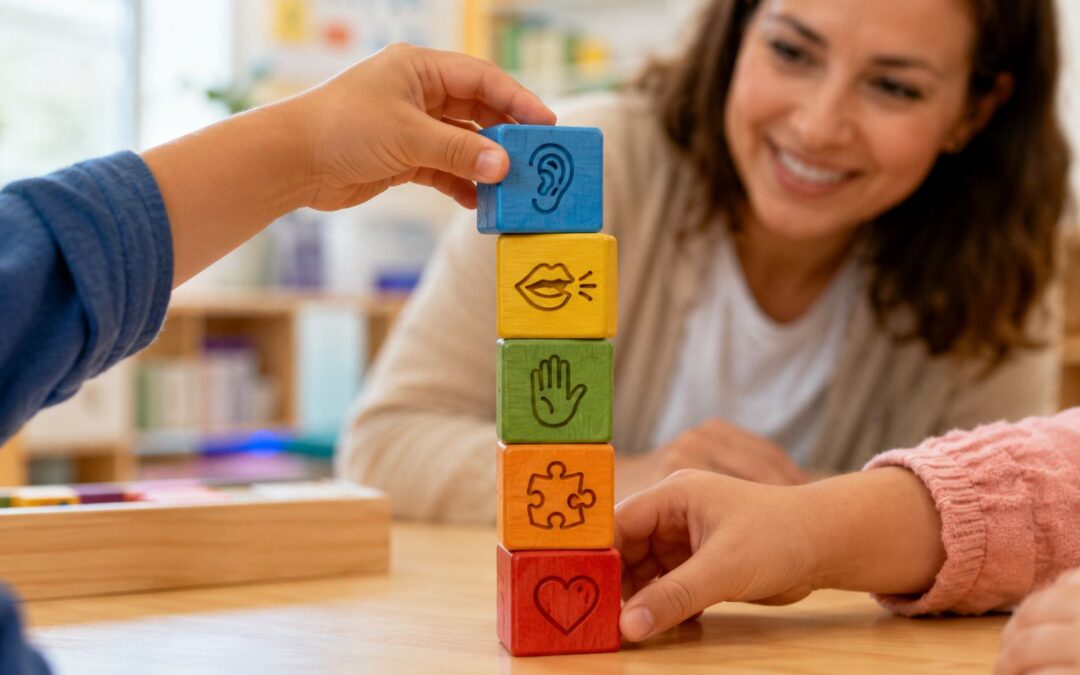
Your student is crying because a classmate “said it weird.” Your child is stomping down the hall because a sibling “never listens.” A small misunderstanding has turned into silence, yelling, or a shove. Most adults in that moment don't need another reminder that communication matters. They need words, routines, and activities that help kids use language when feelings get big.
That's why communication skills for kids deserve the same attention we give reading practice, math facts, and behavior plans. Communication isn't just talking more. It's listening with care, naming feelings, reading body language, taking turns, asking for what you need, and disagreeing without tearing a relationship apart. Those are learnable skills.
Why Communication Is Your Child's Superpower
A child who can say, “I'm mad that you cut in line,” is using a stronger life skill than a child who only knows how to glare, grab, or shut down. That single sentence protects friendships, keeps classrooms calmer, and helps adults respond with support instead of guesswork.
Communication shapes almost every part of a child's day. It affects how they join a game, ask a question, explain an answer, repair a mistake, and recover after conflict. It also affects whether adults understand what's really going on beneath behavior. A child who can put inner experience into words is easier to teach, easier to help, and more likely to feel understood.
The public clearly recognizes how central this skill is. The National Education Association reports that 90% of Americans consider communication skills the most important attribute for students to “get ahead in the world today,” ahead of reading at 85%, math at 80%, and writing at 78% in perceived value for long-term success, as noted by the National Education Association's report on communication as the most important skill.
For older students, that growth can eventually extend into structured speaking settings such as debate, student leadership, or Model UN. Families and educators looking for that next step may find this guide to MUN communication excellence useful because it shows what clear, organized speaking can look like when kids are ready for more formal practice.
Communication is often the hidden skill underneath behavior, belonging, and academic confidence.
When adults teach communication on purpose, children don't just become more polite. They become more capable. They learn that feelings can be expressed, needs can be named, and disagreements can be handled with words.
The Five Pillars of Youth Communication
When adults say a child “needs better communication,” that can feel too broad to teach. It helps to break communication into five parts that kids can practice one at a time.

A useful starting point is this: many children feel stronger in private conversation than in more formal speaking situations. A 2025 Literacy Trust report found that over 81% of young people believe they are good listeners in private, yet they feel substantially less competent in formal or public-speaking contexts, according to the Literacy Trust's 2025 speaking and listening report. That gap matters. A child may seem socially capable at home or with a friend, then freeze during class discussion, group work, or conflict.
Active Listening
Think of active listening as being a thought detective. The child's job isn't just to hear words. It's to notice meaning.
A teacher might say, “Tell me what your partner is worried about before you answer.” A parent might ask, “What do you think your brother wanted when he grabbed the marker?” Those questions slow kids down and teach perspective-taking.
Signs a child is practicing active listening include:
- Looking toward the speaker: Not perfect eye contact every second, but clear attention.
- Responding to the idea: “So you wanted a turn” instead of changing the subject.
- Asking a follow-up: “Did that happen at recess or in class?”
Clear Expression
This is the pillar many adults focus on first. Kids need simple, direct language for thoughts, feelings, and needs.
Instead of “Use your words,” try more specific coaching:
- For feelings: “Say, ‘I'm frustrated.’”
- For needs: “Say, ‘I need space.’”
- For help: “Say, ‘Can you explain that again?’”
Clear expression isn't about sounding fancy. It's about being understandable. If a second grader says, “I don't like it when you laugh when I'm talking,” that's successful communication.
Nonverbal Cues
Children communicate long before they finish a sentence. Their shoulders, face, voice, and distance from others all send messages.
A child may say “I'm fine” while crossing their arms, looking down, and using a sharp tone. That's why adults need to teach kids to read nonverbal information and to notice their own signals too.
Practical rule: If the words and the body don't match, pause and help the child name both.
You might say, “Your words say you're okay, but your face looks upset. Want help finding the words?”
Conversational Flow
Conversation is a rhythm. Kids have to learn when to start, when to pause, when to ask a question, and how to stay connected.
This includes:
- Taking turns
- Not interrupting
- Adding on-topic comments
- Ending a conversation kindly
A common home example is the child who blurts into an adult conversation. A common classroom example is the student who gives a strong idea but doesn't respond to anyone else's idea. Both children need practice with flow, not punishment for “being rude.”
Conflict Language
This pillar is often skipped, but it's the one many children need most. Conflict language means knowing how to disagree, protest, set a boundary, and stay respectful at the same time.
Useful phrases include:
- “I see it differently.”
- “Please stop. I don't like that.”
- “I'm upset, and I need a minute.”
- “Can we solve this another way?”
When kids build all five pillars together, communication becomes more balanced. They don't just talk more. They understand more, express more clearly, and recover from hard moments faster.
Communication Milestones for Grades K-8
Children don't all develop at the same pace, but there are patterns adults can watch for. The most helpful way to think about milestones is not “Can this child talk a lot?” but “Can this child listen, express, connect, and repair?”
Daily practice matters. Developmental research shows that children who participate in daily practice conversations, where adults ask specific questions and role-play scenarios, demonstrate 35% higher proficiency in active listening and emotional regulation than peers, as described in the Virtual Lab School's communication and language development lesson. That's one reason brief, steady routines work better than occasional lectures.
For readers who want a broader SEL foundation behind these communication milestones, this overview of social emotional development in children helps connect language growth with self-awareness and relationships.
Communication Skill Milestones and Support Strategies
| Age Group | Key Communication Milestones | Teacher & Parent Prompts |
|---|---|---|
| K-2 | Takes turns in simple conversations. Names basic feelings. Retells short events in order. Begins noticing facial expressions and tone. Needs support waiting, interrupting respectfully, and using words during frustration. | “What happened first?” “Show me your calm voice.” “Tell your friend what you need.” “What do you think their face is saying?” |
| 3-5 | Explains ideas with more detail. Asks clarifying questions. Starts adjusting language for peers and adults. Can describe a problem but may still blame, overtalk, or shut down during conflict. | “Say the problem in one sentence.” “What's your reason?” “What could you ask instead of assume?” “Can you tell that story in order?” |
| 6-8 | Tracks longer conversations. Notices subtext, mixed feelings, and social nuance. Can disagree more thoughtfully when coached. May struggle with sarcasm, peer pressure, embarrassment, or public speaking. | “What message do you want them to hear?” “What's the respectful disagreement?” “Can you summarize their point before yours?” “How could you say that in a stronger, calmer way?” |
What adults often misread
A quiet child isn't always a strong listener. Sometimes they're confused or anxious.
A talkative child isn't always a strong communicator. Sometimes they're speaking quickly because they don't yet know how to organize a thought or tolerate pause.
That's why prompts matter so much. Specific prompts give kids a ladder to climb. “How was school?” often gets nothing. “Who did you sit with at lunch, and what did you talk about?” gives a child something concrete to answer.
Easy daily practice conversations
Try one of these during a car ride, transition, or closing circle:
- Best part and hard part: “What was the best part of your day? What was the hardest?”
- Retell with detail: “Tell me what happened from the beginning.”
- Perspective switch: “How do you think the other person saw it?”
- Rehearsal for later: “If that happens again, what could you say?”
These moments don't need to be long. They need to be consistent and specific. That's what helps communication skills for kids move from theory into habit.
Activities to Build Active Listening and Clear Expression
Children build communication through doing. A worksheet can support the process, but it can't replace live interaction. Kids need chances to listen, guess, retell, organize, clarify, and try again.
Giving children a conversation structure helps. One simple frame is PREP — Point, Reason, Example, Point — which gives a child a shape to fall back on when they are flustered. In practice, that means structure helps children think under stress.

If you want one activity focused especially on hearing and reflecting meaning, this active listening activity for students pairs well with the games below.
Feelings Charades
A parent writes simple emotions on scraps of paper: frustrated, proud, disappointed, excited, worried. A child picks one and acts it out without speaking. Everyone else guesses the feeling and explains which clues helped.
This works because it makes invisible emotions visible. Kids start noticing clenched jaws, slumped shoulders, quick breathing, and bright eyes. After the guess, ask, “What words might go with that face and body?” A child acting frustrated might practice saying, “I need help,” or “This is harder than I expected.”
A classroom version works well during morning meeting. Students can act out a feeling and classmates can respond with one supportive sentence.
One-Minute Storyteller
Choose a familiar topic such as recess, a soccer game, a science experiment, or losing a tooth. The child gets one minute to tell the story clearly.
Then the adult asks three questions:
- What was your main point?
- What detail helped me picture it?
- What could you say more clearly next time?
This game teaches children that a good story needs sequence and focus. If the child starts everywhere at once, help them reset: “Start with where you were. Then tell me what happened. Then tell me why it mattered.”
Barrier Game
Place a few blocks, crayons, or shapes between two children with a small divider so they can't see each other's materials. One child gives directions. The other has to recreate the arrangement by listening only.
This game quickly reveals vague language. “Put it over there” doesn't work. “Place the red block next to the blue one” works better.
Good communication gets more precise when the listener can't rely on guessing.
After a round, ask, “What helped?” Kids often discover that slower speech, specific words, and checking for understanding make a huge difference.
Story Chain
One child begins with a sentence such as, “The dog ran into the library.” The next child adds a sentence that fits. The story continues around the circle.
This game rewards listening because each new sentence has to connect to the last one. It also helps impulsive children practice waiting and helps hesitant children contribute in manageable pieces.
Try these sentence supports if kids get stuck:
- “Then the character decided…”
- “But there was a problem…”
- “So they asked…”
PREP for kids
PREP sounds formal, but it's simple when taught with kid-friendly language:
- Point: “I think we should line up again.”
- Reason: “Because people were pushing.”
- Example: “A few kids got bumped near the door.”
- Point: “So I think we should try it more calmly.”
This is especially useful when children feel emotional and their thoughts scatter. A teacher can write PREP on the board. A parent can hold up four fingers and coach one part at a time.
A child arguing over game rules might say:
- “I think we need a new turn.”
- “Because the rule wasn't clear.”
- “You went twice when I thought it was my turn.”
- “So let's restart that round.”
These activities don't require expensive materials. They require repetition, warmth, and specific coaching. That's how communication skills for kids become stronger in both the classroom and the living room.
Teaching Kids How to Talk Through Disagreements
Many children can greet politely, answer questions, and share a story. Then conflict appears, and their language disappears. That's not a character flaw. It's a stress response.
Research from the education sector shows a significant gap in structured support for children who struggle with communication during conflict, with many SEL programs offering too little practical guidance for verbalizing disagreement without aggression, as discussed in this article on helping children build strong communication skills.

That gap shows up everywhere. A student says, “He's being mean,” but can't explain what happened. A child screams “Stop!” then hits. An older student knows they disagree but only has two settings: silence or sarcasm. Kids need actual scripts.
For more school-friendly language routines around problem-solving, these conflict resolution strategies for kids offer useful support.
Start with one sentence frame
Children do better in conflict when adults reduce language demands. A simple sentence frame gives them something stable to hold.
Try this pattern:
I feel _____ when _____ because _____. I need _____ .
Examples:
- “I feel frustrated when you interrupt because I lose my turn. I need you to wait.”
- “I feel left out when you change the game without me because I don't know the rules. I need you to explain.”
- “I feel angry when you grab my pencil because I'm still using it. I need you to ask first.”
This isn't robotic. It's training wheels.
Teach the difference between aggression and assertiveness
Many children think strong words are rude. Others think loud words are strong. Neither is true.
Use this quick comparison:
| Style | What it sounds like |
|---|---|
| Passive | “It's fine.” |
| Aggressive | “You're so annoying. Stop it.” |
| Assertive | “Stop. I don't like that.” |
Assertive language is direct, respectful, and clear. It doesn't attack the person. It names the problem and the boundary.
Give kids exact phrases for common conflicts
Children need short scripts they can remember in the moment.
For interruption:
- “I'm still talking.”
- “Please wait. You can go next.”
For unwanted behavior:
- “Stop. I don't like that.”
- “Don't touch my things.”
For disagreement:
- “I see it differently.”
- “I disagree, and here's why.”
For escalation:
- “I'm too upset to solve this right now.”
- “I need a minute, then I can talk.”
Adults often tell kids to “use your words” without first giving them the words.
Role-play the hard part
Children rarely access new language for the first time in a heated moment. Practice has to happen before the next conflict.
Try a quick role-play:
- Adult plays the annoying classmate or sibling.
- Child practices one assertive sentence.
- Adult responds appropriately.
- Child repeats with stronger posture and calmer tone.
Reverse roles too. Let the child play the upset one while you model the words. This lowers pressure and helps them hear what effective conflict language sounds like.
A short video can help adults hear how conflict language can be modeled in a calm, teachable way.