

Mastering Outcome Measurement for SEL Success
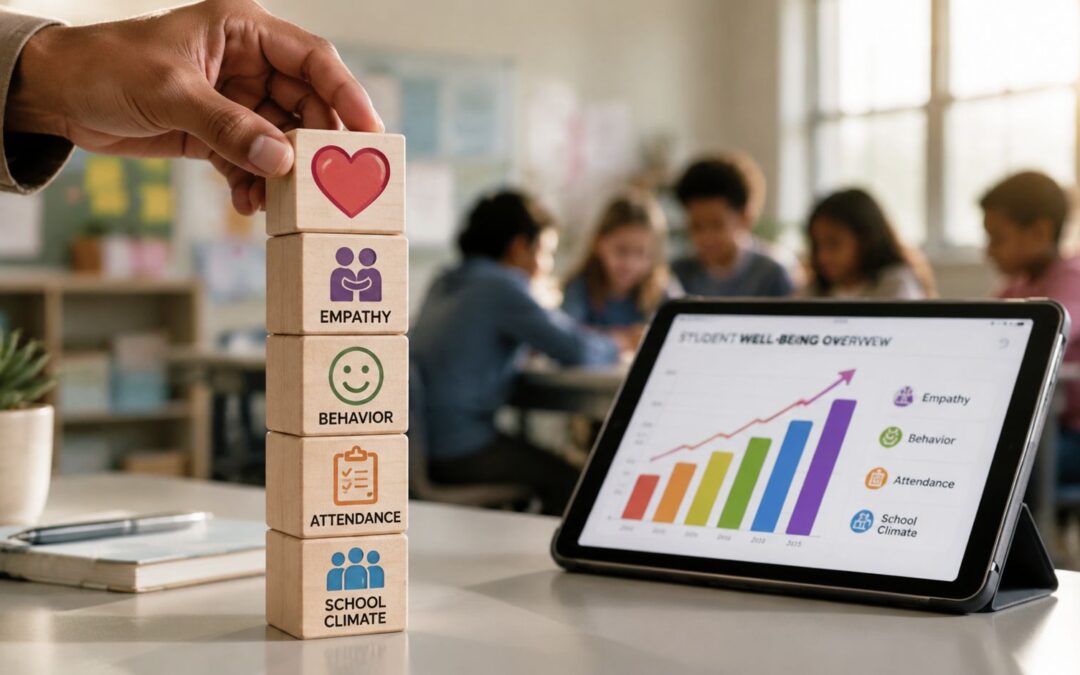
You've launched the lessons. Teachers have introduced calm-down strategies, conflict resolution language, and class circles. A few students are already using the tools. A few aren't. Now the central question shows up in your staff meeting or in the quiet minutes after dismissal.
How do you know whether your SEL work is helping students?
That question can make people tense, because measurement often sounds like compliance. More forms. More spreadsheets. More one-size-fits-all reporting. But good outcome measurement isn't about proving you did something. It's about learning what changed for students, where support is working, and which children still need more care.
When schools approach measurement this way, data stops being a burden and starts becoming a form of listening. It helps a principal notice whether belonging is slipping in one grade level. It helps a teacher see whether a student is using self-regulation tools more often. It helps families and schools talk about the same child with clearer language and less guesswork.
Why Measure SEL Outcomes in Your School
A principal might say, “We trained staff, rolled out lessons, and students liked the assembly. Isn't that enough?” It's a fair question. Activity matters. Effort matters. But neither one tells you whether students feel safer, handle conflict better, or ask for help sooner.
That's where outcome measurement changes the conversation. Instead of asking, “Did we deliver the program?” you ask, “What changed for students because of it?”
Measurement helps you see student impact
In schools, SEL can feel hard to measure because the outcomes are human. A student pauses before reacting. A class starts solving small problems without adult escalation. A child who used to shut down begins naming feelings out loud. These changes are real, but they're easy to miss if no one is looking for them on purpose.
That's why schools need a practical way to notice growth over time.
Good measurement doesn't reduce children to numbers. It gives adults a shared way to notice patterns in children's experience.
A useful SEL measurement process can help you answer questions like these:
- Student skills: Are students getting better at recognizing feelings, calming their bodies, or repairing peer conflict?
- Classroom patterns: Are teachers seeing fewer disruptions tied to frustration or social misunderstanding?
- School climate: Do students report a stronger sense of belonging and emotional safety?
- Support needs: Which groups, classrooms, or routines need extra attention?
For families, this also creates more meaningful conversations than vague updates like “SEL is going well.” You can describe what children are practicing and what adults are observing.
If you want a broader picture of why schools invest in this work in the first place, this overview of the benefits of social-emotional learning gives helpful context.
Other fields already treat outcomes seriously
SEL sometimes gets treated as “soft,” but other fields have shown that human experience can be measured with rigor and care. In healthcare, outcome measurement became a major quality-improvement discipline by standardizing and weighting outcome categories. For example, the Centers for Medicare & Medicaid Services assigns 22% weight to patient experience, which shows how seriously healthcare systems treat the human impact of services, as described in this review of healthcare outcome measures and weighting.
Schools can learn from that mindset. Not by turning children into hospital metrics, but by taking student well-being seriously enough to measure it thoughtfully.
From proving to improving
The biggest shift is this: measurement should support improvement.
A school that measures well isn't trying to “catch” teachers or produce a glossy report. It's trying to learn. If one grade level is thriving and another is struggling, you can respond. If one strategy helps students recover from conflict faster, you can spread it. If families aren't participating in surveys, you can redesign the outreach.
That's what makes outcome measurement worth doing. It helps adults make better decisions for kids.
What Outcome Measurement Really Means for SEL
People often mix up outputs and outcomes. In schools, that confusion causes a lot of frustration because teams think they've measured impact when they've only counted activity.
The clearest way to understand outcome measurement is this: it tracks the result of your work, not just the work itself.

Outputs are what you did
Outputs are the visible actions adults can count.
You held classroom lessons. You trained staff. You ran recess circles. You sent home caregiver materials. Those things matter because they show implementation. But they don't answer the deeper question of whether students changed.
Under the U.S. Government Performance and Results Act, outcome measures are defined as an assessment of the results of a program compared to its intended purpose, while output measures are counts of activity. That distinction is explained in the Office of Justice Programs guide to understanding performance measures.
Outcomes are what changed
In SEL, outcomes are the shifts you hope to see in students' skills, behavior, and lived experience.
A few examples make this easier:
| What you count | What you want to know |
|---|---|
| Teachers taught weekly SEL lessons | Students are more likely to use calming strategies during frustration |
| The school hosted peer conflict workshops | Students resolve disagreements with less adult intervention |
| Families received home connection activities | Caregivers hear students using feeling words more often at home |
Think about a fitness plan. An output is going to the gym three times a week. An outcome is building stamina, lowering stress, or being able to walk up stairs without getting winded. The activity creates the possibility of change, but it isn't the same as change.
That's the same in a school. A lesson on empathy is not the outcome. A student noticing a classmate's feelings and changing how they respond is the outcome.
What this means in day-to-day school life
For teachers, outcome measurement usually sounds more complicated than it is. You're already noticing outcomes all day long. You see who can recover after disappointment. You hear which students can say, “I feel left out,” instead of lashing out. You notice who joins group work more confidently.
The task is to make those observations more intentional and more consistent.
Practical rule: If your measurement only tells you what adults delivered, you're tracking implementation. If it tells you what students gained, changed, or experienced, you're closer to true outcome measurement.
That's also why schools often benefit from a small set of shared tools and language. A teacher reflection form, a short student check-in, and a few common behavior indicators can go a long way. This collection of social-emotional learning tools is a useful place to look for ideas you can adapt.
When educators understand this distinction, the process gets much less intimidating. You don't need to measure everything. You need to measure the changes that matter most.
Key SEL Outcomes You Can Actually Measure
Once schools stop trying to measure “SEL” as one giant idea, the work becomes much more manageable. You can break it into a few outcome areas that adults can observe, students can reflect on, and families can recognize at home.

Social-emotional skills
This is the most direct category. It focuses on the inner tools students are building, such as self-awareness, empathy, emotional regulation, and problem-solving.
At school, you might see a student pause, take a breath, and ask for space instead of yelling. At home, a parent might notice that same child saying, “I'm frustrated,” rather than melting down immediately.
A few concrete examples include:
- Self-awareness: A student can name a feeling and connect it to a trigger.
- Empathy: A child notices that a sibling or classmate is upset and responds with care.
- Self-regulation: A student uses a calming strategy before behavior escalates.
- Communication: A student uses “I feel” or “I need” statements during conflict.
These outcomes line up closely with the skills many schools teach directly, so they're a strong place to start.
Student behavior
This area looks at how SEL shows up externally. Not every behavior issue is an SEL issue, but many school behaviors are tied to stress, weak regulation skills, peer conflict, or a low sense of safety.
At school, you might track patterns like repeated peer disputes, recovery after redirection, or willingness to participate in group work. At home, a caregiver may notice that a child is more cooperative during transitions or more able to accept “no” without a long struggle.
This category often helps skeptical adults buy in, because the changes are visible.
| Outcome area | At school | At home |
|---|---|---|
| Emotional regulation | Student returns to learning after a setback | Child calms more quickly after disappointment |
| Social competence | Student works through recess conflict with words | Child plays more cooperatively with siblings |
| Self-awareness | Student names feelings during check-in | Child explains why they're upset |
| Decision-making | Student makes safer, kinder choices with peers | Child thinks ahead about consequences |
School climate
Some SEL outcomes don't belong to one child. They belong to the whole environment.
A school climate outcome asks whether students feel like they belong, whether classrooms feel emotionally safe, and whether adults and children trust one another enough to speak candidly. Teachers often sense climate shifts before they can explain them. Hallways feel calmer. Group work gets easier. Students participate more freely.
At home, climate can show up in how children talk about school. Do they describe school as a place where they feel known and supported, or as a place they endure?
If your school is aligning measurement with broader expectations, these social-emotional learning standards can help frame what student growth should look like over time.
Academic indicators connected to SEL
Academic data isn't the same as SEL data, but it can still be useful as a related indicator.
For example, if students feel more connected and better regulated, teachers may notice stronger classroom engagement, steadier attendance, better transitions, or more willingness to try challenging tasks. At home, parents may see less homework avoidance or less anxiety around school mornings.
When a child feels safe, connected, and capable, learning becomes more available.
The important thing is not to overclaim. Attendance, participation, and task persistence are influenced by many factors. Still, they can help round out the picture when you look at them alongside direct SEL outcomes.
Choosing the Right Measurement Tools and Methods
Some schools get stuck because they think outcome measurement requires a long survey, a pricey platform, or a formal assessment that takes staff hours to administer. Sometimes those tools are useful. Often, a simpler mix works better.
The right method is the one that gives you trustworthy information your staff can collect and use.

Start with tool quality, not tool popularity
A polished dashboard doesn't guarantee a good measure. For a metric to be a true outcome measure, it needs validation. That includes checks such as test-retest reliability, convergent validity, and evidence that the tool can detect meaningful change over time, as described in the Digital Medicine Society roadmap published in npj Digital Medicine.
In plain language, a valid tool should do three things:
- Measure the right thing: If a survey says it measures belonging, the questions should reflect belonging.
- Give stable results: If nothing meaningful has changed, scores shouldn't swing wildly.
- Notice real growth: If students improve, the tool should be able to pick that up.
If a school skips this step, adults can make decisions based on noise instead of signal.
A practical menu of methods
You don't need only one method. In fact, SEL is usually best measured through a combination of perspectives.
Consider using a mix like this:
- Student self-report: Short surveys, reflection prompts, check-ins, or exit tickets that ask students how safe, connected, or regulated they feel.
- Teacher observation: Simple rubrics or checklists focused on behaviors teachers already notice, such as recovery after conflict or use of peer communication skills.
- Behavior logs: Notes on recurring incidents, conflict patterns, office referrals, or time needed to re-engage after escalation.
- Family feedback: Quick caregiver check-ins about emotion words, cooperation, routines, or school-related stress at home.
- Student voice groups: Small discussions that add context to survey results.
For a classroom teacher, that might look like a weekly observation tracker for a few focus students. For a parent, it could be a simple home feelings chart or one question at bedtime: “When did you feel connected today?”
This is one reason many educators like routines such as daily check-ins for students using mood meters and reflection tools. They create usable data without turning the classroom into a testing site.
Match the method to the decision
A common mistake is collecting more data than anyone can act on. Instead, choose methods based on what decision you need to make.
If you want to know whether a classroom routine is helping students settle, teacher observation may be enough. If you want to understand belonging across grade levels, student surveys and focus groups may be more useful. If you're trying to compare what school staff see with what families see, caregiver check-ins matter.
A short video can also help teams think more concretely about selecting tools and using them well.