

7 Books on Communication in Relationships for 2026

You may be juggling a tense co-parenting text thread, a classroom conflict that keeps resurfacing, or a child who shuts down the moment feelings get big. In those moments, most adults don't need more theory. They need language they can use tonight at the dinner table, during morning drop-off, or after recess.
That's why books on communication in relationships can be so helpful. The strongest ones don't just tell you to “communicate better.” They give you a structure for listening, naming feelings, setting limits, repairing hurt, and staying connected when emotions run high. That matters for grownup relationships, and it matters for kids, because children learn communication by watching the adults around them.
Research adds useful context here. In a four-wave study of low-income newlywed couples, communication and relationship satisfaction were linked at the same time points, but longer-term effects were more limited. Only 7 of 36 cross-lagged effects using 9-month lags were significant for communication-to-satisfaction, and satisfaction more often predicted later communication than the reverse. For educators and caregivers, that's a good reminder. Skills matter, but people use skills best when they also feel safe, valued, and connected.
If you want a simple place to start before picking a book, That's Okay's guide to reflective listening offers a practical bridge into this work.
1. Nonviolent Communication: A Language of Life (3rd ed.) by Marshall B. Rosenberg, PhD
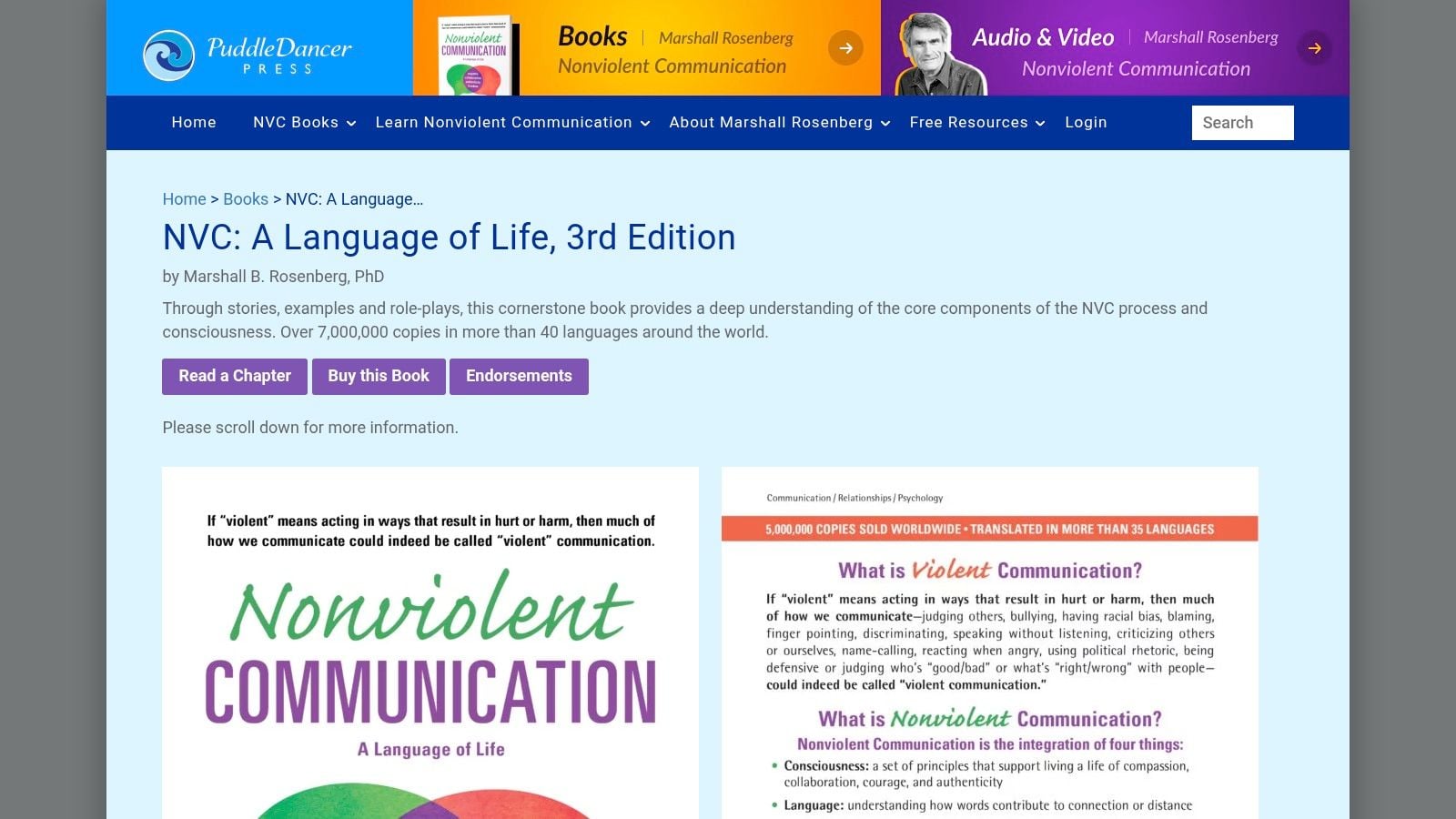
Nonviolent Communication: A Language of Life is the book I reach for when adults need a dependable script for hard moments. Rosenberg's method centers on four parts: observations, feelings, needs, and requests. That structure helps people move away from blame and toward clarity.
For parents and teachers, the biggest strength is transfer. A child can understand the difference between “You're being rude” and “When I hear interrupting, I feel frustrated because I need everyone to have a turn. Will you wait until Maya finishes?” The second version doesn't guarantee agreement, but it lowers defensiveness and models self-awareness.
Why it works well in SEL settings
This book fits naturally with family meetings, restorative chats, and classroom problem-solving circles. It gives adults shared language for needs and requests, which can make conflict feel less personal and more workable.
Practical rule: Describe what happened before you describe what it meant to you.
Try this with a student who grabbed a marker from a classmate. Instead of “That was unkind,” say, “I saw you take the marker from Eli's hand. Eli looked upset. What were you needing right then?” That question keeps accountability in the room while making reflection possible.
A few things to know before you buy it:
- Best for adults who want a repeatable framework: The sentence stems are clear and easy to practice.
- Especially useful for school-home consistency: Families and staff can use the same words for feelings, needs, and requests.
- Less natural at first: Some readers find the wording a little stiff until they've practiced it out loud.
If you want to help children hear the difference between blame and ownership, these I-statement examples for kids and families pair especially well with Rosenberg's approach.
2. Hold Me Tight: Seven Conversations for a Lifetime of Love by Dr. Sue Johnson

Some communication books focus on what to say. Hold Me Tight focuses more on what people are reaching for underneath their words. Sue Johnson's work is grounded in attachment and emotional responsiveness, so the core question becomes, “Can I reach you, and will you respond to me?”
That matters far beyond romantic relationships. Children ask versions of that same question every day. A student who jokes after being corrected may be asking, “Am I still safe with you?” A child who melts down at pickup may be asking, “Will you notice that I had a hard day?” Johnson helps adults hear the attachment signal inside the conflict.
Everyday translation for parents and teachers
One of the most useful takeaways is to respond to vulnerability instead of just reacting to behavior. If your partner says, “You never listen,” the surface issue is criticism. The deeper issue may be fear of disconnection. If a child says, “You like my brother better,” the same principle applies.
Use a simple repair prompt:
- For partners: “I think you're telling me this matters a lot. What feels scary or painful here?”
- For children: “Are you needing comfort, reassurance, or help solving the problem?”
- For classrooms: “What happened on the outside, and what was happening on the inside?”
When people feel emotionally safer, they usually become easier to hear and easier to teach.
This book is strongest for adults who want to slow conflict down and understand the emotional music under the lyrics. It's less of a quick-skills manual than Rosenberg's book, but it's excellent for anyone who keeps noticing the same painful pattern repeat.
The main limitation is scope. It speaks most directly to couples, so teachers and co-parents may need to translate the exercises into their own settings. Still, that translation is worth it, especially if your communication problem isn't a lack of words. It's a lack of felt safety.
3. The Seven Principles for Making Marriage Work (revised ed.) by John Gottman, PhD and Nan Silver
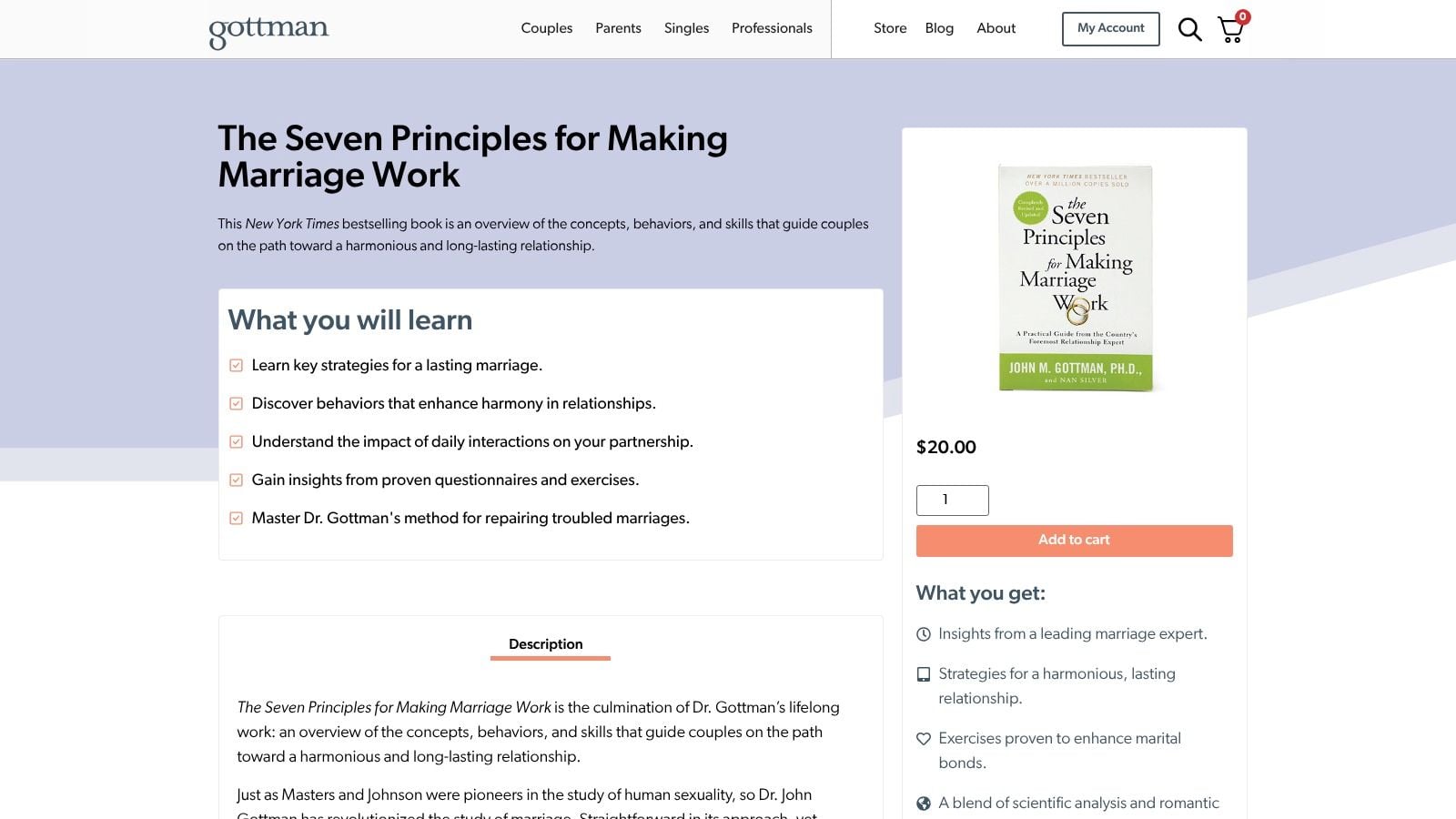
Breakfast is rushed. One adult is packing lunches, another is searching for a missing shoe, and a child is calling from the hallway, “Watch me hop on one foot.” That small moment can go two ways. It can be brushed off as noise, or it can be treated as a bid for connection. That distinction sits near the center of The Seven Principles for Making Marriage Work.
Gottman and Silver focus less on dramatic heart-to-heart conversations and more on the steady habits that shape trust over time. Relationship health works a lot like a classroom climate. One kind comment does not fix a tense week, but repeated moments of warmth, responsiveness, and repair change what people expect from each other. For parents and teachers, that makes this book especially useful. It gives you behaviors to notice, name, and practice.
What stands out from an SEL perspective is how concrete the guidance is. Instead of telling adults to “communicate better,” the book points to skills you can see: turning toward bids for connection, softening harsh start-ups, and repairing after conflict. Those are highly teachable moves, whether you are talking to a spouse, a co-parent, a student, or a teaching partner. They also connect closely to SEL competencies such as relationship skills, self-management, and social awareness.
Best ideas to borrow for home and school
A helpful way to read this book is to ask, “What does this look like in ordinary moments?”
- Notice bids for connection: “Watch this,” “Can I tell you something?” or even silly behavior may be a request for attention, closeness, or reassurance.
- Start gently: “I need help getting the toys put away before dinner” keeps the door open better than blame-filled language.
- Teach repair language: Short phrases like “Can we try that again?” or “I meant that differently” help people recover before conflict hardens.
- Build a culture of appreciation: Specific praise such as “You kept trying even when that was frustrating” strengthens connection more than vague approval.
For children, repair works like social glue. It helps a relationship hold together after strain.
Here is one classroom example. Two students argue during partner work. Instead of focusing only on who started it, a teacher can coach each child through a simple sequence: name what happened, name the impact, and offer one repair move. “I grabbed the marker.” “That made it hard for you to keep working.” “Next time I'll ask, and right now I can give it back.” The conflict becomes a practice field for communication, not just a discipline problem.
Parents can use the same structure at home. If siblings are fighting, ask:
- What happened first?
- What feeling showed up next?
- What is one sentence that could help repair this?
Those prompts turn abstract advice into a routine. That is the extra value of this book in an SEL-focused list. It is not only about understanding adult relationships. It offers patterns adults can model so children learn how healthy communication sounds in real life.
One caution is that the book can feel clinical in places because it categorizes habits and conflict patterns so carefully. Some readers will like that clarity. Others may need help translating couple-centered examples into family or school settings. If that is your situation, this guide to building trust in relationships pairs well with Gottman's ideas, especially if you want more direct carryover to children and group settings.
This book is strongest for adults who want practical, repeatable habits. If your relationships suffer less from big misunderstandings and more from daily friction, missed connection, or hard-to-repair conflict, Gottman gives you a clear place to start.
4. Attached: The New Science of Adult Attachment and How It Can Help You Find and Keep Love by Amir Levine, MD and Rachel S. F. Heller, MA
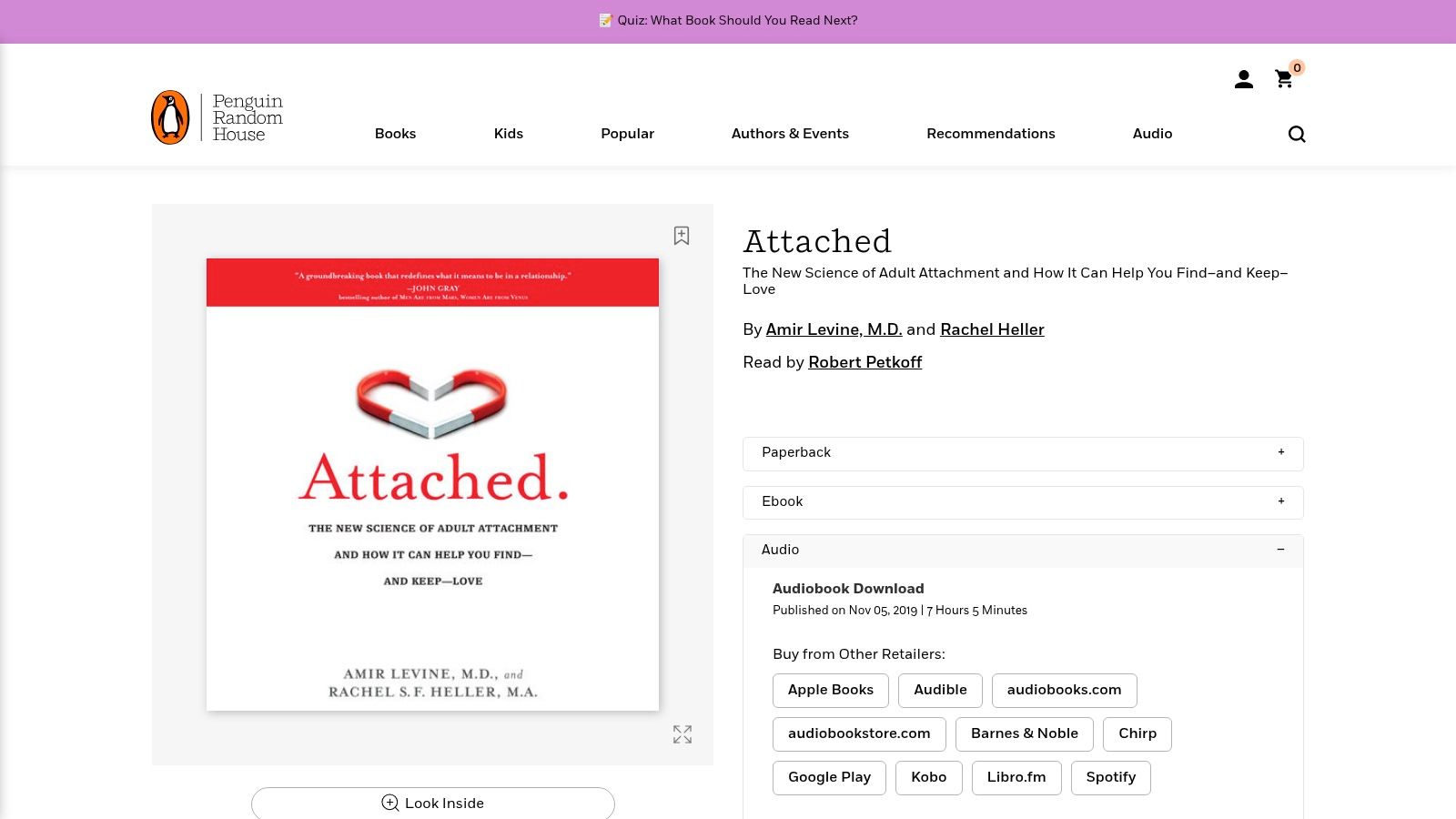
Attached is often the book that helps people say, “Oh, that's the pattern I keep falling into.” It introduces attachment styles in plain language, especially anxious, avoidant, and secure patterns.
For parents, educators, and counselors, that lens can be very useful. Not because every person fits neatly in a box, but because behavior starts to make more sense when you ask what someone does with closeness, distance, reassurance, and stress.
What adults can apply right away
A child who clings at drop-off, a co-parent who needs repeated reassurance, or a partner who goes silent during conflict may all be managing connection in different ways. This book helps adults respond with more intention and less personalization.
Here's a simple way to use the attachment lens:
- When someone pursues: Offer calm reassurance before problem-solving.
- When someone withdraws: Reduce pressure, then return with a clear invitation to reconnect.
- When you feel activated: Ask yourself whether you're reacting to the present moment or an old fear.
This is also a strong book for staff teams. A principal who understands that one teacher needs processing time while another needs immediate dialogue can prevent a lot of accidental friction.
The caution is that popular attachment language can flatten complexity. Real people are more nuanced than a category. Still, as a starting point for self-awareness, this book is accessible and often clarifying.
For adults who want to connect this insight to everyday reliability and safety, these trust-building practices in relationships make a helpful next step.
5. Say What You Mean: A Mindful Approach to Nonviolent Communication by Oren Jay Sofer
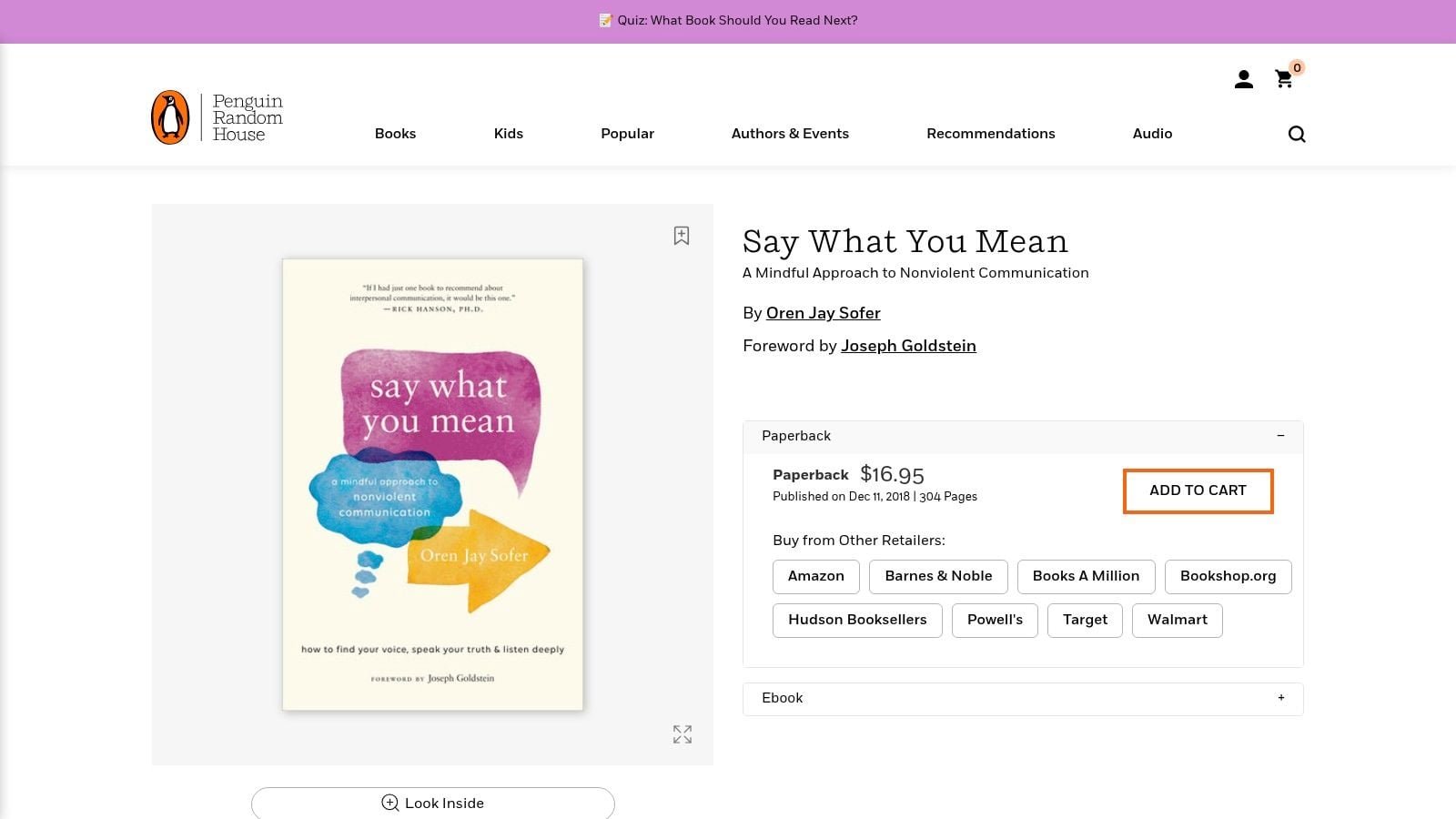
Say What You Mean is especially useful for adults who know what good communication sounds like but can't access it in the moment. If Rosenberg gives you the language, Sofer helps you regulate enough to use it.
That's a big deal in homes and schools. A calm script doesn't help much when your body is flooded and your voice is already sharp. Independent market research on this segment shows lasting interest in practical communication frameworks that act as skill-transfer tools, especially approaches built around identifying trigger states, reducing flooding, and replacing criticism with requests, as noted in Lily Manne's roundup on couples communication and conflict books.
Best fit for high-stress moments
This book blends mindfulness, body awareness, and communication practice. In plain terms, it helps adults notice the signs that they're getting pulled off center.
Try a “pause before response” routine:
- Feel both feet on the floor.
- Relax your jaw and shoulders.
- Name what you're feeling in one word.
- Choose one sentence that is honest and kind.
A school example: a student rolls their eyes after redirection. Instead of snapping back, the adult pauses, softens their tone, and says, “I'm feeling frustrated, and I want to understand what's going on. Are you upset about the instruction or something else?” That small pause can change the whole interaction.
Calm is contagious, but only when adults practice it before they need it.
This book may not be the first pick for readers who dislike mindfulness language. But if you work with dysregulation, conflict, or transitions, its micro-skills are very practical. It's one of the better books for adults who want communication tools that begin in the nervous system, not just in vocabulary.
6. Set Boundaries, Find Peace: A Guide to Reclaiming Yourself by Nedra Glover Tawwab, LCSW

Some communication problems aren't really about expression. They're about limits. Set Boundaries, Find Peace is strong because it treats boundary-setting as a communication skill, not a personality trait.
That's helpful for educators and caregivers who are used to overextending themselves. When adults feel resentful, overloaded, or constantly interrupted, communication often becomes reactive. Clear boundaries reduce that pressure and make respectful dialogue more likely.
Simple scripts that support relationships
This book is full of plainspoken language that adults can use quickly. That makes it useful for school staff, family systems, and helping professionals.
Try these kinds of boundary statements:
- Time boundary: “I can talk about this after dinner, not during homework time.”
- Emotional boundary: “I want to help, and I can't keep talking while we're yelling.”
- Role boundary: “I can support your child at school, but I can't solve this for your family on my own.”
For children, you can model boundaries in age-appropriate ways. “I'm listening. I'm also driving, so I need quiet for two minutes and then I'm all yours.” That teaches kids that limits and care can exist together.
Boundaries aren't punishments. They tell people how to stay in relationship with you.
This title is less about joint exercises and more about individual clarity. That's the tradeoff. If two adults want a shared dialogue structure, pair it with another book on this list. If one adult needs stronger self-respect in communication, this may be the most immediately useful choice.
For older students and families, these healthy boundaries for teens can help translate the concept into daily practice.
7. Getting the Love You Want: A Guide for Couples (Third Edition) by Harville Hendrix, PhD and Helen LaKelly Hunt, PhD
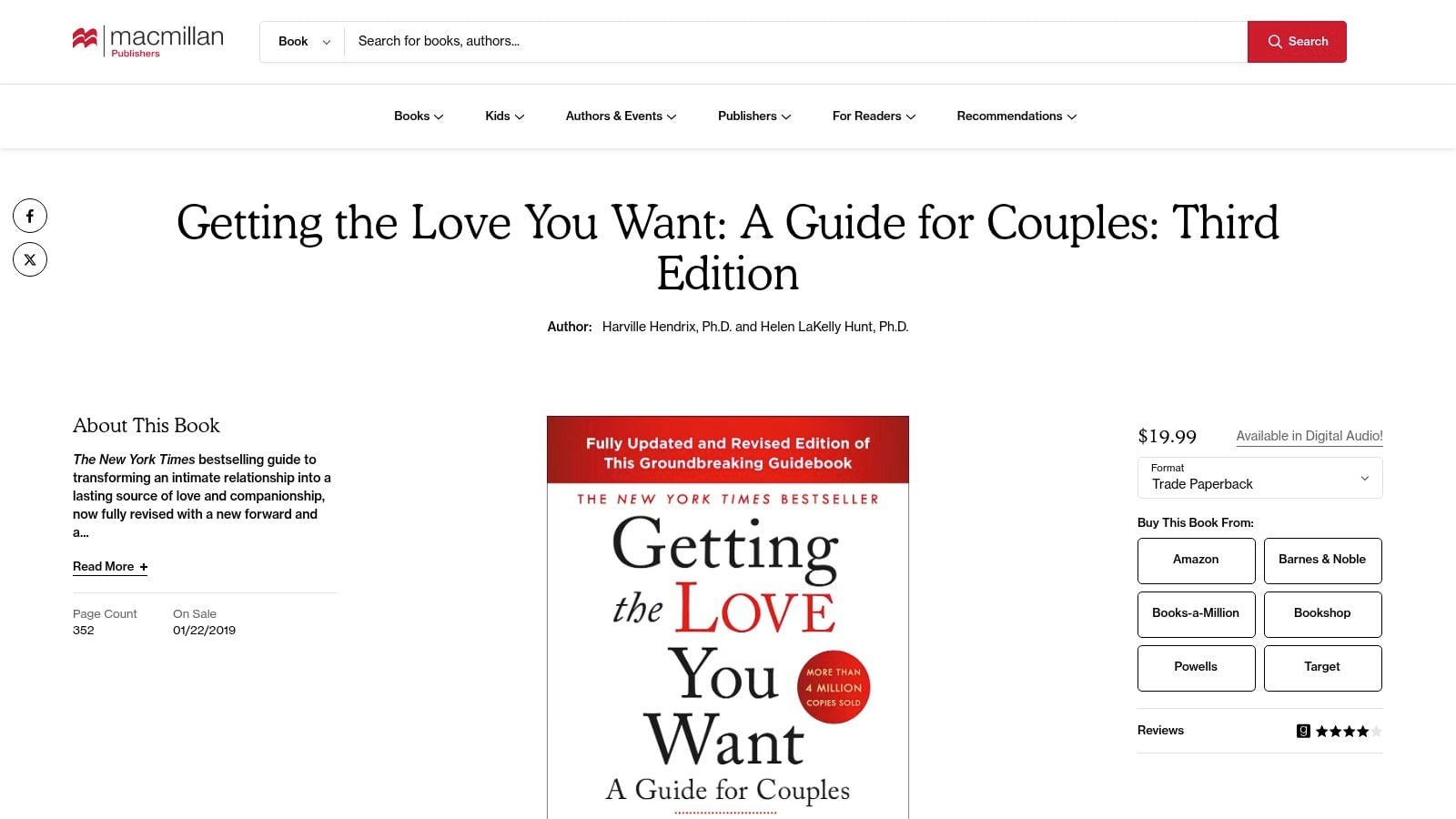
Getting the Love You Want is best known for Imago Dialogue, a structured way to talk through conflict using mirroring, validation, and empathy. If conversations in your home tend to derail fast, structure can be a relief.
I often recommend this kind of conversation container to adults who interrupt, defend, or assume intent too quickly. The method slows people down enough to hear one another.
A useful listening exercise for adults and kids
The heart of the approach is simple. One person speaks. The other mirrors back what they heard before adding opinion. Then they validate the speaker's experience, even if they see things differently.
You can adapt that for children:
- Speaker says, “I got mad when you took my spot.”
- Listener says, “You got mad when I took your spot.”
- Adult coach adds, “Can you tell them one reason that makes sense?”
This style of reflective listening works well in sibling conflict, partner repair talks, and student mediation. It doesn't erase disagreement. It helps people feel understood enough to keep going.
One caution: the early part of the book is more conceptual, so some readers may need patience before the practical tools fully click. But once you start using the dialogue structure, it gives hard conversations a predictable rhythm. For adults who need less chaos and more turn-taking, that can make all the difference.
7-Book Comparison: Communication in Relationships
| Title | Implementation complexity | Resource requirements | Expected outcomes | Ideal use cases | Key advantages |
|---|---|---|---|---|---|
| Nonviolent Communication: A Language of Life, Marshall B. Rosenberg, PhD | Moderate, learning four-part framework and phrasing takes practice | Low–Moderate, book plus many free resources and optional trainer support | Greater empathy, clearer requests, effective de‑escalation | Education, families, counseling, school-home communication | Practical sentence stems; broad adoption and adaptable ecosystem |
| Hold Me Tight: Seven Conversations for a Lifetime of Love, Dr. Sue Johnson | Moderate, structured emotional work across seven conversations | Moderate, book plus EFT workshops or therapist guidance for deeper work | Increased attachment security and emotional responsiveness | Romantic couples, couples therapy, repairing bonds | Evidence-based EFT; clear conversation scripts grounded in attachment science |
| The Seven Principles for Making Marriage Work, John Gottman, PhD & Nan Silver | Low–Moderate, habit- and exercise-focused, easy to apply | Moderate, book plus Gottman workshops/courses available | Improved relationship habits, fewer destructive interactions, measurable changes | Couples seeking practical, skills-based tools and daily practices | Research-backed, highly actionable habits and extensive supporting materials |
| Attached: The New Science of Adult Attachment, Amir Levine & Rachel S. F. Heller | Low, self-assessments and pattern recognition are straightforward | Low, book and online quizzes; minimal external support needed | Greater self-awareness of attachment style; improved communication choices | Individuals and couples wanting attachment insight, co‑parenting dynamics | Accessible primer on attachment with tailored tips for each style |
| Say What You Mean: A Mindful Approach to Nonviolent Communication, Oren Jay Sofer | Moderate, integrates mindfulness and somatic regulation with communication | Low–Moderate, book and regular practice time; possible workshops | Better presence and physiological regulation in difficult conversations | Parents, teachers, teams facing high-conflict moments or stress | Combines mindfulness + NVC into practical micro-skills for high‑conflict situations |
| Set Boundaries, Find Peace, Nedra Glover Tawwab, LCSW | Low, direct, CBT-informed scripts and step-by-step guidance | Low, book with immediately usable scripts; little external support required | Clearer limits, reduced burnout, improved assertiveness and follow-through | Caregivers, helping professionals, anyone needing boundary skills | Highly actionable scripts and quick, practical results for personal wellbeing |
| Getting the Love You Want: A Guide for Couples, Harville Hendrix & Helen LaKelly Hunt | Moderate, dialogue rituals are clear but require practiced use | Moderate, book plus widely available workshops and trained facilitators | Improved reflective listening, validation, and safer hard conversations | Couples seeking structured communication rituals and coached practice | Imago Dialogue offers predictable conversation containers and workshop support |
From Reading to Relating: Putting Communication Skills into Practice
A parent snaps at pickup after a long day. A teacher cuts off a student who is already upset. Ten minutes later, everyone feels worse, and no one is quite sure how the conversation went off track. That is the moment these books can help with, not as theory on a shelf, but as practice for real life.
Relationship communication works a lot like teaching reading. You do not hand a child one lesson and expect fluency. You model a skill, practice it in small doses, notice what gets hard, and return to it again. Adults build communication the same way. One repeated habit matters more than one perfect conversation.
Start with one book and one tool. Keep it small enough to use under stress. You might try a Rosenberg-style observation before a judgment, a Gottman repair phrase after tension, a Sue Johnson question that looks for the feeling under the reaction, or a Sofer pause to settle your body before you answer. If you are a parent or teacher, this approach fits SEL practice well because it turns abstract ideas into repeatable behaviors.
A simple routine helps. Pick one moment that happens often, such as morning transitions, homework frustration, sibling conflict, or a hard staff conversation. Use the same communication tool in that moment for a week. Afterward, ask: Did the other person become more open, more defensive, or more settled? That reflection is where learning happens.
This is also where the books connect to children's SEL growth. Clear requests support relationship skills. Body regulation supports self-management. Naming feelings and needs builds self-awareness and social awareness. Boundaries support responsible decision-making. The value of this list is not only what each author says. It is how each book can become a mini practice lab for families and classrooms.
For example, after reading Nonviolent Communication, a family might use sentence stems at dinner: “When I saw or heard ___, I felt ___, because I needed ___.” In a classroom, students can practice the same pattern with low-stakes topics before using it during conflict. After reading Set Boundaries, Find Peace, a teacher team might write three respectful boundary scripts for common stress points, then role-play saying them in a calm tone. The book becomes useful when it changes what people say on Tuesday afternoon.
Perfection is not the goal. Safety and repair are.
For schools and families, that is good news. Children do not need adults who always get every word right. They need adults who can pause, repair, listen, and try again. Those repeated moments build the climate that makes honest communication possible.
If you support children, it can help to pair your reading with practical family communication tools like the Family Caregiving Kit's communication guide. Soul Shoppe also offers SEL programs and resources for school communities and families that focus on empathy, self-regulation, communication, and conflict resolution. A shared vocabulary gives adults and children something concrete to use when emotions run high.
Start with one practice this week. One clearer request. One calmer response. One reflective listening turn before giving advice. Those small choices are easy to miss, but children learn from them every day.
If you want support bringing these communication skills into your school community, Soul Shoppe offers SEL programs, workshops, and resources that help students and adults build shared language for empathy, self-regulation, and conflict resolution.