

Top Social Emotional Learning Videos for Elementary Students
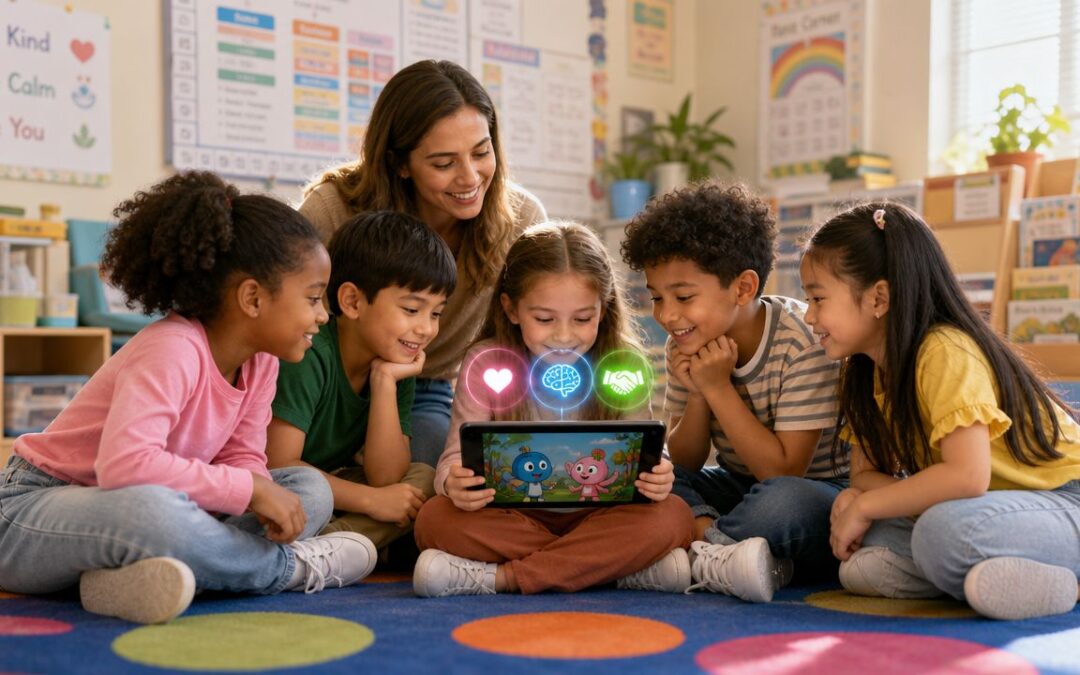
A teacher has ten minutes before the class shifts from math to lunch. A parent needs something better than random YouTube clips after a hard school day. That's usually when people start searching for social emotional learning videos for elementary students. They're not looking for more theory. They need something that works in real life, with real kids, in short windows of time.
That's where video can help. Strong SEL videos give children a shared example, a common vocabulary word, or a simple strategy they can try right away. Public collections from places like PBS LearningMedia's social-emotional learning library show how video-based SEL has shifted from one-off classroom clips to more structured instruction aligned with recognized competencies like self-awareness, self-management, social awareness, relationship skills, and responsible decision-making. In practice, that means videos can fit into morning meeting, counseling groups, family routines, and weekly classroom lessons.
What matters most is what happens after the video. Social and emotional skills are teachable in school settings, and they're linked to meaningful outcomes across academics, quality of life, and broader societal participation, as discussed in the OECD webinar on social and emotional skills. But a video alone rarely changes behavior. The follow-up does. If you also support staff with clear routines, this same principle shows up in other media formats too, including planning successful training videos.
1. Video Gallery – Soul Shoppe Programs

Soul Shoppe's Video Gallery is one of the easiest places to start if you want short, child-ready SEL clips without digging through a giant general library. The focus stays where elementary teachers and families usually need it most: empathy, communication, conflict resolution, mindfulness, and self-regulation. That makes it practical for morning meeting, a reset after recess, or a fast intervention when a class issue shows up in the moment.
What gives this collection an edge is that it connects to a broader SEL approach instead of acting like a stand-alone entertainment library. Soul Shoppe has spent more than 20 years building experiential, developmentally grounded programming for school communities, so the videos feel like part of a larger language kids can use. If you want that bigger picture, their overview of the benefits of social-emotional learning helps frame why these routines matter over time.
Best use in a real classroom
This is the featured pick because it works well for adults who need low-prep tools but don't want shallow content. The clips are short enough to use consistently, and that consistency matters more than a single “special” lesson. I'd use a Soul Shoppe video in one of three ways:
- Morning meeting opener: Show a clip on empathy or calming down, then ask, “What might this sound like in our classroom today?”
- Conflict repair support: After a playground issue, replay a communication clip and have students practice one sentence stem with a partner.
- Home carryover: Send one clip to caregivers with a prompt like, “Ask your child which tool they want to try this week.”
Practical rule: Don't ask, “Did you like the video?” Ask, “What is one thing someone in this video did that you could try today?”
A simple example. If students watch a clip about handling frustration, don't stop at discussion. Have them act out two versions of the same situation: grabbing the marker from a classmate, then trying again with words and a breath first. That's the moment when the lesson starts transferring.
Trade-offs
Soul Shoppe's strength is also its limit. These clips are excellent support tools, but they don't replace live facilitation, coaching, or repeated practice across the day. They're strongest when a teacher, counselor, or caregiver treats them as a launch point rather than the whole lesson.
They're also built for elementary learners, which is a plus here, but less useful if you're trying to stretch one resource across older students. For K-5 and many K-8 settings, though, the age fit is exactly why they work.
2. Second Step

Second Step Elementary works best for schools that don't want to assemble SEL from scattered videos and teacher-created lessons. It gives you a weekly structure, teacher-led delivery, and short media built into the curriculum. For principals and district teams, that kind of consistency matters because classrooms aren't all inventing SEL on their own.
The videos usually function as modeling tools, not complete lessons. That's a good thing. A short skill model on emotion management or problem-solving usually lands better than a long video that tries to do everything.
Where it fits best
Second Step is a strong option if your school wants a scope and sequence and family connection pieces, not just a playlist. It also helps classrooms where teachers are willing to teach SEL but need scripting and pacing support.
Try a lesson video on friendship skills this way:
- Before viewing: “Listen for one moment where a character could have made the problem worse.”
- After viewing: “What was the turning point?”
- Extension: Students write or say one sentence starter they can use at recess, such as “Can we try that again?” or “I felt left out when…”
For families, one practical move is to send home the same skill language used at school. That creates less confusion for children and helps them hear the same message in two places. Soul Shoppe's ideas for SEL activities for elementary students pair well with that kind of carryover.
Trade-offs
Second Step's biggest advantage is structure. Its biggest drawback is that it sits inside a more closed ecosystem, and public pricing isn't posted. That won't bother a district buyer as much as it will a parent or an individual teacher looking for quick free access.
3. Flocabulary

If you teach a class that remembers lyrics faster than lectures, Flocabulary is worth a close look. Its music-driven videos can make SEL vocabulary stick in a way that straight explanation often doesn't. That's especially useful for concepts like active listening, managing frustration, or empathy, where children need memorable language they can call back under stress.
Flocabulary is also handy when you want SEL to connect with literacy, speaking, and discussion. A child who won't summarize a traditional lesson may still repeat a chorus about self-control or respectful communication.
How to avoid passive watching
The mistake with Flocabulary is treating the song as the whole lesson. Don't. Use the rhythm and repetition as the hook, then move quickly into practice.
A strong routine looks like this:
- Listen for the target phrase: Ask students to catch one key line about the skill.
- Turn lyric into action: If the line is about listening, students show what listening looks like with eyes, body, and voice off.
- Use a fast reflection: “When is this easiest for you? When is it hardest?”
Music helps kids remember words. Practice helps them use those words when they're upset.
For a home example, a caregiver might replay a short SEL video before homework and say, “Pick one line from the song that could help if you get stuck tonight.” That's simple, concrete, and more useful than a generic “calm down.” Soul Shoppe's emotional intelligence activities for kids can extend that kind of language work offline.
Trade-offs
Flocabulary is highly engaging, but the style won't fit every classroom. Some teachers love the energy. Others want a quieter tone for sensitive topics. It also requires paid access for the full experience, so it's often easier to justify at the school level than for one family.
4. BrainPOP and BrainPOP Jr.

BrainPOP and BrainPOP Jr. are familiar to many teachers, which lowers the barrier to using them. If students already know the format, you can spend less time explaining the platform and more time discussing the skill. BrainPOP Jr. tends to fit younger elementary students better, while BrainPOP works well into upper elementary and middle grades.
The SEL topics are broad and useful: emotions, empathy, bullying, mindfulness, and digital citizenship. That makes BrainPOP a solid “I need something good for tomorrow” option.
Best for quick concept teaching
BrainPOP is especially good when students need a shared definition before they can talk meaningfully. For example, if a class keeps accusing one another of “being mean,” a short video on empathy or conflict can give everyone more precise language.
Use it this way:
- Pause mid-video: Ask, “What clue tells you how this character feels?”
- Quick partner task: One child names a feeling. The other suggests a respectful response.
- Exit slip: “One thing I can do differently next time is…”
This platform works best as a spark, not the whole fire. If your school wants a more complete approach, pair it with recurring routines, playground coaching, and a broader SEL program for schools.
Trade-offs
BrainPOP's production quality is strong, and that familiarity helps. The trade-off is depth. Some SEL topics are handled well as introductions, but they still need adult-led discussion and real-life application if you want behavior to shift.
5. Harmony SEL

Harmony SEL stands out because it doesn't treat videos as isolated media. It ties them to routines like Meet Up and Buddy Up, which is exactly what many classrooms need. Kids rarely build relationship skills from watching alone. They build them by talking, listening, and repeating social routines with real peers.
That's why Harmony works well in schools trying to strengthen belonging and classroom community. The videos and story-based lessons support the routine, rather than replacing it.
A strong fit for daily practice
If your classroom has tension, cliques, or kids who only talk to the same few classmates, Harmony's daily-practice angle is useful. A short story or video can open the door, then the routine does the heavier lifting.
Example:
- Show a clip on inclusion or friendship.
- Move into a Buddy Up conversation with a prompt like, “Tell about a time you felt included.”
- End with one class agreement for the day, such as “We make room in games.”
Some of the best social emotional learning videos for elementary students aren't the flashiest ones. They're the ones that fit into a repeatable routine kids can count on.
Trade-offs
Harmony is appealing because access is available without a typical curriculum purchase barrier, though registration is required. The main limitation is range. It's strongest in PreK through elementary and may need supplementation if older students need more nuanced content.
6. GoNoodle and SuperNoodle

GoNoodle is one of the easiest SEL-adjacent tools to use because it solves an immediate classroom problem: students are dysregulated, tired, wiggly, or overloaded. The movement and mindfulness videos can help children reset their bodies, and that often creates the opening for better emotional control.
SuperNoodle adds more structure for schools that want sequenced lessons and teacher guides. That matters if you're trying to move from random brain breaks to a more intentional self-regulation approach.
What it does well
GoNoodle shines during transitions. After lunch, before a test, or when the room gets noisy, a short movement or breathing video can reset the group faster than a lecture on expected behavior.
One practical sequence:
- Start with a calming or movement clip.
- Ask, “What changed in your body?”
- Have students choose one word: calmer, energized, focused, still frustrated.
- Name the next step: “Now that your body is ready, let's try the hard part again.”
This works at home too. A parent can use one clip after school and then ask, “Do you need to move more, talk, or sit calmly?” That turns a generic brain break into a self-awareness routine.
Trade-offs
GoNoodle is excellent for regulation support, but it isn't enough by itself if your goal is conflict resolution, empathy language, or problem-solving. Think of it as body-first support that often needs a second step.
7. ClassDojo Big Ideas Video Series
ClassDojo Big Ideas is a strong choice when you need free, fast, child-friendly mini-lessons. The Mojo videos are especially accessible for younger elementary students, and they cover familiar SEL themes like growth mindset, empathy, mindfulness, perseverance, and gratitude.
These videos are simple enough for school or home, which is part of their value. A classroom teacher can use one in five minutes. A caregiver can pull one up after dinner without needing a manual.
Best for conversation starters
ClassDojo is effective. It gives children a shared story and language for talking about a concept that might otherwise feel abstract.
A good example with a perseverance video:
- Ask before viewing: “What do you usually do when something feels too hard?”
- Ask after viewing: “What did the character do instead of giving up?”
- Extend it: Have students finish the sentence, “When I get stuck, I can…”
For home use, keep it even simpler. Watch one clip and invite the child to draw “what trying again looks like.” That gives younger children another way to process the idea.
Trade-offs
The Big Ideas series is free and easy to use, but it isn't a full curriculum. There's limited depth, and older elementary students may outgrow the tone. It's best used as a discussion spark, not the entire SEL plan.
8. Everyday Speech

Everyday Speech is especially useful when students need explicit social skills instruction, not just broad SEL themes. That makes it a strong fit for school counselors, special educators, speech-language pathologists, and classroom teams supporting students who benefit from clear modeling.
The video format is practical. Children can see a scenario, compare less helpful and more helpful responses, and then talk through what changed.
Where it shines
If a child struggles to join play, read conversational cues, or manage peer interactions, Everyday Speech often feels more concrete than a general SEL video. It shows the skill in action, which reduces guesswork.
Try it with a recess-entry skill:
- Watch a scenario about joining a group.
- Pause and ask, “What would make this hard?”
- Practice two entry lines, such as “Can I play too?” or “What role do you need?”
- Rehearse the body language, not just the words.
That last part matters. Many students know the phrase but not the tone, timing, or physical presence that helps the phrase land.
Trade-offs
Everyday Speech is strong on video modeling and companion activities. The trade-off is that adults still need to create live practice opportunities. If students only watch and never rehearse with peers, the skill may stay stuck in the lesson instead of showing up on the playground.
9. CharacterStrong PurposeFull People

CharacterStrong PurposeFull People is built for schools that want turnkey weekly lessons tied to a broader culture effort. The embedded videos, slide decks, prompts, and family resources reduce teacher prep. That alone makes it attractive in busy schools where SEL gets pushed aside unless the materials are ready to go.
Its emphasis on belonging, relationships, and regulation also matches what many elementary teams are trying to reinforce schoolwide.
Good for schoolwide consistency
This program makes the most sense when a school wants common language across classrooms. If one second grade teacher says “pause and breathe,” another says “reset your body,” and the counselor says something else, children get mixed signals. CharacterStrong helps tighten that up.
A practical use case:
- Show the short lesson video.
- Discuss one prompt as a class.
- Practice one specific routine in the setting where kids need it most, such as lining up, group work, or recess transitions.
The fastest way to weaken an SEL video is to keep the skill inside the lesson block. Move it into hallway, playground, and partner work language the same day.
Trade-offs
PurposeFull People is polished and teacher-friendly, but schools get the most value when adoption is broad. If only one classroom uses it in isolation, some of the culture-building advantage gets lost.
10. Peekapak
Peekapak is a good fit for teachers who want SEL and literacy to reinforce each other. Its story-driven approach helps children connect social-emotional concepts to characters, plot, and reading discussion. For many elementary classrooms, that makes implementation easier because the SEL time doesn't feel disconnected from the rest of the day.
This also helps families. Story characters give adults something concrete to reference later, which is easier than revisiting a vague classroom lecture.
Best when you want story and skill together
Peekapak works well for children who respond to narrative more than direct instruction. A child may not engage with “today we are learning empathy,” but they'll often respond to “what should this character do next?”
Simple extension ideas:
- Character check-in: “How do you think this character felt in that moment?”
- Perspective practice: “What might another character have been thinking?”
- Real-life bridge: “When has something like this happened at school or at home?”
This approach also lines up with a broader practical truth about SEL instruction. Independent SEL research highlighted in a webinar on how children learn social and emotional skills emphasizes listening, observation, direct instruction, repeated practice in different contexts, and the importance of discussion and personal connection after a story or video. That's exactly why story-based programs can work well, if adults don't skip the conversation.
Trade-offs
Peekapak's strength is integration. Its limit is access, since many materials sit behind paid packages. It's also best for teachers who are willing to use the stories actively. If you just press play and move on, you won't get the full benefit.
Top 10 Elementary SEL Video Resources Comparison
| Product | Core features | Target audience & use | Key strengths | Limitations & Price |
|---|---|---|---|---|
| Video Gallery – Soul Shoppe Programs | Curated, bite‑sized SEL clips aligned to Soul Shoppe tools & app | Elementary teachers & caregivers; morning meetings, quick lessons, reinforcement between sessions | Aligned with experiential curriculum and shared language; produced by 20+ yr SEL org; classroom‑ready | Supplementary (not a full curriculum); elementary‑focused. Free online |
| Second Step (Committee for Children) | K–8 scope-and-sequence curriculum with weekly lessons, embedded videos & family resources | Districts/classrooms seeking structured, teacher‑led SEL program | Research‑based; strong district implementation supports | Some media require activation/login; pricing by quote |
| Flocabulary (by Nearpod) | Music‑driven instructional videos (700+), standards alignment & teacher resources | K–12; engaging mini‑lessons, morning meetings, cross‑curricular ties | Highly engaging music format that aids retention; broad topical range | Full access requires paid plan (quote); hip‑hop style may not suit all |
| BrainPOP (and BrainPOP Jr.) | Animated SEL shorts paired with quizzes, guides & activities | BrainPOP Jr.: early elementary; BrainPOP: grades 3–8; quick concept lessons | High production quality; interactive features; student familiarity | Subscription required (school/district pricing); SEL depth varies |
| Harmony SEL (Harmony Academy/National University) | Story‑based lessons, Meet Up/Buddy Up routines, training portal | PreK–6 classrooms focused on daily routines & belonging | No‑cost access; strong emphasis on classroom community & daily practices | Portal requires registration; may need supplements for older grades |
| GoNoodle (and SuperNoodle) | Movement & mindfulness brain breaks; SuperNoodle adds sequenced curriculum | Elementary transitions, regulation, brain breaks & focus activities | Very student‑motivating; easy to implement at scale | Free core library; SuperNoodle premium needs district license (quote); not full explicit SEL curriculum |
| ClassDojo, Big Ideas Video Series | Kid‑friendly animated mini‑lessons with teacher prompts & family links | K–5 for quick lessons, discussion starters, family viewing | Free; quick to implement; highly accessible for families | Not a comprehensive curriculum; skews younger |
| Everyday Speech | Video modeling with printable/game extensions and progress tools | Elementary & special education; SLPs and intervention teams | Practical, explicit social skills models favored by clinicians | Licensing by quote; teacher must plan hands‑on practice |
| CharacterStrong, PurposeFull People (Elementary) | Turnkey weekly lessons with videos, slide decks, prompts & family resources | Elementary schools aiming for schoolwide character/SEL culture | Reduces teacher prep; supports schoolwide Tier‑1 alignment | Pricing by quote; best with whole‑school adoption and PD |
| Peekapak | Story‑driven animated stories, teacher videos/slides, home activities (EN/ES) | PreK–5; SEL integrated with literacy & family engagement | Strong literacy integration; multi‑level reading and family extensions | Many materials behind Pro subscription; pricing varies |
Making Screen Time Count: SEL Videos as Tools for Connection
The best social emotional learning videos for elementary students don't carry the whole lesson by themselves. They open the door. A short clip can show a child what empathy looks like, give a class a shared phrase for calming down, or create enough emotional distance to talk about a hard situation safely. But the learning deepens when an adult helps children name what they saw, connect it to their own lives, and practice the next move.
That's the pattern I trust most. Watch something brief. Ask one or two concrete questions. Practice the skill in a realistic setting. Then come back to it later when the child needs it. A video about conflict resolution means more when students use one sentence from it during partner work. A mindfulness clip matters more when a child remembers the breath before a test or after a disagreement.
There's also an important selection issue that gets overlooked. Not every classroom needs the same tone, pace, or examples. Sesame Workshop's Watch, Play, Learn library was designed for children ages 3 to 8 with attention to children affected by crisis, conflict, and displacement. That's a useful reminder that the market doesn't merely need more SEL videos. It needs better-matched videos for children's actual contexts, including multilingual settings, stressed classrooms, and students carrying trauma or instability.
For teachers, that means choosing videos with intention. Ask whether the content fits your students' language levels, emotional readiness, and daily realities. For parents, it means resisting the urge to use videos as digital babysitting when emotions are running high. A two-minute clip followed by a calm conversation will usually do more than a longer block of passive viewing.
The strongest results come when digital resources support a larger culture of belonging, emotional safety, and repeated skill practice. That's why video libraries, curriculum platforms, movement tools, and story-based programs each have a place. They just do different jobs. Some are best for direct instruction. Some are best for regulation. Some help with schoolwide consistency. Some are ideal for home follow-through.
If you want another example of story-based video content that depends on discussion and adult guidance, this roundup of top animated Bible stories for kids shows the same general principle in a different category. The screen introduces the idea. The relationship around the screen makes it meaningful.
If you want social emotional learning to stick beyond a single lesson, Soul Shoppe is worth a serious look. Its video resources, experiential programs, and schoolwide approach help teachers, counselors, and families turn SEL from a topic into a shared daily practice kids can use in class, on the playground, and at home.