

8 Social Emotional Learning Activities for Toddlers
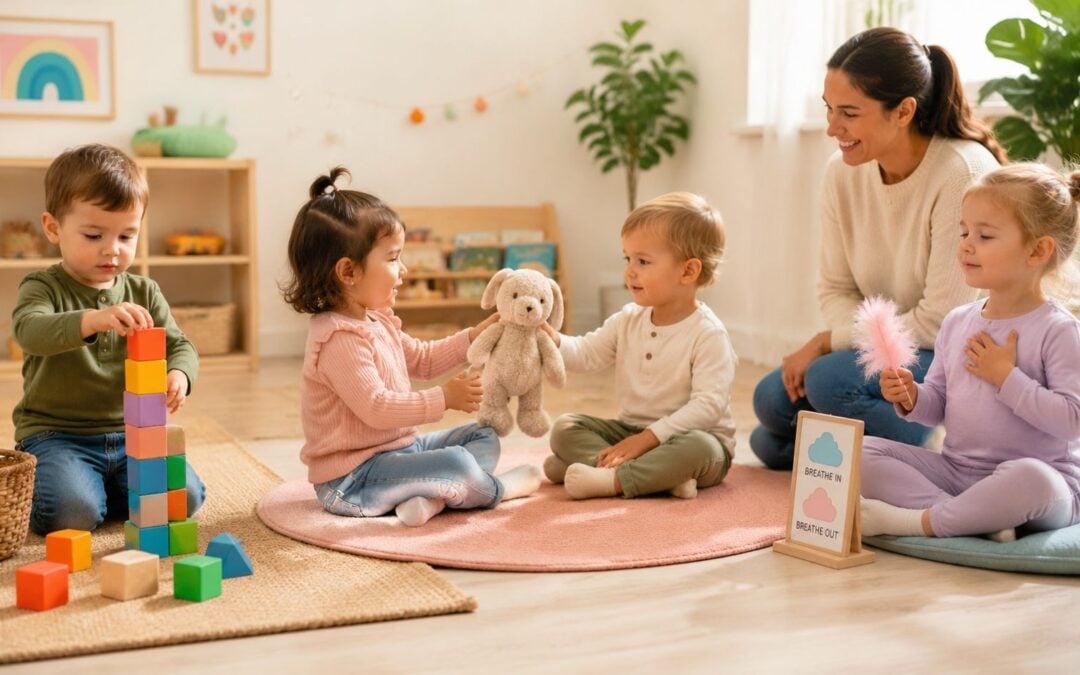
The toddler years can feel like an emotional weather report that changes by the minute. A child is laughing over bubbles, then crying because someone touched the red shovel, then clinging at drop-off, then proudly offering a snack to a friend. That swing isn't a sign that something has gone wrong. It's part of a critical stage for learning feelings, relationships, and self-control.
In early childhood, social and emotional development moved from being treated as simple behavior management to being taught more intentionally through daily routines, songs, play, and feeling-based language. Large early-learning frameworks such as Head Start continue to treat social and emotional learning as a core teaching practice for young children, and NAEYC centers trusting relationships and intentional teaching in that work, as described in Head Start's guidance on social emotional learning. For parents and teachers, that matters. Toddlers aren't just being redirected. They're learning skills.
If you're in the middle of frequent meltdowns, toy battles, or short attention spans, this guide is for you. These social emotional learning activities for toddlers are organized as a practical toolkit, not a random craft list. Each one connects to a core SEL pillar and includes ways to use it at home or in a classroom. If you also care about the wider value of play-based early childhood education, this overview of early learning benefits for Melbourne families complements the same child-centered approach.
1. Emotion Recognition and Naming Activities
Emotion naming is where most toddler SEL work should begin. A child can't use a calming strategy or repair a friendship if they don't yet have words for what's happening inside. Start simple. Happy, sad, mad, and scared are enough at first.

A strong routine is a brief feelings check-in during moments that already repeat. Morning arrival, snack, cleanup, and bedtime work well. In group care, many teachers use a feelings board where each child points to a face card. At home, a parent can do the same with two or three printed pictures on the fridge.
Make feelings visible
Mirror play works because toddlers love looking at faces. Hold up a card with a smiling face, then invite the child to copy it in the mirror. Do the same with sad, angry, and surprised. That helps connect a feeling word to a face and body.
Storybooks help too. Pause during a familiar book and ask, "How does the bunny feel?" If the child can't answer, model it without pressure. For a ready-made visual tool, a simple feelings chart for kids can support the same routine at home or school.
Practical rule: Don't ask toddlers to explain their feelings before they can name them. Label first. Reflect second.
A classroom example looks like this: a toddler grabs a truck, another child cries, and the teacher says, "You look mad. He looks sad. Let's help." A home example is just as direct: "You're angry that the blue cup is in the sink."
What doesn't work is quizzing children when they're already flooded. If a child is screaming, "How do you feel right now?" often raises frustration. Calm first, then label.
- Start with four feelings: Keep the first set small so the child can remember and use the words.
- Use the same words every day: Consistency matters more than creativity.
- Pair words with body cues: "Your fists are tight. That looks angry."
- Keep check-ins brief: One minute is enough for most toddlers.
2. Mindfulness and Breathing Exercises for Young Children
Breathing work with toddlers has to be concrete. If you say, "Take a mindful breath," most children under three will stare at you or keep crying. If you say, "Let's blow a bubble very slowly," they can do it.

Bubble breathing is one of the best social emotional learning activities for toddlers because it gives the breath a job. Blow too hard and the bubble pops. Blow slowly and it floats. That physical feedback makes the lesson real.
Try this during calm moments first. Put one hand on the child's belly and one on your own. Say, "We fill up our belly, then blow the bubble out slow." If you want a simple script for this skill, Soul Shoppe's guide to the belly breathing technique offers child-friendly language.
Use routines, not rescue missions
Breathing helps most when children practice before they need it. A teacher might use three bubble breaths before circle time. A parent might use dragon breaths in the car before childcare drop-off. Repetition is what makes the strategy available later during stress.
The broader idea behind this work lines up with how SEL is defined in the education field: building skills to manage emotions, show empathy, make responsible decisions, and maintain positive relationships. That category is also growing at the systems level. For schools, that means calming tools and explicit SEL practice are no longer fringe supports. They're part of mainstream planning.
A grounding variation is the five-senses game. Ask, "What do you see? What do you hear? What do you feel on your hands?" Toddlers don't need to complete a long sequence. Just noticing one thing can help them settle.
A short guided demonstration can help adults picture the pacing: