

8 Essential Games for Listening & SEL Skills
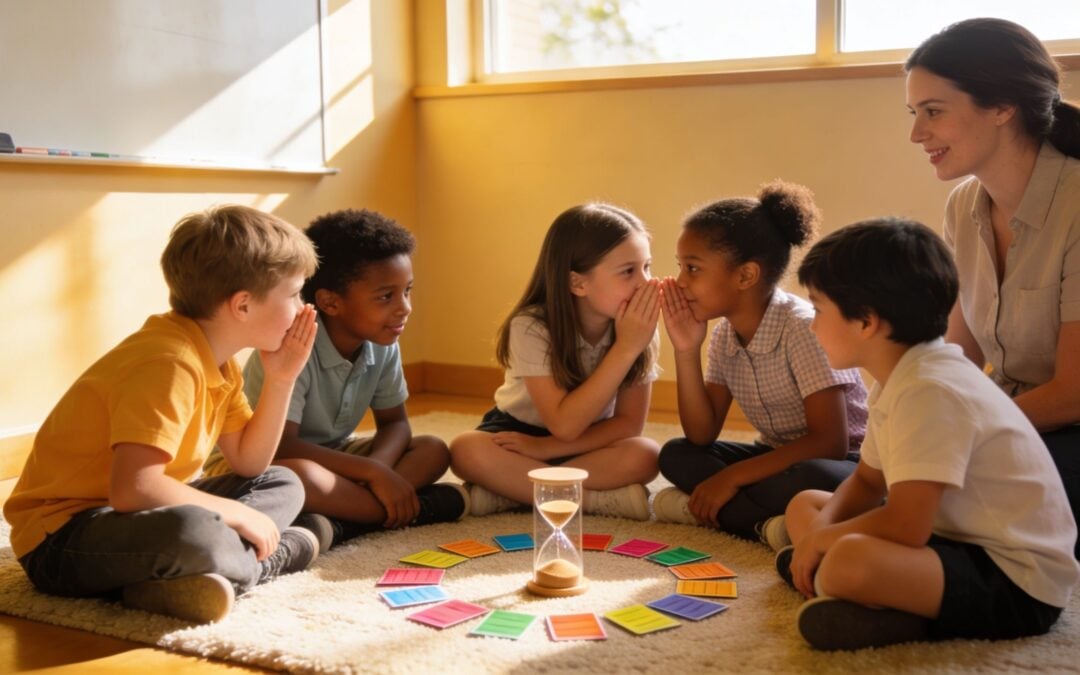
You've just explained the directions, and a few students are already asking what to do. At home, you've asked your child to put on shoes, grab a water bottle, and meet you at the door, but only one of those things happened. Those moments are easy to read as defiance, laziness, or distraction.
Usually, they're a listening problem. Not hearing, but listening. Filtering noise, holding information, noticing tone, reading emotion, and staying present long enough to respond well. In a busy classroom or a full family schedule, that's a big skill set.
That's why games for listening matter so much. They give children low-pressure practice with attention, self-regulation, empathy, and communication repair. They also help adults shift from “Why aren't they listening?” to “What support helps them listen better?” That question changes everything.
Many adults need that reminder too. Some of the same principles that help kids tune in also show up in strong leadership tips from Corporate Challenge Events. Clear expectations, emotional safety, and repetition work across ages.
Listening games have deep roots. Maria Montessori's sensory methods date back to 1912, and active listening games have remained part of early childhood education for decades. One example, documented by Mathful Play's Listen, Count, and Guess activity, describes a classic bucket-and-object game and cites sensory play research showing 85% improvement in auditory discrimination skills among children ages 3 to 5 after four weeks of regular play.
1. Circle Listening
Some games for listening are lively. This one is quiet on purpose.
In a talking circle, students sit in a circle, and only the person holding the talking piece speaks. Everyone else listens without interrupting. That single structure slows the room down and gives children a clear experience of what respectful attention feels like.
Circles work best when adults stop treating them like a performance. Children don't need a perfect answer. They need time, predictable norms, and a real chance to be heard.
How to run it well
Start small. A group of 8 to 12 is usually easier to manage than a whole class if students are new to the format. Use a simple object as the talking piece, such as a smooth stone, a small stuffed animal, or a wooden stick.
Use low-stakes prompts first:
- Easy entry prompt: “What's one sound you heard on the way here?”
- Belonging prompt: “What helps you feel calm at school?”
- Repair prompt: “What should someone do when they interrupt by accident?”
If you want a school-based model for this work, Soul Shoppe shares practical examples in its piece on restorative circles in schools.
Practical rule: Don't force every child to speak on the first round. Passing is often what makes the circle feel safe enough for honest participation later.
This practice aligns naturally with SEL because it teaches turn-taking, perspective-taking, and emotional restraint. The strongest circles aren't the ones with the most polished sharing. They're the ones where children begin responding to one another with less sarcasm, fewer interruptions, and more patience.
A practical classroom example: after recess conflict, don't begin with “What happened?” Start with “What do you need from others so you can listen right now?” That question lowers pressure and often gets better participation.
Later, you can deepen the prompts:
- Conflict awareness: “What makes listening hard when you're upset?”
- Community building: “What does respect sound like?”
- Reflection: “When did someone listen to you this week?”
Here's a short visual introduction you can use if students need to see the structure before trying it.