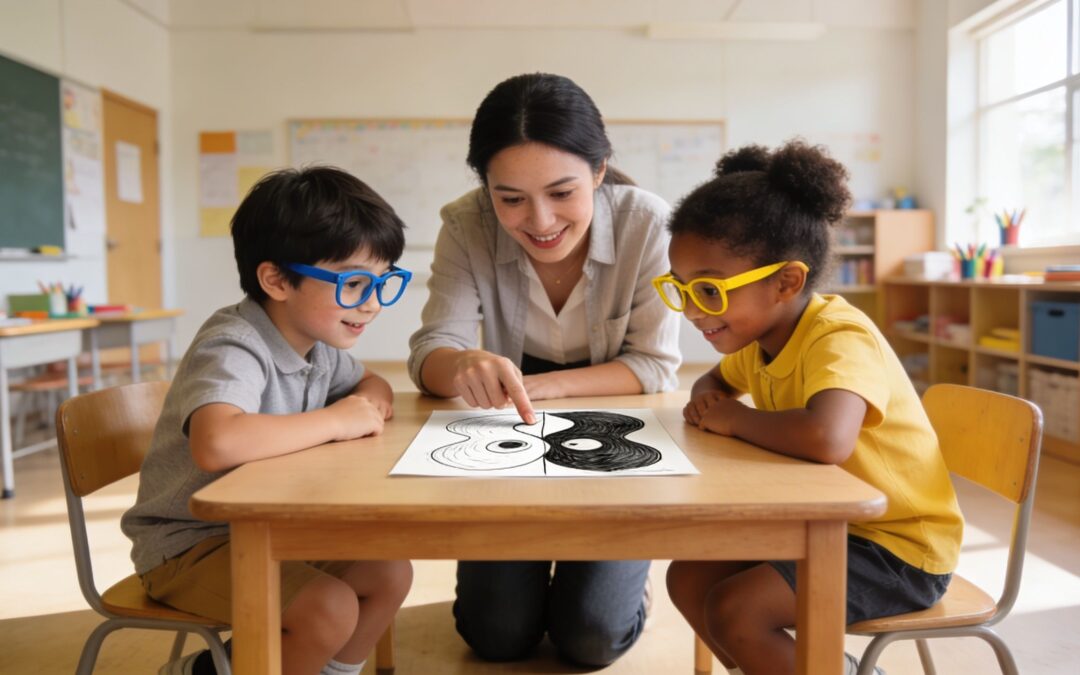
A lot of adults are living this sentence every day without naming it: life is perspective.

You see it during morning meeting when one student says, “She ignored me,” and the other says, “I didn’t even hear you.” You hear it at home when one child says, “That’s not fair,” and a parent is thinking, “I’m trying to help everyone get out the door.” The facts of the moment may be the same. The experience of the moment is not.

For K-8 students, that gap matters. It shapes friendships, classroom trust, problem-solving, and how children make sense of setbacks. When adults teach kids how to pause, look again, and consider another point of view, we aren’t asking them to give up their own feelings. We’re helping them understand that more than one story can be happening at once.

That’s a core social-emotional skill. It helps children move from blame to curiosity, from defensiveness to communication, and from “I’m right” to “Help me understand.”

The Power of Seeing Things Differently

Two second graders are arguing over markers at the art table. One says, “He took it from me.” The other says, “I thought nobody was using it.” Both children are upset. Both feel certain. Both want the teacher to confirm their version.

That’s a small classroom moment, but it holds a big lesson. Children often think perspective means deciding who is correct. In practice, perspective-taking means noticing that each person has partial information, feelings, assumptions, and needs. Once kids learn that, conflict becomes easier to unpack.
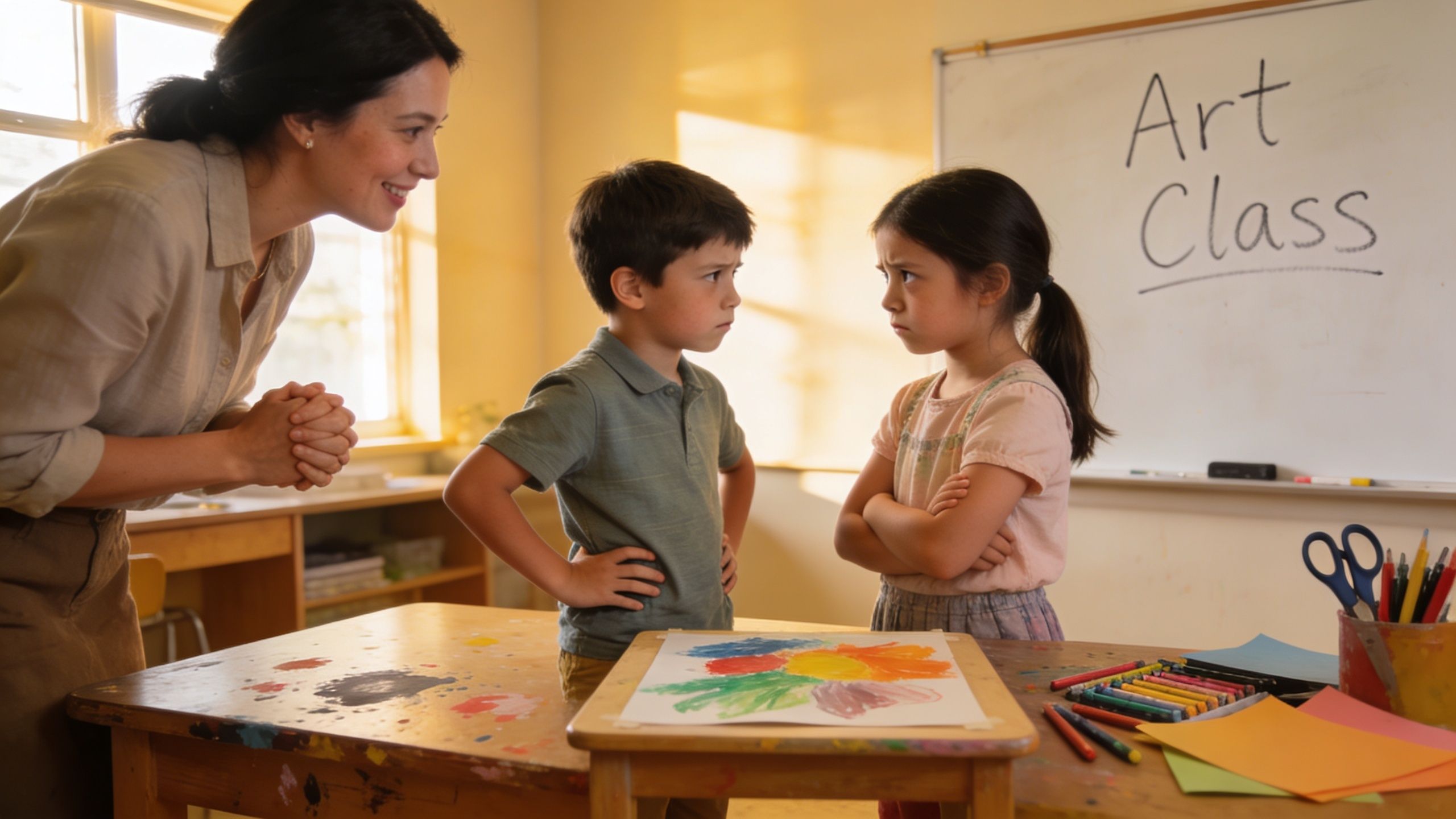
A teacher watches two young students in an art classroom while they look at each other intensely.

What perspective means in a school day

In plain language, perspective is the way a person understands what’s happening. It includes what they noticed, what they missed, what they expected, and what they felt.

A child who says, “Nobody wants me on the team,” may be reacting to one missed invitation. Another child in the same game may be focused on rules and not realize someone feels left out. The event is shared. The meaning attached to it is different.

This is why “life is perspective” lands so strongly in SEL work. It reminds us that behavior doesn’t appear out of nowhere. A child reacts to the meaning they assign to the moment.

Practical rule: Start with, “Tell me what happened from your view,” before you move to correction or consequences.

That one sentence changes the temperature of the room. Kids feel heard, and adults get better information.

Why this matters beyond one conflict

Research from the Pew Research Center on what makes life meaningful across advanced economies shows that while priorities differ across cultures, core human values like family, friendships, and health are nearly universal sources of meaning. For educators and families, that’s a useful reminder. Children need help building connection, belonging, and resilience because those are part of what people consistently value most.

In school, perspective-taking supports exactly those outcomes. A child who can ask, “What else might be going on here?” is less likely to escalate a disagreement and more likely to repair a relationship.

You can even build this mindset into academic lessons. During a read-aloud about environmental care, for example, students can compare how different people see the same problem. If you want real-world visuals for that kind of discussion, these sources for plastic pollution images can help students talk about how the same image may spark sadness, responsibility, anger, or action depending on the viewer.

Where adults often get stuck

Many teachers and parents worry that validating perspective means approving hurtful behavior. It doesn’t.

You can say, “I believe you felt left out,” and also say, “You may not push when you’re angry.” Perspective-taking doesn’t remove boundaries. It makes boundaries more teachable because students are calmer and more able to reflect.

When children learn that other people have inner experiences just as real as their own, they begin to build empathy. That shift is one of the strongest foundations we can give them.

The Science Behind a Shift in Perspective

When I explain perspective-taking in staff workshops, I use a simple image. Think of the brain as using a fast camera. It snaps a quick picture of a situation and labels it immediately: threat, unfair, embarrassing, mean, boring.

That first picture isn’t always wrong. But it’s often incomplete.
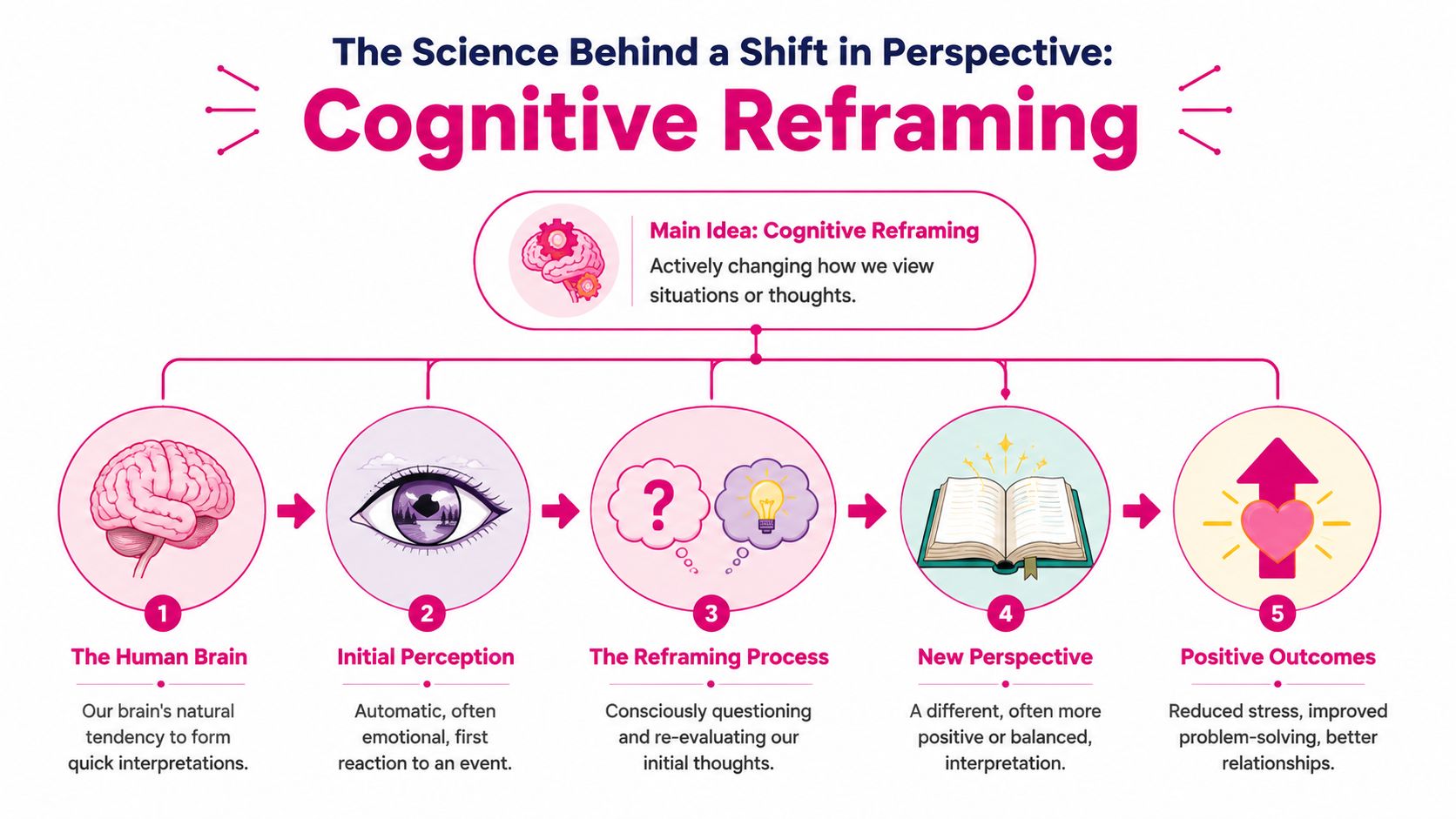
A diagram illustrating the five-step process of cognitive reframing to change thoughts and improve mental outcomes.

The brain can learn a second look

Cognitive reframing means teaching students to take a second mental picture. Instead of stopping at “She’s ignoring me,” they learn to ask, “Could she be distracted, nervous, or unsure what to say?” That doesn’t erase their feeling. It widens their interpretation.

Neuroscientific studies described in this discussion of perspective-taking and empathy-related brain activity report that structured perspective-taking exercises can increase activation in brain regions responsible for empathy and improve conflict resolution outcomes in students by up to 31%. For educators, the takeaway is straightforward. Perspective-taking isn’t fluff. Practice changes how students respond.

Two brain regions often come up in this conversation: the anterior cingulate cortex and the temporoparietal junction. You don’t need students to memorize those names. What matters is the idea behind them. Parts of the brain involved in empathy and understanding other minds become more active when people intentionally consider another viewpoint.

A useful classroom analogy

Try calling this “putting on perspective glasses.”

When a student is upset, ask:

  1. What did you first see?
  2. What might you have missed?
  3. What could the other person be thinking or feeling?
  4. What’s a more complete story?

That sequence is simple enough for elementary students and still useful for middle schoolers.

When kids can name their first interpretation, they’re more able to loosen their grip on it.

That’s the moment reframing begins.

Why repeated practice matters

Perspective-taking works like any other skill. One lesson won’t do it. Students need brief, repeated opportunities in real situations.

That’s why short daily routines often work better than waiting for a major conflict. You can build the habit with:

  • Morning prompts: “What’s one reason someone might have a hard time joining a group today?”
  • Read-aloud pauses: “How might the side character describe this scene?”
  • Repair conversations: “What did you assume, and what do you know now?”

Teachers who want a broader SEL foundation for this work may also find Soul Shoppe’s article on what social-emotional development is helpful because it connects perspective-taking to larger developmental skills children use every day.

For adults, a related framework from therapy can also be useful. If you support anxious students or family members, this overview of understanding ACT for anxiety offers language for noticing thoughts without letting them control every reaction. That mindset pairs well with perspective work.

What to say when students get confused

Children often hear “see the other side” as “your feelings don’t count.” Clear language helps.

Try these lines:

  • “Your feeling is real. We’re also going to look at the whole picture.”
  • “We’re not changing the facts. We’re checking our interpretation.”
  • “Two people can remember the same moment differently.”

That’s how we teach students that life is perspective without slipping into relativism or confusion. We help them keep their truth and stay open to someone else’s.

Why Teaching Perspective Boosts School Wellbeing

A school climate doesn’t improve because adults post kindness posters. It improves when students learn what to do in moments of misunderstanding, exclusion, embarrassment, and tension.

Perspective-taking belongs at the center of that work.
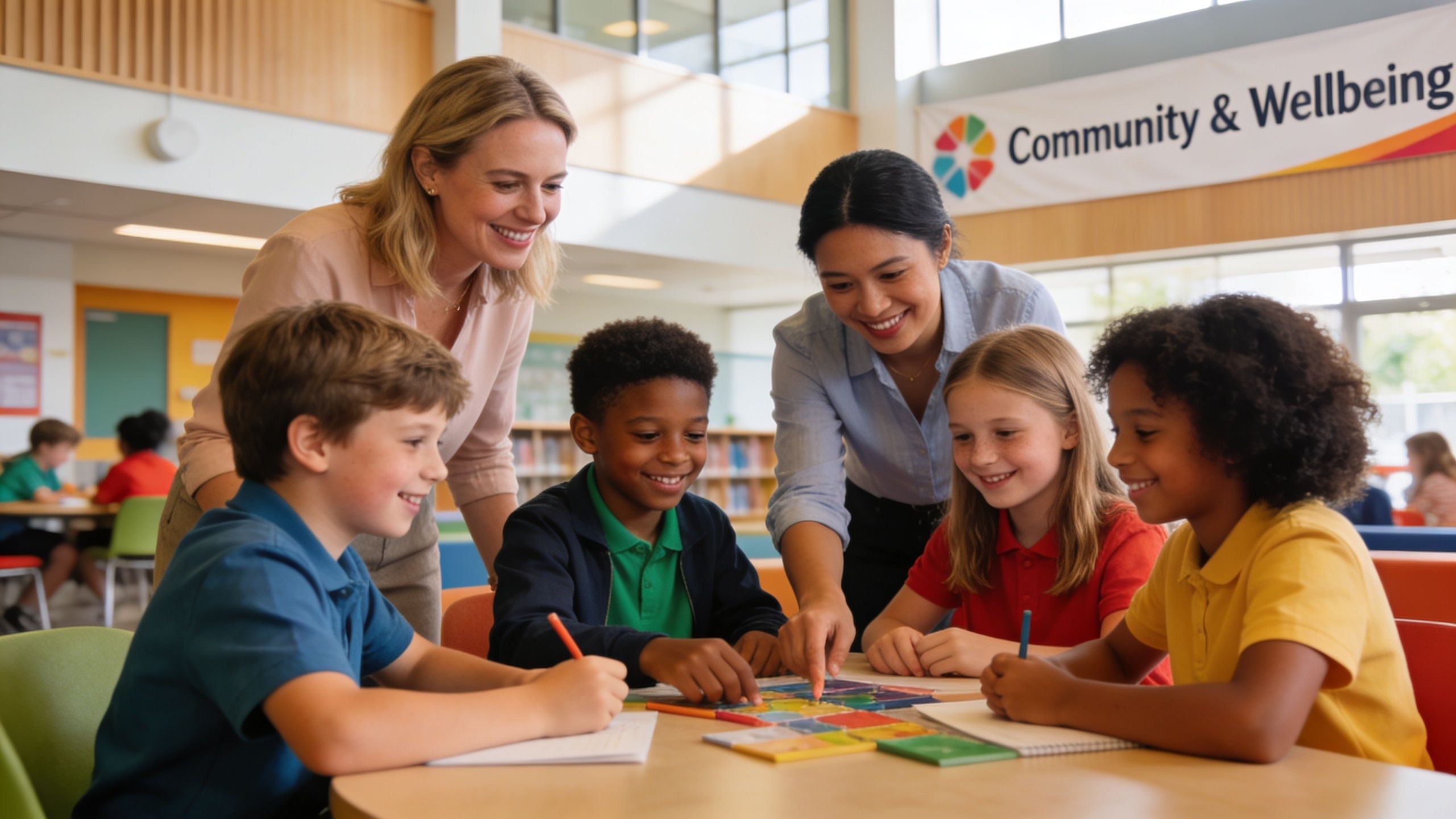
A diverse group of children and teachers collaborating on a learning activity in a classroom setting.

Friendship is not extra

An American Perspectives Survey on what matters for a fulfilling life found that 58% of Americans identify good friends as essential to a fulfilling life. That places friendship above several milestones adults are often taught to prioritize. For schools, that’s a practical message. Peer relationships are not a side issue. They are central to wellbeing.

If friendship matters that much in adult life, then teaching children how to listen, repair, include, and interpret each other generously is serious educational work. It affects recess, partner work, group projects, lunch, transitions, and the emotional safety students carry into academic tasks.

A child who trusts peers enough to take a risk in class is more available for learning than a child who is busy scanning for rejection.

What schools gain when perspective becomes common practice

When schools teach perspective consistently, adults often notice changes in the quality of daily interactions before they see changes on any formal measure. Hallway conflicts de-escalate faster. Students become more willing to explain rather than accuse. Teachers spend less energy sorting out social confusion and more energy teaching.

Some of the strongest arguments for SEL also support this work. CASEL research, summarized in this overview of the benefits of social-emotional learning, notes that students receiving evidence-based SEL instruction demonstrate an $11 return for every $1 spent, with gains linked to reduced behavioral referrals, improved attendance, and stronger academic outcomes.

That return makes sense on the ground. When students can interpret conflict with more flexibility, classrooms lose less time to emotional fallout.

What this looks like in practice

Schools don’t need a perfect initiative. They need shared language and consistent adult responses.

A perspective-rich school often sounds like this:

  • Teachers say: “What story are you telling yourself about that?”
  • Counselors ask: “What might the other student have intended?”
  • Administrators coach: “How can we repair impact while understanding perspective?”
  • Families hear: “We’re teaching students to notice feelings, assumptions, and needs.”

One option schools use to support that kind of shared language is Soul Shoppe, which offers workshops, assemblies, coaching, and digital tools focused on communication, self-regulation, conflict resolution, and empathy.

For teams that want to see how this language can be modeled with students, this short video is a useful conversation starter.

A leadership question worth asking

If students are struggling socially, ask this: Are we only telling them to be kind, or are we teaching them how to interpret each other more accurately?

Kindness matters. Skills make kindness usable.

Leadership move: Put perspective-taking into staff norms, classroom routines, and family communication so students hear the same language everywhere.

That’s how school wellbeing becomes more than a slogan. It becomes a pattern.

Classroom Activities to Cultivate Perspective

Teachers usually don’t need more theory. They need tomorrow’s lesson.

The activities below are designed for regular classrooms, advisory periods, counseling groups, or family workshops. Each one turns the phrase life is perspective into something students can practice with their bodies, voices, and choices.

Perspective-taking activities by grade level

Grade Level Activity Name Brief Description
K-2 Storybook Switch Students retell a familiar story from the perspective of a side character or object.
K-2 Feelings Detective Children look at a picture or short scenario and guess what different people might feel.
3-5 Two-View Replay Students describe one playground or classroom moment from two different viewpoints.
3-5 Problem-Solving Circle A class discusses a conflict and generates multiple interpretations before solutions.
6-8 Role-Play Rewind Students act out a conflict, then replay it with each person voicing internal thoughts.
6-8 Assumption Check Students identify the first story they told themselves and revise it using new information.

Kindergarten through grade 2

Young children learn perspective best through play, stories, and concrete prompts.

Storybook Switch works well during read-aloud time. Pause after a key event and ask, “How would the dog tell this story?” or “What does the little brother think is happening?” Students can draw their answer before sharing it aloud.

Feelings Detective is helpful during morning meeting. Show a picture of two children on a playground. Ask:

  • “What might this child be feeling?”
  • “What else could be true?”
  • “What clue helped you decide?”

Keep the tone light. The goal isn’t a single right answer. The goal is flexibility.

Sample teacher script:

“You noticed the face looked upset. Good observing. Now let’s stretch our thinking. Could that same face also mean worried or confused?”

Grades 3 through 5

Upper elementary students are ready to compare viewpoints more directly.

Use Two-View Replay after a mild classroom conflict. Invite two students, or two volunteers using a fictional example, to explain the same event separately. Then ask the class what each person noticed, assumed, and needed.

A Problem-Solving Circle can follow this structure:

  1. Name the situation in one sentence.
  2. Hear each viewpoint without interruption.
  3. List possible feelings.
  4. List possible misunderstandings.
  5. Brainstorm one repair step each person can take.

This keeps the conversation from collapsing into blame. It also teaches students that perspective-taking includes listening for missing information.

Grades 6 through 8

Middle school students can handle more reflection and social nuance.

Role-Play Rewind is powerful because it makes hidden assumptions visible. Two students act out a conflict. Then they replay it, but this time each person pauses to say what they were thinking in the moment. Classmates often realize that what looked “rude” from the outside may have involved embarrassment, insecurity, or misreading tone.

Assumption Check works well in journals or advisory. Give students these prompts:

  • What happened?
  • What did I assume at first?
  • What else might explain it?
  • What would I say if I wanted clarity instead of conflict?

This routine also connects well to restorative conversations.

Making activities inclusive for neurodivergent learners

A critical gap in many SEL materials is that they don’t adapt perspective-taking instruction for students who process social information differently. Since 1 in 5 students may have a disability, differentiating for students with autism, ADHD, and other learning differences matters for inclusive practice, as noted in this reference connected to adapting perspective-taking for neurodivergent learners.

Some practical adjustments help right away:

  • Use visual supports: Draw thought bubbles, feeling faces, or simple sequence cards.
  • Reduce language load: Offer sentence stems such as “I thought ___ because ___.”
  • Preview social scenarios: Let students rehearse before a live role-play.
  • Allow multiple response modes: Students can point, write, draw, or use a graphic organizer instead of speaking on the spot.
  • Teach explicitly: Don’t assume students will infer hidden meaning. Name it.

A student with ADHD may need shorter turns and movement built into discussion. A student with autism may do better when perspective tasks begin with concrete clues instead of abstract guessing. That’s not lowering expectations. It’s making the skill teachable.

If you want more ready-to-use ideas, this collection of perspective-taking activities for students offers additional prompts teachers can adapt across grades.

One strong habit for any grade

End conflict reflection with one question: “What do you understand now that you didn’t understand before?”

That question shifts the goal from winning to learning. Over time, students start asking it for themselves.

Bringing Perspective-Taking Practices Home

School helps the skill start. Home helps the skill stick.

When families use the same language children hear in class, perspective-taking becomes part of everyday life instead of a special lesson. That matters because most of a child’s real practice happens in ordinary moments: breakfast rushes, homework frustration, sibling disputes, car rides, and bedtime conversations.

A mother sitting on a couch with her young son, reading a book together in a sunlit room.

Simple routines that work

You don’t need a long family meeting. You need a few repeatable questions.

Try these at dinner or in the car:

  • “Was there a moment today when you and someone else saw things differently?”
  • “What do you think your teacher was hoping students would understand today?”
  • “If your pet could describe your afternoon, what would it say?”

That last question is playful, which helps children practice perspective without feeling corrected.

Reading together also creates natural openings. During a story, stop and ask, “Why do you think that character made that choice?” Then add, “Would another character describe that moment differently?” Families who want more ideas for this kind of conversation can explore these practical suggestions on how to teach empathy at home and in daily life.

What to do during sibling conflict

Parents often move too fast to a verdict. That’s understandable. Everyone is tired.

A more effective pattern is:

  1. Hear each child briefly.
  2. Reflect each perspective.
  3. Name the shared problem.
  4. Ask for one repair step from each child.

For example:

  • “You thought your sister took your turn on purpose.”
  • “You were excited and didn’t realize he thought it was still his turn.”
  • “The problem is that both of you want fairness.”
  • “What can each of you do now?”

“I can understand your perspective without agreeing with how you handled it.”

That sentence helps children separate validation from approval.

Keep the language steady

Children benefit when adults use the same few phrases repeatedly. Pick two or three and stick with them.

Good options include:

  • “What’s your view?”
  • “What might be another explanation?”
  • “What does the other person need right now?”

Consistency matters more than sophistication. Kids learn perspective by hearing it modeled over and over, in calm moments and messy ones.

When families and schools share this language, children get a powerful message. Their feelings matter, and so do other people’s experiences. That balance is where empathy grows.

Building a Culture of Empathy Together

If there’s one idea I want teachers and families to hold onto, it’s this: perspective-taking is teachable.

Children aren’t born knowing how to pause, question their first interpretation, and consider another person’s inner world. They learn it from repeated practice with steady adults. They learn it when a teacher slows down a conflict instead of rushing to blame. They learn it when a parent says, “Tell me your side, and then let’s think about theirs.” They learn it when classrooms treat misunderstandings as chances to build skill.

Life is perspective, but that doesn’t mean truth is meaningless or that every behavior gets excused. It means children need help understanding that each person brings feelings, history, and assumptions into the same moment. Once they grasp that, empathy becomes more reachable. So does accountability.

Schools become safer when students can interpret one another with more generosity. Homes become calmer when family members stop arguing only about facts and start naming viewpoints. Communities become stronger when young people know how to stay grounded in their own experience while making room for someone else’s.

That work belongs to all of us. Teachers, counselors, administrators, caregivers, and community partners all shape the emotional vocabulary children carry into friendships, classrooms, and eventually adulthood.

Small shifts in language create large shifts in culture.

Every time you ask a child, “What else could be true?” you are helping build a more thoughtful, connected, and humane environment. That’s not a small act. It’s culture-building.


Soul Shoppe helps school communities cultivate connection, safety, and empathy through practical social-emotional learning experiences for students and adults. If you want support bringing perspective-taking, communication, and conflict resolution into your classrooms or family partnerships, visit Soul Shoppe.