

How To Earn Trust Back: A Step-by-Step SEL Guide

A student stops raising their hand after you called on them and then brushed off their answer. Your child nods when you ask if they’re fine, but the warmth is gone after you broke a promise you made twice. A staff member says “no problem” in the hallway, yet gives you only the minimum in meetings after a decision landed on them instead of with them.
That’s what broken trust often looks like. Not a dramatic confrontation. A pullback. Less openness. Less risk-taking. Less honesty.
If you’re trying to figure out how to earn trust back, start here: trust repair is not about one perfect apology. It’s about helping the other person feel safe enough to believe your words again because your actions keep matching them. In schools and homes, that matters even more. Children learn what trust feels like from repeated moments with adults. Staff do too.
Trust can be rebuilt. It usually takes longer than the person who caused the hurt wants. It also takes more specificity than is commonly expected. Vague regret rarely repairs much. Clear ownership, calm listening, and consistent follow-through do.
When Trust Is Broken The Path to Repair
In a classroom, trust often breaks in ordinary moments. A teacher promises to check in with a student and forgets. A principal says student voice matters, then rushes through concerns after an incident. A parent says, “You can tell me anything,” and then reacts with anger when the child finally does.

For children, trust is closely tied to psychological safety. They don’t separate relationship from learning the way adults try to. If an adult feels unpredictable, dismissive, or defensive, the child may protect themselves by withdrawing, acting out, or saying as little as possible. The same pattern shows up with staff. Once people start bracing, they stop bringing you the truth.
That’s why trust repair belongs inside SEL practice. It isn’t extra. It’s part of teaching self-awareness, responsible communication, and conflict repair. If you want a helpful outside perspective on relationship repair language, Securely Loved's trust recovery guide offers useful reminders about accountability and patience. For a school-centered lens, Soul Shoppe’s article on building trust in relationships is a strong companion.
What trust repair actually asks of you
Most adults want to jump to reassurance.
They say things like:
“You can trust me.”
“I said I was sorry.”
“I’m doing better now.”
The problem is that the hurt person doesn’t need your conclusion. They need your reliability.
A better starting point is:
- Name the break clearly so the other person doesn’t have to prove it happened.
- Acknowledge the impact instead of focusing on your intention.
- Invite honest response without punishing it.
- Show change in small visible ways long enough for the nervous system to catch up.
Practical rule: Trust usually returns quietly. You’ll notice it in renewed eye contact, more honest answers, and a greater willingness to ask for help.
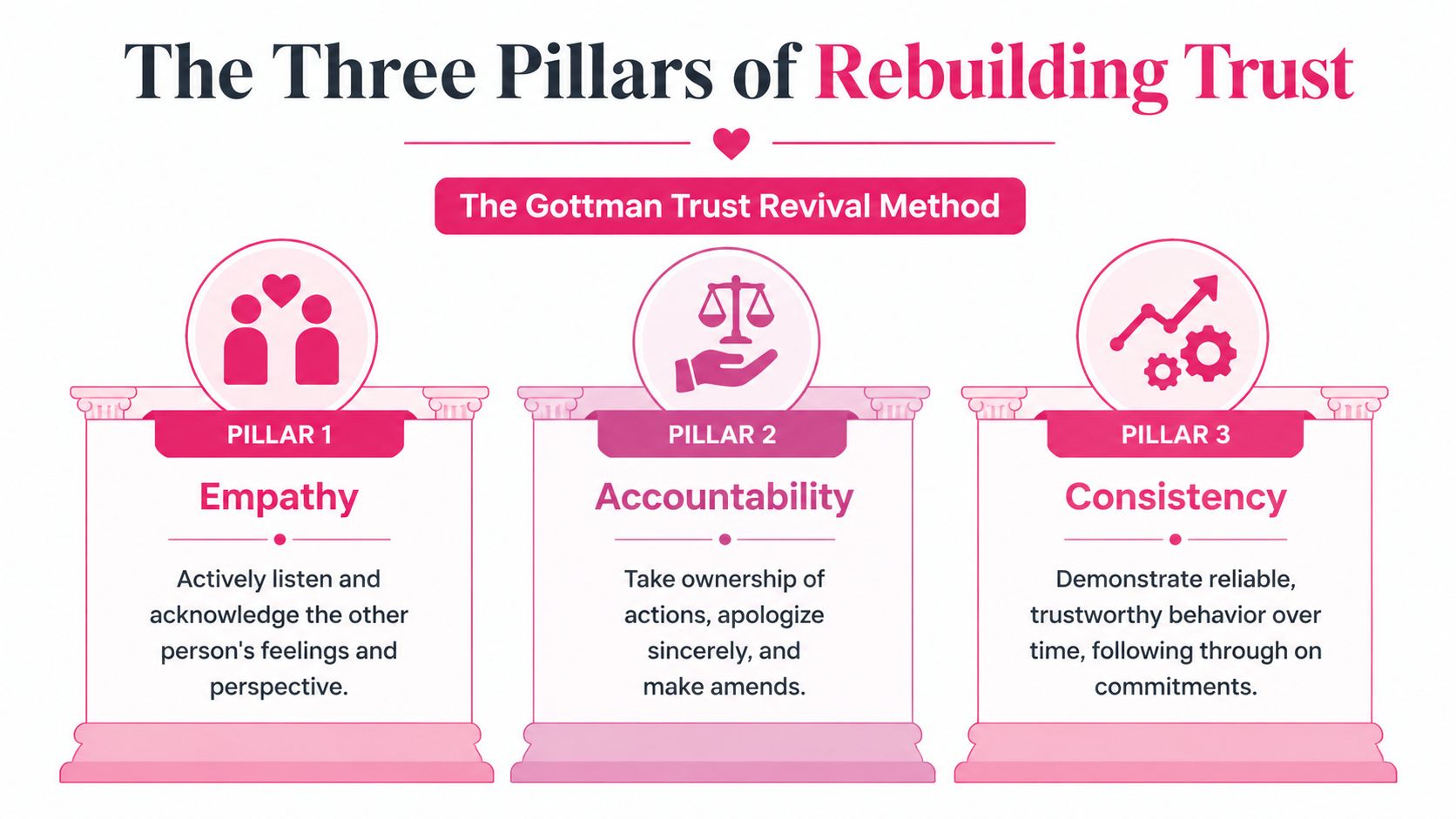
The Three Pillars of Rebuilding Trust
A useful framework comes from the Gottman Trust Revival Method: Atone, Attune, Attach. In work with families and schools, these three words are memorable because they match what children and adults both need after a breach. First, they need the adult to own it. Then they need to feel understood. Then they need new experiences that make the relationship feel safe again.
According to the Gottman Institute’s discussion of reviving trust after betrayal, couples who complete all three phases report a 70 to 85% success rate, and partial accountability fails in 80% of cases during the Atone phase because the trust-breaker needs to take 100% ownership (Gottman’s overview of Atone, Attune, and Attach).
Atone means full ownership
Atone is not self-criticism. It is precise responsibility.
If a teacher says, “I’m sorry you felt embarrassed,” that’s not ownership. If a principal says, “Communication could have been better,” that spreads responsibility into the air. If a parent says, “I was stressed,” before acknowledging the child’s experience, the child hears explanation before care.
Atone sounds more like this:
- Teacher to student: “I called out your behavior in front of the class. That put you on the spot. I should have spoken with you privately.”
- Parent to child: “I promised I’d come to your performance and I didn’t. You had a right to expect me there.”
- Principal to staff: “I announced the schedule change before discussing it with the team most affected. That damaged trust.”
This phase matters because people can’t relax into repair if they still feel they have to convince you there was harm.
Attune means stay with the feelings
Once you’ve owned the action, the next job is harder for many adults. You have to hear the impact without defending yourself.
That means letting a child say, “You always say you’ll help and then you forget,” without correcting every word. It means letting a teacher say, “I didn’t feel respected,” without replying, “That wasn’t my intent.” Intent can matter later. In the repair moment, impact comes first.
A few attunement habits work well in schools and homes:
- Reflect back what you heard: “You stopped asking for help because you expected me to dismiss you again.”
- Validate the emotion: “That makes sense.”
- Keep your body calm: lower your volume, slow your pace, don’t loom over a child.
- Ask one more question: “What felt hardest about that?”
Soul Shoppe’s explanation of the five core SEL competencies fits here well because attunement depends on self-awareness, self-management, relationship skills, and social awareness all at once.
If the hurt person has to take care of your feelings while telling the truth, trust repair stalls.
Attach means build new proof
After a good apology and a real conversation, many adults assume trust should come back. Usually it doesn’t. Not yet.
Attach is the phase where you create repeated moments that feel different from the old pattern. You don’t argue someone back into trust. You give them enough lived evidence to update their expectations.
Here’s what that can look like:
| Relationship | Old pattern | New proof |
|---|---|---|
| Teacher and student | Public correction | Private check-in before discussing behavior |
| Parent and child | Broken promises | One small promise kept daily or weekly |
| Principal and staff | Decisions announced late | Preview decisions early and invite feedback |
The key trade-off is speed versus depth. Adults often want closure. Trust repair asks for patience. Rushing to “Are we good now?” usually serves the person who caused the hurt, not the person carrying it.
Actionable Scripts for Every Relationship
Specific language helps because it keeps adults from falling into the same old habits: explaining, minimizing, or pushing for quick forgiveness. In relationships affected by a significant trust breach, 86% of couples who commit to full vulnerability and detailed, honest discussions about the events succeed in rebuilding trust, while 32% of those who discuss it with very little detail regain very little trust according to this breakdown of trust rebuilding through detailed honesty. The setting in that research is intimate partnership, but the practical lesson carries into schools and homes. Detail matters.
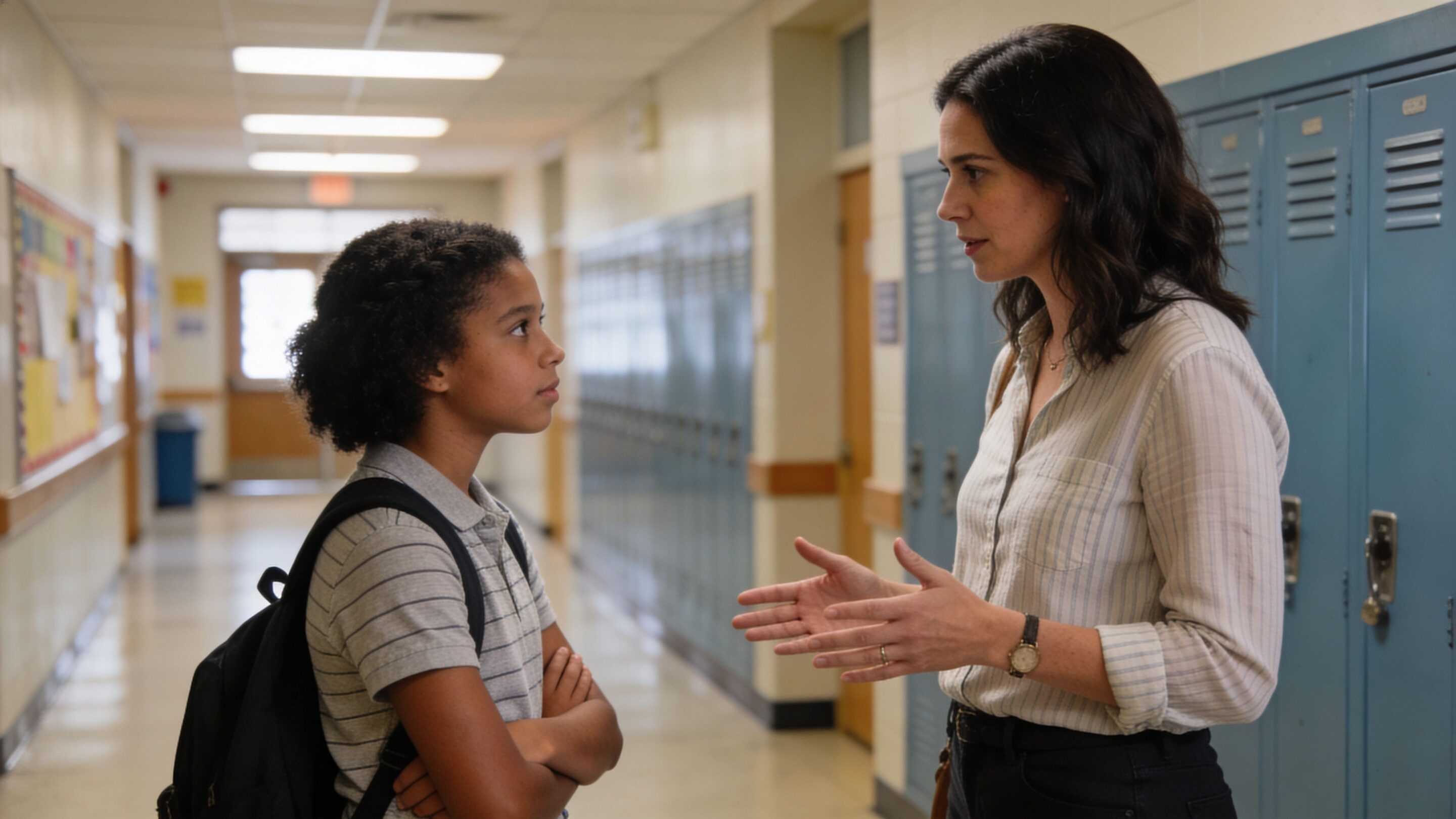
Teacher to student after a letdown
A student usually knows when an adult is trying to smooth things over. They can hear the difference between a polished apology and a grounded one.
Use a script with four parts:
- Name what happened
- Name the likely impact
- Take responsibility
- Offer a concrete next step
“I told you I would check your project before the end of class, and I didn’t. You were left waiting and then had to turn it in without the support I promised. That’s on me. Tomorrow, I’m meeting with you first during work time, and if I ever can’t follow through, I’ll tell you directly instead of leaving you guessing.”
If the student is upset, don’t chase agreement.
Try:
“You don’t have to say it’s okay. I wanted to be honest about what happened and what I’m doing differently.”
That line lowers pressure. It also signals that the apology is about repair, not relief for the adult.
Parent to child after breaking a promise
Parents often rush to the explanation because the context feels important. Work ran late. Traffic was bad. A younger sibling melted down. Sometimes those things are true and relevant. They just can’t come first.
Start here:
“I said I’d be there, and I wasn’t. That hurt, and I understand why you’d be mad.”
Then add needed detail:
“You may have been looking for me and wondering if I forgot or if it didn’t matter to me. I did not want you to carry that feeling, but I created it anyway.”
Then make the repair visible:
- Offer one do-over with structure: “I can’t redo the game, but I can protect Friday from start to finish and show up early.”
- Invite the child’s input: “What would help you believe me next time?”
- Accept a guarded response: “It makes sense if you don’t trust this right away.”
When children have ADHD, language processing differences, or impulsivity in conflict, clarity matters even more. Parents and educators who need help reducing crossed wires may find Sachs Center's ADHD communication solutions useful because repair conversations go better when instructions, expectations, and emotional language are more concrete.
Administrator to staff after a leadership misstep
Trust repair with staff has one extra layer. People are often evaluating not only your character, but also whether speaking truthfully is safe.
A principal might say:
“I moved ahead with the assembly plan without giving grade-level teams time to raise concerns. That decision affected your classrooms and your credibility with students. I own that. Today I want to hear what the impact was, and then I’ll share how we’ll change the process before the next schoolwide event.”
What not to add in the opening:
- “We were under a lot of pressure.”
- “Everyone had a part in this.”
- “I hope we can move forward.”
Those statements may be discussable later. In the first repair moment, they dilute accountability.
Scripts that don’t work well
It helps to hear the contrast.
| Common script | Why it fails | Better replacement |
|---|---|---|
| “I’m sorry you were upset.” | Focuses on reaction, not action | “I’m sorry I did that.” |
| “That wasn’t my intention.” | Prioritizes self-explanation | “The impact mattered, even though I didn’t intend it.” |
| “Can we move on now?” | Pressures for closure | “I know trust may take time to rebuild.” |
| “You need to tell me what to do.” | Pushes the labor back to the hurt person | “I’m starting with these changes, and I’m open to what would help.” |
For adults who want more support with wording, Soul Shoppe’s examples of I-statements that reduce defensiveness can help shift a tense conversation into something more workable.
When the child says nothing
Silence is common after trust has been damaged. Don’t confuse it with indifference.
A student may stare at the floor. A child may shrug. A staff member may say, “It’s fine.” In many cases, that means the person doesn’t yet believe honesty will be handled safely.
Use low-pressure invitations:
“You don’t have to respond right now. I wanted to own my part.”
“If talking feels hard, you can write it, draw it, or tell me later.”
“I’ll check back tomorrow. I’m not dropping this because it matters.”
That last sentence is powerful because it separates persistence from pressure.
A short visual can help adults rehearse these moments before they happen: