

10 Conflict Resolution Activities for Students
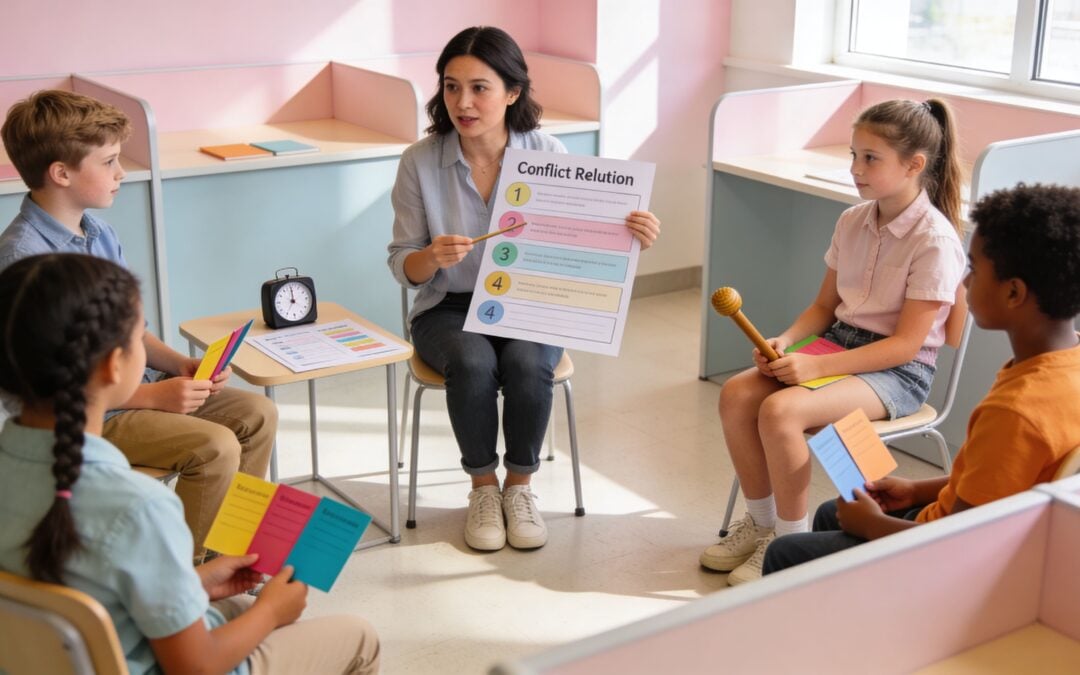
A disagreement over a shared toy. Hurt feelings after a comment at recess. A group project that falls apart because no one feels heard. If you work with kids, you’ve seen how fast small moments can turn into tears, silence, blame, or pushing.
Conflict is part of school life. That won’t change. What can change is how students move through it. With practice, a tense moment can become a lesson in listening, problem-solving, empathy, and repair. That’s why conflict resolution activities for students matter so much. They don’t just calm a classroom in the moment. They help children build habits they’ll use in friendships, family life, and future work.
The good news is that you don’t need to wait for a big behavior issue to start. You can teach these skills in morning meeting, partner work, read-aloud discussions, recess support, advisory, and family conversations at home. Many educators also build on essential conflict resolution techniques to create shared language across classrooms.
At Soul Shoppe, we’ve spent more than 20 years helping schools build connected, safe communities through experiential social-emotional learning. One thing we’ve seen again and again is simple: kids rise when adults give them tools, scripts, and steady practice. The ten strategies below aren’t just one-off activities. They’re practical mini-systems you can use from kindergarten through middle school to help students handle conflict with more confidence and care.
1. Peer Mediation Programs
Two students storm in from recess, each talking over the other, each sure they were wronged. The teacher has twenty other children waiting, a lesson to start, and about thirty seconds to decide what happens next. Peer mediation gives schools a middle path between ignoring the conflict and turning every disagreement into an adult-run event.
At its best, peer mediation works like a student version of a good traffic signal. It slows the moment down, creates turns, and helps everyone move more safely. Trained student mediators do not hand out punishments or decide who is telling the truth. They guide a process so classmates can listen, name what happened, and agree on a repair step they can both carry out.
This approach is especially useful for recurring peer conflicts such as exclusion at recess, arguments over shared materials, teasing, friendship strain, and misunderstandings that grow because no one pauses to check the facts. In Soul Shoppe’s 20-plus years of working with schools, we’ve seen that students often accept peer support more readily when the process is clear, supervised, and practiced. It sends a powerful message. Problem-solving belongs to the whole community.
How it looks in practice
A fourth grader and a fifth grader are stuck in a kickball argument. Both want an adult to declare a winner. A trained mediator brings them to a quiet spot and starts with one simple norm:
“One person talks at a time. First, tell what happened from your point of view. Then your classmate gets a turn.”
From there, the mediator might ask, “What part felt unfair?” “What did you want to happen instead?” and “What is one step that would help fix this today?” Those questions shift the conversation from proving a case to solving a problem. For many students, that is the moment the temperature drops.
Peer mediation works best as part of a larger school system. Students need to know which conflicts fit mediation, how to request it, when an adult steps in, and what happens after an agreement is made. Schools often pair mediation with class agreements and follow-up reflection. If you want the repair side of this work to feel stronger, Soul Shoppe shares related practices in its guide to restorative circles in schools and in its guide to conflict resolution for schools.
K-8 differentiation
- K-2: Keep it short and adult-supported. Use picture cards for feelings, sentence frames such as “I felt ___ when ___,” and one concrete repair choice.
- 3-5: Train student mediators to paraphrase, check for understanding, and help peers agree on one next step they can do the same day.
- 6-8: Add confidentiality guidelines, note-taking, and practice with more layered conflicts such as rumors, shifting friend groups, and online issues that spill into school.
A simple SEL script for training mediators
Start with language students can remember:
- “Tell me what happened from your side.”
- “What were you feeling at the time?”
- “What did you need or want?”
- “Now let’s hear the other person.”
- “What is one fair step you both agree to next?”
For younger students, shorten it even more. For older students, add, “Can you repeat what you heard before you respond?” That one move often prevents the conversation from sliding back into debate.
Reflection prompts for staff and student mediators
- Which conflicts should go to mediation, and which need immediate adult support?
- Do students see mediation as fair, private, and helpful?
- Are agreements specific enough to follow through on?
- What support do mediators need after a tough case?
Peer mediation is one strategy in this larger toolkit. It builds student voice, shared responsibility, and everyday repair skills that support a more peaceful school culture.
2. Restorative Practices, Circles, Community Conferences, and Classroom Practices
It is 10:15 on a Tuesday. Two students are glaring at each other after a recess argument, the rest of the class is watching, and instruction has stalled. In that moment, a consequence alone rarely repairs the room. Students also need a process that helps them name impact, hear one another, and make a clear plan to put things right.
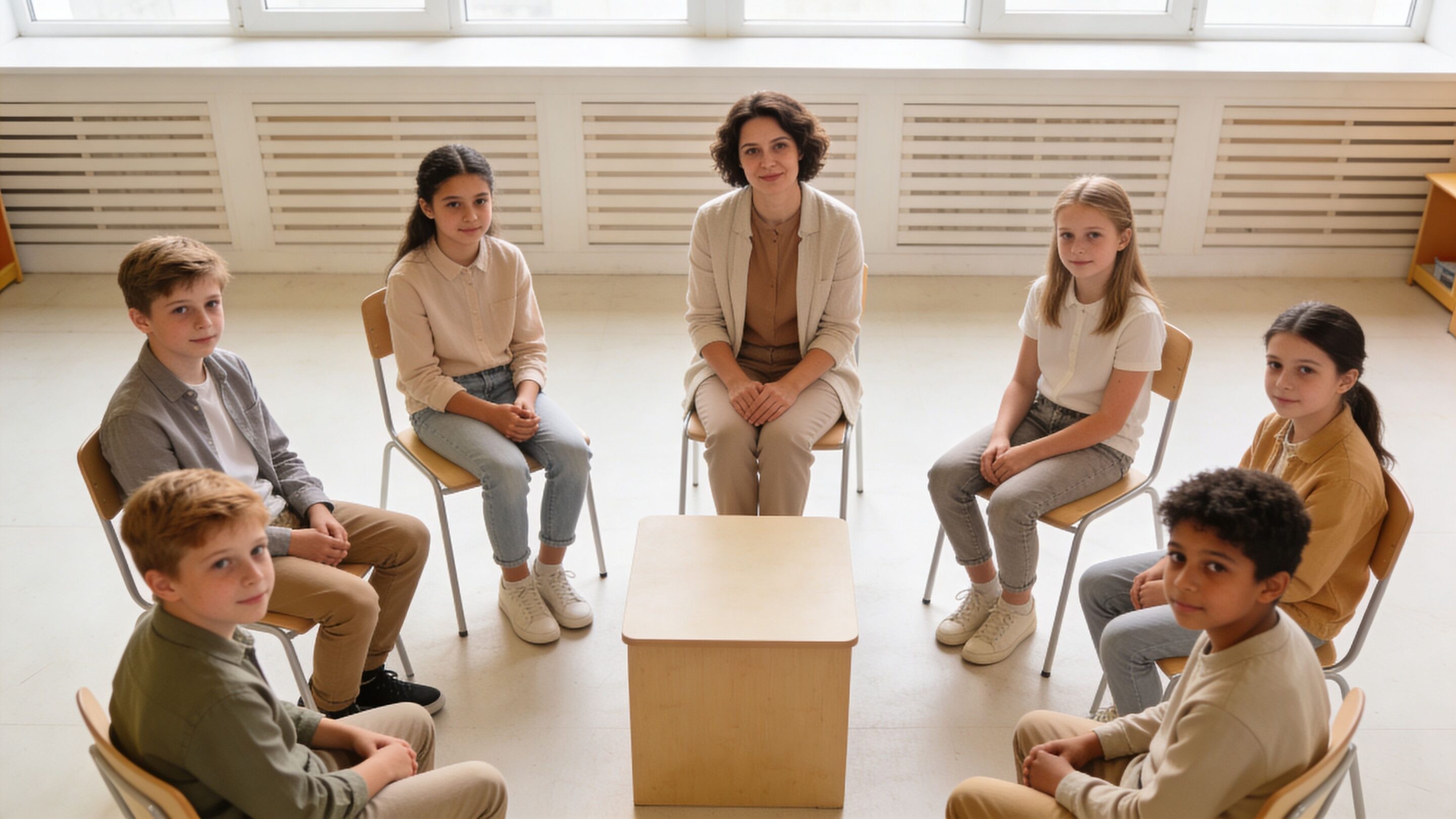
That is the role of restorative practices. They give schools a repeatable way to handle conflict before it grows, during the hard moment, and after harm has happened. A weekly circle, a short partner check-in, and a formal community conference are all part of the same system. The goal is not only to respond to problems. The goal is to teach students how a healthy community repairs strain.
Restorative work shifts the questions adults ask. Instead of focusing only on rule-breaking, teachers guide students to consider who was affected, what each person experienced, and what repair now looks like. That change matters because accountability becomes concrete. Students are not just receiving a consequence. They are practicing responsibility.
A classroom circle works like a homeroom meeting with more structure and more intention. The format is simple, but the routine does a lot of heavy lifting over time. It builds listening stamina, emotional vocabulary, and trust before students need those skills in a tense conversation. Soul Shoppe shares practical examples of restorative circles in schools that teachers can adapt across grade levels.
A simple classroom circle
Try this in a grade 2 classroom after repeated line-cutting conflicts:
- Opening prompt: “What helps you feel respected in a line?”
- Middle prompt: “What happens in your body when someone cuts in front of you?”
- Repair prompt: “What can our class agree to do next time?”
For older students, the structure can widen into a community conference. That might include the student who caused harm, the student affected, a staff member, and a caregiver. The adult’s job is to keep the conversation steady and specific so it stays on impact, responsibility, and repair rather than blame or debate.
Start with low-stakes circles first. Students need practice with turn-taking and honest sharing before they can use circles well during conflict.
A helpful way to picture the progression is this: circles build the classroom soil, and conferences address the specific damage. If the soil is dry, the repair conversation has very little to grow in. That is why schools with strong restorative practice do not treat circles as a one-time activity. They use them as a routine that supports safety, belonging, and honest problem-solving.
Research and practice summaries from the International Institute for Restorative Practices describe stronger relationships and healthier school climate as common outcomes of well-implemented restorative approaches. In Soul Shoppe’s work with schools over more than 20 years, the pattern is familiar. Students are more willing to repair harm when adults have already taught the structure, modeled calm language, and protected everyone’s dignity during the process.
3. Role-Playing and Perspective-Taking Scenarios
Students need rehearsal before real-life conflict shows up. Role-play gives them that rehearsal. It lets them try language, make mistakes, and build confidence while the stakes are low.
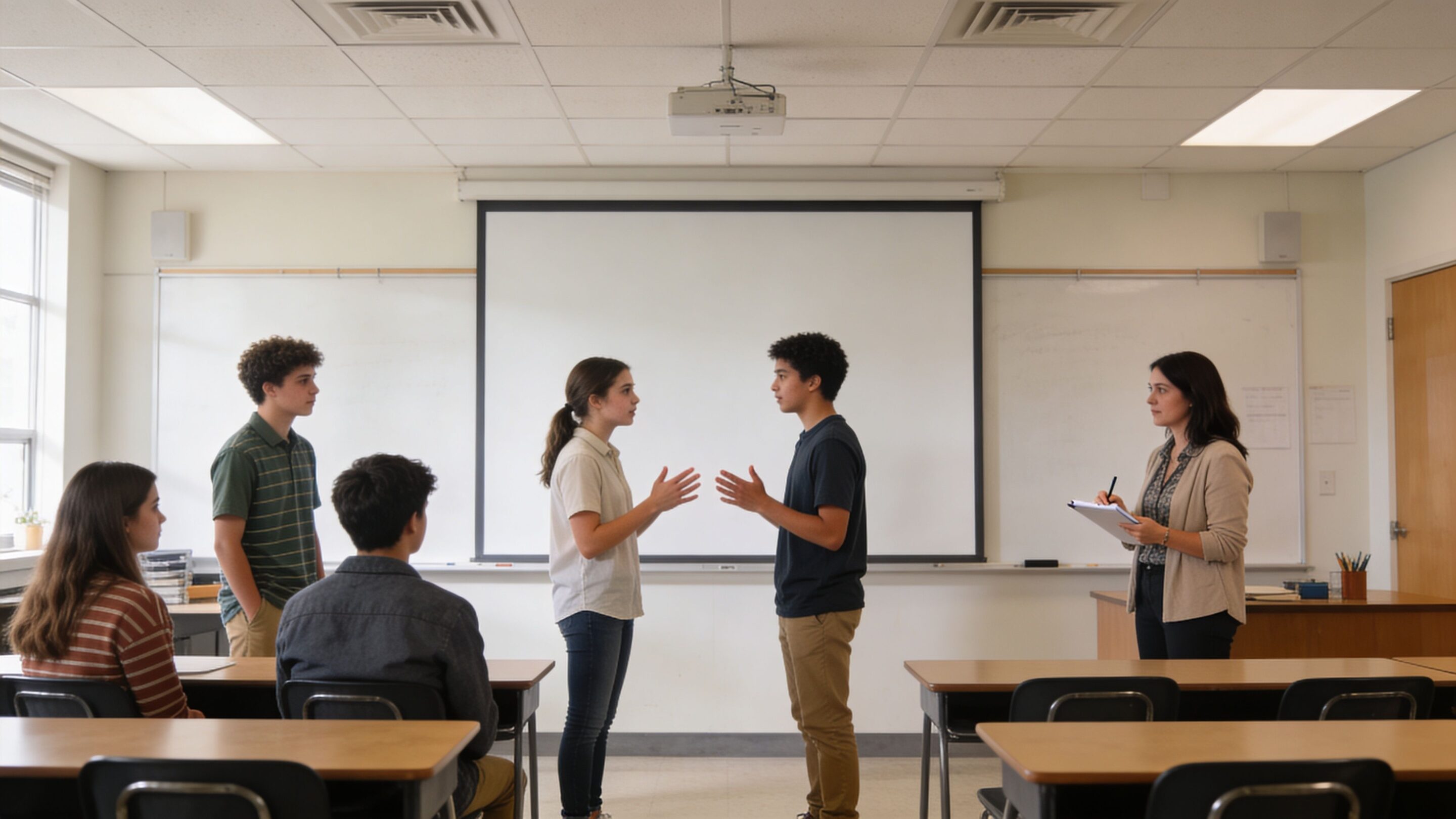
A useful role-play isn’t dramatic for drama’s sake. It’s familiar. Two students want the same marker set. One student feels left out of a game. A lab partner takes over the whole assignment. Those are the conflicts kids recognize.
A role-play format that works
Use three roles:
- Student A
- Student B
- Coach or observer
Give the observer a job. They listen for one thing, such as interrupting, blaming language, or whether each student offered a solution. That makes the debrief much sharper.
Try these sentence starters:
- “When that happened, I felt…”
- “What I needed was…”
- “Next time, could we…?”
- “Let me say back what I heard.”
In primary grades, use puppets, stuffed animals, or character cards. In upper elementary and middle school, ask students to switch roles halfway through so they must argue the other person’s side. That’s where empathy often clicks.
Here’s a classroom video you can use as a discussion starter before students practice.
Reflection prompts
After each role-play, ask:
- What words helped lower the heat?
- Where did the conflict get worse?
- What would you try differently in a real situation?
This kind of practice is especially promising in digital and gamified environments too. Analysis of 16,597 players in the FLIGBY serious game found improvements in conflict recognition, decision-making, and self-awareness through simulated scenarios.
4. Social Emotional Learning Curriculum Integration
A familiar classroom moment. Two students argue over materials during science. The teacher helps them settle it, but by lunch the same pattern shows up again with different students, different words, same stuck cycle.
That is why conflict resolution grows faster when it lives inside the school day instead of sitting in a once-a-month lesson. Students need repeated practice, in real contexts, with the same language showing up across classrooms, recess, advisory, and family communication. Over time, those skills start to work like a shared map. Children know where to go when feelings rise.
Integrated SEL gives students more than a reminder to “be nice” or “use your words.” It teaches the building blocks underneath conflict. Naming feelings. Noticing body signals. Listening for the other person’s perspective. Asking for what you need without blame. Repairing harm after a hard moment.
What integration can look like across the day
In kindergarten, that might mean using picture cards for words like “frustrated,” “left out,” and “proud” during morning meeting, then returning to those same words during play-based conflicts.
In grades 3 to 5, a teacher might pause a group project and ask, “What skill would help this group right now. Taking turns, listening, compromise, or repair?” Students begin to connect the lesson to the moment, which is where transfer happens.
In middle school, advisory can become a steady practice space for friendship conflict, digital communication, boundary setting, and problem-solving scripts. The key is repetition with adult modeling, not a single polished lesson.
Programs such as Second Step, PATHS, and Responsive Classroom are often used this way. What matters most is that the adults share language, protect time for practice, and reinforce the same skills outside the SEL block. Soul Shoppe has seen this pattern across more than 20 years of building connected and safe school communities. Students use conflict tools more consistently when the whole campus treats SEL as part of how school works, not an extra program on the side.
Practical rule: If adults are not using the same phrases students are learning, students usually stop using them under stress.
A simple planning test can help. Ask, “Where will students learn this skill, where will they practice it, and where will they use it during a real problem?” If a school can answer all three, integration is taking root.
For schools comparing approaches, Soul Shoppe shares helpful implementation questions in its guide to social-emotional learning programs for schools. Research summarized by CASEL on schoolwide SEL points to stronger student relationships, better emotion management, and improved academic engagement when these skills are taught intentionally and reinforced across the school environment.
5. Conflict Resolution Think-Pair-Share and Discussion Protocols
Not every student is ready to process conflict out loud in front of a class. Think-pair-share gives them time to collect their thoughts first. That pause alone can prevent shutdown or escalation.
This strategy is simple. Students think privately, talk with one partner, then share with a larger group if they’re ready. Because the first step is quiet reflection, more students can participate thoughtfully.
Try this with a real conflict theme
Prompt: “Two students both think the other one was rude during partner work. What could each student say to start repairing the problem?”
Give students one minute to write or draw. Then ask them to turn to a partner and compare ideas. Finally, invite a few responses to the group and chart the language that sounds respectful and clear.
Useful protocols include:
- Talking piece circles for equal turns
- Fishbowl discussions where one group models while another observes
- Dialogue rounds with one question and no interruptions
This works well after recess incidents, before group projects, or after reading a story with a conflict scene. It also helps multilingual learners and quieter students because they get rehearsal time.
Helpful prompts by age
- K-2: “What can you say if someone grabs your crayon?”
- 3-5: “How can you disagree without being mean?”
- 6-8: “What’s the difference between honesty and public embarrassment?”
The teacher’s role is to model curiosity instead of rushing to a verdict. If a child says, “I’d tell them they’re selfish,” you can ask, “What message do you want them to hear, and what wording would make that more likely?”
6. Cooperative Learning and Team-Building Activities
A group project starts. One student grabs the markers, another goes quiet, a third complains that they always do all the work, and the fourth checks out before the task really begins. By the time the disagreement shows up out loud, the conflict has usually been building for several minutes. Sometimes for several weeks.
That is why cooperative learning matters in a conflict resolution toolkit. It gives students practice with shared responsibility, turn-taking, and repair during low-stakes tasks, so they have something to stand on when real tension shows up. In Soul Shoppe’s 20+ years of work with schools, we have seen this pattern again and again. Students handle conflict better when adults teach collaboration as a skill, not as a hope.
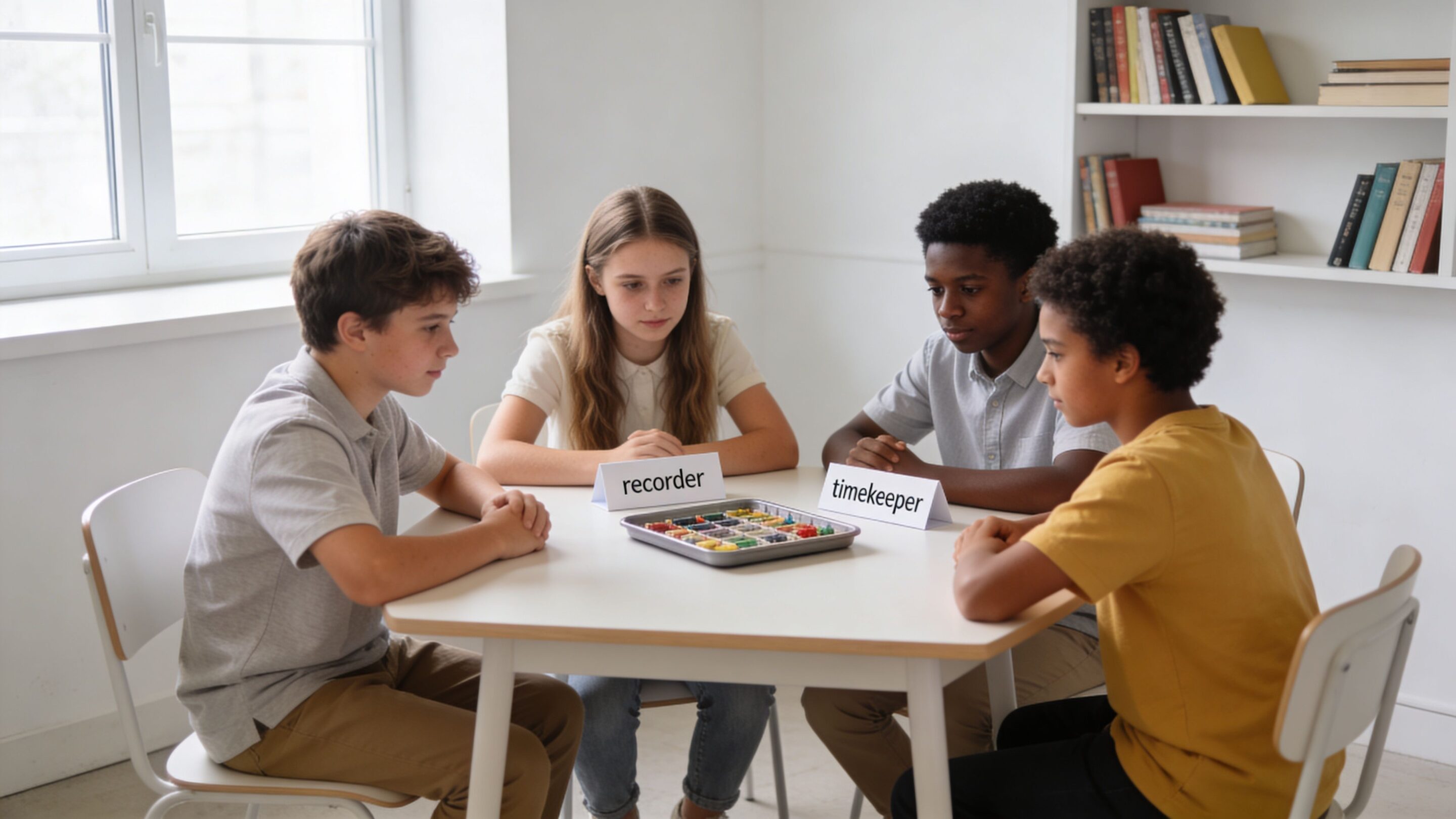
A team task works like a practice field. If the structure is loose, stronger personalities can take over and quieter students can disappear. If the structure is clear, students get repeated chances to use conflict resolution moves in real time.
Start with roles that rotate:
- facilitator
- recorder
- materials manager
- timekeeper
- inclusion checker
That last role often makes the biggest difference. The inclusion checker watches for who has spoken, who has been interrupted, and whether the group is making room for every voice.
Try a shared-challenge task
In a fourth grade classroom, give each team a building challenge with limited supplies. One student handles tape. One reads directions. One tracks time. One notices whether every idea gets heard before the group chooses a plan.
Then debrief the process, not just the product. That is where students learn how cooperation works.
Ask:
- Who helped the group stay focused when opinions were different?
- What did your team do when two ideas competed?
- When did someone feel left out or unheard?
- What sentence helped your group get back on track?
K-8 differentiation
K-2: Use short partner tasks with clear visuals and one shared material, such as one box of crayons for two students. Teach simple lines like, “My turn next, please,” and, “Let’s do it together.”
3-5: Add rotating jobs and a quick reflection sheet. Students at this age can start noticing patterns like interrupting, blaming, or deciding too fast.
6-8: Use longer group challenges with checkpoints. Older students benefit from naming group dynamics directly, such as social exclusion, sarcasm, unequal effort, or leadership struggles.
SEL script educators can use
Try a brief coaching script during group work:
“I’m noticing two strong ideas. Pause first. Let’s hear each one all the way through, then choose a plan together.”
If one student dominates, try:
“Your ideas matter. Your job now is to make space for someone else’s idea too.”
If a student withdraws, try:
“I want to make sure your voice is in the group. Do you want to share with a partner first, then bring your idea to the team?”
These prompts help students experience conflict as something they can handle, not something adults always have to fix for them.
Research on cooperative learning has found that well-structured group work can support stronger peer relationships and more positive academic and social outcomes, especially when students depend on one another to succeed. A helpful summary appears through the Education Endowment Foundation’s guidance on collaborative learning approaches. For playful practice beyond the classroom, some families and educators also use cooperative board games.
A simple reflection closes the loop: “How did we treat each other while we worked?” That question turns one activity into a repeatable strategy, which is exactly what helps a classroom grow from isolated conflict lessons into a steady culture of peace.
7. Mindfulness and Self-Regulation Practices
Some students know exactly what they should say in a conflict, but they can’t access that skill when they’re flooded. Their heart is racing, their jaw is tight, and their brain is locked on defense. Self-regulation practices help bridge that gap.
Mindfulness in schools doesn’t have to mean long silent meditation. It can be brief, concrete, and child-friendly. A breathing pattern. A body check. A hand on the heart. A “notice five things” reset before a hard conversation.
Use it before, during, and after conflict
Try this sequence:
- Before conflict practice: “Take one slow breath and relax your shoulders.”
- During conflict: “Pause. Name what you’re feeling before you answer.”
- After conflict: “What is your body telling you now?”
For younger students, use visuals like “smell the flower, blow out the candle.” For older students, teach a private reset they can use without drawing attention to themselves, such as pressing their feet into the floor and counting breaths.
A child who can pause has a much better chance of listening.
Structured activities matter here too. A universal program in a randomized trial of 626 students reduced suspensions and injuries, according to the market overview summarizing conflict resolution education evidence. The practical takeaway for schools is simple: regulation and conflict skills work best when everyone practices them, not only students already in crisis.
Reflection prompt
Ask students, “What’s your early warning sign that you need a reset?” Common answers include hot cheeks, clenched fists, fast talking, or wanting to walk away. That awareness is a conflict resolution skill.
8. Nonviolent Communication and Feelings and Needs Vocabulary
Many students are fluent in blame. “You’re rude.” “You never let me play.” “He did it on purpose.” They need help turning those reactions into language another person can hear.
Nonviolent Communication offers a useful frame. Students learn to separate what happened from the story they’re telling about it. Then they identify a feeling, connect it to a need, and make a clear request.
A student-friendly formula
Try:
- When…
- I felt…
- Because I needed…
- Next time, I’d like…
Example:
“When you laughed while I was reading, I felt embarrassed because I needed respect. Next time, I’d like you to wait until I finish.”
That’s very different from, “You always make fun of me.”
For younger children, shorten it:
“When you took my block, I felt mad. I want a turn.”
Soul Shoppe offers practical language support around this in the magic of I feel statements for kids transforming disagreements.
Teaching it so it sticks
Post a feelings chart, but don’t stop there. Students also need needs words: fairness, space, help, inclusion, calm, choice, respect, clarity. Once kids can name what they need, they’re more likely to problem-solve instead of attack.
A helpful routine is to model this language as adults:
- “I’m feeling scattered. I need everyone’s eyes for one minute.”
- “I felt concerned when voices got louder. We need a reset so everyone feels safe.”
When adults use the script naturally, students trust it more.
9. Empathy-Building Activities and Perspective-Taking Exercises
Students don’t resolve conflict well if they can’t imagine another person’s inner world. Empathy-building activities help them move past “I’m right” and toward “I can see how that felt for you.”
This can start with literature, art, and storytelling. You don’t always need to begin with a live conflict. Sometimes the safest entry point is a character in a book, a historical figure, or a classroom scenario that feels one step removed.
Strong empathy practices
Try these:
- Character hot seat: One student speaks as a book character and answers classmates’ questions about motives and feelings.
- Identity circles: Students reflect on parts of who they are, such as family role, language, hobbies, or traditions, and discuss what helps them feel respected.
- Two-side journaling: Students write one paragraph from each person’s point of view in a conflict.
A third grader might read a story about exclusion and discuss how each character felt. A seventh grader might examine a rumor scenario and write from the perspective of the person who spread it, the person harmed, and the bystander.
The most important safeguard is choice. Students should never be pushed to disclose something personal in the name of empathy work.
“Use stories first, then invite personal connection if students want it.”
Reflection prompts
Ask:
- What might this person have needed?
- What did they possibly misunderstand?
- What would help them feel dignity in the repair?
These questions train students to look below surface behavior, which often softens conflict before it hardens.
10. Problem-Solving and Decision-Making Frameworks
Two students are stuck. One says, “That was my idea.” The other says, “You never listen to me.” At that moment, they usually do not need a lecture. They need a process they can hold onto.
That is what a problem-solving framework gives them. It works like a trail map in the woods. Students may still feel upset, but they can see the next step instead of getting lost in the feeling.
Across Soul Shoppe’s 20+ years of helping schools build safer, more connected communities, one pattern shows up again and again. Students are more likely to use peaceful conflict skills when the adults teach one shared process, practice it often, and use it consistently across settings.
A school-friendly framework students can remember
The letters matter less than the routine. Your school might use STOP, PAUSE, or a teacher-created chart. What matters is that students hear the same sequence in the classroom, on the playground, and during problem-solving conversations.
A practical five-step model is:
- Name the problem
- Identify what each person needs
- Brainstorm several possible solutions
- Choose one solution and try it
- Check back and adjust if needed
This approach adds something distinct to your conflict resolution toolkit. Peer mediation supports student-led repair. Restorative practices rebuild community after harm. Perspective-taking helps students understand each other. A decision-making framework teaches what to do next, especially in the small, everyday moments when students are upset, rushed, or unsure.
How to teach it so students actually use it
Start small. Teach the process during a calm part of the day, not in the middle of a conflict.
For younger students, use pictures, gestures, and repeated sentence frames. A first grade teacher might say, “First, tell me what happened. Next, tell me what you need. Now let’s think of two ways to fix it.” For older students, add written reflection or a quick problem-solving form they complete before a conversation.
Here are sample prompts you can use:
- Name the problem: “What is the problem, in one sentence?”
- Identify needs: “What do you need right now? What might the other person need?”
- Brainstorm solutions: “What are three choices, even if one is not your favorite?”
- Choose and try: “Which choice is fair, safe, and realistic?”
- Check back: “Did that solution work for both people? If not, what needs to change?”
Students often rush past brainstorming and grab the first idea that feels good to them. That is a common sticking point. Slow them down there. The goal is not just agreement. The goal is a solution that is safe, workable, and respectful.
K-8 differentiation
K-2: Use visuals, puppets, and short oral prompts. Keep choices concrete. “Take turns,” “get a new marker,” or “ask for space.”
3-5: Add simple partner reflection sheets. Ask students to separate facts from feelings. That helps reduce “He always” and “She never” language.
6-8: Introduce trade-offs and consequences. Middle school students can compare options by asking, “What solves the problem now?” and “What prevents the same problem tomorrow?”
A lab dispute, group project disagreement, or recess argument can all use the same structure. That consistency helps the framework stick.
Make the framework part of daily classroom life
Students use what they can see and what adults repeat.
- Post it: Keep the steps visible at student eye level.
- Practice it: Use low-stakes examples before real conflict happens.
- Model it aloud: Let students hear adults solve classroom problems with the same language.
- Use portable tools: Desk cards, notebooks, and small cue cards help students remember the steps independently.
- Reflect after use: Ask, “Which step helped most?” or “Which step was hardest?”
If you want research support for explicit problem-solving instruction, the What Works Clearinghouse practice guide on improving social and behavioral outcomes recommends teaching students to use a consistent problem-solving process and reinforcing those skills across the school day.
A good framework does not remove conflict. It gives students a repeatable way to handle it with more clarity, more responsibility, and more chance of repair.
Reflection prompts
Use questions like these after students try the process:
- Which step felt easiest for you?
- Where did you get stuck?
- Did your solution meet both people’s needs, or only one person’s wants?
- What would you do differently next time?
That is how a single activity grows into a schoolwide habit. Students stop relying only on impulse, and start building judgment.
10-Activity Student Conflict Resolution Comparison
| Strategy | Implementation complexity | Resource requirements | Expected outcomes | Ideal use cases | Key advantages |
|---|---|---|---|---|---|
| Peer Mediation Programs | High, selection, training, integration | Trained student mediators, staff supervisor, curriculum, scheduled sessions | More peer-led resolutions; leadership and EI development; reduced admin load | Middle schools; K–12 with referral systems | Scalable peer ownership; builds student leadership |
| Restorative Practices (circles, conferences) | High, whole-school adoption and skilled facilitation | Skilled facilitators, significant time, school-wide buy-in, follow-up systems | Stronger relationships, reduced repeat harm, genuine accountability | Schoolwide culture change; recurring or community harms | Addresses root causes; builds community and empathy |
| Role-Playing & Perspective-Taking | Low–Medium, facilitator skill matters | Scripts/scenarios, classroom time, facilitator debriefing (optional recording) | Increased empathy, practiced responses, greater confidence | SEL lessons, small groups, rehearsal of real incidents | Engaging experiential practice; safe skill rehearsal |
| SEL Curriculum Integration | High, curriculum alignment and fidelity | Purchased curriculum, teacher PD, assessment tools, protected class time | Systematic skill growth, better behavior and academics over time | District-level implementation; long-term prevention | Research-based, consistent language across grades |
| Think-Pair-Share & Discussion Protocols | Low, quick classroom routines | Minimal materials, teacher modeling, brief class time | Improved speaking/listening, scaffolded reflection, inclusive participation | Short debriefs, formative SEL checks, mixed-ability classes | Low-barrier, quick to implement, accessible to all learners |
| Cooperative Learning & Team-Building | Medium, careful group design required | Structured tasks, role cards, planning and reflection time | Stronger peer bonds, collaboration skills, increased engagement | Group projects, mixed-ability classes, relationship-building | Prevents conflict through positive interdependence; motivating |
| Mindfulness & Self-Regulation Practices | Low–Medium, consistent practice required | Guided scripts/apps, teacher modeling, calm spaces | Reduced stress/reactivity, improved focus and emotion regulation | Universal classroom routines, trauma-informed settings | Immediate calming tools; supports individual regulation |
| Nonviolent Communication (NVC) & Needs Vocabulary | Medium, conceptual training and practice | Teacher training, visuals, practice time, sentence stems | Needs-based conversations, less defensiveness, improved emotional literacy | Conflict conversations, restorative settings, SEL lessons | Shifts blame to collaborative needs-based problem solving |
| Empathy-Building Activities & Perspective Exercises | Medium, requires safe facilitation | Diverse literature/materials, skilled facilitators, protocols | Increased empathy, reduced stereotyping, greater belonging | Identity work, bullying prevention, diversity curricula | Deepens perspective-taking and inclusion; reduces prejudice |
| Problem-Solving & Decision-Making Frameworks | Low–Medium, repeated practice needed | Visual guides/posters, practice scenarios, teacher reinforcement | Better decision-making, reduced impulsivity, transferable executive skills | Individual skill instruction, classroom routines, crisis prep | Concrete step-by-step tool students can apply independently |
From Activities to a Culture of Resolution
The class has just come in from recess. Two students are still upset about a kickball argument. One is talking over you. The other has shut down completely. A few classmates are watching to see what happens next. In that moment, conflict resolution is not a single activity you pull off the shelf. It is the set of routines, language, and shared expectations that tell students, “We know what to do with hard moments here.”
That is the shift from activities to culture.
A strong conflict resolution approach works like a woven fabric. Each thread matters on its own, but its true strength comes from how the threads hold together. Peer mediation gives students leadership roles. Restorative practices create ways to repair harm and rebuild trust. Role-play lets students rehearse before the actual moment arrives. SEL lessons keep skills in daily use instead of limiting them to one advisory block. Discussion protocols, team tasks, regulation tools, feelings-and-needs language, empathy practice, and problem-solving steps all support the same goal. Students learn that conflict is a normal part of community life, and that there are clear, respectful ways to handle it.
That broader view is the unique value of this guide. These ten entries are not random ideas to try once and forget. They are ten connected strategies that reach from individual skill-building to schoolwide systems. Each one can become a mini playbook for your staff, with K-8 adjustments, simple SEL scripts, and reflection prompts that help students practice, reflect, and try again.
Start small, but start on purpose.
If students tend to react quickly, begin with self-regulation and a few shared sentence stems. If classroom tension grows during partner or group work, focus on cooperative structures and brief repair routines. If your school is ready to build stronger systems, peer mediation or restorative circles can give students and adults a common process across settings. In our experience at Soul Shoppe, schools make the most lasting progress when adults choose a manageable starting point and repeat it often enough that students can use the skill under stress, not only during a calm lesson.
This work supports more than behavior. Research summarized by the Collaborative for Academic, Social, and Emotional Learning (CASEL) connects SEL implementation with stronger relationships, more positive school experiences, and better conditions for learning. You can review that body of work through CASEL’s research overview. For educators, the practical takeaway is simple. When students have tools for handling conflict, classrooms spend less time stuck in repeated social injuries and more time returning to learning.
School culture changes when adults use the same habits in small, ordinary moments. A teacher prompts a student to restate a concern respectfully. A recess aide guides a quick repair conversation instead of handing out blame. A principal opens a meeting with a check-in circle so staff experience the same kind of belonging they want students to feel. These moments may look small, but together they set the norm. Conflict has a process. Repair is expected. Relationships matter here.
Students need visible supports for that process. Post sentence stems. Keep reflection questions short enough to use in real time. Model what an apology sounds like when it includes both accountability and a plan. Notice the student who takes a breath before responding, the pair that solves a disagreement with words, or the group that pauses to include a classmate who feels left out. Those are signs that a culture is taking root.
At Soul Shoppe, we have seen for more than 20 years that schools feel different when students and adults share practical tools for self-regulation, communication, empathy, and repair. Hallways grow calmer. Recess becomes more inclusive. Teachers recover instructional time because fewer conflicts spiral into long cycles. Soul Shoppe is one option schools use when they want experiential support through workshops, assemblies, coaching, and related SEL resources.
The deeper goal is not perfect behavior. It is helping children build confidence, belonging, and the ability to repair relationships after something goes wrong. Conflict is a little like friction in a classroom community. Left alone, it can create heat and damage. Guided well, it can become the pressure that helps students build social strength. That is the heart of conflict resolution strategies. It is also the heart of a school community where people feel safe enough to learn and brave enough to make things right.
If you want support bringing these practices to life across classrooms, recess spaces, and family partnerships, explore Soul Shoppe. Their programs and resources focus on helping school communities build connection, safety, empathy, and practical conflict resolution skills that students can apply.