Self-regulation is the cornerstone of learning, resilience, and emotional well-being. It is the core ability to manage emotions, thoughts, and behaviors to achieve a specific goal. But what does it actually look like in practice, especially in a busy classroom or a hectic home environment? For many parents and educators, moving from abstract theory to tangible action can feel like a significant challenge.

This guide is designed to bridge that gap. We will provide clear, actionable examples of self-regulation that work for students across different ages and settings. Instead of just theory, you'll get specific tactics you can implement immediately.

We will break down seven powerful techniques, from in-the-moment breathwork to long-term problem-solving skills. Each section includes practical scripts, quick implementation tips, and brief notes on how to teach or reinforce each skill. By the end of this article, you will have a toolkit of replicable strategies to help children build the emotional intelligence they need to handle challenges and succeed. Let's dive into the first powerful example of self-regulation.

1. Breathwork and Mindfulness (Deep Breathing, Box Breathing, and Present-Moment Awareness)

Breathwork and mindfulness are foundational self-regulation strategies that directly influence the body's physiological stress response. By consciously controlling our breathing, we can activate the parasympathetic nervous system, which slows the heart rate and creates a sense of calm. This technique is a powerful example of self-regulation because it provides an immediate, accessible tool for managing overwhelming emotions like anxiety, anger, or frustration.

Mindfulness expands on this by training the brain to focus on the present moment without judgment. It helps children and adults notice their thoughts and feelings as temporary events rather than getting swept away by them. This builds the mental muscle needed to pause before reacting, a core component of emotional control. Combining these two practices offers both an in-the-moment rescue tool (breathwork) and a long-term preventative skill (mindfulness).

Strategic Breakdown and Implementation

Why It Works: Deliberate, slow breathing sends a signal to the brain that there is no immediate danger, counteracting the "fight or flight" response. This is especially effective for children, whose nervous systems are still developing. Simple diaphragmatic breathing, often called belly breathing, is a great starting point. To learn more about this specific technique, you can explore this detailed guide on the belly breathing technique.

When to Use It:

  • Proactively: Before known triggers, like a test, a public speaking event, or a difficult conversation. For example, a teacher can lead the class in one minute of quiet breathing before a math quiz.
  • Reactively: When feeling overwhelmed, angry, anxious, or unable to focus. For example, a parent can say, "I see you're getting frustrated. Let's take three deep 'lion breaths' together."
  • Routinely: As a daily practice to build baseline resilience and emotional awareness. For example, starting each morning with "Five Finger Breathing" where a child traces their hand while breathing in and out.

Key Insight: The goal isn't to stop thoughts or eliminate feelings, but to notice them without getting stuck. Teach kids that their mind will wander-the "work" is gently bringing their attention back to their breath each time.

Actionable Examples and Prompts

  • For the Classroom (Ages 5-8): Use a visual like an animated "breathing bubble" on a screen or a physical Hoberman Sphere. Say, "Let's all be breathing buddies. Watch the ball get bigger as we breathe in through our noses, and see it get smaller as we breathe out of our mouths."
  • For Home (Ages 9-12): Introduce "Box Breathing" before homework or after a frustrating moment. Use a simple prompt: "Let's make a square with our breath. Breathe in for 4, hold for 4, breathe out for 4, and hold for 4. Let's trace the square in the air with our finger as we go."
  • For Teens: Encourage the use of guided meditation apps like Calm or Headspace for 5-10 minutes daily. Frame it as mental training for sports, academics, or managing social stress. Prompt: "Let's try a 5-minute guided session to hit reset before we start this next task."

2. Mindful Movement and Body Scanning

Mindful movement integrates physical activity with present-moment awareness, helping individuals connect their minds and bodies. This practice is a powerful example of self-regulation as it teaches learners to notice physical sensations like tension, tightness, or relaxation without judgment. By paying attention to the body through simple stretches, yoga, or systematic body scanning, individuals gain conscious control over their physiological state and learn to release stored stress.
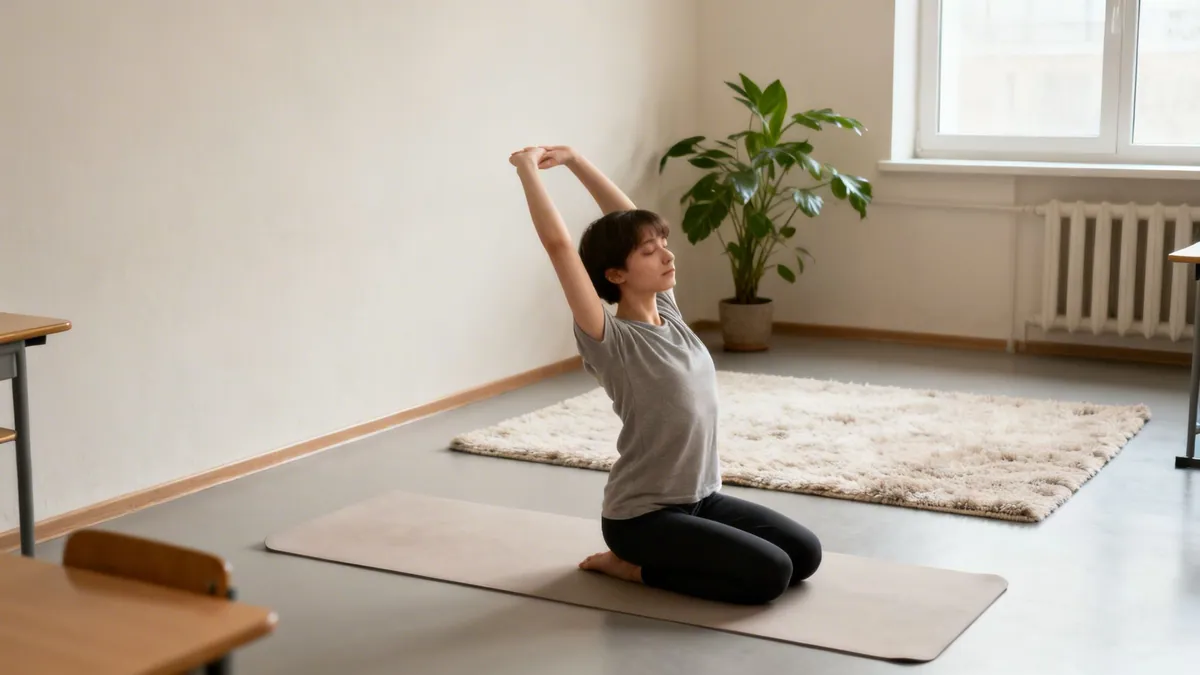
A child practicing yoga as an example of self-regulation.

This approach is particularly effective because it addresses the physical manifestation of emotions. When we feel anxious or angry, our muscles often tense up. Mindful movement provides a direct pathway to interrupt this cycle, offering a physical outlet that simultaneously calms the nervous system. Whether through a "brain break" in the classroom or a guided relaxation session at home, it builds interoceptive awareness, the ability to sense what is happening inside your own body.

Strategic Breakdown and Implementation

Why It Works: Mindful movement and body scanning activate the mind-body connection, a key pathway for regulating the nervous system. As noted by trauma experts like Bessel van der Kolk, movement can help process and release stress that is held in the body. Progressive Muscle Relaxation (PMR), for example, involves intentionally tensing and then releasing muscle groups, teaching the brain the difference between tension and calm.

When to Use It:

  • Proactively: As a morning routine to start the day grounded or before transitions between subjects in a classroom. For example, a teacher could lead a two-minute "chair yoga" stretch between math and reading.
  • Reactively: When a child shows signs of restlessness, fidgeting, or emotional escalation. For example, a parent could say, "You have a lot of energy in your body right now. Let's do 10 wall pushes to help it settle."
  • Routinely: To build body awareness and provide a healthy outlet for physical energy, especially in settings with limited movement. For example, scheduling a "dance party" break during a long homework session.

Key Insight: The goal is not perfect poses or complex movements, but mindful attention. Encourage students to notice how their body feels, for example, "Notice the stretch in your arms," or "Feel your feet on the floor," without pressure to perform.

Actionable Examples and Prompts

  • For the Classroom (Ages 5-8): Use "Animal Yoga." Say, "Let's be stretchy cats! Get on your hands and knees and arch your back up to the ceiling. Now let's be floppy dogs, reaching our hands forward and wagging our tails." Use guided video platforms like GoNoodle for structured brain breaks.
  • For Home (Ages 9-12): Introduce a simple body scan at bedtime. Prompt: "Lie down and close your eyes. Let's send our attention to our toes. Can you wiggle them and then let them get heavy and relaxed? Now let's move up to your legs. Notice how they feel against the bed."
  • For Teens: Frame Progressive Muscle Relaxation as a tool for sports recovery or test-anxiety relief. Prompt: "Let's try a technique to release tension. Squeeze your hands into fists as tight as you can for five seconds… Now, release and feel the difference. Let’s do that with our shoulders next, raising them to our ears."

3. Emotional Labeling and Feelings Vocabulary

The practice of putting feelings into words, known as emotional labeling, is a powerful example of self-regulation that builds emotional intelligence from the inside out. Championed by experts like Dr. Daniel Siegel as "name it to tame it," this strategy involves using a rich feelings vocabulary to accurately identify what one is experiencing. The act of labeling an emotion activates the prefrontal cortex, the brain's regulatory center, which in turn calms the amygdala, the emotional alarm system. This reduces the intensity of feelings like anger, sadness, or frustration, making them more manageable.

A colorful emotions wheel showing different feeling words, an example of self-regulation.

This practice moves a child from a vague state of distress ("I feel bad") to a more specific understanding ("I feel disappointed and left out"). This clarity is the first step toward problem-solving and choosing a healthy response instead of reacting impulsively. By developing a broad emotional vocabulary, children and adults gain the precision needed to communicate their needs effectively, build empathy for others, and gain control over their internal world.

Strategic Breakdown and Implementation

Why It Works: Naming an emotion externalizes it, creating mental distance between the person and the feeling itself. This prevents emotional flooding and allows for more rational thought. It validates the person's experience, sending the message that feelings are normal and survivable. For individuals struggling with intense emotions, specialized approaches like Dialectical Behavior Therapy (DBT) can significantly enhance emotional labeling and regulation skills.

When to Use It:

  • Proactively: During calm moments, use emotion charts or read books to build vocabulary before a crisis hits. For example, a teacher might read "The Color Monster" and discuss each feeling.
  • Reactively: When a child is upset, gently prompt them to name their feeling. For example, a parent could say, "It looks like you're feeling frustrated. Is that right?"
  • Routinely: Incorporate feeling words into daily check-ins. For example, at the dinner table, each person shares a feeling they had that day and why.

Key Insight: The goal is not just to name basic emotions like "sad" or "mad," but to build emotional granularity. Introduce more nuanced words like "irate," "annoyed," "disappointed," or "lonely" to help children identify the specific flavor of their feelings.

Actionable Examples and Prompts

  • For the Classroom (Ages 5-8): Create a "Feelings Wall" with pictures of faces showing different emotions and simple labels. During morning circle, ask: "Point to the feeling that's most like yours today. I'll start-I'm feeling cheerful because the sun is out."
  • For Home (Ages 9-12): Use characters in movies or books to practice. Pause and ask, "How do you think that character is feeling right now? What clues tell you that?" This builds a bridge to discussing their own feelings. For more activities, you can find helpful resources for teaching emotional vocabulary using games and charts.
  • For Teens: Introduce an "Emotion Wheel" with tiers of feelings, from general to specific. Prompt: "You said you're stressed. Let's look at the wheel. Is it more like feeling overwhelmed, pressured, or anxious?" This encourages deeper self-reflection.

4. Cognitive Reframing and Thought Shifting

Cognitive reframing involves recognizing and challenging unhelpful thought patterns to develop more balanced, realistic perspectives. Our automatic thoughts directly influence our feelings and actions, and this technique teaches us to become detectives of our own minds. This is a powerful example of self-regulation because it addresses the root cause of many emotional reactions, empowering individuals to move from rigid, catastrophic thinking to flexible problem-solving.

This process, rooted in cognitive-behavioral therapy (CBT), helps both children and adults understand that their initial interpretation of an event isn't always the only one. By learning to identify "thinking traps" like all-or-nothing thinking or jumping to conclusions, they gain the ability to pause, question their assumptions, and choose a more constructive viewpoint. This practice builds mental agility and emotional resilience, preventing small setbacks from spiraling into major emotional crises.

Strategic Breakdown and Implementation

Why It Works: Our brains are wired for efficiency, often relying on mental shortcuts that can lead to biased or negative conclusions. Cognitive reframing creates a conscious "check-in" point, interrupting this automatic process. For children, this skill helps them understand that feelings like anxiety or anger are often fueled by their thoughts, and that they have the power to change those thoughts. As pioneered by researchers like Carol Dweck with the growth mindset, reframing mistakes as learning opportunities is a fundamental shift that supports academic and personal growth.

When to Use It:

  • Proactively: When discussing goal-setting or preparing for a new challenge, framing potential obstacles as part of the learning process. For example, saying, "When we learn to ride a bike, we will probably fall. Falling is how our body learns to balance."
  • Reactively: After a student experiences a setback, feels anxious about a social situation, or expresses self-critical thoughts. For example, if a child says, "I'm bad at drawing," a parent can respond, "You're feeling disappointed in this drawing. Let's look at it like a scientist. What part do you want to improve?"
  • Routinely: During morning meetings or advisory periods to practice identifying thinking traps using hypothetical scenarios. For example, "Scenario: Your friend didn't sit with you at lunch. What's a 'Jumping to Conclusions' thought? What's a more balanced thought?"

Key Insight: The goal is not to force "positive thinking" or ignore negative feelings. Instead, it's about finding a more accurate and helpful way to see a situation, which naturally leads to more manageable emotions. Acknowledge the initial feeling first before guiding a reframe.

Actionable Examples and Prompts

  • For the Classroom (Ages 5-8): Introduce "Thought Buddies." Use two puppets: a "Worry Worm" that says things like, "No one will play with me," and a "Wise Owl" that reframes it: "I feel worried, but maybe I can ask to join their game." Ask students, "What would the Wise Owl say to the Worry Worm right now?"
  • For Home (Ages 9-12): Teach the concept of "thinking traps." When your child says, "I'm terrible at math," identify it as all-or-nothing thinking. Prompt them with a reframe: "That test was really hard, and you're disappointed with the score. What's one part of the test you did understand? What can we practice for the next one?"
  • For Teens: Use guided worksheets that help them process a specific event. The sheet can have columns for: 1) The Situation, 2) My Automatic Thought, 3) The Feeling, 4) Evidence That Supports My Thought, 5) Evidence That Doesn't, and 6) My New, Balanced Thought. Prompt: "Let's walk through this worksheet to see if there's another way to look at what happened."

5. Peer Support and Social Connection Strategies

Humans are social beings, and our ability to regulate our emotions is deeply connected to our relationships with others. Peer support strategies formalize this connection, turning social interaction into a powerful tool for emotional stability. This approach is an excellent example of self-regulation because it moves beyond individual coping skills and builds a supportive environment where co-regulation can happen naturally. By creating structures like buddy systems and peer mediation, we teach children that seeking help and offering support are both signs of strength.

Social connection acts as a buffer against stress and isolation, which are major triggers for emotional dysregulation. When students feel seen, heard, and valued by their peers, their sense of safety and belonging increases, making it easier to manage difficult feelings. These strategies shift the focus from solely individual responsibility to a shared community effort, fostering empathy and collective well-being.

Strategic Breakdown and Implementation

Why It Works: Based on the concept of co-regulation, these strategies recognize that one person's calm, regulated nervous system can help soothe another's. For children, learning from a peer can be less intimidating than learning from an adult. It creates a culture where students are empowered to help each other, reducing the burden on teachers and building essential leadership and social skills. For a deeper look into building these foundational abilities, you can review some effective kids' social skills activities.

When to Use It:

  • Proactively: To build a positive school climate from the start of the year and prevent conflicts before they escalate. For example, a teacher could assign "reading buddies" from different grade levels.
  • Reactively: When a student is struggling with social isolation, low-level conflict, or needs a friendly face during a tough time. For example, asking a responsible student to be a "lunch buddy" for a new student.
  • Routinely: Integrated into daily or weekly school life through classroom jobs, group projects, and circle practices. For example, starting class with a "greeting circle" where each student makes eye contact and greets another by name.

Key Insight: The success of peer support isn't accidental; it requires clear structure and training. Both the supporter and the supported student need to understand their roles, boundaries, and when to get an adult involved.

Actionable Examples and Prompts

  • For the Classroom (Ages 5-8): Implement a "Peace Corner Buddy" system. When a child uses the calm-down corner, a designated buddy can quietly join them after a minute to offer a book or just sit nearby. Prompt: "It looks like our friend needs some space. Maya, you're our Peace Corner Buddy today. In a moment, would you like to see if they want to look at a book with you?"
  • For Home (Ages 9-12): Encourage collaborative problem-solving with siblings or friends. If a conflict arises over a game, guide them through it. Prompt: "It sounds like you both have different ideas. Let's take a break. Can you each come up with one solution that might work for both of you? Let's share them in five minutes."
  • For Teens: Support student-led clubs or peer mediation programs. Programs like the Junior Giants' Strike Out Bullying model teach bystander intervention skills that empower teens to support each other safely. Prompt to students: "We're starting a peer support group to help students navigate social challenges. What issues do you think are most important for us to address?"

6. Sensory Regulation and Environmental Design

Sensory regulation involves deliberately adjusting one's environment and using specific sensory inputs to manage arousal levels, focus, and emotional states. This approach, rooted in sensory integration theory, recognizes that our ability to process sensory information directly impacts our capacity for self-control. This method is a powerful example of self-regulation because it helps individuals, especially children, proactively manage their internal state by modifying their external world, rather than waiting for dysregulation to occur.

Creating a sensory-supportive environment acknowledges that each person processes sound, sight, touch, and movement differently. For some, a bustling classroom is overstimulating and anxiety-provoking; for others, the same environment may not be stimulating enough to maintain focus. By intentionally designing spaces and providing tools like fidgets or weighted lap pads, we give children tangible ways to meet their unique sensory needs, which is a foundational skill for managing emotions and behavior.

Strategic Breakdown and Implementation

Why It Works: Our nervous system is constantly taking in sensory information. For children with sensory processing differences, this input can quickly become overwhelming, triggering a "fight or flight" response. Environmental and sensory-based tools provide predictable, calming, or alerting input that helps the nervous system feel organized and safe. This allows cognitive resources to be freed up for learning and emotional control.

When to Use It:

  • Proactively: Before transitions, high-focus tasks, or social situations that may be overstimulating. For example, a teacher can dim the lights and play soft music after a loud recess period.
  • Reactively: When a child appears fidgety, distracted, withdrawn, or emotionally escalated. For example, a parent can offer a child a crunchy snack or a cold drink to help them "reset" their nervous system.
  • Routinely: By incorporating sensory-friendly elements into daily spaces (classrooms, bedrooms) to support baseline regulation. For example, placing a stretchy resistance band on the front legs of a student's chair for them to push against.

Key Insight: Sensory regulation is not about rewards or punishments; it's about meeting a biological need. The goal is to teach children to recognize their own sensory signals (e.g., "My body feels wiggly and I can't focus") and empower them to use a tool or space that helps them feel "just right."

Actionable Examples and Prompts

  • For the Classroom (Ages 5-8): Establish a "Calm Corner" or "Peace Place" with soft pillows, a weighted blanket, and a small bin of quiet fidgets. Introduce it by saying, "This is our room's cozy corner. If you ever feel too wiggly, sad, or overwhelmed, you can choose to take a 5-minute break here to help your body feel calm and ready to learn again."
  • For Home (Ages 9-12): Create a "Sensory Toolkit" for homework time. Include items like noise-reducing headphones, scented putty, a textured seat cushion, and a stress ball. Prompt your child by asking, "What does your body need to focus on this math worksheet? Let's pick a tool from our kit to help."
  • For Teens: Support their need for sensory input in a discreet, age-appropriate way. Suggest listening to ambient music or white noise with headphones while studying or using a subtle fidget like a spinner ring or textured pencil grip. Frame it as a performance tool: "Sometimes a little background sound can help the brain lock in. Let's see if that works for you."

7. Problem-Solving and Executive Function Strategies

Teaching structured approaches to problem-solving is a powerful method for building self-regulation. By breaking down challenges into manageable steps, children learn to activate their executive functions-planning, organizing, and inhibiting impulses-instead of reacting with immediate frustration or shutdown. This strategy is an excellent example of self-regulation because it shifts the focus from the emotional weight of a problem to a clear, actionable process for addressing it.

This method equips children and teens with a mental toolkit for navigating conflicts, academic hurdles, and social dilemmas. Rather than being overwhelmed by a large issue, they learn to dissect it, brainstorm solutions, and consider consequences before acting. This deliberate process builds cognitive control and emotional resilience, reducing the likelihood of impulsive or emotionally driven responses.

Strategic Breakdown and Implementation

Why It Works: Executive functions are the brain's "air traffic control" system, but they are still developing in children and teens. Explicitly teaching a problem-solving framework provides the external structure needed to build these internal skills. When a child has a clear plan, their cognitive load is reduced, freeing up mental resources to manage their emotions. Understanding how different environments and activities can aid in self-regulation, for example, exploring the benefits and a practical example of self-regulation through the importance of sensory play, is also crucial for a well-rounded approach.

When to Use It:

  • Proactively: Practice with low-stakes, hypothetical scenarios during calm moments. For example, using a social story about sharing and asking, "What are three things the character could do?"
  • Reactively: Guide a child through the steps when a real problem arises, acting as a coach rather than a rescuer. For example, if a child forgot their homework, you can say, "Okay, that's a problem. What's step one to solving it?"
  • Routinely: Integrate problem-solving language into daily conversations about homework, chores, or disagreements with friends. For example, using a visual planner to break a book report into smaller steps.

Key Insight: The goal is to make thinking visible. Use flowcharts, checklists, or simple "STOP & THINK" posters to externalize the process. Celebrate the effort and the process, not just a successful outcome, to encourage repeated attempts.

Actionable Examples and Prompts

  • For the Classroom (Ages 5-8): Use a simple three-step visual chart: 1. What is my problem? 2. What are some solutions? 3. Which solution will I try? Role-play common scenarios like someone cutting in line. Prompt: "It looks like there's a problem. Let's be detectives and figure out some solutions together."
  • For Home (Ages 9-12): Introduce a "Collaborative Problem-Solving" conversation for bigger issues. Sit down together and say, "I've noticed it's been hard getting homework done before screen time. I want to solve this with you. What's your perspective on what's getting in the way?"
  • For Teens: Use goal-setting worksheets for long-term projects or personal goals. Guide them to break a big project into mini-steps, set deadlines, and identify potential obstacles. Prompt: "This research paper feels huge. Let's map it out and create a plan of attack so it doesn't feel so overwhelming." For more ideas, explore this engaging problem-solving activity.

7 Self-Regulation Strategies Compared

Approach Implementation complexity Resource requirements Expected outcomes Ideal use cases Key advantages
Breathwork and Mindfulness (Deep Breathing, Box Breathing, Present-Moment Awareness) Low–moderate; easy to teach but needs regular practice Minimal (time, occasional visual aids or apps, facilitator training) Immediate physiological calming; long‑term attention and emotion regulation gains Acute stress moments (tests, transitions) and daily classroom routines Rapid downregulation of stress, portable, low cost
Mindful Movement and Body Scanning Moderate; needs routines, space, and facilitator guidance Mats/space, guided videos or instructors, scheduling Reduced physical tension, improved focus and interoception Movement breaks, PE integration, trauma‑informed classrooms Engages body and mind; suits kinesthetic learners
Emotional Labeling and Feelings Vocabulary Low–moderate; consistent modeling and reinforcement required Visual charts, books, teacher modeling time Greater emotional awareness, improved communication and reduced outbursts Morning check‑ins, literature discussions, SEL lessons Builds shared language for regulation and empathy
Cognitive Reframing and Thought Shifting Moderate–high; requires explicit instruction and practice Trained facilitators/resources (worksheets), time for repetition Reduced anxiety and rumination; increased cognitive flexibility Upper elementary and older students; targeted anxiety or maladaptive thinking Empowers adaptive thinking and problem‑solving
Peer Support and Social Connection Strategies Moderate–high; needs program design, training, and oversight Training for peers/adults, coordination, adult supervision Increased belonging, sustained co‑regulation, improved school climate Mentoring programs, peer mediation, community‑building efforts Leverages relationships for resilience and scalability
Sensory Regulation and Environmental Design Moderate; planning and individualized understanding needed Calm spaces, sensory tools, possible budget for environment changes Lower arousal, better focus—especially for neurodiverse learners Calm corners, sensory breaks, classrooms for diverse sensory needs Nonverbal regulation options; inclusive for varied sensory profiles
Problem-Solving and Executive Function Strategies Moderate; explicit teaching and repeated scaffolding Visual aids, lesson time, adult coaching Improved planning, reduced overwhelm, stronger impulse control Goal‑setting, collaborative problem solving, academic tasks Concrete frameworks that build agency and executive skills

Putting It All Together: Building a Culture of Self-Regulation

Throughout this article, we have explored a detailed collection of strategies, moving from the foundational calm of breathwork to the complex social reasoning of peer support. The journey through each example of self-regulation reveals a central truth: emotional management is not an innate trait but a learned skill. It is a toolkit of practical actions that children, and even adults, can build over time. The power lies not in mastering one single technique, but in developing a flexible, go-to menu of options that can be applied to different situations.

From mindful movement that reconnects a child to their body to cognitive reframing that empowers them to change their own narrative, these tools are interconnected. A child who can label their frustration (emotional vocabulary) is better equipped to choose a calming strategy (like box breathing) instead of reacting impulsively. This process is about creating space between a feeling and a reaction.

From Examples to Everyday Practice

The most important takeaway for parents, educators, and administrators is that building this capacity in children starts with us. Our role is to model these behaviors consistently and create environments where practicing them is safe, encouraged, and normalized. This doesn't require grand, time-consuming programs. It starts with small, intentional actions integrated into daily life.

  • Actionable Takeaway: Instead of asking "How was your day?", try a more specific feelings check-in: "What was a 'rose' (a good moment) and a 'thorn' (a challenging moment) from your day?" This directly uses emotional labeling.
  • Actionable Takeaway: When a child is overwhelmed, resist the urge to immediately solve their problem. First, co-regulate with them. Say, "This feels big. Let's take three deep breaths together, and then we can think about what to do next." This models a clear self-regulation sequence.

By weaving this language and these practices into our interactions, we shift the culture from one of pure reaction to one of mindful response. We show children that feelings are not emergencies but are simply information. Every example of self-regulation we’ve covered offers a pathway to this understanding.

The ultimate value of teaching these skills extends far beyond preventing a single meltdown in the classroom or at home. We are giving children the internal architecture to face academic challenges, navigate complex social dynamics, and build resilience for a lifetime. When a school community or a family adopts a shared language of emotional awareness, it fosters a profound sense of psychological safety and connection. Children feel seen, heard, and capable, creating the ideal conditions for learning, growth, and authentic self-expression. The final goal is to build communities of care where both children and adults feel supported, competent, and ready to engage with the world.


Ready to bring a structured, campus-wide approach to emotional intelligence to your school? The programs from Soul Shoppe are designed to equip entire communities with the shared language and practical tools discussed here, fostering empathy and creating peaceful learning environments. Discover how Soul Shoppe can help you build a culture of self-regulation from the ground up.