

What Is Emotional Intelligence and How Do We Teach It?
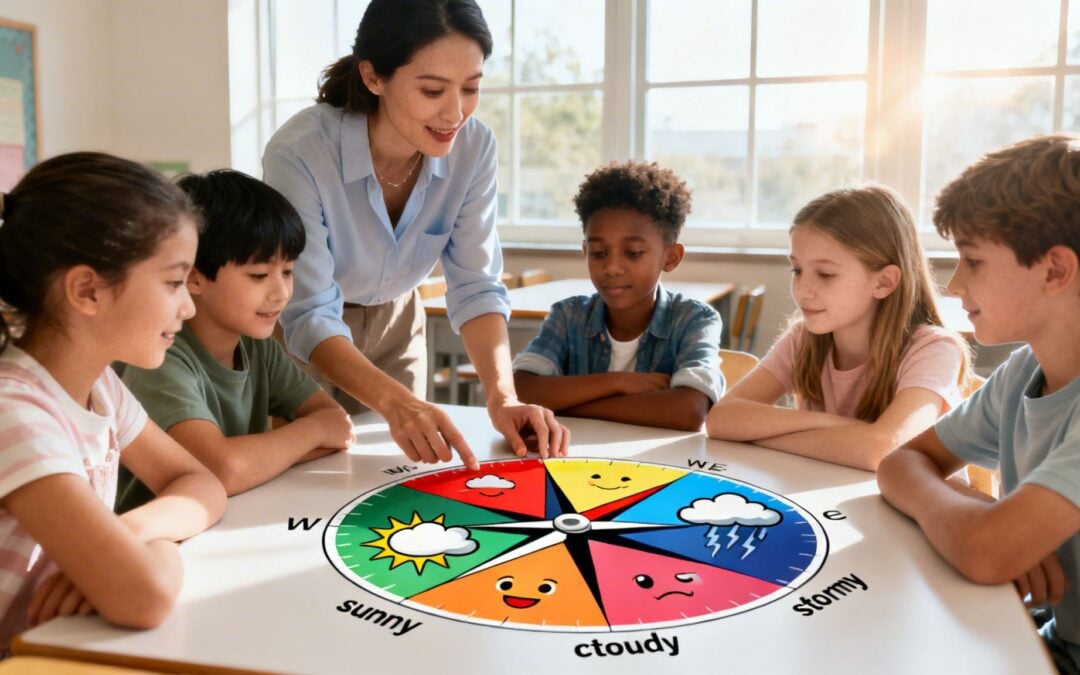
We hear the term “emotional intelligence” all the time, but what does it really mean for our kids? At its heart, emotional intelligence, or EQ, is the ability to recognize and manage your own emotions, while also understanding and navigating the feelings of others.
Think of it as an internal compass helping a child make sense of their complex social and academic worlds. It’s the set of skills that fosters resilience, empathy, and the strong relationships every child needs to thrive.
Decoding Emotional Intelligence in Your School and Home
We often praise kids for being book-smart—what’s known as their Intelligence Quotient, or IQ. But EQ is about a different kind of smarts. It’s the kind that helps a child make a new friend on the playground, bounce back from a disappointing grade, or work cooperatively on a group project.
To clarify how these two concepts fit together, here’s a quick comparison:
Emotional Intelligence (EQ) vs. Intelligence Quotient (IQ)
| Aspect | Emotional Intelligence (EQ) | Intelligence Quotient (IQ) |
|---|---|---|
| What It Measures | The ability to understand, manage, and express emotions in healthy ways. | Cognitive abilities like logic, reasoning, and problem-solving. |
| Key Skills | Empathy, self-awareness, social skills, self-regulation, motivation. | Memory, analytical skills, mathematical ability, language comprehension. |
| Is It Fixed? | No. EQ is a flexible set of skills that can be taught and developed over time. | Generally considered more stable throughout a person's life. |
| Primary Role | Governs social interactions, resilience, and personal well-being. | Predicts academic performance and the ability to process complex information. |
The best news for parents and educators is that unlike IQ, which is relatively fixed, EQ is a collection of practical skills. They can be taught, practiced, and strengthened over time. This means we can all play an active role in helping our kids build these essential emotional capacities.
The Origins and Importance of EQ
The idea of EQ first emerged in 1990 from researchers Peter Salovey and John Mayer, and was later made famous by psychologist Daniel Goleman. Their work was a game-changer, shifting our focus from pure academics to a more holistic view of what it takes to succeed in life. For schools and families, this has paved the way for creating safer, more supportive environments where kids feel seen and understood.
It’s also crucial to recognize the unique challenges faced by some students, including the link between neurodivergence and emotional dysregulation. A deeper understanding of these realities helps us build more inclusive and effective support for every single learner.
Emotional intelligence isn't about shutting feelings down; it’s about understanding them well enough to make wise choices. It’s the skill that allows a student to say, "I'm feeling frustrated with this math problem, so I'll take a few deep breaths before trying again," instead of just giving up.
Why EQ Matters More Than Ever
In schools, where organizations like Soul Shoppe bring experiential programs to K-8 students, EQ gives kids the tools they need for self-regulation, mindfulness, and resolving conflicts peacefully. This work directly fosters safer, more connected communities where bullying goes down and collaboration goes up.
The payoff extends far beyond the classroom walls. For instance, 71% of employers now say they value emotional intelligence over IQ. Research also shows that for every one-point increase in a person's EQ score, their annual salary goes up by an average of $1,300.
By teaching these skills early, we aren't just helping kids with today’s homework or friendships—we are preparing them for a more successful and fulfilling future. You can dive deeper into these statistics and their impact. Read the full research about EQ's professional benefits.
The Five Core Skills of Emotional Intelligence
Emotional intelligence isn't one big, abstract idea. It's more like a toolkit filled with five core skills that help children—and adults—navigate their world with more kindness and awareness. These skills, which are part of the well-known CASEL framework, don't exist in a vacuum. They build on one another, creating a sturdy foundation for a child's entire social and emotional life.
Think of them as building blocks. When kids develop these abilities, they’re better equipped to handle everything from classroom challenges to playground friendships.
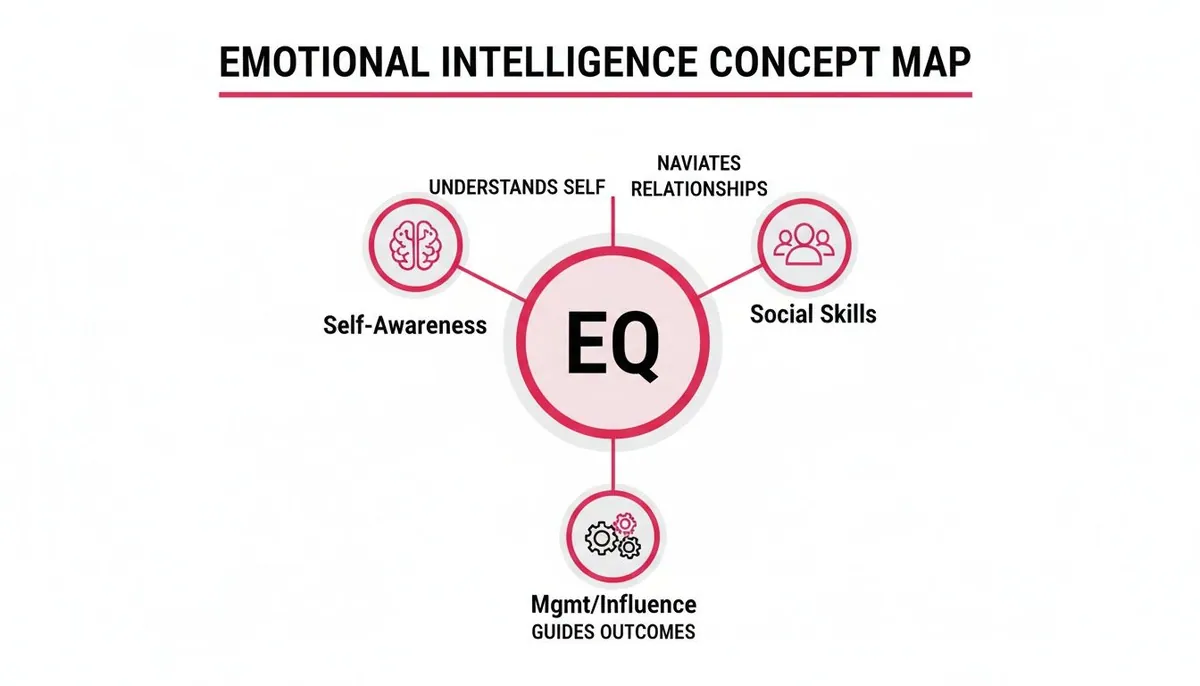
As you can see, it all starts with what’s happening inside us. Understanding ourselves is the first step toward managing our actions and connecting meaningfully with others.
1. Self-Awareness: The Internal Weather Report
Self-awareness is the ability to check in with yourself and know what’s going on inside. It’s about recognizing your own emotions, thoughts, and values—and seeing how they shape what you do. For a child, it’s like having an "internal weather report." Are they feeling bright and sunny, or is a storm of frustration starting to brew?
This is the bedrock skill. Without it, managing big feelings or understanding a friend's perspective is nearly impossible. This also includes understanding the fight, flight, freeze, or fawn response—our body's automatic reaction to stress—which is a huge part of knowing ourselves.
- Practical Example for Parents/Teachers: Before a spelling test, a second-grader named Alex notices his stomach feels tight and his hands are balled into fists. He tells his teacher, "I feel nervous." That's self-awareness in action. He connected his physical feelings to an emotion.
2. Self-Management: Steering Your Ship
Once a child can read their internal weather, self-management is about learning to steer their ship through it. This skill is all about handling emotions in healthy ways, controlling impulses, and working toward goals. It's where a student takes the information from their self-awareness and does something constructive with it.
This doesn't mean bottling up feelings. It means navigating the emotional storm without letting it capsize the ship. A child with strong self-management can stay focused under pressure and bounce back when things don't go their way.
Self-management is the crucial pause between feeling an emotion and reacting to it. It’s the difference between a student yelling out in frustration and one who takes a deep breath before asking for help.
- Practical Example for Parents/Teachers: After recognizing his nervousness, Alex uses a strategy from class. He takes three slow, deep "belly breaths" to calm himself down before the spelling test starts. That’s a clear win for self-management.
3. Social Awareness: Reading the Room
Social awareness is the skill of looking outward. It’s the ability to understand other people's feelings and perspectives, especially those from different backgrounds. It’s about being able to "read the room" by noticing body language, tone of voice, and other social cues that tell us how someone else might be feeling.
A socially aware child can sense when a friend is feeling down, even if they say, "I'm fine." They notice the unspoken rules of a group and can navigate social situations with kindness and respect.
- Practical Example for Parents/Teachers: At recess, fourth-grader Maria sees a new student, Leo, standing by himself with his head down. Maria notices his slumped shoulders and sad look, guesses he might be feeling lonely, and walks over to ask if he wants to play.
4. Relationship Skills: Building Bridges
Relationship skills are where all the other EQ tools come together to build and maintain healthy friendships. This means communicating clearly, listening well, working with others, resolving conflicts peacefully, and knowing when to ask for or offer help. It’s the art of building bridges, not walls.
These skills are essential for everything from group projects to navigating the tricky social world of school. To go deeper, you can explore the five core SEL competencies in our complete guide.
- Practical Example for Parents/Teachers: Two fifth-graders are arguing over who gets to use the new set of markers. Instead of yelling, they use "I-statements" they've practiced. One says, "I feel frustrated when I don't get a turn." This opens the door for a real conversation so they can work out a fair solution, like setting a timer.
5. Responsible Decision-Making: Choosing the Right Path
This final skill is about putting it all into practice. Responsible decision-making is the ability to make choices that are caring, constructive, and safe for everyone involved. It requires thinking about the consequences of an action before you take it.
When a child uses this skill, they're weighing their options. They consider ethics, safety, and how their choice will affect themselves and others. They're learning to choose the path that is both helpful and thoughtful.
- Practical Example for Parents/Teachers: A group of middle schoolers finds a wallet on the playground. One friend suggests they should keep the cash. But another, using empathy (social awareness), points out how worried the owner must be. After talking it over, they decide together to do the right thing and turn it in to the office.
Navigating the Decline in Student Emotional Wellness
While the five core skills of emotional intelligence give us a clear road map, the journey for our kids has gotten a lot harder. Today’s students are growing up in a world where their emotional well-being is under constant strain, which makes these skills more critical than ever. Understanding what is emotional intelligence now means recognizing it as a crucial lifeline for children.
Many educators and parents have felt a shift in children's behavior and moods since 2020. Students seem more stressed, are quicker to disengage, and find it harder to connect with their friends. This isn't just a feeling; it's a real pattern that shows how much our world has changed.
The Rise of the Emotional Recession
The ripple effects of the pandemic and the huge increase in digital life have created new hurdles for K-8 students. Some have started calling this period an "Emotional Recession"—a time where our shared ability to manage feelings and connect with one another has taken a hit. Kids are especially vulnerable, soaking up the stress and uncertainty around them during their most important developmental years.
This isn't just an observation. Startling global data shows that emotional intelligence scores dropped by 5.79% worldwide between 2019 and 2024. This study, which looked at thousands of adults, points to a weakening of the very relational skills that shape the environments where our children learn and grow. You can discover more insights about these EQ findings and what they might mean for all of us.
For K-8 students, this "recession" often shows up as:
- Increased Anxiety: More worry about school, grades, and fitting in.
- Lower Frustration Tolerance: Giving up faster when things get tough.
- Social Disconnection: Struggling to make and keep friends, which can lead to loneliness.
An Opportunity for Resilience
This emotional decline isn't a dead end—it's a clear call to action. It proves that social-emotional learning is no longer a "nice-to-have" extra. It's an essential tool for helping kids succeed, both in school and in life. Schools are in a unique position to turn these trends around by actively teaching the skills that build resilience from the ground up.
This challenge presents a powerful opportunity. By teaching practical tools for empathy and connection, schools can directly counteract the effects of isolation and stress, equipping students not just to cope, but to thrive.
This is exactly what programs like those from Soul Shoppe are designed to do. With over 20 years of experience, we use research-based methods to give students a shared language and hands-on tools to rebuild what’s been eroding. When an entire school community learns how to handle conflict and practice empathy, it creates a foundation of true psychological safety.
Ultimately, by focusing on emotional intelligence, we’re preparing students for a future where these skills are more valuable than ever. We’re giving them the internal compass they need to navigate a complex world with confidence, connection, and strength.
Practical Ways to Teach Emotional Intelligence at School
Knowing what emotional intelligence is is one thing. Actually bringing it to life in a busy classroom? That’s where the magic happens. When schools actively teach EQ, they’re doing more than just checking a box on the curriculum. They're creating an environment where kids feel safer, more connected, and truly ready to learn.
The trick is to use practical, age-appropriate strategies that feel like a natural part of the school day, not just another lesson. These methods give students a shared language and consistent tools to navigate their own feelings and their friendships.
Strategies for Early Learners (Grades K-2)
For our youngest students, emotional intelligence starts with the absolute basics: putting a name to a feeling and learning a simple way to handle it. The goal here is to build their first emotional vocabulary and introduce self-regulation in a way they can see and feel.
- Feelings Wheel Check-ins: Kick off the morning by having students point to a face on a "Feelings Wheel" that matches how they feel. A teacher might say, "I see you pointed to 'sad,' Liam. Thank you for sharing that with us." This simple act shows that all emotions are okay and helps build self-awareness.
- Puppet Role-Playing: Grab a couple of puppets and act out common social hiccups, like wanting the same toy or feeling left out. This lets kids explore different points of view (social awareness) and practice solutions in a fun, low-pressure way.
- Breathing Buddies: To make self-management tangible, have students lie down and place a small stuffed animal—their "breathing buddy"—on their stomachs. They can watch their buddy gently rise and fall as they breathe, giving them a visual anchor for calming breaths.
These simple routines make abstract ideas like "empathy" feel real and doable for little learners.
Building Skills in Upper Elementary (Grades 3-5)
As kids hit the upper elementary years, they're ready for more complex social situations and a bit more self-reflection. Now, the focus can shift toward using their EQ skills to actually solve problems, especially when conflicts pop up with their friends.
A critical step for this age group is moving from simply naming a feeling to understanding its cause and choosing a productive response. This is where students learn to connect their internal experience with their external actions.
- Practicing "I-Statements": When a disagreement happens, guide students to use the "I-statement" formula: "I feel ______ when you ______ because ______." Instead of yelling, "You're so annoying!" a child learns to say, "I feel frustrated when you talk while I'm trying to read because I can't concentrate." This is a huge step for relationship skills, teaching clear, non-blaming communication.
- Problem-Solving Scenarios: Give the class a common problem to chew on, like two friends who both want to play different games at recess. Brainstorm a list of possible solutions as a group and talk through the pros and cons of each one. This is responsible decision-making in action.
Giving students these practical communication tools is like handing them a script for navigating tricky social moments with respect. For even more great ideas, check out our guide on emotional intelligence activities for kids.
Fostering EQ in Middle School (Grades 6-8)
Middle schoolers are in the thick of it—navigating a super complex social world while their own emotions are intensifying. The strategies for this group need to respect their growing independence and connect directly to the real-world drama they face every day, focusing on things like perspective-taking and making ethical choices.
This is where a school-wide approach really shines, creating a consistent culture of respect that can genuinely reduce bullying and cliques.
Key School-Wide Initiatives
| Initiative | Description & Practical Example |
|---|---|
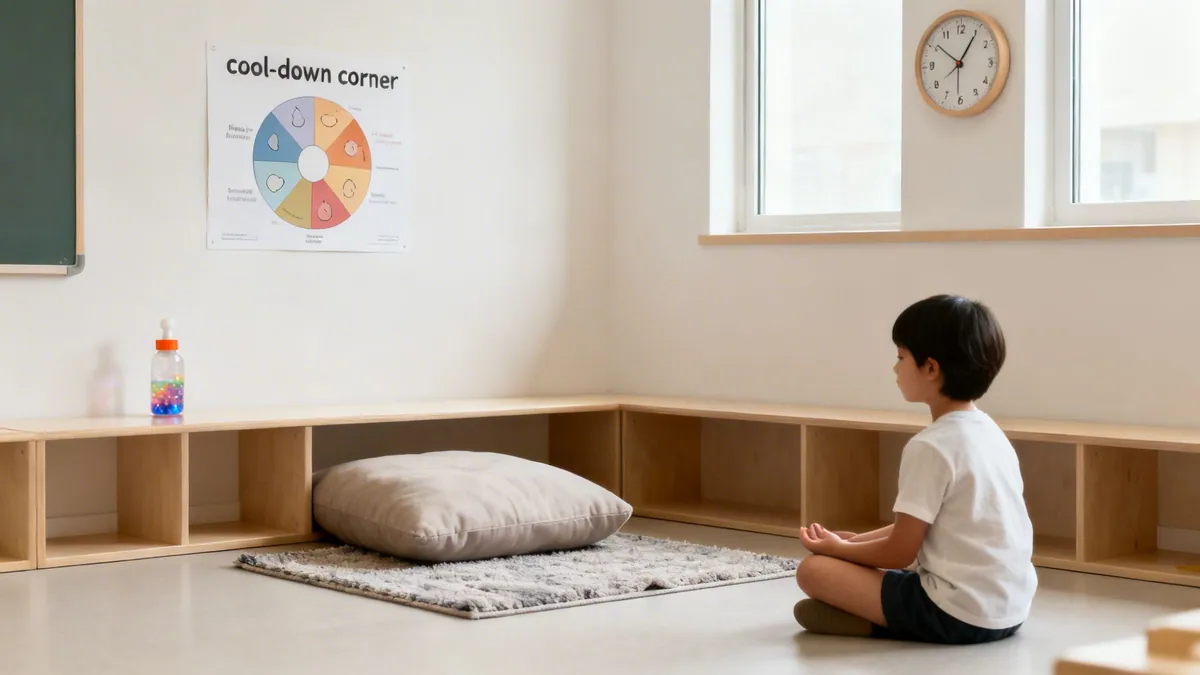
| Establish a Cool-Down Corner | Create a designated quiet space in classrooms with tools like stress balls, journals, or mindfulness cards. A student who feels overwhelmed can use the space for a few minutes to regulate their emotions (self-management) before rejoining the class, ready to learn. |
| Create a Shared Emotional Language | Adopt a consistent set of "feeling words" that are used in every classroom, from science to P.E. When everyone from the principal to the students uses the same vocabulary, it reinforces emotional literacy and makes it easier for kids to express themselves clearly. |
| Implement Peer Mediation | Train older students to be neutral helpers who can guide younger students through resolving conflicts. This not only builds leadership and social skills in the mediators but also empowers all students to solve their own problems peacefully. |
These strategies don't just tell students what emotional intelligence is; they create a campus where EQ is lived out every single day. By embedding these tools into the school culture, we build a foundation of psychological safety that allows every child to thrive, both in their friendships and their report cards.
How to Nurture Emotional Intelligence at Home
The skills kids learn in the classroom really come to life when they’re practiced and supported at home. As a parent or caregiver, you’re your child’s first and most important teacher, especially when it comes to emotions.
When you create a bridge between the emotional language used at school and the conversations you have at home, you build an incredible support system for your child’s growth.
It all starts with modeling. Children are always watching, and they absorb far more from what you do than from what you say. When you handle your own big feelings with honesty and a sense of calm, you’re handing them a real-life blueprint for navigating their own.

Use Feeling Words Every Day
One of the simplest and most effective ways to build EQ is to help your child build their emotional vocabulary. This means going beyond the basics like "sad," "mad," and "happy." The goal is to get more specific to help them name the subtle shades of what they’re feeling inside.
- Practical Example: Instead of "Don't be sad," try saying, "It sounds like you’re feeling disappointed that we can't go to the park."
- Practical Example: Instead of "You're fine," you could say, "I can see you're feeling frustrated with that puzzle. It does look tricky."
- Practical Example: Instead of "Calm down," try, "You seem really overwhelmed right now. Let's take a break together."
Using these "feeling words" helps your child connect a name to their inner world. That’s the first real step toward self-awareness and learning how to manage those feelings. For more ideas, you might like our guide on teaching emotional vocabulary to kids using games and charts.
Create a Calm-Down Space at Home
Just like schools have a "Cool-Down Corner," you can set up a similar space in your home. This isn't a timeout spot for punishment. It’s a safe, comforting place your child can choose to go when they feel overwhelmed and need to regulate.
A calm-down space teaches a vital lesson: it's okay to have big feelings, and it's smart to have a plan for what to do with them. It gives your child a sense of control and a healthy coping strategy.
This space can be simple. Think a cozy corner with a beanbag, a few favorite books, a soft blanket, or a glitter jar to watch. The goal is to create a positive feeling around self-regulation, showing your child that taking space to calm their body and mind is a sign of strength.
Open the Door to Deeper Conversations
Knowing how to talk about feelings is a skill that takes practice. Sometimes, kids just need a gentle invitation to share what’s on their minds. Using open-ended questions can help you explore friendship challenges, celebrate wins, and work through disappointments together.
Here are a few practical examples of questions to try:
- Friendship Challenges: "What was one kind thing a friend did for you today? Was there a time when someone was unkind?"
- Celebrating Success: "Tell me about something you did today that made you feel proud."
- Handling Disappointment: "What was the hardest part of your day? What did you do to handle it?"
By actively listening during these talks—putting your phone down and giving them your full attention—you show your child that their feelings matter. This consistent support at home is the foundation for all other EQ skills, helping you raise a resilient, emotionally intelligent child.