

How to Self Soothe A Guide for Parents and Educators
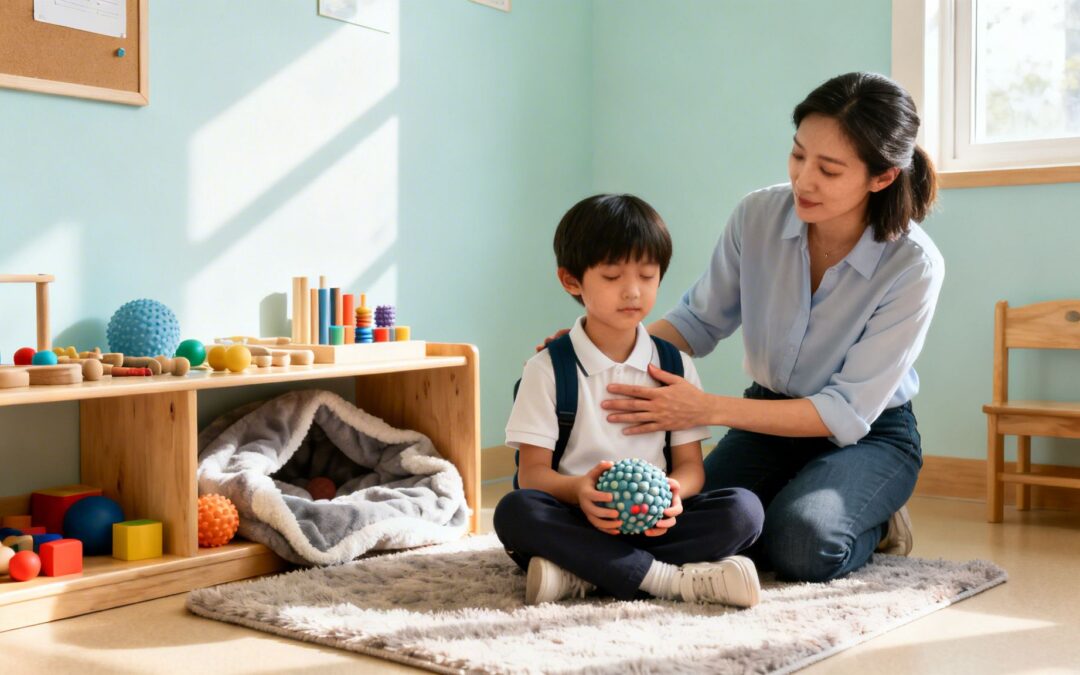
Learning how to self soothe is one of the most important skills we can teach our kids. It’s what allows them to navigate big, overwhelming feelings and build the resilience they’ll need for a lifetime. When a child can recognize an emotional storm coming, use a personal strategy to find their calm, and practice this in a safe space, they build a foundation for everything else—from focusing in class to creating positive friendships.
The Foundations of Self-Soothing in Children
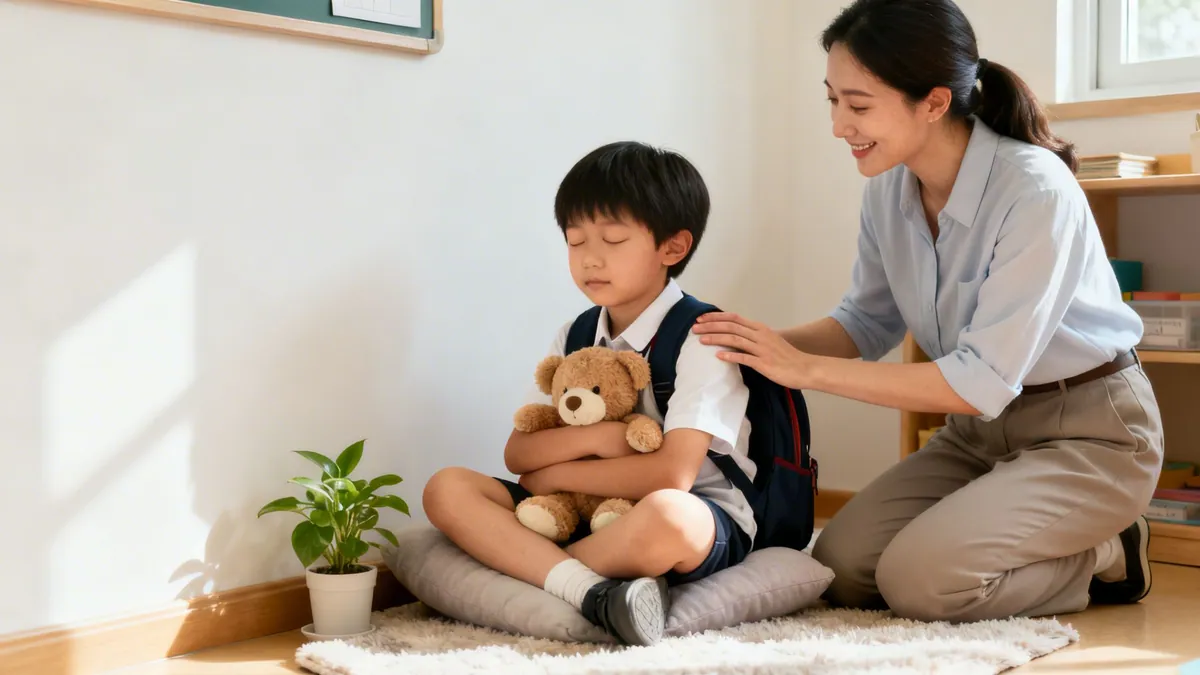
Let’s clear up a common myth right away. Teaching a child to self-soothe has nothing to do with leaving them alone to “cry it out.” True self-soothing is a skill that’s learned, not forced. It develops through our active guidance, modeling, and co-regulation—the process of calming with them.
Think of it as the ability to independently manage emotional waves. It’s a skill that grows slowly, right alongside their developing brains. For our youngest kids, regulation is almost entirely external; they need a trusted adult to be their anchor in a storm. Over time, they start to internalize the strategies we show them, eventually learning to use them all on their own.
Creating Emotional Safety
The journey always begins with emotional safety. Before a child can even think about managing their feelings, they have to know it’s okay to have them—even the messy, inconvenient ones.
A huge part of this is giving them the words for what’s happening inside. When we create a shared, simple language for emotions, we demystify the experience. For example, a teacher might say to a second-grader, “It looks like you’re feeling frustrated because that puzzle piece won’t fit. Frustration can feel tight and hot in your body, can’t it?” This does two things: it labels the feeling and normalizes the physical sensation without judgment. You’re helping them connect the inner feeling to an outer word, which is a core building block of social-emotional development.
A child’s ability to self-soothe is directly tied to the feeling of being seen and understood by their caregivers. When we validate their emotions, we give them the security to explore and eventually manage those feelings independently.
While we’re focusing on school-aged kids here, these principles start way earlier. The groundwork for self-regulation is laid in infancy. If you’re curious about this stage, there are great guides on how to teach baby to self soothe that dig into the specifics.
Identifying Triggers and Modeling Responses
A key piece of the puzzle is learning to spot what sets off big emotions in the first place. These triggers change dramatically with age. What sends a kindergartener into a tailspin is worlds away from what rattles a middle schooler.
When we can anticipate these age-specific triggers, we can be proactive about modeling healthy ways to respond. A young child who’s crushed over losing a game might just need a hug and a quiet moment. A parent might say, “Losing feels so disappointing. It’s okay to be sad. Let’s get a big hug.” For an older student stressing about a test, you might model taking a few deep breaths and using positive self-talk, saying, “Wow, this test feels like a lot. I’m going to take three slow breaths to calm my brain down.”
To help you get started, here’s a look at some common triggers and simple soothing responses you can model for different age groups.
Age-Based Emotional Triggers and Initial Soothing Responses
This table breaks down some of the most frequent emotional stressors for K-8 students and offers immediate, age-appropriate actions you can model to help them begin the self-soothing process.
| Age Group | Common Triggers | Initial Soothing Response to Model |
|---|---|---|
| K–2 | Losing a game, sharing toys, transitioning between activities, loud noises. | “Let’s take a slow breath together.” Hugging a favorite stuffed animal. Moving to a quiet corner. |
| 3–5 | Peer disagreements, homework frustration, feeling left out, academic pressure. | “It’s okay to feel upset. Let’s write or draw about it.” Squeezing a stress ball. Taking a short walk. |
| 6–8 | Social drama, test anxiety, fear of failure, body image concerns, complex homework. | “I can see this is tough. Let’s listen to a calm song.” Journaling thoughts. Talking to a trusted friend. |
By consistently modeling these simple actions, you give kids a real-life script they can draw from when their own emotions feel too big to handle alone.
Building a Sensory Toolkit for Calming Down
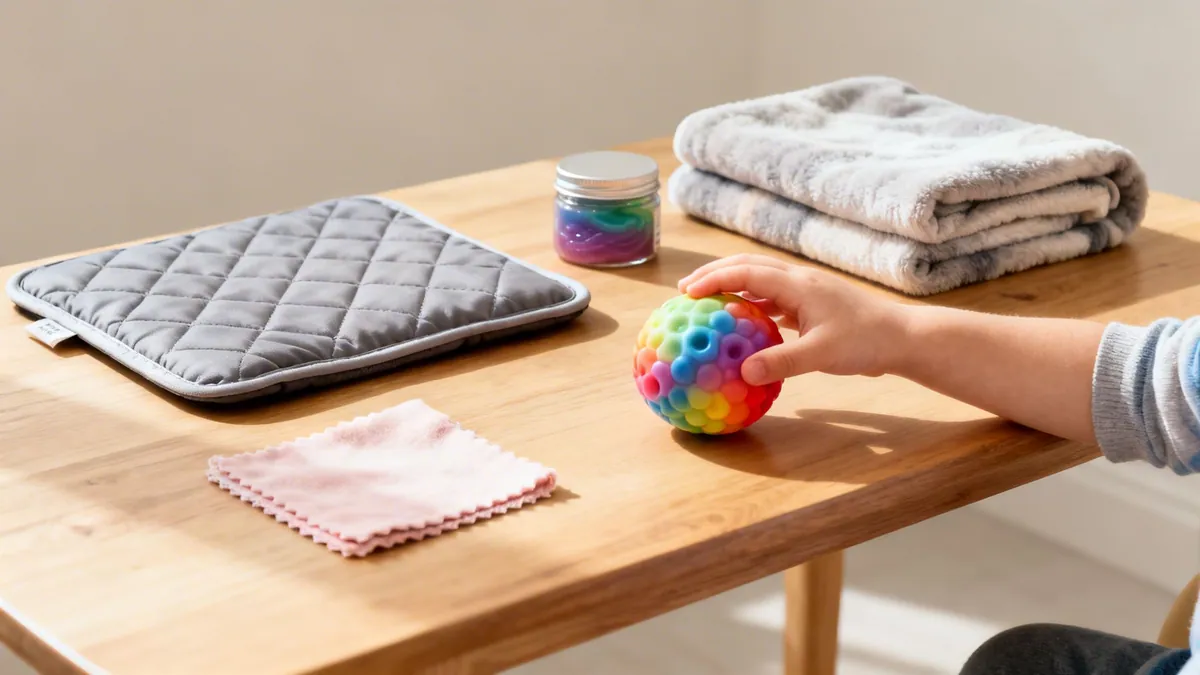
Once a child can name their feelings and triggers, we can give them something physical to do about it. This is where a sensory toolkit—often called a “calm-down kit”—becomes one of the most powerful resources you can have, both at home and in the classroom.
Engaging the senses is one of the fastest ways to ground a child who feels like they’re spiraling. When big emotions hijack their brain, the logical, thinking part goes offline. Sensory input helps cut through the noise, pulling them out of that reactive state and back into their bodies.
The Power of Sensory Engagement
A calm-down kit isn’t just a box of toys to distract a child. It’s a hand-picked collection of items designed to provide specific sensory input that actively de-escalates stress. Research backs this up, showing that tactile (touch) and proprioceptive (deep pressure) input have a significant calming effect on the nervous system.
You don’t need to spend a fortune on fancy gadgets. Honestly, some of the most effective items are things you probably already have, or can find at a local dollar store. The whole point is to offer a variety of textures, weights, and even smells that a child can turn to when their world feels a little too loud.
Here are a few powerful, low-cost ideas to get your kit started:
- For Touch: A scrap of faux fur, a smooth river stone, a small sequin pillow, or different fabric swatches like velvet, corduroy, and silk.
- For Pressure: A weighted lap pad (easy to make with a pouch of rice or dried beans), a perfectly squishy stress ball, or some therapy putty.
- For Scent: Scented putty or play-doh with calming smells like lavender or chamomile. Even peppermint can be great for helping a child refocus their attention.
Co-Creating the Kit With Your Child
This is the most important part: build the toolkit with your child. When they get to choose what goes inside, they develop a sense of ownership over the tools and are far more likely to actually use them.
Find a calm, quiet moment to sit down together. Explain the kit’s purpose in a way they’ll understand. A parent might say, “Remember how your body feels when you get really frustrated? Let’s make a special box of things that can help your body feel calm and safe again.” A teacher could say, “Our classroom is a team. Let’s build a ‘Peace Corner’ with tools anyone can use when they need a quiet moment to reset.”
When a child co-creates their own sensory toolkit, they are not just picking out items; they are practicing self-awareness. They learn to identify what truly helps them feel better, turning a box of objects into a powerful symbol of their own competence and control.
For instance, a third-grader feeling anxious before a spelling test might pull out their peppermint-scented putty. The act of kneading it provides calming deep pressure to their hands, while the focusing scent helps clear their mind.
Practical Examples in Action
Let’s look at how this plays out in the real world. These scenarios show how a simple toolkit can be woven right into a child’s day.
Example 1: A Kindergartener After a Loud Assembly
- Scenario: Leo comes back from a noisy all-school assembly feeling jittery and overstimulated. He’s having a hard time settling down for quiet reading.
- Tool: His teacher quietly guides him to the classroom’s “calm-down corner,” where he has his own small sensory box. He picks out a small, weighted lizard to place on his lap.
- Outcome: The gentle pressure from the weighted animal helps ground him. That simple, physical sensation gives his nervous system the input it needs to settle down. In just a few minutes, he’s ready to rejoin the group.
Example 2: A Middle Schooler After a Disagreement
- Scenario: Maya, a seventh-grader, has a small argument with a friend at lunch and comes home feeling upset and withdrawn.
- Tool: Instead of pushing her to talk, her parent reminds her about the “chill out” basket they created together. Maya grabs a soft fleece blanket and her sketchbook.
- Outcome: She wraps herself tightly in the blanket, giving herself a comforting, cocoon-like hug. She then spends 10 minutes doodling, which lets her process her feelings without having to find the words. This is a fantastic example of using established self-regulation strategies for students in a personal and meaningful way.
Mindful Movements and Breathing You Can Teach Today
While sensory tools are fantastic for grounding, some of the most powerful self-soothing strategies don’t come in a box. When we teach children how to use their own breath and body, we give them a toolkit they can carry anywhere, for life.
This isn’t just about telling a kid to “take a deep breath.” These are engaging, memorable activities designed to interrupt the stress cycle and return a child’s sense of control. Mastering this skill is at the heart of learning how to self soothe.
Breathing Exercises With Kid-Friendly Scripts
The goal is to make breathing feel less like a chore and more like a superpower. Using simple, playful scripts helps kids connect with the practice and, more importantly, remember it when they need it most.
Here are a few of my go-to’s that work wonders in both classrooms and homes.
1. Balloon Breaths
This one is perfect for helping kids visualize their breath and slow down, which is incredibly helpful for taming anxiety.
- The Script: “Pretend your belly is a big balloon. Put your hands right on your tummy. As you breathe in slowly through your nose, feel that balloon get bigger and bigger. Now, breathe out slowly through your mouth, letting all the air whoosh out as your balloon deflates.”
- Practical Scenario: A parent sees their fourth-grader getting frustrated over a tough math problem. They might say, “Hey, let’s pause and do three Balloon Breaths to give our brains a mini-break.” This shifts the moment from struggle to proactive self-care.
2. Dragon Breaths
This is the one I pull out for releasing frustration or big, pent-up energy. It encourages a strong, cleansing exhale.
- The Script: “Sit up tall like a mighty dragon. Take a giant breath in through your nose, filling up your whole belly. Now, open your mouth wide and breathe out a powerful, fiery breath—whoosh!—to get all that mad energy out.”
- Practical Scenario: After a disagreement on the playground, a teacher sees a student stomping back to class. Instead of scolding, they can get down on the child’s level and say, “I see some fiery feelings in you. Let’s be dragons together and breathe that fire out.”
3. Box Breathing (or Square Breathing)
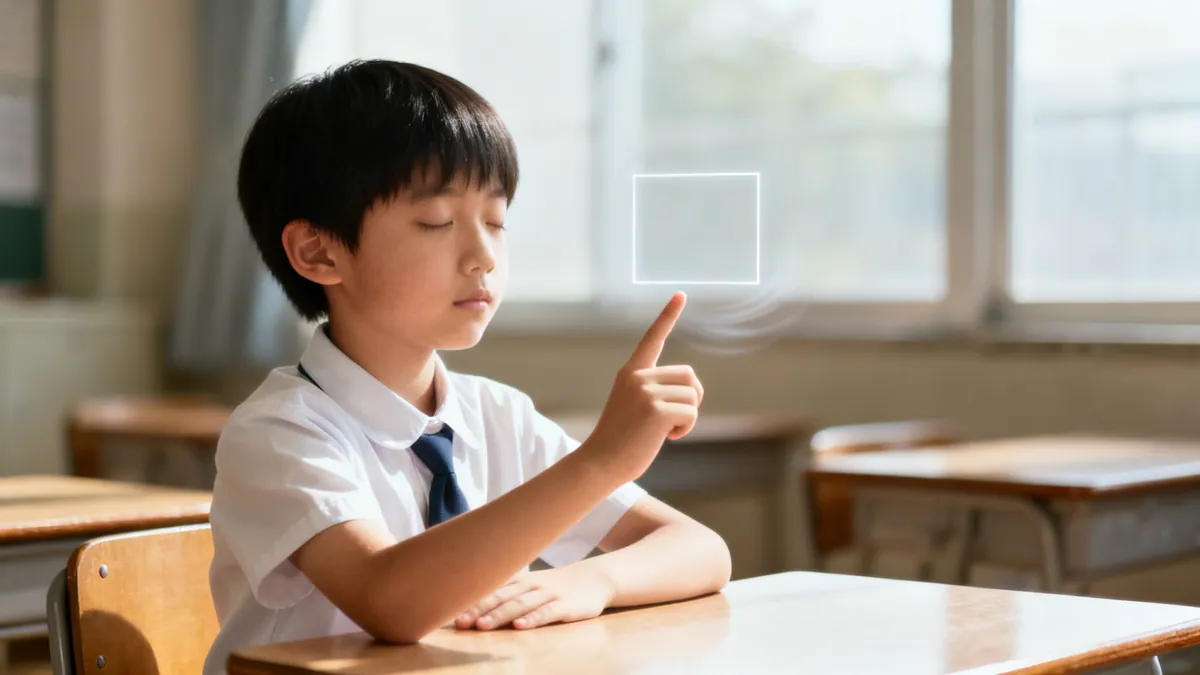
This technique is excellent for older kids (grades 3–8) because it introduces rhythm and focus. It involves tracing a square in the air or on their leg to pace the breath.
- The Script: “Let’s draw a square with our breath. Using your finger, trace one side up as you breathe in for four counts. Hold your breath for four counts as you trace the line across the top. Breathe out for four counts as you trace down the other side. And hold your breath for four counts as you trace the bottom to finish the square.”
- Practical Scenario: A middle schooler is visibly nervous before a presentation. A counselor could quietly guide them: “Let’s do some Square Breathing at your desk. No one even has to know. Just trace the square on your notebook.”
Mindful breathing activates the parasympathetic nervous system—the body’s natural “rest and digest” mode. By intentionally slowing their breath, children can lower their heart rate and signal to their brain that they are safe, effectively short-circuiting an anxious response.
Mindful Movements to Reset and Refocus
Sometimes, a child’s body just needs to move to let go of tension. These simple stretches can be done right at a desk or in a small space, making them perfect for classroom transitions or quick resets at home.
Starfish Stretches
This full-body stretch is a fantastic way to wake up the body and release tension after sitting for a while.
- How to Do It: “Stand up and reach your arms and legs out as wide as you can, like a big starfish! Stretch your fingers and toes. Now, curl into a tiny, tight ball. Let’s do it again—big starfish stretch, then tiny ball.”
- Practical Scenario: A teacher notices the class energy is getting chaotic after a loud assembly. They can announce, “Okay, everyone, on your feet! Let’s do three big Starfish Stretches to help our bodies feel calm and ready for our next activity.” It gives students a physical outlet and instantly resets the room’s atmosphere.
Teaching these techniques is a vital step in helping kids build their emotional regulation skills, but it’s just one piece of the puzzle. The need for these practices is wider than you might think. For instance, a 2023 Safer Society survey found that while 74% of people have a daily self-care practice, 80% still report high burnout. More telling for us, 45% of respondents reported high stress in the prior six months. You can read the full research about these findings to see how stress is affecting people of all ages.
By weaving these simple, mindful exercises into daily routines, we give children invaluable tools. If you’re ready to go deeper, you can learn more by teaching mindfulness to children with our detailed guide.
You don’t need fancy programs or complex exercises to teach a child how to self-soothe. In fact, some of the most powerful strategies are probably already happening in your home or classroom. The key is to turn these everyday activities into intentional tools for emotional regulation.
It’s all about helping a child connect the dots. When we guide them to see why listening to a certain song or doodling in a notebook makes them feel better, we’re handing them the keys. They move from just passively distracting themselves to mindfully managing their inner world.
Turn Passive Habits Into Active Soothing
Many activities kids already gravitate toward are, at their core, a form of self-regulation. Our job is to help them recognize this and use these habits on purpose. Instead of just seeing screen time or hobbies as “downtime,” we can frame them as real and valid self-care tools.
This isn’t just a hunch; it’s how kids are already coping. A 2023 survey revealed that 93% of youth use self-care to manage their emotions. The most common methods? Listening to music (72%), watching movies or TV (53%), and playing video games (47%). You can dive into the full breakdown of these powerful self-care findings to see just how central these activities are to their well-being.
By validating these existing habits, we remove the shame that can sometimes come with them. We send a clear message: “What you’re doing to feel better isn’t just okay—it’s a skill. Let’s get good at using it when you need it most.”
This shift in perspective is everything. It helps kids build a personalized menu of calming options that feel genuine and easy to reach for, boosting their confidence to handle whatever comes their way.
Create a “Calm-Down Playlist”
Music has a direct line to the emotional centers of the brain. The right song can shift a child’s mood, slow their heart rate, and give them a much-needed mental break. Building a “Calm-Down Playlist” with a child is a fantastic collaborative exercise.
- For the Classroom: During a quiet moment, ask students to share one song that helps them feel calm or happy. Compile them into a class playlist to use during independent work, tricky transitions, or after a high-energy gym class.
- For Home: Sit down with your child and explore different kinds of music. Try instrumental tracks, nature sounds, or even their favorite gentle pop songs. Ask them how each one makes their body feel. Does it make them want to tap their feet or relax their shoulders?
Practical Example:
A fifth-grade teacher sees his class is getting antsy before a math test. He says, “Okay team, let’s put on our calm-down playlist for five minutes while we get our pencils ready.” A quiet, instrumental track comes on, and without him saying another word, the energy in the room visibly settles.
Set Up a “Doodle Corner” for Quiet Expression
Drawing, doodling, and coloring aren’t just for art class—they’re forms of non-verbal processing. For a child who can’t find the words for their big feelings, a pen and paper can be a lifeline. It gives them a way to get frustration or sadness out without having to talk about it.
- In the Classroom: Designate a small, cozy area with paper, colored pencils, and markers. Frame it as a spot to “draw your feelings out” or to “give your brain a quiet break.”
- At Home: Keep a “doodle basket” with sketchbooks and art supplies somewhere easy to grab. When you see your child is upset, you can suggest, “It looks like you have some big feelings right now. Do you want to go doodle them out in your book for a bit?”
Practical Example:
An eight-year-old is fuming after an argument with her brother. She stomps off and grabs her sketchbook. She starts by furiously drawing dark, scribbly storm clouds. After a few minutes, she begins adding little sunbeams peeking through. The act of drawing helps her process the anger and move through it on her own terms.
Adapting Strategies for Different Ages and Needs
What works for a five-year-old won’t fly with a fifth-grader. The journey to learning how to self-soothe isn’t a one-size-fits-all path. What brings comfort to a six-year-old might feel silly or even embarrassing for a thirteen-year-old, so adapting our strategies is key.
As kids grow, their worlds expand. Their ability to think abstractly, understand their own feelings, and connect with others deepens. This means our approach has to evolve right alongside them, shifting from purely sensory methods for our youngest learners to more cognitive and relational tools for older students.
Kindergarten to Second Grade: Concrete Comfort
For kids in K-2, the world is very literal and hands-on. Their emotional regulation is deeply tied to their senses and what their bodies are experiencing. When big feelings hit, they need concrete, physical actions to feel safe and grounded again.
Self-soothing strategies at this age should be simple, easy to remember, and focused on the body.
- Hugging a Stuffed Animal: The gentle pressure and soft texture offer immediate comfort. Practical Example: A first-grader feels sad after a playground squabble and the teacher allows them to get the classroom’s “feel-better bear” from the calm-down corner to hold at their desk for a few minutes.
- Using a Weighted Lap Pad: During quiet reading, a child who feels wiggly and overstimulated can place a small weighted pad on their lap. That deep pressure sends calming signals straight to the nervous system.
- Looking at a Calm-Down Jar: A glitter jar is a perfect visual anchor. Practical Example: A kindergartener is upset about their parent leaving at drop-off. The teacher can sit with them for a moment, shake the glitter jar, and say, “Let’s watch all the glitter settle. By the time it’s calm, our hearts might feel a little calmer, too.”
The goal here is to move from co-regulation to self-regulation. We start by modeling the soothing action with them—hugging them, breathing deeply beside them—and then guide them to use a physical tool on their own, like their favorite stuffed animal.
These early skills are incredibly important. Research shows that a child’s ability to self-soothe grows dramatically even in the first year of life, jumping from just 27.55% at one month to 46.39% by twelve months. This early development, often supported by comfort objects, helps build lifelong emotional health. You can learn more about how these foundational soothing skills develop and why they matter for a child’s future.
Third to Fifth Grade: Building a Bridge to Self-Awareness
Students in upper elementary are in a fascinating transition. They still absolutely benefit from sensory strategies, but they’re also starting to develop the ability to use more internal, cognitive techniques. They can actually think about their feelings and begin using simple self-talk.
This is the perfect age to connect concrete actions with their growing self-awareness.
- Drawing or Journaling: A fourth-grader who’s frustrated with a tough math problem can be encouraged to “draw their frustration” or write down three angry words. This gets the feeling out without needing a complex conversation.
- Using a Fidget Tool Discreetly: A fidget spinner or therapy putty can be used under a desk to manage pre-test jitters. It gives them quiet sensory input that helps focus the mind without distracting anyone else.
- Listening to a Short Guided Meditation: Practical Example: A teacher can have students put their heads down for three minutes before a test and play a short audio clip: “Imagine a calm, blue light filling up your body, from your toes to your head, making you feel peaceful and focused.”
Sixth to Eighth Grade: Thinking and Connecting to Calm Down
By middle school, students are swimming in a sea of complex social dynamics and higher academic stakes. A squishy ball might still have its place, but they need more sophisticated tools that respect their growing independence and need for privacy.
The focus naturally shifts to internal self-talk and trusted peer connections.
- Practicing Positive Self-Talk: A student who bombed a quiz can be taught to reframe their thoughts. Practical Example: A parent can model this by saying, “I’m so frustrated I burned dinner! Okay, deep breath. It’s not the end of the world. Let’s order a pizza and I’ll try that recipe again tomorrow.” This shows the student how to talk themselves through a mistake.
- Creating a Calming Music Playlist: Music is a huge mood regulator for this age. An eighth-grader overwhelmed by social drama can put on their headphones and tune into a pre-made “chill” playlist, creating a personal bubble of calm.
- Relational Soothing: Encourage them to reach out to a trusted friend. Practical Example: A teacher might notice a student is upset and say, “It looks like you’re having a hard time. Would you feel better if you took five minutes to talk with Sarah in the hallway?” This validates peer support as a healthy coping strategy.