

8 Calming Ways to Start Your Day: Your 2026 Guide to 2nd Grade Morning Work
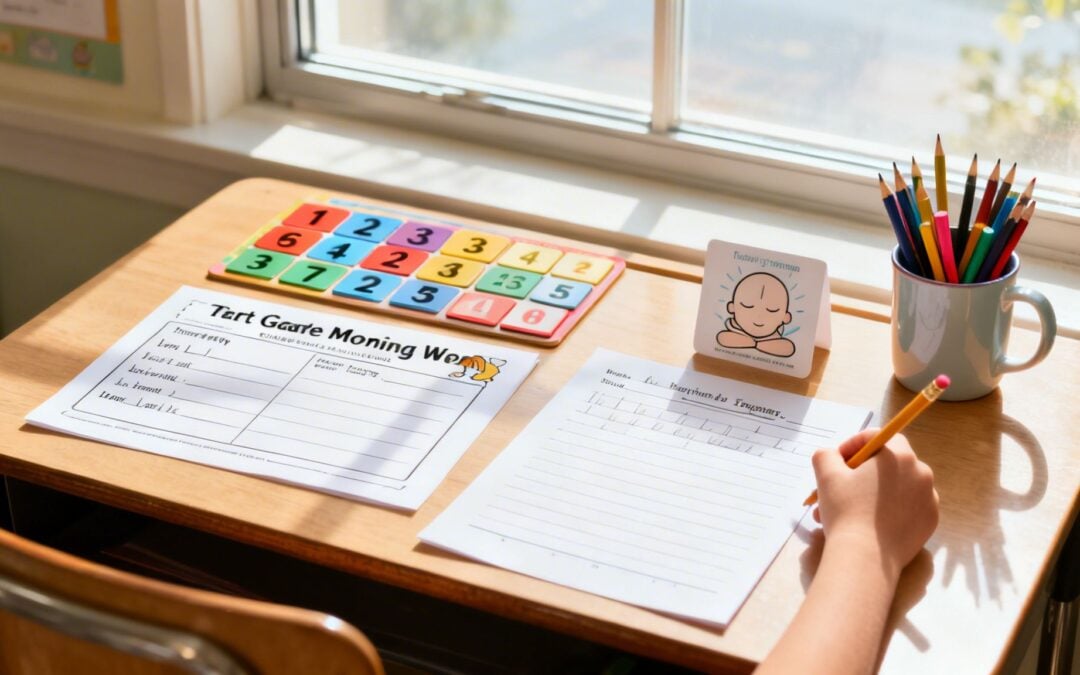
Imagine your 2nd graders walking into a calm, focused classroom, ready to connect and learn. This isn’t a fantasy; it’s the power of intentional morning routines. Traditional worksheets often miss the most critical part of a child’s school day: settling their minds and bodies. Effective 2nd grade morning work should build a foundation for learning, not just fill time before the first bell.
This guide provides a curated list of practical, low-prep activities that prioritize social-emotional learning (SEL) alongside academics. These ideas are designed for busy teachers, administrators, and parents seeking to replace morning chaos with meaningful engagement. A key part of this process involves teaching students foundational skills. Understanding how to regulate emotions is a cornerstone of a peaceful classroom, as it equips children with the tools they need to manage big feelings and focus on learning.
You will find specific, actionable examples for each activity, from mindfulness check-ins to problem-solving role-plays. We also include differentiation tips and ways to integrate practices from leading SEL organizations like Soul Shoppe. The goal is to ensure your students start their day feeling safe, connected, and truly ready to thrive.
1. Mindfulness & Breathing Check-In Circle
Starting the day with a Mindfulness & Breathing Check-In Circle is a powerful form of 2nd grade morning work that prioritizes social-emotional learning (SEL) before academics begin. This 5 to 10-minute structured activity involves gathering students in a circle on the floor to practice guided breathing, simple body scans, or grounding techniques. The primary goal is to help students transition from home to school, co-regulate their nervous systems, and build a foundation of calm, focused attention for the day ahead.
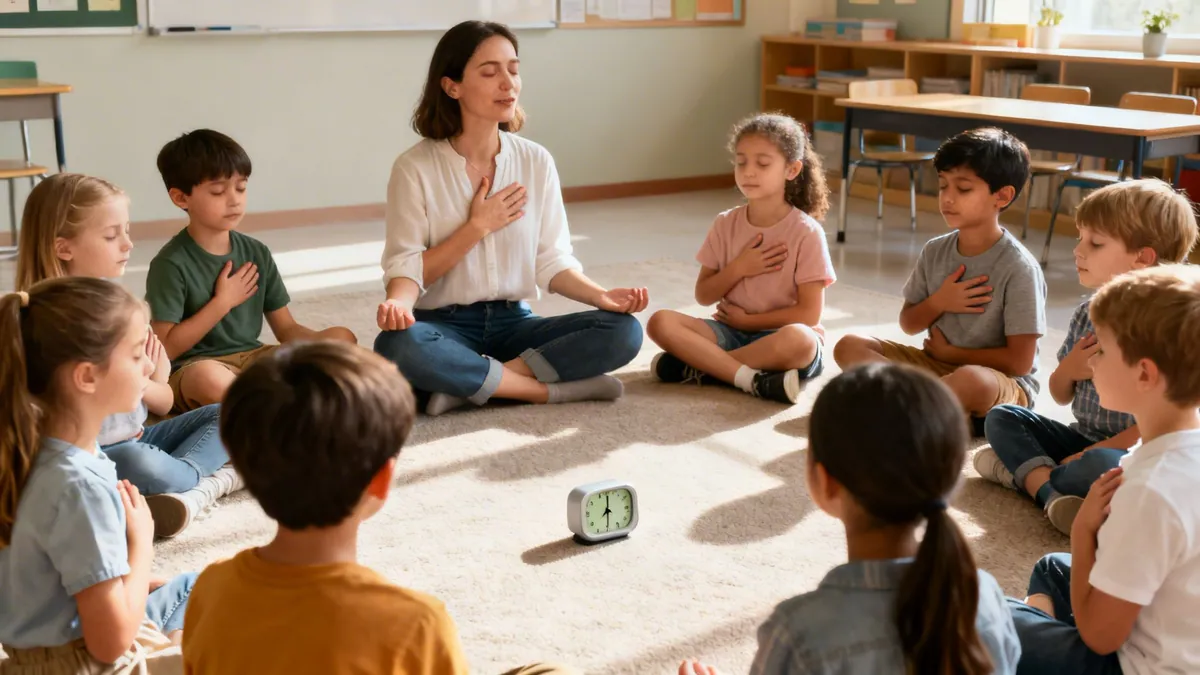
This practice directly supports students’ ability to identify and manage their emotions, a key component of SEL. Many schools successfully use programs like Calm or Headspace for Schools, while others integrate these moments into the Responsive Classroom morning meeting structure. The teacher acts as a facilitator, modeling calmness and guiding students through simple, consistent routines.
How to Implement a Breathing Circle
- Start Small and Be Consistent: Begin with just two to three minutes of guided practice each morning. As students become more familiar and comfortable with the routine, you can gradually extend the time. A practical example is a “Take 5” breathing exercise: students trace their hand, breathing in as they trace up a finger and out as they trace down.
- Create a Dedicated Space: If possible, designate a “calm-down corner” or a specific area of the classroom for this circle. Keep it free from visual distractions to help students focus inward.
- Use Simple, Repetitive Language: Guide students with clear, predictable phrases. For example, “Let’s take a deep breath in through our noses, filling our bellies like a balloon… now, slowly let the air out through your mouth like you’re blowing a bubble.” This consistency creates a sense of safety and predictability. To effectively help children regulate their emotions and prepare for the day, consider integrating some of the best breathing exercises tailored for calming the nervous system.
- Follow with an Emotion Check-In: After the breathing practice, ask students to non-verbally share how they are feeling. A simple thumbs-up (feeling great), thumbs-sideways (feeling okay), or thumbs-down (having a tough time) provides a quick, private way to gauge the classroom climate. These quick assessments are an essential part of effective daily check-ins for students.
Your authentic participation is key. When students see their teacher actively and genuinely engaging in the breathing exercises, they are more likely to mirror that engagement and internalize the benefits of the practice.
2. Social-Emotional Learning (SEL) Prompt Reflection
Integrating a daily Social-Emotional Learning (SEL) Prompt Reflection is an effective form of 2nd grade morning work that builds emotional intelligence through writing or discussion. This quiet, independent activity asks students to respond to a specific prompt about feelings, relationships, or problem-solving. By answering questions like, “Who showed you kindness yesterday?” or “How did you handle a frustration today?” students practice identifying emotions, developing empathy, and using the language of self-awareness.
This practice gives students a structured way to process their inner world and connect it to their school life. Many effective curricula, such as the Second Step Program and Zones of Regulation, use this prompt-based method to reinforce key SEL concepts. It allows teachers to gain valuable insight into students’ well-being while fostering a classroom culture where emotional expression is valued and normalized.
How to Implement SEL Prompts
- Establish a Weekly Theme: Create a rotating schedule to cover different SEL competencies. A practical example: Monday (Gratitude – “What is one thing you are thankful for?”), Tuesday (Kindness – “Draw a time you helped a friend.”), Wednesday (Problem-Solving), Thursday (Empathy), and Friday (Reflection). This provides structure and predictability.
- Keep Prompts Simple and Concrete: Phrase questions in a way that is easy for a second grader to understand. Instead of “Describe a time you showed perseverance,” try “What is something you worked hard on and didn’t give up?”
- Model Vulnerability: Share your own authentic, age-appropriate response to the prompt first. Saying, “I felt frustrated this morning when I couldn’t find my keys, so I took a deep breath,” shows students that everyone manages emotions.
- Use Visual Anchors: Create an anchor chart with sentence starters like “I felt happy when…” or “A kind thing I saw was…” to support students who need help structuring their thoughts. For example, for a prompt about helping, a starter could be: “I helped my mom by…” Providing a range of thoughtful and effective student reflection questions can guide this practice and deepen its impact.
- Normalize All Feelings: Emphasize that there are no “right” or “wrong” answers. The goal is honest reflection, not a perfect response. This builds psychological safety and encourages authentic sharing.
3. Kindness & Connection Morning Meeting
A Kindness & Connection Morning Meeting is a structured, 10 to 15-minute group gathering that serves as exceptional 2nd grade morning work by putting community first. In this daily practice, students celebrate one another, practice active listening, and intentionally build a safe, supportive classroom culture. The core purpose is to establish belonging, reduce feelings of isolation, and ensure that every student feels seen and heard before academic instruction begins.
This intentional community-building time directly addresses students’ need for safety and connection, which are prerequisites for engaged learning. Many effective models exist, from the well-known Responsive Classroom Morning Meeting to frameworks like Tribes Learning Communities. The teacher’s role is to facilitate a predictable routine where students can share good news, acknowledge peer accomplishments, or play cooperative games.
How to Implement a Kindness Meeting
- Establish Clear Norms: Co-create rules for respectful listening with your students. Simple expectations like “quiet bodies,” “kind faces,” and “eyes on the speaker” help everyone feel safe to share. For example, create an anchor chart with pictures demonstrating these norms.
- Use a Talking Piece: Pass a designated object (a special rock, a small stuffed animal) to show whose turn it is to speak. This ensures equitable participation and teaches students not to interrupt, giving each child uninterrupted time. For example, you can say, “Only the person holding ‘Sparky the Star’ can share their thoughts.”
- Start with Low-Risk Sharing: Begin the year with simple prompts like, “Share one thing you enjoyed this weekend.” As trust builds, you can move toward more personal sharing. For example: “Share your favorite part of the book we read yesterday.”
- Rotate the Celebration Focus: To keep it fresh, dedicate each day to a different theme. For example, Mondays could be for celebrating academic effort (“I want to celebrate Maria for working so hard on her math facts”), while Tuesdays are for noticing acts of kindness. This structure guides students on what to look for in their peers. To discover more ways to foster these connections, you can find a wealth of classroom community-building activities that complement this morning routine.
Your consistent modeling of vulnerability and appreciation sets the tone. When you genuinely celebrate a student’s effort or share a personal story, you show students that the classroom is a true community where every member matters.
4. Conflict Resolution & Problem-Solving Role-Play
Using role-play for conflict resolution is a dynamic form of 2nd grade morning work that gives students hands-on practice with social problem-solving. These short, interactive skits focus on common classroom issues like sharing, taking turns, or responding to unkind words. By acting out different roles in a safe, guided setting, students learn to see conflicts from multiple perspectives, practice using “I-Feel” statements, and brainstorm peaceful solutions together. This makes abstract concepts like empathy and respect tangible and memorable.
This method directly equips students with the language and strategies needed to navigate peer disagreements constructively. Experiential programs from organizations like Soul Shoppe and the Second Step Program often feature role-playing as a core component for teaching these skills. The teacher facilitates by setting up simple scenarios, guiding the process, and helping students reflect on the outcomes of their chosen solutions, turning potential disruptions into learning opportunities.
How to Implement Problem-Solving Role-Play
- Start with Puppets: Before asking students to perform, use puppets or stuffed animals to act out scenarios. This lowers the pressure and allows students to focus on the problem and solution, not on being in the spotlight. A practical example: have one puppet snatch a toy from another, then guide students to give the puppets the right words to use.
- Scaffold the Scenarios: Begin with simple, two-character conflicts. For example, “Character A took Character B’s crayon without asking.” As students gain confidence, you can introduce more complex situations like, “Leo and Sara both want to be line leader. What can they do?”
- Create a Visual Aid: Develop a “Problem-Solving Steps” anchor chart that students can reference. Steps might include: 1. Stop and Cool Off, 2. Use an “I-Feel” Statement, 3. Listen to the Other Person, and 4. Brainstorm a Solution. A practical example for step 2 is teaching the phrase: “I feel _____ when you _____ because _____.” To explore more ideas for building these skills, check out these engaging conflict resolution activities for kids.
- Rotate Roles: Ensure every student has the chance to play different parts, including the person with the problem, the person who caused it, and a helpful bystander or “peace-maker.” This builds empathy by allowing them to experience the situation from all sides.
- Connect to Real Life: After a role-play session, explicitly connect the practice to classroom life. Say, “Remember how we practiced asking nicely for a turn? I saw Jamal and Aisha do that at the block center. Great job using your peace-making skills!” This helps transfer the skills from the activity to real-world interactions.
5. Emotion Recognition & Feelings Check-In
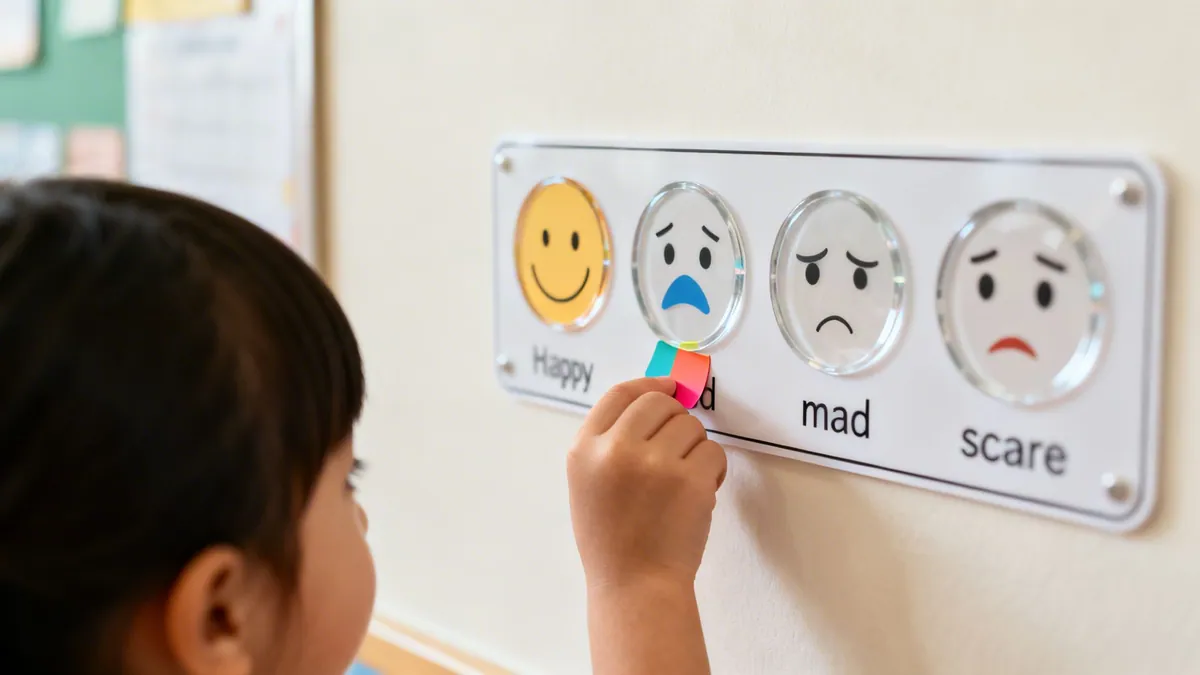
Building emotional literacy is a foundational part of social-emotional learning, and an Emotion Recognition & Feelings Check-In serves as effective 2nd grade morning work for this purpose. This daily activity asks students to identify and name their current feelings using visual aids like emotion wheels or feelings charts. The goal is to create a safe, predictable routine where discussing emotions is normalized, helping teachers gauge student readiness for learning and building a more empathetic classroom culture.
This practice gives students the vocabulary they need to move beyond simple terms like “mad” or “sad.” Frameworks such as the Zones of Regulation, which categorize feelings into colored zones (blue, green, yellow, red), are widely used to help children understand their emotional and physical state. Other teachers may use a feelings thermometer or a daily mood board where students place their name under a corresponding emotion face.
How to Implement a Feelings Check-In
- Introduce Emotions Gradually: Start the school year with four basic feelings: happy, sad, angry, and scared. As students master this vocabulary, you can introduce more nuanced words like disappointed, frustrated, proud, or calm. For example, create a “feeling of the week” and discuss what it looks like, sounds like, and feels like in the body.
- Use Consistent Visual Supports: Choose one visual system and stick with it. Whether it’s a color-coded chart based on The Color Monster or a Zones of Regulation poster, consistency helps students quickly recognize and identify their state without confusion. A practical example: a pocket chart where each student moves their name stick to the “zone” they are in each morning.
- Model Naming Your Own Emotions: Your authenticity is powerful. Start the check-in by sharing your own feelings in a simple, age-appropriate way. For example, “Good morning, class. I am feeling excited today because we get to start our new science unit.” This models that all feelings are normal and acceptable.
- Provide Non-Verbal Options: Not every child will be ready to share verbally. Allow students to use a thumbs-up/sideways/down signal, point to a chart, or place a clothespin with their name on a feelings poster. Respecting this choice is key to building trust and psychological safety.
After the check-in, you can make a general observation to validate their feelings and connect them to classroom strategies. A simple statement like, “I see some of us are in the blue zone and feeling tired this morning. Let’s remember we can take a stretch break if we need one,” shows students you see them and are ready to support them.
6. Partner or Peer Share Activity
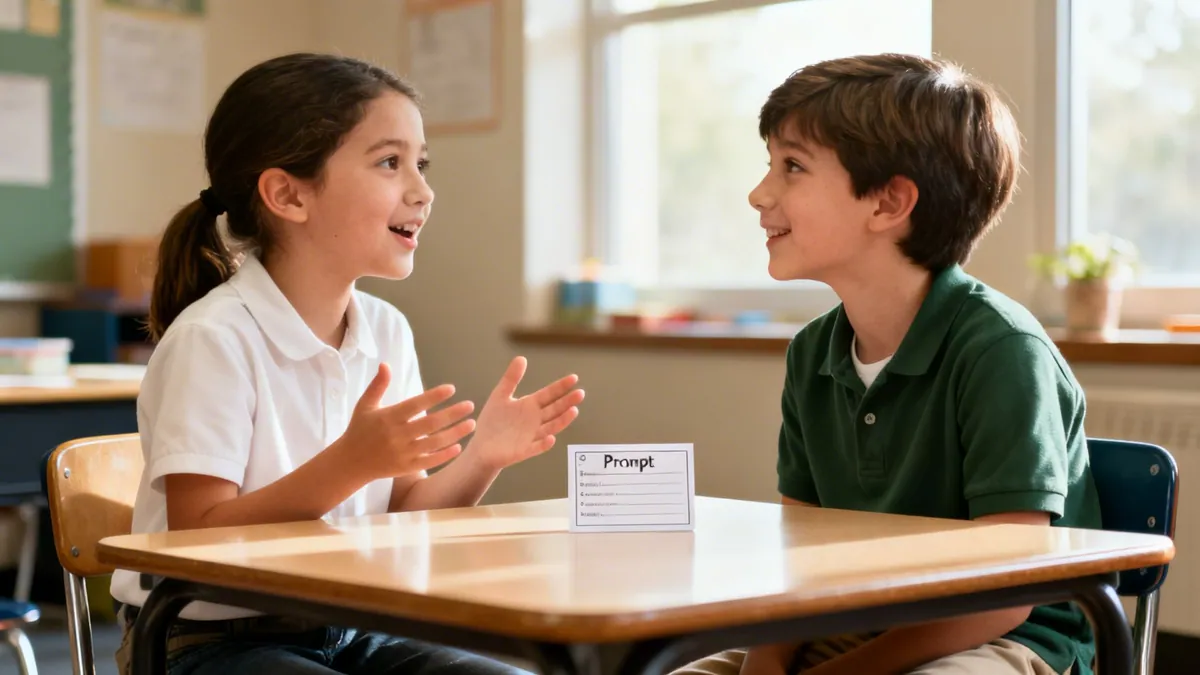
A Partner or Peer Share Activity is a structured form of 2nd grade morning work that develops crucial communication and social skills. This 5 to 10-minute routine involves pairing students to ask and answer thoughtful questions, practice active listening, and learn about one another in a safe, one-on-one setting. The primary goal is to build a supportive classroom community, give quieter students a voice, and foster empathy by creating intentional connection points.
This practice is a cornerstone of collaborative learning models like Responsive Classroom and Cooperative Learning. By taking turns speaking and listening, students move beyond surface-level interactions to build genuine understanding. The teacher acts as a facilitator, modeling respectful communication and providing engaging prompts that encourage students to share their thoughts and experiences.
How to Implement a Partner Share Activity
- Model Expected Behaviors: Before starting, explicitly model what good listening and speaking look like. For example, act out a “good partner” who makes eye contact and asks a follow-up question, then a “distracted partner” who is looking away. A practical example is using the “EEKK” rule: Elbow-to-Elbow, Knee-to-Knee.
- Use Clear Prompts and a Timer: Start with simple, concrete questions like, “What is one thing you are good at?” or “If you could have any superpower, what would it be and why?” Use a visual timer to give each partner 1-2 minutes to share, providing a clear structure for turn-taking.
- Intentionally Pair Students: To build a stronger classroom community, purposefully pair students who may not typically interact. Rotating partners weekly or biweekly ensures that every student gets a chance to connect with many different classmates throughout the year, breaking down social cliques. For example, use “clock buddies” where students pre-select partners for different times of the day.
- Teach Active Listening Skills: Make active listening a direct teaching point. Instruct students to “look at your partner, nod to show you’re listening, and think of one question to ask about what they said.” You can even create a “listening challenge” where students have to introduce their partner and one thing they learned from them. For example: “This is my partner, Sam. I learned that his favorite animal is a cheetah.”
7. Gratitude & Appreciation Activity
Integrating a Gratitude & Appreciation Activity into your routine is a simple yet profound type of 2nd grade morning work that builds community and fosters a positive classroom environment. This activity invites students to identify what they are thankful for, recognize their own strengths, and appreciate kindness in their peers. It shifts the daily focus toward positive relationships and emotional well-being, setting a constructive tone for learning.
Formats can range from a whole-class gratitude circle or a “Thankfulness Thanksgiving” tradition to individual gratitude journals. The core goal is to help students develop a practice of noticing the good around them, which builds resilience and a growth mindset. This practice is popularized by the Bucket Fillers movement and supported by research from positive psychology on the benefits of gratitude.
How to Implement Gratitude Activities
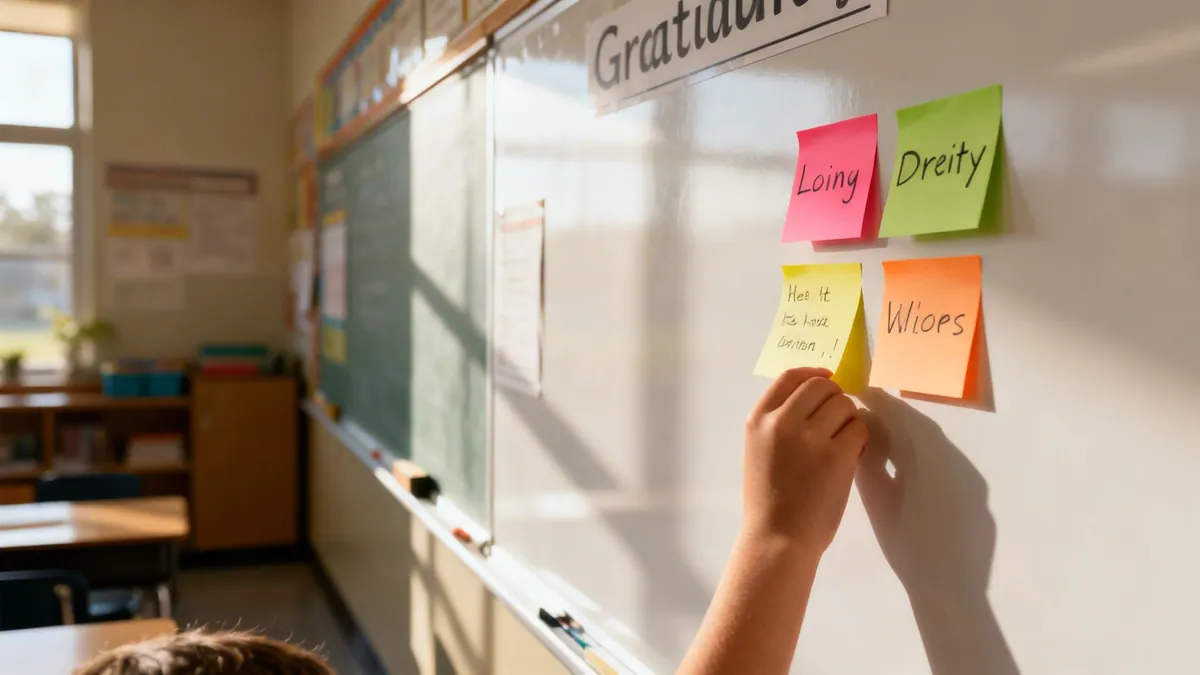
- Create a Visual “Appreciation Board”: Designate a bulletin board where students can post sticky notes with appreciative comments about classmates. A practical example: a “Bucket Filler” board where students write notes saying, “To Lena, You filled my bucket when you shared your crayons with me. From, David.” Seeing the board fill up provides a powerful visual reinforcement.
- Scaffold with Specific Prompts: Young students may need help identifying things to be grateful for. Use clear prompts like, “What is something that made you smile this morning?” or “Who showed you kindness on the playground yesterday?”
- Model Authentic Gratitude: Share your own specific and genuine gratitude. For example, “I am so grateful for how quietly and respectfully everyone transitioned from the rug to their desks.” This models the behavior you want to see.
- Introduce “Shout-Out Fridays”: Dedicate a few minutes at the end of the week for students to give a verbal “shout-out” to a peer who helped them, showed perseverance, or was a good friend. To ensure everyone feels included, you can discreetly track who receives shout-outs and gently guide students to recognize peers who haven’t been mentioned recently. For instance, “Let’s give a shout-out to someone who showed courage this week.”
8. Mindful Movement & Brain Break Activities
Incorporating Mindful Movement & Brain Break Activities into your morning routine is a dynamic form of 2nd grade morning work that channels physical energy into focus and self-awareness. These short, 5-minute sessions combine guided physical activities like yoga, stretching, or dance with mindful principles. The objective is to help students release pent-up energy, improve body awareness, and prepare their brains for academic tasks. This practice builds a crucial bridge between physical sensations and emotional states.