

How to Run a Social Skills Group That Actually Works
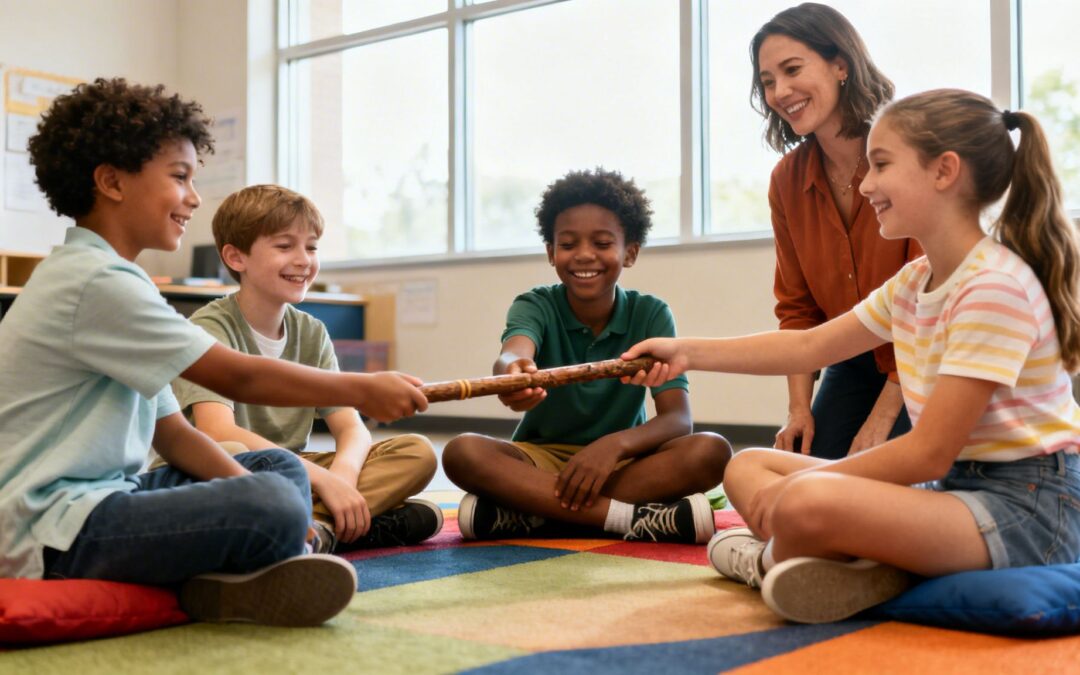
So, what exactly is a social skills group? Think of it as a small, guided get-together where students can practice communication, cooperation, and conflict resolution in a safe space. It’s way more than just another class—it’s a social laboratory where kids learn the unwritten rules of friendship and how to get along with others.
Why Social Skills Groups Are a Game-Changer
A social skills group is one of the most powerful tools we have for building a more empathetic and connected school culture. Instead of just reacting to problems on the playground or in the classroom, these groups get to the root of the issues, turning frustrating moments into proactive skill-building.
It happens time and time again. A student who always plays alone at recess because they just don’t know how to join in a game suddenly has the words to ask. A few weeks later, that same student is not only playing but helping other kids solve a disagreement over the rules. That’s the kind of “before and after” we’re talking about.
The Ripple Effect in Your School
When students learn to manage their emotions and understand where others are coming from, the benefits don’t just stay within the group. You start to see a positive ripple effect across the entire school.
- Fewer Playground Problems: Kids who have scripts for sharing, taking turns, and compromising are way less likely to get into arguments or tussles. Practical Example: A student who learns to say, “Can I use the red swing when you’re done?” is much less likely to just shove another child to get what they want.
- A Calmer Classroom: A child who can say, “I’m frustrated,” is less likely to act out. That means teachers can spend more time teaching and less time putting out fires. Practical Example: Instead of knocking over a tower of blocks in anger, a student might say, “I’m feeling mad because my tower keeps falling,” giving the teacher a chance to help them manage that feeling constructively.
- A Truly Inclusive Vibe: These groups are empathy-builders. They teach students to appreciate differences and support their classmates, which helps make school feel like a safe place for everyone. Practical Example: After a group discussion on including others, a student might notice a classmate sitting alone at lunch and ask, “Do you want to come sit with us?”
Building a Foundation for Emotional Well-being
At its core, a social skills group meets a fundamental human need for connection. A big part of that is feeling socially supported, which is a cornerstone of well-being.
These groups are especially powerful for students who need that direct, explicit instruction. For example, one study on group-based support for children with autism found significant improvements in social skills. Parent-reported scores on a responsiveness scale dropped from an average of 73.00 to 64.57 right after the program, and those gains were still there three months later.
This shows that the right support doesn’t just teach a skill for a day—it builds a foundation for lasting social confidence.
Ultimately, putting time and energy into social skills is an investment in your entire learning environment. It’s a key piece of any school-wide wellness plan. If you’re looking at the bigger picture, you might find our guide on how social-emotional learning programs benefit schools helpful.
Building Your Group for Success from Day One
Setting up a social skills group that truly clicks can feel like a massive undertaking, but I’ve found that a strong foundation makes all the difference. When you create a structured, predictable environment from the very first meeting, you’re building the trust students need to feel secure. This initial setup isn’t just about logistics; it’s about paving the way for meaningful growth right from the start.
A successful group actually begins long before the first session. It starts with thoughtfully identifying which students will benefit most. While our minds often jump to kids with more disruptive behaviors, it’s just as important to think about the ones who internalize their struggles.
Look for the quiet student who never raises their hand, the one who always seems to be playing alone at recess, or the child who gets visibly overwhelmed during group projects. These are often the students who desperately need a safe, structured space to practice interaction without the pressure of a big, bustling classroom.
Finding the Right Group Mix
Once you have a few students in mind, the next step is figuring out the group’s composition. The size and mix of your group have a huge impact on its dynamic and overall effectiveness. There’s no single “perfect” size—the ideal number really depends on your specific goals and the needs of the kids.
- Small Groups (3-4 students): This size is perfect for highly targeted support. It allows for much more one-on-one attention from you and is ideal for students who are very shy, anxious, or need intensive practice on a specific skill, like how to start a conversation. Practical Example: In a small group, you could role-play introducing yourself, giving each student multiple turns to practice saying, “Hi, my name is ___. Can I play?”
- Larger Groups (6-8 students): A slightly larger group brings more diverse perspectives and a wider range of practice opportunities. This setting is great for students who are ready to work on navigating more complex social situations, like group decision-making or figuring out disagreements with peers. Practical Example: With a larger group, you can play a cooperative game where they must all agree on a strategy to win, forcing them to negotiate and compromise.
The key is to strike a balance where students feel supported but are also gently challenged to grow.
Crafting a Predictable and Safe Routine
I can’t stress this enough: kids thrive on predictability. A consistent session structure lowers anxiety and helps students know exactly what to expect, which frees them up to focus on learning and trying out new skills. The most effective social skills groups I’ve run have always followed a clear, repeatable pattern.
This simple flow shows how structured interactions can turn social challenges into real opportunities for growth.
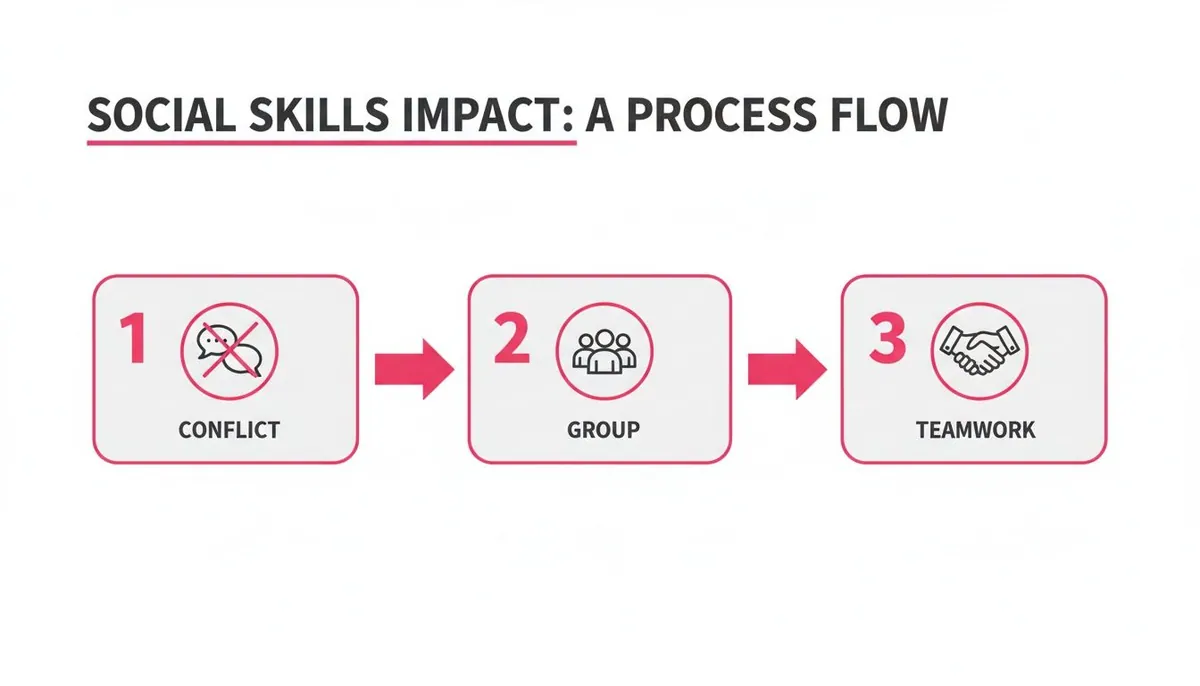
By guiding students from individual conflict toward collaborative teamwork, the group provides a clear path to better social relationships.
A typical session can be broken down into a few core parts that create a comforting rhythm. This structure not only organizes your time but also models the natural flow of positive social interactions—checking in, sharing an experience, and parting on a good note. For more ideas, you can learn more about how to create a safe space where students feel comfortable opening up.
A reliable routine might look something like this:
- Welcome and Feelings Check-In (5 minutes): Start each session by going around the circle and having each student share how they’re feeling. You could use a “feelings wheel” or just a simple number from one to ten. Practical Example: A student might say, “I’m a 3 today because I was worried about my math test.” This builds self-awareness and empathy from the very first minute.
- Introduce the Skill of the Day (10 minutes): Clearly and simply introduce one new social skill. This could be anything from “how to join a conversation” to “understanding someone else’s point of view.” Practical Example: You could say, “Today, we’re going to practice being ‘space invaders’ in a good way! We’ll learn how to notice if someone is busy and how to wait for a pause before we talk to them.”
- Practice Through Activity (20 minutes): This is the heart of the session. Get the kids engaged in a hands-on activity, game, or role-play that lets them practice the skill. Practical Example: If the skill is “taking turns,” you might play a cooperative board game where everyone has to work together and wait for their turn to help the team win.
- Positive Wrap-Up and Reflection (5 minutes): Always end on a high note. Each member can share one thing they learned or one success they had during the group. This reinforces the learning and sends them off feeling accomplished. Practical Example: A student could share, “I was proud that I let Maria go first in the game today.”
Creating this predictable flow is about more than just managing time; it’s about building a container of psychological safety where students feel confident enough to take social risks. When they know what’s coming next, they are more willing to be vulnerable and try something new. This structure is the bedrock of a successful social skills group.
Engaging Activities for Every Age and Skill Level
Once you’ve put a social skills group together, the real work—and fun—begins. The secret to a great group isn’t just about teaching social rules; it’s about creating lively, enjoyable experiences where students can practice skills without the pressure of getting it “right.” When activities feel more like play than work, kids build confidence and the lessons just stick.
The heart of any session is getting kids to interact and work together. To keep things fresh and productive, it helps to have a whole toolbox of ideas ready. You can even adapt many fun team building activities to fit your group’s specific goals and age range.
Activities for Early Elementary Students (K-2)
For our youngest learners, keep it simple, concrete, and focused on the basics—like figuring out emotions or taking turns. The goal here is to make social learning a hands-on, tangible experience.
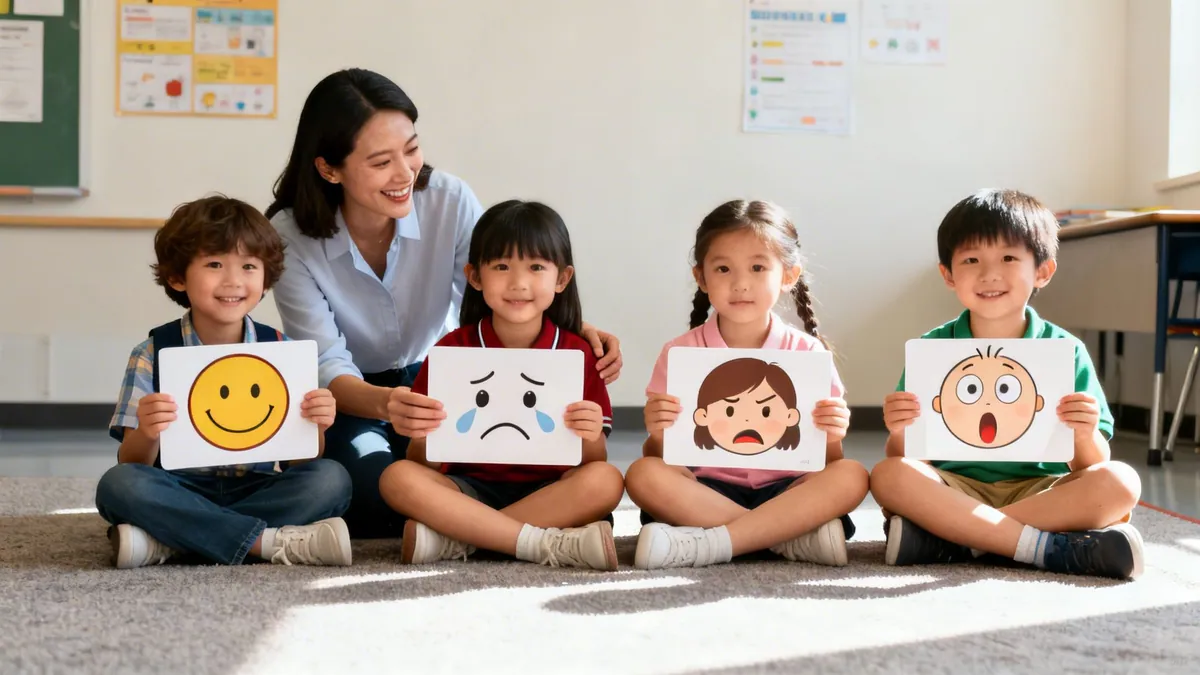
- Emotion Detectives: Grab a set of emotion flashcards. One student picks a card and makes the face, and the others become “detectives” to guess the feeling. Here’s how to take it deeper: After they guess “angry,” ask, “What clues on their face told you they were angry? Are their eyebrows down? Is their mouth in a straight line?” This builds that critical skill of reading nonverbal cues.
- Compliment Circle: This is a fantastic way to wrap up a session on a positive note. Each child turns to the person next to them and gives a specific, kind compliment. Instead of a generic “You’re nice,” guide them toward something like, “I really liked how you shared the blue marker with me today.” It teaches them how to both give and receive praise gracefully.
Activities for Upper Elementary Students (3-5)
By this age, students are ready for more nuance. They can handle complex scenarios that require problem-solving and seeing things from someone else’s point of view. Now’s the time to introduce activities where they have to collaborate to find a solution.
Role-playing is one of the most powerful tools in your kit here. It lets students practice navigating tricky situations—like playground arguments or feeling left out—in a safe space before they have to do it in real time. For more great hands-on ideas, our guide on kids’ social skills activities is packed with options.
When children role-play a solution, they build muscle memory for positive social behavior. It moves the skill from an abstract idea into a concrete action they can use on the playground tomorrow.
- Problem-Solving Scenarios: Write down common peer conflicts on slips of paper. Think things like, “Two friends both want to use the only swing,” or “Someone cuts in front of you in the lunch line.” Students draw a scenario and, as a group, act out a few different ways to solve it. Practical Example: For the “swing” scenario, one student could act out grabbing it, another could try a “rock, paper, scissors” solution, and a third could suggest taking turns for five minutes each.
- Team Storytelling: This one is great for listening and cooperation. Start a story with a single sentence, like “Once upon a time, there was a dragon who was afraid of heights.” Each student adds just one sentence to continue the narrative. They have to listen carefully to what came before to make the story flow.
Activities for Middle School Students (6-8)
Middle schoolers are wrestling with much bigger concepts like fairness, social justice, and navigating seriously complex friendships. Your activities should tap into their growing ability to think abstractly and consider different viewpoints.
- Perspective-Taking Debates: Pick a topic that’s actually relevant to their lives, like, “Should cell phones be allowed during lunch?” Then, assign students to argue for the side they don’t agree with. This forces them to step into someone else’s shoes and build a case from a different perspective.
- Social Sleuths (Video Clips): Find a short, muted clip from a TV show or movie that shows a social interaction. Have the group analyze the body language, facial expressions, and context. Their job is to figure out what’s happening, what the characters are feeling, and what might happen next. Practical Example: Use a clip of two friends having a subtle disagreement. Ask the group: “How can you tell she’s upset even though she’s smiling? Look at her crossed arms and how she’s not making eye contact.” It’s a fantastic way to practice reading subtle social cues.
Sample Social Skills Group Activities by Age and SEL Competency
Mapping your activities to core SEL skills ensures you’re building a well-rounded and effective curriculum. This table offers a simple framework for connecting different competencies with age-appropriate exercises you can use to plan your sessions.
| SEL Competency | Activity for K-2nd Grade | Activity for 3rd-5th Grade | Activity for 6th-8th Grade |
|---|---|---|---|
| Self-Awareness | Feelings Check-In Students use a feelings wheel to identify and share their current emotional state at the start of the group. |
Strength Spotting Each student identifies one personal strength and shares an example of when they used it that week. |
Values Journaling Students spend five minutes writing about a time they had to make a choice that aligned with their personal values. |
| Relationship Skills | Turn-Taking Tower Students take turns adding a block to a tower, practicing patience and cooperation to keep it from falling. |
Collaborative Mural The group works together on a large piece of paper to draw a mural on a given theme, negotiating space and ideas. |
Active Listening Pairs One student speaks for two minutes about a topic while their partner listens without interrupting, then summarizes what they heard. |
With a little planning, you can easily tailor activities to meet your students right where they are, building skills that will serve them well beyond the walls of your group room.
How to Measure Success and Share Progress
So, how do you know if your social skills group is actually working? While formal assessments have their place, tracking success doesn’t have to mean complicated reports or dense spreadsheets. Honestly, the most meaningful progress often shows up in small, everyday moments—the kind you can see and hear if you know what you’re looking for.
Measuring success is really about learning to spot these subtle shifts and celebrating them for the huge wins they are.
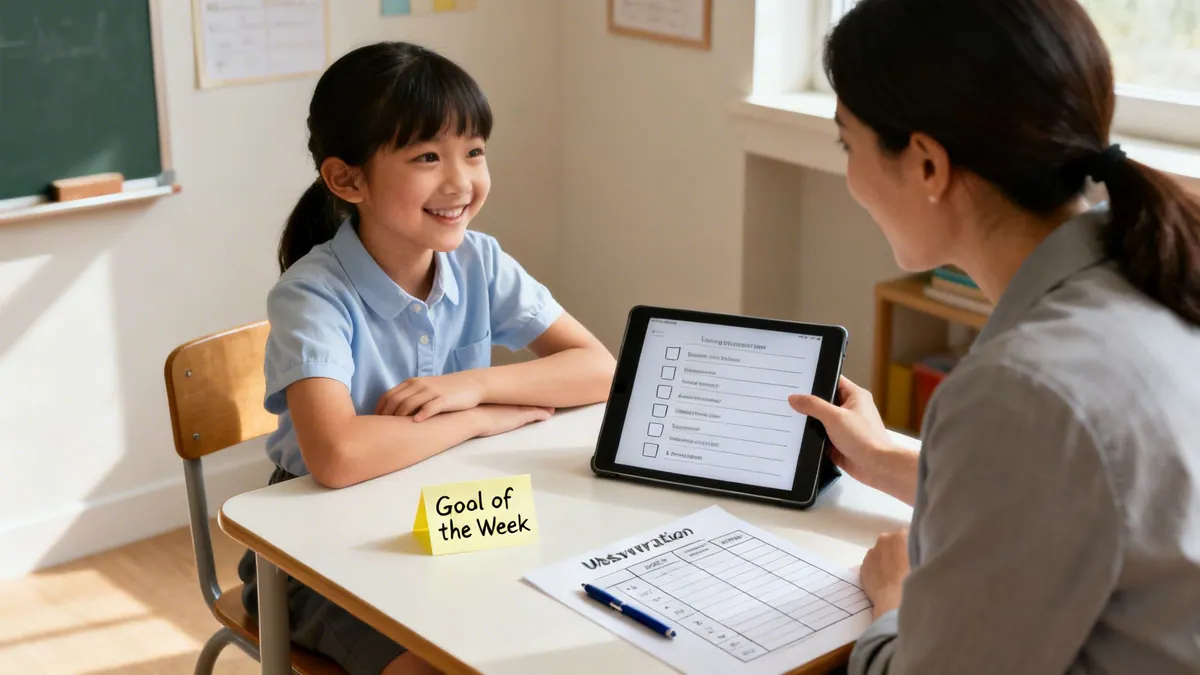
This whole process isn’t just about collecting data; it’s about piecing together a story of growth. When you focus on practical, observable behaviors, you start to build a clear picture of how a student is developing real social confidence over time.
Simple Tools for Tracking Growth
To do this well, you need simple, easy-to-use tools that don’t add hours to your already packed schedule. The goal here is to capture authentic moments of skill-building in real-time, both inside and outside the group.
Here are a few methods I’ve found incredibly practical:
- Observation Checklists: I like to create a simple checklist with just two or three target behaviors for each student. During group sessions or even a quick pop-in to the classroom, you can quickly tally how often a student nails a skill.
- Practical Example: For a student working on joining conversations, your checklist might have items like: “Made eye contact with a peer,” “Asked a relevant question,” or “Waited for a natural pause before speaking.” You can simply put a checkmark next to each behavior you observe during a 20-minute recess.
- Student Self-Reflections: The real magic happens when students start to recognize their own progress. A simple “Goal of the Week” worksheet can be a fantastic tool for building that self-awareness.
- Practical Example: At the start of a session, a student might set a goal like, “I will use a calming strategy when I feel frustrated.” At the end, they can reflect on how it went, maybe with a simple scale of smiley faces or by jotting down a few words like, “I took two deep breaths when Sam knocked over my LEGOs.”
Using tools like these helps you gather specific, concrete examples that show genuine skill development. For more ideas on fostering this kind of self-awareness, you can explore our resources on how daily check-ins for students can build confidence.
Sharing Wins with Parents and Teachers
Tracking progress is only half the battle; sharing it is just as important. When you communicate successes to parents and teachers—no matter how small they seem—you build a powerful team around that child. This collaboration is what helps reinforce new skills in all the other environments, like at home and in the classroom.
The key is to make communication quick, specific, and positive. Forget the long, formal reports. A brief, targeted message can be far more effective and motivating for everyone.
A simple email that says, “Just wanted to share a win! Today in our group, Alex used an ‘I feel’ statement to solve a disagreement during a game,” gives parents and teachers a concrete example of progress they can celebrate and encourage.
This approach turns progress monitoring from a chore into a powerful way to build alliances. It’s not just a hunch, either; research on group social skills interventions shows that programs with strong parent-group components get significantly better results. When you bring parents into the loop, you aren’t just sharing information—you are amplifying the impact of the social skills group. You can read more about the research on social development interventions to see the data for yourself.
Here’s a simple formula for structuring these updates to make them pop:
- Start with the Success: Always lead with the positive observation.
- Name the Skill: Explicitly state the social skill the student demonstrated.
- Give Some Context: Briefly describe the situation where it happened.
- Encourage Reinforcement: Suggest a simple way they can acknowledge this skill at home or in class. Practical Example: You could add, “If you see him share a toy at home, you could say, ‘I noticed how well you’re taking turns!'”
This consistent, positive loop ensures the skills learned in group are seen, valued, and practiced everywhere else. That’s how they become a natural, lasting part of a child’s social toolkit.
Making Your Group Work in the Real World
A truly great social skills group isn’t a rigid, follow-the-script kind of thing. It needs to breathe and shift with the kids in it, becoming a place where every child feels understood and perfectly challenged. Our goal is to move beyond the therapy room and give students skills that actually work on the playground, in the classroom, and even in their digital lives.