

Social emotional learning for kids: Practical guide for parents and teachers
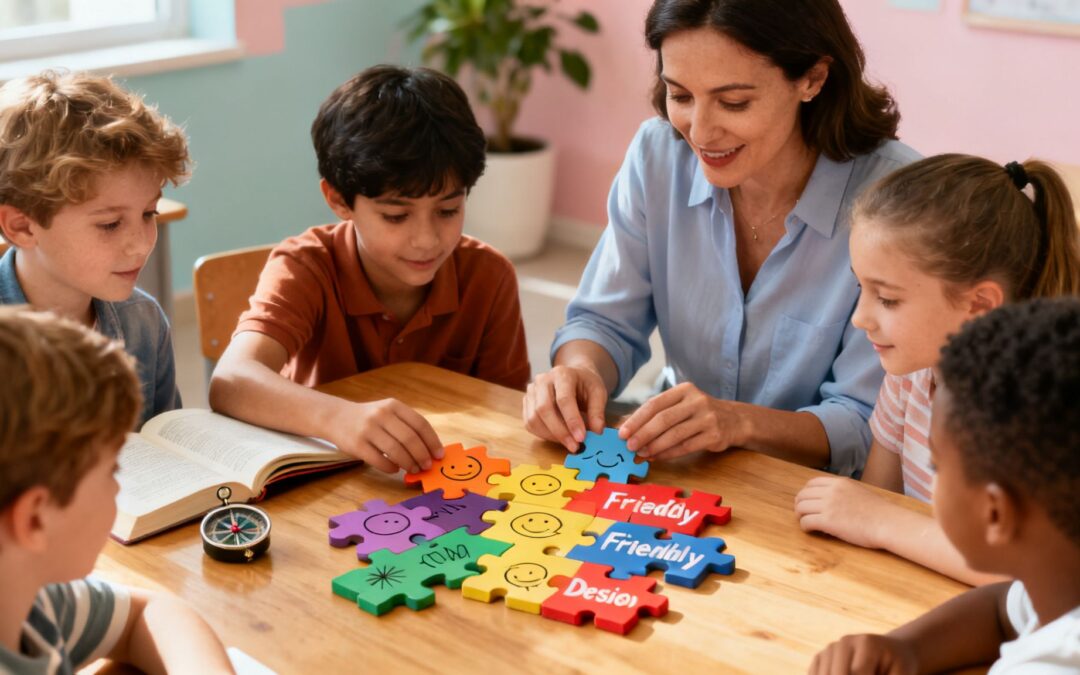
So, what exactly is social emotional learning? Think of it as giving kids an internal compass to help them navigate their own feelings and their relationships with others. It’s the process of developing the self-awareness, self-control, and people skills they need to succeed in school, at home, and eventually, in life.
These aren’t just “nice-to-have” traits; they are teachable skills that build resilience and empower kids to make responsible choices.
What Is Social Emotional Learning and Why It Matters Now
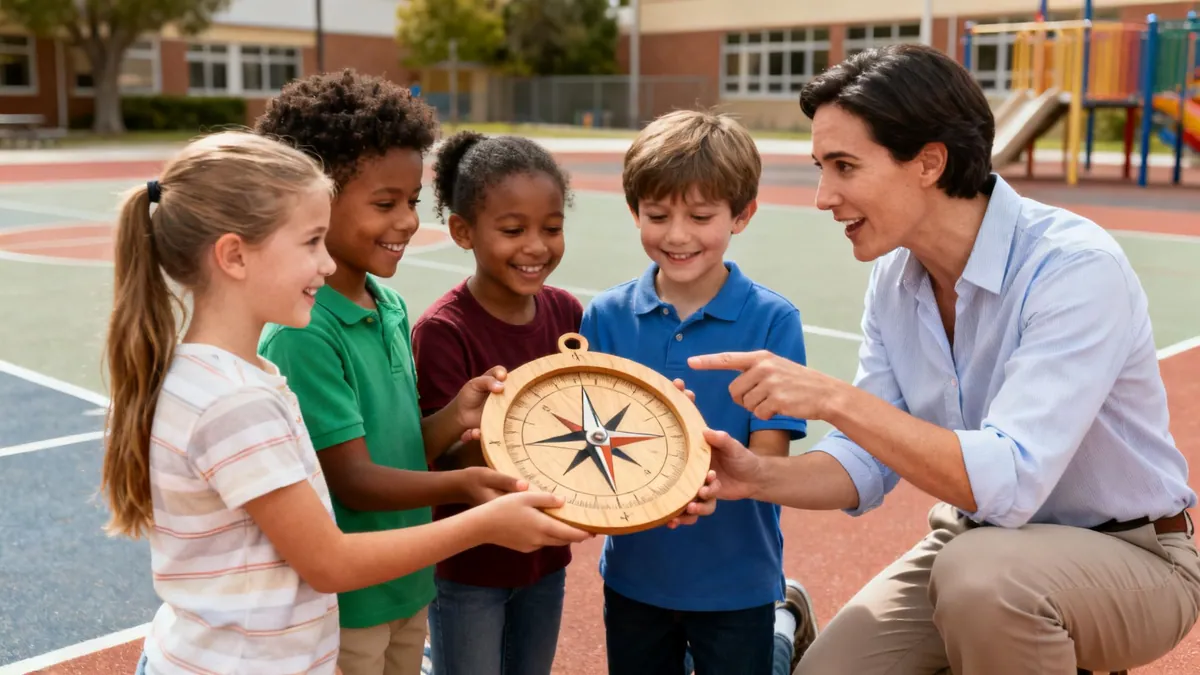
Imagine a child trying to build a block tower. Without understanding balance and structure, the tower just keeps falling over, which leads to a whole lot of frustration. Social emotional learning (SEL) provides that “balance and structure” for a child’s inner world. It’s not some lofty academic theory—it’s a practical toolkit for life.
SEL helps kids become better teammates, both in the classroom and on the playground. It’s about giving them the tools to understand their big feelings, show empathy for others, build real friendships, and make thoughtful decisions. For parents and teachers, this translates into more focused students, fewer conflicts, and kids who can bounce back when things get tough.
The Real-World Impact of SEL
The benefits of SEL aren’t just feel-good stories; they’re backed by solid research. A landmark meta-analysis reviewed by the Learning Policy Institute in 2017 discovered that students in SEL programs showed significant gains in social and emotional skills. This led to more positive behaviors, better peer relationships, and even higher grades and test scores.
This data drives home a critical point: emotional well-being and academic success are deeply connected. When children feel safe, understood, and equipped to handle their emotions, their minds are free to focus, learn, and grow. You can explore the evidence behind social emotional learning in schools to see the full picture.
Social emotional learning isn’t an “add-on” to education; it’s fundamental. It equips children with the internal architecture needed to build a successful and fulfilling life, one thoughtful choice at a time.
Building a Foundation for Lifelong Success
Ultimately, social emotional learning is about laying the groundwork for a child’s future happiness and success. The skills they pick up today become the bedrock for navigating everything from playground disagreements to complex workplace collaborations down the road.
By focusing on these core abilities, we empower children to:
- Recognize and manage their emotions: Instead of getting swept away by anger or anxiety, they learn to name the feeling and choose a constructive way to respond. For example, a child might say, “I’m feeling frustrated with this puzzle,” and then take a short break instead of throwing the pieces.
- Develop empathy for others: They practice seeing situations from another person’s point of view, a skill that’s absolutely essential for kindness and teamwork. A practical example is a student noticing a classmate is sitting alone at lunch and inviting them to join their table.
- Establish positive relationships: They learn the communication and cooperation skills needed to build and keep healthy friendships. This could look like two kids deciding to take turns with a popular swing on the playground.
- Make responsible decisions: They get used to thinking through how their actions might affect themselves and the people around them. For instance, a student chooses to finish their homework before playing video games because they understand the long-term benefit.
These skills are the building blocks of a resilient, compassionate generation. When we explore why SEL matters, we see it’s one of the most powerful ways to unlock a child’s full potential.
The Five Core Skills of Social Emotional Learning
Social emotional learning is built around five interconnected skills that work together, much like the different instruments in an orchestra. Each one plays a unique part, but when they harmonize, they create something truly resilient and beautiful. These skills, often called the CASEL 5, give us a clear and helpful framework for understanding exactly what we’re helping our kids build.
Let’s break down these essential building blocks. Getting a real feel for them is the first step to nurturing them in a child’s everyday life.
1. Self-Awareness: The Inner Weather Report
Self-awareness is simply the ability to recognize your own emotions, thoughts, and values and see how they influence your behavior. Think of it as a child’s internal weather report. Just as a meteorologist can identify sun, clouds, or an approaching storm, a self-aware child learns to identify their own feelings of happiness, frustration, or nervousness.
This goes beyond just naming feelings. It’s also about understanding personal strengths and weaknesses. A student with strong self-awareness knows what they’re good at and, just as importantly, where they might need a little help.
Practical Example: Before a big math test, a third-grader named Liam notices his stomach feels fluttery and his palms are sweaty. Instead of just feeling “bad,” he recognizes this feeling as anxiety. That awareness is the critical first step to managing it. Another example is a student realizing, “I’m really good at sharing my ideas, but I have trouble listening when others are talking.”
2. Self-Management: Choosing the Right Response
Once a child can read their internal weather, self-management is the skill of choosing how to respond. It’s like learning to shift gears in a car depending on the road conditions. A child with this skill can manage their emotions, thoughts, and behaviors to handle different situations and meet their goals.
This includes things like impulse control, handling stress, and motivating yourself. It’s about creating that tiny, powerful pause between a feeling and an action, which gives kids the power to choose a more constructive response.
Practical Example: After recognizing his test anxiety, Liam remembers a breathing exercise his teacher taught him. He takes three slow, deep breaths to calm his body and mind. Instead of letting the anxiety take over, he used a tool to manage it and was able to focus better on the test. At home, a child who wants to play but has to clean their room might tell themselves, “Okay, if I clean for 15 minutes, then I can take a 5-minute break.”
Self-awareness is knowing you feel a storm brewing inside. Self-management is knowing how to find your umbrella and navigate the rain without getting soaked.
3. Social Awareness: Seeing Through Another’s Eyes
Social awareness is the ability to understand others’ perspectives and feel empathy for them, especially for people from different backgrounds and cultures. It’s like putting on a pair of glasses that lets a child see the world from someone else’s point of view.
It involves picking up on social cues—like body language or tone of voice—and understanding how to act in different social situations. This skill is the absolute foundation of compassion and respect.
Practical Example: During recess, Maya sees her friend Alex sitting alone on a bench, looking down. Her social awareness kicks in, prompting her to think, “Alex looks sad. I wonder what’s wrong.” Instead of ignoring him, she decides to walk over and ask if he’s okay. In the classroom, a student might notice their teacher seems tired and decide to be extra quiet and helpful.
4. Relationship Skills: Building Strong Bridges
Relationship skills are the tools children use to build and maintain healthy, supportive connections with others. If social awareness is seeing the other side of a river, relationship skills are about building the bridge to get there.
These skills include things like clear communication, active listening, cooperation, and knowing how to handle conflicts in a healthy way. They empower children to work well in teams, make friends, and ask for help when they need it.
Practical Example: Two students, Chloe and Ben, both want to use the same blue crayon. Instead of just grabbing for it, Chloe uses her relationship skills and says, “Ben, can I use the blue when you’re finished, please?” This simple act of communication and compromise prevents a conflict before it even starts. Another example is a student asking a friend, “Can you explain that math problem to me? I didn’t understand it,” which demonstrates asking for help.
5. Responsible Decision-Making: Thinking Before Acting
Finally, responsible decision-making brings all the other skills together. It’s the ability to make caring and constructive choices about your behavior and how you interact with others. It involves really thinking about the consequences of your actions—for yourself and for everyone else.
A child practicing this skill can identify a problem, look at the situation from different angles, and think through the potential outcomes before they act.
Practical Example: A group of friends dares a student to write on a school wall. The student pauses. They consider how their actions would make the custodian feel (social awareness), know they would feel guilty afterward (self-awareness), and recognize they could get in big trouble. They make the responsible decision to say “no” and walk away. At home, this could be a child choosing to tell the truth about a broken vase, understanding that honesty is better than hiding it and getting into more trouble later.
The CASEL 5 Competencies At a Glance
These five skills don’t work in isolation; they overlap and build on one another every single day. Here’s a quick summary to see how they all fit together.
| Competency | What It Means for Kids | Example in Action |
|---|---|---|
| Self-Awareness | Knowing your own feelings, strengths, and challenges. | “I feel frustrated when I don’t understand my homework.” |
| Self-Management | Controlling impulses, managing stress, and staying motivated. | “I’m angry, so I’m going to take five deep breaths before I speak.” |
| Social Awareness | Understanding and empathizing with others’ feelings and perspectives. | “My friend seems quiet today. I’ll ask if they’re okay.” |
| Relationship Skills | Communicating clearly, listening well, and resolving conflicts. | “Can we take turns with the ball so everyone gets to play?” |
| Responsible Decision-Making | Making thoughtful choices that consider yourself and others. | “I won’t join in teasing because it would hurt someone’s feelings.” |
By focusing on these five areas, we can give children a holistic toolkit that prepares them not just for the classroom, but for life.
Supporting SEL Development from Kindergarten Through Middle School
A child’s social and emotional world changes dramatically between the first day of kindergarten and the last day of middle school. Just like we wouldn’t teach algebra to a first-grader, our approach to social-emotional learning has to meet kids where they are, developmentally. Giving them the right tools at the right time is how they build a strong, resilient foundation for life.
This journey happens in clear stages, each with its own milestones and challenges. Understanding this progression helps parents and educators offer strategies that actually make sense to kids and connect with what they’re experiencing right now.
This timeline shows how kids move from self-focused skills to social abilities and, finally, to responsible decision-making.
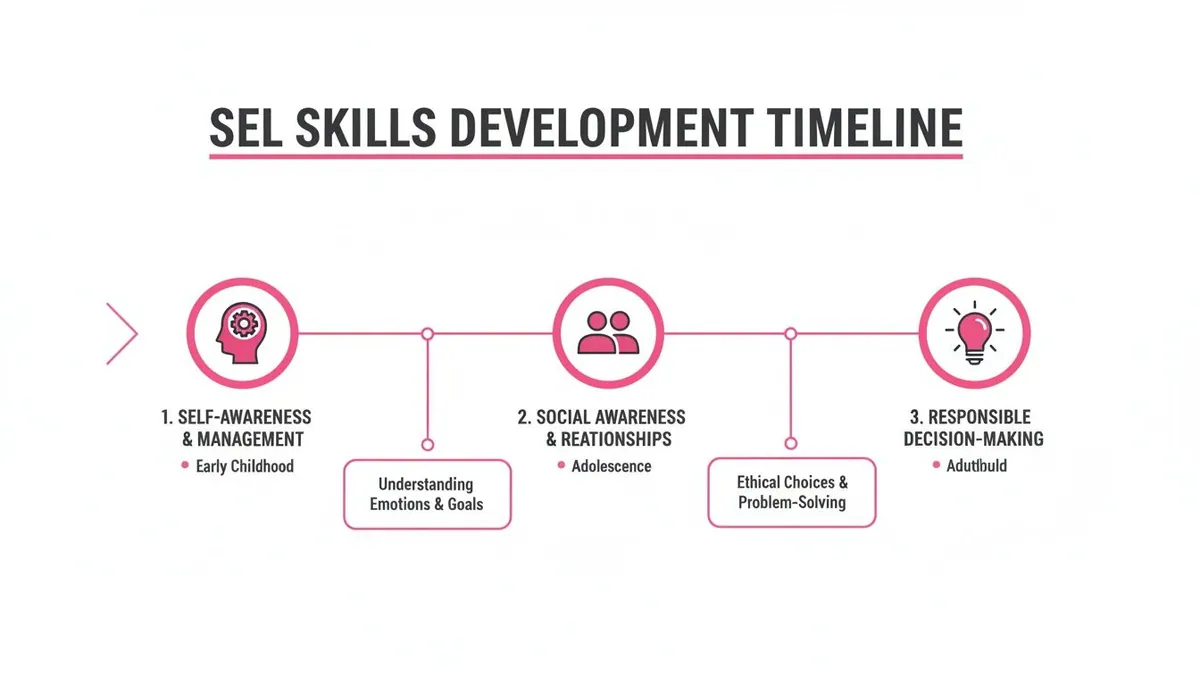
You can see how those early self-awareness skills are the essential first step, paving the way for more complex social interactions and ethical choices later on.
K-2nd Grade: The Foundational Building Blocks
In these early years, a child’s world is mostly about their own feelings and experiences. The main job of SEL here is to give them the basic vocabulary and tools to understand that inner world. We’re laying the essential groundwork for everything to come.
The primary focus is on self-awareness and self-management. Kids are learning to put a name to a feeling—”I feel angry,” or “I feel excited”—and starting to get that these feelings are totally normal. They’re also just beginning to understand impulse control, even if it’s a daily struggle.
Practical Examples for K-2nd Graders:
- Feelings Chart: A teacher uses a chart with different emoji faces during a morning meeting. Students can point to the face that shows how they feel, giving them a simple, non-verbal way to express their emotions.
- “Take Five” Breathing: When a student feels overwhelmed, a parent or teacher guides them to trace their hand while taking five slow breaths—breathing in as they trace up a finger and out as they trace down.
- Story Time Empathy: After reading a story, a parent might ask, “How do you think the little bear felt when he lost his toy?” This simple question helps the child start to think about perspectives outside their own.
3rd-5th Grade: Navigating Friendships and Perspectives
As children move into upper elementary school, their social lives get a lot bigger. Friendships become more complicated, group dynamics start to matter, and being able to see things from someone else’s point of view is suddenly critical. The SEL focus naturally shifts outward toward social awareness and relationship skills.
During this stage, kids go from just naming their own feelings to recognizing and respecting the feelings of others. They’re learning the delicate art of compromise, how to really listen, and how to work through disagreements without just tattling or arguing. This is when they start building the bridges that connect their inner world to their friends’ worlds.
Practical Examples for 3rd-5th Graders:
- Partner Problem-Solving: A teacher might pair students up to work on a tricky math problem. This requires them to listen to each other’s ideas, explain their own thinking, and work together on a solution.
- “Perspective Detective” Game: A parent can describe a situation, like two siblings arguing over a game. They then ask their child to be a “detective” and describe how each sibling might be feeling and why.
- Kindness Journals: Students keep a small notebook where they jot down one kind act they did or saw each day. This focuses their attention on positive social interactions and the impact of their actions.
This is the age when kids begin to realize that every person in their classroom has a rich inner life, just like they do. Fostering empathy here is a game-changer for creating a kind and inclusive school community.
6th-8th Grade: Complex Choices and Identity
Middle school is a time of massive change. Young adolescents are dealing with a stronger need for independence, intense peer pressure, and the first hints of abstract thinking. Here, the SEL focus sharpens onto responsible decision-making, pulling all five competencies together to navigate an increasingly complex social world.
The challenges are more nuanced now, involving everything from peer pressure and ethical dilemmas to managing a digital social life. Students need to draw on their self-awareness to know their own values, use self-management to resist negative influences, and apply social awareness to understand the long-term consequences of their choices on themselves and others.
Practical Examples for 6th-8th Graders:
- Problem-Solving Scenarios: A teacher presents a scenario like, “Your friend wants you to help them cheat on a test. What are three different ways you could handle this, and what are the potential outcomes of each?”
- Goal-Setting Journals: Students set a personal or academic goal, break it down into smaller steps, and track their progress. This builds both self-management and a sense of agency.
- Digital Citizenship Discussions: A school counselor leads a talk about the impact of online comments, helping students connect their actions online to real-world feelings and consequences.
Unfortunately, just as these social challenges ramp up, school-based support can sometimes drop off. The OECD’s 2023 Survey on Social and Emotional Skills (SSES) found a “skills dip” as kids get older. While most 10-year-olds attend schools that prioritize SEL, that support often fades by age 15, which contributes to increased stress. This really highlights the need for consistent, age-appropriate SEL support through these critical middle school years. You can learn more about these global findings on SEL development.
Practical SEL Activities for the Classroom and Home
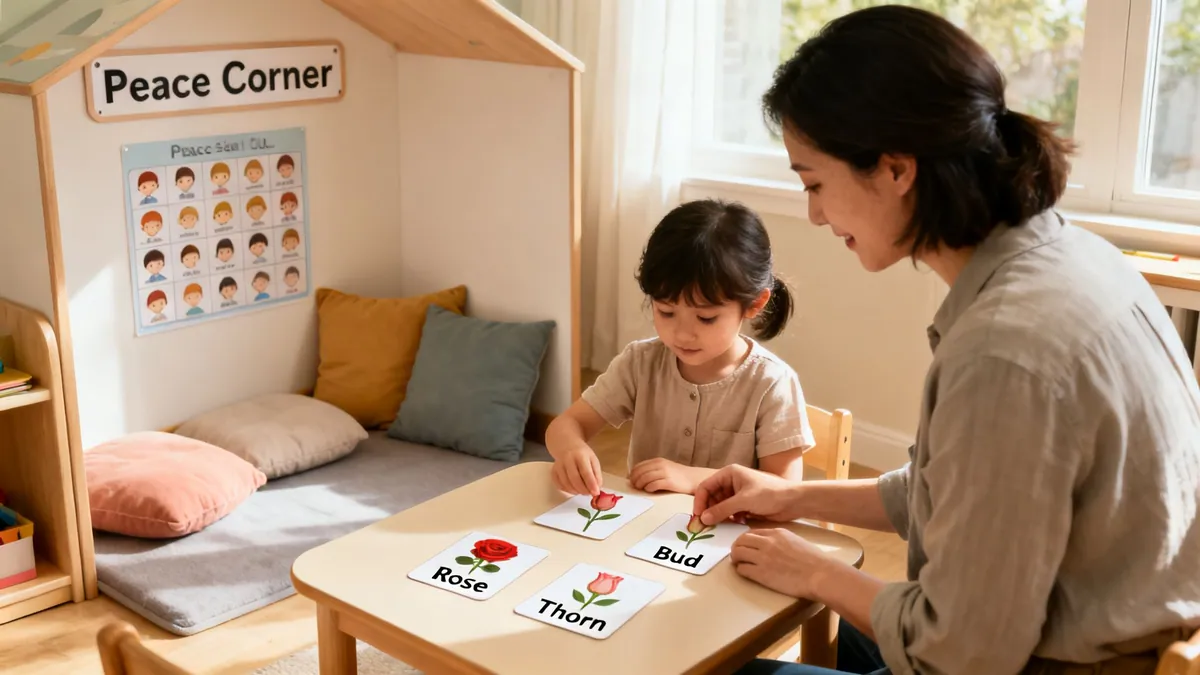
Understanding the core skills of social emotional learning is the first step; bringing them to life is the next. The most effective SEL happens when it’s woven into the fabric of daily routines, not just reserved for a special lesson. The goal is to create consistent opportunities for kids to practice these skills in real, everyday situations.
These simple, effective activities are designed for both teachers in busy classrooms and parents around the dinner table. They turn abstract concepts like empathy and self-regulation into tangible actions, making it easy to integrate powerful social emotional learning for kids into your day.
Simple and Effective SEL in the Classroom
A classroom that prioritizes SEL is a calmer, more focused, and more collaborative learning environment. It’s a place where students feel safe enough to take academic risks and supported enough to navigate social challenges. Here are a few foundational practices to get started.
Establish Morning Meetings
A Morning Meeting is a brief, structured gathering at the start of the day that builds a strong sense of community and belonging. This simple routine can set a positive tone for the entire day, making students feel seen, heard, and valued.
A typical meeting has four simple components:
- Greeting: Students and the teacher greet each other by name, often with a handshake or a wave, fostering a sense of personal connection. Example: Students greet their neighbor by saying, “Good morning, [Name]. I hope you have a great day.”
- Sharing: A few students share something about their lives, and others practice active listening by asking thoughtful questions. Example: A student shares about their weekend soccer game, and another asks, “What was your favorite part of the game?”
- Group Activity: A quick, fun activity builds teamwork and cooperation. Example: The class works together to create a human knot and then tries to untangle it without letting go of hands.
- Morning Message: The teacher shares a brief message outlining the day’s learning goals, reinforcing a shared purpose.
Create a Peace Corner
A Peace Corner (or Calming Corner) is a designated space in the classroom where students can go to self-regulate when they feel overwhelmed, angry, or anxious. It’s not a punishment or a “time-out” spot; it’s a supportive tool for building self-management.
A Peace Corner teaches an invaluable life lesson: It is okay to feel big emotions, and it is smart to take a moment to manage them constructively. It shifts the focus from punishing behavior to understanding and addressing the underlying feelings.
Stock this space with simple tools that help kids calm their bodies and minds.
- Soft pillows or a beanbag for comfort.
- Stress balls or fidget tools for sensory input.
- Feeling flashcards to help them identify their emotions.
- A journal and crayons for drawing or writing.
Use Turn-and-Talk Strategies
This simple instructional technique boosts engagement and gives every student a voice. Instead of just calling on one or two students, the teacher poses a question and asks students to turn to a partner and discuss their thoughts for a minute.
This practice directly builds relationship skills and social awareness. It teaches students how to listen actively to a peer’s idea, articulate their own thoughts clearly, and see a topic from another perspective. Example: After a science experiment, the teacher asks, “Turn and talk to your partner about what surprised you the most.”
Practical and Powerful SEL at Home
Home is the first classroom for social emotional learning. By integrating SEL into family routines, parents can reinforce the skills children are learning at school and deepen their emotional intelligence in a safe, loving environment. These activities require no special materials—just a little intention.
Practice the “Rose, Bud, Thorn” Check-In
This is a wonderful way to structure conversations around the dinner table or before bed. Each family member shares three things about their day, using a simple metaphor to guide the conversation.
- Rose: A success or something that went well. Example: “My rose was that I got a good grade on my spelling test.”
- Bud: Something they are looking forward to. Example: “My bud is that we are going to the park this weekend.”
- Thorn: A challenge they faced or something that was difficult. Example: “My thorn was that I had a disagreement with my friend at recess.”
This activity builds self-awareness by encouraging kids to reflect on their experiences and name their feelings. It also fosters empathy as family members listen to and support each other’s “thorns.” You can find many more simple and effective exercises in our comprehensive guide to social emotional learning activities.
Start a Family Feelings Journal
A Family Feelings Journal is a shared notebook where family members can write or draw about their emotions. It’s a low-pressure way to build emotional vocabulary and normalize conversations about feelings.
Leave the journal in a common area. A parent might start by writing, “Today I felt proud when I saw you help your sister.” This models emotional expression and gives children a safe outlet to share things they might not want to say out loud. Example: A child might draw a picture of a rainy cloud and write, “I felt sad today because my friend moved away.”
Use Movie Nights for SEL Discussions
Movies and stories are powerful tools for teaching empathy and responsible decision-making. Characters face conflicts, make choices, and experience a wide range of emotions—all from the safety of the couch.
After watching a movie together, ask open-ended questions:
- “How do you think the main character felt when that happened?”
- “What would you have done if you were in their shoes?”
- “Was that a kind choice? Why or why not?”
These conversations help children connect a character’s actions to their consequences, which is a foundational element of responsible decision-making.