

How to Build Classroom Community
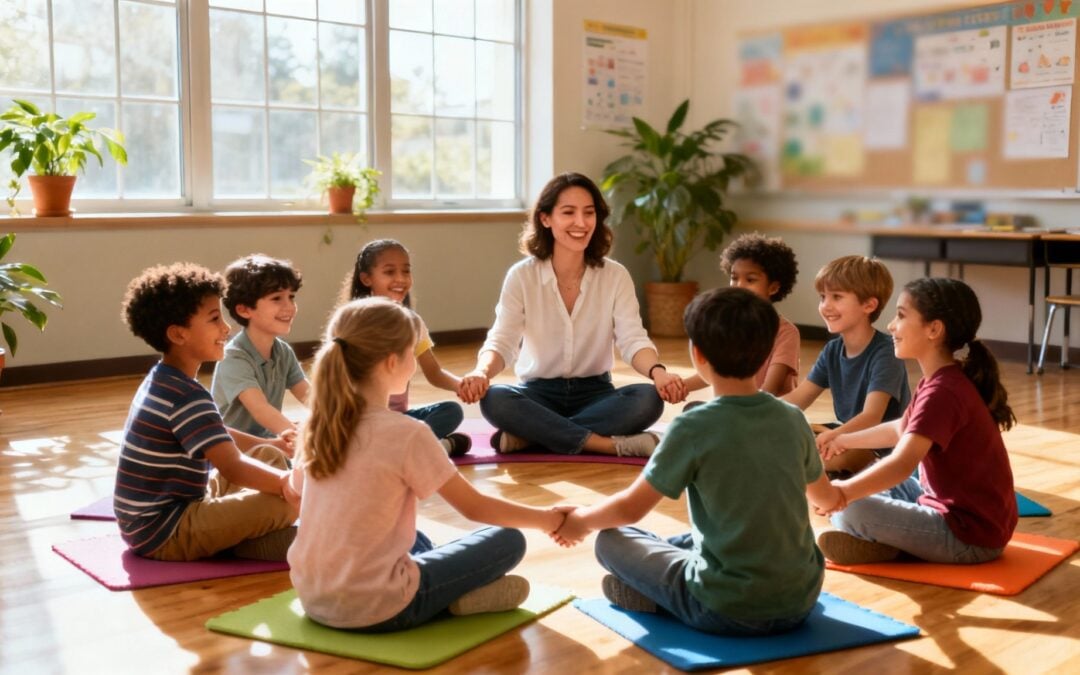
Building a strong classroom community isn’t just a nice idea—it’s the single most important investment you can make in your students’ success. It’s about intentionally creating a safe, supportive space where every single student feels seen, heard, and valued. This is what transforms a room of disconnected individuals into a cohesive team, ready to learn and grow together.
The Foundation of a Connected Classroom
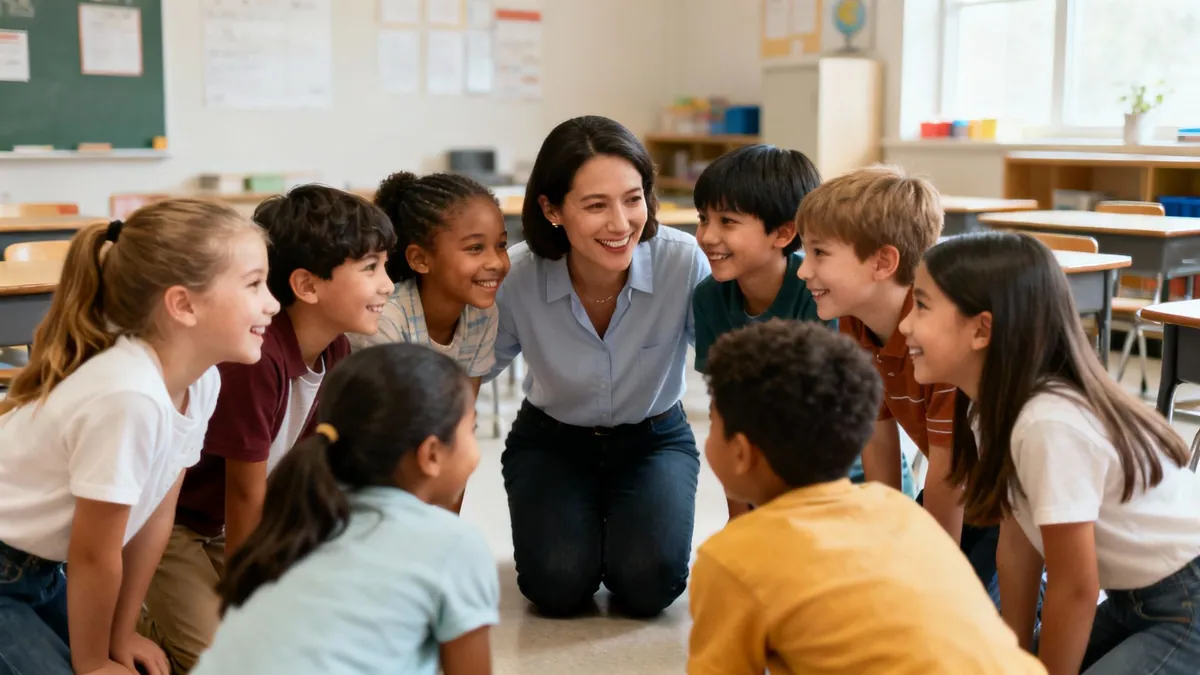
A positive classroom community doesn’t just happen. It’s carefully and consistently built, day by day. It’s the feeling of psychological safety that allows a quiet student to share an idea, even if they’re not sure it’s right. It’s the mutual respect that lets students give each other constructive feedback without anyone feeling attacked. For example, instead of a student saying, “That’s a bad idea,” the community culture encourages them to say, “I see your point. Have you also considered…?”
Think of it this way: when students feel like they belong, their brains can switch from a protective “fight or flight” mode to a state of genuine curiosity and engagement. Instead of worrying about fitting in, they can pour that energy into learning. This sense of belonging is a non-negotiable for academic achievement and social-emotional growth.
Why Community Matters More Than Ever
In any classroom I’ve been in, a true sense of community immediately cuts down on behavioral issues and boosts participation. When a student feels connected to their peers and their teacher, they become more invested in the group’s success and are far less likely to act out.
This supportive atmosphere also encourages academic risk-taking. Students are more willing to try a tough math problem on the board or ask a question they think might sound silly. A practical example is when a student attempts a challenging fraction problem on the whiteboard and gets it wrong, but the class response is a supportive, “Good try, you were really close!” instead of silence or snickering.
The benefits aren’t just anecdotal, either. They’re backed by solid research. Longitudinal studies have shown impressive results from programs designed to build classroom community. Students in these classrooms not only develop a greater sense of their own abilities but also achieve higher grade-point averages and test scores than their peers.
A thriving classroom community is not built with a single team-building activity. It is woven into the very fabric of your teaching—from how you greet students at the door to how you facilitate challenging conversations.
The Core Pillars of Community
To get you started, here’s a quick look at the core components of classroom community, outlining your role and what you’re aiming for with your students.
| Core Component | Teacher’s Role | Student Outcome |
|---|---|---|
| Safety & Trust | Model respect, establish clear routines, and create a predictable environment where mistakes are learning opportunities. | Students feel secure enough to be vulnerable, ask for help, and take academic risks without fear of judgment. |
| Inclusivity & Belonging | Actively celebrate diversity, ensure all voices are heard, and integrate culturally relevant content and practices. | Every student, regardless of background or ability, feels like an essential and valued member of the group. |
| Shared Ownership | Co-create classroom norms with students, assign meaningful classroom jobs, and involve them in decision-making processes. | Students feel a sense of responsibility for their learning environment and are invested in its collective success. |
These pillars provide a solid framework for creating an environment where every student can truly thrive.
Building this foundation rests on a few key principles. At its heart, it’s about creating an environment where every member feels both physically and emotionally secure.
Here’s what that looks like in practice:
- Safety and Trust: Students need to know their classroom is a predictable and supportive space. This comes from setting clear expectations and consistently modeling respect and kindness in every interaction. A practical example is establishing a “Mistakes are Expected, Respected, and Inspected” motto, where you celebrate a student’s logical process even if the final answer is incorrect.
- Inclusivity and Belonging: Every student must feel like an essential part of the group. This means actively making space for different perspectives, celebrating what makes each child unique, and ensuring all voices are heard. For instance, during a history lesson, you could invite students to share stories about their own family’s heritage related to the topic.
- Shared Ownership: Students become more invested when they have a real say in their environment. Co-creating classroom norms or giving students meaningful responsibilities fosters a powerful sense of ownership. A simple example is letting students vote on the theme for the next class project or the book for the next read-aloud.
By focusing on these elements, you create the conditions for a vibrant learning environment to flourish. It all starts when you learn how to create a safe space where students are free to be their authentic selves.
Weaving Connection into Your Daily Routines
The real magic of classroom community isn’t just in the big, planned lessons; it’s baked into the small, everyday moments. Consistent routines are the steady heartbeat of a connected classroom, creating a predictable rhythm that helps every student feel safe, seen, and ready to learn. These rituals are the scaffolding for trust and belonging.
Think about the first few minutes of the day. A frantic rush to get seated sends a very different message than a deliberate, personal moment of connection at the door. When kids know what to expect, their nervous systems can relax. Our guide on how routines for kids help children feel emotionally grounded dives deeper into this psychology.
Start the Day with a Powerful Greeting
That first interaction of the morning can set the tone for the entire day. Going beyond a generic “good morning,” a personalized greeting at the door communicates one simple, powerful message to each student: “I see you, and I’m glad you’re here.”
This isn’t just a nice gesture; it’s a strategy that gets results. Research has shown that when teachers start the day with positive greetings at the door (PGD), there’s a significant boost in academic engaged time and a noticeable drop in disruptive behaviors. These simple rituals, alongside restorative practices like community circles, have a real, measurable impact. If you want to see the data for yourself, you can learn more about the importance of community-building in the classroom.
Here are a few age-appropriate ideas you can try tomorrow:
- For K–2 Students: Set up a choice board by the door with pictures for a high-five, a silly dance, a hug, or a fist bump. This gives your youngest learners a sense of agency and turns the greeting into a fun, interactive game.
- For 3–5 Students: Try a daily password or a special handshake. The password could be a vocabulary word from science or a fun fact, creating a quick moment of shared knowledge. For example, the password might be “photosynthesis” during a plant unit.
- For 6–8 Students: With this age group, authenticity is everything. A simple nod and a genuine “How’s it going?” or “Hey, nice new haircut,” can be far more effective than a forced, overly cheerful greeting. A calm, sincere check-in goes a long way.
Design Morning Meetings That Truly Build Bonds
The Morning Meeting is a cornerstone routine for any community-focused classroom, but it has to be more than just running through the daily schedule. To be truly effective, it needs to be a dedicated time for students to connect with each other, share their voices, and feel like they belong to a team.
A solid structure includes four key parts: a greeting, a time for sharing, a group activity, and a morning message. The greeting, in particular, is your chance to make sure every single child is welcomed by their peers.
Greeting Examples:
- Snowball Greet (K-2): Each student writes their name on a piece of paper, crumples it into a “snowball,” and gently tosses it into the circle’s center. Then, each child picks a new snowball, opens it, and finds that person to say good morning to.
- Would You Rather? Check-in (3-5): Kick things off with a fun “Would you rather…” question (e.g., “…have the ability to fly or be invisible?”). Students share their answers and a quick reason why, learning something new and unexpected about their classmates.
- Appreciation Toss (6-8): One student starts with a soft ball or beanbag. They share a piece of appreciation for another student—”I appreciate how Sarah helped me with my math yesterday”—and gently toss the ball to them. The receiver then shares an appreciation for someone else, and so on.
A well-facilitated Morning Meeting doesn’t just start the day on a positive note—it actively teaches students the skills of listening, empathizing, and validating others’ experiences.
Foster Ownership with Meaningful Classroom Jobs
Nothing builds a sense of shared ownership quite like giving students real responsibility for their environment. Classroom jobs should be more than just chores; they should be meaningful roles that contribute to the collective good. This practice is what shifts the mindset from “the teacher’s classroom” to “our classroom.”
Instead of the usual lineup of generic roles, get creative and tie jobs to your students’ strengths and your community’s values.
- Class Historian: This student uses a class camera or tablet to take photos of special moments or collaborative projects during the week. On Fridays, they share a quick recap. For example, they might show a photo of a group building a successful bridge in a STEM challenge.
- Greeter of Guests: When a visitor enters the room, this student is responsible for welcoming them, shaking their hand, and explaining what the class is working on at that moment. This is a huge confidence booster and shows respect for the classroom.
- Materials Manager: Instead of just passing out papers, this student ensures that project supplies are organized, accessible, and well-stocked. They might conduct a “supply inventory” on Fridays and post a list of items that are running low.
These daily and weekly rituals are what transform your classroom from a place students simply attend into a community they are proud to belong to.
Routines are the bedrock of a safe classroom, but targeted Social-Emotional Learning (SEL) activities are how we intentionally teach the skills that build a true community. Think of these not as one-off icebreakers, but as structured experiences that deepen relationships and help you cultivate a resilient classroom culture.
Through these activities, students learn to step into someone else’s shoes, share their own feelings without fear, and handle tricky social situations with grace. This is where the magic happens—where empathy and trust take root.
This isn’t just a feel-good idea; it has a massive impact. A huge international survey by the OECD found that while 79% of students feel they belong at school, the numbers vary wildly from school to school. This proves what we as teachers already know: the environment we create in our own four walls can completely change a child’s sense of community.
Building this sense of community is a daily practice, not a one-time event. A simple, repeatable process can reinforce these SEL skills every single day.
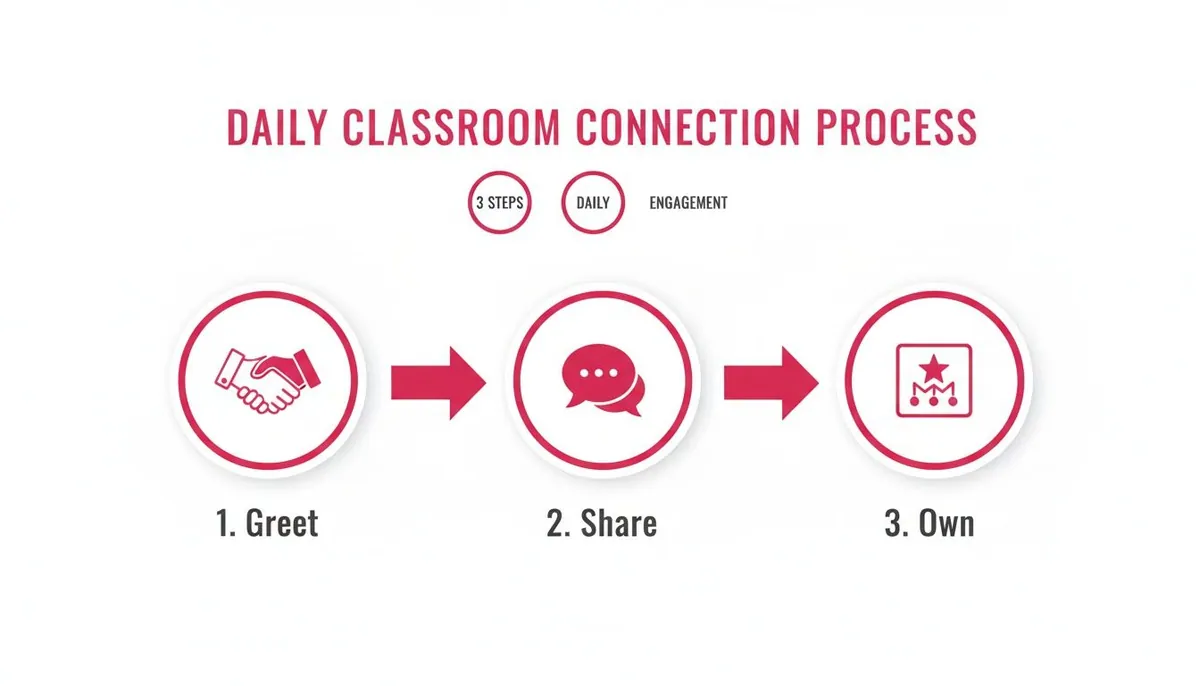
This cycle of greeting, sharing, and owning our actions creates constant opportunities for students to practice connection and empathy.
Activities for Younger Students (Grades K-2)
With our youngest learners, we want to keep things simple, concrete, and centered on positive vibes. The goal here is to build foundational skills in a way that feels like play. A “Compliment Circle” is a perfect way to get started.
Here’s how to run it:
- First, gather your students in a circle on the rug.
- Grab a soft object, like a class stuffed animal or a beanbag, to act as a talking piece.
- You go first to model. Hold the object and give a student a specific, genuine compliment. For example, “I really loved how you invited Maya to play with the blocks today.”
- Then, pass the object to that student. They give a compliment to someone else before passing it along. Keep it going until every child has had a turn to both give and receive a compliment.
A little pro-tip: I like to put sentence stems on the board, like “I appreciate how you…” or “It was helpful when you…” This helps kids move beyond “I like your shoes” to something more meaningful.
Building Empathy with Older Students (Grades 3-5)
By upper elementary, students are ready for more abstract thinking and deeper reflection. This is the perfect time to introduce activities that help them see that everyone has a rich, complex inner world. The “Inside/Outside” activity is incredibly powerful for this.
Here’s how to set it up:
- Preparation: Give each student a large piece of paper and ask them to draw a simple outline of a person.
- The Outside: On the outside of the outline, they’ll write or draw things about themselves that others can easily see—like their hair color, their favorite sport, or that they love to draw.
- The Inside: Then, on the inside of the outline, they’ll add the things people can’t see—a worry they have, a hidden talent, or a special memory with their family.
- Sharing: In small, trusted groups of three or four, students can share one “inside” item and one “outside” item.
This activity is a beautiful, visual reminder that there’s always more to a person than what’s on the surface. It really fosters a culture of curiosity and compassion. For more ideas like this, check out these practical social emotional learning activities.
By creating structured opportunities for vulnerability, we teach students that sharing our authentic selves is not only safe but is the very thing that builds the strongest bonds.
Encouraging Perspective-Taking with Middle Schoolers (Grades 6-8)
Middle school is a time of navigating complex social webs and figuring out their own moral compass. SEL activities for this age group should respect their growing intellect and their desire for autonomy and debate. A “Moral Dilemma” discussion is a fantastic way to do this.
Pick a scenario that feels real and relevant. Something like, “Your best friend asks to copy your homework because they were up all night with a family emergency. You know your teacher has a strict no-cheating policy. What do you do, and why?”
Here’s how to structure the conversation:
- Present the Dilemma: Clearly lay out the scenario and the tough choice at its core.
- Think Time: Give students a few minutes to jot down their initial thoughts and reasoning on their own.
- Small Group Huddle: Put them in small groups to discuss their different viewpoints. Encourage them to really listen to one another.
- Full-Class Debrief: Have a spokesperson from each group share the main arguments that came up, focusing less on the final decision and more on the why behind it.
Your job here isn’t to declare a “right” answer. It’s to be a facilitator, creating a space where students can safely practice seeing an issue from multiple angles and articulate their own values. These kinds of rich discussions are just one example of the many social-emotional learning activities that can really strengthen your classroom community.
To help you visualize how this all fits together, here is a sample plan for an upper elementary classroom that weaves these kinds of activities into a multi-week focus.
Sample 6-Week Community Building Plan
This table outlines how you can sequence themes and activities over several weeks to intentionally build specific SEL skills.
| Week | Theme | SEL Competency Focus | Sample Activity |
|---|---|---|---|
| 1 | Getting to Know You | Self-Awareness | “Inside/Outside” Person Activity |
| 2 | Building Trust | Relationship Skills | “Human Knot” Team Challenge |
| 3 | Understanding Others | Social Awareness | Compliment Circle |
| 4 | Working Together | Responsible Decision-Making | Group Problem-Solving Scenario |
| 5 | Managing Feelings | Self-Management | “Feelings Thermometer” Check-ins |
| 6 | Celebrating Our Community | Relationship Skills | “Classroom Appreciations” Graffiti Wall |
By intentionally weaving targeted SEL activities like these into your curriculum, you’re not just hoping for a kind classroom—you’re giving students the tools they need to build an empathetic and trusting community from the inside out.