Soul Shoppe's work is made possible by donors and partners who care deeply about the young people in their communities! We can't do this work without you. Support our work in classrooms and on playgrounds across the nation by donating here.
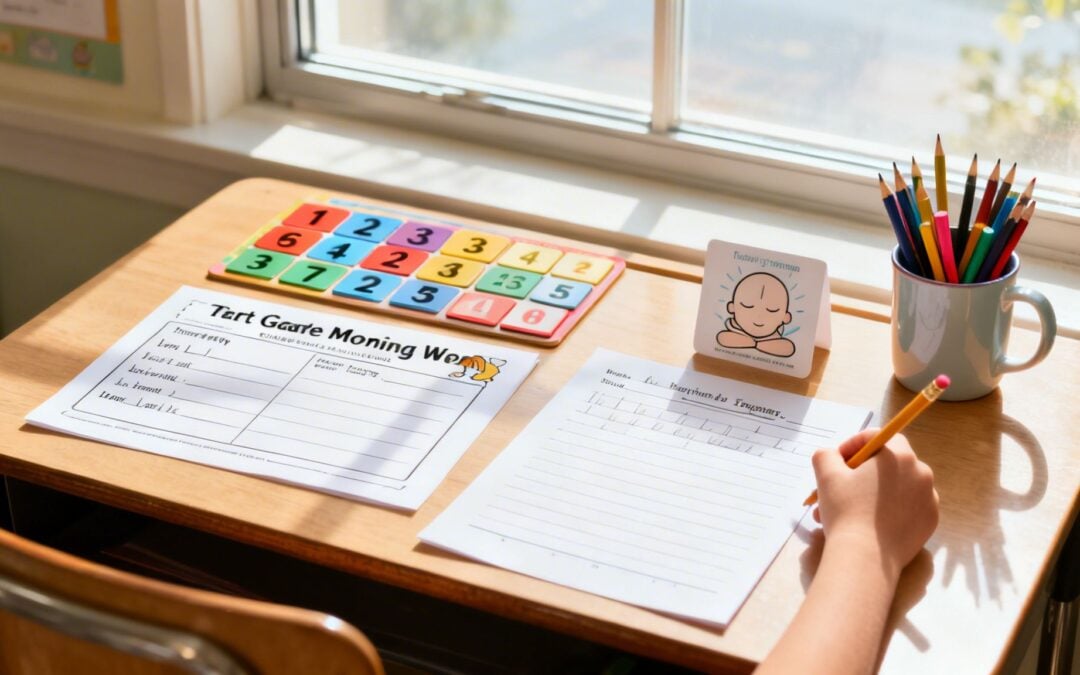
Imagine your 2nd graders walking into a calm, focused classroom, ready to connect and learn. This isn’t a fantasy; it’s the power of intentional morning routines. Traditional worksheets often miss the most critical part of a child’s school day: settling their minds and bodies. Effective 2nd grade morning work should build a foundation for learning, not just fill time before the first bell.
This guide provides a curated list of practical, low-prep activities that prioritize social-emotional learning (SEL) alongside academics. These ideas are designed for busy teachers, administrators, and parents seeking to replace morning chaos with meaningful engagement. A key part of this process involves teaching students foundational skills. Understanding how to regulate emotions is a cornerstone of a peaceful classroom, as it equips children with the tools they need to manage big feelings and focus on learning.
You will find specific, actionable examples for each activity, from mindfulness check-ins to problem-solving role-plays. We also include differentiation tips and ways to integrate practices from leading SEL organizations like Soul Shoppe. The goal is to ensure your students start their day feeling safe, connected, and truly ready to thrive.
1. Mindfulness & Breathing Check-In Circle
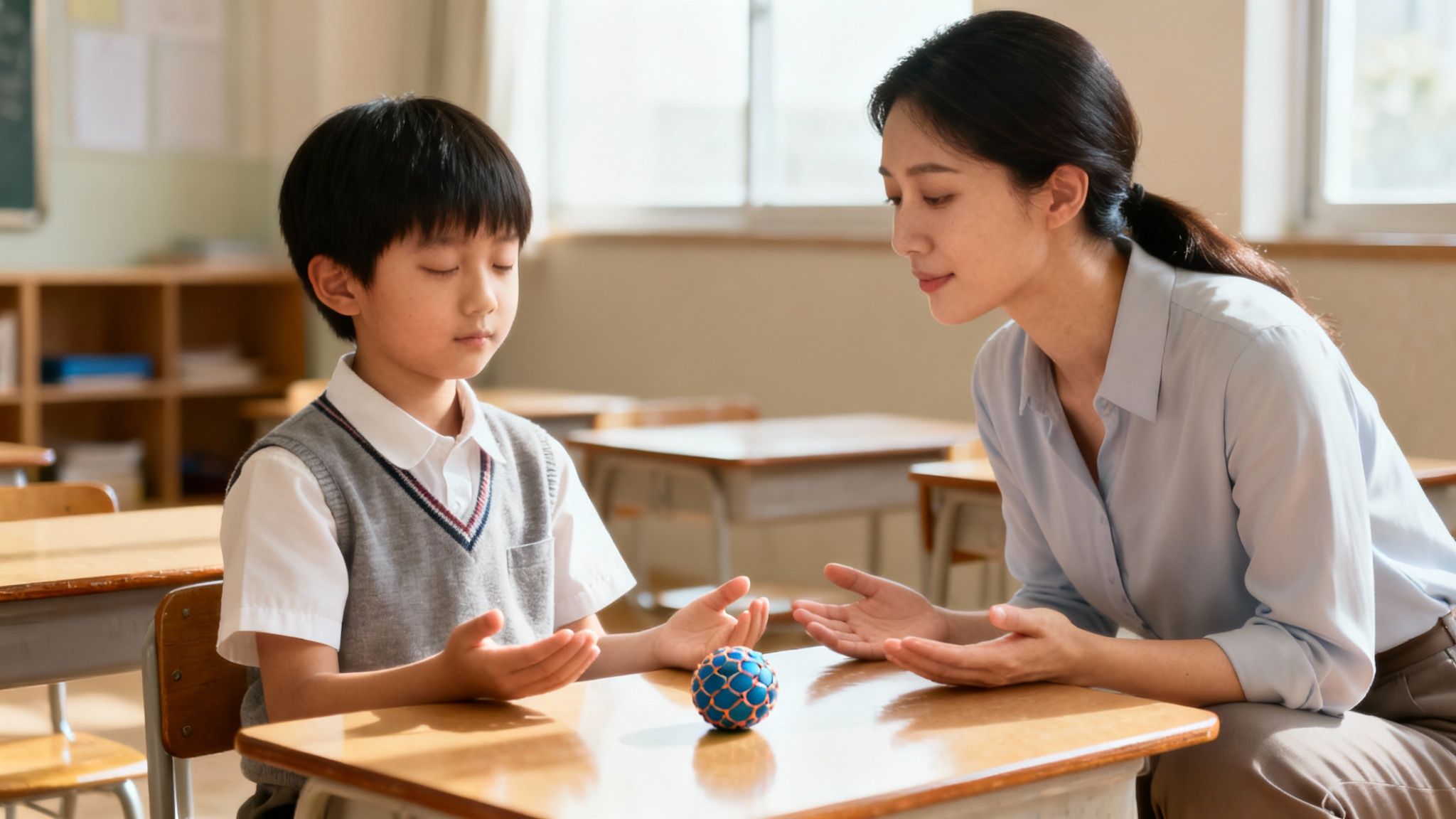
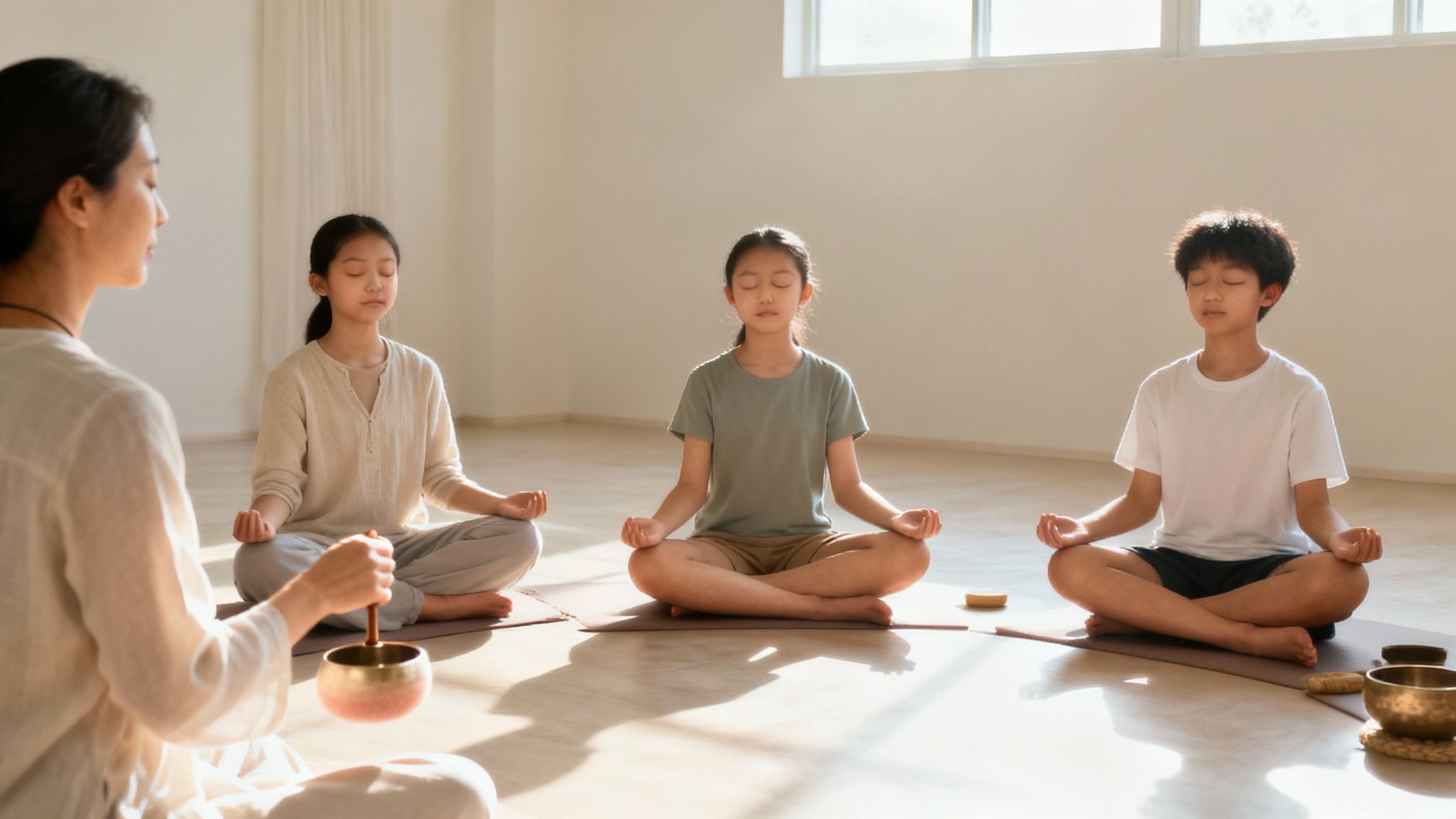
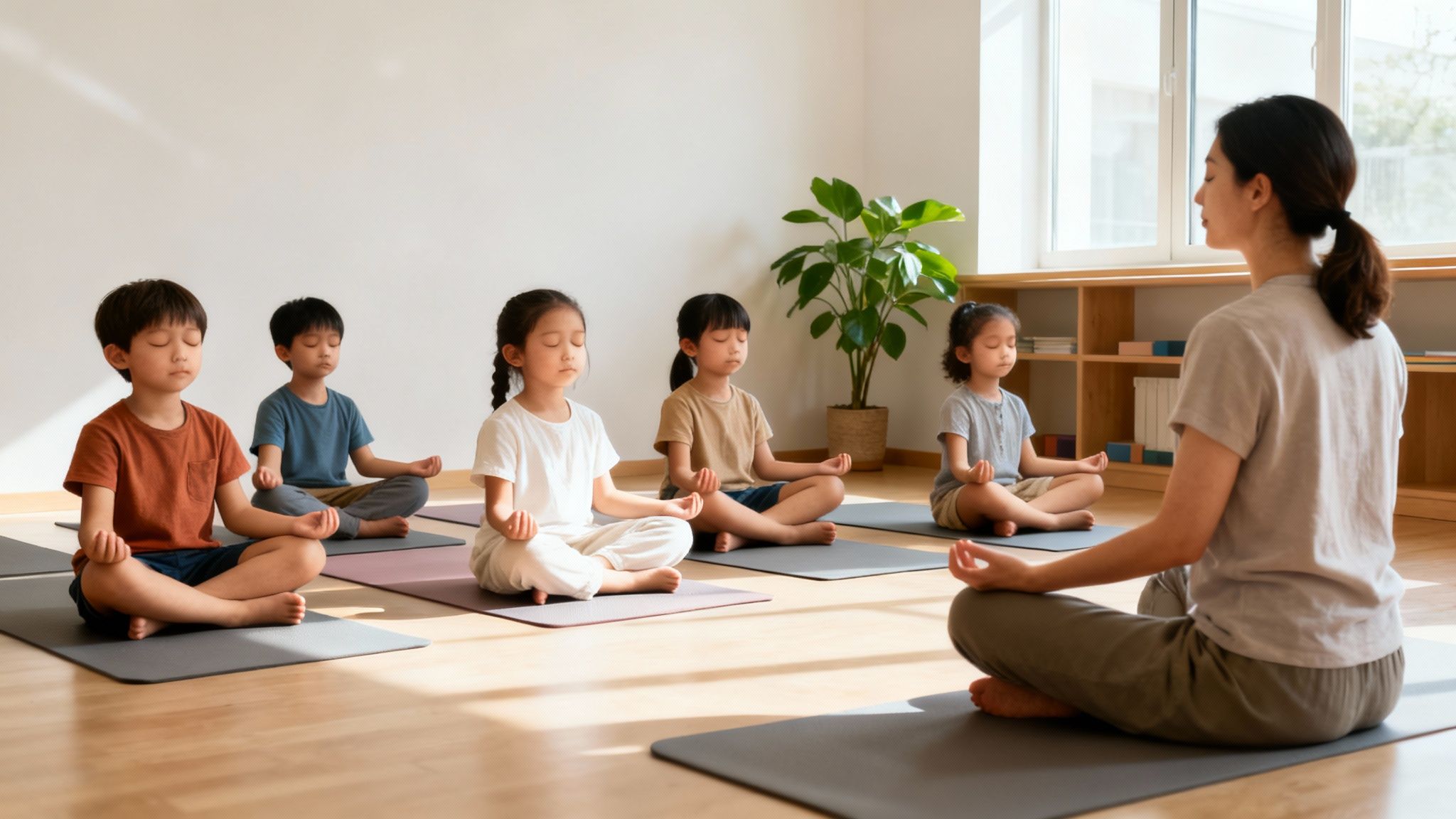
Starting the day with a Mindfulness & Breathing Check-In Circle is a powerful form of 2nd grade morning work that prioritizes social-emotional learning (SEL) before academics begin. This 5 to 10-minute structured activity involves gathering students in a circle on the floor to practice guided breathing, simple body scans, or grounding techniques. The primary goal is to help students transition from home to school, co-regulate their nervous systems, and build a foundation of calm, focused attention for the day ahead.
This practice directly supports students’ ability to identify and manage their emotions, a key component of SEL. Many schools successfully use programs like Calm or Headspace for Schools, while others integrate these moments into the Responsive Classroom morning meeting structure. The teacher acts as a facilitator, modeling calmness and guiding students through simple, consistent routines.
How to Implement a Breathing Circle
Start Small and Be Consistent: Begin with just two to three minutes of guided practice each morning. As students become more familiar and comfortable with the routine, you can gradually extend the time. A practical example is a “Take 5” breathing exercise: students trace their hand, breathing in as they trace up a finger and out as they trace down.
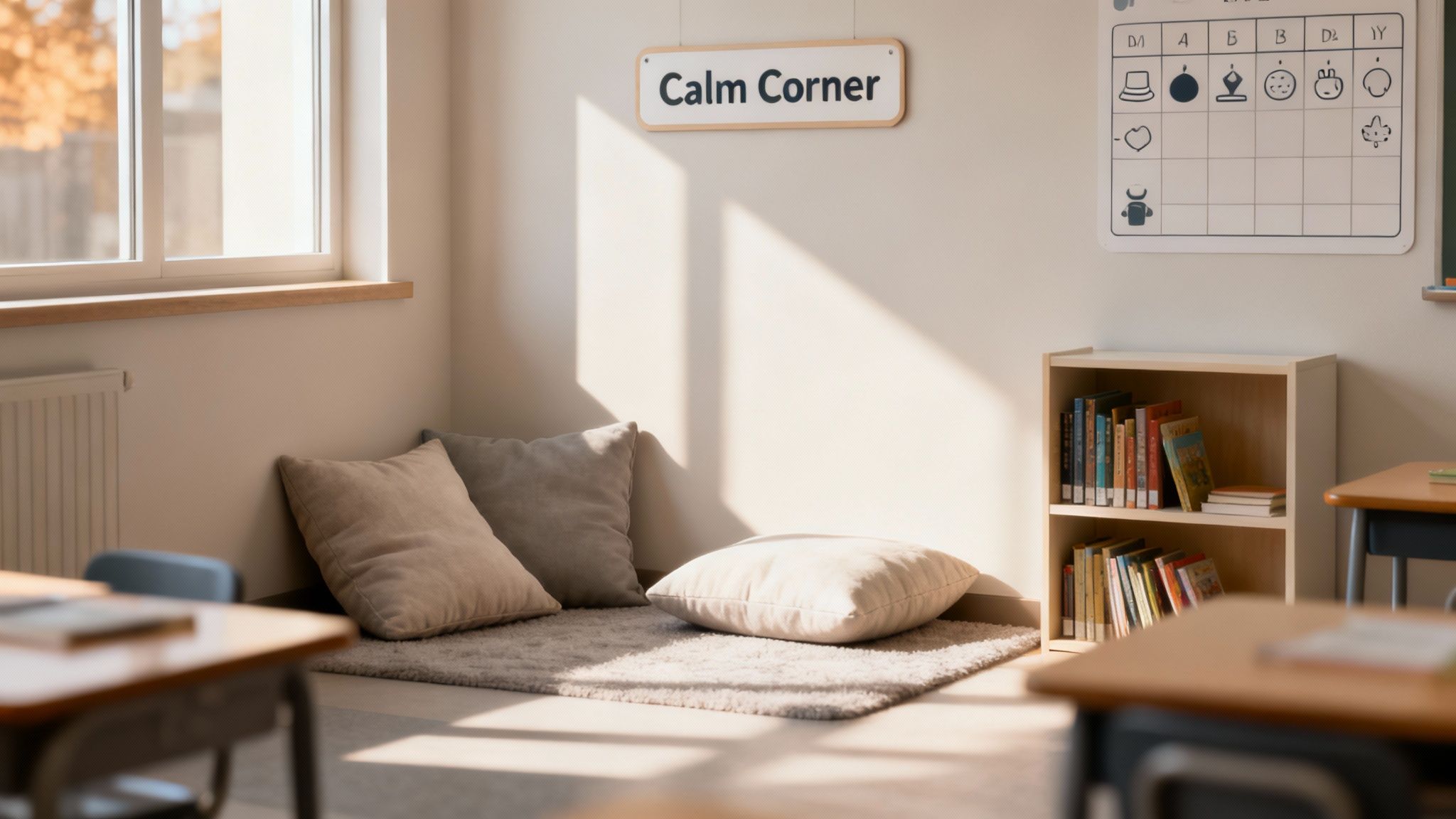
Create a Dedicated Space: If possible, designate a “calm-down corner” or a specific area of the classroom for this circle. Keep it free from visual distractions to help students focus inward.
Use Simple, Repetitive Language: Guide students with clear, predictable phrases. For example, “Let’s take a deep breath in through our noses, filling our bellies like a balloon… now, slowly let the air out through your mouth like you’re blowing a bubble.” This consistency creates a sense of safety and predictability. To effectively help children regulate their emotions and prepare for the day, consider integrating some of the best breathing exercises tailored for calming the nervous system.
Follow with an Emotion Check-In: After the breathing practice, ask students to non-verbally share how they are feeling. A simple thumbs-up (feeling great), thumbs-sideways (feeling okay), or thumbs-down (having a tough time) provides a quick, private way to gauge the classroom climate. These quick assessments are an essential part of effective daily check-ins for students.
Your authentic participation is key. When students see their teacher actively and genuinely engaging in the breathing exercises, they are more likely to mirror that engagement and internalize the benefits of the practice.
Integrating a daily Social-Emotional Learning (SEL) Prompt Reflection is an effective form of 2nd grade morning work that builds emotional intelligence through writing or discussion. This quiet, independent activity asks students to respond to a specific prompt about feelings, relationships, or problem-solving. By answering questions like, “Who showed you kindness yesterday?” or “How did you handle a frustration today?” students practice identifying emotions, developing empathy, and using the language of self-awareness.
This practice gives students a structured way to process their inner world and connect it to their school life. Many effective curricula, such as the Second Step Program and Zones of Regulation, use this prompt-based method to reinforce key SEL concepts. It allows teachers to gain valuable insight into students’ well-being while fostering a classroom culture where emotional expression is valued and normalized.
How to Implement SEL Prompts
Establish a Weekly Theme: Create a rotating schedule to cover different SEL competencies. A practical example: Monday (Gratitude – “What is one thing you are thankful for?”), Tuesday (Kindness – “Draw a time you helped a friend.”), Wednesday (Problem-Solving), Thursday (Empathy), and Friday (Reflection). This provides structure and predictability.
Keep Prompts Simple and Concrete: Phrase questions in a way that is easy for a second grader to understand. Instead of “Describe a time you showed perseverance,” try “What is something you worked hard on and didn’t give up?”
Model Vulnerability: Share your own authentic, age-appropriate response to the prompt first. Saying, “I felt frustrated this morning when I couldn’t find my keys, so I took a deep breath,” shows students that everyone manages emotions.
Use Visual Anchors: Create an anchor chart with sentence starters like “I felt happy when…” or “A kind thing I saw was…” to support students who need help structuring their thoughts. For example, for a prompt about helping, a starter could be: “I helped my mom by…” Providing a range of thoughtful and effective student reflection questions can guide this practice and deepen its impact.
Normalize All Feelings: Emphasize that there are no “right” or “wrong” answers. The goal is honest reflection, not a perfect response. This builds psychological safety and encourages authentic sharing.
3. Kindness & Connection Morning Meeting
A Kindness & Connection Morning Meeting is a structured, 10 to 15-minute group gathering that serves as exceptional 2nd grade morning work by putting community first. In this daily practice, students celebrate one another, practice active listening, and intentionally build a safe, supportive classroom culture. The core purpose is to establish belonging, reduce feelings of isolation, and ensure that every student feels seen and heard before academic instruction begins.
This intentional community-building time directly addresses students’ need for safety and connection, which are prerequisites for engaged learning. Many effective models exist, from the well-known Responsive Classroom Morning Meeting to frameworks like Tribes Learning Communities. The teacher’s role is to facilitate a predictable routine where students can share good news, acknowledge peer accomplishments, or play cooperative games.
How to Implement a Kindness Meeting
Establish Clear Norms: Co-create rules for respectful listening with your students. Simple expectations like “quiet bodies,” “kind faces,” and “eyes on the speaker” help everyone feel safe to share. For example, create an anchor chart with pictures demonstrating these norms.
Use a Talking Piece: Pass a designated object (a special rock, a small stuffed animal) to show whose turn it is to speak. This ensures equitable participation and teaches students not to interrupt, giving each child uninterrupted time. For example, you can say, “Only the person holding ‘Sparky the Star’ can share their thoughts.”
Start with Low-Risk Sharing: Begin the year with simple prompts like, “Share one thing you enjoyed this weekend.” As trust builds, you can move toward more personal sharing. For example: “Share your favorite part of the book we read yesterday.”
Rotate the Celebration Focus: To keep it fresh, dedicate each day to a different theme. For example, Mondays could be for celebrating academic effort (“I want to celebrate Maria for working so hard on her math facts”), while Tuesdays are for noticing acts of kindness. This structure guides students on what to look for in their peers. To discover more ways to foster these connections, you can find a wealth of classroom community-building activities that complement this morning routine.
Your consistent modeling of vulnerability and appreciation sets the tone. When you genuinely celebrate a student’s effort or share a personal story, you show students that the classroom is a true community where every member matters.
Using role-play for conflict resolution is a dynamic form of 2nd grade morning work that gives students hands-on practice with social problem-solving. These short, interactive skits focus on common classroom issues like sharing, taking turns, or responding to unkind words. By acting out different roles in a safe, guided setting, students learn to see conflicts from multiple perspectives, practice using “I-Feel” statements, and brainstorm peaceful solutions together. This makes abstract concepts like empathy and respect tangible and memorable.
This method directly equips students with the language and strategies needed to navigate peer disagreements constructively. Experiential programs from organizations like Soul Shoppe and the Second Step Program often feature role-playing as a core component for teaching these skills. The teacher facilitates by setting up simple scenarios, guiding the process, and helping students reflect on the outcomes of their chosen solutions, turning potential disruptions into learning opportunities.
How to Implement Problem-Solving Role-Play
Start with Puppets: Before asking students to perform, use puppets or stuffed animals to act out scenarios. This lowers the pressure and allows students to focus on the problem and solution, not on being in the spotlight. A practical example: have one puppet snatch a toy from another, then guide students to give the puppets the right words to use.
Scaffold the Scenarios: Begin with simple, two-character conflicts. For example, “Character A took Character B’s crayon without asking.” As students gain confidence, you can introduce more complex situations like, “Leo and Sara both want to be line leader. What can they do?”
Create a Visual Aid: Develop a “Problem-Solving Steps” anchor chart that students can reference. Steps might include: 1. Stop and Cool Off, 2. Use an “I-Feel” Statement, 3. Listen to the Other Person, and 4. Brainstorm a Solution. A practical example for step 2 is teaching the phrase: “I feel _____ when you _____ because _____.” To explore more ideas for building these skills, check out these engaging conflict resolution activities for kids.
Rotate Roles: Ensure every student has the chance to play different parts, including the person with the problem, the person who caused it, and a helpful bystander or “peace-maker.” This builds empathy by allowing them to experience the situation from all sides.
Connect to Real Life: After a role-play session, explicitly connect the practice to classroom life. Say, “Remember how we practiced asking nicely for a turn? I saw Jamal and Aisha do that at the block center. Great job using your peace-making skills!” This helps transfer the skills from the activity to real-world interactions.
5. Emotion Recognition & Feelings Check-In
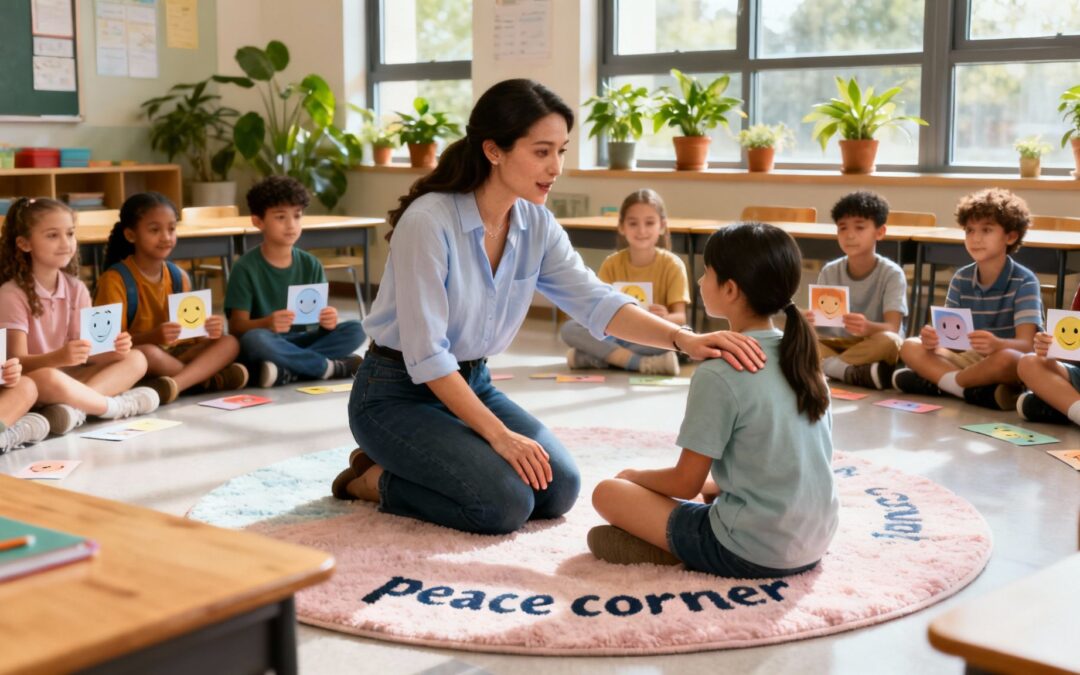
Building emotional literacy is a foundational part of social-emotional learning, and an Emotion Recognition & Feelings Check-In serves as effective 2nd grade morning work for this purpose. This daily activity asks students to identify and name their current feelings using visual aids like emotion wheels or feelings charts. The goal is to create a safe, predictable routine where discussing emotions is normalized, helping teachers gauge student readiness for learning and building a more empathetic classroom culture.
This practice gives students the vocabulary they need to move beyond simple terms like “mad” or “sad.” Frameworks such as the Zones of Regulation, which categorize feelings into colored zones (blue, green, yellow, red), are widely used to help children understand their emotional and physical state. Other teachers may use a feelings thermometer or a daily mood board where students place their name under a corresponding emotion face.
How to Implement a Feelings Check-In
Introduce Emotions Gradually: Start the school year with four basic feelings: happy, sad, angry, and scared. As students master this vocabulary, you can introduce more nuanced words like disappointed, frustrated, proud, or calm. For example, create a “feeling of the week” and discuss what it looks like, sounds like, and feels like in the body.
Use Consistent Visual Supports: Choose one visual system and stick with it. Whether it’s a color-coded chart based on The Color Monster or a Zones of Regulation poster, consistency helps students quickly recognize and identify their state without confusion. A practical example: a pocket chart where each student moves their name stick to the “zone” they are in each morning.
Model Naming Your Own Emotions: Your authenticity is powerful. Start the check-in by sharing your own feelings in a simple, age-appropriate way. For example, “Good morning, class. I am feeling excited today because we get to start our new science unit.” This models that all feelings are normal and acceptable.
Provide Non-Verbal Options: Not every child will be ready to share verbally. Allow students to use a thumbs-up/sideways/down signal, point to a chart, or place a clothespin with their name on a feelings poster. Respecting this choice is key to building trust and psychological safety.
After the check-in, you can make a general observation to validate their feelings and connect them to classroom strategies. A simple statement like, “I see some of us are in the blue zone and feeling tired this morning. Let’s remember we can take a stretch break if we need one,” shows students you see them and are ready to support them.
6. Partner or Peer Share Activity
A Partner or Peer Share Activity is a structured form of 2nd grade morning work that develops crucial communication and social skills. This 5 to 10-minute routine involves pairing students to ask and answer thoughtful questions, practice active listening, and learn about one another in a safe, one-on-one setting. The primary goal is to build a supportive classroom community, give quieter students a voice, and foster empathy by creating intentional connection points.
This practice is a cornerstone of collaborative learning models like Responsive Classroom and Cooperative Learning. By taking turns speaking and listening, students move beyond surface-level interactions to build genuine understanding. The teacher acts as a facilitator, modeling respectful communication and providing engaging prompts that encourage students to share their thoughts and experiences.
How to Implement a Partner Share Activity
Model Expected Behaviors: Before starting, explicitly model what good listening and speaking look like. For example, act out a “good partner” who makes eye contact and asks a follow-up question, then a “distracted partner” who is looking away. A practical example is using the “EEKK” rule: Elbow-to-Elbow, Knee-to-Knee.
Use Clear Prompts and a Timer: Start with simple, concrete questions like, “What is one thing you are good at?” or “If you could have any superpower, what would it be and why?” Use a visual timer to give each partner 1-2 minutes to share, providing a clear structure for turn-taking.
Intentionally Pair Students: To build a stronger classroom community, purposefully pair students who may not typically interact. Rotating partners weekly or biweekly ensures that every student gets a chance to connect with many different classmates throughout the year, breaking down social cliques. For example, use “clock buddies” where students pre-select partners for different times of the day.
Teach Active Listening Skills: Make active listening a direct teaching point. Instruct students to “look at your partner, nod to show you’re listening, and think of one question to ask about what they said.” You can even create a “listening challenge” where students have to introduce their partner and one thing they learned from them. For example: “This is my partner, Sam. I learned that his favorite animal is a cheetah.”
7. Gratitude & Appreciation Activity
Integrating a Gratitude & Appreciation Activity into your routine is a simple yet profound type of 2nd grade morning work that builds community and fosters a positive classroom environment. This activity invites students to identify what they are thankful for, recognize their own strengths, and appreciate kindness in their peers. It shifts the daily focus toward positive relationships and emotional well-being, setting a constructive tone for learning.
Formats can range from a whole-class gratitude circle or a “Thankfulness Thanksgiving” tradition to individual gratitude journals. The core goal is to help students develop a practice of noticing the good around them, which builds resilience and a growth mindset. This practice is popularized by the Bucket Fillers movement and supported by research from positive psychology on the benefits of gratitude.
How to Implement Gratitude Activities
Create a Visual “Appreciation Board”: Designate a bulletin board where students can post sticky notes with appreciative comments about classmates. A practical example: a “Bucket Filler” board where students write notes saying, “To Lena, You filled my bucket when you shared your crayons with me. From, David.” Seeing the board fill up provides a powerful visual reinforcement.
Scaffold with Specific Prompts: Young students may need help identifying things to be grateful for. Use clear prompts like, “What is something that made you smile this morning?” or “Who showed you kindness on the playground yesterday?”
Model Authentic Gratitude: Share your own specific and genuine gratitude. For example, “I am so grateful for how quietly and respectfully everyone transitioned from the rug to their desks.” This models the behavior you want to see.
Introduce “Shout-Out Fridays”: Dedicate a few minutes at the end of the week for students to give a verbal “shout-out” to a peer who helped them, showed perseverance, or was a good friend. To ensure everyone feels included, you can discreetly track who receives shout-outs and gently guide students to recognize peers who haven’t been mentioned recently. For instance, “Let’s give a shout-out to someone who showed courage this week.”
8. Mindful Movement & Brain Break Activities
Incorporating Mindful Movement & Brain Break Activities into your morning routine is a dynamic form of 2nd grade morning work that channels physical energy into focus and self-awareness. These short, 5-minute sessions combine guided physical activities like yoga, stretching, or dance with mindful principles. The objective is to help students release pent-up energy, improve body awareness, and prepare their brains for academic tasks. This practice builds a crucial bridge between physical sensations and emotional states.
These activities directly support self-regulation and focus, making them an effective way to start the school day. Many teachers find success using guided video resources like GoNoodle for energetic brain breaks or Cosmic Kids Yoga for storytelling-based movement. These tools help students embody the mind-body connection essential to social-emotional learning, teaching them that movement can be a powerful tool for managing feelings and preparing to learn.
How to Implement Mindful Movement
Choose a Few Go-To Activities: Start with two or three simple, repeatable activities. Rotating between familiar options like “Cosmic Kids Yoga,” a specific GoNoodle dance, or a simple stretching sequence helps students engage quickly without needing lengthy instructions. A practical example is a “Weather Report” stretch: reach high for the sun, wiggle fingers for rain, sway side-to-side for the wind.
Model and Connect to Feelings: Participate enthusiastically alongside your students. Use language that connects the physical movement to an emotional or mental state. For example, “As we do our tree pose, feel how strong and steady your body is. This can help us feel strong inside, too.”
Use Consistent Verbal Cues: Simple, predictable phrases create a routine. Cues like, “Breathe in the calm, breathe out the wiggles,” or, “Notice your feet firmly on the ground,” help ground students and reinforce the mindful aspect of the movement.
Offer Differentiated Options: Ensure every student can participate. Provide seated variations for yoga poses or suggest hand and arm movements for students with physical limitations. For example, during a standing stretch, you could say, “If you’re sitting, reach your arms up high from your chair!” The goal is participation and body awareness, not perfect form. When students feel overwhelmed, you can remind them, “Remember how we stretched this morning? Let’s try that now to help our bodies feel calm.”
2nd Grade Morning Work: 8-Activity Comparison
Activity
Implementation complexity
Resource requirements
Expected outcomes
Ideal use cases
Key advantages
Mindfulness & Breathing Check-In Circle
Low–Moderate — needs consistent teacher modeling
Minimal — no materials required; optional apps or visual timer
Weekly rituals, celebrations, reinforcement of positive behavior
Strengthens culture; highlights strengths; easy to implement
Mindful Movement & Brain Break Activities
Low–Moderate — needs space and energy management
Moderate — physical space, videos/music, adaptations for accessibility
Regulation of energy, improved focus, embodied awareness
Transitions, before challenging tasks, for kinesthetic learners
Releases energy while teaching body-awareness; supports attention and regulation
Putting It All Together: Your First Week of Meaningful Morning Work
Moving from a list of ideas to a functional classroom routine is the most critical step. A successful 2nd grade morning work plan isn’t about implementing thirty new activities at once. It’s about building a consistent, sustainable rhythm that sets a positive tone for the day. The SEL-focused activities we’ve explored, from breathing check-ins to gratitude journaling, are powerful tools for creating a classroom where students feel seen, safe, and ready to learn. By prioritizing connection before content, you invest in a more peaceful and productive learning environment for the entire year.
Remember, the goal is progress, not perfection. Start small, stay consistent, and observe how your classroom community begins to shift. Your initial efforts lay the groundwork for a year of deeper engagement and stronger student relationships.
Your Sample SEL-Focused Morning Work Week
To help you get started, here is a practical, sample weekly plan that balances different SEL skills. This structure can be adapted to fit your students’ needs and your own classroom schedule.
Mindful Monday: Begin the week with a calming activity.
Activity:Mindfulness & Breathing Check-In Circle. Lead students in a simple 3-minute box breathing exercise (inhale for 4, hold for 4, exhale for 4, hold for 4). Afterwards, ask students to share one word describing how they feel.
Teamwork Tuesday: Focus on connection and collaboration.
Activity:Partner or Peer Share Activity. Pose a simple, low-stakes question like, “What is one thing you are looking forward to this week?” Give partners two minutes each to share and practice active listening.
Wisdom Wednesday: Dedicate mid-week to problem-solving skills.
Activity:Conflict Resolution & Problem-Solving Role-Play. Present a common scenario: “Two students both want to use the same blue crayon during art.” Brainstorm a few peaceful solutions together as a class.
Thoughtful Thursday: Cultivate gratitude and positive thinking.
Activity:Gratitude & Appreciation Activity. Have students write or draw one thing they are grateful for in their morning work journal. This could be a person, a favorite toy, or a sunny day.
Feelings Friday: End the week with emotional reflection.
Activity:Emotion Recognition & Feelings Check-In. Display a few emotion flashcards (happy, sad, frustrated, excited). Ask students to privately point to the one that best matches their feeling and then draw a picture of that emotion in their journal.
Final Takeaways for Lasting Success
As you build out your 2nd grade morning work routine, keep these core principles in mind. They are the keys to turning a good morning routine into a great one.
Consistency Over Complexity: A simple, predictable routine done every day is far more effective than a complicated one that is difficult to maintain. Students thrive on structure; it helps them feel secure.
Model Everything: Never assume students know how to participate. Model how to breathe deeply, how to listen to a partner, and how to write a gratitude statement. Your vulnerability and participation give them permission to do the same.
Connection is the Goal: The primary purpose of this morning time is not academic rigor, but human connection. By filling your students’ emotional cups first, you make them more available for learning throughout the day. This simple shift in priority can significantly reduce classroom disruptions and boost academic focus.
Ready to bring even more powerful, structured social-emotional learning into your classroom? The activities discussed in this article are foundational to the work we do at Soul Shoppe. Explore our programs at Soul Shoppe to find comprehensive, school-wide solutions that empower students with the tools to build empathy, resolve conflicts, and create a culture of kindness.
Understanding the impact of trauma on learning is no longer optional; it’s essential for creating classrooms where every student can thrive. Trauma, stemming from adverse childhood experiences (ACEs) or systemic stressors, can fundamentally alter a child’s brain development. This directly affects their ability to regulate emotions, build relationships, and access learning. For K-8 educators, this means that traditional classroom management techniques may not only be ineffective but could also re-traumatize a student who is struggling.
The goal isn’t to become a therapist. Instead, it’s about making a crucial shift in perspective from asking, “What’s wrong with this student?” to “What happened to this student, and how can I support them?” By implementing trauma informed teaching strategies, educators can build environments of psychological safety that calm the nervous system and reopen pathways to engagement, connection, and academic growth. A trauma-informed classroom is a space where students feel seen, safe, and supported, allowing their brains to move out of survival mode and into a state ready for learning.
This comprehensive guide moves beyond theory to provide ten actionable strategies tailored for the K-8 classroom. Each item includes practical, step-by-step implementation details, real-world examples, and guidance on how to adapt these methods to meet individual student needs. You will discover how to create predictable routines, foster authentic connections, and use restorative practices to build a more resilient and supportive learning community for every child.
1. Creating Psychologically Safe Classrooms
Psychological safety is the bedrock of all trauma-informed teaching strategies, creating an environment where students feel secure enough to take healthy academic and social risks. For students who have experienced trauma, the world can feel unpredictable and threatening. A psychologically safe classroom counteracts this by establishing consistency, predictability, and emotional validation, allowing a child’s nervous system to shift from a constant state of high alert to one of calm readiness for learning. This foundation is crucial for engagement, cognitive function, and building positive relationships.
A foundational element in creating a psychologically safe classroom is successfully forming a supportive community where students feel connected and valued. When students trust their teacher and peers, they are more willing to participate, ask for help, and navigate challenges without fear of judgment or shaming.
How to Implement This Strategy
Establish Predictable Routines: Post and review a visual daily schedule. Use timers or verbal cues to signal transitions consistently. For example, use the same short, calm song every day to signal clean-up time. This predictability reduces anxiety about what comes next.
Create Safe Spaces: Designate a “calm-down corner” or “cozy corner” with comfortable seating, sensory tools, and books. Teach students how to use this space to self-regulate, framing it as a tool for everyone. For instance, you could say, “If you feel your engine running too fast, you can take a 5-minute break in the cozy corner to help your body feel calm.” For more ideas, explore these detailed steps on how to create a safe space for students.
Co-Create Classroom Agreements: At the beginning of the year, work with students to establish shared expectations. Instead of a rule like “No shouting,” an agreement might be, “We use calm voices to show respect for our friends’ ears.” Phrase them positively and have all students sign the poster.
Practice Welcoming Rituals: Greet every student at the door by name each morning with a choice of a handshake, high-five, or wave. This simple, consistent act of connection reinforces that each child is seen and valued from the moment they arrive.
This approach is most effective when implemented universally from the first day of school, as it sets the tone for the entire year. It is particularly vital during times of change, such as after a school break or a disruptive event, to re-establish a sense of stability and security.
2. Self-Regulation and Co-Regulation Techniques
Self-regulation is the ability to manage emotions and behaviors, a skill that can be significantly underdeveloped in students who have experienced trauma. Co-regulation is the supportive process where a calm, regulated adult helps a child navigate distress and return to a state of balance. By explicitly teaching and modeling these skills, educators provide one of the most essential trauma informed teaching strategies, equipping students with tools to manage their internal states and engage in learning. Instead of just reacting to behavior, this approach addresses the underlying neurological need for safety and calm.
The work of neurobiologists like Dr. Dan Siegel emphasizes how co-regulation helps build neural pathways for independent self-regulation over time. When a teacher remains a calm, validating presence during a student’s meltdown, they are not just managing a moment; they are actively helping to wire the child’s brain for future resilience.
How to Implement This Strategy
Model Your Own Regulation: When you feel frustrated, narrate your process out loud. For example: “The projector isn’t working, and I’m feeling a little flustered. I’m going to take three deep ‘balloon breaths’ to calm down before we try again.” This makes internal processes visible and provides a concrete model for students to follow.
Teach Explicit Techniques: Teach self-regulation strategies during calm moments, not in the middle of a crisis. Practice “box breathing” (inhale for four, hold for four, exhale for four, hold for four) or “5-4-3-2-1 grounding” where students name five things they can see, four they can feel, three they can hear, two they can smell, and one they can taste.
Offer Proactive Regulation Breaks: Integrate short movement or sensory breaks into your daily schedule before students show signs of dysregulation. For example, before a math lesson, say, “Let’s get our brains ready! Everyone stand up and do 10 wall pushes.”
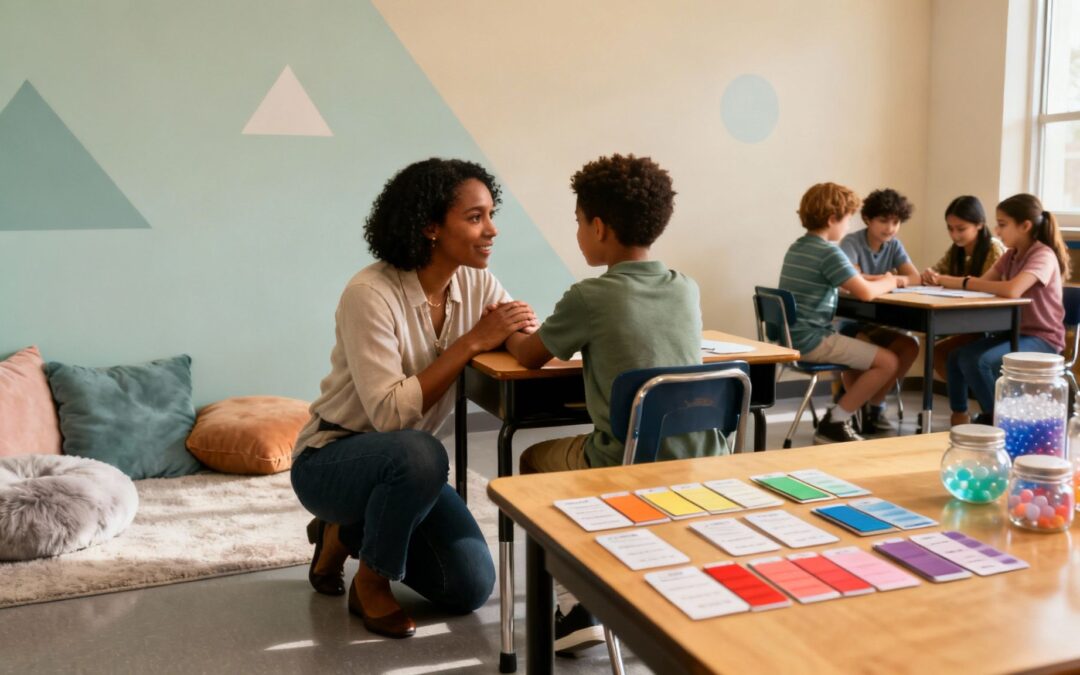
Validate and Support: When a student is upset, get down on their level and validate their emotion first. Say, “I can see you are very upset that your block tower fell down. That is so frustrating. I’m going to sit here with you until your body feels safe again.” This co-regulation builds trust and reduces shame. Explore additional self-regulation strategies for students to expand your toolkit.
This strategy is most effective when regulation skills are practiced daily, becoming as routine as academic drills. It is particularly crucial for students who exhibit big emotional responses, as it shifts the focus from punishment to skill-building, empowering them to manage their own nervous systems.
3. Strengths-Based and Asset-Focused Approaches
A strengths-based approach fundamentally shifts the educational focus from what students are lacking to what they possess. Instead of viewing behaviors through a deficit lens, this trauma-informed teaching strategy prioritizes identifying and cultivating each student’s unique talents, resilience, and interests. For children who have experienced trauma and may have internalized negative self-perceptions, this intentional focus on their assets is profoundly healing and empowering. It reframes their identity around capabilities rather than challenges, fostering a positive self-concept and a stronger connection to the school community.
This asset-focused mindset directly counters the sense of helplessness that trauma can create, showing students that they have inherent value and the capacity to succeed. By building instruction around student strengths, educators create more engaging and relevant learning experiences. This approach is closely linked to developing a growth mindset in the classroom, as it teaches students to view their abilities as skills that can be developed through effort and perseverance.
How to Implement This Strategy
Create Strength Profiles: At the beginning of the year, use interest inventories or “get to know you” activities to document 2-3 specific strengths for each student (e.g., “creative problem-solver,” “empathetic friend,” “persistent artist”). Refer to these profiles when planning lessons or assigning roles. For example, during group work, you might say, “Maria, since you are such a creative problem-solver, would you be in charge of brainstorming for your team?”
Use Strengths-Based Language: Instead of generic praise like “Good job,” be specific and connect it to a strength. For example, say, “David, I noticed how you asked Sam if he was okay after he fell. That showed what an empathetic friend you are.”
Assign Purposeful Classroom Jobs: Design roles that align with student talents. A student who is a natural organizer could be the “Materials Manager,” while a compassionate student could be the “Welcome Ambassador” for new classmates. A student who loves to draw could be the “Class Illustrator,” creating pictures for anchor charts.
Highlight Growth Over Grades: Shift recognition systems to celebrate progress, effort, and resilience. During parent conferences, start by sharing an anecdote of a child’s persistence: “I want to show you this first draft of Liam’s story and then his final version. The effort he put into revising it shows incredible growth in his perseverance.”
This approach is most powerful when used consistently across all interactions, from academic feedback to behavior management. It is especially important when a student is struggling, as it provides an opportunity to remind them of their past successes and inherent capabilities, reinforcing their ability to overcome current challenges.
4. Collaborative Problem-Solving and Student Voice
Trauma-informed teaching recognizes that students, particularly those who have experienced trauma, often feel a profound sense of powerlessness. Collaborative problem-solving directly counteracts this by inviting students into decision-making processes, valuing their perspectives, and building solutions together. This approach shifts the classroom dynamic from top-down, punitive discipline to one of dialogue and shared ownership, which builds student autonomy and reinforces that their voice matters in creating a functional, supportive community.
Popularized by Dr. Ross Greene, this strategy is built on the idea that “kids do well if they can.” When students face challenges, it is not due to a lack of will but a lack of skills. By working together to identify lagging skills and unsolved problems, teachers and students can find mutually agreeable solutions that address the root cause of the behavior, fostering both skill development and a stronger relationship.
How to Implement This Strategy
Hold Class Meetings: Dedicate regular time for students to discuss classroom concerns and co-create solutions. For example, if students are struggling with noisy transitions, a meeting could start with, “I’ve noticed our clean-up time has been really loud and it’s hard for us to get to the next activity. What are your ideas to make it smoother?”
Use Restorative Circles: After a conflict, gather involved students in a circle to share their perspectives. For instance, if two students argued over a shared toy, each would get a chance to answer, “What happened?” “How did it make you feel?” and “What do you need to feel better?” This teaches empathy and repairs harm rather than simply assigning blame.
Implement Student-Led Conferences: Empower students to present their learning progress, challenges, and goals to their parents or caregivers. This gives them agency over their academic journey and develops self-advocacy skills.
Start with Low-Stakes Decisions: Build student comfort by first asking for input on smaller issues. You could say, “Class, we have 15 minutes at the end of the day. Would you prefer a read-aloud or a quick drawing activity? Let’s take a vote.”
This strategy is most effective when used proactively to build community and consistently to address challenges as they arise. It is particularly crucial when behavioral issues surface, as it provides a non-punitive framework for understanding the student’s struggle and finding a path forward together.
5. Mindfulness and Present-Moment Awareness Practices
Mindfulness, the practice of paying attention to the present moment without judgment, is a powerful self-regulation tool. For students impacted by trauma, whose nervous systems can be stuck in a state of high alert, mindfulness helps anchor them in the safety of the here and now. This practice counters the effects of trauma, such as intrusive thoughts or anxiety about the future, by training the brain to focus, calm itself, and create a crucial pause between an emotional trigger and a reaction. Integrating mindfulness is one of the most direct trauma informed teaching strategies for building internal coping skills.
This strategy empowers students with the awareness and skills to manage their internal states. By teaching them to notice their breath, body sensations, and thoughts, we give them an invaluable resource for navigating stress both inside and outside the classroom.
How to Implement This Strategy
Start with Short, Guided Practices: Begin with simple one-minute breathing exercises. Guide students to “Put one hand on your belly. As you breathe in, feel your belly get big like a balloon. As you breathe out, feel it get smaller.” Gradually extend the time as students become more comfortable.
Use Sensory Anchors: Ring a mindfulness bell or chime to signal the start of a quiet transition. Ask students to simply listen until they can no longer hear the sound. This auditory focus brings everyone into the present moment before you give the next instruction.
Integrate Mindful Movement: Incorporate simple yoga stretches or “body scans.” For example, lead students in a “Mindful Walk” around the classroom, asking them to notice the feeling of their feet on the floor with each step. This helps reconnect mind and body. For resources, organizations like the Center for Healthy Minds offer science-backed practices for educators.
Model the Practice: Share your own experiences with mindfulness. You might say, “I’m feeling a little rushed, so I’m going to take three deep breaths to calm my body before we begin our lesson.” This normalizes the practice and shows its practical application.
This approach is most effective when introduced gently and practiced consistently, such as after recess or before an assessment, to help students settle their bodies and minds. It is crucial to always make participation optional, allowing students to opt out or modify the practice to ensure they feel in control and safe.
6. Relationship-Building and Authentic Connection
For students impacted by trauma, the presence of a stable, caring, and predictable adult can be a powerful healing force. Authentic connection is a core component of trauma-informed teaching strategies because it directly counteracts the relational harm and instability that often accompany adverse experiences. When a teacher invests in knowing a child as an individual, they create a secure attachment that allows the student’s brain to feel safe, valued, and ready to learn. This relationship becomes the secure base from which students feel empowered to explore, make mistakes, and engage with their peers and academic material.
Building these connections is not about being a student’s best friend; it is about providing unwavering positive regard and demonstrating genuine care. This consistent emotional support helps regulate the nervous system and builds the trust necessary for a student to feel comfortable being vulnerable in the classroom. Understanding the power of a positive teacher-student relationship is essential for creating a classroom culture where every child feels seen and supported.
How to Implement This Strategy
Schedule Intentional Connection Time: Dedicate a few minutes each day or week for non-academic check-ins. This could be greeting each student at the door with a personal question, such as “How was your brother’s soccer game last night?” or having a “lunch bunch” with a small group of students.
Discover and Reference Student Interests: Keep a simple log of students’ hobbies, favorite foods, or family members. If a student loves dinosaurs, you could leave a dinosaur book on their desk or say, “I saw this cool documentary about T-Rexes and it made me think of you!” This shows you listen and care about their lives outside of school.
Share Positive News with Families: Make it a habit to send a quick, positive note or email home. For example: “Hi Mrs. Davis, I wanted to let you know that Maria was an excellent helper to a new student today. You should be very proud of her kindness.” This builds a supportive relationship with caregivers and reinforces the child’s sense of value.
Practice the “Two-by-Ten” Strategy: For two minutes each day for ten consecutive days, have a personal, non-academic conversation with a specific student. Ask them about their favorite video game, their pet, or what they did over the weekend. This focused effort can significantly improve the dynamic with students who may be struggling to connect.
This strategy is foundational and should be applied consistently throughout the school year for all students. It is particularly crucial for students who exhibit withdrawn behaviors or externalize stress through challenging actions, as these are often signs that they need connection the most.
7. Trauma-Sensitive Discipline and Restorative Practices
Traditional, punitive discipline can often re-traumatize students by activating their fear responses, escalating conflict, and damaging the crucial teacher-student relationship. A trauma-informed approach recognizes that all behavior is a form of communication, often signaling an unmet need or a state of distress. Trauma-sensitive discipline shifts the focus from punishment to problem-solving, and from exclusion to restoration. This strategy aims to repair harm, teach accountability, and rebuild community trust while maintaining high behavioral expectations.
This pivot toward restorative practices, championed by organizations like the International Institute for Restorative Practices (IIRP), helps students develop essential social-emotional skills such as empathy, responsibility, and conflict resolution. Instead of isolating students, it brings them back into the community, reinforcing their sense of belonging and preserving their dignity. This approach addresses the root causes of misbehavior rather than just the symptoms, creating a more sustainable and supportive learning environment.
How to Implement This Strategy
Shift Your Language: Instead of asking a dysregulated student “Why did you do that?” which can provoke defensiveness, get curious. Try asking “I noticed you threw the pencil. Can you tell me what happened right before that?” This opens a non-judgmental dialogue focused on understanding the situation from the student’s perspective.
Focus on Repair and Restoration: When a conflict occurs, guide students with restorative questions. If a student knocks over another’s project, the restorative consequence might be helping them rebuild it. You could facilitate by asking, “What was the harm done?” and “What do you think you can do to make things right?”
Teach Replacement Behaviors: When a student doesn’t meet an expectation, explicitly model and teach the desired behavior. For instance, if a student yells out, you might say later in private, “I see you get really excited and have a hard time waiting to share. Let’s practice raising a quiet hand. Can you show me what that looks like?”
Conduct Private Conversations: Address misbehavior in a private, one-on-one conversation rather than publicly shaming a student. This preserves their dignity and strengthens your relationship. Start the conversation by reaffirming the connection: “You are an important part of our class, and I care about you. We need to talk about what happened at recess so we can solve it together.”
This strategy is most effective when used consistently by all staff to create a predictable and fair school culture. It is particularly crucial for addressing repeated behaviors, as these patterns often indicate an underlying need that punitive measures will not resolve. By prioritizing restoration over punishment, schools can transform discipline into a powerful opportunity for learning and healing.
8. Sensory Integration and Regulation Accommodations
Trauma can significantly impact a student’s nervous system, leading to dysregulation where they become either hypersensitive (overly responsive) or hyposensitive (under-responsive) to sensory input. A loud noise, bright light, or unexpected touch can trigger a fight, flight, or freeze response. Sensory integration and regulation accommodations are essential trauma informed teaching strategies that modify the environment and provide tools to help students manage sensory input, stay calm, and remain available for learning. By addressing sensory needs, educators help soothe a child’s nervous system, making the classroom feel safe and predictable.
This approach, rooted in the work of occupational therapists like Dr. A. Jean Ayres, recognizes that a regulated body is a prerequisite for a focused mind. Providing sensory support isn’t about rewarding behavior; it’s about providing the necessary tools for a child to achieve the optimal state of alertness for academic engagement.
How to Implement This Strategy
Offer Flexible Seating Options: Move beyond traditional desks. Provide wobble cushions, standing desks, yoga ball chairs, or floor cushions that allow for subtle movement, which helps with focus. A student who constantly tips their chair back might benefit from a wiggle seat to get that movement input safely.
Create Proactive Movement Breaks: Integrate short, structured movement activities throughout the day. For example, before a long reading block, say, “Let’s do 10 ‘chair push-ups’ to get our bodies ready to focus.” This provides heavy work that can be very calming for the nervous system.
Provide Sensory Tools: Make a toolkit of fidgets, stress balls, textured items, or weighted lap pads accessible to all students. You might create a “fidget pass” that students can quietly place on their desk when they need a tool, reducing disruption and empowering them to self-advocate for their needs.
Modify the Environment: Be mindful of sensory triggers. Dim harsh fluorescent lights with fabric covers, reduce visual clutter on walls, and provide noise-reducing headphones for students who are sensitive to sound during independent work. For a student easily overwhelmed by noise, offering headphones can be a game-changer.
This strategy is most effective when sensory supports are offered proactively before a student becomes visibly dysregulated. It’s particularly useful during periods requiring quiet focus or following high-energy activities like recess, helping students transition their bodies and minds back to a calm, learning-ready state.
9. Clear Communication and Predictable Expectations
Students who have experienced trauma often exist in a state of hypervigilance, constantly scanning their environment for potential threats. This heightened state of alert makes ambiguous instructions, sudden changes, and unclear expectations feel threatening, often triggering anxiety or defensive behaviors. One of the most stabilizing trauma informed teaching strategies is to establish and maintain clear communication and predictable expectations, which helps a child’s nervous system feel safe enough to lower its defenses and engage in learning.
This strategy is about making the implicit explicit. By clearly communicating what is happening now, what will happen next, and how to succeed, educators remove the guesswork that can be deeply dysregulating for vulnerable students. This predictability builds trust and creates an environment where cognitive resources can be dedicated to academics rather than to anticipating danger.
How to Implement This Strategy
Make Routines Visual and Explicit: Post a visual daily schedule with pictures and words. For multi-step tasks like morning arrival, create a small chart at the student’s desk: 1. Unpack backpack. 2. Turn in homework. 3. Start morning work. This removes reliance on auditory processing, which can be difficult for a stressed brain.
Provide Advance Warnings for Transitions: Use both verbal cues and a visual timer to signal upcoming changes. For example, say, “In five minutes, we will be cleaning up our writing journals,” while setting a visible countdown timer. For a student who struggles greatly, a personal 2-minute warning can be even more helpful.
Teach and Practice Expectations: Do not assume students know what “be respectful” looks like. Create an anchor chart that defines it in concrete terms. For example: “Being respectful in the hallway means: 1. Voices off. 2. Hands to ourselves. 3. Walking feet.” Then, practice it like a fire drill.
Use Consistent, Positive Language: Frame expectations in terms of what students should do. Instead of “Stop running,” try a calm “Please use your walking feet.” Reinforce positive behavior by noticing it: “I see you have your book open to the right page; that shows you are ready.” This approach builds self-efficacy without shaming.
This strategy is most effective when implemented consistently across all classroom activities and, ideally, throughout the entire school. It is particularly crucial at the beginning of the school year, after breaks, or when a substitute teacher is present to maintain a stable and secure learning environment.
10. Cultural Responsiveness and Anti-Bias Teaching
Trauma is not experienced in a vacuum; it intersects with a student’s race, culture, socioeconomic status, and other identities. For this reason, a core component of trauma informed teaching strategies must be a commitment to cultural responsiveness and anti-bias education. This approach recognizes that systemic issues like racism and discrimination are sources of ongoing collective trauma and create significant barriers to learning. It requires educators to honor students’ full identities and histories as a fundamental part of creating a safe and healing-centered environment.
This strategy moves beyond mere tolerance to actively affirming and sustaining students’ cultural backgrounds. It acknowledges that validating a child’s identity is crucial for their psychological well-being and academic success. As Dr. Zaretta Hammond outlines in Culturally Responsive Teaching and The Brain, building on students’ cultural frames of reference can actually foster deeper cognitive processing and engagement.
How to Implement This Strategy
Audit Your Curriculum and Classroom: Examine your books, lesson plans, and classroom visuals. For example, when studying communities, ensure you include examples from the diverse neighborhoods your students live in, not just generic suburban ones. Actively seek and incorporate materials that reflect your students’ identities.
Integrate Culturally Sustaining Practices: Go beyond celebrating specific heritage months. Learn about your students’ home cultures and find authentic ways to integrate their knowledge. For instance, if you have a large Spanish-speaking population, label classroom items in both English and Spanish, or use folktales from their home countries in a literacy unit.
Examine Personal Biases: Engage in professional development and personal reflection to understand your own implicit biases. Acknowledging how your own background shapes your worldview is the first step toward preventing those biases from negatively impacting your students.
Address Microaggressions and Bias Promptly: When a biased comment occurs, such as a student making fun of another’s name, address it directly and educatively. You could say, “In our classroom, we respect everyone’s name. Names are an important part of our identity.” Ignoring these incidents can re-traumatize students who are targeted.
This approach is essential for all students but is especially critical for those from marginalized communities who may experience identity-based harm both inside and outside of school. Implementing these practices consistently helps dismantle systems of inequity and ensures that the classroom is a place where every child feels seen, valued, and safe to learn.
10-Point Trauma-Informed Teaching Comparison
Strategy
Implementation Complexity
Resource Requirements
Expected Outcomes
Ideal Use Cases
Key Advantages
Creating Psychologically Safe Classrooms
Moderate — requires planning and consistent routines
Moderate — staff time, classroom setup, coordination
Addresses systemic causes of trauma; honors student identities
Putting It All Together: Your Next Steps in Trauma-Informed Practice
Embarking on the path of trauma-informed teaching is a commitment to fostering a fundamentally more humane and effective learning environment. Throughout this article, we’ve explored a comprehensive toolkit of trauma informed teaching strategies, moving from the foundational need for psychological safety to the nuanced application of restorative practices and culturally responsive pedagogy. Each strategy, whether it’s establishing predictable routines, co-regulating with a student in distress, or amplifying student voice, serves a singular, powerful purpose: to create a classroom where every child feels safe, seen, and supported enough to learn and thrive.
The core takeaway is that this work is not an add-on or a special initiative; it is the very bedrock of good teaching. It recognizes that a student’s nervous system must be calm and regulated before their prefrontal cortex can engage in higher-order thinking. Strategies like mindfulness exercises and sensory integration are not rewards or distractions; they are essential tools for learning readiness. Similarly, shifting from a punitive to a restorative mindset isn’t about excusing behavior but about teaching the critical social-emotional skills that prevent it from recurring.
Your Actionable Path Forward
Integrating these practices can feel overwhelming, but the journey starts with small, intentional steps. The goal is not to implement all ten strategies overnight but to build a sustainable, authentic practice over time.
Here is a practical roadmap to get you started:
Choose Your Starting Point: Select one or two strategies from this list that resonate most with you or address an immediate need in your classroom. Perhaps you’ll start with Strategy #6: Relationship-Building by committing to the “2×10” method, spending two minutes a day for ten consecutive days talking with a specific student about anything but schoolwork.
Build a Coalition: You are not alone in this work. Share an interesting strategy with a trusted colleague or bring up the concept of Strategy #7: Trauma-Sensitive Discipline at a team meeting. Building a shared language and support system with fellow educators is a powerful catalyst for school-wide change.
Seek Additional Support and Funding: Implementing new approaches, such as building a sensory corner (Strategy #8) or acquiring new SEL curriculum materials, often requires resources. As you plan your next steps, consider exploring resources such as special education grants for teachers to fund these vital strategies. These grants can provide the necessary financial backing to bring your trauma-informed vision to life.
Practice Self-Compassion: Remember that you, too, are human. There will be days when your own regulation is challenged. The principles of trauma-informed care apply to educators as much as they do to students. Acknowledge your efforts, give yourself grace, and focus on progress, not perfection.
This journey is a marathon, not a sprint. By consistently applying these trauma informed teaching strategies, you cultivate a classroom culture that ripples outward. You are not just managing behavior; you are nurturing resilience, fostering deep connection, and empowering students with the skills they need to navigate a complex world. Each time you greet a student by name, validate their feelings, or offer a choice, you are actively rewiring their brain for safety, trust, and academic success. Your commitment to this work transforms your classroom into a sanctuary of learning and a beacon of hope for every child who walks through your door.
For more than 20 years, Soul Shoppe has helped schools build these foundational skills through dynamic, experiential programs. Our on-site and digital workshops equip your entire school community with a shared language and practical tools to cultivate connection, empathy, and resilience. Discover how Soul Shoppe can help you create a thriving, trauma-informed learning environment.
Handling disruptive behavior is less about reacting in the moment and more about building a classroom that prevents misbehavior from happening in the first place. The real secret is shifting your mindset from demanding compliance to cultivating a community. When you lead with Social-Emotional Learning (SEL) principles, you create a space where students genuinely feel seen, heard, and supported—and that foundation of trust changes everything.
Building a Proactive and Peaceful Classroom
Honestly, the best way to handle disruptive students is to create a classroom where disruptions rarely get the chance to take root. This goes way beyond just posting a list of rules and consequences. It’s about actively building a culture of respect, safety, and belonging. When students feel truly connected to their teacher and peers, they become invested in the community’s success.
This work is more critical now than ever. Post-pandemic, a staggering 48% of U.S. educators have reported that student behavior is significantly worse than it was before 2019. On top of that, a lack of focus is impacting learning in 75% of schools, highlighting a massive need for foundational socio-emotional support.
Fostering Community and Connection
A strong sense of community is your first and best line of defense against disruptive behavior. It’s the simple, consistent routines that really make a difference, helping students feel grounded and ready to learn.
One of the most powerful routines you can start is a Morning Check-In Circle. This isn’t just a fancy way to take attendance; it’s dedicated time for real connection. Students sit together and share one small thing. Maybe they rate their emotional “weather” for the day (sunny, cloudy, stormy) or answer a simple prompt like, “What’s one thing you’re looking forward to today?”
Practical Example: A teacher notices a student, Liam, shares that his emotional weather is “stormy” because his dog is sick. The teacher makes a mental note to check in with Liam privately after the circle, offering a moment of quiet support or a quick note home. This small act of empathy helps Liam feel seen and can prevent his anxiety from bubbling over into disruptive behavior later in the day.
This little ritual gives you a priceless snapshot of each student’s emotional state before the day even gets rolling. If a child shares they’re feeling “stormy,” you immediately know to offer a bit more support, which can head off a potential outburst later.
Co-Creating Classroom Agreements
Instead of handing down a list of top-down rules, try involving your students in creating “Classroom Agreements.” This collaborative process is a game-changer because it gives them ownership over their environment and behavior.
Just ask your class: “What do we all need from each other to do our best learning?” and “How do we want our classroom to feel?”
Practical Example: A third-grade class might come up with agreements like, “We listen when someone is talking,” “We use kind hands and words,” and “It’s okay to make mistakes.” These get written on a big poster, signed by every student, and hung up where everyone can see it. When a disruption happens, you can gently refer back to it: “Hey, remember how we all agreed to listen when someone is speaking?”
Establishing these shared expectations is a cornerstone of a proactive classroom. You can deepen this practice by exploring effective discipline strategies that build on this collaborative spirit.
Designing a Space for Self-Regulation
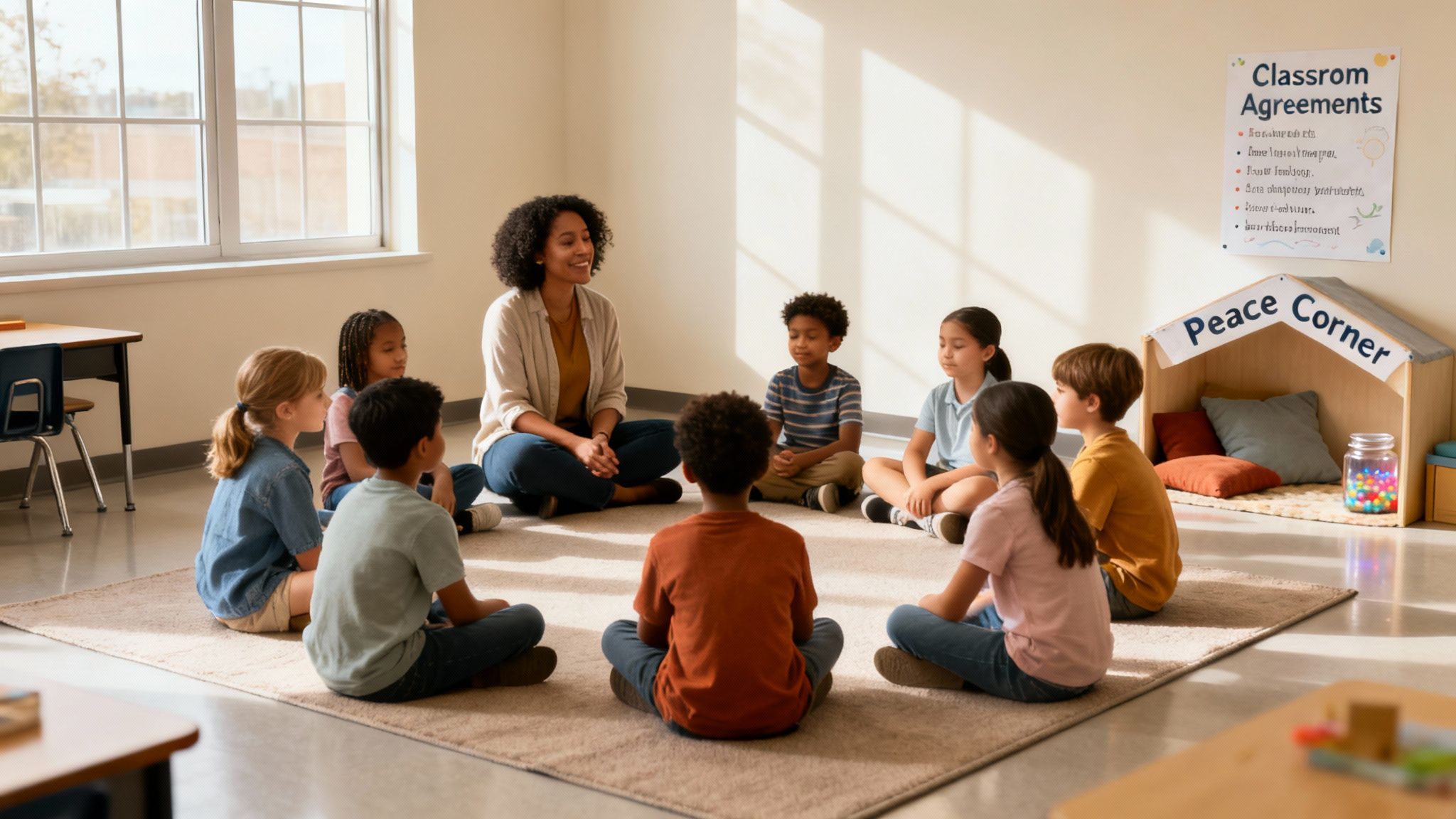
Every single student, no matter their age, feels overwhelmed sometimes. A designated “Peace Corner” or “Calm-Down Spot” gives them a safe space to self-regulate before their emotions boil over into a disruption.
It’s crucial to frame this as a supportive tool, not a punishment or a time-out spot. It’s a resource center equipped to help students navigate big feelings.
What to include in a Peace Corner:
Comfortable seating: Think a beanbag chair or a few soft cushions.
Sensory tools: Stress balls, fidgets, or a weighted lap pad can work wonders.
Visual aids: Posters showing simple breathing exercises or a chart of feelings.
Quiet activities: A simple puzzle, some coloring pages, or a glittery calm-down jar.
Practical Example: A student named Maya feels frustrated during a difficult math problem. Instead of crumpling her paper, she remembers the process her teacher taught her. She puts up the non-verbal “break” signal, walks quietly to the Peace Corner, sets a three-minute sand timer, and squeezes a stress ball. After a few minutes, she feels regulated and ready to try the problem again with a clearer mind.
By explicitly teaching students how and when to use this space, you’re not just managing behavior—you’re empowering them with self-management skills they’ll use for the rest of their lives. This foundational work is key to creating the positive atmosphere we all want, and you can learn more in our guide to building a peaceful and welcoming classroom culture.
Getting to the Root Cause of Disruptive Behavior
Before you can respond effectively to a student’s actions, you have to get curious about the need driving them. Nearly all disruptive behavior is just communication in disguise—an outward signal of an internal struggle.
The single most important shift you can make is moving from “behavior manager” to “needs detective.” This one change in perspective is the key to handling disruptions with empathy and real, lasting success.
When we only react to what we see on the surface—the calling out, the refusal to work, the constant fidgeting—we miss the real story. This path usually leads to a frustrating cycle of consequences that never actually solves the problem because it ignores the cause. The goal isn’t just to stop the disruption; it’s to figure out its function. What is this student trying to gain or avoid?
Research shows just how critical it is to get this right, and early. Without the right kind of intervention, disruptive behavior can escalate. For example, boys in aggressive first-grade classrooms are 2.5 times more likely to be aggressive by the time they reach middle school. With 32% of U.S. teachers saying misbehavior gets in the way of their teaching, it’s clear this is a widespread challenge. The good news? Strong, early management can slash the odds of future aggression from 59:1 down to a fraction of that, as detailed by research from PMC.
Identifying Patterns and Triggers
To decode what a student is communicating, you have to become an observer. Start looking for patterns. Think of yourself as a data collector, gathering clues that point you toward the root cause. This doesn’t need to be a complicated system; a simple notepad or a digital doc is all you need to start tracking what you see.
When a disruption happens, ask yourself a few key questions:
When does it happen? Is it always during math, hinting at a learning gap or anxiety? Does it ramp up right before lunch, suggesting hunger?
Where does it happen? Does the behavior pop up during unstructured times like recess or transitions? That could point to a need for social skills support or connection.
What happens right before? Did you just assign independent work? Was there a sudden loud noise? Did another student say something?
Practical Example: A teacher notices that a student, Leo, starts tapping his pencil loudly and trying to talk to neighbors every time they begin independent writing. After jotting down this observation for three days, the teacher realizes the behavior only happens during writing, never math or reading. This pattern suggests Leo isn’t being willfully defiant; he’s likely feeling anxious or stuck about the writing task itself.
These observations help you move past assumptions and start pinpointing specific triggers. That’s the first real step toward finding a solution that works.
Common Unmet Needs Behind the Behavior
Once you’ve spotted a few patterns, you can start connecting them to the most common unmet needs. While every child is different, disruptive behaviors often stem from a handful of core areas.
A student who constantly blurts out might not be trying to be defiant. They could be desperate for positive attention and connection—so much so that even a reprimand feels better than being ignored. The student who puts their head down and refuses to start an assignment isn’t necessarily lazy; they might be completely overwhelmed and are using avoidance to escape the feeling of failure.
Practical Example: A student who rips up their paper isn’t trying to challenge your authority—they’re likely expressing extreme frustration with a task they feel they cannot do. Instead of a punishment, the teacher could offer a different tool, like a mini whiteboard for practice, saying, “Writing can be tough. Let’s try brainstorming on this board first, where mistakes are easy to erase.”
It’s also crucial to remember that what happens outside of school has a huge impact inside the classroom. Understanding challenges like how family homelessness fuels child hunger can completely reframe how you see a child’s inability to focus or self-regulate. When you know a student is carrying heavy burdens, their behavior starts to make a lot more sense.
You can learn more about these challenging behaviors in the classroom in our related guide. By digging deeper to find the “why,” you can respond with compassion and provide support that actually helps, rather than just punishing the symptom.
In-the-Moment Strategies and De-escalation Scripts
When a disruption kicks off, your immediate response is everything. It sets the tone for what comes next. The real goal isn’t to win a battle of wills; it’s to guide a student back to a place where they’re calm and ready to learn again.
The most effective in-the-moment strategies are quiet, quick, and focused on de-escalation, not punishment. These moments are about preserving a student’s dignity while maintaining your authority. When done right, you can turn a potential power struggle into a genuine teaching opportunity.
First, you have to stay regulated yourself. A calm voice and neutral body language are your best tools for lowering the temperature in the room.
Using Non-Verbal Cues and Proximity
Sometimes, the best interventions are the ones nobody else in the class even notices. Before you ever have to say a word, subtle, non-verbal cues can redirect a student without disrupting the flow of your lesson. It’s the least invasive way to handle off-task behavior, and it works surprisingly well.
One of the most powerful tools in your toolkit is strategic proximity. Just walking over and standing near a student’s desk while you continue teaching is often enough to get them back on track. No confrontation, no public call-out—just your quiet presence signaling that you see what’s going on.
Practical Example: Two fourth-graders are whispering during silent reading. Instead of calling their names from across the room, their teacher calmly walks over and stands between their desks while scanning the rest of the class. The whispering stops instantly, and both students pick up their books. Not a single word was exchanged.
The Power of a Quiet Voice and Private Redirection
When you do need to use words, how you say them matters just as much as what you say. A loud, public correction often makes a student feel defensive and cornered, which can make them double down on the behavior.
Instead, try getting down to the student’s eye level and speaking in a quiet, firm, but respectful tone. This private redirection shows the student you’re addressing the behavior, not attacking them as a person. It communicates care.
Here are a few ways to redirect quietly:
The “Two-Sentence Intervention”: State the problem in one sentence and offer a solution in the second. For example, “I see you’re having trouble focusing on your worksheet. Why don’t we try the first two problems together?”
Offer a Controlled Choice: This gives the student a sense of agency, which can de-escalate things fast. “You can choose to finish this at your desk or in the peace corner. What works best for you right now?”
Postpone the Conversation: If a student is too agitated for a productive chat, acknowledge their feelings and schedule a time to talk later. “I can see you’re upset. Let’s talk about this in five minutes at my desk once you’ve had a chance to cool down.”
These small shifts are critical for managing the big feelings that can bubble up in a classroom. For more on this, check out our guide on what to do when big emotions take over.
Ready-to-Use De-escalation Scripts
When you’re put on the spot, it can be a lifesaver to have a few go-to phrases ready. The point of these scripts is to be supportive and proactive, not reactive and punitive. They work by validating the student’s feelings while still holding a clear boundary for their behavior.
Thinking about your responses ahead of time helps you stay calm and handle disruptions in a way that builds students up.
Reactive vs Proactive Responses to Common Disruptions
Let’s look at how small changes in our language can make a huge difference. Below is a table that contrasts common reactive phrases with more effective, SEL-informed alternatives.
Disruptive Behavior Scenario
Common Reactive Response to Avoid
Proactive SEL Response to Use
A student refuses to start their work.
“Do your work now or you’ll lose recess.”
“I see getting started feels tough today. Let’s look at the first question together.”
A student is talking out of turn repeatedly.
“Stop talking! I’ve already told you three times.”
“I love your enthusiasm. Please raise your hand so everyone gets a chance to share.”
A student makes a frustrated noise and crumples their paper.
“That’s a waste of paper. Pick it up and start over.”
“I can see you’re feeling frustrated. It’s okay. Let’s take a deep breath and find a new starting point.”
Two students are arguing over supplies.
“Both of you stop it! Give me the crayons.”
“It looks like you both want the same color. How can we solve this problem fairly?”
Using proactive language like this does more than just stop a behavior—it models problem-solving and emotional regulation. You’re teaching a skill that will last a lifetime. This approach reinforces that your classroom is a supportive community where challenges are met with help, not just consequences.
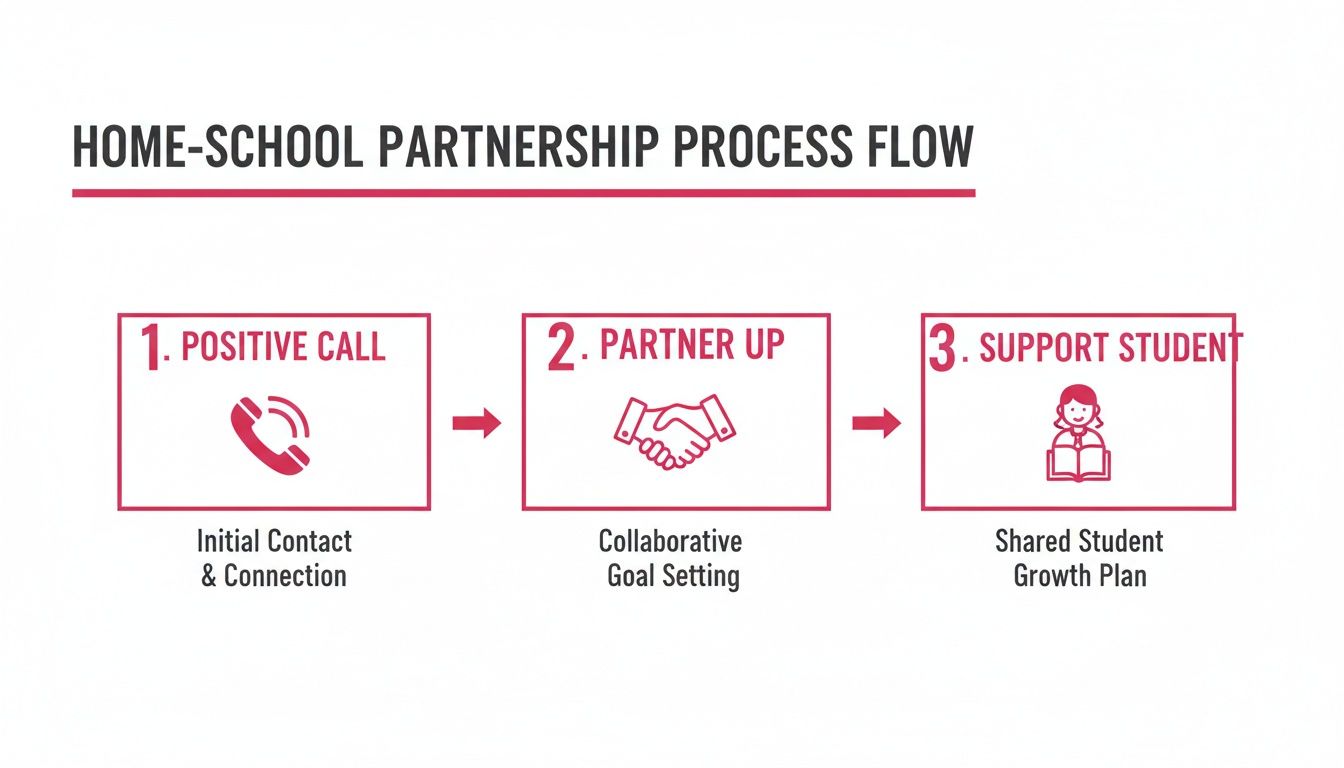
Building a Strong Home and School Partnership
When you’re trying to figure out how to handle disruptive students, it’s easy to feel like you’re on an island. But the truth is, you can’t—and shouldn’t—do it alone. Lasting change really takes hold when a student feels consistently supported by all the adults in their life. Building a collaborative partnership with families is one of the most powerful moves you can make.
This team effort isn’t just about reporting problems. It’s about creating a unified front that wraps support around the student. The goal is to move from a “you versus me” or “school versus home” dynamic to a “we’re in this together for your child” approach. This ensures the student receives the same messages and support, whether they’re in your classroom or at their kitchen table.
Framing the Conversation with Parents
Bringing up a child’s challenging behavior can feel daunting. It’s natural for parents to become defensive if they feel their child—or their parenting—is being criticized. The key is to frame every interaction from a place of partnership and shared goals, starting with a positive connection.
Never, ever lead with a list of problems. Instead, begin by sharing a genuine positive observation or a small moment of success. This simple step shows that you see their child’s strengths and value them as a whole person, not just as a behavior issue.
Practical Example Script for a Phone Call or Email: “Hi [Parent’s Name], this is [Your Name] from [School]. I was thinking about [Student’s Name] today and wanted to share something that made me smile—they were so helpful to a classmate during our science activity. I also wanted to partner with you on something I’ve noticed. [Student] seems to be struggling during transitions between subjects, and I’d love to brainstorm with you to find a strategy that might work both here and at home.”
This approach immediately establishes you as an ally. It shifts the focus from blame to collaborative problem-solving, making parents much more likely to engage as active partners.
Practical Tools for Parent-Teacher Conferences
Parent-teacher conferences are a prime opportunity to strengthen this partnership, but they can quickly turn negative if you’re not careful. It helps to prepare talking points that emphasize teamwork and focus squarely on solutions.
Here are a few actionable tips for these meetings:
Share data, not drama. Instead of saying, “He’s always disruptive,” try something more objective: “I’ve tracked it, and the outbursts happen most frequently right before lunch, which makes me wonder if hunger is a trigger.”
Ask for their expertise. Parents are the ultimate experts on their own children. Ask questions like, “What strategies do you use at home when he gets frustrated?” or “Have you seen this behavior in other settings?”
Create a shared goal. Work together to define one specific, achievable goal. For instance, “Let’s both work on helping him use his words to ask for a break when he feels overwhelmed.”
Practical Example: In a conference, a teacher says, “I’ve noticed Ava has a hard time settling down after recess. At home, what helps her transition from high-energy playtime to a quiet activity?” The parent shares that a five-minute warning and a simple breathing exercise work wonders. Together, they decide the teacher will try the same five-minute warning before the bell rings to come inside.
This collaborative spirit reinforces that you’re on the same team. Parents who feel heard and respected are far more likely to implement suggested strategies at home. You can learn more about these approaches through these positive parenting tips.
Involving School Support Staff
Remember, your partnership circle extends beyond just parents. School counselors, psychologists, social workers, and special education staff are invaluable resources. They bring specialized expertise and can offer different kinds of support for both you and the student.
Don’t wait until a situation becomes a full-blown crisis to reach out. The moment you notice a persistent pattern of disruptive behavior that isn’t responding to your classroom strategies, it’s time to consult with your school’s support team.
Bring your objective observations and documentation to them. They can help you analyze the behavior from a fresh perspective, suggest new interventions, or begin the process for more formal support if needed. Taking this proactive step ensures the student gets the right help sooner and shows families that the entire school community is invested in their child’s success.
Documenting Behavior and Creating Support Plans
When your go-to classroom strategies and talks with parents aren’t enough to change a persistent, disruptive behavior, it’s a signal to shift to a more structured approach. This isn’t a sign of failure. It simply means the student needs a different, more intensive kind of support.
The first step toward getting that support is clear, objective documentation.
This whole process is about painting a data-driven picture of what’s happening—not building a case against a child. By carefully recording the facts, you give your school’s support team (counselors, psychologists, or special education staff) the precise information they need to step in effectively. Without good data, getting a student the right help can feel like an uphill battle.
What to Record for Effective Documentation
To make your notes truly useful, they have to be objective. Focus on the observable facts and leave emotions or interpretations out of it. Think of yourself as a camera recording exactly what happened. This creates a clear, unbiased record for others to analyze.
When you track these details consistently, patterns start to emerge. And those patterns are the key to figuring out what’s really going on.
Here are the key details to log every time:
Date and Time: Pinpoint the exact time. Does it always happen before lunch? Only during math? This helps you see triggers.
Specific Actions: Describe exactly what you saw and heard. Instead of saying a student “was defiant,” write, “refused verbal prompts to begin the assignment and put his head on the desk.”
Location and Context: Where did the behavior happen? Was it during group work, independent reading, or a transition between activities?
Interventions Tried: What did you do in the moment? Jot down your strategy, like “gave a verbal redirection,” “offered a choice between two tasks,” or “prompted a visit to the peace corner.”
Student’s Response: How did the student react to what you did? Did they de-escalate, escalate, or simply ignore the prompt?
Practical Example: A teacher’s log entry might read: “Oct. 5, 10:15 AM: During silent reading, Sam left his seat and walked to the window. I gave a quiet verbal redirection to return to his book. He said, ‘This is boring,’ and remained at the window. I offered the choice to read in the book nook. He refused and sat on the floor.” This factual account is far more useful than “Sam was defiant and off-task again.”
The scale of this challenge is massive. In England’s schools, a staggering 69% of teachers say that poor student behavior regularly disrupts their lessons, with about a fifth of all teaching time lost to these interruptions. This chaos is directly tied to student performance; we know that safer classrooms with clear expectations lead to better academic outcomes.
With school suspensions hitting a record 787,000 in a single academic year, the need for data-backed support systems has never been clearer. You can read more about these findings on the behavior challenge in schools.
The simple flow below shows how a strong home-school partnership lays the groundwork for these more formal support plans.
This illustrates that the best support starts with positive communication long before a formal plan is even on the table.
Creating a Formal Behavior Intervention Plan
Once you have detailed documentation, you’re ready to refer a student to your school’s support team. With your data in hand, you can all work together to create a formal Behavior Intervention Plan (BIP). A BIP is not a punishment. It’s a proactive, personalized roadmap designed to teach and reinforce positive behaviors.
A BIP is a commitment from the school team to understand a student’s needs and provide targeted support. It shifts the focus from managing disruptions to teaching the skills the student is missing.
Creating a BIP is a team sport. You, the parents, a school psychologist or counselor, and maybe an administrator will all have a seat at the table. The plan will clearly define the target behavior, identify its function (what is the student trying to get or avoid?), and lay out specific strategies to help the student find a better way to meet that need.
For instance, a BIP for a student who frequently has outbursts during math might include:
Proactive Strategies: Allowing the student to work with a partner, or giving them a checklist to break down large assignments into smaller, less overwhelming steps.
Replacement Behaviors: Teaching the student to use a break card to ask for a two-minute rest when they feel frustrated, instead of shouting out.
Reinforcement: Giving specific praise when the student uses their break card appropriately or completes a portion of their work quietly.
This kind of structured plan gets everyone on the same page, providing the consistency and targeted support a struggling student needs to get back on track.
Your Questions About Student Behavior, Answered
Working with kids means navigating the wild, wonderful, and sometimes confusing world of their behavior. It’s a landscape that can bring up a lot of questions for teachers, parents, and anyone who cares for children. How do you know if it’s a real problem or just a tough day? When is it time to call for backup? Let’s get into some of the most common questions we hear.
How Can I Tell the Difference Between a Bad Day and a Real Behavioral Pattern?
This is a big one, and something every teacher grapples with. We’ve all seen a student who is usually sunny and engaged suddenly become withdrawn or a little grumpy. Is it a red flag? Not necessarily.
The key is to look for patterns versus isolated events. A bad day is just that—one day. It might look like a student being unusually quiet, sad, or briefly off-task. Maybe they didn’t sleep well, had a tiff with a friend before school, or just woke up on the wrong side of the bed. It’s a temporary blip.
A disruptive behavioral pattern is different. It’s recurring. It consistently gets in the way of their learning or the learning of those around them. We’re talking about the frequent calling out, the persistent refusal to even start an assignment, or the constant fidgeting that continues day after day, even with gentle redirection.
Practical Example: A second-grader who loves math suddenly puts her head on her desk during your lesson on telling time. That’s likely just a bad day. But if that same student puts her head down every single time a math worksheet hits her desk? You’re seeing a pattern. It could point to anything from math anxiety to a genuine learning gap.
A bad day calls for empathy, a quiet check-in, and a little grace. A pattern, on the other hand, is a signal that we need to observe more closely and start thinking about a more structured plan.
How Do I Correct a Student Without Shaming Them?
No one wants to be called out in front of a crowd, and kids are no exception. Public corrections almost always backfire. They can make a student feel defensive, embarrassed, or resentful, which often escalates the exact behavior you’re trying to address.
Privacy and discretion are your best friends here.
Whenever you can, address the behavior quietly and physically close to the student. Often, you don’t even need to say a word. Simply moving to stand near their desk while you continue teaching can be a powerful, silent cue that gets them back on track.
If words are necessary, keep your voice low and focus on the action, not the child’s character. Instead of calling from across the room, “Why aren’t you working?” walk over and whisper, “I need you to start on the first problem now.” This small shift protects their dignity and makes them more likely to cooperate.
Practical Example: During a class discussion, a student blurts out an answer for the third time. Instead of saying, “Stop interrupting!”, the teacher makes eye contact, subtly shakes her head, and touches her own raised hand as a quiet reminder of the classroom agreement. Later, she praises the student privately when he remembers to raise his hand.
And just as important: “catch them being good.” Make it a point to notice and acknowledge their positive efforts throughout the day. When students feel seen for their contributions, not just their mistakes, they’re more willing to take gentle correction in stride.
When Is It Time to Involve School Support Staff?
Knowing when to ask for help is a critical skill for any educator. You’ve tried different strategies, you’ve communicated with the family, but the behavior isn’t improving. It’s time to bring in the school counselor, psychologist, or an administrator when a student’s behavior hits one of these three benchmarks:
It Compromises Safety: This is the absolute priority. If a student’s actions pose a physical or emotional threat to themselves or anyone else, it’s time to involve support staff immediately.
It Persists Despite Your Best Efforts: You’ve tried proximity, private redirection, positive reinforcement, and partnering with parents, but the disruptive behavior continues or gets worse. Your toolbox is empty, and you need more specialized support.
It Severely Obstructs Learning: The behavior is so frequent or intense that it consistently prevents the student, their classmates, or even you from being able to teach and learn effectively.
Practical Example: A teacher has documented for two weeks that a particular student throws their materials on the floor whenever they are asked to transition from a preferred activity (like drawing) to a non-preferred one (like cleanup). The teacher has tried visual timers, verbal warnings, and offering choices, but the behavior is escalating. This is the perfect time to bring the documentation to the school counselor to brainstorm next steps.
Before you make that referral, make sure your documentation is in order. You’ll want clear, objective notes detailing the specific behaviors, when they happen, and the strategies you’ve already tried. This gives the support team the full picture they need to step in and provide the targeted help that student deserves.
At Soul Shoppe, we believe that every child deserves to feel safe, seen, and supported. Our programs provide schools with the tools to build empathetic, resilient communities where all students can thrive. Learn more about how we can partner with your school at https://www.soulshoppe.org.
In today’s educational landscape, academic achievement is deeply intertwined with emotional well-being. A strong classroom community isn’t just a ‘nice-to-have’; it’s the foundation upon which resilient, engaged, and successful learners are built. When students feel seen, safe, and connected, they are better equipped to take academic risks, collaborate effectively, and navigate social challenges with confidence.
This article moves beyond generic advice to provide a curated roundup of 10 powerful, research-aligned classroom community building activities. Each entry is designed for practical implementation, offering step-by-step guidance, adaptations for different grade levels (K-8), and specific examples that both teachers and parents can use to foster a thriving, supportive learning environment. For instance, you’ll find structured check-in prompts for a first-grade classroom and complex restorative circle scripts suitable for middle schoolers.
Creating this supportive atmosphere is a critical component of a well-managed learning space. Before diving into specific activities, it’s helpful to establish a baseline of respect and order. You can explore powerful classroom management strategies that transform your space into a vibrant community where every student feels seen and empowered.
Drawing from over 20 years of experience at Soul Shoppe, we know that these strategies are essential for cultivating the connection, safety, and empathy every child needs to thrive. This guide provides actionable steps to intentionally build a classroom where every student feels they belong, setting the stage for deeper learning and social-emotional growth. Let’s explore the activities that will make this a reality in your classroom.
1. Circle Time/Talking Circles
Circle Time, often called Talking Circles, is a foundational practice for fostering psychological safety and a strong sense of belonging in the classroom. This structured activity involves students gathering in a circle to share thoughts, feelings, and experiences. By giving every student an equal opportunity to speak and be heard without interruption, it reinforces that each voice has value. This practice is rooted in indigenous traditions and is a cornerstone of early childhood education and restorative justice models.
Practical Implementation and Examples
The power of Circle Time lies in its consistency and structure. For example, a first-grade teacher might start each morning by asking students to share “one happy or one crummy” thing from their evening. A middle school advisory could use a weekly circle with a prompt like, “Share a time this week you felt proud of your effort.” These routines create a predictable space for sharing.
Actionable Tips for Success
To make circles effective, focus on creating a safe and predictable environment.
Establish Clear Agreements: Work with students to co-create community agreements before each circle to reinforce expectations like respectful listening and confidentiality.
Use a Talking Piece: Introduce a special object (a smooth stone, a small toy, or a decorated stick) as a “talking piece.” Only the person holding the object may speak. This simple tool prevents interruptions and encourages mindful participation.
Start Small: Begin with brief circles (10-15 minutes) and low-pressure prompts. As students become more comfortable, you can gradually extend the time and introduce more reflective or emotional topics.
Model Vulnerability: As the facilitator, your participation is crucial. Share your own appropriate thoughts and feelings to model the type of open, honest communication you want to cultivate.
Key Insight: The physical act of sitting in a circle, with no front or back, is a powerful nonverbal cue that dismantles traditional classroom hierarchies and positions everyone as an equal member of the community.
Circles are one of the most versatile classroom community building activities because they can be adapted for any grade level and serve multiple purposes, from daily check-ins to resolving conflicts. This approach directly aligns with Soul Shoppe’s core belief that connection and emotional safety are prerequisites for academic and social success. By creating a predictable and safe space for sharing, you lay the groundwork for a truly empathetic and supportive classroom culture.
2. Peer Buddy Systems and Mentorship Programs
Peer Buddy Systems and Mentorship Programs are structured partnerships that pair students for mutual academic, social, and emotional support. These programs deliberately create one-on-one connections, often matching older students with younger ones, to foster a culture of care and responsibility. By building these direct links, schools can reduce feelings of isolation, enhance empathy, and empower students to become leaders. This approach is rooted in models like Big Brothers Big Sisters and has become a powerful tool in modern anti-bullying and social-emotional learning initiatives.
Practical Implementation and Examples
This strategy thrives on intentional structure. A common example is pairing fifth graders with kindergarteners for a weekly “Reading Buddies” session, where the older student helps the younger one with literacy skills while building a positive relationship. Another powerful application is in middle school, where eighth-grade mentors can support sixth graders navigating the difficult transition, offering guidance and a friendly face in the hallway. For instance, mentors could help new students learn how to open their lockers or find their way to different classrooms during the first week of school.
Actionable Tips for Success
To ensure these partnerships are meaningful and effective, careful planning is essential. A well-designed program goes beyond simply matching names on a list.
Use Matching Surveys: Create simple surveys to pair students based on shared interests, hobbies, or even identified social needs. This intentional matching increases the likelihood of a genuine connection.
Provide Structure and Prompts: Don’t leave interactions to chance. Offer structured activities like shared reading, a specific craft, or conversation starter cards to guide their time together, especially in the beginning.
Train Your Mentors: Explicitly teach older students essential skills like active listening, asking open-ended questions, and how to offer encouragement. This training transforms them from just a “buddy” into a true mentor.
Schedule Regular Check-ins: Meet with mentors as a group to troubleshoot challenges and share successes. Check in with younger buddies to ensure they feel safe and supported in the partnership.
Key Insight: Peer mentorship transforms the school environment from a collection of individual classrooms into an interconnected ecosystem where students are actively responsible for one another’s well-being and success.
These types of classroom community building activities are invaluable for creating a protective and inclusive school climate. They give older students a profound sense of purpose and provide younger students with a trusted ally, directly addressing the need for belonging that is central to Soul Shoppe’s mission. By empowering students to support each other, you build a community that is resilient, empathetic, and truly student-led.
3. Collaborative Learning Projects and Cooperative Learning Structures
Collaborative Learning Projects and Cooperative Learning Structures embed community building directly into academic instruction. Instead of treating social skills and coursework as separate, this approach intentionally designs tasks where students must work together toward a shared goal. By making students mutually dependent on one another for success, these activities teach vital communication, problem-solving, and conflict resolution skills in an authentic context. This method transforms academic work into a powerful vehicle for building interdependence and mutual respect.
For example, a science investigation can assign designated roles like “Materials Manager,” “Recorder,” and “Speaker,” ensuring each student has a crucial part to play. Similarly, literature circles give students specific jobs like “Discussion Director” or “Word Wizard,” fostering student-led discussions that build strong communication habits. For a history project, one student might be the “Researcher,” another the “Map Maker,” and a third the “Presenter,” making each person’s contribution essential to the final grade.
How to Implement Collaborative Learning Effectively:
Explicitly Teach Collaboration Skills: Before starting a project, hold mini-lessons on skills like active listening, giving constructive feedback, and reaching a consensus. Don’t assume students know how to collaborate effectively.
Use Role Cards: Provide groups with cards that clearly define each member’s responsibilities. This clarifies expectations, prevents one or two students from dominating the work, and ensures everyone contributes.
Vary Groupings Intentionally: Mix up student groups regularly. This prevents cliques from forming and gives every student a chance to work with and learn from all of their peers, building relationships across the entire classroom.
Incorporate Group Reflection: After a project, guide students to reflect on their process. Ask questions like, “What was one challenge our group faced, and how did we handle it?” or “How well did we listen to everyone’s ideas?” This metacognitive step is crucial for growth.
Key Insight: Structuring academic tasks for interdependence shifts the classroom dynamic from individual competition to collective achievement. Students learn that their personal success is directly linked to the success of their peers, fostering a powerful sense of “we.”
Integrating these projects is one of the most effective classroom community building activities because it shows students the value of community in a tangible, academic context. This approach aligns with Soul Shoppe’s philosophy of teaching practical relationship tools, turning every lesson into an opportunity to build a more resilient and supportive classroom culture where students learn to rely on and respect one another.
4. Gratitude and Appreciation Practices
Integrating Gratitude and Appreciation Practices into the daily classroom routine is a powerful strategy for building a positive, supportive, and empathetic community. This approach involves creating intentional opportunities for students to recognize and express thankfulness for their peers, teachers, and school environment. By consistently shifting the focus toward strengths and positive contributions, these practices actively reduce conflict, foster a sense of being seen and valued, and reinforce the core principles of psychological safety and connection.
How to Implement Gratitude Practices
Successful implementation relies on making appreciation a regular and authentic habit rather than a one-time event. You can embed these moments throughout the school day in various engaging ways. For example, start a “Gratitude Jar” where students can write anonymous notes of thanks to classmates, which are read aloud at the end of the week. Another popular method is dedicating a few minutes during morning meetings for “Appreciation Shout-Outs,” where students can publicly acknowledge a kind act or helpful behavior from a peer.
For a more tangible approach, teachers can provide students with opportunities to create and share messages of appreciation, such as personalized notes or customizable thank you cards for special occasions. These small but meaningful gestures help solidify the habit of showing gratitude.
Tips for Effective Facilitation
Model Specificity: Go beyond generic praise. Instead of saying, “Thanks for being a good friend,” model specific appreciation like, “I want to thank Maya for helping me pick up my crayons when I dropped them. It made me feel supported.”
Teach the ‘Why’: Explain to students how receiving specific appreciation makes someone feel. Connect their kind actions to the positive impact they have on others to build empathy.
Ensure Equity: Use a system, like drawing names from a jar or having a student of the day, to ensure that every child, especially quieter ones, regularly receives recognition from their peers.
Create a Visual Focus: Designate a “Gratitude Wall” or a bulletin board where students can post thank-you notes. This creates a powerful and constant visual reminder of the community’s positive interactions.
Key Insight: A culture of appreciation changes the classroom’s default setting from identifying problems to recognizing strengths. This shift empowers students to see the good in one another, which is a foundational skill for resolving conflicts and building lasting friendships.
Gratitude and Appreciation Practices are some of the most impactful classroom community building activities because they require minimal resources but yield significant emotional returns. These exercises directly support Soul Shoppe’s mission by teaching students to actively look for and acknowledge the best in each other, creating a classroom where everyone feels a deep sense of belonging. Learn more about gratitude activities for kids and how they can transform your classroom environment.
5. Restorative Practices and Peace Circles
Restorative Practices and Peace Circles offer a powerful framework for addressing harm, resolving conflict, and strengthening relationships within the classroom. Moving beyond traditional punitive discipline, this approach brings together those affected by an incident to collaboratively understand its impact, repair the harm done, and rebuild community trust. It is a proactive and responsive strategy that empowers students to take accountability and learn from their mistakes in a supportive environment.
How to Implement Restorative Practices
Successfully integrating restorative practices requires a foundational shift in how conflict is viewed, not as a disruption to be punished but as an opportunity for learning and connection. This approach aligns directly with Soul Shoppe’s mission to equip students with essential conflict resolution tools.
Build the Foundation First: Start with proactive community-building circles (like the Talking Circles mentioned earlier) to establish trust and shared norms. This makes it easier to use circles for responsive situations when conflict arises.
Use Restorative Language: Consistently use restorative questions throughout the day. Instead of “Why did you do that?”, ask “What happened?” and “Who has been affected by what you did?” This shifts the focus from blame to impact.
Facilitate, Don’t Judge: In a responsive peace circle, the teacher’s role is to facilitate dialogue, not to impose a solution. Guide students through a structured conversation to understand each other’s perspectives and collectively decide on a path forward. For example, after a dispute over a game at recess, a circle could help students express their feelings and co-create new rules for the game that everyone agrees on.
Invest in Training: Effective facilitation is a skill. Seek out comprehensive training in restorative principles to ensure you can hold a safe and productive space for students, especially when discussing sensitive incidents.
Key Insight: Restorative practices are not just for when things go wrong; they are most effective when woven into the daily fabric of the classroom to proactively build empathy, accountability, and mutual respect.
As one of the most transformative classroom community building activities, restorative circles teach invaluable life skills. They provide a structured process for repairing relationships and fostering a culture where every member feels seen, heard, and responsible for the well-being of the group. Explore these conflict resolution strategies for students to further support this work.
6. Mindfulness and Self-Regulation Practices
Mindfulness and Self-Regulation Practices are structured activities that teach students to become aware of their thoughts, emotions, and bodily sensations without judgment. Integrating these practices into the daily routine helps students develop crucial self-regulation skills, emotional resilience, and the ability to focus. By creating moments of intentional calm, you build the psychological safety necessary for learning and connection, which are core competencies Soul Shoppe teaches to help kids and adults thrive.
How to Implement It:
These practices are not about emptying the mind but about paying attention to the present moment. Effective implementation involves making these exercises a predictable and supportive part of the classroom culture rather than a reactive tool used only during moments of chaos.
For example, a teacher might start each day with a “Mindful Minute,” guiding students to notice the feeling of their feet on the floor and the air entering and leaving their lungs. Another powerful practice is using a “Body Scan” after recess, asking students to mentally scan from their toes to their head, noticing and releasing any physical tension they are holding. These brief, consistent activities help students build their “attention muscle” over time.
Practical Tips for Success:
To make mindfulness accessible and effective, it’s important to introduce it in a way that feels safe and engaging for all students. The goal is progress, not perfection.
Start Small: Begin with very short practices, just 2-3 minutes long, and gradually extend the duration as students become more comfortable. This prevents overwhelm and builds confidence.
Frame it as ‘Brain Training’: For older students, use sports or fitness metaphors. Explain that mindfulness is like a workout for the brain, helping them strengthen their focus and manage stress.
Offer Multiple Modalities: Recognize that students have different needs. Offer options like mindful breathing, mindful walking, or mindful listening to sounds in the room.
Practice with Them: Your authentic participation is key. When you practice mindfulness alongside your students, you model its importance and create a shared experience of calm.
Key Insight: Teaching students to notice their internal state is a profound act of empowerment. It gives them the tools to respond to challenges thoughtfully instead of reacting impulsively, which is a cornerstone of a safe and respectful community.
Mindfulness is one of the most impactful classroom community building activities because it equips each student with the internal resources to manage stress and engage with others from a place of centeredness. When individuals feel more in control of their emotions, the entire community benefits from a more peaceful and productive learning environment. Dive deeper into the benefits of mindfulness in the classroom and discover more strategies.
7. Identity and Belonging Activities (All About Me Projects, Identity Exploration)
Identity and Belonging Activities are structured exercises where students explore and share their unique backgrounds, cultures, interests, and values. These practices help students feel seen, understood, and valued for who they are, which directly fosters a sense of belonging. By celebrating the diverse identities within the room, these activities build empathy, reduce stereotypes, and create a classroom where every student’s story matters. This approach acknowledges the whole child, a core component of creating the safe and connected learning environments that Soul Shoppe champions.
How to Implement This in Your Classroom
Activities that center student identity can be woven into the curriculum throughout the year. For instance, an “Identity Web” activity allows students to map different aspects of their identity, such as family roles (“oldest sister”), cultural heritage (“Mexican-American”), hobbies (“soccer player”), and personal strengths (“good at math”). Another powerful practice is creating “All About Me” books or posters that students share during a morning meeting, giving them a platform to be the expert on their own life. These projects validate individual experiences and build bridges of understanding between classmates.
Tips for Success
Establish Safety and Respect: Before any sharing, co-create agreements about respectful listening and asking thoughtful questions. This ensures the classroom is a safe space for vulnerability.
Provide Structure and Choice: Offer structured templates or prompts (e.g., “My favorite family tradition is…”) to guide students, but also allow for creative expression through art, writing, or technology. This reduces pressure and empowers student voice.
Model First: As the teacher, share your own identity web or “All About Me” project first. Your authenticity and willingness to be open will set a positive and trusting tone for the entire class.
Display Student Identities: Make student identities a visible and celebrated part of the classroom environment. Proudly display their posters, webs, and cultural artifacts to reinforce that every student belongs.
Key Insight: When students see their own identities and cultures reflected and respected in the classroom, they develop a stronger sense of ownership and belonging. This validation is a critical prerequisite for both social and academic engagement.
Identity exploration is one of the most impactful classroom community building activities for developing a truly inclusive culture. It moves beyond surface-level introductions to foster genuine connections rooted in mutual respect and appreciation for diversity. By making space for students to share their stories, you affirm their worth and build a cohesive community where every member feels they truly fit in.
8. Community Service and Cooperative Problem-Solving Projects
Community Service and Cooperative Problem-Solving Projects shift the focus of community building from internal classroom dynamics to external, shared goals. This approach involves students working together to address authentic challenges within their classroom, school, or local community. By uniting around a common purpose, students develop a profound sense of agency, empathy, and interconnectedness. They learn that their collective actions can create meaningful, positive change, reinforcing the idea that they are a capable and impactful team. This method is a cornerstone of service learning and project-based learning frameworks.
How to Implement This Activity
The power of this activity lies in student ownership. Begin by facilitating a discussion to identify genuine needs or problems that students care about. This could be anything from a messy classroom library to a lack of recycling bins in the cafeteria or the need for a “buddy bench” on the playground. Once a project is chosen, guide students through planning, collaboration, execution, and reflection. For example, a classroom garden project requires students to research plants, design the layout, delegate watering duties, and decide how to share the harvest. A school-wide kindness campaign might involve students creating posters, writing announcements, and tracking acts of kindness.
Practical Tips for Success
Start Small and Local: Begin with a manageable, classroom-level project, like organizing supplies or creating a welcoming bulletin board for a new student. Success here builds the confidence and skills needed for larger, school-wide initiatives.
Give Students a Voice: Involve students in every step, from identifying the problem to brainstorming solutions. When they feel a sense of ownership, their engagement and commitment skyrocket.
Break It Down: Deconstruct large projects into smaller, achievable milestones with clear roles. This prevents students from feeling overwhelmed and helps maintain momentum.
Focus on Reflection: Regularly schedule time for students to reflect on their progress, challenges, and the collaborative skills they are using. Ask questions like, “What was one way our team worked well together today?”
Key Insight: When students collaborate to serve a purpose greater than themselves, they build community not just by talking about values like kindness and responsibility, but by actively practicing them in a real-world context.
These collaborative efforts are among the most powerful classroom community building activities because they transform students from passive recipients of instruction into active citizens. This directly supports Soul Shoppe’s vision of empowering students to support their peers and work together to create a better environment for everyone. By solving real problems, students forge strong bonds built on shared accomplishment and mutual respect.
9. Structured Social-Emotional Check-ins and Mood Tracking
Structured Social-Emotional Check-ins are brief, consistent routines where students identify and share their emotional state. This practice normalizes emotional expression, builds self-awareness, and provides teachers with valuable insight into their students’ well-being. By creating a predictable and safe way for students to report how they feel, these check-ins signal that emotions are a valid and important part of the classroom experience, which is a key component of building a supportive community.
This method can be implemented in various ways. For instance, a teacher might have a “mood meter” chart near the classroom entrance with different color zones representing emotions (e.g., blue for sad/tired, green for calm/ready to learn, yellow for excited/silly, red for angry/upset), where students place a clothespin with their name on the color that matches their feeling. Other options include brief journal prompts like, “What’s one feeling you’re bringing to school today?” or using a simple digital form with emojis for students to fill out during morning homeroom.
Tips for Effective Implementation
To make these check-ins a successful part of your routine, consider these strategies:
Keep it Quick and Consistent: To ensure sustainability, keep the check-in process under five minutes. Making it a predictable part of the daily schedule, like right after the morning bell, helps it become a habit.
Offer Privacy: While group sharing can be powerful, always provide a private or anonymous option for students to indicate they are struggling. This could be a private form, a sticky note placed in a designated “I need a check-in” box, or a specific hand signal.
Act on the Data: The information gathered is only useful if it’s acted upon. When a student consistently reports feeling sad or angry, follow up with a quiet, private conversation to offer support. This shows students you are listening and that their feelings matter.
Use a Simple Scale: Use a clear and easy-to-understand scale that is developmentally appropriate. For younger students, colors or simple emojis work well. Older students might use a 1-5 number scale or a more nuanced set of feeling words. For more detailed strategies, you can explore how to boost student confidence with mood meters and reflection tools.
Key Insight: Daily emotional check-ins transform the abstract concept of “emotional awareness” into a concrete, daily practice. This routine gives students the language and permission to understand their inner world and communicates to them that the teacher is a safe and available resource for support.
As one of the most direct classroom community building activities, emotional check-ins create a climate of care and responsiveness. This practice directly aligns with Soul Shoppe’s mission to equip students with the tools for emotional intelligence, creating a foundation where every child feels seen, heard, and ready to learn. By integrating this simple yet powerful habit, you build a more empathetic and connected classroom.
10. Interactive Games, Energizers, and Team-Building Activities
Interactive games and energizers are structured, play-based activities that harness the power of fun and movement to build trust, communication, and positive peer relationships. These activities intentionally break down social barriers and create shared positive experiences, transforming the classroom dynamic from a group of individuals into a collaborative team. By engaging students in low-pressure, high-energy challenges, you can foster teamwork and energize the room during transitions or lulls in the day. This aligns directly with Soul Shoppe’s experiential, play-based approach to building connection.
How to Implement This Strategy
These activities are highly adaptable and can be used as quick brain breaks, dedicated team-building lessons, or to kickstart a day. For example, a game of “Silent Sequencing” where students must line up in order of their birthdays without speaking teaches nonverbal communication and problem-solving. A quick round of “Four Corners” can re-energize students after a long lesson while also serving as an informal poll or opinion gauge (e.g., “Go to the corner that represents your favorite season”).
Tips for Success
Explain the “Why”: Before starting a game, briefly explain its purpose. After the activity, lead a short debrief to discuss what students learned about communication, trust, or teamwork. This reflection turns fun into meaningful SEL learning.
Scaffold Trust Gradually: Begin with low-risk activities that don’t require physical contact or high levels of vulnerability. As students build comfort and rapport, you can introduce more complex challenges like a carefully supervised and scaffolded trust walk.
Prioritize Safety and Choice: Establish clear rules and boundaries to ensure physical and emotional safety. Always provide an “opt-out” option where students can choose to observe or take on a different role, like timekeeper, without judgment.
Observe and Intervene: Pay close attention to group dynamics. Use these games as an opportunity to observe social interactions, and be prepared to gently address any signs of exclusion or discomfort to reinforce a culture of inclusivity.
Key Insight: Structured play provides a unique context where students can practice essential social skills like negotiation, cooperation, and empathy in a low-stakes environment. The fun of the game makes the learning feel effortless and memorable.
Using classroom community building activities like these energizers and games is a powerful way to inject joy and movement into your routine. They provide a valuable medium for students to connect with their peers on a different level, strengthening the social fabric of the classroom one game at a time.
Classroom Community Activities: 10-Point Comparison
Practice
Implementation complexity
Resource needs
Expected outcomes
Ideal use cases
Key advantages
Circle Time / Talking Circles
Low–Moderate — requires facilitation skill
Minimal: time, talking piece, facilitator training
Increased belonging, active listening, normalized emotional expression
Daily routines, morning meetings, advisory periods (K-8)
Increased trust, engagement, improved communication
Transitions, team-building days, energizers between lessons
Fun engagement, lowers barriers, supports kinesthetic learners
Putting It All Together: Your Next Steps for Community Building
We’ve explored a comprehensive toolkit of ten powerful strategies, from the foundational practice of Talking Circles to the dynamic energy of collaborative projects. Each of these classroom community building activities serves as a vital thread in weaving a tapestry of connection, respect, and belonging. The true impact, however, lies not in completing a single activity, but in the consistent, intentional integration of these practices into the daily rhythm of your school environment.
This is not a checklist to be completed by the end of September. It is a continuous journey of listening, adapting, and co-creating a space where every individual feels seen, valued, and safe. The goal is to move beyond mere classroom management and into the realm of genuine community cultivation.
Key Takeaways for Lasting Impact
As you move forward, keep these core principles at the forefront of your planning and practice:
Consistency Over Intensity: A brief, daily Social-Emotional Check-in will build more trust and psychological safety over time than a single, elaborate team-building day. The routine nature of these interactions signals to students that their emotional well-being is a constant priority.
Student Agency is Paramount: The most vibrant communities are not built for students, but with them. Involve students in establishing norms for Restorative Circles, let them lead Gratitude and Appreciation Practices, and empower them to choose Community Service Projects that resonate with their passions.
Modeling is Your Most Powerful Tool: Your own vulnerability, empathy, and willingness to participate authentically in these activities set the tone for the entire community. When you share a personal story in a Talking Circle or model how to give specific, meaningful appreciation, you grant students permission to do the same.
Your Actionable Next Steps
Feeling inspired but not sure where to begin? Don’t try to implement everything at once. Sustainable change starts with small, deliberate steps.
Assess Your Current Needs: Take a moment to reflect on your specific classroom or school environment. Is there a need for more proactive conflict resolution? Perhaps students would benefit from enhanced self-regulation skills. Use this assessment to choose one or two activities from our list that directly address your most pressing needs. For example, if you notice frequent minor conflicts during recess, introducing Restorative Practices might be your most impactful starting point.
Schedule It In: The adage “what gets scheduled gets done” is especially true for community building. Block out 10-15 minutes on your daily or weekly calendar specifically for these practices. Treat this time as non-negotiable, just like you would for core academic subjects. A consistent “Mindful Monday” or “Feedback Friday” can quickly become a cherished and grounding routine for students.
Gather Feedback and Iterate: After trying an activity for a few weeks, check in with your students. Ask them directly: What did you enjoy about our Peer Buddy system? How could we make our Collaborative Learning Projects more effective? Use their insights to adapt and refine your approach, reinforcing the message that their voice and experience matter.
Ultimately, investing in these classroom community building activities is an investment in academic success, emotional well-being, and the development of compassionate, engaged citizens. You are not just teaching curriculum; you are creating a nurturing ecosystem where every student has the foundation they need to learn, grow, and thrive. The positive ripples from a strong, supportive classroom community extend far beyond your four walls, shaping how students interact with their families, their peers, and the world at large.
Ready to deepen this work and bring a unified, school-wide approach to social-emotional learning? Soul Shoppe provides dynamic, interactive programs and professional development that equip entire school communities with the tools to build empathy, prevent bullying, and create lasting positive change. Explore how our evidence-based Soul Shoppe programs can transform your school’s culture today.