


How to Improve School Culture: Practical Tips for Every Educator
Improving school culture isn’t just about adding another program to an already long list. It’s about being intentional in building an environment where everyone—from students to staff—feels safe, connected, and valued.
The most direct path to this is by weaving three core pillars into the fabric of each day: psychological safety, strong relationships, and a shared purpose. This isn’t about buzzwords; it’s about making tangible, positive changes that people can actually feel.
What a Positive School Culture Really Looks Like
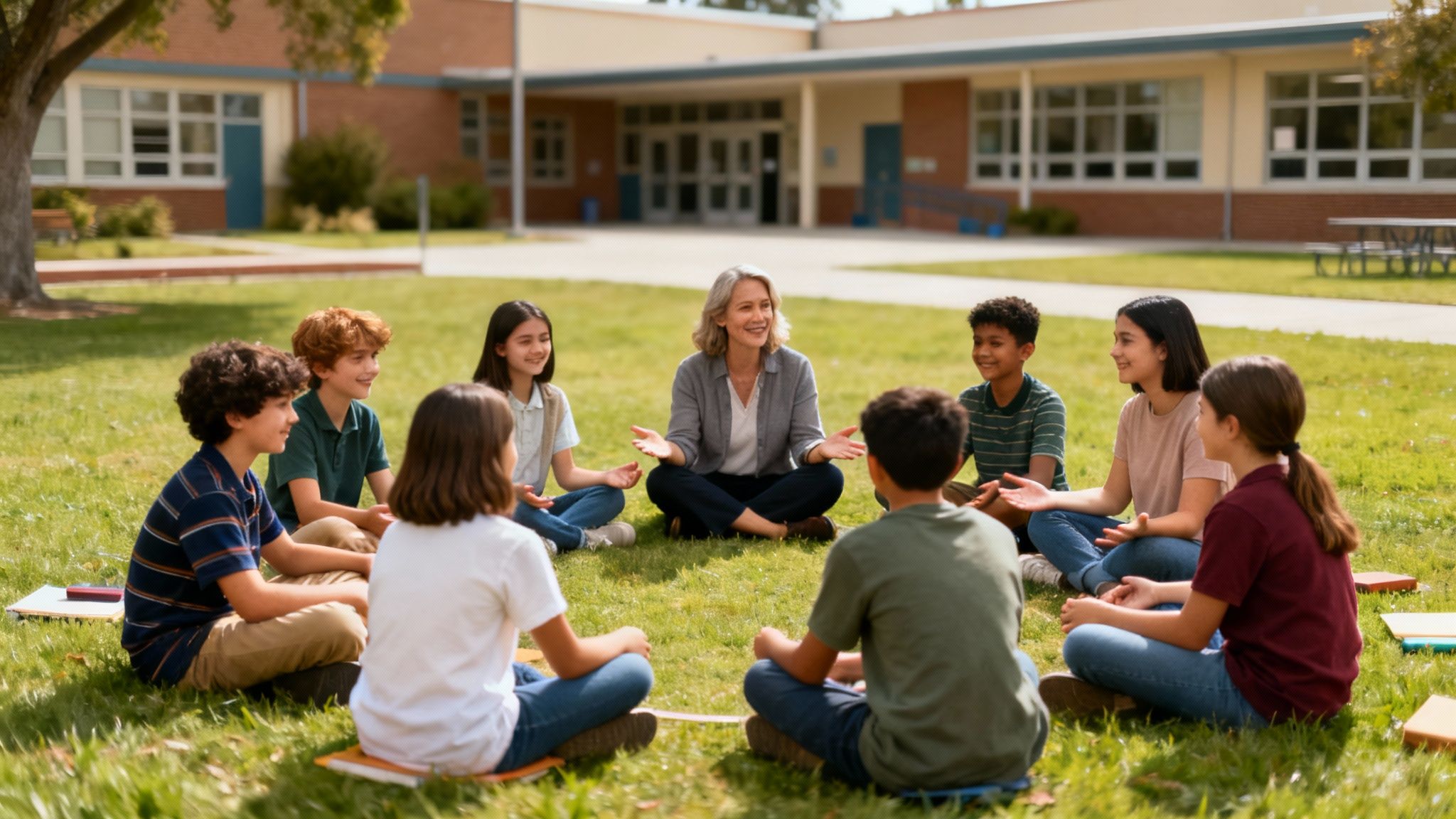
Forget the abstract for a moment and picture what a thriving school culture feels like on a random Tuesday morning. It’s the energy you notice in the hallways. It’s the way kids and adults interact in the cafeteria. It’s the tone of the conversations in the staff lounge.
A genuinely positive culture has less to do with the posters on the wall and everything to do with the daily, lived experiences of every single person who walks through the doors.
At its heart, this kind of culture is built on a foundation of psychological safety. This means students feel secure enough to ask a question without worrying about being ridiculed. It means teachers feel empowered to try a new lesson plan without the fear of failure hanging over their heads.
It’s the crucial difference between a student raising their hand to say, “I don’t get it,” and one who stays silent to avoid looking foolish.
The Power of Strong Relationships
Beyond feeling safe, strong relationships are the connective tissue holding a healthy school together. This is so much more than students simply having friends. It’s about teachers who know their students’ interests, administrators who greet kids by name, and staff who feel genuinely supported by their colleagues.
Think about how two different schools might handle a conflict between students:
- School A (Punitive Culture): The students involved get sent to the office, are handed a detention slip, and told to stay away from each other. The root of the problem is never addressed, and resentment is left to simmer.
- School B (Relational Culture): The students sit down for a restorative circle, guided by a trained staff member. They each get to share their side, listen to one another, and work together to figure out how to repair the harm. This process builds empathy and gives them real-world conflict-resolution skills.
The second approach doesn’t just punish behavior—it actively mends relationships and strengthens the community. It sends a clear message that connection and understanding are what truly matter.
A Clear and Shared Purpose
Finally, a positive culture is united by a shared purpose that everyone understands and believes in. This has to go deeper than a generic mission statement plaque hanging in the main office. It’s a collective agreement that the school is a place for everyone to grow—academically, socially, and emotionally.
When a school’s purpose is clear, big and small decisions get filtered through a simple question: “Does this help our students and staff thrive?” This clarity aligns everyone’s efforts, from the principal’s budget priorities to a teacher’s classroom management strategy.
This shared mission is what transforms a school from a collection of individual classrooms into a cohesive community working toward the same goals. You can see it in action when older students mentor younger ones or when teachers collaborate on exciting cross-curricular projects. To see this come alive at the classroom level, it helps to understand what makes a peaceful and welcoming classroom culture.
Let’s break down these core components and what they mean for your school.
The Three Pillars of a Positive School Culture
| Pillar | What It Looks Like in Practice | Impact on Students and Staff |
|---|---|---|
| Psychological Safety | Students ask questions freely. Staff try new ideas without fear of failure. Mistakes are treated as learning opportunities, not punishments. | Fosters curiosity and innovation. Reduces anxiety and boosts participation. Staff feel empowered and are more likely to stay. |
| Strong Relationships | Teachers greet students by name. Staff collaborate and support one another. Restorative practices are used to resolve conflicts. | Creates a strong sense of belonging. Students feel seen and supported. Behavior issues decrease as connections deepen. |
| Shared Purpose | Decisions are aligned with the school’s core values. Everyone can articulate “why we do what we do.” There’s a collective focus on student and staff well-being. | Aligns efforts and reduces friction. Motivates everyone to work toward common goals. Boosts morale and school pride. |
The impact of focusing on these pillars is profound. Schools with strong, positive cultures see better academic outcomes, a significant drop in behavioral issues, and higher teacher retention rates. When staff feel respected and students feel they belong, the entire educational experience is elevated. Knowing how to improve school culture is really about knowing how to intentionally build these pillars, day in and day out.
Conducting a Meaningful School Culture Audit
Before you can improve your school’s culture, you first have to get an honest picture of what it’s actually like right now. It’s tempting to jump right into new initiatives, but starting without understanding the real experiences of your students and staff is like trying to navigate without a map.
A truly meaningful culture audit goes way beyond generic surveys. It’s about uncovering the unspoken rules, the hidden challenges, and the authentic bright spots that define daily life on your campus. This isn’t about finding blame; it’s about spotting specific opportunities to make things better.
The need for this deep listening is more urgent than ever. The Pearson School Report 2023 revealed some concerning trends post-COVID. For instance, only 27% of schools increased collaboration with parents on student issues, a sharp decline from 43% the year before. At the same time, just 36% offered mental health training for staff, down from 47%, even with staff wellbeing and student behavior as top concerns.
Moving Beyond Standard Surveys
Climate surveys can be a decent starting point, but they often miss the subtle, human details of a school’s culture. To get a richer, more complete picture, you need to get creative and give a real voice to the people who live that culture every single day.
Here are a couple of powerful ways to do that:
- Shadow a student for a day. This is a game-changer. When an administrator follows a student from the first bell to the last, they get an unfiltered view of everything—the chaos in the hallways between classes, the social dynamics in the cafeteria, and the emotional energy of different classrooms. It reveals pain points and successes that numbers on a spreadsheet could never show.
- Create safe, anonymous feedback channels. A simple staff feedback wall in the lounge with a stack of sticky notes can generate far more honest input than a formal meeting. It gives staff a low-pressure way to share what’s working, what’s not, and what they really need to feel supported.
Listening Directly to Students
Your students are the ultimate experts on your school’s culture, and creating structured ways for them to share their truth is non-negotiable. Student-led focus groups, for example, often create a more comfortable space for them to speak openly with their peers.
The questions you ask make all the difference. Move past the generic and ask things that get to the heart of their social and emotional reality:
- “Where on campus do you feel like you truly belong?”
- “When do you feel most invisible or unheard here?”
- “Tell me about a time you felt really proud to be a student at this school. What was happening?”
- “If you could change one ‘unwritten rule’ here, what would it be and why?”
These kinds of questions dig deep, helping you pinpoint specific areas that need attention, whether it’s a lack of inclusive spaces or a communication breakdown between students and adults.
By actively listening to these voices, you’re not just collecting data; you’re sending a powerful message that everyone’s experience matters. This act of listening is, in itself, the first step toward building a more positive and connected culture.
An audit will almost always surface important insights about psychological and physical safety on campus. To explore this specific area, targeted tools can be incredibly helpful. Our School Safety Quiz is a great resource for assessing key safety indicators, giving you a clear baseline to build from.
Strategies for Building Safety, Connection, and Empathy
So, you’ve taken a good, honest look at your school’s culture. Now it’s time to roll up our sleeves and put that knowledge to work.
Real change in school culture doesn’t come from a single assembly or a poster in the hallway. It’s built through small, consistent, and intentional actions that weave safety, connection, and empathy into the very fabric of the school day. Think of these as the foundational building blocks for a thriving community.
When students feel physically and emotionally safe, they can open themselves up to connection. And it’s from that foundation of connection that true empathy begins to grow.
Fostering a Foundational Sense of Safety
Psychological safety is the bedrock. It’s the unspoken permission a student feels to ask a “silly” question or for a teacher to try a new lesson that might not be perfect. Without it, real learning and connection are nearly impossible.
One of the most powerful ways to build this safety is by creating predictable routines for handling big emotions. When a child is spiraling—whether from anger, anxiety, or frustration—they need a clear, safe process to find their way back to calm.
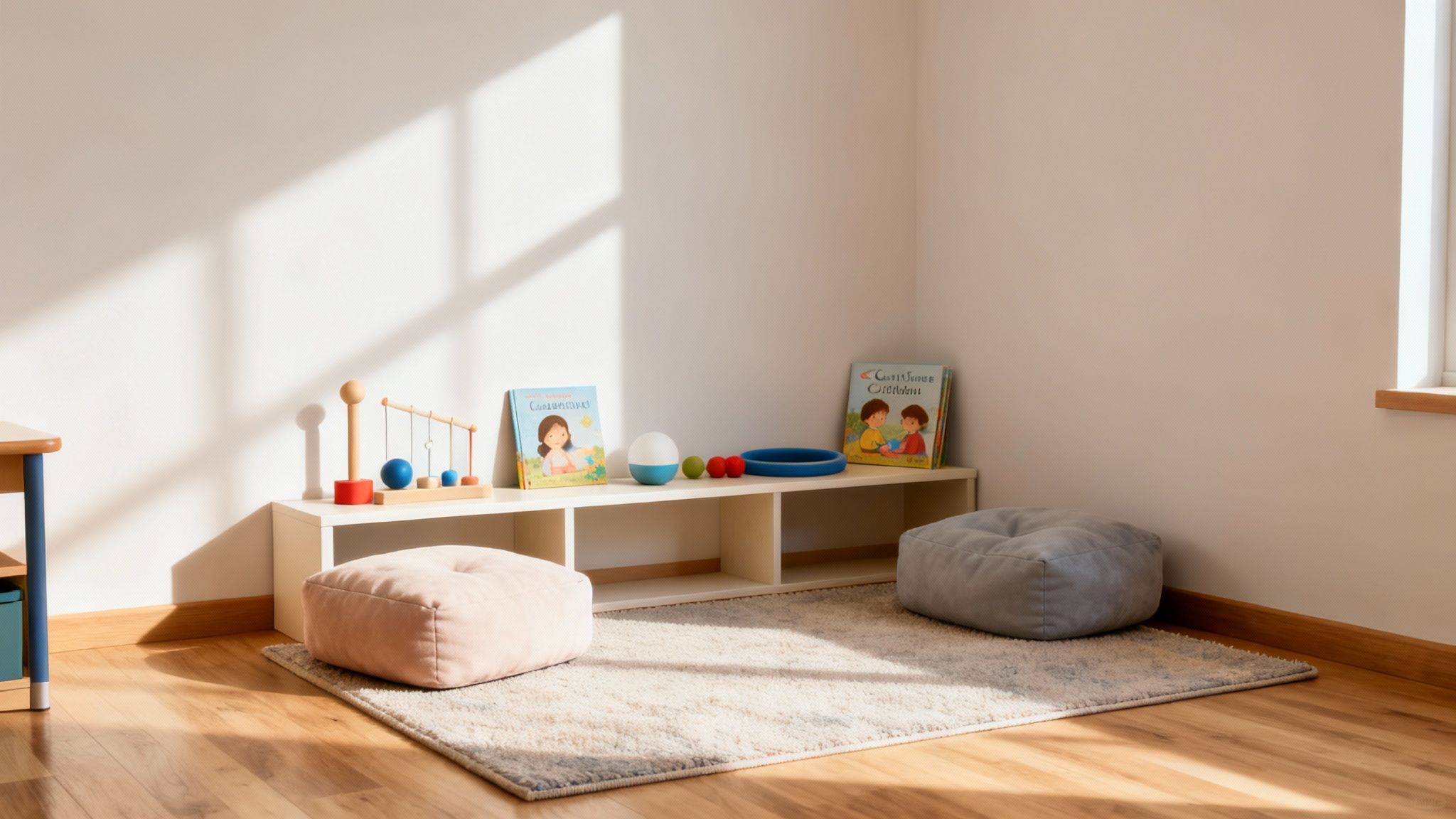
Practical Example: The ‘Cool-Down Corner’
A “cool-down corner” or “peace corner” offers a physical space for emotional regulation. This isn’t a timeout or a punishment; it’s a tool students learn to use for themselves.
- For Teachers: Stock the corner with soft cushions, fidgets, calming picture books, or visual guides for deep breathing. Explicitly teach all students how and when to use it, framing it as a strong choice for self-care.
- For Parents: You can easily create a similar space at home. When your child is upset, guide them to their calm-down spot and practice breathing with them. This reinforces the message that big feelings are okay and we have healthy ways to manage them.
Another key to safety is developing a shared, school-wide language for conflict resolution. When everyone from the principal to the playground aide uses the same approach, students get a consistent message about how to work through problems respectfully.
Using a common language, such as ‘I-statements,’ transforms conflict from a disruptive event into a valuable learning opportunity. It shifts the focus from blame to understanding and empowers students with tools they can use for the rest of their lives.
For instance, instead of a student shouting, “You always cut in line!” they are guided to say, “I feel frustrated when you cut in front of me because it feels unfair.” This simple shift teaches them to express their needs without attacking the other person, which immediately de-escalates the situation.
Nurturing Genuine Student Connection
Loneliness is a huge barrier to learning. To combat it, we have to intentionally create opportunities for students to build positive relationships—not just with their friends, but with all of their peers and the adults in the building.
These moments don’t need to be complicated. In fact, the most effective strategies are often simple, daily rituals that build a sense of belonging over time.
Practical Example: The Morning Meeting
Kicking off the day with a structured 15-minute morning meeting can set a positive and inclusive tone. This ritual might include a greeting, a brief sharing activity, and a quick group game. The goal is to make sure every single child feels seen and heard from the moment they arrive.
- Teacher Tip: During the sharing portion, try a prompt like, “Share one thing you’re looking forward to today.” It keeps the focus on positivity and gives you a peek into what motivates your students.
- Parent Tip: Try this at home! At breakfast or dinner, ask everyone to share one “rose” (something good) and one “thorn” (a challenge). It opens up communication and makes it normal to talk about the tough stuff, too.
Even the physical environment can help. A “buddy bench” on the playground is a brilliant, kid-friendly tool for inclusion. The rule is simple: if you’re feeling lonely, go sit on the bench. This acts as a quiet signal to others that you’d like someone to play with, giving classmates a clear, kind way to be an “upstander” and invite someone in.
Integrating Empathy into Daily Learning
Empathy—the ability to understand and share someone else’s feelings—isn’t just a “soft skill.” It’s essential for collaboration, problem-solving, and creating an inclusive community. The best way to teach it is to embed it directly into the learning you’re already doing.
You can practice perspective-taking in almost any subject. During literacy, for example, go beyond basic comprehension and dig into the characters’ emotional worlds. We have more targeted ideas in our guide on how to build empathy in the classroom.
Practical Example: Character Discussions
When reading a story, pause and ask questions that encourage students to step into someone else’s shoes:
- “How do you think the main character felt when that happened? What clues in the story tell you that?”
- “If you were that character, what might you have done differently?”
- “Has anyone ever felt a similar way? What was that like for you?”
This simple practice helps students connect what they’re reading to their own lives, building the neural pathways for empathy. Filling your classroom library with books that teach empathy can also provide rich, natural opportunities for these conversations.
By weaving these practical strategies into your daily routines, you start to systematically shift your school’s culture. You create an environment where safety is the norm, connection is natural, and empathy is a skill everyone is actively practicing.
How Leaders and Staff Can Drive Lasting Change
While strategies like cool-down corners and buddy benches are essential, they really only work when the adults in the building champion them. Let’s be honest: improving school culture isn’t a top-down mandate or a bottom-up wish. It’s a shared mission, actively driven by both leaders and staff working together.
Real, lasting change happens when the entire team commits to modeling the very behaviors they want to see in their students. This shared ownership is what turns a set of good ideas into the school’s cultural DNA. When a principal shows vulnerability or a teacher spearheads a new kindness initiative, they create ripples of positive influence. This collective effort is the engine that moves a school from simply having a mission statement to truly living it.
Leaders Must Model the Way
School leaders, especially principals, set the emotional tone for the entire campus. If a leader is stressed, isolated, and focused only on compliance, that anxiety will inevitably trickle down. On the flip side, when a leader models emotional intelligence and trust, they create a foundation of psychological safety for everyone.
This often starts with vulnerability. A principal who openly admits to not having all the answers or shares a personal challenge makes it safe for teachers to do the same. This simple act builds a culture where staff feel secure enough to take risks, ask for help, and connect on a human level.
Practical Example for Leaders
Instead of a staff meeting focused purely on logistics, try starting with a brief, structured check-in. A principal might model this by saying, “This week was a tough one for me because of X, but I’m feeling hopeful about Y. How is everyone else doing?” This small shift normalizes open communication and puts well-being front and center.
The impact of strong leadership is undeniable. When leaders are intentionally developed, the effects cascade through the entire school community, fostering a culture that directly supports student learning.
Empowering Staff as Culture Champions
The most powerful culture shifts aren’t dictated from the principal’s office. They’re nurtured in classrooms and teacher teams. When you empower staff to become leaders in this work, you ensure that new initiatives are relevant, authentic, and actually stick around.
Forget those one-off, “sit-and-get” workshops. The key is sustained professional development that is collaborative and practical. When teachers have ongoing opportunities to learn from each other, they build collective capacity and ownership over the school’s climate. Investing in a robust professional development program for educators is one of the most direct ways to build this internal expertise.
Here are a couple of ways to empower your team:
- Peer Observation Cycles: Instead of formal evaluations, teachers can observe each other with a specific focus, like “How are I-statements being used to resolve conflict?” Afterward, they offer supportive feedback, creating a collaborative and non-judgmental learning loop.
- Teacher-Led Initiatives: Look for teachers who are passionate about social-emotional learning and empower them to lead a small initiative on their grade level. This could be anything from piloting a new morning meeting structure to organizing a school-wide kindness challenge.
The Ripple Effect of Investing in People
Investing in your people isn’t just a “nice-to-have”—it has a measurable impact on the entire school. This was demonstrated powerfully in 2023 when the Global School Leaders organization partnered with 10 organizations to reach 4,271 school leaders and 68,293 teachers, impacting over a million students. You can discover more about their global impact and see how targeted training boosts learning outcomes.
When school leaders and staff feel equipped and supported, a powerful chain reaction kicks off. Teacher morale improves, which reduces burnout and turnover. In turn, students benefit from more stable, positive relationships with their educators. This supportive environment ultimately leads to fewer behavioral issues and stronger academic achievement—creating a thriving culture where everyone can succeed.
Engaging Families as Authentic Community Partners
A positive school culture doesn’t stop at the dismissal bell. It spills out into the parking lot, follows kids home, and weaves itself into the fabric of the community. To make that happen, we have to move beyond the once-a-year open house or the standard PTA meeting and start building real, authentic partnerships with families.
The goal is to create a genuine two-way street. It’s about shifting from simply informing parents to truly involving them. When families understand the social-emotional language their kids are learning—the same tools for handling big feelings or resolving conflicts—they can reinforce those skills at home. That alignment is where the real magic happens for a child’s development.
Moving Beyond the Bake Sale
Building these partnerships means creating opportunities that are meaningful and, just as importantly, accessible. Let’s be real: many parents are juggling inflexible work schedules, language barriers, or maybe just feel a little intimidated by the school environment. The key is to meet them where they are.
Here are a few ideas that work:
- Host Family SEL Nights. These aren’t lectures; they’re hands-on workshops. A teacher might model how to use “I-statements,” then have parents and kids practice together with a common scenario, like how to share a new toy. It’s practical, it’s engaging, and it connects home and school.
- Create a Parent-Led Welcome Committee. There’s nothing more isolating than being the new family. A small committee of current parents can make all the difference by reaching out, answering those little questions everyone has, and inviting newcomers to a casual coffee. It instantly makes a big school feel like a village.
- Share the Good Stuff. Keep it simple. Use an app like ClassDojo or Remind to send a quick, positive note or a photo. A picture of a student beaming with pride over their art project does more to build a positive connection than a dozen newsletters.
Making Every Interaction Inclusive
True partnership is built on a foundation of inclusivity. Every single family, no matter their background, language, or life situation, needs to feel seen and respected. Often, this comes down to small, intentional gestures that send a big message.
When families feel genuinely welcomed and respected, they are far more likely to become active partners in their child’s education. This partnership is a cornerstone of a healthy and vibrant school culture.
To build that sense of belonging, try this:
- Vary Your Meeting Times. Not everyone can make a 9 AM meeting on a Tuesday. Mix it up with morning, afternoon, and evening options to show you respect everyone’s schedule.
- Provide Translation Services. Having translators at key events or sending home important documents in multiple languages is a powerful way to say, “You belong here. We want to hear from you.”
- Ask for Their Input. Before you plan that big family event, send out a quick survey. Ask what activities they’d actually enjoy and what times work best for them. When you co-create events with your community, you get so much more buy-in.
By taking these small but powerful steps, you can start breaking down those invisible walls. You can transform your relationship with families from a simple mailing list into a dynamic, supportive partnership—and that’s essential for a positive school culture that truly lasts.
Measuring Progress and Sustaining a Thriving Culture
Improving school culture isn’t a destination; it’s a journey. Once you’ve put new strategies into motion, the real work begins: figuring out what’s actually working and creating a durable cycle of improvement. Without this piece, even the most brilliant initiatives can fizzle out over time.
This isn’t just about proving that your plan worked. It’s about learning, adapting, and getting better. By building a rhythm of data collection, honest reflection, and smart adjustments, you ensure those positive changes stick around and become a core part of who you are as a school.
Look Beyond the Obvious Metrics
When we hear the word “data,” it’s easy to jump right to the hard numbers. And yes, quantitative metrics are definitely important—they give us a clear, objective snapshot of certain behaviors. But they only tell part of the story.
To really get a feel for the impact of your efforts, you have to blend those hard numbers with the human experience. It’s about pairing the “what” with the “why.”
Key Metrics to Track:
- Quantitative Data (The What): This is your measurable evidence. Look for shifts in things like attendance rates, disciplinary referrals, and participation in after-school activities. A noticeable drop in office visits for conflict is a fantastic sign that new resolution skills are taking root.
- Qualitative Data (The Why): This is where you capture the feelings and perceptions that truly define a culture. Use short, anonymous climate surveys for both students and staff. Ask pointed questions like, “On a scale of 1-5, how connected do you feel to at least one adult in this building?”
Create a Sustainable Cycle of Improvement
A thriving culture doesn’t happen by accident. It requires a deliberate and predictable process—not a one-time project, but an ongoing commitment to listening, reflecting, and acting. This is how your school stays responsive to the real needs of its community.
The path to a better school culture involves intentionally welcoming, partnering with, and supporting families every step of the way.
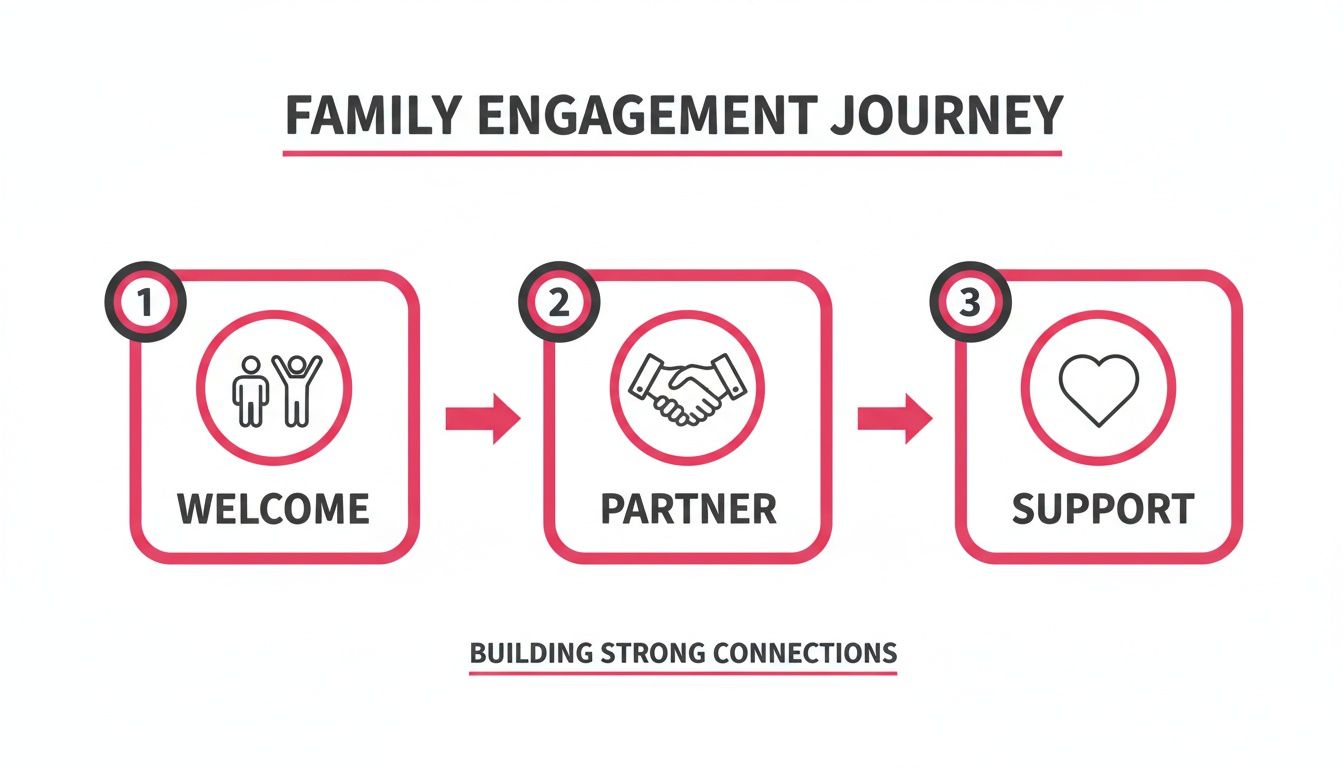
This visual shows how each step builds on the last, creating a stronger, more collaborative community over time.
This isn’t just a local effort; it’s a global one. Take Estonia’s Future School programme, launched in 2017, which has successfully transformed school culture by focusing on co-creation and evidence-driven decisions. By constantly monitoring and reflecting, they’ve been able to foster truly meaningful change. You can learn more about their framework for sustainable improvement and its impressive results.
An Action Plan in Motion
Let’s make this real. Imagine a middle school wants to boost the sense of belonging among its 6th graders. Their initial culture audit revealed that many new students felt isolated and adrift, especially during lunch.
Here’s what their action plan for one semester could look like:
- The Goal: Increase the percentage of 6th graders who report “feeling a sense of belonging” from 45% to 65% by the end of the semester.
- The Strategies:
- Place “Conversation Starter” cards on all 6th-grade lunch tables.
- Train 8th-grade student leaders to act as “Lunch Buddies” twice a week.
- Launch a weekly “6th Grade Connect” club focused on non-athletic games and activities.
- The Measurement:
- Monthly: Use a quick, one-question pulse survey: “Did you have a positive conversation with a peer at lunch today?”
- Quarterly: Hold short focus groups with 6th graders to hear their stories and get direct feedback.
- End of Semester: Re-administer the original climate survey to measure the change in belonging.
By breaking down a huge goal into smaller, measurable steps, the school can see exactly what’s working and what isn’t. If the survey data isn’t moving, they can adjust—maybe the club needs a different focus, or the Lunch Buddy strategy needs a tweak.
This cycle of action and reflection is what builds momentum. It transforms the abstract goal of improving school culture into a series of achievable, data-informed steps that lead to real, lasting change.
Your Questions About School Culture, Answered
As you start the work of improving your school’s culture, it’s completely normal for practical questions to pop up. Navigating the real-world hurdles of time, resources, and getting everyone on the same page is just part of the process.
Here are some straightforward answers to the questions we hear most often. The goal is to give you the confidence to move from idea to action and create lasting, positive change for your students and staff.
How Long Does It Take to See Real Change?
This is the big one, and the honest answer is: it depends. You’ll often feel small, positive shifts within just a few months of putting consistent practices into place, like morning meetings or a shared way of handling conflicts. You might overhear students using “I-statements” on their own or notice fewer arguments on the playground. These are huge wins!
However, deep, lasting cultural change—where these new mindsets and behaviors become the default for everyone—is a longer journey. Meaningful transformation typically takes 1 to 3 years of sustained effort. It’s a marathon, not a sprint, built on the back of consistent daily actions, not a few big, flashy events.
The key is to celebrate the small wins. When you acknowledge the incremental progress—like a quieter hallway or more hands in the air during discussions—it keeps the momentum going and shows everyone their hard work is making a real difference.
What If We Have Limited Time and Resources?
We get it. The idea of piling on another initiative can feel completely overwhelming. The good news is that many of the most powerful school culture strategies don’t require a big budget or extra hours. They’re about refining what you’re already doing.
- Integrate, Don’t Add: Weave social-emotional learning into your existing lessons. A 10-minute morning meeting can easily replace a standard roll call. Use reading time to talk about a character’s feelings and choices, instantly turning a literacy lesson into an empathy lesson.
- Focus on High-Impact, Low-Effort Strategies: A “buddy bench” on the playground costs next to nothing but can have a massive impact on students’ sense of belonging. A simple, school-wide greeting—like a fist bump at the classroom door—takes just seconds but builds powerful connections day after day.
For more ideas tailored to the K-12 environment, exploring the broader landscape of elementary and secondary education can offer great context on making the most of the resources you have.
How Do We Get Skeptical Staff on Board?
It’s a given that not everyone will be an immediate champion of a new idea, and that’s perfectly okay. The best way to build buy-in with hesitant staff isn’t with a top-down mandate, which often just creates resistance.
Instead, start small, show results, and empower your teacher leaders. Find a few passionate teachers—your “early adopters”—and give them the support to pilot a new strategy in their classrooms. When their colleagues start seeing it work and hearing positive stories from students, that’s when the magic happens.
Here’s What That Looks Like in Practice
Imagine a couple of teachers start using restorative circles to handle classroom conflicts. In the next staff meeting, they share a story about how a circle helped two students mend a friendship and get back to learning. Suddenly, it’s not just an abstract idea anymore. Their peers see the real-world benefit firsthand. That kind of peer-to-peer evidence is far more persuasive than any directive from leadership ever could be.
At Soul Shoppe, we believe every school deserves a culture where both students and adults feel safe, connected, and ready to thrive. Our programs provide the practical tools and shared language your community needs to build that positive change from the inside out.
Explore our social-emotional learning programs and bring Soul Shoppe to your school.