

10 Practical Mental Health Activities for Kids at School and Home in 2026
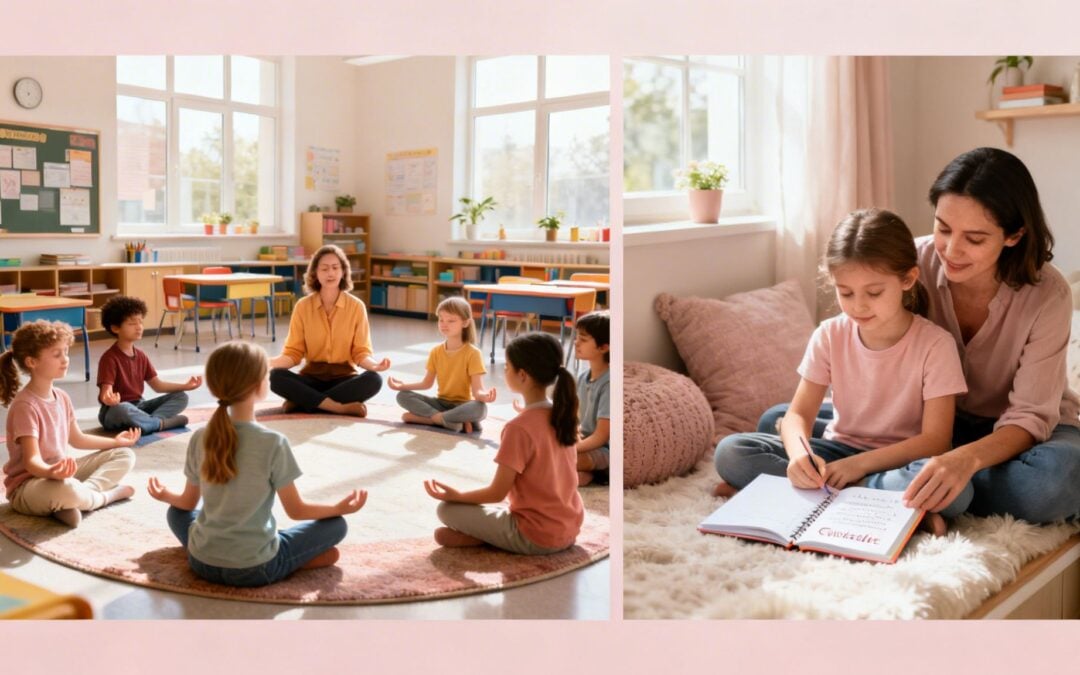
In today's complex world, equipping students with tools for emotional resilience is as crucial as teaching reading and math. The growing need for supportive environments at school and home has made intentional mental health support a priority. This guide moves beyond theory, offering a practical collection of 10 evidence-informed mental health activities designed specifically for K-8 students.
Each activity provides a clear, actionable framework that teachers, administrators, and parents can implement immediately. From building emotional vocabulary with feelings identification exercises to fostering peaceful conflict resolution, these tools are designed for real-world application. For example, a teacher might use a restorative circle to address a classroom disagreement over playground rules, while a parent could introduce a simple gratitude practice at the dinner table to shift the family's focus toward positivity.
The goal is to provide tangible ways to nurture social-emotional well-being. This includes structured programs and also enriching personal pursuits. For instance, consider the profound benefits of learning to play an instrument, which can boost brain function, mood, and overall skills, contributing significantly to a child's foundation of well-being.
Whether you're an educator seeking to create a calmer, more connected classroom or a caregiver wanting to strengthen communication at home, this listicle offers the specific steps, materials, and adaptations you need. These are not just ideas; they are ready-to-use strategies from trusted sources like Soul Shoppe, which has spent over two decades helping school communities cultivate safety and connection.
1. Mindfulness and Breathing Exercises
Mindfulness and breathing exercises are structured practices that teach students to focus their attention on the present moment. These mental health activities guide children to notice their breath, bodily sensations, and thoughts without judgment. The core purpose is to help regulate the nervous system, which can reduce feelings of anxiety and improve emotional awareness, creating a calmer, more focused learning environment.

These foundational social-emotional learning (SEL) skills are already seeing success in schools. For example, some elementary classrooms start the day with a "mindful minute," where students listen to a chime until the sound fades completely. Others use "breathing buddies," placing a small stuffed animal on a student's belly to visually guide deep, calming breaths. These simple but effective practices are core to programs from organizations like Mindful Schools, which have been implemented in hundreds of schools.
Quick Guide for Implementation
- Age Range: K-8
- Time: 3-10 minutes
- Materials: Optional: chime or bell, comfortable cushions, small objects (e.g., stuffed animals, smooth stones).
How to Get Started
- Introduce the Concept: Explain mindfulness as "noticing what's happening right now." For breathing, you can use the analogy of a balloon slowly inflating and deflating. Example: For younger kids, say, "Let's pretend our bellies are balloons. When we breathe in, the balloon gets big. When we breathe out, all the air comes out slowly."
- Start Small: Begin with short, 1- to 3-minute guided sessions. Use consistent cues like a specific time of day (e.g., after recess) or a gentle sound to signal the start of the practice.
- Practice Together: Model engagement by participating alongside your students. This shows that it's a shared activity and not a task to be completed. Example: A teacher can say, "I'm going to do my 'balloon breaths' with you. Let's all take one big breath in… and let it out."
- Normalize Wandering Minds: Remind students that it is natural for their minds to wander. The practice is gently bringing their attention back to their breath, not achieving a perfectly empty mind. For a great foundational technique, you can learn more about the belly breathing technique and teach it to your students.
Facilitator Tip: Create a dedicated "Peace Corner" or "Mindfulness Corner" in your classroom or home. Stock it with soft pillows, calming visuals, and maybe a few fidget tools to create an inviting space for self-regulation.
2. Emotional Check-In and Feelings Identification
Emotional check-ins are structured activities where students learn to identify, name, and talk about their emotions. These mental health activities build emotional literacy, the foundation of emotional intelligence, by using tools like feeling charts and regular check-in conversations. The core purpose is to give students a shared, non-judgmental language for their feelings, which helps create a more empathetic and supportive classroom community.
This practice is central to many social-emotional learning (SEL) programs and is easily adapted across different age groups. For example, K-2 classrooms often start the day with a "feelings share" during their morning meeting, where each child points to a face on a chart that matches their current emotion. In middle school, teachers might use an "emotional exit ticket," asking students to anonymously write down a word or two describing how they feel after a lesson. These consistent routines normalize talking about feelings and help educators identify students who might need extra support.
Quick Guide for Implementation
- Age Range: K-8
- Time: 5-15 minutes
- Materials: Optional: emotion wheels, feeling charts, sticky notes, journals, digital check-in forms.
How to Get Started
- Introduce the Vocabulary: Start with a basic set of emotion words (e.g., happy, sad, angry, scared) for younger students and expand to more complex words (e.g., frustrated, anxious, proud, content) for older ones.
- Establish a Routine: Make emotional check-ins a predictable part of the day, such as at the beginning of class or after lunch. Example: A parent can ask at dinner, "What was your 'high point' and 'low point' today?" to open a discussion about feelings. A teacher can have students place a clothespin with their name on it next to an emotion word on a chart as they enter the room.
- Model Vulnerability: Share your own feelings in an age-appropriate way. Saying, "I'm feeling a little frustrated because the projector isn't working, so I'm going to take a deep breath," shows students how to manage emotions constructively.
- Use Visual Aids: Visuals are key, especially for younger students or visual learners. You can find great examples of a feelings chart for kids to use as a starting point in your classroom or home.
Facilitator Tip: Emphasize that all emotions are valid; there are no "good" or "bad" feelings. The focus is on recognizing the emotion and choosing a helpful response, not on judging the feeling itself. Always respect a student's choice not to share and never force participation.
3. Conflict Resolution and Peer Mediation Programs
Conflict resolution and peer mediation programs are structured systems that teach students practical communication and problem-solving skills to resolve disagreements. These mental health activities empower children to act as neutral third-party mediators, guiding their peers through a process of negotiation and mutual understanding. The purpose is to build a school culture where conflict is seen as an opportunity for growth, reducing social isolation and giving students ownership over their community's well-being.
These programs are a powerful tool for developing advanced social-emotional skills. For instance, many middle schools implement peer mediation where trained students use "I-statements" to help classmates discuss issues like rumors or social exclusion without blaming each other. Similarly, restorative justice circles, used in districts like Oakland USD, bring students together to talk through the impact of their actions and collaboratively decide how to repair harm. These initiatives, inspired by models from The Community Boards Program, create safer, more connected school environments.
Quick Guide for Implementation
- Age Range: 3-8 (Formal mediation programs are typically grades 3-8)
- Time: 15-30 minutes per session
- Materials: A designated quiet space, "peace table" or neutral meeting area, talking piece (optional), script or flowchart for mediators.
How to Get Started
- Recruit and Train Mediators: Select a diverse group of student volunteers who represent different social circles. Provide them with foundational training on listening, impartiality, and the steps of mediation.
- Establish Clear Procedures: Create a simple referral process so students and teachers know how and when to request mediation. Define what issues are appropriate for peer mediation (e.g., arguments over a game, misunderstandings) versus those needing adult intervention (e.g., bullying, safety concerns).
- Structure the Session: Teach mediators to follow a script. Example Script: 1) Welcome and set rules. 2) Person A tells their side. 3) Person B tells their side. 4) Clarify feelings and needs. 5) Brainstorm solutions. 6) Agree on a plan.
- Coach, Don't Solve: Train teachers to guide students toward using mediation rather than immediately solving their problems for them. For excellent foundational skills, you can learn more about conflict resolution strategies for kids to support this process.
Facilitator Tip: Publicly acknowledge your peer mediators' contributions, perhaps through school announcements or certificates. This validates their important work, reinforces the program's value to the school community, and motivates continued participation.
4. Social-Emotional Learning (SEL) Curricula and Workshops
Social-emotional learning (SEL) curricula and workshops are structured educational programs that systematically teach core life skills. These mental health activities move beyond single exercises to provide a comprehensive framework for developing self-awareness, self-management, social awareness, relationship skills, and responsible decision-making. The goal is to embed these competencies into the school's culture, giving students a shared language and consistent tools to navigate their emotions and social interactions.
These programs are already a cornerstone of effective school mental health strategies. For instance, the Second Step program is used in thousands of schools, providing weekly lessons on topics like empathy and problem-solving. Other schools adopt the Responsive Classroom approach, which integrates SEL into daily academic instruction. Experiential programs like those from Soul Shoppe offer interactive assemblies and workshops, such as the Peaceful Warriors Summit, that allow students to practice conflict resolution and empathy in real-time, dynamic scenarios. This makes abstract concepts tangible and memorable.
Quick Guide for Implementation
- Age Range: K-8
- Time: Varies; 20-45 minute lessons weekly, or half/full-day workshops.
- Materials: Dependent on the specific curriculum; may include lesson plans, student workbooks, posters, videos, and facilitator guides.
How to Get Started
- Form a Team: Create an SEL committee with teachers, administrators, counselors, and parents to evaluate and select a program that fits your school's unique needs and culture.
- Start with a Pilot: Introduce a new curriculum or workshop series in one or two grade levels first. This allows you to gather feedback and work out implementation challenges before a school-wide rollout.
- Invest in Training: Ensure all staff involved receive robust professional development with ongoing coaching. Teacher confidence and buy-in are critical for the program's success.
- Communicate and Involve Families: Host an informational night or send home resources explaining the program and its benefits. Example: Send home a one-page summary of the month's SEL theme (e.g., "Empathy") with a conversation starter for the dinner table. For more ideas, you can explore different SEL programs for schools to find the right fit.
Facilitator Tip: Integrate SEL concepts across subjects. Connect a lesson on empathy to a character in a novel, or discuss responsible decision-making during a history lesson about a major event. This shows students that SEL skills are relevant everywhere, not just during a specific "SEL time."
5. Gratitude and Positive Psychology Practices
Gratitude and positive psychology practices are mental health activities designed to shift a student’s focus toward positive experiences, personal strengths, and appreciation for others. These exercises guide children to intentionally notice the good in their lives, which can counteract the brain's natural tendency to focus on negative events. The main goal is to build resilience, boost optimism, and improve overall well-being by rewiring thought patterns toward positivity and thankfulness.

These concepts, popularized by researchers like Martin Seligman and Brené Brown, are being successfully integrated into school cultures. For instance, many classrooms now host a weekly "Appreciation Circle" where students share something they are grateful for about a classmate. Others implement "Strength Spotting," where students identify and acknowledge a peer's positive character trait, like perseverance or kindness. These practices help foster a supportive community, reduce symptoms of anxiety and depression, and build lasting emotional skills.
Quick Guide for Implementation
- Age Range: K-8
- Time: 5-15 minutes
- Materials: Optional: journal or notebook, jar, sticky notes, "appreciation" board.
How to Get Started
- Introduce the Concept: Explain gratitude as "noticing the good things" and positive psychology as "focusing on our strengths." Use a simple analogy like a "gratitude lens" that helps you see the bright spots in your day.
- Start with Simple Rituals: Begin with a small, consistent practice, such as "Thankful Thursday," where each student writes one thing they are grateful for on a sticky note and adds it to a classroom display. Parent Example: At bedtime, ask your child to name "three good things" that happened that day, no matter how small.
- Model Authenticity: Participate yourself by sharing genuine and specific examples of gratitude. Instead of saying, "I'm thankful for our class," try, "I'm grateful for how quietly you all worked during reading time; it helped us create a peaceful room."
- Make It Visual and Tangible: Create a "Gratitude Jar" where students can drop notes of thanks throughout the week. To incorporate gratitude into daily life, exploring these 8 gratitude journal prompts can be a great starting point for enhancing positive psychology practices.
Facilitator Tip: When practicing strength-spotting, be specific. Instead of saying "You're smart," praise the action: "I noticed you didn't give up on that hard math problem. That showed real perseverance." This makes the feedback more meaningful and helps students recognize their own character strengths.
6. Social Skills and Cooperative Learning Activities
Social skills and cooperative learning activities are structured methods for explicitly teaching and practicing key social competencies. These mental health activities guide students through teamwork, perspective-taking, active listening, and conflict resolution in a supportive setting. The main goal is to build strong relationship skills, which are foundational for emotional well-being, academic success, and creating a positive school climate where all students feel they belong.
These collaborative approaches are central to frameworks like Kagan Cooperative Learning and educational philosophies that prioritize equity. For example, a teacher might use a "Think-Pair-Share" structure where students first consider a question individually, then discuss it with a partner before sharing with the whole class. Another powerful application is the "Jigsaw" method, where each student in a group becomes an "expert" on one piece of a topic and then teaches it to their peers. These techniques are cornerstones of programs like the Junior Giants, which uses teamwork in sports to promote character development and inclusion.
Quick Guide for Implementation
- Age Range: K-8
- Time: 15-45 minutes (can be integrated into any lesson)
- Materials: Dependent on the academic task; chart paper for group roles, sentence starters, or discussion prompts.
How to Get Started
- Teach Skills Directly: Before starting a group task, explicitly teach the social skill you want students to practice, such as "using encouraging words" or "making sure everyone has a turn to speak." Example: A teacher could model this by saying, "An encouraging word sounds like, 'Great idea!' or 'Let's try that.'"
- Assign Structured Roles: Give each group member a specific job, like a Recorder (writes down ideas), a Speaker (shares with the class), a Materials Manager (gathers supplies), or a Timekeeper. This ensures everyone participates.
- Use Randomized Groups: Intentionally mix up student groups frequently. This helps break down social cliques and encourages students to build relationships with a wider range of peers.
- Debrief the Process: After the activity, lead a brief discussion about how the teamwork went. Ask questions like, "What went well in your group today?" and "What is one thing we could do better next time?"
Facilitator Tip: Create and post visual aids with sentence starters for respectful disagreement (e.g., "I see your point, but have you considered…") or collaboration (e.g., "Building on that idea…"). This provides students with the language they need to navigate social interactions successfully.
7. Mindful Movement and Yoga for Children
Mindful movement and yoga are physical mental health activities that integrate body-based awareness with intentional motion. These practices, which include yoga, creative dance, and guided stretching, teach children to notice how their bodies feel as they move. The core purpose is to build the mind-body connection, offering a healthy outlet for stored-up energy and emotions while improving physical coordination and self-awareness.

These kinesthetic practices are increasingly common as brain breaks and structured physical education. For instance, many classrooms use short, guided movement videos between academic lessons to help students reset and refocus. Some schools offer kids' yoga as an after-school program, using animal-themed poses to make it engaging. These activities, championed by organizations like the Kids' Yoga Alliance, are excellent for kinesthetic learners who process information and emotion through physical action.
Quick Guide for Implementation
- Age Range: K-8
- Time: 5-20 minutes
- Materials: Comfortable clothing, optional: yoga mats, calming music.
How to Get Started
- Set the Stage: Create a safe space where students have room to move without bumping into others. Explain that the goal is to notice how their bodies feel, not to achieve a perfect pose.
- Use Accessible Language: Frame poses with kid-friendly names like "Cat-Cow," "Downward-Facing Dog," or "Tree Pose." Instead of complex terms, use simple cues like "stretch your arms to the sky."
- Start with Short Sequences: Begin with brief 5-minute routines. You can follow a guided video together or lead a simple series of three to four poses, like a morning stretch routine to wake up the body. Example sequence: Start in "Mountain Pose" (standing tall), reach up for "Volcano Pose," fold forward, then finish in "Child's Pose."
- Connect Movement to Emotion: Ask reflective questions like, "What does a strong mountain pose feel like in your body?" or "How does it feel to stretch like a cat waking up from a nap?" This builds emotional vocabulary. For a fun and accessible introduction, try this "Zen Den" guided yoga session with your students:
Facilitator Tip: Emphasize effort over perfection. Celebrate every child's participation by saying things like, "I love how you are all trying these new shapes with your bodies." Offer modifications, such as doing a pose while seated in a chair or against a wall for balance support.
8. Restorative Practices and Community Circles
Restorative practices are proactive processes that build community, relationships, and shared responsibility, while also providing a framework for responding to harm when it occurs. These mental health activities shift the focus from punishment to repairing relationships. Community circles and restorative conferences bring groups together to discuss issues, celebrate connections, repair harm, and problem-solve collaboratively, creating a foundation of psychological safety.
This approach is central to bullying prevention and creating a supportive school climate. For example, many elementary classrooms now start with a "Morning Circle," where students check in and share feelings using a talking piece. When conflict arises, a "Peacemaking Circle" can be held to address the behavior's impact, involving all affected parties to decide on a meaningful resolution. Restorative justice programs in Oakland schools have demonstrated success in reducing suspensions and improving the sense of belonging among students.
Quick Guide for Implementation
- Age Range: K-8
- Time: 15-45 minutes
- Materials: A talking piece (a special object to signify whose turn it is to speak), comfortable seating arranged in a circle, optional: chart paper for co-creating agreements.
How to Get Started
- Start Proactively: Begin with low-stakes community-building circles before using them for conflict. Use prompts like, "Share a time you felt proud" or "What is one hope you have for our class?"
- Co-Create Norms: Establish ground rules together, such as "Listen with respect," "Speak from the heart," and "One person speaks at a time." This creates shared ownership of the space.
- Introduce a Talking Piece: Explain that only the person holding the object can speak. Practical Example: Use a decorated rock, a small stuffed animal, or a special stick. Say, "Whoever is holding the 'talking turtle' is the only one who can talk. This helps us be great listeners."
- Use Restorative Questions: When addressing harm, move from "What rule was broken?" to restorative questions: "What happened?", "Who has been affected?", and "What needs to be done to make things right?". Learn more about the core principles of restorative practices at the National Association for Community and Restorative Justice.
Facilitator Tip: Trust is the bedrock of restorative work. Invest significant time in building relationships and establishing circle norms before attempting to address sensitive conflicts. A well-facilitated proactive circle is the best preparation for a responsive one.
9. Family Engagement and Home-Based SEL Activities
Family engagement and home-based SEL activities extend social-emotional learning beyond the classroom, creating a consistent support system for children. These mental health activities involve structured programs and resources like parent workshops, take-home practice exercises, and communication guides. The goal is to empower families with the tools and language to reinforce SEL concepts at home, ensuring that a child's emotional growth is supported in all areas of their life.
This approach bridges the gap between school and home, which is critical for lasting impact. For instance, a school might send home a weekly "Dinner Table Topics" card with questions like, "What was one 'rose' (a good thing) and one 'thorn' (a challenge) from your day?" This simple practice encourages emotional sharing. Organizations like CASEL provide extensive family resources, and schools use apps like ClassDojo to share SEL moments and tips directly with parents, building a strong, collaborative community around each child.
Quick Guide for Implementation
- Age Range: K-8
- Time: 10-15 minutes per activity
- Materials: Varies by activity; often includes worksheets, conversation prompts, or simple household items.
How to Get Started
- Introduce with a Positive Frame: Position these as opportunities for family connection, not as homework. Emphasize that these activities are designed to be fun and build stronger relationships.
- Make It Accessible: Provide resources in multiple formats and languages. A short video, a printable PDF, and a text message prompt can all deliver the same activity, reaching families where they are.
- Start with Low-Barrier Activities: Begin with simple, universally positive topics like gratitude or kindness. For example, a "Gratitude Jar" where family members write down things they are thankful for each day is an easy entry point.
- Connect to School Learning: Explicitly link home activities to what students are learning in class. Practical Example: If students learn "I-Statements" in class, a take-home note could explain the concept and suggest a practice scenario for parents: "Instead of 'You made me mad,' try 'I feel mad when I have to ask you three times to clean your room.'" For families seeking more tools, our parent resources and newsletter offer practical guidance.
Facilitator Tip: Host optional, informal "office hours" or a virtual coffee chat for parents to ask questions about the SEL activities. This creates a no-pressure environment for support and helps you gather valuable feedback to improve the resources.
10. Bullying Prevention and Peer Support Programs
Bullying prevention and peer support programs are structured initiatives that aim to create a psychologically safe school environment. These are essential mental health activities because they directly address peer harm, which can cause significant anxiety, depression, and social isolation. The goal is to shift school culture from one of passive bystanders to one of active allies, teaching students the skills to prevent bullying, support those who are targeted, and engage in restorative practices.
These programs go beyond simple "be nice" campaigns by providing clear definitions of bullying and concrete strategies for action. For example, evidence-based models like the Olweus Bullying Prevention Program are implemented school-wide, involving students, staff, and parents. Other initiatives, like the Junior Giants Strike Out Bullying program, partner with community organizations to promote respect and positive peer relationships. These efforts often include training peer mediators who help classmates resolve lower-level conflicts before they escalate.
Quick Guide for Implementation
- Age Range: K-8
- Time: Varies (ongoing curriculum, weekly meetings, school-wide campaigns)
- Materials: Curriculum guides, posters, anonymous reporting boxes or digital forms, student handbooks.
How to Get Started
- Define and Teach: Clearly define what bullying is (and isn't) using student-friendly language. Focus on the three key elements: it's unwanted aggressive behavior, involves a power imbalance, and is repeated or has the potential to be repeated.
- Train the Adults: Ensure all staff, from teachers to bus drivers, are trained to recognize and intervene in bullying situations consistently. This builds a foundation of trust and safety.
- Establish Clear Reporting: Create multiple, safe ways for students to report incidents, including anonymously. This could be a physical "courage box" in the library or a simple online form.
- Teach Bystander Intervention: Equip students with safe strategies to act as "upstanders." Example Role-Play: One student pretends to tease another. The "upstander" can practice saying, "Hey, leave them alone," or walking over to the targeted student and saying, "Do you want to go play somewhere else with me?" Our own work at Soul Shoppe is dedicated to building these skills in K-8 students.
Facilitator Tip: Focus on restorative practices rather than purely punitive ones. When harm occurs, facilitate conversations that help the student who bullied understand the impact of their actions and find meaningful ways to repair the relationship and community trust.
10-Point Comparison: Mental Health Activities
| Program | Implementation complexity | Resource requirements | Expected outcomes | Ideal use cases | Key advantages |
|---|---|---|---|---|---|
| Mindfulness and Breathing Exercises | Low–Medium (brief routines, teacher training) | Minimal (scripts/apps, small space) | Immediate calming, better focus and self-regulation | Morning meetings, transitions, classroom calming | Quick to implement, scalable, low cost |
| Emotional Check‑In and Feelings Identification | Low–Medium (structured routines) | Low (charts, visual supports, time) | Improved emotional vocabulary and early distress identification | Morning/closing circles, counselor check‑ins | Builds emotional literacy, strengthens relationships |
| Conflict Resolution and Peer Mediation Programs | High (training, systems) | Moderate–High (mediator training, supervision) | Fewer referrals, improved peer problem‑solving | Recurring conflicts, middle schools, bullying cases | Empowers students, builds leadership and empathy |
| Social‑Emotional Learning (SEL) Curricula and Workshops | High (curriculum + fidelity monitoring) | High (PD, materials, assessments) | Long‑term academic, behavioral and social gains | Whole‑school adoption, district scaling, sustained programs | Comprehensive, research‑based, scalable impact |
| Gratitude and Positive Psychology Practices | Low (simple activities) | Minimal (journals, prompts, display space) | Increased well‑being, resilience, positive climate | Morning routines, targeted wellbeing boosts, homeroom | Easy, low‑cost, boosts mood and belonging |
| Social Skills and Cooperative Learning Activities | Medium (lesson design, monitoring) | Low–Medium (materials, grouping strategies) | Better collaboration, empathy, classroom engagement | Group projects, cooperative lessons, team building | Improves peer connections and academic engagement |
| Mindful Movement and Yoga for Children | Medium (facilitator skills) | Low–Medium (space, optional mats, trainer) | Improved regulation, body awareness, reduced anxiety | Movement breaks, kinesthetic learners, PE integration | Combines physical activity with emotional regulation |
| Restorative Practices and Community Circles | High (facilitation training, time) | Moderate–High (training, regular meeting time) | Stronger community, repaired relationships, reduced harm | Community building, responding to incidents, school culture work | Repairs harm, fosters accountability and inclusion |
| Family Engagement and Home‑Based SEL Activities | Medium (coordination with families) | Moderate (materials, translations, digital tools) | Consistency across home/school, stronger parent–child bonds | Home practice, parent workshops, family outreach | Extends SEL reach, engages caregivers as partners |
| Bullying Prevention and Peer Support Programs | High (school‑wide strategy) | High (training, protocols, monitoring) | Reduced bullying incidents, safer school climate | School‑wide prevention, bystander training, policy enforcement | Comprehensive prevention, supports victims and bystanders |
Putting It All Together: A Whole-Community Approach to Mental Health
This article has detailed ten distinct categories of powerful mental health activities, from individual mindfulness practices to school-wide peer support programs. Each one offers a specific set of tools for building emotional intelligence, resilience, and a stronger sense of community. But their true power is unlocked not when used in isolation, but when woven into the very fabric of a child’s daily life, both at school and at home. The goal is to move beyond one-off lessons and create an ecosystem of consistent, predictable support.
Viewing these practices as a menu rather than a checklist allows you to build a sustainable plan. A single school assembly on bullying prevention, for example, has a limited impact. But when paired with weekly restorative circles in the classroom, ongoing conflict resolution training, and parent workshops on positive communication, the message is reinforced, and the skills become ingrained. It is this layering of strategies that builds a truly supportive environment where children feel safe enough to be vulnerable and confident enough to solve problems.
Your Action Plan: From Individual Activities to a Unified Strategy
Moving from knowledge to action is the most important step. The key is to start small and build momentum. Overhauling everything at once can be overwhelming and counterproductive. Instead, focus on creating small, consistent habits that will grow over time.
Consider this phased approach for implementation:
Phase 1: Start with Low-Hanging Fruit. Begin with activities that require minimal time and resources. For instance, a teacher could introduce a two-minute "Belly Breathing" exercise after recess each day to help students transition back to learning. A parent could start a simple dinner-time tradition of sharing one thing they were grateful for that day. These small but consistent mental health activities establish a foundation of emotional awareness.
Phase 2: Build and Expand. Once a few practices become routine, you can introduce more structured activities. A school might pilot a peer mediation program with a single grade level before expanding it. A family could designate one night a week for a "Feelings Charades" game, making emotional expression a fun and regular part of their interaction. The goal here is to deepen the practice and involve more people.
Phase 3: Integrate and Systematize. In this phase, you connect the dots between different initiatives. The language used in a classroom's social-emotional learning curriculum should align with the techniques taught in the peer mediation program. The skills a child learns in a school-based gratitude circle can be reinforced with a family gratitude jar at home. This creates a common vocabulary and a unified approach to well-being across different environments.
Key Takeaway: The most effective mental health support isn't about doing everything at once. It's about doing one or two things consistently, and then thoughtfully adding more layers of support until these practices become second nature for the entire community.
Committing to these practices is an investment in our collective future. When we provide children with a robust toolkit of mental health activities, we are not just helping them manage stress or navigate a single conflict. We are equipping them with the core competencies they need to build healthy relationships, make responsible decisions, and face life’s inevitable challenges with confidence and compassion. We are creating a generation of adults who are more self-aware, empathetic, and resilient. This consistent, community-wide effort transforms a school from a place of academic instruction into a true center of well-being where every child can flourish.
For schools and districts ready to take a deeper, more structured approach, partnering with an expert organization can make all the difference. Soul Shoppe provides evidence-based social-emotional learning programs, professional development for staff, and parent resources designed to build a positive and safe school climate. Explore how Soul Shoppe can help you integrate these powerful mental health activities into a cohesive, school-wide strategy.