

How to Define Perspective Taking for Student Success in 2026
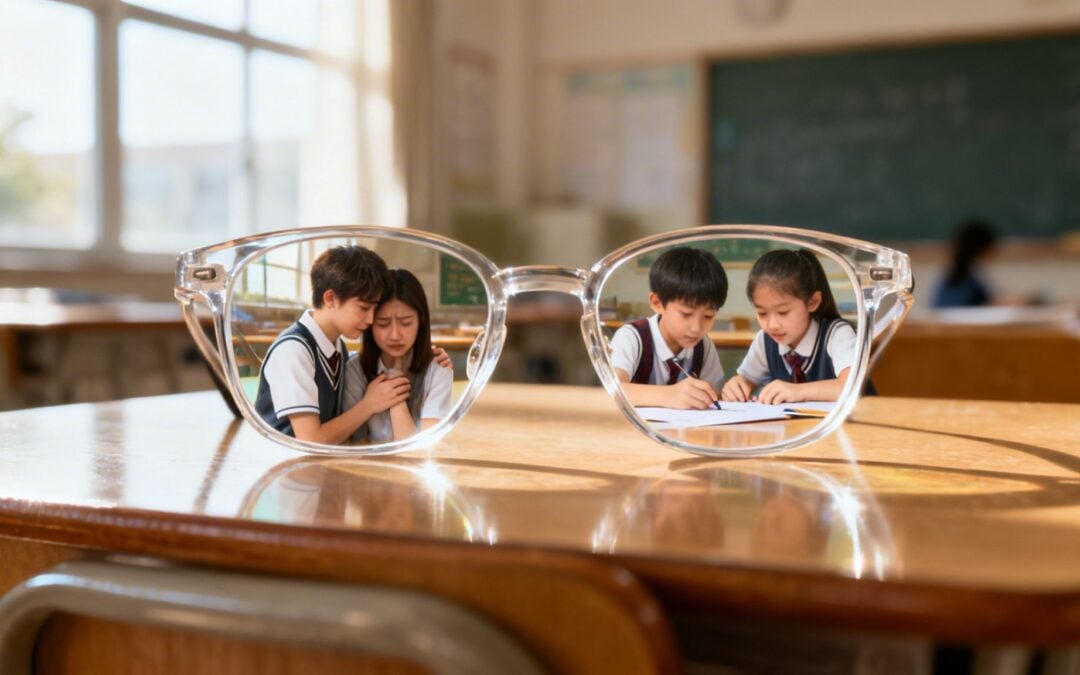
We often talk about the importance of empathy, but where does it come from? The answer starts with a skill called perspective-taking.
So, what is perspective-taking, really? Think of it as the ability to mentally "try on" someone else's point of view—to see the world through their eyes, even if just for a moment. It’s the cognitive workhorse behind empathy, effective communication, and solving conflicts peacefully.
It’s about moving beyond our own immediate experience to understand another person’s thoughts, feelings, and beliefs, without needing to agree with them.
What Is Perspective Taking Really

Let's go deeper than a simple definition. At its heart, perspective-taking is an active, curious process. It’s not just noticing a friend is sad. It's wondering why they might be feeling that way based on their unique situation and what they’re going through.
This is a game-changer on the playground, in a group project, or around the dinner table.
For a child, it’s the shift from seeing a classmate grab a toy and thinking, "He's mean!" to considering, "Maybe he didn't know I was still using it." That subtle pivot is how we build bridges instead of walls.
The Three Types of Perspective Taking
Perspective-taking isn't a one-size-fits-all skill. It actually develops in stages and shows up in different forms. Understanding these types can help parents and teachers see where a child is thriving and where they might need a little more support.
- Perceptual Perspective Taking: This is the most basic form and one of the first to develop. It's the simple, concrete understanding of what another person can physically see from their vantage point. A practical example is asking a child, "I see the door from here. Can you see the door from your chair, or is the bookshelf in your way?"
- Cognitive Perspective Taking: This is a bigger leap. It’s the ability to understand that other people have different thoughts, beliefs, and knowledge. For instance, a child developing this skill realizes that a friend doesn't know a secret just because they know it. A teacher might ask, "Even though you know the answer, does Sarah know it if she wasn't here yesterday?"
- Emotional Perspective Taking: This is where we get to the heart of empathy. It's the ability to infer what another person is feeling. A parent might use this by saying, "Your brother looks upset. How do you think he feels about his tower falling over?"
A Practical Example: A Classroom Disagreement
Imagine two students, Maria and Leo, are arguing over a shared tablet. Maria is upset because Leo snatched it without asking. Leo is frustrated because he's rushing to finish his assignment.
Without perspective-taking, the conflict just gets louder. "It's my turn!" "No, it's mine!"
But a teacher can guide them to practice the skill.
"Maria, can you think of why Leo might be feeling so rushed right now? What is he trying to get done? Leo, how do you think it made Maria feel when you grabbed the tablet without talking to her first?"
This simple prompt encourages both students to put on each other’s "mental glasses." Maria might realize Leo is stressed about a deadline, and Leo might understand his action felt disrespectful to Maria. This doesn’t magically fix the problem, but it reframes the conflict. It becomes a shared problem they can solve together instead of a battle to be won.
This skill is a close cousin to another important concept; you can learn more about this in our guide to define empathetic listening.
By truly understanding perspective-taking, we can see why it’s a non-negotiable skill for our children. It lays the foundation for a more compassionate and collaborative world, one interaction at a time.
Why Perspective Taking Is an SEL Superpower
What if you could give your students a superpower that improves almost every social interaction they’ll ever have? That’s what perspective-taking does. It’s so much more than a soft skill; it’s a core part of social-emotional learning (SEL) that fuels positive change in classrooms, homes, and entire communities.
When we talk about perspective-taking, we mean the ability to see a situation from someone else’s point of view. It’s the engine that drives empathy, makes communication clearer, and sets the stage for real conflict resolution. Without it, kids are stuck seeing the world through their own narrow lens.
This one skill is the difference between a student thinking a quiet classmate is being rude, and realizing they might just be having a tough morning. It’s a small mental shift that completely changes the social landscape.
Building Stronger Friendships and Reducing Conflict
One of the first things you’ll notice when kids develop perspective-taking skills is that their friendships get healthier. Students who can genuinely understand a friend's feelings or point of view are just better at navigating the normal ups and downs of relationships.
We see it time and again: children who are good at this are more likely to help, share, and comfort others. This naturally makes them more well-liked by their peers and helps them avoid feeling left out or rejected.
Practical Example: A Playground Disagreement
Two students, Sam and Chloe, both want the last swing on the playground.
- Without Perspective-Taking: Sam just grabs it and says, "It's mine!" Chloe gets upset, an argument starts, and they both walk away angry.
- With Perspective-Taking: Sam sees the disappointed look on Chloe's face. He pauses and asks, "Did you want this swing?" Chloe explains she had a bad morning and just wanted a minute alone. Sam gets it. "Oh, okay. You can have it. I'll go on the slide."
What could have been a fight becomes a moment of connection. Sam learned something about Chloe, and Chloe felt seen and understood. That tiny interaction not only prevented a problem but actually strengthened their friendship.
Fostering a Positive School Climate
When perspective-taking becomes a real value in a school, the whole atmosphere changes. It’s a powerful defense against bullying, exclusion, and day-to-day classroom friction. After all, bullying is often rooted in a complete failure to see the other person's humanity.
A school environment that actively teaches and models perspective-taking is an environment where bullying has a much harder time taking root. Students learn to see their classmates as complex people with their own stories, not just as simple targets.
This skill also makes group projects and other collaborative work run so much more smoothly. Students become better at:
- Listening to and valuing their teammates’ ideas.
- Understanding why a peer might be struggling with their part of the task.
- Compromising and finding solutions that work for the whole group.
A practical example is during a group project. When one student fails to complete their part, instead of getting angry, a classmate with perspective-taking skills might ask, "Is everything okay? You seem a little stressed." This opens the door to understanding that the student might be overwhelmed with other work, rather than just being lazy.
This creates a more cooperative, less competitive classroom where students feel safe enough to share their thoughts and ideas. The many benefits of social-emotional learning are truly unlocked when perspective-taking is front and center.
Developing Resilience and Social Awareness
Finally, perspective-taking is absolutely essential for building resilience. It gives children the tools to handle tricky social situations without getting overwhelmed or completely shutting down. They learn that not every negative moment is a personal attack.
For example, if a child isn't invited to a birthday party, their first instinct might be to feel hurt and rejected. A parent can help them practice perspective-taking by asking, "I know you feel sad. Can we think of some other reasons? Maybe their parents only allowed a small number of guests, or maybe they only invited kids from their soccer team." This helps the child realize the situation might not be a personal slight.
This social awareness helps them "read the room" and adjust their behavior, which is a vital skill for success in school and in life. By making perspective-taking a priority, we're not just teaching kids to be nice; we're giving them a strategic social-emotional superpower that will serve them for the rest of their lives.
The Developmental Journey of Perspective Taking
Knowing what perspective taking is is one thing, but seeing how it blossoms in a child is another entirely. This skill doesn't just switch on one day. It’s a slow, steady journey that unfolds over years, much like a child learns to walk before they can run. They have to master simple social viewpoints first before they can ever hope to navigate complex friendships and disagreements.
This developmental path isn't a strict schedule but more of a general roadmap. It’s helpful to think of it through frameworks like Vygotsky's sociocultural theory, which shows us how much social interaction shapes a child’s growing mind. Each stage builds on the one before, and when we know what’s typical for each age, we can offer the right support at just the right time.
Perspective-taking abilities change significantly as children mature. The table below breaks down these stages, offering a quick guide for educators and parents to see what's happening at each age and how they can best support this growth.
Developmental Stages of Perspective Taking
| Age Group | Typical Abilities | Practical Example | Supportive Prompt for Adults |
|---|---|---|---|
| Kindergarten – 2nd Grade | Egocentric View: Sees the world from their own physical viewpoint. Begins to identify basic emotions in others. | A child hides by covering their own eyes, thinking "If I can't see you, you can't see me." | "I see you're looking at the blue car. What do you think I see from where I'm sitting?" |
| 3rd Grade – 5th Grade | Second-Person View: Understands that others have different thoughts, feelings, and information. | A child realizes that their friend might not know about the surprise party, even though they do. They keep it a secret. | "Can you think of any other reasons your friend might have seemed upset today? What might they be thinking?" |
| Middle School & Beyond | Third-Person View: Can step back and see a situation from a neutral, outside perspective. | Two friends in a fight can analyze the problem as if they were an uninvolved observer, seeing both sides. | "Let's pretend you're a mediator. How would you describe the problem fairly to both people?" |
By tailoring our guidance to a child's developmental stage, we can meet them where they are and help them build these crucial skills one step at a time.
Early Foundations: Kindergarten to 2nd Grade
In these early years, kids are naturally egocentric. Their universe spins around their own feelings and experiences—and that's completely normal. At this stage, perspective taking is very concrete and tied to what they can physically see.
The main skill popping up is perceptual perspective taking. This is the literal ability to get that someone else sees something differently from their own physical spot.
A great way to practice this is to sit on the floor with a child and put a big book or toy between you. Ask them what they see on their side. Then, ask what they think you see from your side. It’s a simple game that helps them grasp the core idea that two people can have different views of the exact same object.
The focus here is on linking actions to feelings. For example, a child learns that if they snatch a toy, it makes their friend sad. They aren't ready to dive deep into their friend's inner world, but they're laying the foundation for emotional empathy.
As you can see, perspective taking is a core skill that fuels other SEL superpowers like empathy, friendship, and resilience as kids grow.

This shows how a child’s ability to handle more complex social and emotional situations matures right alongside their perspective-taking skills.
Expanding Horizons: 3rd to 5th Grade
Once kids hit the upper elementary grades, their thinking takes a huge leap. They move past just physical views and start to understand that other people have different thoughts, beliefs, and knowledge. This is cognitive perspective taking. They finally get that just because they know the secret to a surprise party, it doesn't mean everyone else does.
This is a game-changer for social life, as friendships get way more complicated. Kids at this age can start to put themselves in someone else's "mental shoes" and think about their intentions.
A key shift during this period is the ability to recognize that a person's actions are driven by their own unique thoughts and knowledge. This insight is fundamental to moving past black-and-white thinking and seeing the nuances in social situations.
For example, imagine a student is sad because their friend didn't save them a seat at lunch. Instead of just focusing on the hurt, a teacher can ask, "Can you think of any reasons why your friend might not have saved you a seat? Maybe they didn't see you, or maybe someone else asked to sit there first." This nudges the child to explore other possibilities beyond their own feelings.
Advanced Understanding: Middle School and Beyond
Middle school drops kids into a whole new level of social complexity, and their perspective-taking skills have to level up, too. Now, adolescents become capable of something pretty sophisticated: seeing a situation from a neutral, third-party perspective. They can actually step back from a fight and look at it like an outside observer would.
This skill is absolutely vital for navigating peer pressure, solving messy arguments, and understanding bigger societal issues. They learn that truth isn't always black and white and that two people can have totally valid but opposite views on the same problem.
Say two friends are arguing over a group project. One feels the other isn't pulling their weight, while the second feels swamped with other commitments. A counselor could guide them by saying, "Let's pretend you're a reporter writing a story about this. What would each person's side of the story be? What's the fair way to describe what happened?"
This simple prompt helps them detach from their intense emotions and see the situation more objectively—the ultimate goal of mature perspective taking. When you understand this developmental journey, you can be a much better guide for students every step of the way.
Proven Classroom Strategies to Teach Perspective Taking

Helping students define perspective taking for themselves is one of the most powerful things we can do as educators. It’s not just an abstract theory—it’s a practical tool that helps kids navigate their social world with more kindness and understanding.
The best part? You don’t need a whole separate curriculum. These strategies can be woven right into the fabric of your daily routine. Everyday moments can become powerful lessons in empathy.
The key is making this skill visible and practical. When teachers model perspective taking, it becomes a natural part of the classroom culture rather than just another rule to follow. Let’s look at a few proven ways you can start doing this tomorrow.
Use Think-Alouds During Read-Alouds
Storytime is the perfect laboratory for practicing perspective taking. As you’re reading to your class, just pause and model your own thought process out loud. This "think-aloud" technique makes the internal process of seeing another's viewpoint clear and simple for your students.
Instead of just reading the words on the page, you can show your curiosity:
- "Hmm, the wolf says he just had a cold, but the pig looks terrified. I wonder what the pig is thinking right now?"
- "Wow, she just lost her favorite toy. How do you think she's feeling inside right now? What would you want a friend to do for you if that happened?"
- "He isn't sharing his snack. What could be a reason for that? Maybe he's extra hungry today or didn't have breakfast."
This simple act invites students to step into the characters' shoes. It shows them there’s almost always more than one reason for a person's behavior, moving them beyond snap judgments.
Integrate Perspective Taking into Core Subjects
Perspective taking isn’t just for your SEL block; it's a critical thinking skill that makes every academic subject richer. By weaving it into your existing lessons, you reinforce the concept all day long.
In Literature:
Go beyond simple comprehension questions. Ask students to dig into character motivations. Why did a character make a certain choice? How did their past experiences shape their actions? For example, "Why do you think the villain in this story acts so mean? What might have happened in their past to make them this way?"
In History and Social Studies:
History is packed with opportunities. Instead of just having students memorize dates, ask them to explore events from multiple viewpoints.
Example: When studying a conflict, you could divide the class into groups representing different sides. Have each group research and argue from that perspective. This helps them see that history is often a matter of interpretation and that different groups can experience the same event in profoundly different ways.
Research supports this approach. Using case studies from history or even lived experiences helps students analyze conflicts. They can search for evidence of where a lack of perspective taking led to problems and discuss how empathy might have changed the outcome.
Leverage Structured Role-Playing
Role-playing takes perspective taking from a mental exercise to a physical one. It’s a safe way for students to practice navigating the kinds of conflicts they face every day on the playground or in the classroom.
You can start with simple, common scenarios:
- Set the Scene: Two students both want to use the same computer.
- Assign Roles: One student needs the computer to finish work. The other wants to play a game.
- Practice the Script: Guide them to use "I feel" statements and to state what they think the other person wants. For example: "I feel frustrated because I need to finish my work. I get that you want to play a game, and you've been waiting for a turn."
This kind of structured practice builds muscle memory for empathy. It gives students the words they need when a real conflict pops up. For even more hands-on ideas, check out our guide on fun and engaging perspective taking activities.
Empower with Question Stems
Finally, give your students the tools to practice perspective taking on their own. Post a few simple question stems around the classroom as visual reminders they can use during disagreements or group projects.
Helpful question stems include:
- "How might they see this differently?"
- "What's another reason they might have done that?"
- "What do they need right now?"
- "Can you say back what you heard them say?"
By consistently using these strategies, you create an environment where understanding others is a skill that’s both valued and practiced. You're not just managing behavior; you're building a foundation for compassionate, socially aware kids.
How Parents Can Build Perspective Taking at Home
While classrooms provide a wonderful, structured space for social-emotional learning, the most powerful lessons often take root at home. As a parent, you play a vital role in nurturing perspective taking, turning everyday family moments into real-world learning opportunities.
These small, consistent practices are your secret weapon. The goal isn't to add more to your already full plate, but to weave this skill into the things you already do—from watching movies to navigating sibling squabbles. When perspective taking becomes a natural part of your family’s dialogue, you show your child how much it matters in a way no lesson plan ever could.
Turn Dinnertime into a "Feeling" Feast
The family dinner table is more than a place to eat; it’s a daily empathy gym. Make it a habit to go beyond "How was your day?" and ask questions that gently nudge your children to think about the feelings of others.
Try a simple game like "Rose, Thorn, Bud." Each person shares:
- A Rose: The best part of their day.
- A Thorn: A challenging moment they had.
- A Bud: Something they're looking forward to.
This simple structure creates a perfect opening for practicing perspective taking. If a child shares a “thorn” about a conflict with a friend, you can gently ask, "That sounds so frustrating. How do you think your friend might have been feeling in that moment?" This normalizes thinking about another person's experience.
Use Media as an Empathy Mirror
Family movie night—or even a 10-minute cartoon—is a fantastic laboratory for building perspective taking. The characters on screen offer a low-stakes way for kids to practice walking in someone else’s shoes.
The key is to pause and ponder. When a character makes a surprising choice or shows a big emotion, hit pause and get curious.
- "Why do you think she did that? What’s another reason she might have acted that way?"
- "Look at his face. What do you think he’s feeling, and what makes you say that?"
- "How would you feel if that happened to you?"
By exploring characters’ motivations and emotions, you’re teaching your child to look for the “why” behind people’s actions. This builds the mental habit of considering what’s happening beneath the surface—a core skill for empathy.
This simple act turns passive screen time into an active, engaging lesson. Reading stories together works just as well; you can find some great titles in our curated list of books on emotions for children.
Navigate Sibling Squabbles with a Script
Sibling disagreements are inevitable. But they’re also prime opportunities to teach conflict resolution and empathy in the heat of the moment. Instead of just sending kids to separate corners, use these moments to explicitly practice perspective taking.
Introduce a simple "Stop and State" rule. Before you jump in to find a solution, each child must first try to calmly state the other’s point of view.
Practical Example: The Broken Toy
One child is crying because their sibling broke their favorite toy. The other child is defensive, insisting it was an accident.
- Stop: Separate them and help them both take a breath to calm down.
- State: Ask the upset child, "Can you try to explain what your brother is saying happened?" Then turn to the other and ask, "Can you tell me how your sister is feeling right now and why?"
- Solve: Once they've each made an effort to see the other's side, they can start working on a solution together, like fixing the toy or offering a real apology.
This process forces a pause and requires them to step outside their own intense feelings, even for a second. It shows them that understanding isn't the same as agreeing, but it’s the essential first step toward finding a fair and kind solution.
Building Empathetic Schools with Soul Shoppe Programs
Understanding perspective-taking is the first step, but the real magic happens when you weave it into the fabric of your entire school community. This is where theory gets its hands dirty. At Soul Shoppe, we guide schools from just talking about empathy to actually building it into the campus DNA with our research-based, hands-on programs.
We create a psychologically safe space where students from kindergarten through 8th grade can actively practice seeing the world through someone else’s eyes. Our approach isn't about lectures; it's about doing. Through interactive workshops, students engage in activities designed to help them step into another person’s shoes and see a familiar situation from a totally new angle.
Creating a Shared Language for Empathy
One of the most powerful ways to make perspective-taking a campus-wide habit is to establish a shared language. When everyone—from the principal to the youngest student—uses the same words to talk about feelings and conflict, it creates a powerful cultural touchstone. Our programs introduce simple, memorable tools that make it easier for students to communicate with real understanding.
For instance, we might walk students through a conflict with a simple, three-part script:
- "I feel…" to express their own emotions without placing blame.
- "I hear you saying…" to prove they were listening to the other person's side.
- "What I need is…" to clearly and respectfully ask for what would help.
This shared vocabulary turns an abstract idea into concrete action. It gives kids the words they need to navigate tough moments with confidence, turning potential fights into opportunities for real connection.
Experiential Learning That Sticks
Let's be honest: kids learn best by doing. Soul Shoppe’s facilitators lead students through dynamic activities that make perspective-taking a tangible experience, not just a vocabulary word. These aren't sleepy, passive assemblies; they are high-energy workshops where empathy is practiced in real time.
A core belief at Soul Shoppe is that emotional skills are built through practice, just like any other skill. We don't just tell students to be empathetic; we give them the chance to feel what it’s like to understand someone else's point of view in a real, immediate way.
A teacher might see a student who usually struggles in groups suddenly pause and ask, "Wait, what's your idea?" after one of our programs. That tiny shift is the direct result of practicing the skill in a safe, guided environment.
When you partner with an organization like Soul Shoppe, you can scale these strategies across your entire campus. You can turn your school into a community where every single child feels seen, heard, and truly valued.
Common Questions About Teaching Perspective Taking
As you start weaving perspective-taking into your daily conversations with kids, you're bound to have some questions pop up. It’s a complex skill, and figuring out the best way to teach it isn't always straightforward. We get it.
Here are some of the most common questions we hear from parents and educators, along with our most practical, real-world answers.
Is Perspective Taking the Same as Empathy?
They’re incredibly close partners, but they aren't the same thing. Think of it this way: perspective-taking is the mental work of trying to see the world from someone else’s viewpoint. It’s a thinking skill. Empathy is the feeling part—it’s feeling with someone because you understand where they're coming from.
You really can't have true empathy without first taking someone’s perspective. It’s the key that unlocks the door. For instance, a student uses perspective-taking to guess that their friend is quiet because they didn't do well on a math test. That understanding then opens the door for them to feel empathy for their friend's disappointment.
My Child Struggles with This. When Should I Be Concerned?
First off, it is completely normal for younger kids (think K-2) to see the world primarily through their own eyes. Their brains are naturally self-focused at this stage. Just keep modeling the skill, using simple feeling words, and talking through different points of view.
But if a child in the upper elementary grades (4th or 5th) consistently seems unable to consider other viewpoints—and it's starting to cause friction in their friendships—that's a good time to team up with their teacher to brainstorm more targeted support.
For example, if your child always blames others for conflicts and can't articulate why a friend might be upset ("I don't know, he's just being weird"), it's a good cue to be more intentional. You can work with the teacher to see if this pattern shows up at school, too.
How Do I Teach This Without Making My Child a Pushover?
This is such an important question and a worry we hear all the time. The goal here is to teach understanding, not automatic agreement. We always stress that "understanding why someone feels a certain way doesn't mean you have to agree with them."
Frame perspective-taking as a tool for smarter, more effective communication. You can use phrases like, "You don't have to agree with your friend, but let's try to figure out why they're so upset." For instance, "I understand you feel it's unfair that your brother got to choose the movie, but you can still tell him you want to choose next time. Understanding his reason doesn't mean you give up your turn." This helps them see that understanding others gives them more information and makes them a better friend and problem-solver, not someone who just gives in.
For adults and older teens looking to deepen their own social-emotional skills, exploring options like professional counselling services can provide valuable strategies for personal growth.
Soul Shoppe provides research-based social-emotional learning programs that equip K-8 schools with the tools and language to build empathetic, connected communities where every student can thrive. Learn how we can support your school.