

10 Transformative Ways to Show Gratitude in K-8 Schools and Homes
In a world of constant distraction and pressure, how can we help young people build the emotional foundation for resilience, connection, and success? While academic skills are crucial, social-emotional learning (SEL) provides the bedrock for everything else. Gratitude isn't just about good manners; it's a powerful SEL practice that can reshape school culture, strengthen family bonds, and equip K-8 students with the tools to navigate life's challenges.
Research shows that consistent gratitude practices can increase happiness, improve mental health, and foster empathy. But how do we move beyond a simple 'thank you' and embed genuine appreciation into the daily lives of children? The key is to make it an active, visible, and consistent part of their world, both at school and at home. This requires more than just saying the words; it demands structured, intentional activities that make gratitude a habit. By focusing on specific ways to show gratitude, we can teach students to recognize the good in their lives and in others, which in turn builds a more positive and supportive community.
This comprehensive guide provides ten powerful and practical ways to cultivate gratitude, designed specifically for K-8 principals, teachers, and parents. Each strategy is backed by actionable steps, age-specific adaptations, and conversation starters. Drawing from over 20 years of SEL work by Soul Shoppe, these methods offer a clear roadmap to cultivate a thriving environment where every child feels seen, valued, and connected. From peer-to-peer appreciation circles to integrating gratitude into family routines, you will find concrete tools to build a lasting culture of thankfulness.
1. Gratitude Journaling in the Classroom
Gratitude journaling is a structured practice where students regularly write down things they are thankful for. This evidence-based social-emotional learning tool helps rewire the brain toward positivity, reduces anxiety, and builds emotional awareness. In a school setting, it creates a shared language around appreciation and belonging, making it particularly effective for K-8 students who are developing foundational emotional intelligence.

This practice is one of the simplest yet most powerful ways to show gratitude because it makes reflection a concrete, repeatable habit. The physical act of writing or drawing focuses a child's attention, moving appreciation from an abstract thought to a tangible expression. It gives students a private space to explore their feelings and recognize the good in their lives, from a sunny day to a friend's kind word.
How to Implement Gratitude Journaling
Make it a Ritual: Consistency is key. Dedicate a specific time, such as during morning meetings or the last five minutes of the day, for journaling. This predictability helps build a lasting habit. For example, a "Five-Minute Friday" write before dismissal allows students to end the week on a positive note.
Provide Structure and Flexibility: Offer sentence starters for younger students (K-2), such as "I'm grateful for… because…" or "Today, I felt happy when…". For older students, provide more open-ended prompts like, "Write about a challenge you're grateful for and what you learned from it." Allow students to express themselves through drawing, writing, or even creating a list of words.
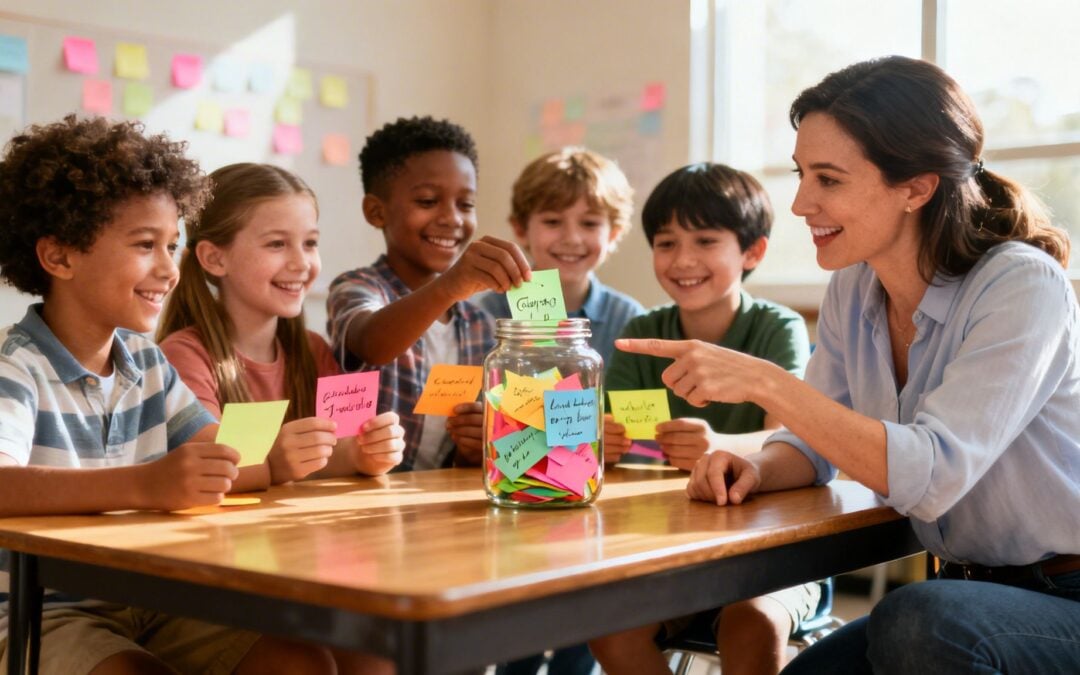
Create a Shared Space (Optional): Establish a "Gratitude Wall" or a community jar where students can anonymously submit entries they wish to share. Reading these aloud can reinforce a culture of appreciation and show students they are part of a grateful community.
Practical Example: A third-grade teacher noticed her class struggled with negative self-talk. She introduced a daily gratitude journaling practice using the prompt, "What's one small thing you're grateful for today?" She observed students not only writing about big events but also small moments, like "I'm grateful for my sharp pencil because it helps me draw" or "I'm grateful Sarah shared her snack with me." This shift in focus helped them appreciate effort and everyday resources.
This practice directly supports SEL competencies like self-awareness and relationship skills. By regularly identifying positive aspects of their lives, students build resilience and empathy. To explore more gratitude activities for kids, you can find additional ideas for changing the way kids see the world.
2. Peer-to-Peer Gratitude Circles
Peer-to-peer gratitude circles are structured small-group conversations where students express appreciation for one another in a safe, facilitated setting. This practice directly addresses belonging and psychological safety by creating intentional opportunities for students to give and receive acknowledgment. In a classroom, these circles build empathy, strengthen peer relationships, and reduce feelings of isolation, making them an excellent way to show gratitude and build community.
This method is powerful because it makes gratitude a shared, verbal experience. Unlike private journaling, gratitude circles teach students the social-emotional skills of articulating appreciation and gracefully accepting it. It moves gratitude from an internal feeling to a public affirmation, which validates students and shows them their positive actions are noticed by their peers. This is especially important for building a culture where kindness is the norm.
How to Implement Gratitude Circles
Establish Norms First: Before the first circle, co-create guidelines with the students. Essential norms include one person speaking at a time, listening without judgment, and keeping what's shared in the circle confidential. This ensures a foundation of trust and respect.
Use Sentence Starters: Provide clear and simple prompts to guide students, especially when the practice is new. Use phrases like, "I appreciate you for…" or "I noticed when you… and I was grateful because…". This helps students focus on specific behaviors and actions rather than general personality traits.
Start with Consistency, Then Rotate: Initially, keep the small groups consistent to build deep trust. Once students are comfortable with the process, rotate the groups. This allows students to connect with a wider range of classmates, breaking down cliques and fostering a more inclusive classroom environment.
Practical Example: During an advisory period, a sixth-grade teacher used gratitude circles to address social friction. He had students pass a "talking stick" and use the sentence starter, "I want to thank [student's name] because…" One student shared, "I want to thank Marco because he helped me pick up my books when they fell, even though we don't usually talk." This small, specific acknowledgment helped bridge a social gap and visibly improved the classroom dynamic.
By facilitating these circles, educators can directly teach and reinforce core SEL competencies like social awareness and relationship skills. Students learn to see the good in others and communicate it constructively, which is a fundamental skill for building healthy, supportive relationships throughout their lives.
3. Teacher-to-Student Gratitude Notes
Teacher-to-student gratitude notes are personalized expressions of appreciation from educators to students, highlighting specific strengths, growth, or character qualities. This practice directly uses the powerful influence of teacher-student relationships to build a child’s confidence and sense of belonging. Research shows that when students feel seen and valued by adults in their school, their academic engagement, behavior, and mental health all improve.

This method is one of the most effective ways to show gratitude because it singles out positive actions, making appreciation specific and memorable. A simple note can shift a student’s entire perspective on their school day, especially for those who may not often receive positive affirmation. By moving beyond generic praise, teachers communicate that they are paying close attention to each child's unique contributions and character.
How to Implement Teacher-to-Student Gratitude Notes
Create a Sustainable System: Don't leave appreciation to chance. Create a system to ensure every student receives a note regularly. Use a class roster checklist or set a goal to write three to five notes each day. This prevents educators from only noticing the most outgoing or highest-achieving students.
Be Specific and Authentic: Vague praise like "You're a good student" is less impactful than a specific observation. Instead, try, "I noticed how you helped Marcus with his math problem even when you were finished," or "Your thoughtful question during our science discussion helped the whole class think differently." Specificity shows you are truly paying attention.
Integrate, Don't Isolate: Weave gratitude notes into regular communications. Send a "Friday Postcard" home celebrating a student's weekly growth or use a digital platform to quickly send a positive message to a student and their family. This separates appreciation from behavioral correction and reinforces that the student is valued as a whole person.
Practical Example: A middle school advisory teacher made a commitment to write one specific gratitude note on a sticky note for a different student each day, leaving it on their desk before they arrived. He noticed students would often save the notes in their binders. One student, who had been struggling with motivation, told him, "Your note said, 'I'm proud of how hard you worked on that essay, even when it was tough.' That was the first time a teacher said they were proud of me for trying, not just for my grade."
This practice builds strong connections and directly supports a student’s sense of self-worth. By modeling specific appreciation, teachers also teach students how to recognize and value positive qualities in others. You can explore more about the power of a positive teacher-student relationship and its effects on school climate.
4. Family Gratitude Rituals and Home Integration
Family gratitude rituals extend social-emotional learning beyond the classroom, creating a bridge between school and home. These are structured, repeatable practices that families adopt to reinforce appreciation as a shared value. When schools and families work together on these ways to show gratitude, the impact is multiplied, creating a consistent environment where children feel seen, heard, and valued. This approach empowers parents as essential SEL partners, ensuring gratitude becomes part of a child's core identity.
This method is powerful because it makes gratitude a lived experience rather than just a school lesson. Simple, consistent home practices, like sharing "highs and lows" at dinner or a bedtime thank-you, help children connect appreciation to their daily lives. It provides a safe space for families to communicate openly, build stronger bonds, and collectively focus on the positive, supporting the work done in the classroom.
How to Implement Family Gratitude Rituals
Start Small and Be Consistent: Encourage families to begin with a simple, five-minute activity. For example, a "Rose, Thorn, Bud" conversation at dinner where each person shares a highlight (rose), a challenge (thorn), and something they're looking forward to (bud). Consistency is more important than duration.
Create a Gratitude Jar: Provide families with instructions for a "Gratitude Jar." Each family member writes down things they are grateful for on small slips of paper throughout the week. During a weekly family meeting or Sunday dinner, they can read the notes aloud, celebrating the good things that happened.
Establish Bedtime Reflections: For younger children, a simple bedtime routine can be very effective. Parents can ask, "What was one thing that made you smile today?" or "Who helped you today, and how did it feel?" This calms the mind before sleep and ends the day on a positive note.
Practical Example: A school counselor shared a parent newsletter with a monthly gratitude challenge, including a template for a family gratitude jar. One family reported that their nightly "thankfuls" conversation helped their anxious first-grader feel more secure. Her dad would ask, "What was the best part of your day?" She started by saying, "recess," but eventually began sharing specifics like, "I'm thankful that Emily pushed me on the swing today." This helped her focus on positive social interactions at school.
Integrating gratitude into family life directly supports self-awareness and relationship skills. By creating these shared rituals, families build a common language of appreciation that strengthens their connection. For more ideas on bridging school and home, explore parent resources that offer practical gratitude activities.
5. Service-Based Gratitude and Acts of Kindness
Service-based gratitude moves appreciation from a feeling into tangible action. This approach teaches students to express thankfulness by helping others, fostering a deep understanding of interdependence and community. Service-learning, whether through small acts of kindness or organized projects, is a powerful way to show gratitude that builds empathy, reduces bullying, and gives students a sense of purpose.
This method is one of the most impactful ways to show gratitude because it connects students directly to their community. When students actively contribute, they see firsthand how their efforts make a difference, reinforcing that they have the power to create positive change. It shifts their perspective from being passive recipients of kindness to becoming active agents of appreciation.
How to Implement Service-Based Gratitude
Start Within the School: Begin with projects that serve the immediate school community. This makes the impact visible and personal. For example, older students could mentor younger ones, or a class could organize a "Staff Appreciation Day" where they write thank-you notes and perform small chores for teachers and custodians.
Connect Service to Reflection: After any act of kindness or service project, guide a reflection. Use prompts like, "How did it feel to help someone today?" or "Who benefits from our work, and who are we grateful to for this opportunity?" This step is crucial for connecting the action back to the feeling of gratitude.
Empower Student Ownership: Let students lead the way by identifying needs within their community. A class might notice the local park needs a cleanup or that a nearby animal shelter requires supplies. When students drive the project, their engagement and sense of accomplishment are much higher. Additionally, acknowledging the efforts of educators through gestures like thoughtful gifts for teachers can reinforce a culture of appreciation within the school community.
Practical Example: A fifth-grade class launched a "Kindness Campaign" that involved leaving anonymous sticky notes with positive messages on lockers. The teacher provided prompts like, "I noticed you were a good friend when…" One student, who was often quiet and withdrawn, wrote that finding a note saying "You have a great smile" was the highlight of his week. This simple act showed students how small, intentional gestures can have a big impact on their peers.
By participating in service, students develop crucial SEL competencies like social awareness and responsible decision-making. They learn to recognize the needs of others and take initiative to help, building a foundation for lifelong compassion. To explore this further, you can discover more about teaching kindness and building habits of compassion in kids.
6. Visual Gratitude Displays and Community Boards
Visual gratitude displays are physical or digital spaces where students and staff post appreciations, creating a visible culture of gratitude. These displays, like gratitude walls, thankfulness trees, or digital boards, serve as constant, public reminders of appreciation and belonging. They are one of the most effective ways to show gratitude because they make an abstract feeling concrete and communal.

This practice is powerful because it brings gratitude out of individual journals and into the shared environment. A hallway "Thankfulness Tree" with leaves displaying student appreciations or a classroom gratitude wall with daily sticky notes becomes a community touchstone. It reinforces positive school culture by making appreciation visible, accessible, and a part of the school’s daily fabric.
How to Implement Visual Gratitude Displays
Make it Visible and Accessible: Place displays in high-traffic areas like hallways, the cafeteria, or the school entrance for maximum visibility. Create low-barrier submission options so every student can participate, using written notes, drawings, or even pre-made stickers for younger children.
Keep it Fresh and Engaging: Change the prompt monthly to maintain interest. For example, one month the prompt could be, "Who are you grateful for in our school community?" and the next could be, "What part of our playground are you thankful for?" This keeps the practice dynamic and encourages students to look for new things to appreciate.
Build Student Ownership: Involve students in the installation, maintenance, and promotion of the display. Assigning a small group of students to collect, post, and organize the appreciations gives them a sense of responsibility and pride in the project. They become gratitude ambassadors for their peers.
Practical Example: At a middle school, the counselor created a "Gratitude Graffiti Wall" on a large paper roll in the main hall. Initially, posts were simple, like "pizza day." After modeling how to write specific notes— "I'm grateful for Mr. Evans because he stays after school to help with our math project"— the submissions became more meaningful. Students started writing notes like, "Thank you to the cafeteria staff for always being so friendly," strengthening staff-student connections.
By creating a public forum for thanks, visual displays directly support social awareness and relationship skills. Students learn to recognize and articulate the positive contributions of others, building empathy and a stronger sense of community. This practice turns individual feelings of gratitude into a collective celebration of the good within the school.
7. Strength-Based Feedback and Appreciation Meetings
Strength-based feedback is a structured conversation model that shifts the focus from deficit-based critiques to intentional appreciation of a student's inherent qualities. It reframes how students see themselves and how schools communicate with families. By intentionally highlighting strengths, character traits, and effort alongside growth areas, educators build confidence and resilience while maintaining high standards.
This approach is one of the most direct ways to show gratitude because it communicates, "I see you, and I value your unique contributions." Instead of starting with what’s wrong, it starts with what’s strong. This practice is especially powerful during one-on-one meetings or family-teacher conferences, as it builds a foundation of trust and respect, making it easier to discuss challenges productively.
How to Implement Strength-Based Feedback
Start with Strengths First: Begin every feedback session, whether with a student or their family, by identifying at least two or three specific strengths. For example, during a family-teacher conference, start by saying, "Before we discuss grades, I want to share how much I appreciate Maria's persistence. I saw her work through a very difficult math problem this week without giving up."
Use Specific, Actionable Language: Avoid generic praise like "You're smart." Instead, focus on observable behaviors and character strengths. Use concrete examples: "I noticed how you included a new student in your group at recess" or "Your focus during our science experiment was excellent; you followed every step carefully."
Connect Strengths to Growth: Frame challenges as opportunities to apply existing strengths. For a student who struggles with writing but is a great storyteller, you could say, "You have an amazing imagination. Let's work on using that strength to organize your fantastic ideas on paper." This empowers the student by giving them tools they already possess.
Practical Example: A middle school advisory group used this model for peer feedback on presentations. Instead of just pointing out errors, students were required to start with the "3 C's": one comment on Clarity ("I understood your main point because…"), one on Creativity ("I liked how you used…"), and one on Courage ("It was brave to…"). This protocol transformed peer review from a source of anxiety into a genuine exercise in mutual support and appreciation.
By focusing on what students do well, this practice reinforces key SEL competencies like self-awareness and social awareness. It teaches them to recognize their own value and appreciate the strengths in others, creating a more supportive and grateful school climate.
8. Gratitude-Based Conflict Resolution and Restorative Practices
Gratitude-based conflict resolution integrates appreciation into restorative processes, shifting the focus from blame to healing and connection. Instead of concentrating solely on wrongdoing, this approach encourages all parties to recognize positive qualities in one another, even amidst conflict. It provides a structured way to show gratitude as a tool for rebuilding trust, repairing relationships, and fostering empathy in a school community.
This method is powerful because it reframes conflict as an opportunity for growth rather than a purely negative event. By creating space for mutual appreciation, it helps students see the humanity in others, which is essential for genuine reconciliation. This practice moves beyond a simple apology to actively repair the social fabric, making it one of the most profound ways to show gratitude and rebuild community after harm has occurred.
How to Implement Gratitude-Based Conflict Resolution
Establish Safety First: Acknowledge the harm and validate feelings before introducing gratitude. The goal is not to dismiss the incident but to build a bridge toward repair. For example, a facilitator might start by saying, "We all agree that what happened was not okay. Now, let's talk about how we can move forward together."
Use Structured Prompts: In a restorative circle, after the harm has been discussed, guide students with specific prompts. For younger students (K-3), try: "Even though we are upset, what is one good thing you know about [person's name]?" For older students (4-8), a prompt could be: "What is a strength you see in this person that could help them make a better choice next time?"
End Peer Mediations with Appreciation: Conclude peer mediation sessions by having each student share one thing they appreciate about the other. This could be related to the process itself, like, "I appreciate that you listened to my side of the story," which reinforces positive communication and ends the session on a constructive note.
Practical Example: A middle school used gratitude in a restorative circle after a conflict involving social exclusion. After discussing the hurt caused, the facilitator asked each student to share something they secretly admired about the others using the prompt, "Even when we disagree, I appreciate that you…" One student admitted, "I appreciate that you always make people laugh, even when I felt left out." This moment opened the door for genuine apologies and a plan to be more inclusive.
This approach directly builds SEL competencies like social awareness and relationship management by teaching students to hold two truths at once: that someone can make a mistake and still possess admirable qualities. By practicing this, students learn that conflict does not have to be the end of a relationship. You can explore how this fits into a wider strategy by learning more about what restorative practices in education entail.
9. Gratitude Mentorship and Buddy Systems
Gratitude mentorship and buddy systems are structured pairing programs where one student or adult is intentionally matched with another to provide guidance, support, and a sense of belonging. The core of this practice is training mentors to actively notice, name, and appreciate their mentees' strengths, efforts, and growth. These relationships create a powerful, ongoing feedback loop of gratitude and positive connection, which is especially important for students who may feel disconnected or overlooked.
This approach is one of the most impactful ways to show gratitude because it moves appreciation from a one-time event to a sustained, relational practice. By design, it provides students with a dedicated person who is focused on seeing the good in them. This consistent validation helps build self-worth, improves social skills, and creates a safety net of support within the school community.
How to Implement Gratitude Mentorship
Train Mentors in Appreciation: Before pairing them, explicitly train mentors on how to give specific, meaningful praise. Instead of saying "good job," teach them to say, "I really appreciate how you kept trying on that math problem, even when it got frustrating." Provide sentence stems like, "I noticed you…" or "I was grateful when you…".
Structure the Relationship: Create a predictable schedule for meetings, whether it's a weekly lunch with a "Kindness Buddy" or a check-in before school with a teacher-mentor. Provide reflection prompts for mentors to consider between meetings, such as, "What is one strength my mentee showed this week?" or "What am I grateful for about our connection?".
Match with Purpose: Whenever possible, match mentors and mentees based on shared experiences or interests. A high school student who successfully navigated middle school social challenges can be an effective mentor for a current middle schooler. Pairing students in affinity groups, such as for students of color or LGBTQ+ youth, can also foster a deep sense of understanding and validation.
Practical Example: A middle school paired eighth-graders with sixth-graders for a "Kindness Buddies" program. Mentors were tasked with leaving one anonymous note of appreciation for their buddy each week. An eighth-grader, who was a mentor, wrote, "I'm grateful you're my buddy because you always say hi to me in the hall. It makes me feel seen as a leader." The simple, reciprocal act transformed the school's climate, reducing hallway anonymity and building cross-grade friendships.
These programs directly support SEL competencies like social awareness and relationship skills. The mentor learns empathy and leadership, while the mentee experiences a consistent source of encouragement, reinforcing their value within the community.
10. Gratitude-Infused School Assemblies and Ceremonies
Gratitude-infused assemblies are large-scale school events intentionally designed to celebrate appreciation and community. These high-visibility gatherings shift the focus from individual achievement to collective recognition, creating powerful, shared moments that reinforce a positive school culture. By embedding gratitude into ceremonies, schools make appreciation a public value and a cornerstone of the community's identity.
This approach is one of the most impactful ways to show gratitude because it models appreciation on a grand scale. When students see staff, peers, and community members publicly recognized for their contributions and character, it validates the importance of kindness and effort. These events serve as cultural touchstones, influencing how the entire school community relates to one another and celebrating the diverse ways people contribute to a positive environment.
How to Implement Gratitude-Infused Assemblies
Center on Inclusive Recognition: Ensure equity by celebrating a wide range of students and staff, not just those with perfect grades or attendance. Track recognition to include students from diverse backgrounds and those who demonstrate growth, resilience, or kindness. For example, a monthly "Peaceful Warrior" assembly can highlight students who resolved a conflict or supported a friend.
Involve Student Leadership: Empower students to help plan and facilitate the event. Student leaders can suggest themes, introduce speakers, or create segments that feel authentic to their peers. This co-creation gives students ownership and makes the message of gratitude more resonant.
Incorporate Peer-to-Peer Appreciation: Move beyond adult-led recognition. Create moments where students can thank each other, such as a "shout-out" segment where peers can publicly acknowledge a classmate's help or a "gratitude chain" where students write notes of thanks that are read aloud.
Practical Example: A middle school principal replaced a traditional awards ceremony with a "Community Celebration" assembly. Instead of just honoring academic achievements, they used student-made videos to showcase "unsung heroes" like the cafeteria staff who know students' names, the custodian who always says hello, and a bus driver who decorates the bus for holidays. This simple shift taught students that everyone's contribution is valuable and worthy of gratitude.
These events directly support social awareness and relationship skills by making gratitude a visible, communal practice. By consistently celebrating acts of kindness and contribution, schools build a culture where appreciation becomes second nature.
10 Gratitude Practices: Quick Comparison
| Practice | Implementation complexity | Resource requirements | Expected outcomes | Ideal use cases | Key advantages |
|---|---|---|---|---|---|
| Gratitude Journaling in the Classroom | Low–Medium — regular routines and teacher facilitation | Minimal — journals/paper, prompts, brief class time | Improved mood, resilience, self-reflection, focus | K–8 morning meetings, daily SEL blocks, whole-class routines | Low-cost, scalable, creates tangible record of growth |
| Peer-to-Peer Gratitude Circles | Medium–High — needs facilitation and norms | Trained facilitator or peer leader, small-group time/space | Stronger belonging, empathy, peer trust | Advisory, restorative groups, targeted social skills work | Deep relational impact; elevates marginalized voices |
| Teacher-to-Student Gratitude Notes | Low–Medium — simple practice needing systemization | Teacher time, stationery or digital messaging, tracking system | Increased engagement, motivation, improved behavior | Individual supports, weekly recognition, family communications | Highly personalized, low-cost, high relational impact |
| Family Gratitude Rituals and Home Integration | Medium — requires outreach and adaptable guidance | Parent resources, bilingual materials, workshops/newsletters | Reinforced SEL at home, stronger family communication | School–home partnership initiatives, family nights | Extends school impact to home; multiplies behavior change |
| Service-Based Gratitude & Acts of Kindness | Medium–High — planning and coordination required | Staff coordination, community partners, materials, reflection time | Increased empathy, leadership, purpose, reduced bullying | Community projects, school-wide service campaigns | Action-oriented learning; visible community impact |
| Visual Gratitude Displays & Community Boards | Low — easy setup but needs maintenance | Bulletin/digital space, materials (notes, art), periodic refresh | Ongoing reinforcement of positive culture, inclusive visibility | High-traffic areas, low-barrier engagement efforts | Scalable, engages visual learners, low-cost culture cue |
| Strength-Based Feedback & Appreciation Meetings | Medium–High — scheduled meetings + staff training | Time for one-on-ones, training in appreciative language, documentation | Higher self-efficacy, confidence, trust, balanced accountability | Conferences, advisory check-ins, behavior support plans | Shifts focus to strengths while supporting growth |
| Gratitude-Based Conflict Resolution & Restorative Practices | High — skilled facilitation and safety protocols needed | Trained mediators, trauma-informed training, safe spaces, time | Relationship repair, reduced recidivism, increased empathy | Restorative circles, bullying interventions, mediation | Converts harm into repair opportunities; reduces exclusions |
| Gratitude Mentorship & Buddy Systems | Medium — careful matching and ongoing supervision | Mentor training, scheduling, tracking, coordinator oversight | Sustained belonging, consistent support, leadership growth | Cross-age mentoring, at-risk student supports, transitions | Ongoing personalized support; builds mentor leadership |
| Gratitude-Infused School Assemblies & Ceremonies | Medium — event planning and equity considerations | Event coordination, AV, staff time, student participation | School-wide culture reinforcement, public recognition, family engagement | Whole-school celebrations, monthly assemblies, awards | High-visibility community moments; memorable culture-setting |
Start Small, Build a Culture: Your Next Step Toward Gratitude
We’ve explored a wide range of practical ways to show gratitude, from the quiet introspection of Gratitude Journaling to the communal celebration of Gratitude-Infused School Assemblies. Each strategy, whether it's a Peer-to-Peer Gratitude Circle or a simple Teacher-to-Student Gratitude Note, offers a unique entry point for building a more connected and appreciative environment for children. The power isn't in adopting all ten methods at once; it's in recognizing that a profound cultural shift begins with a single, consistent action.
The journey toward a gratitude-rich community is a marathon, not a sprint. It’s built through small, repeatable moments that accumulate over time. Think of it like this: a single Strength-Based Feedback conversation might make one student’s day, but a school-wide commitment to this practice changes the very nature of student-teacher interactions. Similarly, a one-time Service-Based Gratitude project is valuable, but integrating regular acts of kindness into the curriculum builds a lasting foundation of empathy and community responsibility.
From Ideas to Action: Your Starting Point
The key takeaway is to avoid feeling overwhelmed by the possibilities. Instead, choose one strategy that feels both manageable and meaningful for your specific context.
- For the busy classroom teacher: You might start with a Visual Gratitude Display. This requires minimal daily time but offers a constant, physical reminder of thankfulness. It can be as simple as a "Gratitude Graffiti Wall" where students can add a quick note with a sticky pad whenever they feel thankful.
- For the engaged parent or caregiver: Consider implementing a Family Gratitude Ritual. This doesn't need to be complex. It could be a simple "Rose, Bud, Thorn" sharing at dinner, where each person names a highlight (rose), something they're looking forward to (bud), and a challenge (thorn) from their day, always ending by sharing one thing they are grateful for.
- For the school administrator or counselor: Championing a Gratitude Mentorship program can create powerful cross-grade connections. Pairing older students with younger ones to work on gratitude activities gives both parties a sense of purpose and belonging, reinforcing positive behaviors across the school.
The goal is to select one of these ways to show gratitude and commit to it. Try it for four weeks. Observe the small shifts in attitude, language, and interaction. Notice if students using Gratitude-Based Conflict Resolution are quicker to find common ground or if a Community Gratitude Board encourages more positive hallway conversations. These small victories are the building blocks of a true culture of appreciation. For continuous inspiration and practical advice on integrating gratitude into daily life and educational settings, consider exploring the gleetime blog.
By weaving these intentional practices into the daily fabric of school and home, we do more than just teach children to say "thank you." We equip them with the emotional tools to see the good in their lives, to value the contributions of others, and to build resilience in the face of challenges. We are actively shaping a generation of individuals who are not only academically prepared but also emotionally intelligent, compassionate, and genuinely grateful. This is the ultimate goal, and it starts with your next small, courageous step.
Ready to bring a structured, expert-led approach to social-emotional learning to your school? Soul Shoppe provides proven programs that give students the tools to stop bullying, build empathy, and practice gratitude. Explore our workshops and resources to see how we can help you build a safer, more connected school community. Soul Shoppe