

8 Essential Mindfulness Activities for Elementary Students in 2026
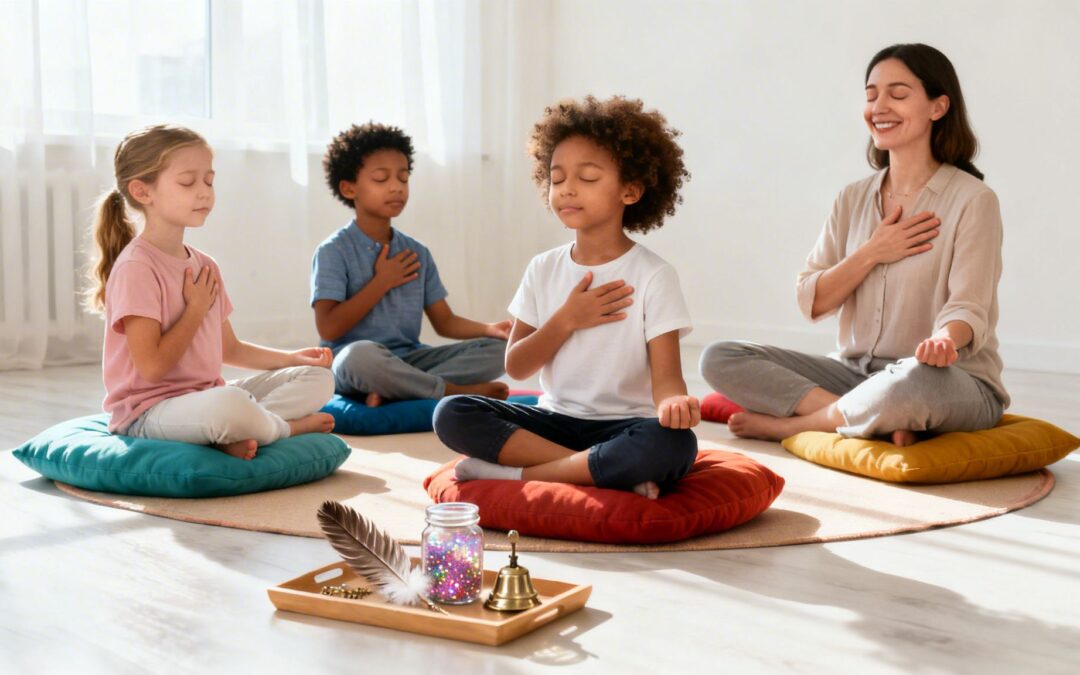
In a world filled with constant stimuli, young students often face significant challenges with focus, stress, and emotional regulation. The ability to manage these pressures is a critical life skill, and mindfulness offers a direct, powerful pathway to developing it. This guide moves beyond theory to provide a practical toolkit of mindfulness activities for elementary students, specifically designed for easy implementation in both classrooms and at home. The goal is to make abstract concepts like self-awareness and presence concrete and engaging for children.
Inside, you will find a curated collection of exercises that are both fun and foundational. We present a variety of options, from simple breathing techniques and body scan meditations to mindful movement and gratitude practices. Each activity is broken down with clear, step-by-step instructions, making them accessible even for educators and parents new to mindfulness.
To ensure these practices are effective and age-appropriate, every item includes:
- Specific grade-level adaptations for students from kindergarten through fifth grade.
- Alignment with core Social-Emotional Learning (SEL) competencies.
- Practical tips for teachers and caregivers to lead the activities successfully.
This article is more than just a list; it is a resource for building a supportive environment where children can learn to understand their inner world, manage big emotions, and cultivate a sense of calm and focus. These are not just momentary fixes but essential skills that will support their well-being for years to come.
1. Breathing Exercises and Breathwork
Structured breathing exercises, often called breathwork, are a fundamental component of any effective mindfulness program for elementary students. These techniques teach children how to consciously use their breath to influence their nervous system, providing a powerful and accessible tool for managing stress, emotions, and focus. By concentrating on the simple, repetitive rhythm of inhaling and exhaling, students can anchor themselves in the present moment, quieting anxious thoughts and calming their bodies.
This practice is foundational because the breath is always available. Unlike other tools that require specific materials or settings, a student can use a breathing technique anywhere-at their desk before a test, on the playground during a conflict, or at home when feeling overwhelmed.
Common Breathing Techniques for Kids
- Belly Breathing: Students place a hand on their stomach and imagine a small balloon inside. As they breathe in through their nose, they feel their belly expand like the balloon filling with air. As they breathe out slowly through their mouth, they feel the “balloon” deflate. This encourages deep, diaphragmatic breathing which is naturally calming. Practical Example: A teacher might say, “Let’s get our ‘Belly Buddies’ out!” Students lie down, place a small stuffed animal on their belly, and watch it rise and fall as they breathe.
- Five Finger Breathing: Students hold one hand up with their fingers spread. Using the index finger of their other hand, they slowly trace up their thumb while inhaling, and trace down the other side while exhaling. They continue this for all five fingers, providing a multisensory experience that combines touch, sight, and breath. Practical Example: Before a spelling test, a teacher can say, “Let’s do our ‘High Five Breath’ to calm our butterflies.” The class does the exercise together for a minute.
- Box Breathing: Ideal for older elementary students, this technique involves a four-part count. Students inhale for a count of four, hold their breath for four, exhale for four, and hold again for four. Visualizing drawing a square can help them remember the pattern. Practical Example: After a noisy recess, a teacher can guide the class: “Let’s draw our boxes with our breath. Inhale 2, 3, 4… Hold 2, 3, 4…” to help them settle.
Implementation Tip: Model these exercises yourself during class. When you take a moment to do Five Finger Breathing before starting a new lesson, you normalize the practice and show students that everyone can benefit from a mindful pause.
Putting Breathwork into Practice
Integrating breathing exercises into daily routines makes them second nature. A kindergarten teacher might start the day with “Belly Buddies,” where students lie down and place a small stuffed animal on their belly to watch it rise and fall with their breath. A fifth-grade teacher could use Box Breathing as a two-minute transition tool after a lively group activity to help the class reset and focus for independent work.
These simple yet effective practices are some of the most important self-regulation strategies for students to learn. By giving children a concrete way to manage their internal state, you empower them to handle challenges with greater resilience and awareness. The consistency of the practice is key; breathing exercises done during calm moments build the neural pathways needed to access the skill during times of high stress.
2. Body Scan Meditation
Body scan meditation is a guided practice where students bring gentle, moment-to-moment attention to different parts of their body. By systematically moving their focus from their toes to the top of their head, children learn to notice physical sensations like warmth, tingling, tightness, or comfort without judgment. This activity builds a crucial mind-body connection, helping students recognize how emotions like stress or excitement manifest physically.
This practice is an excellent addition to mindfulness activities for elementary students because it teaches interoception, the sense of the internal state of the body. Developing this skill allows children to identify and address feelings before they become overwhelming. A student who learns to notice the knot in their stomach before a test can then use a calming strategy, like breathwork, to self-soothe.
Common Body Scan Approaches for Kids
- Weather Report: Students imagine different weather patterns in each body part. They might notice “sunny warmth” in their hands, a “tight storm cloud” in their shoulders, or “gentle rain” in their feet. This metaphor makes abstract sensations more concrete and less intimidating. Practical Example: A counselor could ask a child, “What’s the weather like in your tummy right now? Is it stormy or calm?”
- Flashlight Focus: The guide asks students to imagine they are holding a flashlight and can shine its beam of attention on one body part at a time. They “illuminate” their toes, then their ankles, then their knees, simply observing what they feel in the light. Practical Example: A parent could say at bedtime, “Let’s get our magic flashlights. Shine it on your feet. Are they warm or cool? Now let’s move the light up to your legs…”
- Melting Scan: This version is great for relaxation. Students are guided to tense a specific body part (e.g., squeeze their fists) and then release it, noticing the feeling of the muscle “melting” like an ice cube. This actively releases physical tension. Practical Example: A teacher might say, “Squeeze all the muscles in your legs like a frozen icicle… hold it… and now let them melt into a warm puddle.”
Implementation Tip: Offer choices to ensure comfort and safety. Let students decide if they want their eyes open or closed, and whether they prefer to sit in a chair or lie on a yoga mat or carpet. For students who are anxious or have experienced trauma, normalizing the practice in a one-on-one setting first can be very helpful.
Putting Body Scans into Practice
Integrating body scans can effectively transition students between different energy levels. A physical education teacher might use a five-minute melting scan after a high-energy game to help the class calm their bodies before heading back to the classroom. A school counselor could guide a student through a quick three-minute “Flashlight Focus” scan to help them identify where they are feeling anger after a playground conflict.
Starting with shorter, three-to-five-minute scans helps build students’ capacity for sustained attention. Following the practice with a quiet moment for drawing or journaling about what they noticed can deepen their awareness. By learning to listen to their bodies, students gain one of the most important self-awareness strategies for emotional regulation, giving them the power to understand and respond to their internal cues with kindness and skill.
3. Mindful Movement and Yoga
Mindful movement and yoga are physical mindfulness practices that connect gentle movement, stretching, and body awareness. For elementary students, who often learn best through kinesthetic experiences, these activities are invaluable. They teach children to pay attention to their bodies’ signals, release physical tension stored from stress or long periods of sitting, and improve focus by coordinating breath with motion.

This approach is powerful because it makes mindfulness tangible. Instead of just thinking about being calm, students can feel calm in their muscles and grounded through their feet. Popularized by programs like Cosmic Kids Yoga and the Yoga Kids curriculum, these activities offer a structured yet playful way to explore the mind-body connection.
Common Movement Techniques for Kids
- Animal Poses: Engaging for younger students, these poses use imagination. Children can become a “downward-facing dog,” a “cat” arching its back, or a “cobra” lifting its head. This storytelling approach makes yoga feel like play rather than exercise. Practical Example: A kindergarten teacher could lead a “yoga story” about a trip to the zoo, having students become the different animals they “see.”
- Mountain and Tree Pose: These simple standing poses build balance and concentration. In Mountain Pose, students stand tall and strong, feeling their feet connected to the ground. In Tree Pose, they balance on one leg, which requires complete focus in the present moment. Practical Example: Before a group project, a teacher can say, “Let’s find our strong Mountain Pose to feel confident and steady before we begin.”
- Stretching Sequences: A teacher can lead a simple sequence like reaching for the sky on an inhale and folding forward toward the toes on an exhale. These can be used as quick “brain breaks” to reset the classroom’s energy. Practical Example: In the middle of a long lesson, the teacher can announce a “Stretch Break,” guiding students to “Reach for the sun, then tickle your toes.”
Implementation Tip: Connect movements to emotions to build emotional literacy. Use strong, expansive poses like Warrior II to help students feel confident before a presentation, and gentle, folded poses like Child’s Pose to create a sense of safety and calm when they feel overwhelmed.
Putting Movement into Practice
Integrating mindful movement into the school day can take many forms. A first-grade teacher might start each morning with a five-minute “yoga adventure” from a video to get wiggles out and set a positive tone. In a PE class, yoga can serve as a cool-down activity after active games, helping students transition from a high-energy state to a calm one.
These practices are excellent mindfulness activities for elementary students because they address both physical and emotional needs simultaneously. By guiding children through intentional movement, you give them a physical vocabulary for their feelings. You can discover more about how these embodiment practices support kids in school and at home. The key is to emphasize feeling over perfection, creating a non-competitive space where every child can connect with their body.
4. Gratitude and Appreciation Practices
Structured gratitude practices teach elementary students to intentionally notice and express appreciation for the positive aspects of their lives. These activities shift a child’s focus from what is lacking to what is present, building resilience, improving mood, and fostering a deep sense of connection and empathy. By actively looking for things to be thankful for, students develop a more positive and strengths-based mindset.
This practice is powerful because it retrains the brain to scan for goodness. In a busy school day filled with academic pressures and social challenges, taking a moment for gratitude can reset a child’s perspective, reduce feelings of envy, and increase overall happiness. It is one of the core mindfulness activities for elementary students that directly builds social-emotional well-being.
Common Gratitude Techniques for Kids
- Gratitude Circles: During morning meetings, students take turns sharing one specific thing they are grateful for. This could be a person, an experience, or a simple object. Practical Example: A student might say, “I’m grateful for my brother because he helped me with my homework last night,” or “I’m grateful for the sunny weather at recess today.”
- Thank-You Letters or Notes: Students write or draw a note to someone they appreciate, like a classmate, teacher, or family member. This tangible act reinforces the feeling of gratitude and positively impacts the recipient, strengthening social bonds. Practical Example: A teacher can set up a “Thank-You Station” with paper and crayons where students can write a quick note to a cafeteria worker or custodian.
- Gratitude Journals or Jars: Students regularly write down things they are thankful for on slips of paper to put in a class “Gratitude Jar” or in a personal journal. Prompts like, “Today I appreciated…” or “A kind thing someone did for me was…” can guide their reflections. Practical Example: At the end of each week, the teacher can read a few slips from the Gratitude Jar to celebrate the good things that happened.
Implementation Tip: Model authentic gratitude yourself. When you start a lesson by saying, “I’m so grateful for how quietly everyone transitioned back to their seats,” you show students what gratitude looks like in action and set a positive, appreciative tone for the classroom.
Putting Gratitude into Practice
Integrating gratitude into the daily or weekly routine is essential for it to become a habit. A first-grade teacher could create a “Gratitude Tree” on a bulletin board where students add paper leaves with things they appreciate written or drawn on them. A fourth-grade class might engage in “Appreciation Circles” on Fridays, where students can publicly acknowledge a classmate for an act of kindness. For those interested in a deeper dive, there are various gratitude activities for kids that can change their worldview.
Beyond simple appreciation, students can learn 3 Ways To Develop An Attitude Of Gratitude that can enrich their daily lives. By providing structured opportunities to notice the good around them, you give children a tool to cultivate joy and connection, which directly counteracts stress and negativity. The key is to ask follow-up questions like, “Why are you grateful for that?” to help students connect the feeling to a specific cause, deepening their reflective practice.
5. Mindful Listening and Communication Circles
Mindful listening and communication circles are structured group activities where students practice deep listening and authentic expression in a safe, facilitated setting. These circles teach children to move beyond simply waiting for their turn to speak and instead focus on hearing and understanding their peers’ perspectives. By creating a dedicated space for sharing, these practices build community, empathy, and the psychological safety needed for a healthy classroom culture.
This practice is powerful because it directly addresses the social-emotional component of mindfulness. While breathing calms the individual, listening circles cultivate mindful awareness within a group, teaching students how to be present with others. They provide a structured format for navigating social dynamics, resolving conflict, and building strong interpersonal skills.
Common Circle Formats and Prompts
- Morning Meeting Check-ins: A daily or weekly circle where students share a quick response to a low-stakes prompt. Practical Example: The teacher passes a talking piece and asks, “On a scale of 1 to 5, how are you feeling today, and why?” or “What is one thing you are looking forward to today?”
- Restorative Circles: Used to repair harm after a conflict. A facilitator guides the students involved through prompts like, “What happened?” “Who was affected?” and “What needs to be done to make things right?” Practical Example: After an argument on the playground, two students and a teacher sit in a circle. Each gets to speak without interruption about their side of the story and what they need to feel better.
- Thematic Circles: Focused on a specific topic relevant to the class or school, such as kindness, belonging, or resilience. Practical Example: A teacher might hold a circle about friendship and ask, “Share a time you saw someone being a good friend,” to reinforce positive behaviors.
Implementation Tip: The ‘talking piece’ is a critical tool. This can be any object-a special stone, a small ball, or a class mascot. Only the person holding the object can speak. This simple rule slows down the conversation, prevents interruptions, and ensures every voice has a chance to be heard.
Putting Circles into Practice
Establishing clear agreements is the first step. Before the circle begins, the group agrees to rules like: listen with respect, speak from the heart, maintain confidentiality, and honor the right to pass. A teacher might model this by sharing something simple and authentic about their own day, showing students that vulnerability is welcome and safe.
For younger students in kindergarten or first grade, a circle might last just five minutes and focus on a simple feelings check-in (“How is your heart today?”). For older fifth-grade students, a circle could be a 20-minute discussion used to solve a class-wide problem or explore a character’s motivations in a novel. The key is building a routine so that the circle becomes a trusted space for connection. By engaging in this mindfulness activity for elementary students, you are teaching one of the most important life skills: the ability to truly hear another person. These circles can be supported with a targeted active listening activity to strengthen the core skills needed for success.
6. Mindful Eating and Sensory Awareness Activities
Mindful eating invites students to slow down and use all their senses to explore food, transforming a routine act into a powerful lesson in present-moment awareness. This guided practice, often introduced with a single raisin or cracker, teaches children to pay close attention to sight, smell, touch, and taste without judgment. By focusing completely on the sensory experience of eating, students learn to notice subtle details, appreciate their food, and listen to their body’s hunger and fullness cues.
This practice is powerful because it connects the abstract concept of mindfulness to a concrete, universal experience: eating. It provides a structured way to practice focus and observation that can be extended to other sensory activities, helping students build a healthier and more conscious relationship with food and their own sensory world.

Common Sensory Awareness Techniques for Kids
- The Mindful Raisin: This classic exercise, popularized by Jon Kabat-Zinn, guides students to explore a single raisin. They look at its wrinkles, feel its texture, smell its scent, place it in their mouth without chewing, and finally, chew it slowly, noticing the burst of flavor. Practical Example: A teacher gives each student one raisin and guides them: “First, just look at it. What do you see? Now, touch it. How does it feel? Now, listen to it near your ear.”
- Sensory Anchor Stations: Create different stations around the room, each focused on one sense. One might have a bin of cool sand (touch), another a jar with cinnamon sticks (smell), a third with a rain stick (sound), and a fourth with a textured rock (sight/touch). Students rotate and spend a minute quietly exploring each. Practical Example: During a “Mindful Minute,” students can choose a station to visit, like smelling a jar of lavender or feeling a smooth stone to help them feel calm.
- Mindful Snacking: Instead of eating snacks on autopilot, guide students through the first few bites mindfully. Ask open-ended questions like, “What sounds does the cracker make when you bite it?” or “What does the apple slice feel like on your tongue?” Practical Example: During snack time, a teacher can say, “Let’s take our first bite together mindfully. Close your eyes and just notice the taste of your orange slice.”
Implementation Tip: Always check for food allergies and have safe alternatives available. Use open-ended questions like “What do you notice?” instead of leading ones like “Doesn’t it taste sweet?” This encourages non-judgmental observation.
Putting Sensory Awareness into Practice
Integrating sensory awareness into the school day anchors mindfulness in tangible experiences. A science teacher could use mindful tasting during a lesson on the five senses, asking students to describe an apple slice with scientific precision. A school counselor might use sensory stations with an anxious student, helping them find a texture or scent that grounds them when they feel overwhelmed. Transforming snack time into an opportunity for sensory exploration and conscious consumption can start with choosing the right foods. Discover tips for finding deliciously fun healthy snacks that can make these activities even more engaging.
These hands-on mindfulness activities for elementary students teach them to tune into their bodies and the world around them. By practicing with food or other sensory objects, they build the ability to pause and notice, a skill that supports both academic focus and emotional self-regulation. The debrief after the activity is crucial for helping students connect the experience of “noticing” to the broader concept of mindfulness.
7. Loving-Kindness and Compassion Meditation
Loving-kindness and compassion meditations guide students to intentionally direct feelings of goodwill, kindness, and warmth toward themselves and others. This practice systematically expands a child’s circle of empathy, starting with self-compassion and extending outward to loved ones, neutral people, and eventually even those with whom they have difficulty. It is a powerful method for building emotional resilience, reducing social anxiety, and cultivating prosocial behaviors that form the bedrock of an inclusive school community.
This practice is essential because it actively counters the brain’s natural negativity bias and teaches students how to generate positive emotions on purpose. By repeating phrases of kindness, children learn to nurture their inner world, which directly impacts how they interact with their peers and handle social challenges like conflict or exclusion.
Common Compassion Practices for Kids
- Self-Compassion Phrases: Students place a hand over their heart and silently repeat simple, kind phrases to themselves. The practice always begins here, as children cannot extend kindness to others if they don’t first feel it for themselves. Practical Example: The teacher guides, “Put a hand on your heart and silently say to yourself: May I be happy. May I be safe. May I be kind to myself.”
- Extending Kindness Outward: After focusing on themselves, students visualize a loved one (a parent, pet, or best friend) and send them the same kind wishes: “May you be happy. May you be safe.” They then progress to a neutral person (like a school bus driver), a difficult person, and finally, the entire class or world. Practical Example: The teacher might say, “Now, think of someone in your family. Let’s send them kind wishes. In your mind, say to them: May you be happy.”
- Compassion Visualization: Students can imagine a warm, glowing light in their chest that represents kindness. As they breathe in, the light grows brighter. As they breathe out, they can imagine sending beams of that light to themselves and then to others, wrapping them in warmth and care. Practical Example: “Imagine a warm, sparkly light in your heart. Breathe in and make it brighter. Now breathe out and send that light to everyone in our classroom.”
Implementation Tip: Be sensitive and provide extra support for students who struggle with self-compassion, which is common. Frame it as a practice, like learning an instrument; it’s okay if it feels awkward at first. Your consistent, non-judgmental modeling is the most important element.
Putting Compassion into Practice
Integrating loving-kindness into the school day reinforces a culture of empathy. A school counselor might lead a small group of students struggling with anger through a compassion meditation to help them understand and soften their reactions. A second-grade teacher could use a three-minute loving-kindness practice focused on classmates after recess to help reset social dynamics before an afternoon lesson.
These practices are some of the most effective mindfulness activities for elementary students when it comes to preventing bullying. By teaching children to send kind thoughts even to “difficult” people, you give them a constructive tool for managing complicated peer relationships. This builds the foundation for restorative conversations and a truly caring classroom where every student feels seen and valued.
8. Mindful Nature Connection and Outdoor Activities
Engaging students with nature through mindfulness is a powerful way to foster calm, curiosity, and a sense of connection to the world around them. These practices guide children to use their senses to observe plants, animals, and natural elements with full attention. By focusing on the texture of a leaf, the sound of the wind, or the feeling of the earth beneath their feet, students anchor themselves in the present moment, which can reduce stress and improve focus.
This approach, popularized by authors like Richard Louv who coined the term “nature-deficit disorder,” is essential because it gets students outdoors and connects them to a source of wonder and well-being. It moves mindfulness from an abstract concept into a tangible, sensory experience. Research supports that time in nature builds resilience, boosts mood, and cultivates environmental stewardship.

Common Nature Connection Activities for Kids
- Sit Spot Observation: Students find a quiet, personal spot outdoors where they can sit comfortably for a few minutes. They are encouraged to simply observe what they see, hear, and feel without judgment. Returning to the same spot regularly helps them notice subtle changes through the seasons. Practical Example: A teacher takes the class outside and says, “Find your own ‘sit spot’ under a tree or near a bush. For the next three minutes, just watch and listen. What do you notice?”
- Sensory Scavenger Hunt: Instead of looking for specific items, students search for sensory experiences. Prompts could include “Find something smooth,” “Find something that makes a crunching sound,” or “Find something that smells like the earth.” This hones their observational skills and present-moment awareness. Practical Example: A parent on a walk with their child could say, “Let’s go on a sound hunt! What’s the quietest sound you can hear? What’s the loudest?”
- Barefoot Grounding: On a safe, clear patch of grass or soft earth, students are invited to take off their shoes and socks and simply stand or walk slowly. The goal is to notice the sensation of their feet connecting with the ground, feeling the temperature and texture of the earth. Practical Example: A teacher can lead this on a school field, saying, “Feel the grass tickling your toes. Do you feel the cool earth? Let’s walk slowly and notice every step.”
Implementation Tip: Integrate these activities into existing routines. Use the first five minutes of recess for a “Sit Spot” check-in or turn a walk to another part of the school campus into a mindful sensory exploration. Normalizing being outside in mild “bad weather,” like a light drizzle, also teaches resilience.
Putting Nature Connection into Practice
Bringing mindful nature connection into the school day can be simple and effective. A first-grade teacher might lead a “tree-hugging” exercise where students gently place their hands or give a light hug to a tree, noticing its bark texture and sturdiness. A fourth-grade class could create nature journals to sketch or write about what they observe, connecting scientific observation with personal reflection.
These outdoor mindfulness activities for elementary students offer a refreshing alternative to classroom-based practices. By guiding children to connect with the natural world, you give them a lifelong tool for finding peace, sparking curiosity, and understanding their place within the broader ecosystem. The key is to start small and build comfort, using open-ended questions like “What do you notice?” to empower students to lead their own discovery.
Elementary Mindfulness: 8-Activity Comparison
| Practice | Implementation complexity | Resource requirements | Expected outcomes | Ideal use cases | Key advantages |
|---|---|---|---|---|---|
| Breathing Exercises and Breathwork | Low — quick to teach, short sessions | Minimal — no materials; optional visuals | Immediate physiological calming, improved self-regulation | Transitions, quick de-escalation, morning meetings | Fast, accessible, no cost, widely adaptable |
| Body Scan Meditation | Low–Medium — guided instruction, requires stillness | Quiet/comfortable space, optional audio or mats | Greater body awareness, deeper relaxation, reduced tension | Before tests, post-activity cool-down, rest times | Builds interoception, supports relaxation and emotional insight |
| Mindful Movement and Yoga | Medium — needs space and facilitator guidance | Space, optional mats/props, trained instructor preferred | Improved focus, strength, tension release, embodied regulation | PE, brain breaks, kinesthetic learners, classroom transitions | Engages active learners, integrates body and breath, playful |
| Gratitude and Appreciation Practices | Low — simple routines and prompts | Minimal — journals or prompts optional | More positive mindset, resilience, stronger peer connections | Morning meetings, classroom culture building, SEL lessons | Low-cost, scalable, research-backed for well-being |
| Mindful Listening and Communication Circles | Medium–High — skilled facilitation and norms required | Time, structured prompts, talking piece; facilitator training helpful | Increased empathy, conflict resolution, psychological safety | Restorative practices, community-building, repairing conflicts | Gives all students voice, builds trust and listening skills |
| Mindful Eating and Sensory Awareness Activities | Low — short guided explorations | Single food items or sensory materials, allergy precautions | Present-moment awareness, sensory discrimination, mindful habits | Snack time integration, sensory lessons, nutrition education | Concrete, engaging, memorable for young learners |
| Loving-Kindness and Compassion Meditation | Medium — requires careful introduction and practice | Quiet space, guided scripts; sensitive facilitation | Greater compassion, self-worth, reduced social aggression | Anti-bullying programs, SEL lessons, restorative circles | Cultivates empathy and self-compassion, supports inclusion |
| Mindful Nature Connection and Outdoor Activities | Medium — depends on access, supervision, weather | Outdoor space, supervision, appropriate clothing | Stress reduction, improved attention, environmental stewardship | Sit-spot routines, school gardens, outdoor lessons | Powerful mood benefits, low-cost, fosters awe and connection |
From Activity to Habit: Embedding Mindfulness into Your School Community
The journey into mindfulness is not about adding more to a teacher’s already full plate. Instead, it’s about shifting the way we approach daily challenges and opportunities for connection. The collection of mindfulness activities for elementary students detailed in this article, from simple breathing exercises to mindful nature walks, are more than just classroom fillers. They are practical, accessible tools for building a foundation of emotional awareness, self-regulation, and empathy. When a student can use a “Breathing Buddy” to calm their pre-test jitters or a “Body Scan” to release frustration after a playground disagreement, they are actively practicing lifelong skills.
The true impact of these practices is realized when they move from being isolated events to becoming integrated habits. A mindful moment is good, but a mindful culture is what creates lasting change. This shift begins with small, consistent steps. Rather than attempting to introduce all eight activities at once, start by identifying one or two that feel most authentic and needed for your specific group of students. A boisterous third-grade class might benefit most from starting with Mindful Movement and Yoga to channel their energy, while a quiet, anxious kindergarten group may find immediate comfort in Gratitude Circles.
Making Mindfulness Stick: From Practice to School Culture
Building a sustainable mindfulness program hinges on consistency, modeling, and a shared community language. The goal is to make these practices as routine and predictable as taking attendance or lining up for recess.
- Consistency Over Duration: A daily two-minute “Starfish Breath” exercise before a math lesson is more effective than an occasional 20-minute meditation. Consistency builds neural pathways and makes self-regulation an automatic response, not an afterthought. For instance, a teacher could establish a “Mindful Minute” as the official start to the afternoon, signaling a reset for everyone.
- Authentic Modeling: Children learn best by watching the adults around them. When teachers and parents share their own simple mindfulness practices, it normalizes the experience. A teacher might say, “My thoughts are feeling a little jumbled, so I’m going to take three deep breaths before we start our reading group.” This modeling shows students that mindfulness is a tool for everyone, not just a response to misbehavior.
- Create a Shared Language: When everyone in the school community uses the same terms, the concepts become embedded in the culture. Terms like “anchor breath,” “kind hands,” or “listening with our whole body” create a common ground. This shared vocabulary allows a student to move from the classroom to the lunchroom to the principal’s office and find a consistent, supportive framework for emotional expression and regulation.
Expanding the Impact Beyond the Classroom
The benefits of these mindfulness activities for elementary students extend far beyond individual self-control. They ripple outward, positively affecting peer relationships, classroom dynamics, and the overall school climate. A student who has practiced Loving-Kindness Meditation is more likely to offer a kind word to a struggling classmate. A class that regularly engages in Mindful Listening Circles learns to respect differing perspectives, reducing conflicts and fostering a sense of belonging.
A Practical Example: Imagine a conflict over a shared toy. Instead of an immediate timeout, a teacher can guide the students involved through a simple breathing exercise to calm their reactive brains. Afterward, they can use prompts from Mindful Communication to express their feelings: “I felt sad when the block was taken because I was building with it.” This approach doesn’t just solve the immediate problem; it teaches the students a process for resolving future conflicts constructively.
By committing to this work, educators and parents are not just teaching coping skills. You are empowering children with a fundamental understanding of their own minds and hearts. You are giving them the tools to manage stress, build healthy relationships, and approach life’s challenges with resilience and compassion. This is the ultimate goal: to nurture a generation of children who can thrive not just in school, but in the complex world that awaits them.
Ready to bring a structured, school-wide mindfulness and social-emotional learning program to your campus? Soul Shoppe provides research-based, experiential programs that equip your entire community with a shared language and practical tools for self-regulation and conflict resolution. Visit Soul Shoppe to learn how their on-site and virtual programs can help you systematically embed these vital skills into the fabric of your school.