

10 Essential Trauma Informed Teaching Strategies for K-8 Educators
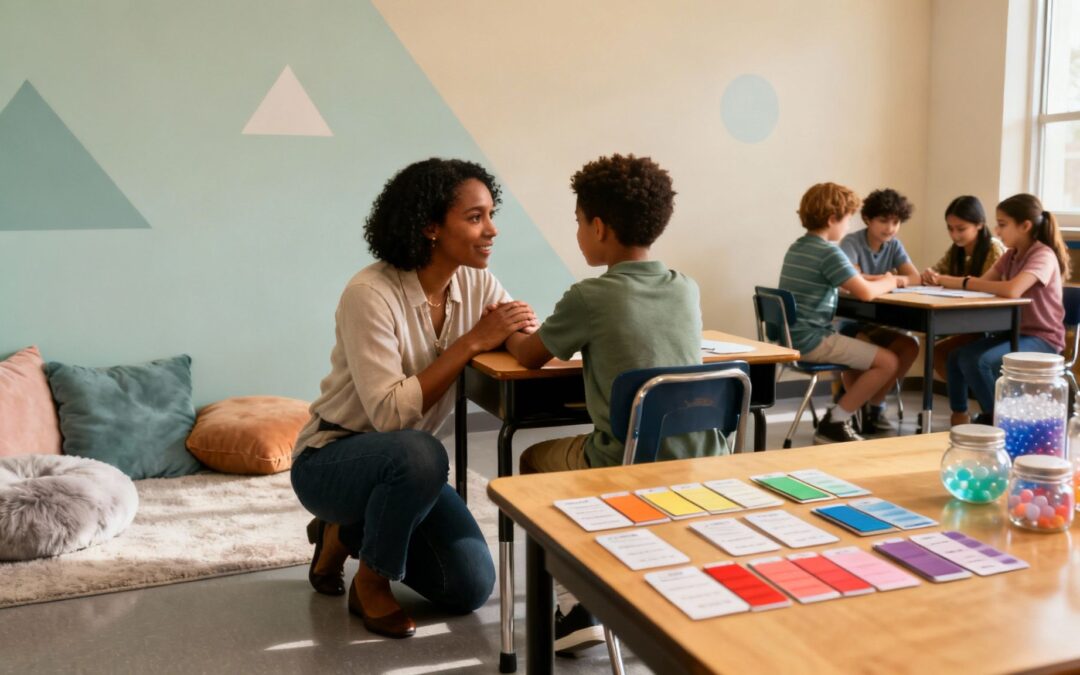
Understanding the impact of trauma on learning is no longer optional; it’s essential for creating classrooms where every student can thrive. Trauma, stemming from adverse childhood experiences (ACEs) or systemic stressors, can fundamentally alter a child’s brain development. This directly affects their ability to regulate emotions, build relationships, and access learning. For K-8 educators, this means that traditional classroom management techniques may not only be ineffective but could also re-traumatize a student who is struggling.
The goal isn’t to become a therapist. Instead, it’s about making a crucial shift in perspective from asking, “What’s wrong with this student?” to “What happened to this student, and how can I support them?” By implementing trauma informed teaching strategies, educators can build environments of psychological safety that calm the nervous system and reopen pathways to engagement, connection, and academic growth. A trauma-informed classroom is a space where students feel seen, safe, and supported, allowing their brains to move out of survival mode and into a state ready for learning.
This comprehensive guide moves beyond theory to provide ten actionable strategies tailored for the K-8 classroom. Each item includes practical, step-by-step implementation details, real-world examples, and guidance on how to adapt these methods to meet individual student needs. You will discover how to create predictable routines, foster authentic connections, and use restorative practices to build a more resilient and supportive learning community for every child.
1. Creating Psychologically Safe Classrooms
Psychological safety is the bedrock of all trauma-informed teaching strategies, creating an environment where students feel secure enough to take healthy academic and social risks. For students who have experienced trauma, the world can feel unpredictable and threatening. A psychologically safe classroom counteracts this by establishing consistency, predictability, and emotional validation, allowing a child’s nervous system to shift from a constant state of high alert to one of calm readiness for learning. This foundation is crucial for engagement, cognitive function, and building positive relationships.
A foundational element in creating a psychologically safe classroom is successfully forming a supportive community where students feel connected and valued. When students trust their teacher and peers, they are more willing to participate, ask for help, and navigate challenges without fear of judgment or shaming.
How to Implement This Strategy
- Establish Predictable Routines: Post and review a visual daily schedule. Use timers or verbal cues to signal transitions consistently. For example, use the same short, calm song every day to signal clean-up time. This predictability reduces anxiety about what comes next.
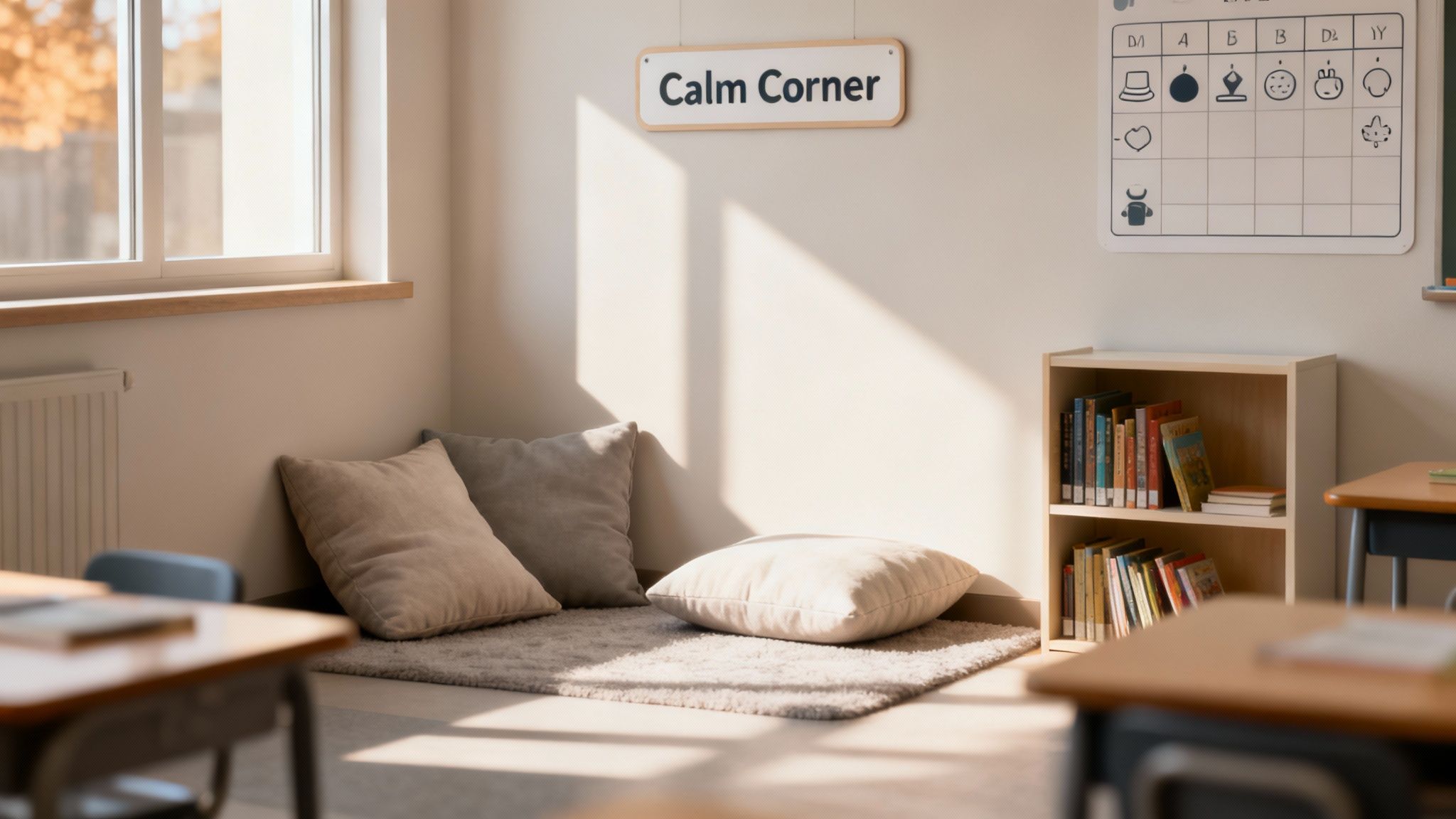
- Create Safe Spaces: Designate a “calm-down corner” or “cozy corner” with comfortable seating, sensory tools, and books. Teach students how to use this space to self-regulate, framing it as a tool for everyone. For instance, you could say, “If you feel your engine running too fast, you can take a 5-minute break in the cozy corner to help your body feel calm.” For more ideas, explore these detailed steps on how to create a safe space for students.
- Co-Create Classroom Agreements: At the beginning of the year, work with students to establish shared expectations. Instead of a rule like “No shouting,” an agreement might be, “We use calm voices to show respect for our friends’ ears.” Phrase them positively and have all students sign the poster.
- Practice Welcoming Rituals: Greet every student at the door by name each morning with a choice of a handshake, high-five, or wave. This simple, consistent act of connection reinforces that each child is seen and valued from the moment they arrive.
This approach is most effective when implemented universally from the first day of school, as it sets the tone for the entire year. It is particularly vital during times of change, such as after a school break or a disruptive event, to re-establish a sense of stability and security.
2. Self-Regulation and Co-Regulation Techniques
Self-regulation is the ability to manage emotions and behaviors, a skill that can be significantly underdeveloped in students who have experienced trauma. Co-regulation is the supportive process where a calm, regulated adult helps a child navigate distress and return to a state of balance. By explicitly teaching and modeling these skills, educators provide one of the most essential trauma informed teaching strategies, equipping students with tools to manage their internal states and engage in learning. Instead of just reacting to behavior, this approach addresses the underlying neurological need for safety and calm.

The work of neurobiologists like Dr. Dan Siegel emphasizes how co-regulation helps build neural pathways for independent self-regulation over time. When a teacher remains a calm, validating presence during a student’s meltdown, they are not just managing a moment; they are actively helping to wire the child’s brain for future resilience.
How to Implement This Strategy
- Model Your Own Regulation: When you feel frustrated, narrate your process out loud. For example: “The projector isn’t working, and I’m feeling a little flustered. I’m going to take three deep ‘balloon breaths’ to calm down before we try again.” This makes internal processes visible and provides a concrete model for students to follow.
- Teach Explicit Techniques: Teach self-regulation strategies during calm moments, not in the middle of a crisis. Practice “box breathing” (inhale for four, hold for four, exhale for four, hold for four) or “5-4-3-2-1 grounding” where students name five things they can see, four they can feel, three they can hear, two they can smell, and one they can taste.
- Offer Proactive Regulation Breaks: Integrate short movement or sensory breaks into your daily schedule before students show signs of dysregulation. For example, before a math lesson, say, “Let’s get our brains ready! Everyone stand up and do 10 wall pushes.”
- Validate and Support: When a student is upset, get down on their level and validate their emotion first. Say, “I can see you are very upset that your block tower fell down. That is so frustrating. I’m going to sit here with you until your body feels safe again.” This co-regulation builds trust and reduces shame. Explore additional self-regulation strategies for students to expand your toolkit.
This strategy is most effective when regulation skills are practiced daily, becoming as routine as academic drills. It is particularly crucial for students who exhibit big emotional responses, as it shifts the focus from punishment to skill-building, empowering them to manage their own nervous systems.
3. Strengths-Based and Asset-Focused Approaches
A strengths-based approach fundamentally shifts the educational focus from what students are lacking to what they possess. Instead of viewing behaviors through a deficit lens, this trauma-informed teaching strategy prioritizes identifying and cultivating each student’s unique talents, resilience, and interests. For children who have experienced trauma and may have internalized negative self-perceptions, this intentional focus on their assets is profoundly healing and empowering. It reframes their identity around capabilities rather than challenges, fostering a positive self-concept and a stronger connection to the school community.

This asset-focused mindset directly counters the sense of helplessness that trauma can create, showing students that they have inherent value and the capacity to succeed. By building instruction around student strengths, educators create more engaging and relevant learning experiences. This approach is closely linked to developing a growth mindset in the classroom, as it teaches students to view their abilities as skills that can be developed through effort and perseverance.
How to Implement This Strategy
- Create Strength Profiles: At the beginning of the year, use interest inventories or “get to know you” activities to document 2-3 specific strengths for each student (e.g., “creative problem-solver,” “empathetic friend,” “persistent artist”). Refer to these profiles when planning lessons or assigning roles. For example, during group work, you might say, “Maria, since you are such a creative problem-solver, would you be in charge of brainstorming for your team?”
- Use Strengths-Based Language: Instead of generic praise like “Good job,” be specific and connect it to a strength. For example, say, “David, I noticed how you asked Sam if he was okay after he fell. That showed what an empathetic friend you are.”
- Assign Purposeful Classroom Jobs: Design roles that align with student talents. A student who is a natural organizer could be the “Materials Manager,” while a compassionate student could be the “Welcome Ambassador” for new classmates. A student who loves to draw could be the “Class Illustrator,” creating pictures for anchor charts.
- Highlight Growth Over Grades: Shift recognition systems to celebrate progress, effort, and resilience. During parent conferences, start by sharing an anecdote of a child’s persistence: “I want to show you this first draft of Liam’s story and then his final version. The effort he put into revising it shows incredible growth in his perseverance.”
This approach is most powerful when used consistently across all interactions, from academic feedback to behavior management. It is especially important when a student is struggling, as it provides an opportunity to remind them of their past successes and inherent capabilities, reinforcing their ability to overcome current challenges.
4. Collaborative Problem-Solving and Student Voice
Trauma-informed teaching recognizes that students, particularly those who have experienced trauma, often feel a profound sense of powerlessness. Collaborative problem-solving directly counteracts this by inviting students into decision-making processes, valuing their perspectives, and building solutions together. This approach shifts the classroom dynamic from top-down, punitive discipline to one of dialogue and shared ownership, which builds student autonomy and reinforces that their voice matters in creating a functional, supportive community.

Popularized by Dr. Ross Greene, this strategy is built on the idea that “kids do well if they can.” When students face challenges, it is not due to a lack of will but a lack of skills. By working together to identify lagging skills and unsolved problems, teachers and students can find mutually agreeable solutions that address the root cause of the behavior, fostering both skill development and a stronger relationship.
How to Implement This Strategy
- Hold Class Meetings: Dedicate regular time for students to discuss classroom concerns and co-create solutions. For example, if students are struggling with noisy transitions, a meeting could start with, “I’ve noticed our clean-up time has been really loud and it’s hard for us to get to the next activity. What are your ideas to make it smoother?”
- Use Restorative Circles: After a conflict, gather involved students in a circle to share their perspectives. For instance, if two students argued over a shared toy, each would get a chance to answer, “What happened?” “How did it make you feel?” and “What do you need to feel better?” This teaches empathy and repairs harm rather than simply assigning blame.
- Implement Student-Led Conferences: Empower students to present their learning progress, challenges, and goals to their parents or caregivers. This gives them agency over their academic journey and develops self-advocacy skills.
- Start with Low-Stakes Decisions: Build student comfort by first asking for input on smaller issues. You could say, “Class, we have 15 minutes at the end of the day. Would you prefer a read-aloud or a quick drawing activity? Let’s take a vote.”
This strategy is most effective when used proactively to build community and consistently to address challenges as they arise. It is particularly crucial when behavioral issues surface, as it provides a non-punitive framework for understanding the student’s struggle and finding a path forward together.
5. Mindfulness and Present-Moment Awareness Practices
Mindfulness, the practice of paying attention to the present moment without judgment, is a powerful self-regulation tool. For students impacted by trauma, whose nervous systems can be stuck in a state of high alert, mindfulness helps anchor them in the safety of the here and now. This practice counters the effects of trauma, such as intrusive thoughts or anxiety about the future, by training the brain to focus, calm itself, and create a crucial pause between an emotional trigger and a reaction. Integrating mindfulness is one of the most direct trauma informed teaching strategies for building internal coping skills.
This strategy empowers students with the awareness and skills to manage their internal states. By teaching them to notice their breath, body sensations, and thoughts, we give them an invaluable resource for navigating stress both inside and outside the classroom.
How to Implement This Strategy
- Start with Short, Guided Practices: Begin with simple one-minute breathing exercises. Guide students to “Put one hand on your belly. As you breathe in, feel your belly get big like a balloon. As you breathe out, feel it get smaller.” Gradually extend the time as students become more comfortable.
- Use Sensory Anchors: Ring a mindfulness bell or chime to signal the start of a quiet transition. Ask students to simply listen until they can no longer hear the sound. This auditory focus brings everyone into the present moment before you give the next instruction.
- Integrate Mindful Movement: Incorporate simple yoga stretches or “body scans.” For example, lead students in a “Mindful Walk” around the classroom, asking them to notice the feeling of their feet on the floor with each step. This helps reconnect mind and body. For resources, organizations like the Center for Healthy Minds offer science-backed practices for educators.
- Model the Practice: Share your own experiences with mindfulness. You might say, “I’m feeling a little rushed, so I’m going to take three deep breaths to calm my body before we begin our lesson.” This normalizes the practice and shows its practical application.
This approach is most effective when introduced gently and practiced consistently, such as after recess or before an assessment, to help students settle their bodies and minds. It is crucial to always make participation optional, allowing students to opt out or modify the practice to ensure they feel in control and safe.
6. Relationship-Building and Authentic Connection
For students impacted by trauma, the presence of a stable, caring, and predictable adult can be a powerful healing force. Authentic connection is a core component of trauma-informed teaching strategies because it directly counteracts the relational harm and instability that often accompany adverse experiences. When a teacher invests in knowing a child as an individual, they create a secure attachment that allows the student’s brain to feel safe, valued, and ready to learn. This relationship becomes the secure base from which students feel empowered to explore, make mistakes, and engage with their peers and academic material.
Building these connections is not about being a student’s best friend; it is about providing unwavering positive regard and demonstrating genuine care. This consistent emotional support helps regulate the nervous system and builds the trust necessary for a student to feel comfortable being vulnerable in the classroom. Understanding the power of a positive teacher-student relationship is essential for creating a classroom culture where every child feels seen and supported.
How to Implement This Strategy
- Schedule Intentional Connection Time: Dedicate a few minutes each day or week for non-academic check-ins. This could be greeting each student at the door with a personal question, such as “How was your brother’s soccer game last night?” or having a “lunch bunch” with a small group of students.
- Discover and Reference Student Interests: Keep a simple log of students’ hobbies, favorite foods, or family members. If a student loves dinosaurs, you could leave a dinosaur book on their desk or say, “I saw this cool documentary about T-Rexes and it made me think of you!” This shows you listen and care about their lives outside of school.
- Share Positive News with Families: Make it a habit to send a quick, positive note or email home. For example: “Hi Mrs. Davis, I wanted to let you know that Maria was an excellent helper to a new student today. You should be very proud of her kindness.” This builds a supportive relationship with caregivers and reinforces the child’s sense of value.
- Practice the “Two-by-Ten” Strategy: For two minutes each day for ten consecutive days, have a personal, non-academic conversation with a specific student. Ask them about their favorite video game, their pet, or what they did over the weekend. This focused effort can significantly improve the dynamic with students who may be struggling to connect.
This strategy is foundational and should be applied consistently throughout the school year for all students. It is particularly crucial for students who exhibit withdrawn behaviors or externalize stress through challenging actions, as these are often signs that they need connection the most.
7. Trauma-Sensitive Discipline and Restorative Practices
Traditional, punitive discipline can often re-traumatize students by activating their fear responses, escalating conflict, and damaging the crucial teacher-student relationship. A trauma-informed approach recognizes that all behavior is a form of communication, often signaling an unmet need or a state of distress. Trauma-sensitive discipline shifts the focus from punishment to problem-solving, and from exclusion to restoration. This strategy aims to repair harm, teach accountability, and rebuild community trust while maintaining high behavioral expectations.
This pivot toward restorative practices, championed by organizations like the International Institute for Restorative Practices (IIRP), helps students develop essential social-emotional skills such as empathy, responsibility, and conflict resolution. Instead of isolating students, it brings them back into the community, reinforcing their sense of belonging and preserving their dignity. This approach addresses the root causes of misbehavior rather than just the symptoms, creating a more sustainable and supportive learning environment.
How to Implement This Strategy
- Shift Your Language: Instead of asking a dysregulated student “Why did you do that?” which can provoke defensiveness, get curious. Try asking “I noticed you threw the pencil. Can you tell me what happened right before that?” This opens a non-judgmental dialogue focused on understanding the situation from the student’s perspective.
- Focus on Repair and Restoration: When a conflict occurs, guide students with restorative questions. If a student knocks over another’s project, the restorative consequence might be helping them rebuild it. You could facilitate by asking, “What was the harm done?” and “What do you think you can do to make things right?”
- Teach Replacement Behaviors: When a student doesn’t meet an expectation, explicitly model and teach the desired behavior. For instance, if a student yells out, you might say later in private, “I see you get really excited and have a hard time waiting to share. Let’s practice raising a quiet hand. Can you show me what that looks like?”
- Conduct Private Conversations: Address misbehavior in a private, one-on-one conversation rather than publicly shaming a student. This preserves their dignity and strengthens your relationship. Start the conversation by reaffirming the connection: “You are an important part of our class, and I care about you. We need to talk about what happened at recess so we can solve it together.”
This strategy is most effective when used consistently by all staff to create a predictable and fair school culture. It is particularly crucial for addressing repeated behaviors, as these patterns often indicate an underlying need that punitive measures will not resolve. By prioritizing restoration over punishment, schools can transform discipline into a powerful opportunity for learning and healing.
8. Sensory Integration and Regulation Accommodations
Trauma can significantly impact a student’s nervous system, leading to dysregulation where they become either hypersensitive (overly responsive) or hyposensitive (under-responsive) to sensory input. A loud noise, bright light, or unexpected touch can trigger a fight, flight, or freeze response. Sensory integration and regulation accommodations are essential trauma informed teaching strategies that modify the environment and provide tools to help students manage sensory input, stay calm, and remain available for learning. By addressing sensory needs, educators help soothe a child’s nervous system, making the classroom feel safe and predictable.
This approach, rooted in the work of occupational therapists like Dr. A. Jean Ayres, recognizes that a regulated body is a prerequisite for a focused mind. Providing sensory support isn’t about rewarding behavior; it’s about providing the necessary tools for a child to achieve the optimal state of alertness for academic engagement.
How to Implement This Strategy
- Offer Flexible Seating Options: Move beyond traditional desks. Provide wobble cushions, standing desks, yoga ball chairs, or floor cushions that allow for subtle movement, which helps with focus. A student who constantly tips their chair back might benefit from a wiggle seat to get that movement input safely.
- Create Proactive Movement Breaks: Integrate short, structured movement activities throughout the day. For example, before a long reading block, say, “Let’s do 10 ‘chair push-ups’ to get our bodies ready to focus.” This provides heavy work that can be very calming for the nervous system.
- Provide Sensory Tools: Make a toolkit of fidgets, stress balls, textured items, or weighted lap pads accessible to all students. You might create a “fidget pass” that students can quietly place on their desk when they need a tool, reducing disruption and empowering them to self-advocate for their needs.
- Modify the Environment: Be mindful of sensory triggers. Dim harsh fluorescent lights with fabric covers, reduce visual clutter on walls, and provide noise-reducing headphones for students who are sensitive to sound during independent work. For a student easily overwhelmed by noise, offering headphones can be a game-changer.
This strategy is most effective when sensory supports are offered proactively before a student becomes visibly dysregulated. It’s particularly useful during periods requiring quiet focus or following high-energy activities like recess, helping students transition their bodies and minds back to a calm, learning-ready state.
9. Clear Communication and Predictable Expectations
Students who have experienced trauma often exist in a state of hypervigilance, constantly scanning their environment for potential threats. This heightened state of alert makes ambiguous instructions, sudden changes, and unclear expectations feel threatening, often triggering anxiety or defensive behaviors. One of the most stabilizing trauma informed teaching strategies is to establish and maintain clear communication and predictable expectations, which helps a child’s nervous system feel safe enough to lower its defenses and engage in learning.
This strategy is about making the implicit explicit. By clearly communicating what is happening now, what will happen next, and how to succeed, educators remove the guesswork that can be deeply dysregulating for vulnerable students. This predictability builds trust and creates an environment where cognitive resources can be dedicated to academics rather than to anticipating danger.
How to Implement This Strategy
- Make Routines Visual and Explicit: Post a visual daily schedule with pictures and words. For multi-step tasks like morning arrival, create a small chart at the student’s desk: 1. Unpack backpack. 2. Turn in homework. 3. Start morning work. This removes reliance on auditory processing, which can be difficult for a stressed brain.
- Provide Advance Warnings for Transitions: Use both verbal cues and a visual timer to signal upcoming changes. For example, say, “In five minutes, we will be cleaning up our writing journals,” while setting a visible countdown timer. For a student who struggles greatly, a personal 2-minute warning can be even more helpful.
- Teach and Practice Expectations: Do not assume students know what “be respectful” looks like. Create an anchor chart that defines it in concrete terms. For example: “Being respectful in the hallway means: 1. Voices off. 2. Hands to ourselves. 3. Walking feet.” Then, practice it like a fire drill.
- Use Consistent, Positive Language: Frame expectations in terms of what students should do. Instead of “Stop running,” try a calm “Please use your walking feet.” Reinforce positive behavior by noticing it: “I see you have your book open to the right page; that shows you are ready.” This approach builds self-efficacy without shaming.
This strategy is most effective when implemented consistently across all classroom activities and, ideally, throughout the entire school. It is particularly crucial at the beginning of the school year, after breaks, or when a substitute teacher is present to maintain a stable and secure learning environment.
10. Cultural Responsiveness and Anti-Bias Teaching
Trauma is not experienced in a vacuum; it intersects with a student’s race, culture, socioeconomic status, and other identities. For this reason, a core component of trauma informed teaching strategies must be a commitment to cultural responsiveness and anti-bias education. This approach recognizes that systemic issues like racism and discrimination are sources of ongoing collective trauma and create significant barriers to learning. It requires educators to honor students’ full identities and histories as a fundamental part of creating a safe and healing-centered environment.
This strategy moves beyond mere tolerance to actively affirming and sustaining students’ cultural backgrounds. It acknowledges that validating a child’s identity is crucial for their psychological well-being and academic success. As Dr. Zaretta Hammond outlines in Culturally Responsive Teaching and The Brain, building on students’ cultural frames of reference can actually foster deeper cognitive processing and engagement.
How to Implement This Strategy
- Audit Your Curriculum and Classroom: Examine your books, lesson plans, and classroom visuals. For example, when studying communities, ensure you include examples from the diverse neighborhoods your students live in, not just generic suburban ones. Actively seek and incorporate materials that reflect your students’ identities.
- Integrate Culturally Sustaining Practices: Go beyond celebrating specific heritage months. Learn about your students’ home cultures and find authentic ways to integrate their knowledge. For instance, if you have a large Spanish-speaking population, label classroom items in both English and Spanish, or use folktales from their home countries in a literacy unit.
- Examine Personal Biases: Engage in professional development and personal reflection to understand your own implicit biases. Acknowledging how your own background shapes your worldview is the first step toward preventing those biases from negatively impacting your students.
- Address Microaggressions and Bias Promptly: When a biased comment occurs, such as a student making fun of another’s name, address it directly and educatively. You could say, “In our classroom, we respect everyone’s name. Names are an important part of our identity.” Ignoring these incidents can re-traumatize students who are targeted.
This approach is essential for all students but is especially critical for those from marginalized communities who may experience identity-based harm both inside and outside of school. Implementing these practices consistently helps dismantle systems of inequity and ensures that the classroom is a place where every child feels seen, valued, and safe to learn.
10-Point Trauma-Informed Teaching Comparison
| Strategy | Implementation Complexity | Resource Requirements | Expected Outcomes | Ideal Use Cases | Key Advantages |
|---|---|---|---|---|---|
| Creating Psychologically Safe Classrooms | Moderate — requires planning and consistent routines | Moderate — staff time, classroom setup, coordination | Reduced anxiety; higher engagement; fewer incidents | Whole-classroom, schoolwide culture shift | Foundation for learning; supports all other strategies |
| Self-Regulation and Co-Regulation Techniques | Moderate — needs explicit instruction & modeling | Low–Moderate — training, brief materials, practice time | Improved emotion management; fewer disruptions | Classrooms with dysregulation; SEL lessons | Teaches concrete tools students can use immediately |
| Strengths-Based and Asset-Focused Approaches | Low–Moderate — mindset shift and documentation | Low — staff training, time for profiling and personalization | Increased motivation, self-efficacy, attendance | Personalization, mentoring, advisory programs | Builds resilience and reduces shame; fosters engagement |
| Collaborative Problem-Solving and Student Voice | High — requires facilitation skills and time | Moderate — training, structured meeting time | Restored agency; sustainable behavior change | Conflict resolution, discipline alternatives, leadership | Reduces power struggles; builds ownership and skills |
| Mindfulness and Present-Moment Awareness Practices | Low–Moderate — consistent short practices needed | Low — teacher practice, optional apps or materials | Increased focus, reduced stress, better regulation | Schoolwide moments, brief classroom practices | Portable, evidence-based tool for attention and calm |
| Relationship-Building and Authentic Connection | Moderate — ongoing intentional effort | Moderate — time for 1:1s, mentoring structures | Stronger attachment; higher motivation and attendance | Small groups, advisory, high-need students | Therapeutic support; foundational to student engagement |
| Trauma-Sensitive Discipline and Restorative Practices | High — requires systemic change and training | High — professional development, policy revision | Fewer suspensions; repaired relationships; equity gains | Schools replacing punitive discipline systems | Preserves dignity; addresses root causes of behavior |
| Sensory Integration and Regulation Accommodations | Moderate — environmental changes and protocols | Moderate — sensory tools, seating options, space adjustments | Reduced activation; improved attention and inclusion | Classrooms with sensory-sensitive students; special ed | Low-cost, high-impact supports benefiting many students |
| Clear Communication and Predictable Expectations | Low–Moderate — initial planning and consistent reinforcement | Low — visual supports, schedules, staff alignment | Less uncertainty; fewer behavioral incidents | All classrooms, especially students with executive function needs | Creates predictable environment; reduces anxiety quickly |
| Cultural Responsiveness and Anti-Bias Teaching | High — ongoing reflection and curricular change | High — sustained PD, diverse materials, community work | Greater equity, belonging, reduced discipline disparities | Diverse schools, equity-focused reforms | Addresses systemic causes of trauma; honors student identities |
Putting It All Together: Your Next Steps in Trauma-Informed Practice
Embarking on the path of trauma-informed teaching is a commitment to fostering a fundamentally more humane and effective learning environment. Throughout this article, we’ve explored a comprehensive toolkit of trauma informed teaching strategies, moving from the foundational need for psychological safety to the nuanced application of restorative practices and culturally responsive pedagogy. Each strategy, whether it’s establishing predictable routines, co-regulating with a student in distress, or amplifying student voice, serves a singular, powerful purpose: to create a classroom where every child feels safe, seen, and supported enough to learn and thrive.
The core takeaway is that this work is not an add-on or a special initiative; it is the very bedrock of good teaching. It recognizes that a student’s nervous system must be calm and regulated before their prefrontal cortex can engage in higher-order thinking. Strategies like mindfulness exercises and sensory integration are not rewards or distractions; they are essential tools for learning readiness. Similarly, shifting from a punitive to a restorative mindset isn’t about excusing behavior but about teaching the critical social-emotional skills that prevent it from recurring.
Your Actionable Path Forward
Integrating these practices can feel overwhelming, but the journey starts with small, intentional steps. The goal is not to implement all ten strategies overnight but to build a sustainable, authentic practice over time.
Here is a practical roadmap to get you started:
- Choose Your Starting Point: Select one or two strategies from this list that resonate most with you or address an immediate need in your classroom. Perhaps you’ll start with Strategy #6: Relationship-Building by committing to the “2×10” method, spending two minutes a day for ten consecutive days talking with a specific student about anything but schoolwork.
- Build a Coalition: You are not alone in this work. Share an interesting strategy with a trusted colleague or bring up the concept of Strategy #7: Trauma-Sensitive Discipline at a team meeting. Building a shared language and support system with fellow educators is a powerful catalyst for school-wide change.
- Seek Additional Support and Funding: Implementing new approaches, such as building a sensory corner (Strategy #8) or acquiring new SEL curriculum materials, often requires resources. As you plan your next steps, consider exploring resources such as special education grants for teachers to fund these vital strategies. These grants can provide the necessary financial backing to bring your trauma-informed vision to life.
- Practice Self-Compassion: Remember that you, too, are human. There will be days when your own regulation is challenged. The principles of trauma-informed care apply to educators as much as they do to students. Acknowledge your efforts, give yourself grace, and focus on progress, not perfection.
This journey is a marathon, not a sprint. By consistently applying these trauma informed teaching strategies, you cultivate a classroom culture that ripples outward. You are not just managing behavior; you are nurturing resilience, fostering deep connection, and empowering students with the skills they need to navigate a complex world. Each time you greet a student by name, validate their feelings, or offer a choice, you are actively rewiring their brain for safety, trust, and academic success. Your commitment to this work transforms your classroom into a sanctuary of learning and a beacon of hope for every child who walks through your door.
For more than 20 years, Soul Shoppe has helped schools build these foundational skills through dynamic, experiential programs. Our on-site and digital workshops equip your entire school community with a shared language and practical tools to cultivate connection, empathy, and resilience. Discover how Soul Shoppe can help you create a thriving, trauma-informed learning environment.