

10 Classroom Management Best Practices for K-8 Educators in 2026
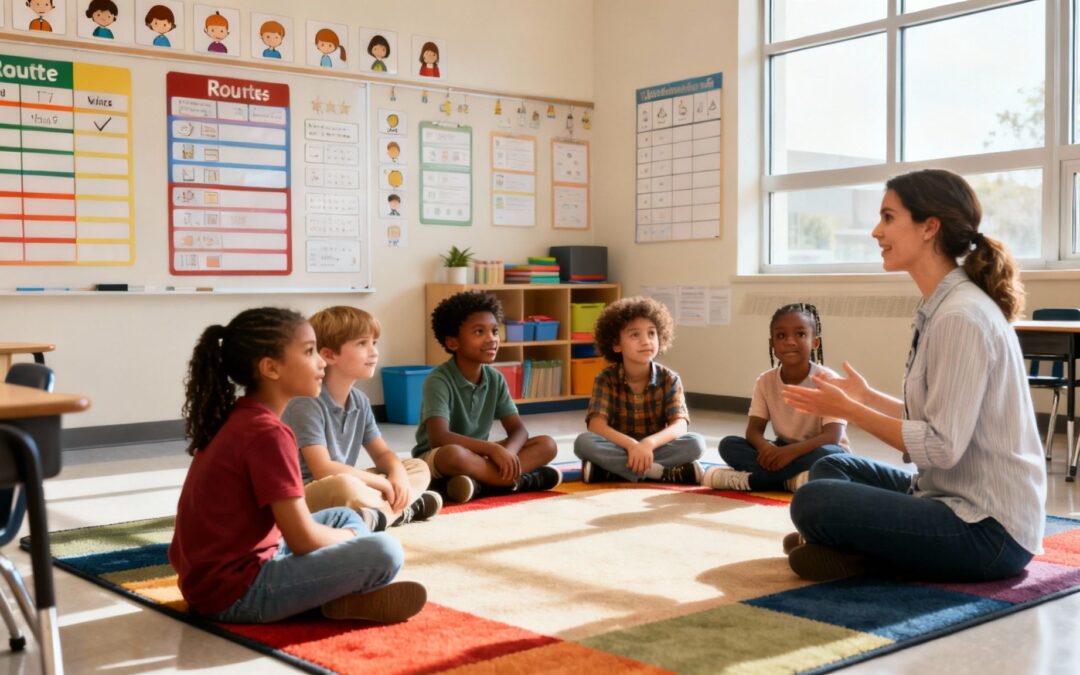
Effective classroom management has evolved far beyond simply controlling behavior. Today’s most successful educators recognize that a quiet, compliant classroom isn’t the same as an engaged, thriving one. The true goal is to build a foundation of psychological safety, connection, and belonging where every student feels seen, valued, and ready to learn. This shift is crucial, especially as students navigate complex social and emotional landscapes.
Traditional discipline often focuses on reacting to misbehavior, but the most effective classroom management best practices are proactive, preventative, and rooted in social-emotional learning (SEL). By intentionally teaching skills like self-regulation, empathy, and conflict resolution, we equip students with the tools they need to succeed academically and socially. This comprehensive guide moves beyond theory to provide actionable, research-backed strategies that K-8 teachers, administrators, and parents can implement immediately.
You will find practical, classroom-ready examples and clear implementation steps for a range of powerful techniques. We will cover:
- Establishing restorative circles and using de-escalation scripts.
- Integrating mindfulness and self-regulation activities.
- Building authentic family partnerships that support student well-being.
- Implementing trauma-informed and culturally responsive teaching methods.
These strategies create environments where students do not just behave, they flourish. Let’s explore the practical steps you can take to transform your learning space into a supportive, collaborative, and joyful community for the upcoming school year and beyond.
1. Consistent Classroom Routines and Clear Expectations
One of the most foundational classroom management best practices involves creating a highly predictable environment. When students know exactly what to do and how to do it for every part of the school day, from sharpening a pencil to transitioning to lunch, their cognitive load decreases. This predictability frees up mental energy for learning and reduces the anxiety that often fuels disruptive behavior.
Consistent routines and clear expectations are not about rigid control; they are about creating psychological safety. Students feel confident and secure when their environment is logical and consistent. Research supports this, showing classrooms with well-established routines can have up to 50% fewer behavioral referrals.
How to Implement Routines and Expectations
Successful implementation moves beyond simply stating rules. It involves actively teaching procedures as you would any academic subject: with modeling, practice, and reinforcement.
- Start Small and Build: Don’t overwhelm students (or yourself) by teaching 20 routines on day one. Focus on the 2-3 most critical procedures first, such as your morning entry routine, how to get the teacher’s attention, and the dismissal process. Once those are mastered, gradually introduce others. For example, a kindergarten teacher might focus only on the routine for hanging up coats and backpacks for the entire first week.
- Model, Practice, Role-Play: Use the “I Do, We Do, You Do” model. First, demonstrate the routine yourself. For example, physically walk through the steps of turning in homework. Then, have the class practice it together, perhaps lining up for lunch as a group. Finally, have individual students role-play the procedure, like demonstrating how to ask for help. Repeat this process daily for the first two weeks of school and reteach as needed after breaks or when issues arise.
- Create Visual Supports: Words are fleeting, but visuals are constant reminders. Post a daily visual schedule with pictures for younger students. Create anchor charts for multi-step procedures (like “Group Work Expectations”). Place laminated procedure cards at relevant classroom stations, such as a small sign at the pencil sharpener that says, “1. Wait for a quiet time. 2. Sharpen quickly. 3. Return to your seat.”
Classroom-Ready Example: Morning Entry Routine
Instead of letting students trickle in with unstructured time, establish a clear three-step entry procedure posted on the door:
- Unpack your backpack and hang it on your hook.
- Turn in your homework to the red basket.
- Begin your morning warm-up work silently.
Practice this sequence every morning, offering specific verbal praise like, “I see Leo has already started his warm-up. Excellent focus!” This small routine prevents morning chaos and sets a productive tone for the entire day.
2. Social-Emotional Learning (SEL) Integration Across Curriculum
Effective classroom management best practices extend beyond behavior charts to address the root causes of student actions. Integrating social-emotional learning (SEL) across the curriculum shifts the focus from managing behavior to developing the whole child. This approach systematically weaves core competencies like self-awareness, relationship skills, and responsible decision-making into daily instruction, giving students the tools to understand and regulate their emotions, collaborate effectively, and solve problems constructively.
Treating SEL as a foundational element, rather than a separate subject, creates a more supportive and empathetic classroom culture. This proactive strategy equips students with essential life skills, which directly translates to improved behavior and academic focus. Research from CASEL shows that schools with strong SEL programs see significant reductions in discipline issues and an average 11-percentile-point gain in academic achievement.
How to Implement SEL Integration
Successful integration means making SEL a visible and consistent part of the school day. It requires explicitly teaching, modeling, and providing opportunities for students to practice these crucial skills in authentic contexts.
- Weave into Daily Touchpoints: Start and end the day with intention. Use morning meetings for a “feelings check-in” where students can show a thumbs-up, down, or sideways to indicate how they’re feeling. Use closing circles for reflections, asking, “What was one challenge you faced today, and how did you handle it?”
- Model and Narrate: As the teacher, you are the primary model for SEL. Narrate your own process aloud: “I’m feeling a little frustrated that the technology isn’t working, so I am going to take a deep breath before I try again.” This makes emotional regulation strategies visible and normalizes them for students.
- Connect to Academic Content: Embed SEL into your existing lessons. When reading a story like The Giving Tree, ask, “How do you think the tree was feeling in this moment? What clues tell us that?” In a history lesson about the Civil Rights Movement, discuss the empathy and responsible decision-making required by leaders like Martin Luther King Jr.
Classroom-Ready Example: The “Pause Button”
Introduce a simple self-regulation technique called the “Pause Button.” Teach students that when they feel a big emotion like anger or frustration, they can physically pretend to press a “pause button” on their hand or desk. This action serves as a physical cue to stop, take one deep “belly breath,” and think about a calm choice.Practice this together when the class is calm. Role-play scenarios where it would be useful, such as disagreeing with a friend or struggling with a math problem. Acknowledge students when you see them using it: “I saw you use your pause button when you were getting frustrated. That was a great choice to help you stay in control.”
3. Mindfulness and Self-Regulation Practices
Effective classroom management is not just about managing behavior; it’s about building students’ capacity to manage themselves. Mindfulness practices teach students to be present and aware of their thoughts, feelings, and bodily sensations without judgment. This awareness is the first step toward self-regulation, allowing students to pause and choose a constructive response rather than reacting impulsively.
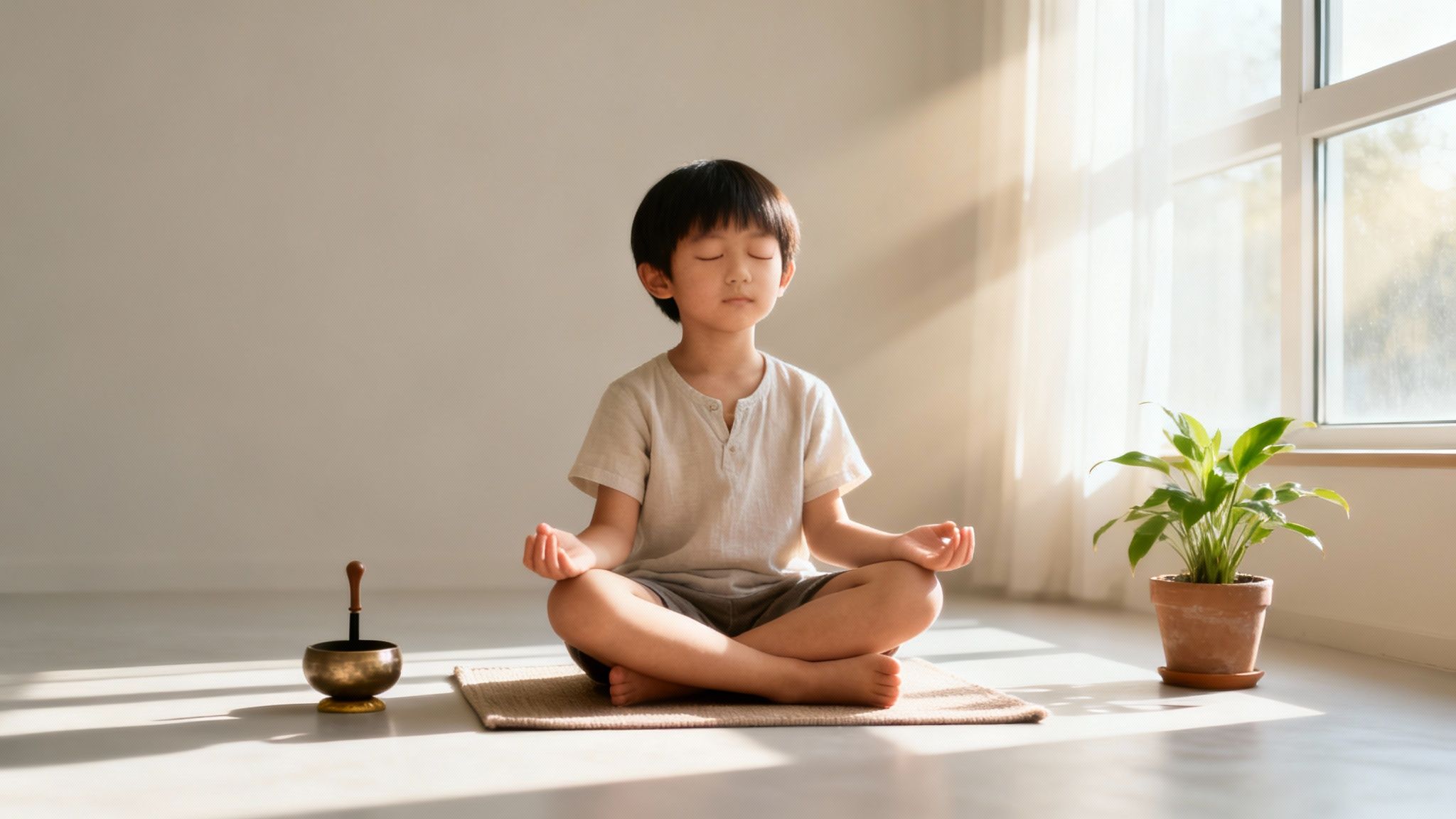
This approach is a powerful preventive tool. By regularly practicing mindfulness, students strengthen their executive function skills, reduce stress, and learn to manage difficult emotions before they escalate. Schools that embed these practices often see significant improvements in student behavior and academic focus, as mindfulness is a core component of trauma-informed and healing-centered education.
How to Implement Mindfulness and Self-Regulation
Integrating these practices requires consistency and a gentle, non-judgmental approach. The goal is to equip students with a toolkit of strategies they can use independently throughout their day and their lives. For more in-depth strategies, you can explore a range of self-regulation strategies for students.
- Start with Short, Guided Practice: Begin with just 2-3 minutes of guided mindfulness each day, perhaps after recess or before a test. Use a calming signal like a bell or chime to start. Say something like, “Let’s do our mindful minute. Close your eyes if you’re comfortable, and just listen to the sounds outside our classroom for one minute.”
- Teach Specific Breathing Techniques: Explicitly teach simple, memorable breathing exercises. For example, introduce “Box Breathing” (breathe in for 4, hold for 4, breathe out for 4, hold for 4) by drawing a square in the air with your finger as you guide them. Create a visual anchor chart so students can reference it when they feel overwhelmed.
- Establish a Calm-Down Corner: Designate a small, comfortable space in the classroom where students can go to self-regulate. Stock it with mindfulness tools like a Hoberman sphere (breathing ball), soft pillows, visual aids for breathing techniques, and noise-reducing headphones. Model how to use the space when you are calm, not as a punishment.
Classroom-Ready Example: Mindful Transitions
Transitions are often a source of chaos. Instead of rushing from one subject to the next, use them as a moment for a “mindful minute.” Before starting math, ring a chime and say:
- Pause: Put your pencils down and place your hands on your desk.
- Breathe: Let’s take three deep “Lion Breaths” together (inhale through the nose, exhale audibly through the mouth).
- Notice: Silently notice how your body feels. Are you ready for our next activity?
This simple routine takes less than 60 seconds but helps the entire class reset their focus, calm their nervous systems, and prepare for new learning, making it one of the most effective classroom management best practices.
4. Positive Behavior Support Systems (PBIS)
Positive Behavior Support Systems, commonly known as PBIS, shift the focus from punishment to prevention. This proactive, data-driven framework establishes a culture where positive behaviors are explicitly taught, modeled, and reinforced across all school settings. Rather than waiting to react to misbehavior, PBIS creates an environment where students understand the expectations and are motivated to meet them, preventing many issues before they start.
This approach is one of the most effective classroom management best practices because it builds a unified, supportive school-wide culture. Schools implementing PBIS consistently report significant reductions in office discipline referrals, sometimes by as much as 50%, alongside improvements in academic outcomes and student attendance. It fosters a sense of belonging by making the behavioral expectations clear, fair, and positive.
How to Implement a PBIS Framework
Implementing PBIS successfully requires a school-wide commitment to teaching behavior with the same intentionality as academic subjects. It involves a systematic, layered approach that supports all students.
- Define Core Expectations: Start by establishing 3-5 broad, positively stated behavioral expectations for the entire school community. Common examples include being Respectful, Responsible, and Safe. These simple terms become the foundation for all behavioral instruction.
- Teach and Reteach Explicitly: Dedicate significant time in the first few weeks of school to explicitly teach what these expectations look like in every setting. For example, show a short video of students demonstrating what “Be Responsible” looks like in the cafeteria (throwing away trash) versus the library (returning books to the shelf).
- Use a Recognition System: Create a system to acknowledge students who meet the expectations. This could be giving out “Caught Being Good” tickets, putting a marble in a class jar for a collective reward, or simple, specific verbal praise. Aim for a ratio of at least four positive interactions for every one corrective interaction to build momentum and goodwill.
- Track and Analyze Data: Systematically collect and review behavior data (like office referrals) at least monthly. A practical example would be a grade-level team noticing from the data that most playground conflicts happen near the swings on Tuesdays and Thursdays, then deciding to add an extra supervisor to that specific zone on those days.
Classroom-Ready Example: Cafeteria Expectations
Instead of a long list of “don’t” rules, a PBIS approach uses a simple matrix to teach positive behaviors. For the cafeteria, the expectations might be:
- Be Respectful: Use quiet voices and good table manners.
- Be Responsible: Clean up your space and push in your chair.
- Be Safe: Walk at all times and keep your hands to yourself.
Staff would actively teach these behaviors and then give out “Caught Being Good” tickets to students demonstrating them. A student who cleans up without being asked might receive a ticket and specific praise: “Thank you for being responsible by cleaning your area, Maria!”
5. Trauma-Informed and Culturally Responsive Teaching
Effective classroom management acknowledges the whole child, including their backgrounds, identities, and life experiences. Trauma-informed and culturally responsive teaching are two interconnected approaches that create a foundation of psychological safety and belonging, which is essential for learning and positive behavior. This practice recognizes that behavior is often a form of communication, signaling an unmet need or a response to past or present adversity.
Instead of a compliance-first model, these approaches prioritize connection and understanding. By honoring students’ cultural identities and creating a predictable, supportive environment, teachers can preemptively address the root causes of many behavioral challenges. Research shows that schools integrating these practices see significant reductions in disciplinary referrals and notable gains in student engagement and academic achievement, making them one of the most vital classroom management best practices.
How to Implement Trauma-Informed and Culturally Responsive Practices
Integrating these frameworks means shifting your mindset from “what is wrong with this student?” to “what happened to this student, and what do they need?” This involves intentionally building an environment that promotes healing, validation, and empowerment.
- Prioritize Safety and Predictability: Trauma impacts the nervous system, making predictability a critical need. Maintain the consistent routines mentioned earlier. A practical example is giving a 5-minute and 2-minute warning before every transition to avoid surprising students who may have a heightened startle response.
- Integrate “Mirrors and Windows”: Ensure your curriculum and classroom library serve as mirrors that reflect your students’ own cultures, and as windows into the experiences of others. For instance, a teacher in a classroom with many students of Mexican heritage should ensure there are books by authors like Pam Muñoz Ryan or Yuyi Morales readily available.
- Focus on Co-Regulation: A dysregulated adult cannot regulate a dysregulated child. When a student is escalated, your calm presence is the most effective tool. A practical example is to lower your own voice, get down to their eye level, and say, “I see you are having a really hard time. I am right here with you. Let’s take a breath together.” This models calmness instead of escalating the situation.
Classroom-Ready Example: A “Cool-Down Corner”
Instead of a punitive time-out chair, create a voluntary “cool-down corner” or “peace corner.” Equip it with comforting items like a soft blanket, a stress ball, coloring pages, and a feelings chart.Teach and model its use: “When you feel your anger growing big, you can choose to take a 5-minute break in the peace corner to help your body feel calm again. This is a helpful choice, not a punishment.” This gives students agency and teaches them a crucial self-regulation skill, replacing disruptive outbursts with a constructive coping strategy.
6. Empathy Building and Perspective-Taking Activities
Effective classroom management best practices extend beyond behavior charts to cultivate the core social-emotional skills that prevent conflict. Intentionally teaching students to understand and share the feelings of others builds empathy as a classroom habit. When students can step into a classmate’s shoes, they are less likely to engage in bullying and more inclined to act with kindness, strengthening the entire community.
This approach transforms the classroom from a group of individuals into a connected team. Empathy is not a fixed trait; it’s a skill that can be developed through guided practice. Research from programs like Roots of Empathy shows that a focus on perspective-taking significantly reduces aggression and bullying, creating a safer and more inclusive learning environment where students feel a true sense of belonging.
How to Implement Empathy-Building Activities
Integrating empathy into your daily curriculum requires weaving it into academic content and classroom routines. It involves teaching students to look beyond their own experiences and consider the diverse perspectives around them.
- Read Diverse Stories: Use high-quality children’s literature as a springboard for discussion. After reading a book like Wonder by R.J. Palacio, ask specific questions like, “How do you think Auggie felt when Julian made that comment? What could the other students have done to show empathy in that moment?”
- Use Think-Pair-Share: Before a whole-group discussion about a conflict, give students a moment to process. Have them first think individually, then pair up with a partner to discuss their ideas, and finally share their combined perspectives with the class. This gives quieter students a safer way to practice sharing their perspective before addressing the whole group.
- Connect to Real Conflicts: When minor disagreements arise, frame them as opportunities to practice empathy. For example, if two students are arguing over a book, guide them by saying, “Sam, can you try to use an ‘I feel’ statement? Sarah, your job is to listen and then repeat back what you heard Sam say. Then we will switch.” This structured dialogue builds listening skills.
Classroom-Ready Example: “A Mile in Their Shoes” Scenario
After a disagreement on the playground over a game, instead of just assigning a consequence, facilitate a perspective-taking activity. Give each student involved a piece of paper and ask them to write or draw the story of what happened from the other person’s point of view.
- Prompt: “Imagine you are [classmate’s name]. What did you see, hear, and feel during the game?”
- Share: Have them share their “new” stories with each other in a quiet corner.
- Reflect: Ask, “Did hearing their side of the story change how you feel? What can we do differently tomorrow?”
This simple role-reversal exercise builds crucial empathy muscles and helps students resolve their own conflicts constructively, a key component of a well-managed classroom.
7. Collaborative Learning Structures and Cooperative Groups
Effective classroom management isn’t just about preventing negative behavior; it’s about actively fostering positive engagement. Structuring purposeful peer interaction through cooperative learning activities is a powerful strategy that builds both academic skills and social-emotional competencies. When students are taught how to collaborate, they learn to communicate, support peers, and solve problems together, which reduces isolation and increases their sense of belonging.
This approach transforms the classroom from a collection of individuals into a community of learners. Research shows that classrooms using structured cooperative learning can see significant improvements in academic achievement and peer relationships. For educators committed to culturally responsive practices, understanding the profound impact of various forms of trauma, including generational trauma, is crucial, as creating supportive peer networks can be a powerful protective factor for students.
How to Implement Collaborative Structures
Simply putting students into groups is not enough; collaboration is a skill that must be explicitly taught and scaffolded. The goal is to create positive interdependence where students succeed together.
- Teach Collaboration Skills First: Before assigning a group task, teach and model key skills. A practical example is to create a “T-Chart” for “Active Listening,” with one column for “Looks Like” (e.g., eyes on speaker, nodding) and another for “Sounds Like” (e.g., “Tell me more,” “I hear you saying…”).
- Assign and Rotate Roles: Give each group member a specific job to ensure equitable participation. Roles like Facilitator (keeps the group on task), Timekeeper (monitors the clock), Recorder (writes down ideas), and Reporter (shares with the class) provide structure. Use role cards with descriptions to make the jobs clear.
- Use Structured Protocols: Implement established protocols to guide discussions. For the Jigsaw method, you might assign four students in a group each a different paragraph of a text. They then meet with students from other groups who have the same paragraph to become “experts” before returning to their home group to teach what they learned.
Classroom-Ready Example: Structured Turn-and-Talk
Instead of an unstructured “turn and talk to your partner,” provide clear scaffolding for a richer discussion:
- Pose a Question: “Based on the text, what is the most important reason the character made that choice?”
- Assign Roles: Partner A will speak for 1 minute first. Partner B will listen and then ask one clarifying question.
- Provide a Sentence Frame: Partner B starts their question with, “What I heard you say was… Am I understanding that correctly?”
- Switch Roles: After Partner B asks their question and A responds, they switch roles for the same amount of time.
This simple structure teaches active listening, paraphrasing, and focused conversation, making peer interaction a productive learning tool.
8. Consistent Classroom Routines and Clear Expectations
One of the most foundational classroom management best practices involves creating a highly predictable environment. When students know exactly what to do and how to do it for every part of the school day, from sharpening a pencil to transitioning to lunch, their cognitive load decreases. This predictability frees up mental energy for learning and reduces the anxiety that often fuels disruptive behavior.
Consistent routines and clear expectations are not about rigid control; they are about creating psychological safety. Students feel confident and secure when their environment is logical and consistent. Research supports this, showing classrooms with well-established routines can have up to 50% fewer behavioral referrals.
How to Implement Routines and Expectations
Successful implementation moves beyond simply stating rules. It involves actively teaching procedures as you would any academic subject: with modeling, practice, and reinforcement.
- Start Small and Build: Don’t overwhelm students (or yourself) by teaching 20 routines on day one. Focus on the 2-3 most critical procedures first, such as your morning entry routine, how to get the teacher’s attention, and the dismissal process. Once those are mastered, gradually introduce others. For example, a kindergarten teacher might focus only on the routine for hanging up coats and backpacks for the entire first week.
- Model, Practice, Role-Play: Use the “I Do, We Do, You Do” model. First, demonstrate the routine yourself. For example, physically walk through the steps of turning in homework. Then, have the class practice it together, perhaps lining up for lunch as a group. Finally, have individual students role-play the procedure, like demonstrating how to ask for help. Repeat this process daily for the first two weeks of school and reteach as needed after breaks or when issues arise.
- Create Visual Supports: Words are fleeting, but visuals are constant reminders. Post a daily visual schedule with pictures for younger students. Create anchor charts for multi-step procedures (like “Group Work Expectations”). Place laminated procedure cards at relevant classroom stations, such as a small sign at the pencil sharpener that says, “1. Wait for a quiet time. 2. Sharpen quickly. 3. Return to your seat.”
Classroom-Ready Example: Morning Entry Routine
Instead of letting students trickle in with unstructured time, establish a clear three-step entry procedure posted on the door:
- Unpack your backpack and hang it on your hook.
- Turn in your homework to the red basket.
- Begin your morning warm-up work silently.
Practice this sequence every morning, offering specific verbal praise like, “I see Leo has already started his warm-up. Excellent focus!” This small routine prevents morning chaos and sets a productive tone for the entire day.
9. Authentic Relationships, Belonging, and Family Engagement
Building genuine relationships where students feel known, valued, and psychologically safe is a cornerstone of effective classroom management best practices. When this sense of belonging is extended to include proactive, two-way family engagement, it creates a powerful support system that nurtures positive behavior and encourages academic risk-taking. This approach shifts the focus from managing behavior to fostering connection.
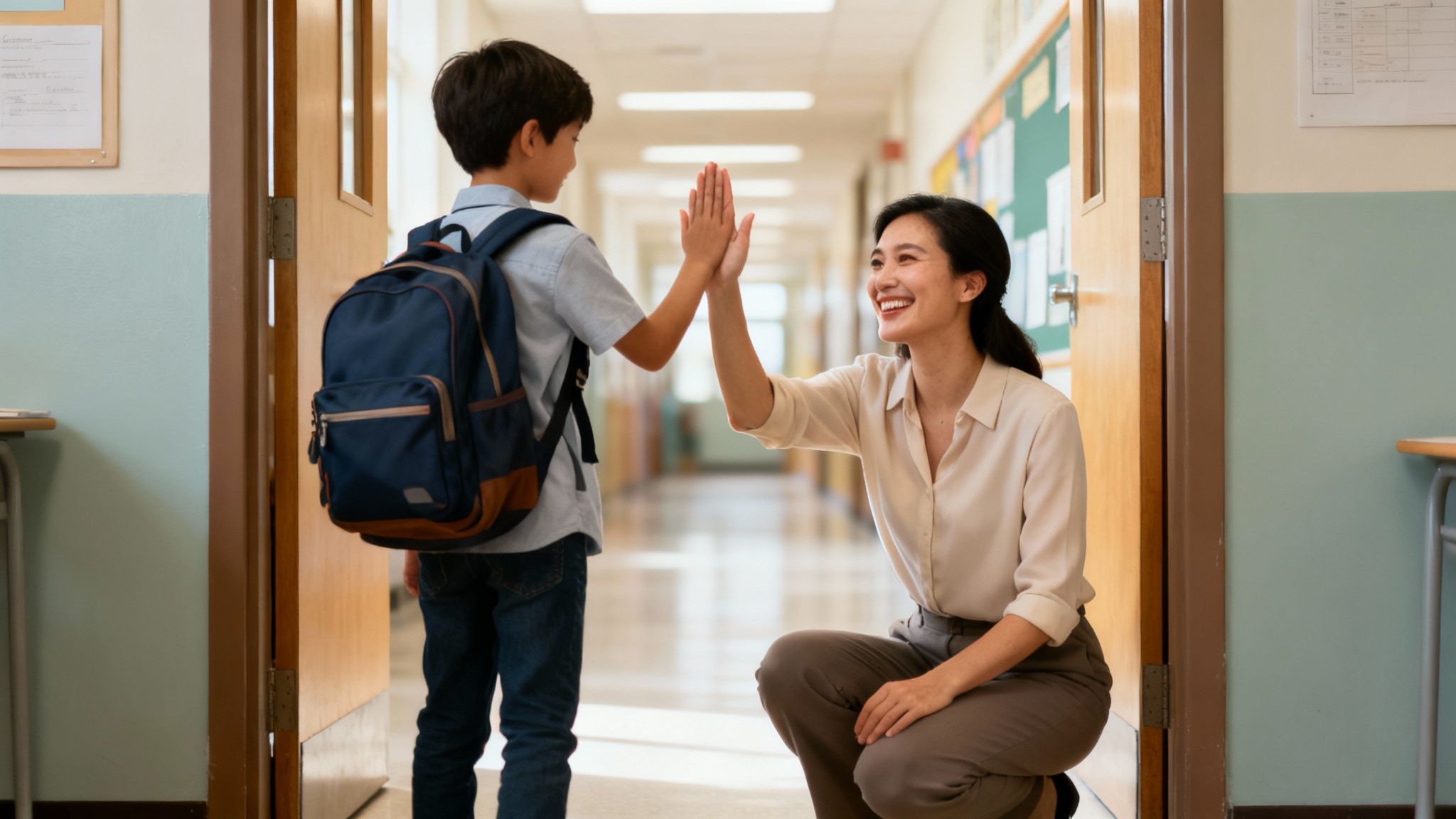
This is not just a feel-good strategy; it is a research-backed imperative. Schools that prioritize belonging report higher attendance, improved academic achievement, and a greater sense of safety. Research from organizations like Soul Shoppe shows that students who feel cared for by their teachers are significantly more likely to persist through challenges. When you add strong family partnerships into the mix, schools can see up to 30% fewer behavioral problems.
How to Implement Relationships and Engagement
Cultivating authentic connections requires intentional, consistent effort. It involves showing genuine interest in students as individuals and viewing families as essential partners in their child’s education.
- Make Personal Connections Daily: Greet every student by name at the door with a high-five, handshake, or smile. Use interest inventories at the start of the year and then ask specific follow-up questions like, “How did your soccer game go on Saturday?” or “Did you finish that amazing drawing you were telling me about?”
- Proactive Positive Communication: Don’t let your only communication with families be about problems. A practical example is to send a “Good News” postcard home when a student shows kindness or masters a new skill. Or, use a communication app to send a quick photo of a student engaged in a positive activity with a caption like, “Jasmine was a fantastic leader in her group today!”
- Partner with Families for Problem-Solving: When an issue arises, approach the family as a teammate. Start the conversation with, “I’d love to partner with you to help Marco succeed. Can you tell me what strategies work best at home when he gets frustrated?” This shows respect and positions the parent as an expert on their child.
Classroom-Ready Example: The “Two-by-Ten” Strategy
For a student you’re struggling to connect with, commit to the “Two-by-Ten” strategy. Spend two minutes a day for ten consecutive school days having a non-academic, non-disciplinary conversation with them.You might ask about their favorite video game, their pet, or their weekend plans. The goal is simply to build rapport and show you see them as a person beyond their behavior or grades. This focused effort can dramatically repair and strengthen a relationship, often leading to a significant decrease in disruptive behavior because the student feels seen and valued.
10. Student Leadership and Voice in Classroom Management
One of the most transformative classroom management best practices involves shifting from a teacher-centric model to a community-based one where students have authentic agency. Giving students meaningful roles in classroom decision-making, from setting expectations to solving problems, builds a profound sense of ownership and responsibility. When students have a voice, they become invested partners in creating a positive and productive classroom culture.
This approach is about co-creating the classroom environment rather than imposing it. Students who feel seen, heard, and valued are far more likely to be engaged and motivated, and less likely to exhibit oppositional behaviors. Research shows that schools prioritizing student voice see stronger student-teacher relationships, increased academic engagement, and more equitable outcomes.
How to Implement Student Leadership and Voice
Cultivating student voice requires intentionally creating structures where their input is not just heard but acted upon. It involves teaching the skills needed to participate constructively in a democratic community.
- Hold Regular Class Meetings: Dedicate time each week for a structured class meeting. Use an agenda that students can add to throughout the week. For example, a student might add “The pencils are always missing from the writing center” to the agenda, allowing the class to solve the problem together.
- Create Meaningful Classroom Jobs: Go beyond simple line leader or paper passer roles. Establish leadership positions that have real responsibility. For example, a “Tech Expert” could be trained to help peers with login issues, or a “Class Ambassador” could be responsible for giving a short tour to any classroom visitors.
- Co-create Expectations and Consequences: In the first week of school, ask, “What does a respectful classroom look, sound, and feel like?” Chart their answers. Then, guide them to turn these ideas into 3-5 positively-phrased class rules. When a rule is broken, ask the student, “We agreed to be respectful. What would be a good way to repair the harm done and make a better choice next time?”
Classroom-Ready Example: Problem-Solving Class Meeting
Instead of the teacher unilaterally banning a popular but distracting item (e.g., trading cards), bring the issue to a class meeting.
- State the Problem: “I’ve noticed that trading cards are becoming a big distraction during math time. What have you all noticed?”
- Brainstorm Solutions: Ask students to brainstorm fair solutions. Ideas might include “cards are only for recess,” “a designated 10-minute trading time on Fridays,” or “cards stay in backpacks until dismissal.”
- Vote and Commit: Have the class vote on the best solution and agree to try it for one week before revisiting the decision.
This process teaches problem-solving skills, respects students’ interests, and generates far greater buy-in for the final solution.
Classroom Management: 10-Strategy Comparison
| Practice | Implementation complexity | Resource requirements | Expected outcomes | Ideal use cases | Key advantages |
|---|---|---|---|---|---|
| Restorative Practices and Circles | High — requires trained facilitators and school buy-in | Moderate–High — staff training, scheduled circle time, facilitator support | Fewer suspensions/referrals, repaired relationships, increased accountability | Responding to incidents, repairing harm, community-building across grades | Centers student voice, repairs harm, builds empathy and belonging |
| SEL Integration Across Curriculum | High — systematic curriculum alignment and ongoing PD | Moderate — SEL curriculum, teacher training, assessment tools | Improved academics, attendance, engagement, social-emotional competency | Whole-school culture change, long-term student development | Research-backed, scalable, aligns academics with SEL skills |
| Mindfulness and Self-Regulation Practices | Low–Moderate — consistent brief practices and modeling | Low — short daily time, minimal materials, basic training | Reduced anxiety/stress, better attention, improved self-regulation | Transitions, test prep, trauma-sensitive classrooms | Low-cost, easy to start, supports focus and emotion regulation |
| Positive Behavior Support Systems (PBIS) | High — systemic rollout, fidelity monitoring, leadership support | Moderate — training, data systems, recognition budgets | Significant reductions in office referrals, consistent behavior expectations | School-wide behavior management, data-driven intervention systems | Predictable, tiered supports with measurable outcomes |
| Trauma-Informed & Culturally Responsive Teaching | High — deep PD, reflective practice, curriculum changes | High — sustained PD, community partnerships, culturally relevant resources | Improved outcomes for traumatized/marginalized students, greater equity and belonging | Schools serving diverse or high-trauma populations, equity-focused initiatives | Promotes safety, reduces discipline disparities, validates student identities |
| Empathy Building & Perspective-Taking Activities | Low–Moderate — requires skilled facilitation and repetition | Low — literature, role-plays, classroom time | Reduced bullying, increased prosocial behavior and social awareness | Bullying prevention, diversity education, social skills instruction | Develops perspective-taking, easily integrated into lessons |
| Collaborative Learning Structures & Cooperative Groups | Moderate — explicit teaching of roles and protocols | Low–Moderate — planning time, role templates, teacher coaching | Higher academic achievement, better collaboration and belonging | Group projects, mixed-ability classrooms, peer-supported learning | Combines academic gains with social-emotional skill building |
| Consistent Classroom Routines & Clear Expectations | Low–Moderate — initial teaching and consistent reinforcement | Low — visual supports, timers, planning time | Fewer disruptions, reduced anxiety, more instructional time | All classrooms and grade levels, transitions, substitute coverage | Predictability improves behavior and learning efficiency |
| Authentic Relationships, Belonging & Family Engagement | Moderate–High — individualized outreach and trust-building | High — time for relationship-building, communication systems, translation | Fewer behavior issues, higher attendance, stronger family-school trust | Building community, addressing chronic behavioral/attendance issues | Deep trust and partnership; prevents many issues before escalation |
| Student Leadership & Voice in Classroom Management | Moderate — shifts power dynamics and teaches decision skills | Low–Moderate — meeting structures, role training, facilitation | Increased ownership, reduced oppositional behavior, leadership growth | Class governance, restorative processes, student-centered classrooms | Empowers students, increases buy-in and peer accountability |
Putting It All Together: Creating Your Proactive Classroom Ecosystem
Navigating the landscape of classroom management best practices can feel like trying to assemble a complex puzzle. We’ve explored ten powerful, interconnected strategies, from establishing consistent routines and integrating Social-Emotional Learning to fostering student voice and implementing restorative justice. The crucial takeaway is not to view these as a checklist of isolated tactics, but as threads to be woven together into a resilient and supportive classroom ecosystem. Effective management isn’t about control; it’s about connection, co-creation, and community.
The journey begins not with a complete overhaul, but with a single, intentional step. The most impactful changes are often small, consistent actions that build trust and predictability over time. By focusing on creating a foundation of psychological safety and authentic relationships, you establish the fertile ground where all other practices can take root and flourish.
Synthesizing the Core Principles
At their heart, these ten classroom management best practices share a common philosophy: they are proactive, not reactive. They shift the focus from correcting misbehavior to cultivating an environment where students feel seen, valued, and equipped with the skills to navigate social and emotional challenges.
- Proactive vs. Reactive: Instead of waiting for conflict to arise, we build community through restorative circles, teach self-regulation with mindfulness exercises, and pre-empt confusion with crystal-clear routines. This preemptive approach minimizes disruptions and maximizes learning time.
- Skills over Sanctions: Rather than relying solely on consequences, we actively teach empathy, perspective-taking, and collaboration. This empowers students with the social-emotional competencies they need to succeed both in school and in life.
- Connection as the Catalyst: The thread connecting all these strategies is the power of human connection. Authentic relationships with students and strong family engagement are not “soft skills”; they are the very bedrock of a well-managed, thriving classroom.
Your Actionable Next Steps
Embarking on this journey requires commitment, not perfection. The goal is progress. Here is a practical, step-by-step approach to begin integrating these principles into your daily practice:
- Start with a Self-Assessment: Reflect on the ten practices discussed. Which one resonates most deeply with your teaching philosophy? Where do you see the most immediate need in your classroom? Perhaps it’s strengthening relationships (#9) or clarifying routines (#8).
- Choose One and Go Deep: Select a single practice to focus on for the next four to six weeks. For example, if you choose Mindfulness and Self-Regulation (#3), you could commit to leading a two-minute “belly breathing” exercise after every transition from recess or lunch.
- Practical Example: A third-grade teacher might introduce a “Peace Corner” with a breathing ball and emotion flashcards. The initial goal isn’t for every student to use it perfectly, but simply to introduce it as a shared tool for co-regulation.
- Involve Your Students: Frame this as a collaborative effort. Announce your new focus to the class. Say, “Team, we’re going to work on getting better at listening to each other’s ideas. One way we’ll do this is by practicing restorative sentence stems when we disagree.” This fosters buy-in and positions students as partners.
- Track and Reflect: Keep a simple journal. What’s working? What challenges are arising? How are students responding? This reflection is crucial for making small adjustments and recognizing progress, which fuels motivation. After a month, you can either deepen your implementation of that practice or layer on a second, complementary one.
Mastering these classroom management best practices is an ongoing process of learning, adapting, and growing alongside your students. It is a profound investment that pays dividends far beyond a quiet and orderly room. It is the work of building a compassionate, equitable, and empowering community where every child has the opportunity to bring their whole self to the learning process, ready to engage, take academic risks, and ultimately, thrive.
Ready to bring this transformative, community-centered approach to your entire school? Soul Shoppe provides research-based programs, professional development, and practical SEL tools that directly align with the classroom management best practices in this guide. Discover how our on-site and virtual programs can help you build a safer, more connected school culture at Soul Shoppe.