

10 Practical Mindfulness Exercises for Students to Enhance Focus in 2026
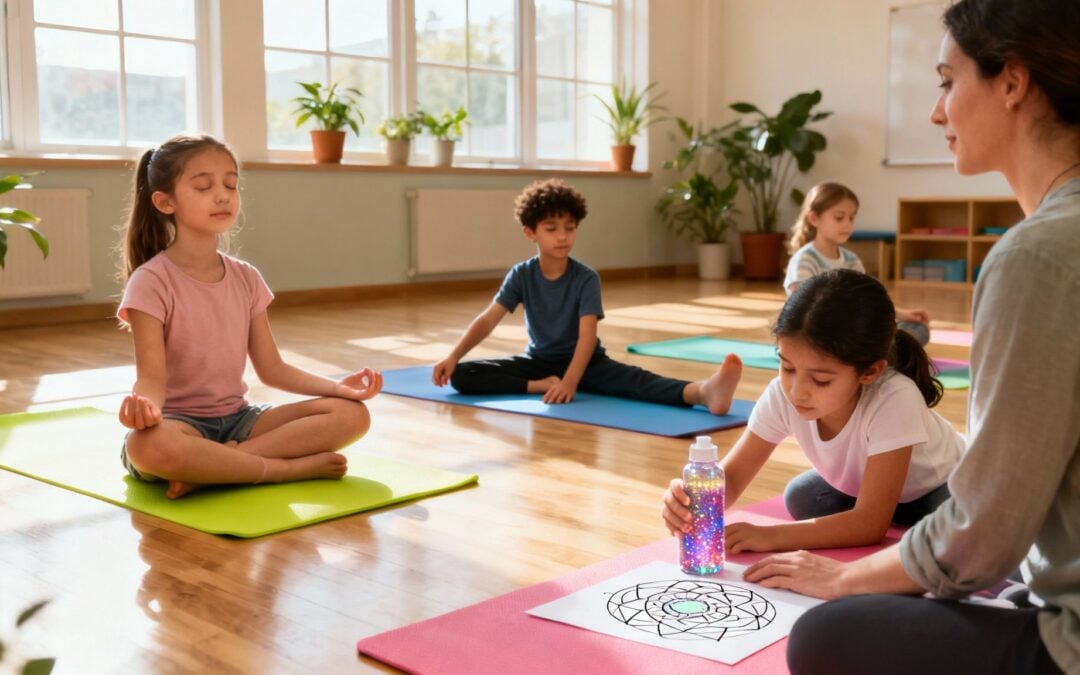
In today’s fast-paced world, students from kindergarten to 8th grade are navigating more distractions and pressures than ever before. The ability to pause, self-regulate, and focus is not just a ‘nice-to-have’—it’s a foundational skill for academic success, emotional well-being, and healthy social development. This is where mindfulness comes in, offering a powerful toolkit to help young learners build resilience and self-awareness from an early age.
This article provides a comprehensive roundup of practical, actionable mindfulness exercises for students that teachers and parents can implement immediately. We’ll move beyond theory and dive into the specific “how-to” for each activity. This approach is crucial for students, helping them manage distractions and ultimately understand how to improve focus while studying effectively. Rather than just presenting ideas, we provide a clear roadmap for execution.
Inside, you will find a curated collection of ten distinct practices, including Body Scan Meditations, Mindful Walking, and Sensory Grounding techniques. For each exercise, you’ll get:
- Step-by-step instructions to guide you and your students.
- Age-specific adaptations for K-2, 3-5, and 6-8 grade levels.
- Practical tips for classroom management and at-home use.
- Clear SEL outcomes to connect the practice to key developmental goals.
Whether you’re looking to calm pre-test jitters, manage challenging classroom transitions, or build a more supportive and empathetic community, these tools offer a clear path forward. Grounded in social-emotional learning (SEL) principles like those championed by Soul Shoppe, these exercises are designed to be easily integrated into your daily routines, creating a more connected and focused learning environment for everyone. Let’s explore these powerful techniques.
1. Body Scan Meditation: Building an Internal Weather Report
The body scan is a foundational mindfulness practice where students bring gentle, focused attention to different parts of their body, one by one. This exercise helps them develop body awareness by systematically noticing physical sensations like warmth, tingling, tightness, or contact with a chair without judgment. The goal isn’t to change these feelings, but simply to acknowledge them, creating a mental “weather report” of their internal state. This builds a crucial skill for self-regulation and emotional intelligence.
By regularly practicing this mindfulness exercise for students, they learn to identify the physical signals of stress, anxiety, or excitement before these feelings become overwhelming. It’s a powerful tool for connecting the mind and body, helping students understand how their emotions manifest physically.
How to Guide a Body Scan
- Get Comfortable: Invite students to find a comfortable position, either sitting with feet on the floor or lying down with eyes gently closed or looking downward.
- Start at the Toes: Begin by directing their attention to the sensations in their toes. Ask them to notice any feelings without needing to label them as “good” or “bad.”
- Move Systematically: Slowly guide their attention up through the body: feet, ankles, legs, stomach, back, arms, hands, neck, and face.
- Use Descriptive Cues: Use calm, neutral language. For example, “Notice the feeling of your feet on the floor,” or “Can you feel the air on your skin?”
- End with Breath: Conclude by bringing awareness back to their breath for a moment before slowly returning their attention to the room.
Classroom and Home Implementation
- Age Adaptations: For K-2 students, keep it short (2-3 minutes) and use playful language like “wiggling your toes to wake them up.” For middle schoolers, you can extend the scan to 10 minutes and introduce themes like noticing tension from studying or social stress.
- When to Use It: A 3-minute body scan is perfect for transitions between subjects, calming the class after recess, or helping students settle before a test. At home, it can be a wonderful practice before homework or bedtime.
- Behavioral Outcomes: This exercise directly supports self-awareness and self-management. A student who can notice a tight jaw or clenched fists during a frustrating math problem is better equipped to pause and take a calming breath instead of acting out.
Practical Example: A teacher notices the class is antsy before a math test. She says, “Let’s do a quick ‘body check-in.’ Close your eyes and see if you can feel where your ‘worry butterflies’ are. Is it in your stomach? Your chest? Just notice them without trying to make them go away. Now, let’s take a deep breath and send some calm to that spot.” This acknowledges their anxiety and gives them a tool to manage it.
2. Mindful Breathing Exercises: Finding an Anchor in the Breath
Mindful breathing teaches students to use their breath as an anchor to the present moment. By consciously focusing on the rhythm of inhalation and exhalation, they activate the body’s natural relaxation response. This simple yet profound practice is a cornerstone of mindfulness exercises for students, offering a portable tool they can use anywhere to calm their nervous system, manage difficult emotions, and improve focus.

Learning to intentionally slow down and deepen their breath helps students directly influence their physiological state, moving from a reactive “fight-or-flight” mode to a more centered “rest-and-digest” state. This skill is fundamental for emotional regulation, giving students a tangible way to cope with anxiety, frustration, or over-excitement. Students can explore various relaxation techniques for better sleep to further enhance their ability to achieve calm, especially before bedtime.
How to Guide Mindful Breathing
- Find a Still Position: Ask students to sit comfortably with their backs straight and hands resting on their laps or stomach. They can close their eyes or look softly at a spot on the floor.
- Focus on the Breath: Guide them to simply notice their breath as it enters and leaves their body. Encourage them to feel the sensation of their belly or chest rising and falling.
- Introduce a Simple Technique: Guide them through a structured breathing pattern. A great starting point is “Box Breathing”: inhale for a count of 4, hold for 4, exhale for 4, and hold for 4.
- Use Metaphors: For younger children, use vivid imagery. “Imagine you are smelling a beautiful flower (inhale slowly), and now gently blow out a birthday candle (exhale slowly).”
- Return to the Room: After a few rounds, guide their attention back to the sounds in the room before inviting them to open their eyes.
Classroom and Home Implementation
- Age Adaptations: For K-2 students, use tactile props like a “breathing buddy” (a small stuffed animal on their belly to watch rise and fall). For older students (grades 6-8), introduce concepts like the “4-7-8 breath” for managing test anxiety or pre-game jitters.
- When to Use It: Start the day with a 2-minute group breathing exercise. Use “5-Finger Breathing” as a quick reset during challenging lessons. It’s also an effective tool for de-escalating conflicts or calming nerves before a presentation.
- Behavioral Outcomes: This exercise directly builds self-regulation and resilience. A student who learns to take three deep breaths when they feel frustrated is better equipped to manage emotions in a positive way instead of disrupting the class.
Practical Example: During a group project, two students start arguing. The teacher intervenes, “Okay, let’s both pause. Let’s trace our hands and do our ‘Five Finger Breathing’ together.” The teacher leads them in slowly tracing each finger, inhaling up and exhaling down. This short break de-escalates the tension and allows both students to approach the problem more calmly.
3. Mindful Walking: Movement as Meditation
Mindful walking is a kinesthetic practice where students move slowly and deliberately, paying close attention to their senses and the physical act of walking. It shifts the focus from reaching a destination to experiencing the journey, moment by moment. Students are guided to notice the feeling of their feet on the ground, the air on their skin, and the sights and sounds around them. This exercise is particularly effective for kinesthetic learners and active students who may find seated meditation challenging.
This active form of mindfulness helps students channel their physical energy into a focused, calming activity. By integrating movement with awareness, mindful walking bridges the gap between stillness and action, teaching students they can find moments of peace and presence even while their bodies are in motion. It’s a foundational practice for developing groundedness and environmental awareness.
How to Guide Mindful Walking
- Find a Path: Designate a clear, safe path, either indoors (a hallway) or outdoors (a playground, track, or nature trail).
- Set the Pace: Instruct students to walk at a much slower pace than usual. The goal is intentional movement, not speed.
- Engage the Senses: Use prompts to guide their awareness. Ask, “What do you feel under your feet?” “What three different sounds can you hear right now?” or “Notice the colors you see without naming them.”
- Focus on Movement: Direct attention to the physical sensations of walking: the lifting and placing of each foot, the shift in balance, and the swing of their arms.
- Return to the Present: When minds wander, gently guide them back to the feeling of their footsteps or the sounds around them.
Classroom and Home Implementation
- Age Adaptations: For K-2 students, make it a game like “secret agent walking” or “animal walks” (e.g., walk as slowly as a turtle). For middle schoolers, introduce a sensory journal for them to write or draw their observations after the walk.
- When to Use It: Mindful walking is an excellent transition tool to de-escalate energy after recess or P.E. It can also serve as a “brain break” during long academic blocks or a grounding activity before a big presentation.
- Behavioral Outcomes: This practice strengthens focus and reduces impulsivity. A student who learns to walk mindfully in the hallway is practicing the same impulse control needed to listen without interrupting in the classroom.
Practical Example: To transition from a high-energy recess back to quiet reading time, a teacher leads the class in a mindful walk from the playground to the classroom. She instructs them to walk “as silently as ninjas” and “notice three things on the way that you’ve never seen before.” This channels their physical energy into quiet focus, making the shift to a calm activity much smoother.
4. Loving-Kindness Meditation (Metta): Cultivating Compassion
Loving-Kindness Meditation, also known as Metta, is a heart-centered practice where students intentionally send kind wishes to themselves and others. This exercise systematically cultivates compassion, moving from the self to loved ones, neutral people, and even those with whom they have difficulty. It is a powerful mindfulness exercise for students that builds empathy, reduces resentment, and strengthens a sense of community. The goal isn’t to force a feeling, but to practice offering goodwill as a way of training the heart.
By repeating phrases of kindness, students develop crucial pro-social skills and enhance their own self-compassion. This practice directly counters bullying dynamics by fostering understanding and connection, helping students see the shared humanity in everyone. It is a foundational tool for building a positive classroom and school climate.
How to Guide a Loving-Kindness Meditation
- Get Comfortable: Invite students to sit in a relaxed but upright posture, with eyes gently closed or gazing softly downward. Ask them to place a hand on their heart if that feels comfortable.
- Start with Self: Begin by guiding them to offer kind phrases to themselves. Silently repeat phrases like, “May I be safe. May I be happy. May I be healthy. May I be peaceful.”
- Extend to Others: Guide their focus to a loved one, then a neutral person (like a school custodian), and eventually, a difficult person. Use the same phrases: “May they be safe. May they be happy.”
- Send to All: Broaden the circle of compassion to include everyone in the classroom, the school, the community, and the world.
- Return to Breath: Conclude by bringing attention back to the feeling of their own breath before gently opening their eyes.
Classroom and Home Implementation
- Age Adaptations: For K-2 students, use very simple phrases like “I wish my friend well” and keep it short (1-2 minutes). For older students, you can have them reflect on what these phrases mean and use the practice before restorative justice circles.
- When to Use It: Use this as a morning meeting practice to set a kind tone for the day. It is also highly effective before peer mediations or after a classroom conflict to help restore a sense of safety and connection.
- Behavioral Outcomes: This practice directly supports the social awareness and relationship skills domains. A student who regularly practices Metta is more likely to show empathy, use kind words, and be inclusive of others. It provides a concrete tool for how to teach empathy in the classroom.
Practical Example: At the start of the week, a teacher leads a 3-minute Loving-Kindness Meditation during the morning meeting. “First, let’s send a kind wish to ourselves. Silently say, ‘May I have a great day.’ Now, think of someone in your family and send them a kind wish: ‘May you have a great day.’ Finally, let’s send that kind wish to everyone in our classroom community: ‘May we all have a great day.'” This sets a positive and supportive tone for the entire class.
5. Mindful Listening Circles: Cultivating Community and Connection
Mindful Listening Circles are a structured group practice where students sit together to practice deep, non-judgmental listening. One person shares at a time, while the others listen with their full attention, creating a space of mutual respect and understanding. This exercise powerfully combines mindfulness with communication, building the psychological safety and belonging essential for a healthy school climate. It teaches students to honor others’ experiences without interrupting, fixing, or judging.
This practice transforms a classroom from a collection of individuals into a supportive community. By participating in these circles, students learn practical tools for empathy, peer support, and conflict resolution. It is one of the most effective mindfulness exercises for students that directly builds social awareness and relationship skills, showing them that being present for someone else is a profound act of kindness.
How to Guide a Mindful Listening Circle
- Form the Circle: Arrange chairs in a circle where everyone can see each other. This physical structure reinforces equality and community.
- Establish Ground Rules: Co-create simple rules with students, such as “respect the talking piece,” “listen from the heart,” and “what’s said in the circle stays in the circle.”
- Introduce a Talking Piece: Use a small, designated object (a stone, a stick, a ball) to signify whose turn it is to speak. Only the person holding the object may talk.
- Present a Prompt: Offer a simple, low-risk prompt to start, like, “Share one good thing that happened this week,” or “Share one thing you are grateful for.”
- Facilitate Sharing: Pass the talking piece around the circle. Remind students they have the option to pass if they don’t wish to share, reinforcing choice and safety.
Classroom and Home Implementation
- Age Adaptations: For K-2 students, use circles for simple check-ins like sharing a favorite color or feeling. For middle schoolers, circles can address more complex topics like friendship challenges, online pressures, or preparing for high school.
- When to Use It: Listening circles are ideal for morning meetings, advisory periods, or as a restorative practice following a conflict. At home, a family listening circle can be a weekly ritual to connect and share.
- Behavioral Outcomes: This exercise directly supports relationship skills and social awareness. Students who learn to listen deeply in a circle are more likely to listen respectfully on the playground and collaborate effectively on group projects, reducing classroom conflicts.
Practical Example: A parent notices their middle schooler seems distant. At dinner, they say, “Let’s do a quick ‘Rose and Thorn’ check-in. The salt shaker is our talking piece. When you’re holding it, share one good thing from your day—your rose—and one challenge—your thorn.” This creates a structured, safe way for the child to share what’s on their mind without feeling pressured.
6. Sensory Grounding (5-4-3-2-1 Technique): Anchoring in the Present
The 5-4-3-2-1 Sensory Grounding technique is a powerful mindfulness exercise that pulls students out of overwhelming thoughts or anxious feelings by anchoring them in the present moment. It systematically engages all five senses to interrupt the cycle of rumination or panic. By intentionally noticing the environment, students can shift their focus from internal distress to external, neutral information, which is particularly effective for managing test anxiety or trauma-related responses.
This practice is an immediate and concrete tool students can use anywhere, anytime. It doesn’t require silence or a special setting, making it one of the most practical mindfulness exercises for students facing sudden emotional dysregulation. It effectively tells the brain, “I am safe right here, right now,” by providing tangible sensory evidence.
How to Guide the 5-4-3-2-1 Technique
- Start with Sight: Ask students to silently look around and name five things they can see. Encourage them to notice small details, like the color of a pencil or a pattern on the floor.
- Move to Sound: Next, have them listen carefully and identify four distinct sounds. This could be the hum of the lights, a voice in the hallway, or the sound of their own breathing.
- Focus on Touch: Guide them to notice three things they can feel. For example, the texture of their jeans, the smoothness of the desk, or the feeling of their feet inside their shoes.
- Engage Smell: Ask them to identify two scents in the air. This might be the smell of a book, a whiteboard marker, or lunch from the cafeteria.
- End with Taste: Finally, have them notice one thing they can taste. This could be the lingering taste of their breakfast, toothpaste, or simply the natural taste of their mouth.
Classroom and Home Implementation
- Age Adaptations: For K-2 students, use a visual anchor chart with pictures for each sense. For older middle school students, encourage them to do this discreetly at their desks during a stressful moment without any verbal cues from the teacher.
- When to Use It: This is a go-to technique for moments of high stress, such as before a presentation, during a difficult test, or after a conflict with a peer. At home, it’s excellent for easing bedtime anxiety. You can find more calming activities for the classroom that complement this technique.
- Behavioral Outcomes: This exercise directly builds self-regulation skills. A student feeling a panic attack coming on can use this method to de-escalate their physiological stress response, preventing a meltdown and allowing them to re-engage with their learning.
Practical Example: A student is about to give a presentation and is visibly nervous, breathing quickly. The teacher quietly approaches and says, “Let’s ground ourselves. Can you look at me and name five blue things you see in the room? Great. Now can you tell me four things you can hear?…” This discreet coaching helps the student anchor in the present moment and regain composure before speaking.
7. Mindful Art and Creative Expression
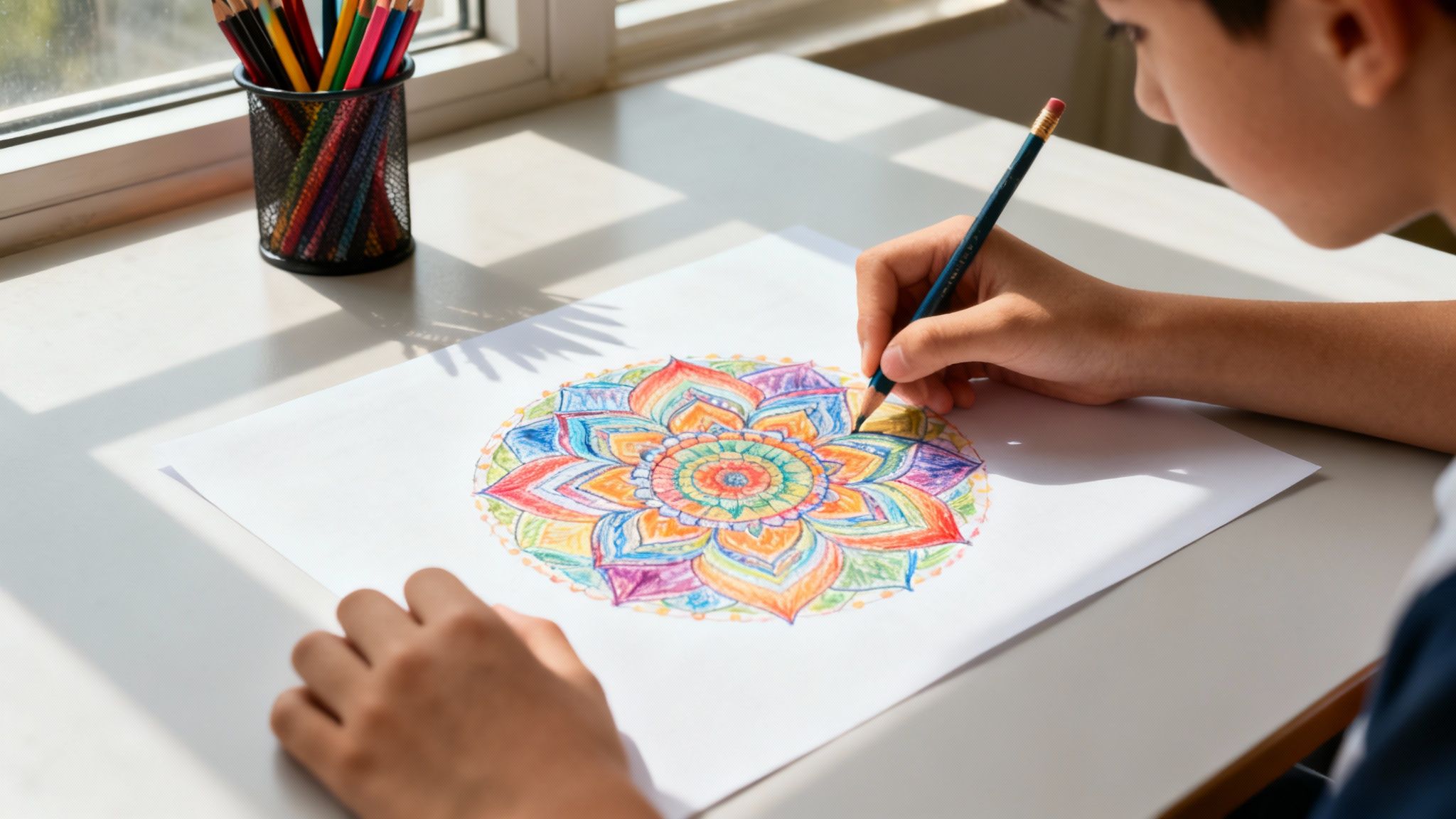
Mindful art merges creative activities with present-moment awareness, inviting students to draw, paint, or sculpt while focusing on the sensory experience of creation. This practice channels the natural calming effects of art-making into a powerful mindfulness exercise. It is especially effective for students who thrive with non-verbal processing or prefer more hands-on, active forms of focus. The goal is not the final product, but the process of noticing colors, textures, and movements.
This approach gives students a tangible way to express internal states they might struggle to verbalize. By engaging their senses in a creative flow, they learn to anchor their attention in the now, reducing anxiety and fostering self-expression. It’s a wonderful mindfulness exercise for students who find traditional meditation challenging, transforming a simple art project into a moment of profound self-connection and calm.
How to Guide Mindful Art
- Set the Intention: Begin by explaining that the goal is to enjoy the process of creating, not to make a perfect picture. The focus is on noticing.
- Engage the Senses: Ask students to choose a material, like a colored pencil or a piece of clay. Guide them to notice its color, weight, texture, and even its smell.
- Use Mindful Prompts: Encourage awareness during the activity. Ask, “What does it feel like when the crayon presses against the paper?” or “Notice the coolness of the clay in your hands.”
- Embrace Non-Judgment: Remind students there are no “mistakes” in mindful art. Every mark or shape is simply part of the experience.
- Reflect on the Process: After a set time, invite students to share what they noticed. Ask, “What was it like to create without worrying about the final result?”
Classroom and Home Implementation
- Age Adaptations: For K-2 students, use simple activities like mindful coloring pages or finger painting. For older students, introduce more complex projects like creating nature mandalas outside, journaling with doodles, or using prompts like “draw what a feeling looks like.”
- When to Use It: Mindful art is a fantastic tool for de-escalating a stressed classroom, providing a quiet activity after a stimulating event, or as a creative brain break. At home, it’s a great way to wind down after school.
- Behavioral Outcomes: This practice nurtures creativity, emotional expression, and focus. A student who learns to channel frustration into a drawing is developing a healthy coping mechanism that supports emotional regulation and impulse control.
Practical Example: A student had a difficult morning at home and is withdrawn in class. The teacher provides a piece of paper and some pastels. “You don’t have to talk about it,” she says, “but maybe you could show me what your feeling looks like using these colors. Just focus on how the colors feel when you smudge them on the paper.” This gives the student a non-verbal outlet to process their emotion in a safe, contained way.
8. Mindful Eating: Cultivating Presence One Bite at a Time
Mindful eating transforms snack or mealtime into a sensory-focused practice of present-moment awareness. Students are guided to eat slowly and intentionally, using all their senses to notice the flavors, textures, aromas, colors, and even the sounds of their food. The goal is to build a conscious, curious, and appreciative relationship with eating, moving away from rushed or distracted consumption. This exercise teaches students to listen to their body’s hunger and fullness cues, fostering self-regulation and healthy habits.
By engaging fully with the experience of eating, this mindfulness exercise for students helps them connect with their bodies and the food that nourishes them. It’s a practical way to anchor their attention in the present, especially during busy parts of the day like lunch, and it can reduce stress associated with mealtimes. This practice also provides a natural entry point for conversations about nutrition, gratitude, and cultural food traditions.
How to Guide a Mindful Eating Exercise
- Select a Simple Food: Begin with a single, small item like a raisin, a slice of apple, or a small cracker to make the experience manageable.
- Engage the Senses: Guide students to explore the food before eating. Ask questions like: “What colors and shapes do you see?” “What does it feel like in your hand?” “What do you smell?”
- Eat Slowly and Intentionally: Instruct them to take one small bite and notice the initial taste and texture. Encourage them to chew slowly, paying attention to how the flavors change.
- Notice Body Signals: Ask students to check in with their bodies. “How does your stomach feel?” “Are you noticing signals of hunger or satisfaction?”
- Express Gratitude: Conclude by thinking about where the food came from: the sun, the soil, the farmers, and the people who prepared it. This builds a sense of connection and gratitude.
Classroom and Home Implementation
- Age Adaptations: For K-2 students, focus on the sensory fun using colorful fruits. You can ask, “Does the strawberry sound crunchy or quiet when you bite it?” For middle schoolers, connect the practice to health, discussing how mindful eating helps them recognize fullness and make choices that fuel their bodies for sports or studying.
- When to Use It: Use it to start a nutrition lesson, as a calming transition before or after lunch, or during a classroom celebration. At home, families can practice with the first bite of dinner to set a calm and connected tone for the meal.
- Behavioral Outcomes: This exercise directly supports self-awareness and responsible decision-making. A student who practices mindful eating is more likely to recognize their body’s needs, make healthier food choices, and regulate the impulse to eat out of boredom or stress.
Practical Example: During snack time, a teacher gives each student three small pretzel sticks. “Today, we’re going to be ‘food explorers.’ First, let’s just look at our pretzel. What does it look like? Now, break one in half. What sound did it make? Let’s take one tiny bite and see if we can chew it ten times before swallowing.” This simple activity turns a routine snack into a focused, sensory experience.
9. Mindful Movement and Yoga: Connecting Body and Breath
Mindful movement combines physical activity with focused breath awareness, making it an ideal practice for students who find it challenging to sit still. This somatic approach, often using simplified yoga poses or gentle stretches, helps students channel their energy productively while developing a stronger mind-body connection. The exercise is not about perfect poses but about noticing how the body feels as it moves, making it a powerful tool for nervous system regulation.
By engaging in these embodied mindfulness exercises for students, they learn to release physical tension and calm racing thoughts. It provides a tangible way to process emotions, improve focus, and enhance physical well-being. This practice is especially effective for kinesthetic learners, offering them an accessible entry point into mindfulness.
How to Guide Mindful Movement
- Create Space: Ensure students have enough room to stretch their arms and legs without bumping into others.
- Start with Breath: Begin by guiding students to notice their breath, linking it to a simple movement like raising arms on an inhale and lowering them on an exhale.
- Introduce Simple Poses: Guide them through a few accessible poses like Mountain Pose (standing tall), Cat-Cow (arching and rounding the back on all fours), or Tree Pose (balancing on one leg).
- Use Accessible Language: Use simple, inviting cues like, “Reach for the sky like a tall tree,” or “Arch your back like a happy cat.” Avoid complex Sanskrit terms unless it’s part of a specific lesson.
- Focus on Sensation: Encourage students to notice the feelings in their muscles as they stretch. Ask, “Where do you feel the stretch in your body?” to guide their awareness inward.
Classroom and Home Implementation
- Age Adaptations: For K-2 students, use animal poses and storytelling (e.g., “let’s be a stretching cat”). For middle schoolers, introduce flowing sequences and partner poses to build connection and focus. A 5-minute yoga sequence can be a great brain break.
- When to Use It: Use mindful movement to energize students in the morning, reset focus after lunch, or as a calming transition before quiet work. At home, it’s a great way to break up homework sessions or wind down before bed.
- Behavioral Outcomes: This practice directly supports self-regulation and body awareness. A student who learns to use stretching to release frustration is better equipped to manage their energy and emotions in a positive way, reducing disruptive behavior.
Practical Example: After a long period of seated work, a teacher announces a “stretch break.” She leads the class in a “Mountain Pose,” having them stand tall and feel their feet on the ground. Then they do a “Volcano Breath,” reaching their arms up high as they inhale and letting them fall to their sides with an audible “haaaa” sound as they exhale. This 60-second activity releases pent-up energy and refocuses the class.
10. Mindfulness Bells, Pause Practices, and Gratitude
This practice integrates brief, intentional pauses into the daily school routine, often signaled by a bell or chime. These moments are combined with gratitude reflections to normalize present-moment awareness and cultivate a positive school culture. The goal is to embed mindfulness into the fabric of the day, creating consistent habits that reset classroom energy and build a community of appreciation. This is one of the most effective mindfulness exercises for students as it builds school-wide consistency.
By making these pauses a predictable part of the schedule, schools help students develop automatic self-regulation skills. The practice shifts from a special activity to a natural, expected part of learning, which supports social-emotional growth. For more strategies on embedding these habits, you can explore further ideas about bringing mindfulness into the classroom.
How to Guide a Pause and Gratitude Practice
- Establish a Signal: Choose a specific, calming sound like a chime, a singing bowl, or a gentle bell. Train students to recognize this as the signal to pause.
- Model the Pause: When the bell rings, the teacher should immediately stop, take a visible deep breath, and become still. This provides a clear model for students to follow.
- Introduce a Brief Focus: Guide students with a simple prompt. It could be, “Notice one breath in and out,” or “Feel your feet on the floor.” Keep it under 30 seconds.
- Add a Gratitude Prompt: After the pause, pose a simple gratitude question. For example, “Silently think of one person who helped you today,” or “What is one small thing that made you smile?”
- Share (Optional): Invite one or two students to share their gratitude aloud or have them write it on a sticky note for a “Thankful Tree” display in the classroom.
Classroom and Home Implementation
- Age Adaptations: For K-2 students, the gratitude prompt can be very concrete, like “What is your favorite toy you played with today?” For middle schoolers, prompts can be more abstract, such as, “Think of a challenge you overcame this week and what you’re grateful for about that experience.”
- When to Use It: Use a mindfulness bell to start each class period, to signal a transition between subjects, or as a whole-school pause at a set time (e.g., 11:00 AM). At home, families can use this before dinner or as part of a bedtime routine.
- Behavioral Outcomes: This practice directly supports relationship skills and responsible decision-making. Regularly reflecting on gratitude builds empathy and positive peer connections, while the pause itself interrupts impulsive behavior and allows for a moment of thoughtful response.
Practical Example: A teacher rings a small chime to signal the end of group work and the transition to independent reading. As soon as the chime sounds, everyone in the room—including the teacher—freezes for one deep breath. Then, the teacher says, “Before we move on, quietly think of one helpful idea you heard from your group members.” This brief pause and reflection make the transition smoother and more purposeful.
10-Point Comparison: Mindfulness Exercises for Students
| Practice | Implementation complexity | Resource requirements | Expected outcomes | Ideal use cases | Key advantages |
|---|---|---|---|---|---|
| Body Scan Meditation | Low–Moderate (needs guided scripts, age adaptation) | Minimal (quiet space, script) | Increased body awareness, reduced tension, improved focus | Pre-tests, transitions, calm-down routines | Easy integration, no equipment, supports self-regulation |
| Mindful Breathing Exercises | Low (simple techniques, quick teaching) | None (portable) | Rapid nervous-system calming, improved attention | Acute stress, test anxiety, quick classroom breaks | Immediate effect, versatile, lifelong regulation skill |
| Mindful Walking | Low–Moderate (requires clear instructions & space) | Safe walking area (indoor/outdoor) | Enhanced sensory awareness, reduced restlessness, physical activity | Kinesthetic learners, transitions, outdoor lessons | Combines movement + mindfulness; good for high-energy students |
| Loving‑Kindness Meditation (Metta) | Moderate (facilitation, emotional readiness) | Minimal (quiet space, guided phrases) | Increased empathy, reduced aggression, stronger peer bonds | Restorative practices, anti-bullying programs, SEL lessons | Directly cultivates compassion; aids conflict resolution |
| Mindful Listening Circles | High (time, skilled facilitation, ground rules) | Time, trained facilitator, circle setup | Greater psychological safety, improved communication, belonging | Restorative circles, advisory, conflict resolution | Builds community voice and active listening skills |
| Sensory Grounding (5‑4‑3‑2‑1) | Low (easy to teach, repeatable) | None (optional grounding kits) | Immediate anxiety interruption, present-moment anchoring | Panic/anxiety moments, discreet classroom use, crisis support | Fast, structured, trauma-informed and portable |
| Mindful Art & Creative Expression | Moderate (materials, structured prompts) | Art supplies, workspace, time | Emotional expression, reduced stress, engagement | Art classes, counseling, students resistant to sitting still | Non‑verbal processing, tangible outcomes, inclusive to diverse learners |
| Mindful Eating | Low–Moderate (timing, accommodations needed) | Food items, controlled time/space | Improved interoception, healthier eating habits, gratitude | Lunch/snack times, nutrition lessons, garden programs | Integrates into daily routines; teaches body and food awareness |
| Mindful Movement & Yoga | Moderate–High (space, trained instructor recommended) | Mats optional, open space, trained staff | Better regulation, physical wellbeing, focus | PE, morning routines, high-energy classrooms, after-school programs | Embodied regulation, supports proprioception, adaptable with modifications |
| Mindfulness Bells, Pause Practices & Gratitude | Low (coordination and consistency required) | Bell/chime or scheduled prompts, staff buy‑in | Habit formation, reduced cumulative stress, positive culture | School‑wide routines, transitions, culture-building efforts | Brief, scalable, normalizes mindfulness across community |
Empowering Students with Tools for Life: Your Next Steps
We’ve explored a powerful collection of ten mindfulness exercises for students, each designed to plant a seed of awareness, calm, and self-compassion. From the grounding stillness of the Body Scan Meditation to the shared connection of Mindful Listening Circles, these practices are more than just activities. They are foundational life skills that equip young people to navigate the complexities of their inner and outer worlds with greater grace and resilience.
The journey from learning about these techniques to integrating them into a bustling classroom or a busy home can feel daunting. The key is to remember that the goal is not to achieve a state of perfect, silent tranquility. Instead, it is about creating consistent, small moments of intentional presence. It’s about showing students, through practice and modeling, that they have the power to pause, breathe, and choose their response.
Making Mindfulness Stick: The Path from Practice to Habit
The true impact of these mindfulness exercises for students is realized through consistency. A single mindful breathing session can soothe a student’s anxiety before a test, but a daily habit of mindful breathing can fundamentally change their relationship with stress itself. To transform these exercises from isolated interventions into ingrained habits, consider these practical starting points:
- Start Small and Build Momentum: Don’t try to implement all ten exercises at once. Choose one or two that resonate most with your students’ needs. Perhaps you start with a two-minute Mindful Breathing exercise every morning after the bell rings or introduce the 5-4-3-2-1 Sensory Grounding technique as a go-to tool during moments of high energy.
- Link to Existing Routines (Habit Stacking): Anchor a new mindfulness practice to an established part of the day. For example, practice Mindful Eating during the first five minutes of snack time or transition from recess with a brief Mindful Walking exercise back to the classroom. This “habit stacking” makes the new practice feel less like an interruption and more like a natural part of the daily flow.
- Model and Share Your Own Experience: Students are incredibly perceptive. When they see you, their teacher or parent, taking a deep breath when you feel overwhelmed, they learn that self-regulation is a tool for everyone. Be open and authentic. You might say, “I’m feeling a little scattered today, so I’m going to take three mindful breaths to recenter myself before we start our math lesson. Would anyone like to join me?” This vulnerability builds trust and normalizes the practice.
The Ripple Effect: Beyond Calm to Connection and Compassion
While the immediate benefits of mindfulness, like improved focus and reduced anxiety, are significant, the long-term impact is even more profound. These simple practices cultivate the core competencies of social-emotional learning (SEL).
A student who regularly practices Loving-Kindness Meditation is not just learning to be kind to others; they are wiring their brain for empathy and self-compassion, which are critical for building healthy relationships and navigating social challenges. Similarly, Mindful Listening Circles do more than teach active listening. They create a classroom culture where every voice is valued, fostering a sense of psychological safety and belonging that is essential for academic and personal growth.
The ultimate value of introducing mindfulness exercises for students is not just in creating calmer classrooms, but in nurturing more compassionate, self-aware, and resilient human beings. You are giving them a toolkit they can carry with them long after they leave your classroom, empowering them to face life’s challenges with a steady mind and an open heart.
This journey is a marathon, not a sprint. There will be days when a guided meditation is met with giggles, and days when students are too restless for a Body Scan. That is all part of the process. Meet your students where they are, celebrate small victories, and trust that with every mindful breath and every moment of shared presence, you are making a lasting and meaningful difference.
Ready to build a comprehensive, campus-wide culture of connection and emotional intelligence? Soul Shoppe provides the tools, training, and experiential programs that bring these mindfulness principles to life, creating safer and more connected learning environments for every child. Explore our Soul Shoppe programs to see how we can partner with your school community.