

10 Transformative Classroom Community Building Activities for 2025
In today’s educational landscape, academic achievement is deeply intertwined with emotional well-being. A strong classroom community isn’t just a ‘nice-to-have’; it’s the foundation upon which resilient, engaged, and successful learners are built. When students feel seen, safe, and connected, they are better equipped to take academic risks, collaborate effectively, and navigate social challenges with confidence.
This article moves beyond generic advice to provide a curated roundup of 10 powerful, research-aligned classroom community building activities. Each entry is designed for practical implementation, offering step-by-step guidance, adaptations for different grade levels (K-8), and specific examples that both teachers and parents can use to foster a thriving, supportive learning environment. For instance, you’ll find structured check-in prompts for a first-grade classroom and complex restorative circle scripts suitable for middle schoolers.
Creating this supportive atmosphere is a critical component of a well-managed learning space. Before diving into specific activities, it’s helpful to establish a baseline of respect and order. You can explore powerful classroom management strategies that transform your space into a vibrant community where every student feels seen and empowered.
Drawing from over 20 years of experience at Soul Shoppe, we know that these strategies are essential for cultivating the connection, safety, and empathy every child needs to thrive. This guide provides actionable steps to intentionally build a classroom where every student feels they belong, setting the stage for deeper learning and social-emotional growth. Let’s explore the activities that will make this a reality in your classroom.
1. Circle Time/Talking Circles
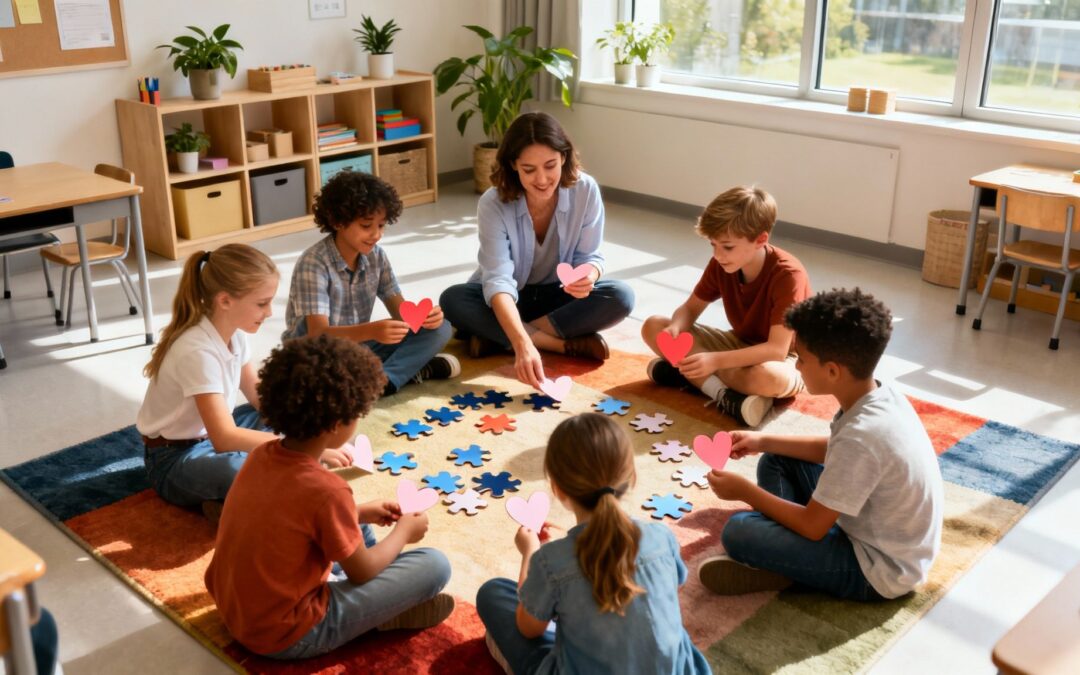
Circle Time, often called Talking Circles, is a foundational practice for fostering psychological safety and a strong sense of belonging in the classroom. This structured activity involves students gathering in a circle to share thoughts, feelings, and experiences. By giving every student an equal opportunity to speak and be heard without interruption, it reinforces that each voice has value. This practice is rooted in indigenous traditions and is a cornerstone of early childhood education and restorative justice models.
Practical Implementation and Examples
The power of Circle Time lies in its consistency and structure. For example, a first-grade teacher might start each morning by asking students to share “one happy or one crummy” thing from their evening. A middle school advisory could use a weekly circle with a prompt like, “Share a time this week you felt proud of your effort.” These routines create a predictable space for sharing.
Actionable Tips for Success
To make circles effective, focus on creating a safe and predictable environment.
- Establish Clear Agreements: Work with students to co-create community agreements before each circle to reinforce expectations like respectful listening and confidentiality.
- Use a Talking Piece: Introduce a special object (a smooth stone, a small toy, or a decorated stick) as a “talking piece.” Only the person holding the object may speak. This simple tool prevents interruptions and encourages mindful participation.
- Start Small: Begin with brief circles (10-15 minutes) and low-pressure prompts. As students become more comfortable, you can gradually extend the time and introduce more reflective or emotional topics.
- Model Vulnerability: As the facilitator, your participation is crucial. Share your own appropriate thoughts and feelings to model the type of open, honest communication you want to cultivate.
Key Insight: The physical act of sitting in a circle, with no front or back, is a powerful nonverbal cue that dismantles traditional classroom hierarchies and positions everyone as an equal member of the community.
Circles are one of the most versatile classroom community building activities because they can be adapted for any grade level and serve multiple purposes, from daily check-ins to resolving conflicts. This approach directly aligns with Soul Shoppe’s core belief that connection and emotional safety are prerequisites for academic and social success. By creating a predictable and safe space for sharing, you lay the groundwork for a truly empathetic and supportive classroom culture.
2. Peer Buddy Systems and Mentorship Programs
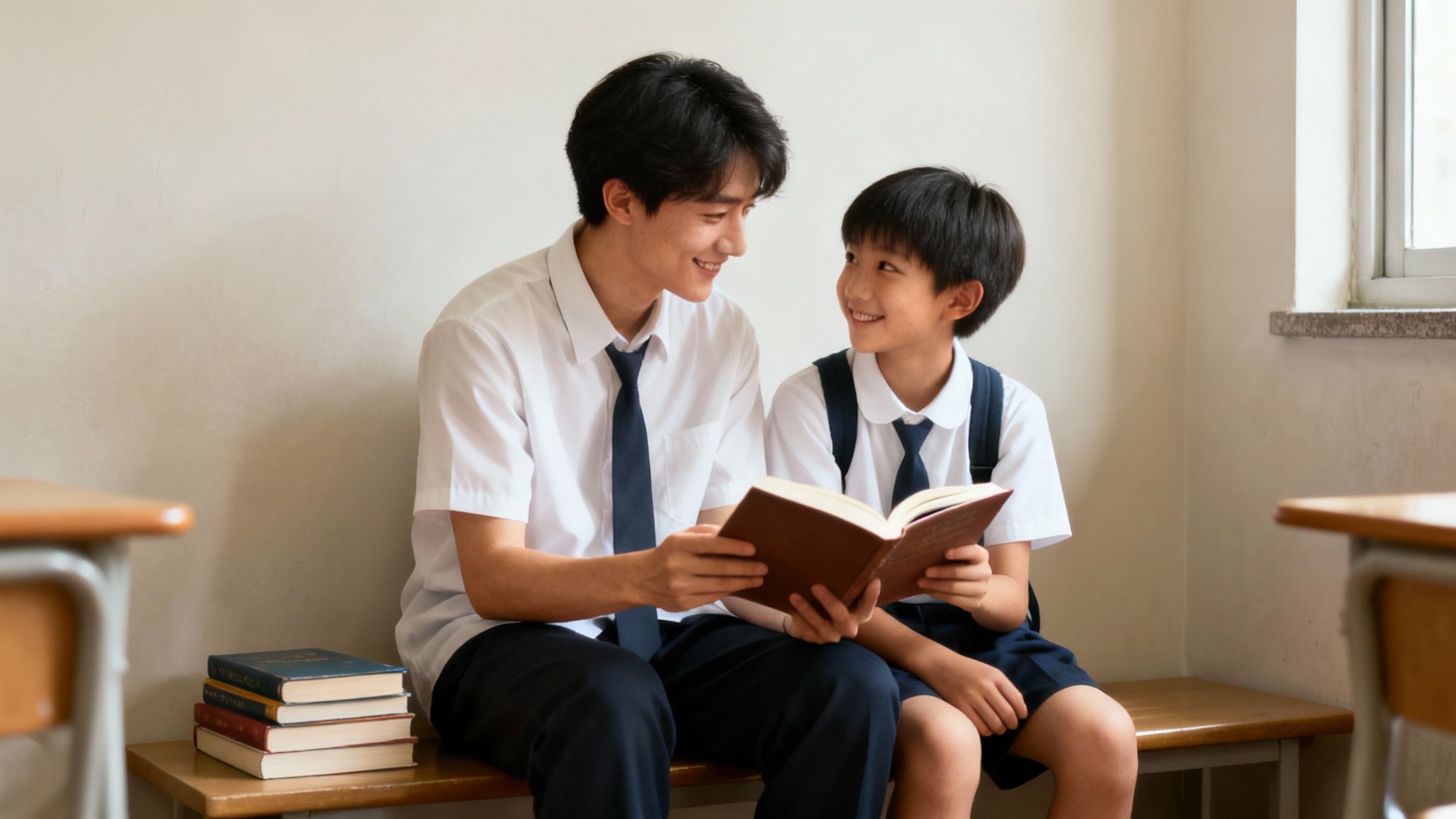
Peer Buddy Systems and Mentorship Programs are structured partnerships that pair students for mutual academic, social, and emotional support. These programs deliberately create one-on-one connections, often matching older students with younger ones, to foster a culture of care and responsibility. By building these direct links, schools can reduce feelings of isolation, enhance empathy, and empower students to become leaders. This approach is rooted in models like Big Brothers Big Sisters and has become a powerful tool in modern anti-bullying and social-emotional learning initiatives.
Practical Implementation and Examples
This strategy thrives on intentional structure. A common example is pairing fifth graders with kindergarteners for a weekly “Reading Buddies” session, where the older student helps the younger one with literacy skills while building a positive relationship. Another powerful application is in middle school, where eighth-grade mentors can support sixth graders navigating the difficult transition, offering guidance and a friendly face in the hallway. For instance, mentors could help new students learn how to open their lockers or find their way to different classrooms during the first week of school.
Actionable Tips for Success
To ensure these partnerships are meaningful and effective, careful planning is essential. A well-designed program goes beyond simply matching names on a list.
- Use Matching Surveys: Create simple surveys to pair students based on shared interests, hobbies, or even identified social needs. This intentional matching increases the likelihood of a genuine connection.
- Provide Structure and Prompts: Don’t leave interactions to chance. Offer structured activities like shared reading, a specific craft, or conversation starter cards to guide their time together, especially in the beginning.
- Train Your Mentors: Explicitly teach older students essential skills like active listening, asking open-ended questions, and how to offer encouragement. This training transforms them from just a “buddy” into a true mentor.
- Schedule Regular Check-ins: Meet with mentors as a group to troubleshoot challenges and share successes. Check in with younger buddies to ensure they feel safe and supported in the partnership.
Key Insight: Peer mentorship transforms the school environment from a collection of individual classrooms into an interconnected ecosystem where students are actively responsible for one another’s well-being and success.
These types of classroom community building activities are invaluable for creating a protective and inclusive school climate. They give older students a profound sense of purpose and provide younger students with a trusted ally, directly addressing the need for belonging that is central to Soul Shoppe’s mission. By empowering students to support each other, you build a community that is resilient, empathetic, and truly student-led.
3. Collaborative Learning Projects and Cooperative Learning Structures
Collaborative Learning Projects and Cooperative Learning Structures embed community building directly into academic instruction. Instead of treating social skills and coursework as separate, this approach intentionally designs tasks where students must work together toward a shared goal. By making students mutually dependent on one another for success, these activities teach vital communication, problem-solving, and conflict resolution skills in an authentic context. This method transforms academic work into a powerful vehicle for building interdependence and mutual respect.
For example, a science investigation can assign designated roles like “Materials Manager,” “Recorder,” and “Speaker,” ensuring each student has a crucial part to play. Similarly, literature circles give students specific jobs like “Discussion Director” or “Word Wizard,” fostering student-led discussions that build strong communication habits. For a history project, one student might be the “Researcher,” another the “Map Maker,” and a third the “Presenter,” making each person’s contribution essential to the final grade.
How to Implement Collaborative Learning Effectively:
- Explicitly Teach Collaboration Skills: Before starting a project, hold mini-lessons on skills like active listening, giving constructive feedback, and reaching a consensus. Don’t assume students know how to collaborate effectively.
- Use Role Cards: Provide groups with cards that clearly define each member’s responsibilities. This clarifies expectations, prevents one or two students from dominating the work, and ensures everyone contributes.
- Vary Groupings Intentionally: Mix up student groups regularly. This prevents cliques from forming and gives every student a chance to work with and learn from all of their peers, building relationships across the entire classroom.
- Incorporate Group Reflection: After a project, guide students to reflect on their process. Ask questions like, “What was one challenge our group faced, and how did we handle it?” or “How well did we listen to everyone’s ideas?” This metacognitive step is crucial for growth.
Key Insight: Structuring academic tasks for interdependence shifts the classroom dynamic from individual competition to collective achievement. Students learn that their personal success is directly linked to the success of their peers, fostering a powerful sense of “we.”
Integrating these projects is one of the most effective classroom community building activities because it shows students the value of community in a tangible, academic context. This approach aligns with Soul Shoppe’s philosophy of teaching practical relationship tools, turning every lesson into an opportunity to build a more resilient and supportive classroom culture where students learn to rely on and respect one another.
4. Gratitude and Appreciation Practices
Integrating Gratitude and Appreciation Practices into the daily classroom routine is a powerful strategy for building a positive, supportive, and empathetic community. This approach involves creating intentional opportunities for students to recognize and express thankfulness for their peers, teachers, and school environment. By consistently shifting the focus toward strengths and positive contributions, these practices actively reduce conflict, foster a sense of being seen and valued, and reinforce the core principles of psychological safety and connection.
How to Implement Gratitude Practices
Successful implementation relies on making appreciation a regular and authentic habit rather than a one-time event. You can embed these moments throughout the school day in various engaging ways. For example, start a “Gratitude Jar” where students can write anonymous notes of thanks to classmates, which are read aloud at the end of the week. Another popular method is dedicating a few minutes during morning meetings for “Appreciation Shout-Outs,” where students can publicly acknowledge a kind act or helpful behavior from a peer.
For a more tangible approach, teachers can provide students with opportunities to create and share messages of appreciation, such as personalized notes or customizable thank you cards for special occasions. These small but meaningful gestures help solidify the habit of showing gratitude.
Tips for Effective Facilitation
- Model Specificity: Go beyond generic praise. Instead of saying, “Thanks for being a good friend,” model specific appreciation like, “I want to thank Maya for helping me pick up my crayons when I dropped them. It made me feel supported.”
- Teach the ‘Why’: Explain to students how receiving specific appreciation makes someone feel. Connect their kind actions to the positive impact they have on others to build empathy.
- Ensure Equity: Use a system, like drawing names from a jar or having a student of the day, to ensure that every child, especially quieter ones, regularly receives recognition from their peers.
- Create a Visual Focus: Designate a “Gratitude Wall” or a bulletin board where students can post thank-you notes. This creates a powerful and constant visual reminder of the community’s positive interactions.
Key Insight: A culture of appreciation changes the classroom’s default setting from identifying problems to recognizing strengths. This shift empowers students to see the good in one another, which is a foundational skill for resolving conflicts and building lasting friendships.
Gratitude and Appreciation Practices are some of the most impactful classroom community building activities because they require minimal resources but yield significant emotional returns. These exercises directly support Soul Shoppe’s mission by teaching students to actively look for and acknowledge the best in each other, creating a classroom where everyone feels a deep sense of belonging. Learn more about gratitude activities for kids and how they can transform your classroom environment.
5. Restorative Practices and Peace Circles
Restorative Practices and Peace Circles offer a powerful framework for addressing harm, resolving conflict, and strengthening relationships within the classroom. Moving beyond traditional punitive discipline, this approach brings together those affected by an incident to collaboratively understand its impact, repair the harm done, and rebuild community trust. It is a proactive and responsive strategy that empowers students to take accountability and learn from their mistakes in a supportive environment.
How to Implement Restorative Practices
Successfully integrating restorative practices requires a foundational shift in how conflict is viewed, not as a disruption to be punished but as an opportunity for learning and connection. This approach aligns directly with Soul Shoppe’s mission to equip students with essential conflict resolution tools.
- Build the Foundation First: Start with proactive community-building circles (like the Talking Circles mentioned earlier) to establish trust and shared norms. This makes it easier to use circles for responsive situations when conflict arises.
- Use Restorative Language: Consistently use restorative questions throughout the day. Instead of “Why did you do that?”, ask “What happened?” and “Who has been affected by what you did?” This shifts the focus from blame to impact.
- Facilitate, Don’t Judge: In a responsive peace circle, the teacher’s role is to facilitate dialogue, not to impose a solution. Guide students through a structured conversation to understand each other’s perspectives and collectively decide on a path forward. For example, after a dispute over a game at recess, a circle could help students express their feelings and co-create new rules for the game that everyone agrees on.
- Invest in Training: Effective facilitation is a skill. Seek out comprehensive training in restorative principles to ensure you can hold a safe and productive space for students, especially when discussing sensitive incidents.
Key Insight: Restorative practices are not just for when things go wrong; they are most effective when woven into the daily fabric of the classroom to proactively build empathy, accountability, and mutual respect.
As one of the most transformative classroom community building activities, restorative circles teach invaluable life skills. They provide a structured process for repairing relationships and fostering a culture where every member feels seen, heard, and responsible for the well-being of the group. Explore these conflict resolution strategies for students to further support this work.
6. Mindfulness and Self-Regulation Practices
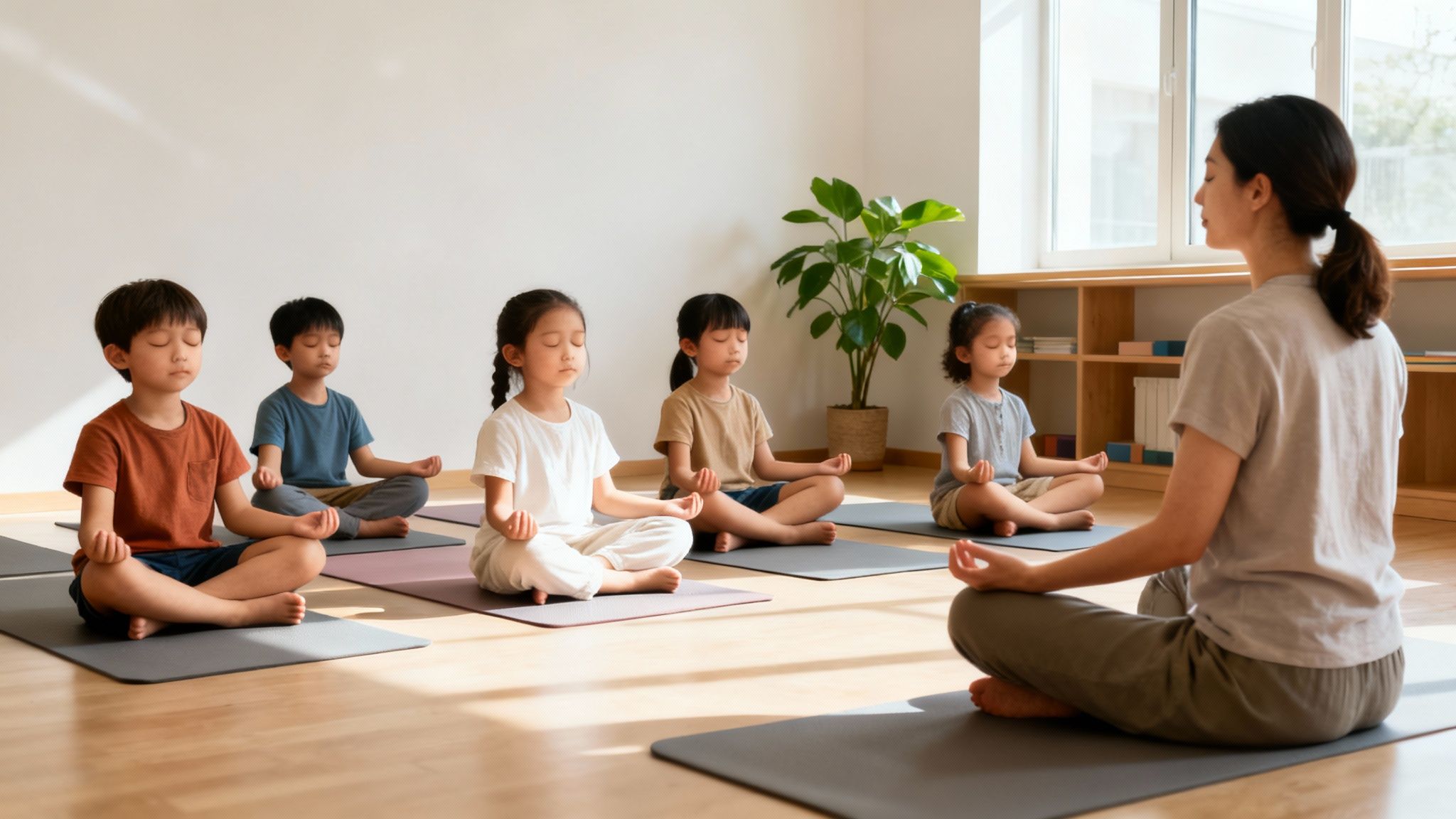
Mindfulness and Self-Regulation Practices are structured activities that teach students to become aware of their thoughts, emotions, and bodily sensations without judgment. Integrating these practices into the daily routine helps students develop crucial self-regulation skills, emotional resilience, and the ability to focus. By creating moments of intentional calm, you build the psychological safety necessary for learning and connection, which are core competencies Soul Shoppe teaches to help kids and adults thrive.
How to Implement It:
These practices are not about emptying the mind but about paying attention to the present moment. Effective implementation involves making these exercises a predictable and supportive part of the classroom culture rather than a reactive tool used only during moments of chaos.
For example, a teacher might start each day with a “Mindful Minute,” guiding students to notice the feeling of their feet on the floor and the air entering and leaving their lungs. Another powerful practice is using a “Body Scan” after recess, asking students to mentally scan from their toes to their head, noticing and releasing any physical tension they are holding. These brief, consistent activities help students build their “attention muscle” over time.
Practical Tips for Success:
To make mindfulness accessible and effective, it’s important to introduce it in a way that feels safe and engaging for all students. The goal is progress, not perfection.
- Start Small: Begin with very short practices, just 2-3 minutes long, and gradually extend the duration as students become more comfortable. This prevents overwhelm and builds confidence.
- Frame it as ‘Brain Training’: For older students, use sports or fitness metaphors. Explain that mindfulness is like a workout for the brain, helping them strengthen their focus and manage stress.
- Offer Multiple Modalities: Recognize that students have different needs. Offer options like mindful breathing, mindful walking, or mindful listening to sounds in the room.
- Practice with Them: Your authentic participation is key. When you practice mindfulness alongside your students, you model its importance and create a shared experience of calm.
Key Insight: Teaching students to notice their internal state is a profound act of empowerment. It gives them the tools to respond to challenges thoughtfully instead of reacting impulsively, which is a cornerstone of a safe and respectful community.
Mindfulness is one of the most impactful classroom community building activities because it equips each student with the internal resources to manage stress and engage with others from a place of centeredness. When individuals feel more in control of their emotions, the entire community benefits from a more peaceful and productive learning environment. Dive deeper into the benefits of mindfulness in the classroom and discover more strategies.
7. Identity and Belonging Activities (All About Me Projects, Identity Exploration)
Identity and Belonging Activities are structured exercises where students explore and share their unique backgrounds, cultures, interests, and values. These practices help students feel seen, understood, and valued for who they are, which directly fosters a sense of belonging. By celebrating the diverse identities within the room, these activities build empathy, reduce stereotypes, and create a classroom where every student’s story matters. This approach acknowledges the whole child, a core component of creating the safe and connected learning environments that Soul Shoppe champions.
How to Implement This in Your Classroom
Activities that center student identity can be woven into the curriculum throughout the year. For instance, an “Identity Web” activity allows students to map different aspects of their identity, such as family roles (“oldest sister”), cultural heritage (“Mexican-American”), hobbies (“soccer player”), and personal strengths (“good at math”). Another powerful practice is creating “All About Me” books or posters that students share during a morning meeting, giving them a platform to be the expert on their own life. These projects validate individual experiences and build bridges of understanding between classmates.
Tips for Success
- Establish Safety and Respect: Before any sharing, co-create agreements about respectful listening and asking thoughtful questions. This ensures the classroom is a safe space for vulnerability.
- Provide Structure and Choice: Offer structured templates or prompts (e.g., “My favorite family tradition is…”) to guide students, but also allow for creative expression through art, writing, or technology. This reduces pressure and empowers student voice.
- Model First: As the teacher, share your own identity web or “All About Me” project first. Your authenticity and willingness to be open will set a positive and trusting tone for the entire class.
- Display Student Identities: Make student identities a visible and celebrated part of the classroom environment. Proudly display their posters, webs, and cultural artifacts to reinforce that every student belongs.
Key Insight: When students see their own identities and cultures reflected and respected in the classroom, they develop a stronger sense of ownership and belonging. This validation is a critical prerequisite for both social and academic engagement.
Identity exploration is one of the most impactful classroom community building activities for developing a truly inclusive culture. It moves beyond surface-level introductions to foster genuine connections rooted in mutual respect and appreciation for diversity. By making space for students to share their stories, you affirm their worth and build a cohesive community where every member feels they truly fit in.
8. Community Service and Cooperative Problem-Solving Projects
Community Service and Cooperative Problem-Solving Projects shift the focus of community building from internal classroom dynamics to external, shared goals. This approach involves students working together to address authentic challenges within their classroom, school, or local community. By uniting around a common purpose, students develop a profound sense of agency, empathy, and interconnectedness. They learn that their collective actions can create meaningful, positive change, reinforcing the idea that they are a capable and impactful team. This method is a cornerstone of service learning and project-based learning frameworks.
How to Implement This Activity
The power of this activity lies in student ownership. Begin by facilitating a discussion to identify genuine needs or problems that students care about. This could be anything from a messy classroom library to a lack of recycling bins in the cafeteria or the need for a “buddy bench” on the playground. Once a project is chosen, guide students through planning, collaboration, execution, and reflection. For example, a classroom garden project requires students to research plants, design the layout, delegate watering duties, and decide how to share the harvest. A school-wide kindness campaign might involve students creating posters, writing announcements, and tracking acts of kindness.
Practical Tips for Success
- Start Small and Local: Begin with a manageable, classroom-level project, like organizing supplies or creating a welcoming bulletin board for a new student. Success here builds the confidence and skills needed for larger, school-wide initiatives.
- Give Students a Voice: Involve students in every step, from identifying the problem to brainstorming solutions. When they feel a sense of ownership, their engagement and commitment skyrocket.
- Break It Down: Deconstruct large projects into smaller, achievable milestones with clear roles. This prevents students from feeling overwhelmed and helps maintain momentum.
- Focus on Reflection: Regularly schedule time for students to reflect on their progress, challenges, and the collaborative skills they are using. Ask questions like, “What was one way our team worked well together today?”
Key Insight: When students collaborate to serve a purpose greater than themselves, they build community not just by talking about values like kindness and responsibility, but by actively practicing them in a real-world context.
These collaborative efforts are among the most powerful classroom community building activities because they transform students from passive recipients of instruction into active citizens. This directly supports Soul Shoppe’s vision of empowering students to support their peers and work together to create a better environment for everyone. By solving real problems, students forge strong bonds built on shared accomplishment and mutual respect.
9. Structured Social-Emotional Check-ins and Mood Tracking
Structured Social-Emotional Check-ins are brief, consistent routines where students identify and share their emotional state. This practice normalizes emotional expression, builds self-awareness, and provides teachers with valuable insight into their students’ well-being. By creating a predictable and safe way for students to report how they feel, these check-ins signal that emotions are a valid and important part of the classroom experience, which is a key component of building a supportive community.
This method can be implemented in various ways. For instance, a teacher might have a “mood meter” chart near the classroom entrance with different color zones representing emotions (e.g., blue for sad/tired, green for calm/ready to learn, yellow for excited/silly, red for angry/upset), where students place a clothespin with their name on the color that matches their feeling. Other options include brief journal prompts like, “What’s one feeling you’re bringing to school today?” or using a simple digital form with emojis for students to fill out during morning homeroom.
Tips for Effective Implementation
To make these check-ins a successful part of your routine, consider these strategies:
- Keep it Quick and Consistent: To ensure sustainability, keep the check-in process under five minutes. Making it a predictable part of the daily schedule, like right after the morning bell, helps it become a habit.
- Offer Privacy: While group sharing can be powerful, always provide a private or anonymous option for students to indicate they are struggling. This could be a private form, a sticky note placed in a designated “I need a check-in” box, or a specific hand signal.
- Act on the Data: The information gathered is only useful if it’s acted upon. When a student consistently reports feeling sad or angry, follow up with a quiet, private conversation to offer support. This shows students you are listening and that their feelings matter.
- Use a Simple Scale: Use a clear and easy-to-understand scale that is developmentally appropriate. For younger students, colors or simple emojis work well. Older students might use a 1-5 number scale or a more nuanced set of feeling words. For more detailed strategies, you can explore how to boost student confidence with mood meters and reflection tools.
Key Insight: Daily emotional check-ins transform the abstract concept of “emotional awareness” into a concrete, daily practice. This routine gives students the language and permission to understand their inner world and communicates to them that the teacher is a safe and available resource for support.
As one of the most direct classroom community building activities, emotional check-ins create a climate of care and responsiveness. This practice directly aligns with Soul Shoppe’s mission to equip students with the tools for emotional intelligence, creating a foundation where every child feels seen, heard, and ready to learn. By integrating this simple yet powerful habit, you build a more empathetic and connected classroom.
10. Interactive Games, Energizers, and Team-Building Activities
Interactive games and energizers are structured, play-based activities that harness the power of fun and movement to build trust, communication, and positive peer relationships. These activities intentionally break down social barriers and create shared positive experiences, transforming the classroom dynamic from a group of individuals into a collaborative team. By engaging students in low-pressure, high-energy challenges, you can foster teamwork and energize the room during transitions or lulls in the day. This aligns directly with Soul Shoppe’s experiential, play-based approach to building connection.
How to Implement This Strategy
These activities are highly adaptable and can be used as quick brain breaks, dedicated team-building lessons, or to kickstart a day. For example, a game of “Silent Sequencing” where students must line up in order of their birthdays without speaking teaches nonverbal communication and problem-solving. A quick round of “Four Corners” can re-energize students after a long lesson while also serving as an informal poll or opinion gauge (e.g., “Go to the corner that represents your favorite season”).
Tips for Success
- Explain the “Why”: Before starting a game, briefly explain its purpose. After the activity, lead a short debrief to discuss what students learned about communication, trust, or teamwork. This reflection turns fun into meaningful SEL learning.
- Scaffold Trust Gradually: Begin with low-risk activities that don’t require physical contact or high levels of vulnerability. As students build comfort and rapport, you can introduce more complex challenges like a carefully supervised and scaffolded trust walk.
- Prioritize Safety and Choice: Establish clear rules and boundaries to ensure physical and emotional safety. Always provide an “opt-out” option where students can choose to observe or take on a different role, like timekeeper, without judgment.
- Observe and Intervene: Pay close attention to group dynamics. Use these games as an opportunity to observe social interactions, and be prepared to gently address any signs of exclusion or discomfort to reinforce a culture of inclusivity.
Key Insight: Structured play provides a unique context where students can practice essential social skills like negotiation, cooperation, and empathy in a low-stakes environment. The fun of the game makes the learning feel effortless and memorable.
Using classroom community building activities like these energizers and games is a powerful way to inject joy and movement into your routine. They provide a valuable medium for students to connect with their peers on a different level, strengthening the social fabric of the classroom one game at a time.
Classroom Community Activities: 10-Point Comparison
| Practice | Implementation complexity | Resource needs | Expected outcomes | Ideal use cases | Key advantages |
|---|---|---|---|---|---|
| Circle Time / Talking Circles | Low–Moderate — requires facilitation skill | Minimal: time, talking piece, facilitator training | Increased belonging, active listening, normalized emotional expression | Daily routines, morning meetings, advisory periods (K-8) | Equal voice, predictable ritual, builds psychological safety |
| Peer Buddy Systems & Mentorship Programs | Moderate–High — matching and oversight required | Coordinator time, mentor training, scheduling | One-on-one support, leadership growth, reduced isolation | Transition periods, bullying prevention, reading buddies | Sustained individualized support; leadership development |
| Collaborative Learning Projects & Cooperative Structures | Moderate — needs explicit instruction and role design | Lesson planning time, materials, teacher facilitation | SEL embedded in academics, teamwork, problem-solving | Project-based units, labs, literature circles | Integrates academic goals with real collaboration practice |
| Gratitude & Appreciation Practices | Low — simple routines to implement | Minimal: brief time, boards or note materials | Positive classroom culture, recognition, reduced conflict | Morning meetings, weekly routines, appreciation boards | Shifts focus to strengths, boosts belonging and wellbeing |
| Restorative Practices & Peace Circles | High — requires training and cultural change | Trained facilitators, time for circles, follow-up systems | Repair of harm, accountability, fewer exclusionary responses | Post-conflict resolution, school discipline reform, community healing | Addresses root causes, restores relationships and trust |
| Mindfulness & Self-Regulation Practices | Low–Moderate — needs consistency and modeling | Minimal: short practice scripts, recordings, training | Improved regulation, reduced anxiety, better focus | Transitions, test prep, calming routines | Practical stress-management tools, scalable brief practices |
| Identity & Belonging Activities | Moderate — sensitive facilitation needed | Time, creative materials, inclusive planning | Stronger belonging, validated identities, increased empathy | Start of year, diversity units, community-building events | Validates diversity, deepens mutual understanding |
| Community Service & Cooperative Problem-Solving | Moderate–High — coordination and sustained commitment | Planning time, community partners, materials | Agency, collective efficacy, real-world impact | Service learning, school-wide campaigns, long-term projects | Authentic purpose, builds agency, teamwork, resilience |
| Structured Social-Emotional Check-ins & Mood Tracking | Low–Moderate — brief routine plus data follow-up | Simple tools/apps or visuals, teacher follow-up time | Early identification of needs, emotional awareness, data-informed supports | Daily routines, wellbeing monitoring, counselor referral systems | Quick signal for support, informs targeted interventions |
| Interactive Games, Energizers & Team-Building | Low–Moderate — planning and safety protocols | Minimal props/space, clear rules, facilitator guidance | Increased trust, engagement, improved communication | Transitions, team-building days, energizers between lessons | Fun engagement, lowers barriers, supports kinesthetic learners |
Putting It All Together: Your Next Steps for Community Building
We’ve explored a comprehensive toolkit of ten powerful strategies, from the foundational practice of Talking Circles to the dynamic energy of collaborative projects. Each of these classroom community building activities serves as a vital thread in weaving a tapestry of connection, respect, and belonging. The true impact, however, lies not in completing a single activity, but in the consistent, intentional integration of these practices into the daily rhythm of your school environment.
This is not a checklist to be completed by the end of September. It is a continuous journey of listening, adapting, and co-creating a space where every individual feels seen, valued, and safe. The goal is to move beyond mere classroom management and into the realm of genuine community cultivation.
Key Takeaways for Lasting Impact
As you move forward, keep these core principles at the forefront of your planning and practice:
- Consistency Over Intensity: A brief, daily Social-Emotional Check-in will build more trust and psychological safety over time than a single, elaborate team-building day. The routine nature of these interactions signals to students that their emotional well-being is a constant priority.
- Student Agency is Paramount: The most vibrant communities are not built for students, but with them. Involve students in establishing norms for Restorative Circles, let them lead Gratitude and Appreciation Practices, and empower them to choose Community Service Projects that resonate with their passions.
- Modeling is Your Most Powerful Tool: Your own vulnerability, empathy, and willingness to participate authentically in these activities set the tone for the entire community. When you share a personal story in a Talking Circle or model how to give specific, meaningful appreciation, you grant students permission to do the same.
Your Actionable Next Steps
Feeling inspired but not sure where to begin? Don’t try to implement everything at once. Sustainable change starts with small, deliberate steps.
- Assess Your Current Needs: Take a moment to reflect on your specific classroom or school environment. Is there a need for more proactive conflict resolution? Perhaps students would benefit from enhanced self-regulation skills. Use this assessment to choose one or two activities from our list that directly address your most pressing needs. For example, if you notice frequent minor conflicts during recess, introducing Restorative Practices might be your most impactful starting point.
- Schedule It In: The adage “what gets scheduled gets done” is especially true for community building. Block out 10-15 minutes on your daily or weekly calendar specifically for these practices. Treat this time as non-negotiable, just like you would for core academic subjects. A consistent “Mindful Monday” or “Feedback Friday” can quickly become a cherished and grounding routine for students.
- Gather Feedback and Iterate: After trying an activity for a few weeks, check in with your students. Ask them directly: What did you enjoy about our Peer Buddy system? How could we make our Collaborative Learning Projects more effective? Use their insights to adapt and refine your approach, reinforcing the message that their voice and experience matter.
Ultimately, investing in these classroom community building activities is an investment in academic success, emotional well-being, and the development of compassionate, engaged citizens. You are not just teaching curriculum; you are creating a nurturing ecosystem where every student has the foundation they need to learn, grow, and thrive. The positive ripples from a strong, supportive classroom community extend far beyond your four walls, shaping how students interact with their families, their peers, and the world at large.
Ready to deepen this work and bring a unified, school-wide approach to social-emotional learning? Soul Shoppe provides dynamic, interactive programs and professional development that equip entire school communities with the tools to build empathy, prevent bullying, and create lasting positive change. Explore how our evidence-based Soul Shoppe programs can transform your school’s culture today.