

SEL Curriculum vs. Character Education: Which Is Right for Your School?

SEL Curriculum vs. Character Education: Which Is Right for Your School?
If you’ve sat through a curriculum review meeting lately, you’ve probably heard these two terms tossed around like they’re interchangeable: social emotional learning (SEL) and character education. They’re not the same thing — and picking the wrong lens for your school’s needs can mean months of implementation work that doesn’t move the needle on the problems you’re actually trying to solve.
Both approaches aim to help students grow into thoughtful, capable people. But they start from different questions, use different methods, and often land in different parts of the school day. Understanding the distinction (and where they overlap) will save your team time, budget, and a lot of staff frustration.
What Character Education Actually Teaches
Character education is built around instilling specific virtues — honesty, respect, responsibility, perseverance, citizenship. It’s rooted in a long tradition of moral education and often shows up through:
- A “word of the month” or “value of the week” focus
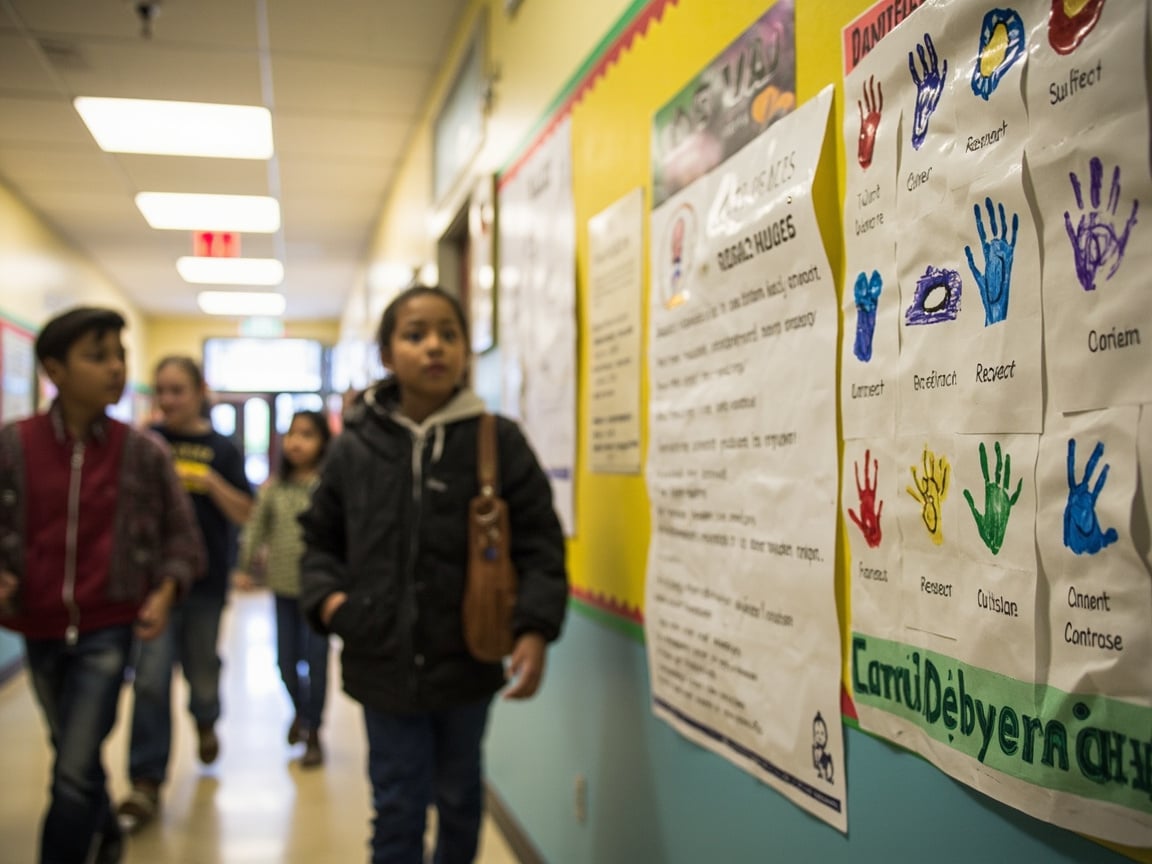
- Posters, pledges, and school-wide language around core values
- Recognition programs (character awards, citizenship certificates)
- Stories, assemblies, and discussions centered on modeling good behavior
The underlying premise is that if students understand and practice good values, good behavior follows. It’s typically content-driven — a defined set of traits taught explicitly, often through a scope and sequence tied to age-appropriate lessons.
Character education tends to be popular in communities that want a shared, values-based vocabulary across the school — something families, staff, and students can all point to and say, “This is what we stand for here.”
What SEL Curriculum Actually Teaches
Social emotional learning takes a different starting point. Instead of asking “what values should students hold?” it asks “what skills do students need to manage themselves and relate to others well?”
Most SEL frameworks — including CASEL’s widely used model — organize instruction around five interconnected competencies:
1. Self-awareness — recognizing emotions, strengths, and challenges
2. Self-management — regulating emotions and behavior, setting goals
3. Social awareness — understanding others’ perspectives, showing empathy
4. Relationship skills — communicating, cooperating, resolving conflict
5. Responsible decision-making — making choices that are ethical and constructive
SEL is skill-driven rather than trait-driven. It’s less about telling students what to value and more about giving them practical tools — naming a feeling, pausing before reacting, repairing a relationship after conflict — that they can actually use in the moment. Because it’s built on skill development, SEL tends to be more measurable over time and integrates more naturally into daily classroom routines like morning meetings, check-ins, and restorative conversations.
The Core Differences at a Glance
Here’s where the two approaches genuinely diverge:
| | Character Education | SEL Curriculum |
|—|—|—|
| Focus | Values and virtues | Skills and competencies |
| Approach | Teaching what’s “right” | Teaching how to regulate, relate, and decide |
| Delivery | Often assemblies, posters, monthly themes | Often daily/weekly embedded practice |
| Measurement | Behavior observation, awards | Skill assessment, climate surveys, behavioral data |
| Feels like | A moral compass | A toolkit |
Neither list is inherently better. A school with strong character education but no SEL structure might have students who know respect matters but lack the regulation skills to act on it under stress. A school with SEL but no shared values language might build great emotional skills without a unifying sense of school identity.
Where They Overlap More Than People Think
Despite the differences, these approaches aren’t opposites. Most strong character education programs implicitly teach self-management and relationship skills. Most SEL curricula implicitly reinforce values like fairness, empathy, and integrity. The competency of “responsible decision-making” in SEL frameworks, for example, is essentially character education wearing a different hat.
The real difference is often structure and measurability — SEL curricula tend to come with defined lesson sequences, developmental benchmarks, and ways to track growth, while character education is more often woven into school culture through language and modeling rather than a formal instructional scope.

How to Decide Which Fits Your School
Rather than picking a label first, start with your school’s actual data and goals. Ask your team:
What problem are we trying to solve?
If discipline referrals are climbing because students struggle to regulate emotions or resolve conflict, that’s a skills gap — SEL is likely the more direct fix. If your community is asking for a stronger shared identity or moral framework, character education may address that more directly.
Do we need something measurable?
If your district or grant funding requires demonstrated outcomes (behavior data, climate survey shifts, skill growth), a structured SEL curriculum with built-in assessment tools will be easier to report on than a values-based program.
How much instructional time do we realistically have?
Character education initiatives can often run through existing structures — assemblies, morning announcements, advisory periods — with lighter lift. A full SEL curriculum usually asks for consistent, dedicated time (10–20 minutes daily or several times a week) plus staff training to teach it well.
What does our staff already believe and practice?
Adoption sticks when it matches how teachers already talk to students. Survey your staff informally — do they lean toward “we teach values here” language, or are they already doing informal check-ins and regulation strategies? Build on what’s working rather than layering something foreign on top.
What do families and community stakeholders expect?
Some communities have strong opinions about “curriculum” touching emotional territory versus values-based language they’re more familiar with from home or faith settings. Early, honest conversation with families can prevent pushback later.

You Don’t Have to Choose Just One
The strongest school cultures usually blend both. Character education gives students a shared vocabulary and sense of purpose — why it matters to treat people well. SEL curriculum gives them the practical skills to actually do it — how to manage frustration, read a peer’s perspective, or repair a friendship after a disagreement.
A practical path many schools take:
- Use a structured SEL curriculum as the instructional backbone, delivered consistently (morning meetings, dedicated lessons, advisory time)
- Layer in character-based language school-wide — shared values that show up in signage, recognition, and staff modeling — so the “why” is always visible
- Make sure staff professional development covers both the skill-teaching side and the culture-building side, so the two reinforce rather than compete
This combination tends to outperform either approach alone, because it addresses both the internal compass (values) and the practical toolkit (skills) students need to actually live those values out under real pressure — in the cafeteria, on the playground, and in group work when things get hard.
Making the Right Call for Your Community
There’s no universal right answer here — only the right answer for your school’s data, staff capacity, and community. If you’re still weighing options, start small: pilot a structured SEL approach in a few grade levels or classrooms, keep your existing values language visible school-wide, and see how the two work together before committing to a full-scale rollout.
If your team is ready to explore what a well-structured, CASEL-aligned SEL curriculum could look like for your school — one that complements the values your community already holds — Soul Shoppe can help you map out an approach that fits your students, staff, and timeline.