

Morning Meeting Ideas for Social Emotional Learning That Set the Tone for Every Day

The first ten minutes of the school day can shape everything that follows. Students arrive carrying whatever happened before they walked through the door — stress, excitement, a rough morning, a restless night. A well-structured morning meeting gives them a place to land. More than a daily ritual, it’s one of the most efficient investments of instructional time you have: students who feel seen and connected are students who are ready to learn.
But not all morning meetings are created equal. Without intentional design, they drift into attendance-taking and calendar time. With a few key SEL components built in, they become a daily anchor for emotional safety, relationship-building, and community trust.
These morning meeting ideas for social emotional learning are practical, adaptable, and grounded in what actually works in real classrooms.
—
Why Morning Meetings and SEL Are a Natural Fit
Morning meetings — popularized by the Responsive Classroom approach — naturally align with the five core SEL competencies: self-awareness, social awareness, relationship skills, responsible decision-making, and self-management.
The structure itself does a lot of the work:
- Greeting builds belonging and eye contact — a simple, powerful regulation reset
- Sharing practices perspective-taking and active listening
- Group activity requires cooperation and emotional flexibility
- Morning message invites reflection and goal-setting
When you layer SEL intention onto each component, the meeting stops being a warm-up and becomes the social-emotional heartbeat of your classroom culture.
—
Morning Meeting Ideas for Social Emotional Learning: By Component
Greeting Ideas That Build Belonging
The greeting is short, but it does big work. These go beyond the handshake-or-hug chart on the wall:
- Name and affirmation: Each student says their neighbor’s name and adds something specific — “Good morning, Marcus — I noticed you helped someone at lunch yesterday.” It models noticing and affirming others as a daily practice.
- Emoji greeting: Students choose a face card that matches how they’re feeling and say, “Good morning — I’m feeling [emoji].” Quick, low-pressure, and opens the door to individual check-ins later.
- Language-of-origin greeting: Students share how to say “good morning” in their family’s home language. Rotating through the class deepens cultural awareness and social connection at the same time.
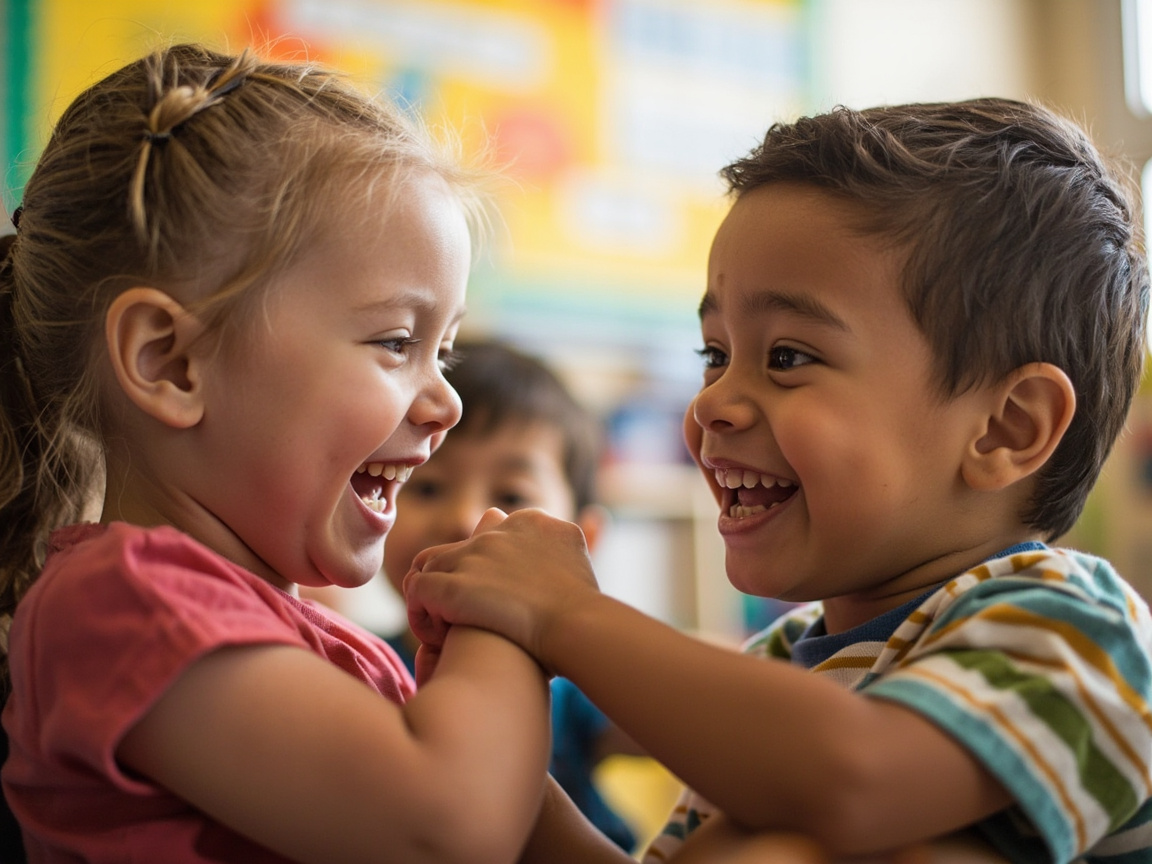
- Compliment handshake: Partners create a short handshake and end it with a genuine compliment. Practicing giving compliments is a real, learnable relationship skill — and it’s joyful.
The goal isn’t novelty for its own sake. It’s to make sure every student gets a moment of being acknowledged before the academic day begins.
—
Sharing Ideas That Develop Self-Awareness and Empathy
Sharing builds the muscle of articulating inner experience — foundational to SEL. Keep it structured so it stays purposeful.
- Roses and Thorns: One good thing, one hard thing from the past day. Simple, consistent, and it normalizes that life holds both.
- Headline of the Day: Students share one sentence as if it were a news headline about their life. “Local kid discovers skateboarding is harder than it looks.” The format reduces vulnerability pressure and adds a layer of humor.
- Wonder Share: Instead of a personal story, students share a question they’re sitting with — something they woke up wondering about. It builds intellectual curiosity and bridges social-emotional sharing to academic thinking.
- Feelings Thermometer: Students rate their current emotional temperature on a 1–5 scale and briefly explain. Builds emotional vocabulary and self-awareness in a repeatable, low-stakes format.
Rotate formats to keep sharing fresh, and explicitly teach active listening expectations — eye contact, body stillness, asking one follow-up question.
—
Group Activities That Practice Social Skills in Real Time
This is the play component — and it’s not frivolous. Group activities are where students practice self-regulation, teamwork, and flexible thinking under genuinely low stakes.
- Pass the Story: Each student adds one sentence to a group story in a circle. Students must listen carefully and build on what came before — perspective-taking in action.
- Rock-Paper-Scissors Tournament: Sounds trivial; teaches managing winning and losing with grace. Run it as a bracket, then take 60 seconds to talk explicitly about how it felt at the end.
- Spectrum Stands: Read a statement (“Recess is the best part of school”) and students position themselves on a physical line from “strongly agree” to “strongly disagree.” Develops perspective-taking and introduces the idea that reasonable people see things differently.
- Mindful Minute: Pause the energy with one minute of structured breathing or a body scan. Pair it with a grounding prompt: “Notice one thing you can hear right now.”

—
Morning Message Ideas That Invite SEL Reflection
The morning message is typically written on the board before students arrive. When it’s SEL-informed, it sets an intention that echoes through the whole day.
- Question of the Day: “What’s one thing you’re proud of that nobody gave you a grade for?” Students respond in writing or discuss during the meeting.
- SEL quote + reflection: A short, age-appropriate quote paired with one grounding question: “What does this mean to you?”
- Gratitude prompt: “Write three things you’re grateful for — at least one has to be something small.” Practicing gratitude shifts emotional baseline. Doing it in the morning primes the rest of the day.
- Intention-setting: “Today I want to feel _____ and do _____.” Students set a personal intention, share it with a partner, and revisit it at the end of the day.
Even two minutes with a strong morning message can shift the emotional register of the entire class.
—
Making Morning Meetings Consistent (Without Burning Out)
The most common reason morning meetings fade is inconsistency. The most common reason for inconsistency is complexity. A few principles help:
Keep it to 10–15 minutes. A short morning meeting that happens every day beats an elaborate one that happens twice a week. The structure exists to serve learning, not the other way around.
Rotate student leadership. By mid-year, students can lead greeting and group activity themselves. This deepens ownership and frees you to observe, connect, and notice who might need extra support.
Name the SEL skill explicitly. After an activity, spend 60 seconds debriefing: “What skill were we practicing? When else do we need that?” This is what makes morning meetings instructional rather than just social.
Tie it to your SEL curriculum. Morning meetings work best when they’re connected to the SEL language and concepts students are learning in other parts of the day. If your program teaches specific vocabulary for emotions or shared community agreements, morning meeting is where that vocabulary comes alive.
—
Adapting These Ideas Across Grade Levels
Most of these ideas work K–5 with small adjustments:
- K–2: Prioritize movement and concrete, simple formats. Feelings thermometers with picture cards, greeting songs, and short cooperative games land well.
- 3–5: Introduce more nuance. Spectrum Stands, Headline of the Day, and structured sharing with follow-up questions work well as students grow in their capacity for perspective-taking.
- Middle grades: Give students more agency in choosing and designing the formats themselves. Autonomy is the engagement lever at this age — and it’s an SEL skill in its own right.
The goal stays the same at every level: help students feel known, practice core social skills, and walk into the instructional day regulated and connected.
—
Start Tomorrow
You don’t need a new curriculum or a perfect plan to improve your morning meeting. Pick one idea from this list, try it three times this week, and notice what shifts — in the energy of the room and in individual students.
A great morning meeting for social emotional learning isn’t magic. It’s consistent, intentional practice. And it compounds. By October, the community you build in those first ten minutes will carry your classroom through the hard days of November and beyond.
If you’re looking for SEL support that integrates with the routines you already have — morning meetings included — explore what Soul Shoppe offers for whole-school SEL. It’s built for real educators, in real classrooms, on real schedules.