

How to Help Students with Anxiety in the Classroom: Signs, Strategies, and Real Support
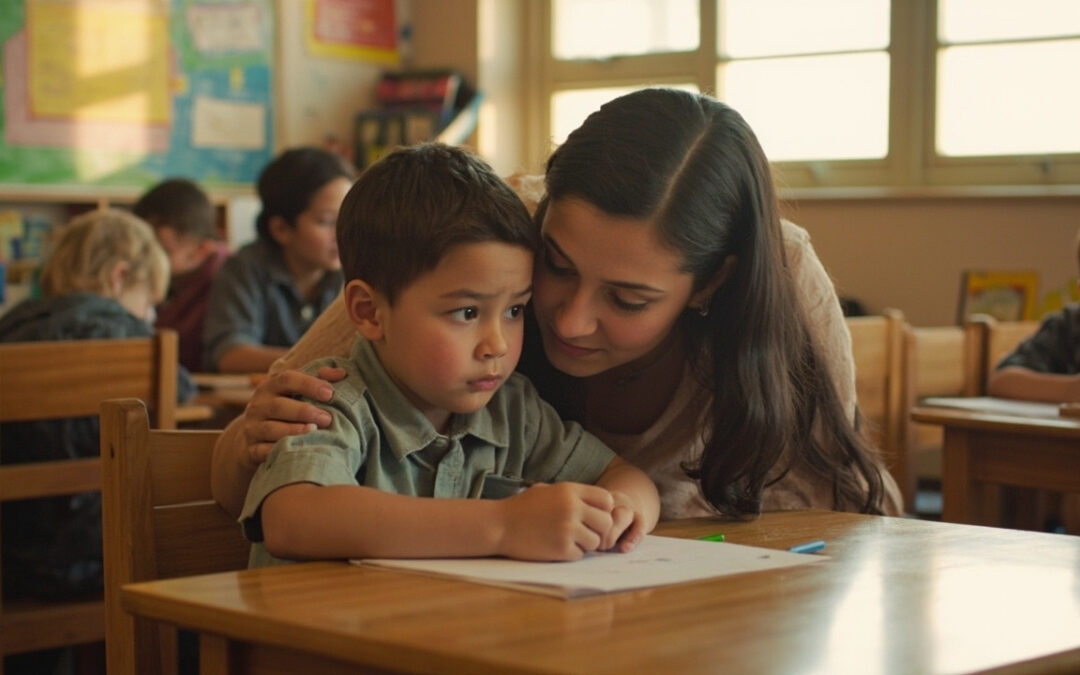
Anxiety is one of the most common mental health challenges children face — and for many students, the classroom is where it shows up most. Whether it’s a child who freezes during a test, refuses to raise their hand, avoids group work, or complains of stomachaches every Monday morning, anxiety looks different from student to student. Knowing how to help students with anxiety in the classroom doesn’t require a clinical background. It requires awareness, a set of practical tools, and a relationship built on trust.
This guide is for educators who are already doing their best — and want to do even better.
What Classroom Anxiety Actually Looks Like
Anxiety in children doesn’t always look like worry. Some of the most anxious students in your class might be the ones you’d least expect.
Watch for these signs:
- Avoidance: Refusing to participate, asking to go to the nurse, or consistently missing school on high-pressure days
- Perfectionism: Erasing excessively, refusing to turn in work, or becoming deeply upset over small mistakes
- Physical complaints: Stomachaches, headaches, or dizziness with no clear medical cause — especially before tests or presentations
- Rigidity: Difficulty with transitions, unexpected schedule changes, or breaks in routine
- Reassurance-seeking: Asking the same questions repeatedly or needing constant confirmation they’re doing something right
- Meltdowns or shutdowns: Both emotional outbursts and complete withdrawal can signal an anxious nervous system
The quietest students — the ones who sit perfectly still, never ask for help, and seem fully compliant — are often missed. Anxiety doesn’t always look like visible distress.

Build a Classroom Environment That Reduces Anxiety Before It Starts
The most powerful tool for helping anxious students is prevention. Environments that feel predictable, safe, and warm lower the baseline stress level for the whole class — not just the students you’ve formally identified.
Predictability is protective. Post a daily schedule and follow it as much as possible. Give advance notice before transitions: “In five minutes we’re moving to reading groups.” When routines shift unexpectedly, name it: “I know this is different from usual — here’s what’s happening.”
Reduce ambiguity. Anxious students often catastrophize when information is absent. Clear instructions, consistent expectations, and explicit rubrics reduce the cognitive load of guessing what’s expected.
Create a calming corner. A small designated space — with a fidget tool, a breathing prompt card, or noise-reducing headphones — gives anxious students a sanctioned way to self-regulate without drawing attention to themselves. It doesn’t need to be elaborate. A beanbag and a visual anchor can be enough.
Build real relationships. Students who feel genuinely known by their teacher are more likely to take risks, ask for help, and recover from hard moments. A 30-second check-in at the door, remembering what a student mentioned last week, or simply noticing when someone seems off — these micro-moments of connection are quietly protective for students experiencing anxiety in the classroom.
In-the-Moment Strategies When a Student Is Anxious
Even the best-designed classroom will have anxious moments. Here’s what actually helps when a student is escalating:
Breathing and Grounding First
Anxiety is physiological before it’s cognitive. When a student’s nervous system is in fight-or-flight mode, they cannot access reason, problem-solving, or learning. Your first job is to help them regulate — not redirect, explain, or correct.
Simple tools that work:
- Box breathing: Inhale for 4 counts, hold for 4, exhale for 4, hold for 4. Doing it alongside the student normalizes it.
- 5-4-3-2-1 grounding: Name 5 things you can see, 4 you can touch, 3 you can hear, 2 you can smell, 1 you can taste. This gently pulls the mind out of spiral thinking.
- A sensory reset: Cold water, a light snack, or a brief walk in the hallway can shift the physiology enough to re-engage.
Give the Student a Sense of Control
Anxiety often spikes when children feel helpless. Offering a small, genuine choice can interrupt the cycle: “Do you want to work at your desk or at the table by the window?” or “Do you want me to sit with you, or would you like a few minutes?” Even minor agency sends the message: You’re not stuck. You have some say here.

How to Talk to Anxious Students (Without Making It Worse)
The way you respond to an anxious student matters as much as what you do. A few language shifts that make a real difference:
Validate before you problem-solve. “That sounds really hard” lands better than “It’ll be fine.” Even well-meaning dismissal teaches students to stop sharing how they feel.
Avoid reassurance loops. When a student asks “Am I going to be okay on the test?” and you say “Yes, you’ll be great!”, they’ll ask again in five minutes. Instead, try: “You’ve prepared well, and I’ll be here if you need help. Let’s take it one step at a time.” Reassurance feels kind, but repeating it can actually reinforce anxiety over time.
Don’t call attention to it publicly. Pull a student aside for a quiet check-in rather than flagging them across the room. Public attention — even caring attention — can deepen shame and heighten the anxiety response.
Normalize the feeling. A brief, matter-of-fact acknowledgment works: “Lots of people feel nervous before a presentation. That feeling doesn’t mean anything is wrong with you.”
When to Involve Other Support
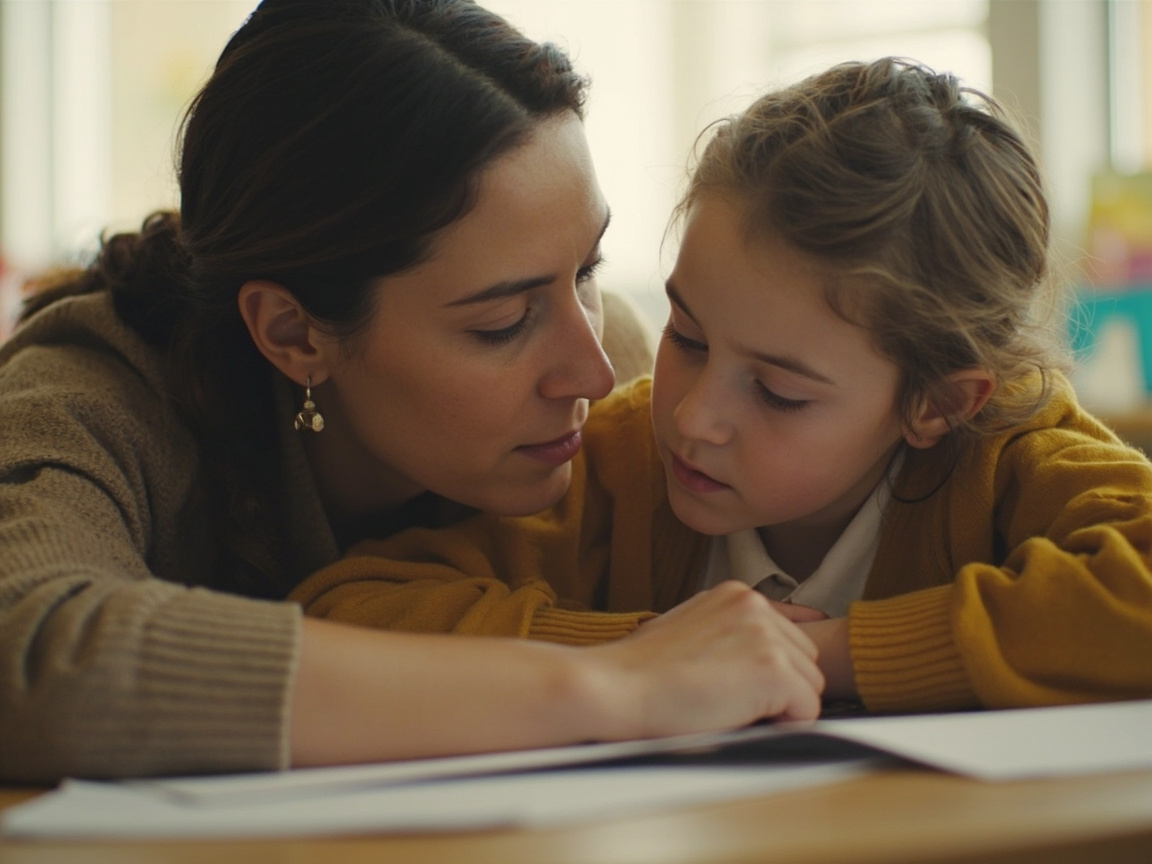
Teachers are not therapists — and aren’t expected to be. But you are often the first person to notice when a student’s anxiety is escalating beyond what classroom strategies can address.
Consider looping in your school counselor, psychologist, or a student’s family when:
- Anxiety is significantly interfering with learning or social participation
- You notice consistent patterns of avoidance, physical complaints, or emotional dysregulation across multiple weeks
- A student discloses worries that feel disproportionate or deeply distressing to you
- Strategies you’ve tried aren’t making a meaningful difference
When you share concerns, be specific. Not “she seems anxious” — but “she has asked to go to the nurse before every spelling test for three weeks and cried twice when I said no.” Specific observations help support teams respond quickly and effectively.
You don’t need to have all the answers. You just need to notice — and connect the student to someone who can help.
Bringing Anxiety Support Into Your Whole Classroom Culture
When anxiety awareness becomes part of your everyday SEL curriculum — not just a response to individual students — it shifts the culture of the room. Teaching all students about emotions, nervous system responses, and coping tools destigmatizes anxiety for everyone. Students who learn that feelings are normal and manageable carry that understanding into every hard moment they’ll face.
The goal isn’t a classroom without anxiety. It’s a classroom where students have the skills to navigate it — and the confidence that their teacher is in their corner.
—
If you’re looking for a structured, school-tested framework to bring this kind of support into your daily practice, Soul Shoppe’s SEL programs are built for real classrooms and real teachers — without piling more onto your already full plate.