

What Is Sense of Belonging? a Guide for Schools & Homes
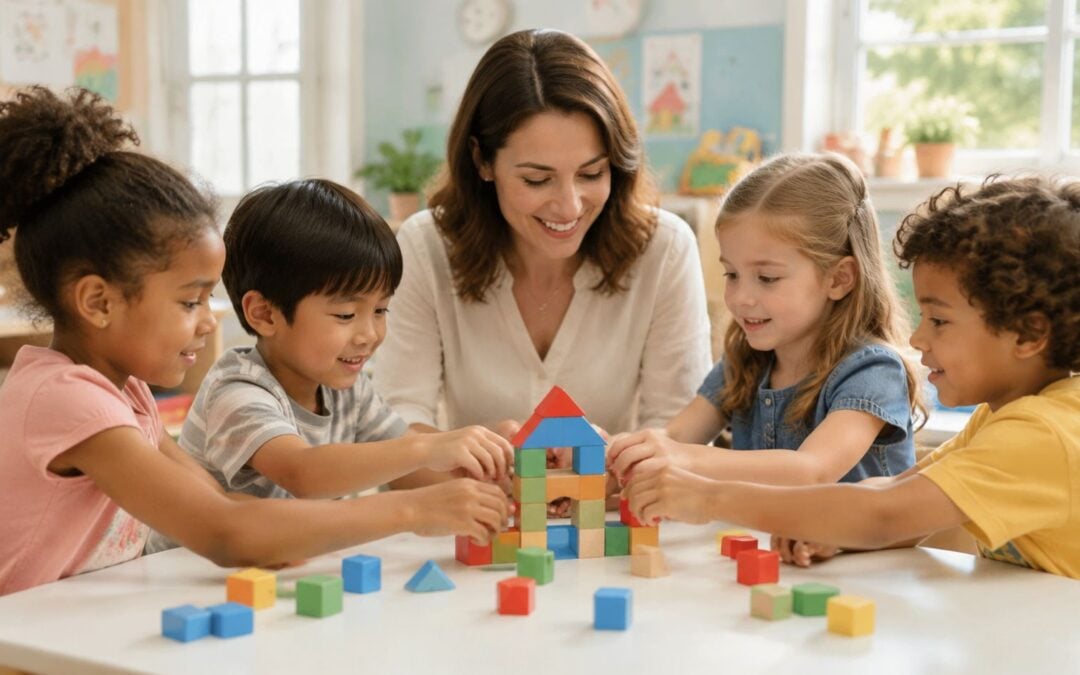
A child can sit in your classroom every day, complete the worksheet, and still feel like a visitor. Another child can walk through the same door, hit a hard problem, make a mistake out loud, and stay engaged because they trust that they belong there.
Most teachers and parents know this difference when they see it. One student keeps their head down, avoids partners, and says “I'm fine” with a flat voice. Another raises a hand, joins the group, and recovers after a rough moment because they feel safe, known, and wanted.
That's why the question what is sense of belonging matters so much. It isn't a soft extra. It shapes whether a child risks, connects, persists, and learns. In school and at home, belonging changes how children interpret everyday moments. A redirection can feel like support, or like proof they don't fit. A group project can feel exciting, or threatening.
For educators and families, belonging is one of the clearest meeting points between emotional life and academic life. When we understand it well, we stop treating it like a mystery and start building it on purpose.
More Than a Feeling The True Meaning of Belonging
By 9:15, two students in Ms. Rivera's class have both finished the warm-up. On paper, they look much the same. In practice, their minds are having very different school days.
One child stays quiet, waits to be placed with a partner, and goes blank when the work becomes difficult. The other asks a classmate a question, tries an answer that may be wrong, and recovers after correction. The academic gap between those two students may not begin with skill. It often begins with whether the brain is busy learning or busy checking, over and over, “Am I safe here. Do I fit here. Will I be accepted if I struggle?”
That is why belonging deserves a more precise definition.
Belonging is the felt experience of being accepted, recognized, and included in a group or place in a way that allows a child to participate fully. It is social, but it is also cognitive. When children trust that they are legitimate members of a classroom or family system, they have more mental space for attention, memory, persistence, and problem-solving. If you support school communities through design or digital access, this same principle also shows up in accessibility guidelines for higher education, where inclusion affects whether people can participate with confidence.
A helpful way to explain this to adults is to compare belonging to bandwidth. Every child comes to school with a limited amount of attention for the day. If too much of that attention is spent scanning for exclusion, hiding mistakes, or guessing how others see them, less is available for reading, reasoning, listening, and taking healthy risks.
What belonging looks like in a child's day
Belonging appears in ordinary moments that adults can easily miss:
- During discussion: A student offers an unfinished idea because being wrong does not feel socially dangerous.
- In group work: A child expects there will be a place for them, not just a seat near others.
- After correction: The message they hear is, “I can improve here,” rather than, “People like me do not fit here.”
- At home later: They can describe a hard moment openly because they expect care instead of shame.
Belonging means a child can use energy to learn, instead of using that energy to defend their place in the room.
Many adults confuse belonging with friendliness, compliance, or popularity. Those signals can sit nearby, but they do not tell the whole story. A student may smile, follow every direction, earn strong grades, and still feel like a guest. That is one reason belonging can be missed in schools that appear successful from the outside.
For teachers and parents, this is an important diagnostic question: Does the child feel merely managed and praised, or known and included? The difference matters because belonging is not only about whether children feel good. It shapes how they interpret feedback, whether they ask for help, and how long they stay engaged when learning gets uncomfortable.
Belonging grows through repeated messages from adults and peers:
- You are noticed.
- You are respected.
- You have a place here.
- Your participation matters.
When those messages are consistent, children do not have to keep proving they deserve to be present. They can get on with the work of learning.
What Is Sense of Belonging in an Educational Context
A student walks into class on time, hangs up their backpack, and gets straight to work. From the outside, everything looks fine. But one child is settling in because school feels like a place built for them. Another is staying quiet, reading the room, and trying not to do anything that might expose them. The behavior can look similar. The learning experience is not.
In education, belonging is the lived experience of being accepted, included, and able to participate fully in the life of a school. It is social, but it is also cognitive. When a child trusts that they have a place in the room, they can put more attention toward listening, problem solving, remembering directions, and asking questions. When that trust is shaky, some of their mental energy gets pulled toward self-protection instead.
A useful way to understand belonging is to picture a house with four connected parts. If one part is weak, the whole structure feels less stable.
A child may want friends but not know how to enter a game. Another may have strong social skills but face routines that leave them out. A third may have both, yet still read the room as unsafe because of earlier experiences. That is why belonging is more than a warm feeling or a friendly classroom climate.

The four parts of the house
| Part | What it means in daily school life | Example |
|---|---|---|
| Competencies | A child has the skills to join, respond, repair, and collaborate | A student knows how to ask, “Can I work with you?” |
| Opportunities | The environment makes connection possible | A teacher uses partner structures instead of letting the same social groups dominate |
| Motivations | The child wants to connect and sees value in trying | A student keeps showing up to morning meeting even after a hard social day |
| Perceptions | The child interprets the setting as accepting and safe | A student believes adults respect them and peers want them there |
Why this matters for teachers and parents
This framework helps adults diagnose the actual barrier instead of making a quick judgment about personality or effort.
If a child rarely joins peers, the issue may be skill. It may be a classroom routine that rewards confident speakers. It may be subtle exclusion that adults have missed. It may also be perception, where the child expects rejection even when support is available. That last one often confuses adults, especially in schools that look successful on paper.
This is one reason belonging deserves attention alongside academics and the benefits of social-emotional learning. Belonging helps explain why two students with similar ability can show very different levels of participation, risk-taking, and follow-through.
Design choices shape that experience every day. Seating, transitions, group norms, wait time, feedback, and family routines all send messages about who is expected to participate. So does access. For example, strong accessibility guidelines for higher education can inform K to 12 practice. When schools review digital materials, parent communication, and student-facing platforms, removing barriers helps show that a space was built with all learners in mind.
A plain-language test
If you want a simple way to check for belonging, ask this:
Practical rule: Can this child participate, make mistakes, and stay fully themselves without losing status in the group?
If the answer is no, belonging is fragile, even if the room looks calm.
This defines what sense of belonging means in education. A child is not only present. The child experiences school as a place where they are accepted, expected, and able to contribute.
Why Belonging Is a Cornerstone of Student Success
A student walks into class after a hard morning. Nothing dramatic happens. No one is openly unkind. The lesson begins, partners turn to each other, and that student stays quiet, watches closely, and avoids raising a hand. By lunch, the child looks “fine.” By the end of the day, the child has learned less, asked for less help, and used a great deal of energy just trying to stay socially safe.
That is the academic side of belonging.
Belonging affects more than mood. It shapes how much working memory a child can use, how willing they are to take a learning risk, and how quickly they recover after confusion, correction, or conflict. In other words, belonging acts a lot like classroom oxygen. Children may not talk about it directly, but every learning task depends on it.

Belonging changes how the brain uses its energy
When a child is unsure, part of the mind shifts into surveillance mode. The child starts asking silent questions. Am I welcome here? What happens if I get this wrong? Who will notice if I fail?
That constant monitoring uses cognitive fuel.
Teachers often see the result before they name the cause. A capable student freezes during group work. A curious child stops volunteering. A strong reader suddenly rushes through assignments to avoid standing out. These are not always motivation problems. Often, they are signs that self-protection is competing with learning.
When children feel secure with the adults and peers around them, more mental energy stays available for attention, memory, language, and problem solving. The connection between belonging and learning is clear. Social safety supports cognitive stamina.
Academic success grows from social safety
Schools ask students to do hard things all day. Belonging makes those hard things more doable.
- Healthy risk-taking: answering before being certain
- Sustained effort: sticking with a frustrating task
- Collaboration: listening, disagreeing, repairing
- Self-advocacy: asking for help without shame
Each of these behaviors depends on more than skill. It also depends on the child's prediction of what will happen socially. If a student expects embarrassment, exclusion, or status loss, even simple participation can feel costly.
This helps explain a pattern many adults find confusing. Some students look successful on paper and still do not feel that they belong. They earn good grades, follow directions, and stay out of trouble, yet they rarely share an original idea, rarely ask for help, and rarely relax into the community. Performance can hide disconnection.
One useful classroom lens is accountability with support. Children follow through more consistently when they feel responsible to a group that also feels safe. Families and educators can borrow ideas from social accountability, not as pressure, but as shared commitment. A reading partner, a morning check in buddy, or a family goal chart works better when the child feels, “People are with me.”
Belonging supports achievement because it supports recovery
Learning is full of small disruptions. A wrong answer. A tough transition. A partner disagreement. A page of math that suddenly feels impossible.
A child with a steady sense of belonging usually returns to the task faster. The child can absorb feedback without hearing rejection in it. The child can make a mistake without deciding, “I am the problem.” That recovery speed has academic consequences. It affects practice time, persistence, revision, and willingness to try again tomorrow.
This is one reason belonging sits so close to the goals of social emotional learning benefits for students and classrooms. SEL gives children tools for self-awareness, relationships, and regulation. Belonging creates the conditions that make those tools easier to use under stress.
Belonging is a condition for learning, not a bonus feature
Schools sometimes treat belonging like a climate issue that lives off to the side of instruction. In practice, it is woven into instruction. It affects who participates, who persists, who asks for clarification, and who feels safe enough to think out loud.
Here's a short explanation many families appreciate: