

Why Do Siblings Fight? an SEL Guide for Home and School
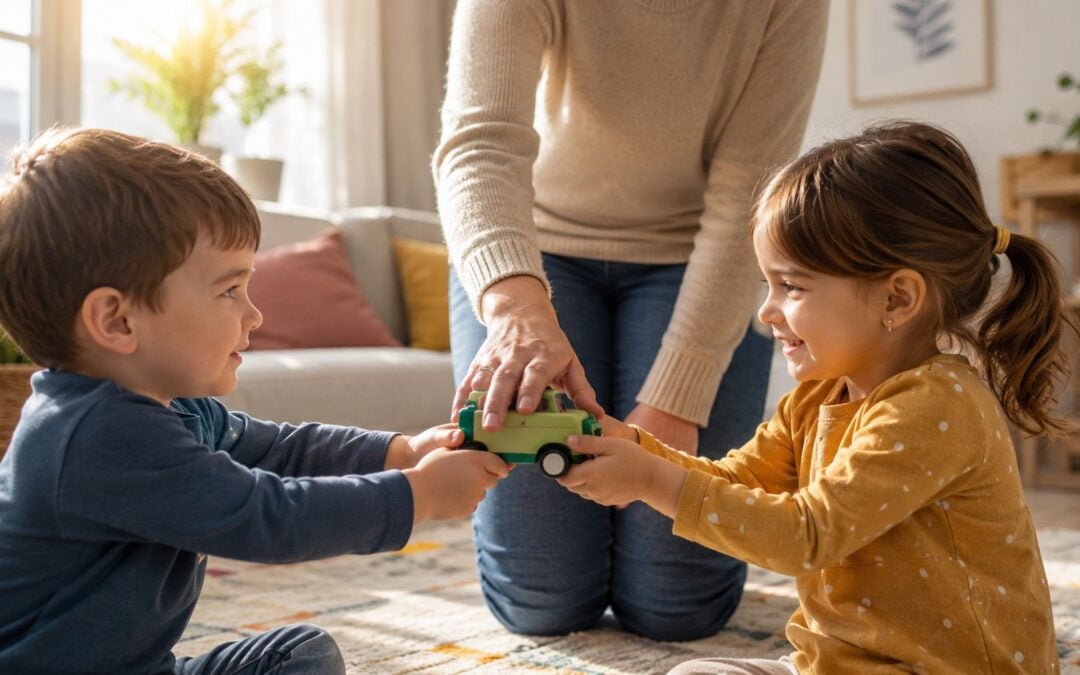
One child is yelling that the blue cup was theirs first. The other is crying because someone “looked at me weird” after breakfast and then took the marker they wanted. A parent is trying to answer emails in the kitchen. A teacher sees the same two children arrive at school already irritated, then clash again during partner work. By 9:15 a.m., everyone feels worn out.
If you're living this, you're not doing anything wrong. Sibling conflict can feel constant, petty, loud, and extremely draining. It also confuses adults because the trigger often seems so small. A spoon. A seat. A turn. A glance.
But small triggers don't mean small meaning.
Children often practice their earliest and most intense social skills with siblings. They test fairness, power, belonging, frustration, and repair in the same relationship, over and over again. That's one reason these moments matter so much. They are not only problems to stop. They are also skills to teach. The same emotional habits children use with a brother or sister often show up later with classmates, teammates, and friends.
From Bickering to Breakthroughs Why Sibling Fights Matter
It starts with a cracker.
An older child grabs the last one. A younger sibling shouts, pushes, and runs to get an adult. The adult steps in, decides who was “right,” and for ten minutes the room quiets down. Then the next argument starts over a blanket, a game rule, or whose turn it is to sit by the window.
Most families know this rhythm. So do schools. Children don't leave home dynamics at the front door. They carry them into recess, small-group work, lunch tables, and hallway interactions.
Why do siblings fight so much, and why should educators care? Because the habits children build at home don't stay there. Large-scale studies of youth in the United States show that sibling fighting is extremely common and strongly linked to later conflict with peers. Researchers found that youth who reported fighting with a sibling were 2.5 times more likely to report fighting with peers, making these family interactions a primary training ground for social behavior, as summarized in this peer conflict and sibling fighting research review.
That finding matters for parents and schools alike. If a child regularly solves conflict with grabbing, blaming, mocking, or escalating, that pattern can spill into friendships and classroom life. If that same child learns to pause, name feelings, negotiate, and repair, those skills can travel too.
Sibling conflict is often the first social lab a child has. What they rehearse there can show up everywhere else.
That doesn't mean every argument is harmful. It means everyday conflict is worth noticing. A home argument over a game controller and a classroom argument over an ipad may look different on the surface, but the underlying skills are often the same. Turn-taking. Flexibility. Emotional regulation. Perspective-taking.
That is why many families and schools benefit from a shared SEL approach. When adults use common language around feelings, boundaries, and repair, children get repetition where it matters most. If you'd like a bigger picture on how these skills support children across settings, this overview of the benefits of social-emotional learning is a helpful companion.
The Hidden Reasons Behind Sibling Rivalry
A fight about a sock is usually not about a sock.
Children fight over objects, space, and turns. But under those surface triggers, there are deeper needs at work. When adults understand those needs, responses get calmer and more effective.

Attention feels like a limited resource
One of the strongest drivers of sibling conflict is perceived fairness. Children notice who got help first, who stayed up later, who got praised, who got corrected more gently, and who seems to have easier access to a parent's attention.
Observational studies in family-conflict literature report that siblings engage in conflict or fight-like interaction about eight times per hour. These clashes are often driven by a core motivation for identity differentiation and competition for parental attention and perceived fairness, which helps explain why fights erupt over seemingly trivial issues, according to this discussion of common sibling conflict patterns.
A practical example: a younger brother keeps poking his older sister while she does homework. The issue may look like “annoying behavior.” But the deeper message might be, “Everyone sees her as the responsible one, and I need someone to notice me too.”
Children are trying to become themselves
Siblings don't only compete. They also separate. A quiet child may become even quieter next to a loud sibling. A highly verbal child may dominate family conversations. One child becomes “the sporty one.” Another becomes “the creative one.”
This is part of identity formation. Children are constantly asking, “Who am I in this family?” Sometimes conflict grows when siblings feel too similar. Other times it grows when one child feels overshadowed.
A classroom version looks familiar too. Two sisters may arrive with tension because one is always called “the helpful one” and the other is “the emotional one.” In school, those labels can keep shaping behavior unless adults help children step out of them.
A useful reframe: children are not only fighting against each other. They are often fighting for a clear sense of self.
Temperament and stress change the temperature
Some children are intense, sensitive, impulsive, or slow to shift gears. Others are easygoing until they're hungry or tired. Add a family transition like a move, a new baby, a divorce, or a schedule change, and the whole sibling system can get pricklier.
That is one reason “treat them exactly the same” rarely works. Different children need different supports. Some need more transition warnings. Some need more quiet. Some need direct coaching in how to enter play without taking over.
For parents who want to think more carefully about how adult responses shape these patterns, this article on different parenting styles and their effect on kids offers a useful lens.
The fight is a practice field
Children don't arrive knowing how to share space, negotiate rules, or recover after frustration. Siblings give them frequent practice. Messy practice, but practice all the same.
That is why the best adult question often isn't “How do I stop this forever?” It is “What skill is missing right now?”
Sometimes the missing skill is waiting. Sometimes it's using words. Sometimes it's recognizing that “unfair” and “different” are not always the same thing.
How Sibling Conflict Changes with Age
A toddler's sibling fight doesn't mean the same thing as a teenager's sibling fight. The behavior changes because the developmental task changes. When adults know what children are working on at each stage, their expectations get more realistic.
Toddlers and preschoolers
Young children often fight with their bodies before they can fight with words. They grab, push, scream, and cling to objects because they are still learning impulse control, ownership, and waiting.
A two-year-old may hit because “I want it” is stronger than “I can wait.” A four-year-old may melt down because fairness still feels very concrete. If one child got the red plate, the other may experience that as a major loss.
Example: Two preschool siblings both want to press the microwave button. The conflict isn't only about the button. It's about agency, turn-taking, and the need to feel included.
Elementary-age children
School-age children become more verbal and more rule-focused. Their conflicts often center on cheating, teasing, bossiness, exclusion, and whose turn it really is.
At this age, children are developing a stronger sense of justice, but they often define justice in rigid ways. They may also use sharper language. Instead of pushing, they might say, “You never let me choose,” or “Mom likes you better.”
| Age Group | Common Triggers | Underlying Developmental Need |
|---|---|---|
| Toddlers and preschoolers | Toys, physical space, turn-taking, parent proximity | Impulse control, ownership, waiting, co-regulation |
| Elementary-age children | Rules, fairness, teasing, shared items, chores | Justice, competence, perspective-taking, emotional language |
| Tweens and teens | Privacy, freedom, status, screens, responsibilities | Identity, autonomy, respect, boundaries |
A school example: two brothers argue during a board game in aftercare because one changes the rules halfway through. The adult hears “They always fight.” But the more accurate reading is, “They need help with flexible thinking, frustration tolerance, and fair process.”
Children often need different coaching as they grow. The goal isn't identical treatment. It's developmentally matched support.
Tweens and teens
Older children usually fight less over toys and more over respect, privacy, and unequal freedoms. One gets a later bedtime. One gets more screen access. One has more chores. One is allowed to walk somewhere alone.
These conflicts can sound more mature, but they still carry strong emotion. Teens may use sarcasm, withdrawal, exclusion, or status games instead of obvious bickering. Adults can miss the intensity because the conflict looks quieter.
Example: A middle schooler slams the bedroom door because a younger sibling barged in and touched their sketchbook. The underlying issue is boundary violation and the growing need for private identity space.
At school, the same child may react strongly if a peer invades personal space or comments on their work without permission. Home and school remain linked.
When and How to Intervene in a Sibling Fight
Adults often ask one question in the middle of chaos: “Should I step in right now?” A simple stoplight model can help.
Not every disagreement needs a referee. Some need a coach. Some need immediate protection.

Green light means stay nearby, but don't rush in
Green-light conflict is balanced and low-stakes. Both children are upset, but neither is unsafe. They are arguing over a game rule, a seat, or whose turn comes next. Voices may be loud, but there is still give-and-take.
In these moments, adults can pause before stepping in.
- Observe first: Are both children participating fairly evenly?
- Listen for skill use: Are they trying words, even if clumsily?
- Hold the boundary: No hitting, threats, or humiliation.
A teacher version might sound like, “I hear two people who both want the same marker. I'm staying close while you work it out.”
Yellow light means coach the process
Yellow-light conflict is escalating. Voices sharpen. Bodies get closer. One child looks flooded. You sense that pushing, name-calling, or tears are close.
This is the moment to scaffold.
Try a short script:
- Pause the action: “Stop. Both of you take one step back.”
- Name what you see: “You both want control of the same thing.”
- Prompt skillful language: “Tell your sibling what you need without blame.”
- Offer limited choices: “Do you want to take turns, trade, or set a timer?”
A home example: two children are fighting over shower order. A parent says, “I'm not deciding who deserves it more. I'm helping you solve it. What are two fair options?”
Red light means intervene directly
Red-light conflict requires immediate adult action. Most parenting resources do not provide clear, age-specific markers to help caregivers differentiate healthy disagreement from harmful relationships. Clinical guidance emphasizes that true bullying involves a power differential and one-sided control, not the balanced give-and-take of a typical sibling dispute, as discussed in this clinical conversation on sibling bullying versus normal conflict.
Red-light signs include:
- Physical harm: hitting, kicking, cornering, throwing objects
- Emotional cruelty: repeated humiliation, threats, targeted insults
- Power imbalance: one child consistently dominates, the other consistently fears
- One-sided control: one child can't exit or disagree safely
Safety comes first: if one child is afraid, overwhelmed, or being controlled, it is no longer a simple sibling spat.
In red-light moments, separate first. Process later. Adults can say, “I'm stopping this because it is not safe,” rather than “Who started it?” That shift matters. It keeps the focus on protection and skill-building, not courtroom logic.
5 Practical SEL Strategies to Teach Conflict Resolution
Children need more than reminders to “be nice.” They need repeatable tools they can use when annoyed, jealous, bored, disappointed, or left out.

1. Teach I-feel statements that children can actually say
Skip overly formal scripts. Give children short, usable sentence stems.
Try:
- “I feel left out when…”
- “I don't like it when…”
- “I want a turn when you're done.”
- “Please ask before you take my things.”
A second grader probably won't say, “I feel dysregulated by your behavior.” But they can say, “I feel mad when you grab.”
At school, a counselor can role-play this with peers. At home, a parent can coach it during snack time. The wording should match in both places.
2. Create a calm-down spot that is not a punishment
A Peace Corner works best when children use it to regulate, not as a place they get sent in shame. Keep it simple. Pillows, paper, crayons, feeling cards, a timer, or a breathing prompt are enough.
A practical example: after a shouting match, instead of demanding immediate apologies, an adult says, “Your bodies need to calm first. You can sit in the Peace Corner or on the porch chair. When you're ready, we'll solve it.”
This is also where a common home-school language helps. If a child already uses a calm-down space in class, they understand the routine faster at home.
3. Hold short family or classroom problem-solving meetings
Many sibling fights are predictable. The same argument happens every afternoon, every bedtime, every Saturday morning.
Use a standing meeting to solve recurring friction before the next explosion.
- Start with one issue: “We keep fighting about the bathroom.”
- Invite each child to speak: one minute each, no interruption
- List possible solutions: even silly ones at first
- Choose one plan to test
- Review later: keep, tweak, or replace
A classroom version could address table supplies. A family version could address getting into the car. The process matters as much as the outcome.
For adults who want more practical resolution techniques for children, that guide offers additional simple tools you can adapt across home and school.
4. Use structure to prevent repeat battles
Some conflicts don't need deeper emotional processing first. They need a plan.
Research suggests that structured routines and shared schedules can reduce repeat sibling conflicts by up to 40%. When children know exactly when they will have access to a desired item or activity, it reduces the need to argue in the moment, according to this guidance on using schedules to reduce sibling conflict.
That can look like:
- A screen-time chart: each child sees their turn in writing
- A bathroom order plan: posted for school mornings
- A homework table routine: one child starts at the kitchen table, another starts at the desk
- A classroom materials system: students sign up for shared art tools or devices
This is not over-structuring. It is removing ambiguity where ambiguity keeps causing fights.
If you'd like more school-friendly ideas, this collection of conflict resolution strategies for kids is useful for adapting SEL language across settings.
5. Give children a problem-solving wheel
A problem-solving wheel helps children generate options instead of waiting for adults to judge and decide. You can make one with words or pictures.
Include choices such as:
- Take turns
- Trade
- Ask for help
- Use a timer
- Do it together
- Take a break
- Pick something else
A parent might point to the wheel and ask, “Which two choices could work here?” A teacher might say, “Try one wheel option before you ask me to solve it.”
A school-based program can support this too. Soul Shoppe offers SEL programming that teaches students shared tools for self-regulation, communication, and conflict resolution, which can help children carry the same language between classroom and home.
A quick demonstration can help adults picture the tone and pacing of these conversations: