

8 Powerful Self Love Mantras for Students in 2026
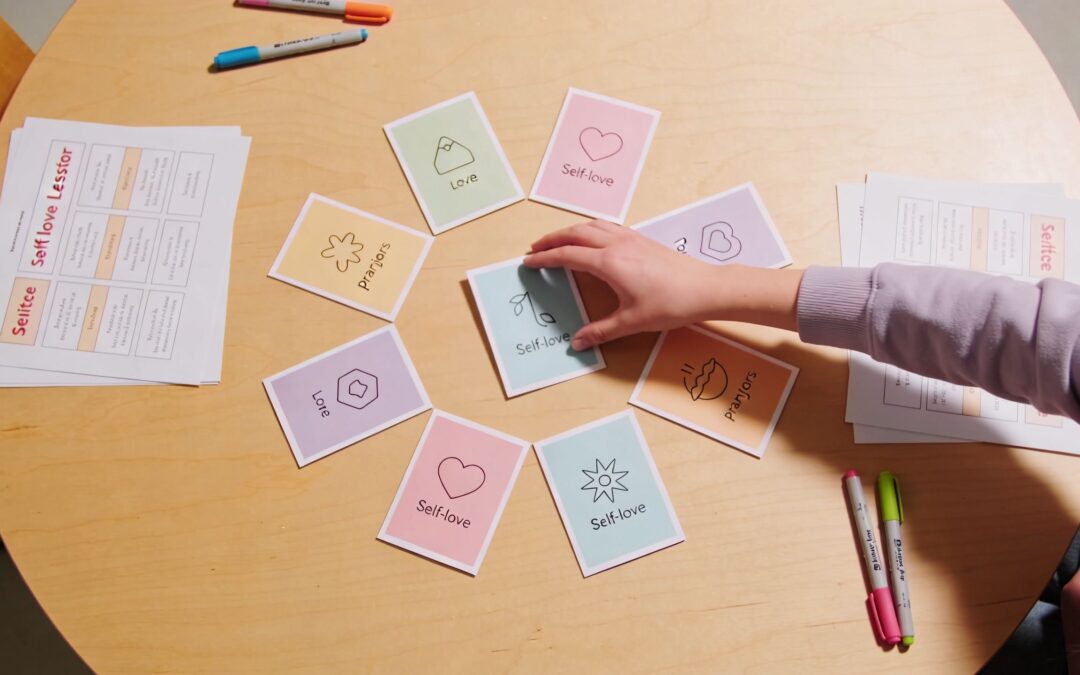
More Than Words: Turning Self Love Mantras into Lifelong Skills
A child misses one math problem and whispers, “I’m so dumb.” Another gets left out at recess and decides it means nobody likes them. A middle schooler scrolls through photos, compares their life to everyone else’s, and grows quieter by the day. Most adults who care for kids have heard some version of this inner critic. It shows up in classrooms, on car rides home, at bedtime, and in the moments after a mistake.
Self love mantras can help, but only when we treat them as practices instead of posters. If a child says words they don’t believe, the phrase can feel fake. If an adult uses a mantra only after a meltdown, it becomes a rescue tool instead of a life skill. Kids need repetition, modeling, and language that matches their real experience.
That matters because self-affirmation isn’t just a trendy idea. Research on self-affirmation has linked the practice with improvements in self-perception and general well-being, and with lower anxiety. For educators and families, that’s a useful reminder that brief, low-cost practices can support emotional health when they’re taught well.
The key is teaching children how to use self love mantras in daily life. The eight mantras below work best when adults connect them to feelings, choices, relationships, and repair. That’s where they become part of SEL, not just positive talk.
1. I Am Enough
“I am enough” is often the first mantra kids need, especially the ones who think worth comes from grades, popularity, athletic skill, or always getting it right. This phrase pushes back on the belief that value must be earned. It tells a child, “You still belong, even when things are hard.”
For younger students, keep it concrete. “I am enough even when I spill paint.” “I am enough even when reading feels tricky today.” Older students can go deeper. “I am enough even if I’m not chosen first.” “I am enough even when I’m still figuring out who I am.”
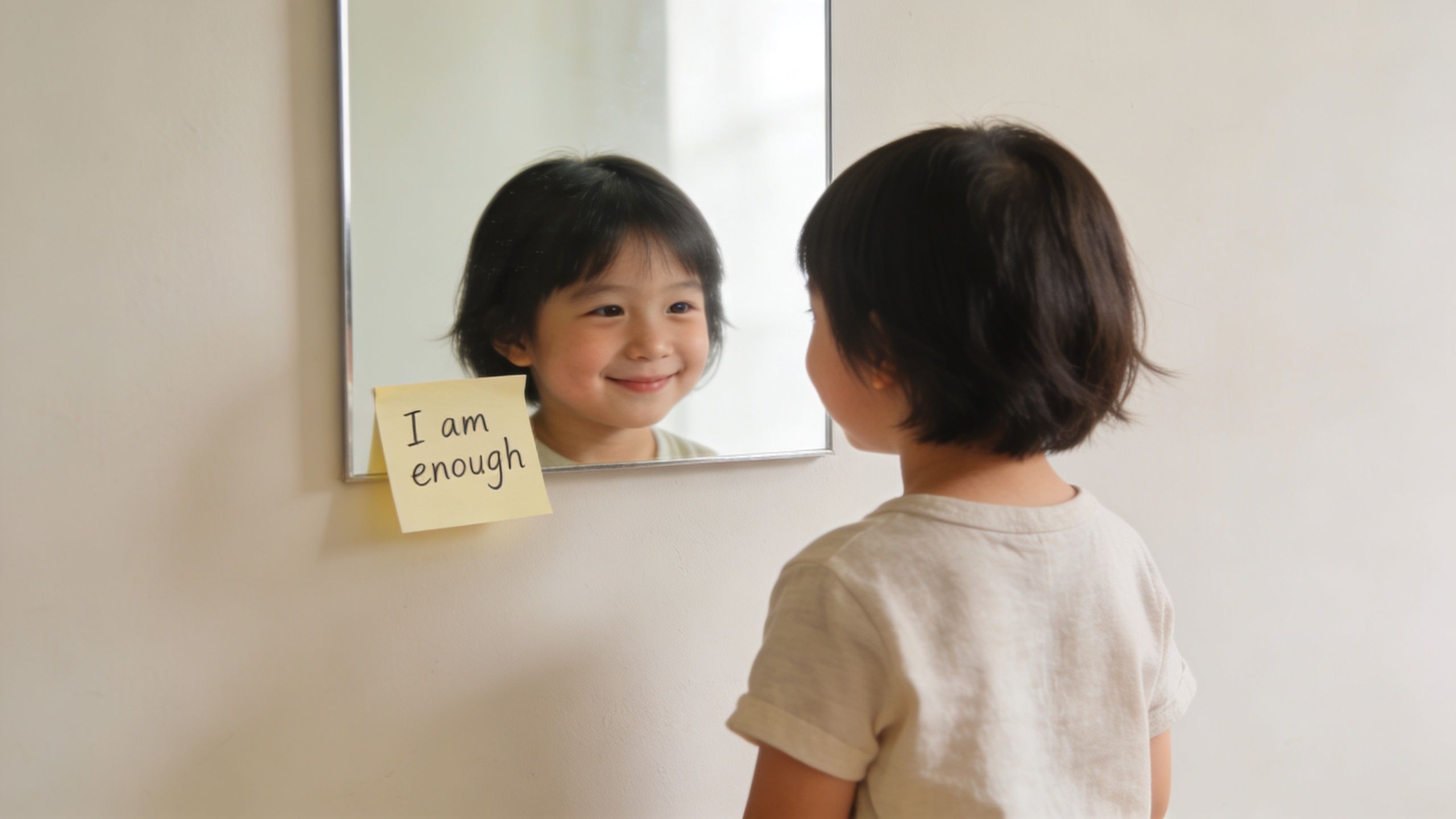
How to teach it so kids believe it
Don’t ask students to chant this phrase with no context. Tie it to common school moments.
- Morning meeting prompt: Ask, “What is one thing that makes you enough today, even before you achieve anything?”
- After mistakes: Say, “You made an error. Your value didn’t change.”
- At home: When a child says, “I’m bad at everything,” respond, “You’re disappointed. And you’re still enough.”
Practical rule: Pair the mantra with a real situation. Children trust specific language more than broad praise.
A teacher might say, “I didn’t explain that as clearly as I wanted. I’m still enough, and I can try again.” That kind of adult modeling matters. Kids learn self-acceptance when they hear adults practice it out loud.
This mantra also fits naturally with belonging work. A hallway poster can help, but daily language matters more. During partner work, class circles, or transitions, remind students that everyone enters the room with equal worth. If you want extra family-friendly language support, Kubrio's guide for parents offers confidence-building ideas that can complement this practice.
2. I Choose to Be Kind to Myself
Some children talk to themselves in ways they’d never use with a friend. They call themselves stupid, annoying, ugly, lazy, or behind. This mantra matters because it introduces agency. A child may not control every feeling, but they can learn to shift how they respond to themselves.
The phrase “I choose” is important. It turns self-kindness into an action, not a personality trait. Kids don’t have to wait until they naturally feel compassionate. They can practice it on purpose.
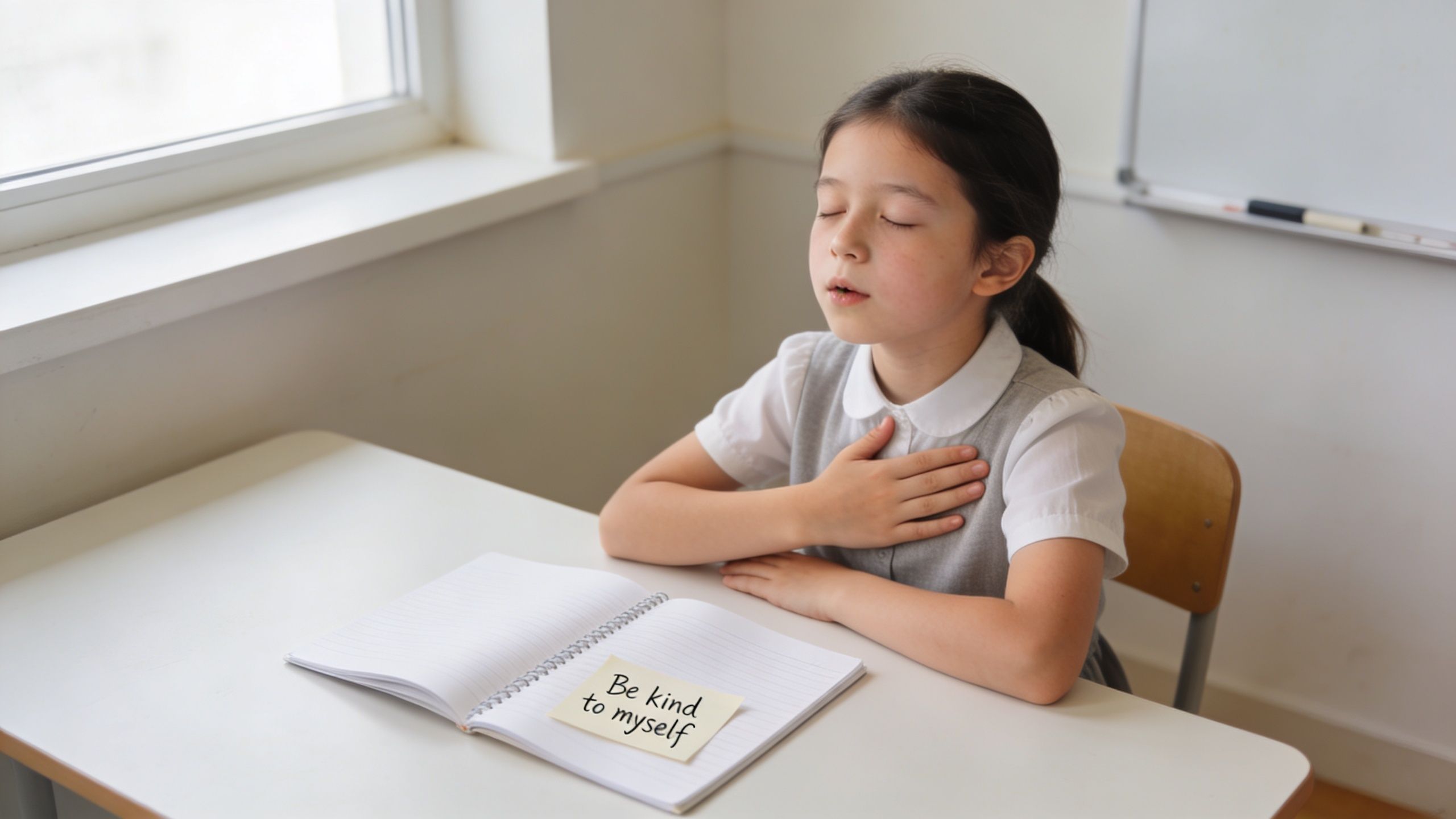
A simple classroom script
Try this after a student makes a mistake in front of others:
Teacher: “What did your inner voice just say?”
Student: “That I messed everything up.”
Teacher: “Would you say that to a friend?”
Student: “No.”
Teacher: “Try again with kindness.”
Student: “I made a mistake, but I can keep going.”
That short exchange teaches more than the mantra alone.
- Use the Friend Test: “Would you say this to a friend?”
- Add a body cue: Hand on heart, one slow breath, then the mantra.
- Keep it brief: Long speeches rarely help in a dysregulated moment.
When children are upset, calm first and coach second.
At home, this often comes up after sports, homework, or social conflict. A parent can say, “It sounds like your inner voice is being rough. What would it sound like if you chose to be kind to yourself right now?” That question invites reflection without shaming the child for being hard on themselves.
Self love mantras work better when they sound believable. If “I love everything about myself” feels too far away, “I choose to be kind to myself” is often more honest and more usable. For adults who want language ideas rooted in compassionate self-talk, how to speak life over yourself offers prompts that can be adapted for older students and caregivers.
3. My Feelings Are Valid
Children often hear two unhelpful messages about feelings. One is “Don’t feel that.” The other is “Feel whatever you feel and do whatever comes next.” Neither teaches regulation. “My feelings are valid” gives kids a healthier middle path.
This mantra tells students that emotions are real and important, but emotions don’t get to run the whole room. A child can be angry and still not hit. They can feel jealous and still act respectfully. They can feel sad and still ask for help.
The sentence that should always follow
Teach this pair together:
All feelings are okay. Not all behaviors are okay.
That one line helps students separate emotion from action. It’s especially useful during conflict.
For example, a fourth grader says, “She didn’t pick me, and now I hate her.” Instead of correcting the feeling, an adult might say, “Your feelings are valid. It hurts to feel left out. Let’s find a safe way to say what you need.” That moves the child toward communication instead of suppression.
A counselor might use this mantra with a student who’s been told to “stop crying.” A teacher might use it when a student comes in upset after recess. A caregiver might use it after bedtime tears that seem too big for the situation. In each case, the message is the same. Your feelings make sense. You still need tools.
Practical SEL moves
- Name the feeling first: frustrated, embarrassed, worried, disappointed, lonely
- Connect feeling to need: space, comfort, repair, clarity, a break
- Offer a safe action: breathe, draw, write, talk, ask for support
This mantra also supports psychological safety. Students are more likely to ask for help when they trust that adults won’t mock, minimize, or rush them. In a classroom community, that changes everything. Kids become more honest, more empathic, and more able to hear each other.
4. I Am Growing and Learning
Some students decide very early who they are. “I’m bad at math.” “I’m not a good reader.” “I’m the shy kid.” “I always mess up.” Once that story hardens, effort starts to drop. This mantra loosens the story.
“I am growing and learning” is one of the most useful self love mantras for school because it protects dignity while making room for change. It tells a child that struggle isn’t proof of failure. It’s part of development.
What this sounds like in real life
A kindergartener rebuilding a block tower can say, “I’m growing and learning how to make it steady.” A fifth grader revising an essay can say, “I’m learning how to organize my ideas.” A middle school student after an awkward peer interaction can say, “I’m growing in how I handle conflict.”
That language matters because it shifts identity from fixed to active.
- Praise strategy: “You kept trying a new way.”
- Praise persistence: “You stayed with it when it got hard.”
- Praise reflection: “You noticed what wasn’t working and adjusted.”
When adults praise only talent, students often become more fragile. When adults praise process, students usually become more resilient.
A lesson snippet teachers can use
Write two statements on the board:
- “I can’t do this.”
- “I’m growing and learning.”
Ask students which statement helps the brain stay open to practice. Then invite them to rewrite common fixed thoughts.
- “I’m bad at spelling” becomes “I’m learning spelling patterns.”
- “I always ruin group work” becomes “I’m learning how to collaborate.”
- “I’m not artistic” becomes “I’m growing my creative confidence.”
This mantra also works well in public repair. If an adult forgets directions or loses patience, they can say, “I’m growing and learning too.” That protects authority while modeling humility. Kids don’t need perfect adults. They need adults who can repair.
5. I Deserve Rest and Boundaries
Many children live in a constant state of “go.” School, homework, sports, activities, screens, social tension, and pressure to perform can wear them down. Adults often do the same to themselves. This mantra reminds kids that rest isn’t a reward for being productive enough. It’s part of being human.
Boundaries are a form of self-respect. Rest is a form of regulation. When we teach both together, children learn that caring for themselves helps them show up better for others.

What kids need to hear
Students often think rest means quitting. Reframe it.
- Rest can be active: drawing, swinging, reading, building, listening to music
- Rest can be quiet: alone time, breathing, lying down, looking out a window
- Boundaries can be kind: “I need space,” “I’m not ready to talk yet,” “I can’t play right now”
A third grader might need a calm corner after lunch. A sixth grader might need fewer after-school commitments for a season. A parent might set a family boundary around device-free evenings so everyone can decompress.
The wider self-improvement app market shows how much people are looking for support in practices like affirmations, meditation, and positive self-talk. In the United States, that market reached $1.22 billion in 2024, up from $762 million in 2022, according to this WebWire report on self-improvement apps. That doesn’t mean an app replaces adult relationships. It does show that many families want accessible tools for emotional regulation and daily reflection.
Adult modeling counts most
Children notice when adults preach boundaries but never take them. If a teacher works through every lunch, kids absorb that. If a parent answers messages all evening while saying “rest matters,” kids absorb that too.
Say the boundary out loud. “I’m taking a few quiet minutes so I can reset.” “I can help after I finish this task.” “I’m resting because my body needs it.” That gives students permission to care for themselves without guilt.
6. I Celebrate My Unique Qualities
Comparison can flatten a child’s sense of self. One student wishes they were louder. Another wishes they were calmer. Another tries to hide a learning difference, cultural identity, family background, or personality trait just to fit in. “I celebrate my unique qualities” interrupts that pressure.
This mantra helps students notice what is distinct and valuable about them. Not better than others. Not more important. Distinct. That’s a powerful shift for identity and belonging.
Try an identity-based activity
Give students a page with the outline of a shield or a superhero badge. In different sections, ask them to fill in:
- something they’re proud of
- a way they help others
- a quality that makes them unique
- a challenge they’re learning to work with
- a part of their identity they want respected
Then invite students to share only what feels safe to share. The goal isn’t performance. The goal is recognition.
An introverted student might write, “I notice things other people miss.” A highly energetic student might write, “I bring excitement and ideas.” A child with ADHD might identify creativity, humor, and quick thinking as strengths. A multilingual student might celebrate the ability to move between worlds.
Children build self-love faster when adults name strengths that are specific, observable, and not tied only to achievement.
This mantra is especially useful when correcting behavior. If a student interrupts constantly, you might say, “Your enthusiasm is a strength. We’re working on timing.” If a student withdraws, you might say, “Your thoughtfulness matters. I want to make sure your voice gets space too.” That protects identity while addressing the skill gap.
Schools can also support this through books, class discussions, heritage celebrations, and community norms that make difference visible and welcome. Self love mantras become more believable when the environment reinforces them.
7. I Am Responsible for My Choices, Not Everyone's Happiness
This mantra is more advanced, but many children need it. Some students feel responsible for keeping everyone okay. They monitor friends, absorb adult stress, over-apologize, or panic when someone is upset with them. Others get manipulated by peers who use guilt to control them.
This phrase helps students understand healthy responsibility. They are responsible for their own words, tone, actions, and repair. They are not responsible for controlling every other person’s emotional state.
A useful way to teach it
Draw two circles on the board or on paper.
In my control:
- my choices
- my words
- my apology
- whether I ask for help
- whether I tell the truth
Not in my control:
- another person’s mood
- whether someone forgives me right away
- another child’s friendship choices
- how fast someone calms down
That visual is simple, and kids remember it.
A student might say, “I can invite them to play, but I can’t make them have a good day.” Another might say, “I’m responsible for apologizing for teasing. I’m not responsible for whether they want space afterward.” Those are healthy, grounded statements.
Care about people deeply. Don’t carry what belongs to them.
Use it in conflict resolution
In peer conflict, adults sometimes accidentally reinforce over-responsibility. They pressure one child to fix everything emotionally. A better script sounds like this: “Own your part. Speak respectfully. Make repair where you can. Let the other person have their own feelings.”
This mantra is especially helpful for natural caretakers, high achievers, and students affected by trauma, who may become hyper-focused on keeping others stable. For a short visual teaching tool on boundaries and emotional responsibility, this video can support older students and adults: