

Mastering the Belly Breathing Technique for Calm and Focus

The belly breathing technique is one of the simplest, most powerful tools we have for calming the nervous system. It’s all about swapping shallow chest breathing for deeper, more efficient breaths that engage the diaphragm. By inhaling to expand the abdomen and exhaling to contract it, you kickstart the body’s natural relaxation response.
What Is Belly Breathing and Why Does It Work So Well
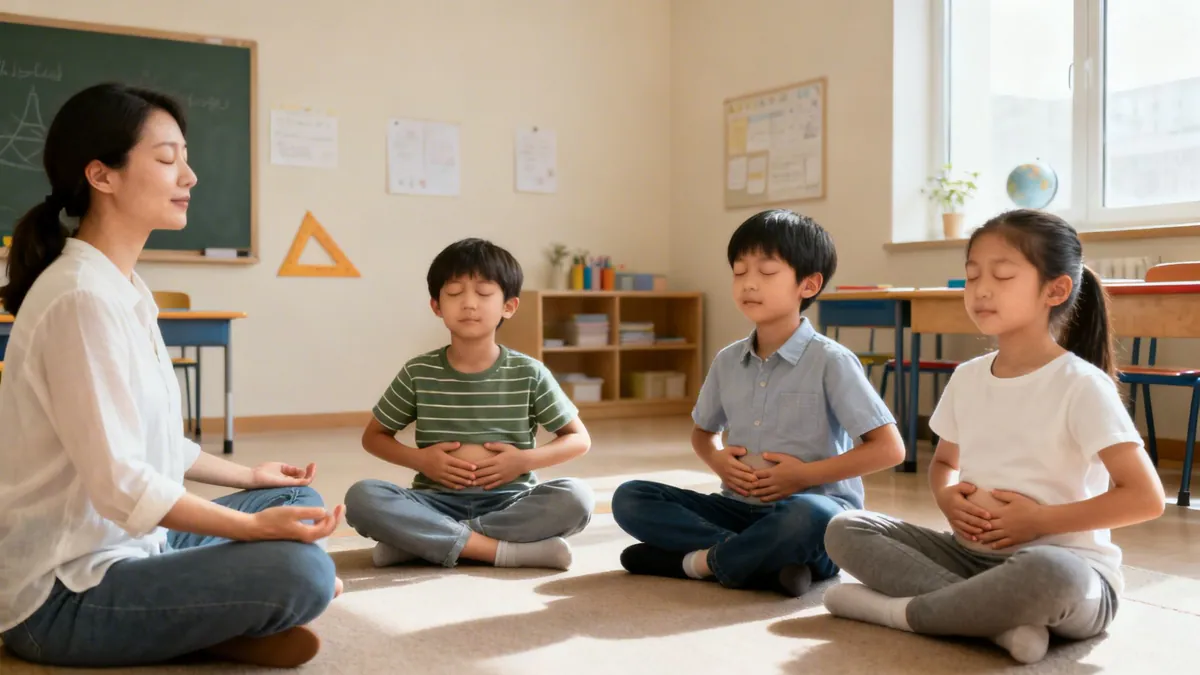
Diaphragmatic breathing, which we often call the belly breathing technique, is how our bodies are naturally designed to breathe. It’s what you see babies do instinctively. But as we get older, life’s stresses and constant tension often cause us to switch to shallow "chest breathing" without even realizing it.
When we feel anxious, rushed, or overwhelmed, our breathing tends to become quick and high up in the chest. This pattern sends a direct signal to our nervous system that we're on high alert, locking us into a state of "fight or flight." Belly breathing flips that switch. By intentionally slowing down and deepening your breaths, you send a message back to your brain that everything is okay.
The Power of Conscious Breathing
This simple act of focusing on your breath engages the diaphragm, a large dome-shaped muscle at the base of your lungs. When you inhale deeply, your diaphragm moves down, creating more room for your lungs to fill with air. This movement directly stimulates the vagus nerve, a crucial part of the parasympathetic nervous system—your body's "rest and digest" command center.
The real power of the belly breathing technique lies in its ability to serve as a physiological reset button. It’s not just about feeling calm; it's about actively changing your body's stress response from the inside out.
For parents and educators, this is a total game-changer. Imagine a child who can calm themselves down before a big test. Or a classroom that can smoothly transition from the chaos of recess to quiet, focused learning. This isn't just a nice idea; it's a trainable skill. For example, a teacher can lead a one-minute "Belly Buddy" session before starting a math lesson to help students settle their minds and bodies.
Historical Roots and Modern Benefits
This practice is anything but a new-age fad. A focus on deep, intentional breathing has roots going back centuries. In the 1800s, the explorer George Catlin observed that Native American communities who consistently practiced nasal breathing showed remarkable health, from strong jaws to overall vitality. He documented these observations in his book, 'The Breath of Life,' directly linking their wellness to how they breathed.
Before we dive into the "how-to," it’s helpful to get a bigger picture by understanding the critical differences between nasal and mouth breathing and how they affect our health. When you teach a child this foundational skill, you're giving them a tool they can use for life. It helps them to:
- Reduce anxiety and stress by lowering cortisol levels.
- Improve focus and attention, which is crucial in academic and social settings.
- Foster emotional regulation and build self-control.
Mastering this one technique can set the stage for a more peaceful and productive environment, both at school and at home.
How to Guide Your Child Through Belly Breathing

Before you can teach the belly breathing technique to a child, it’s a good idea to get a feel for it yourself. We can't pour from an empty cup, after all. Modeling a sense of calm is always the first, most important step.
Find a comfortable spot, either sitting up straight or lying on your back. Place one hand on your chest and the other right on your belly, just below your ribs.
Now, take a slow, deep breath in through your nose. The goal is to feel the hand on your belly rise up, while the hand on your chest stays mostly still. As you exhale slowly, just feel your belly fall. That simple motion means you’re engaging your diaphragm. Once you can feel this in your own body, you'll be so much more confident and authentic when guiding a child.
Making Belly Breathing Fun for Kids
Let's be real—kids learn best through play and imagination. Dry, clinical instructions just won't cut it. To make the belly breathing technique stick, we need to turn it into a gentle, playful activity using visuals and language they can connect with.
Here are a few activities I’ve found work wonders at home or in the classroom.
The Breathing Buddy Activity
This is a classic for a reason—it’s fantastic for younger kids (think Pre-K to 2nd grade) because it makes the breath visible.
- Practical Example: A parent can use this as part of a bedtime routine. After story time, say, "Let's put Teddy on our tummies and rock him to sleep." This creates a calm, focused transition toward sleep.
First, have the child lie down comfortably on their back, maybe on a rug or mat. Ask them to pick a small stuffed animal or a favorite lightweight toy to be their "Breathing Buddy."
Then, have them place their little buddy right on their tummy. Their one special job is to rock their buddy to sleep using only their breath.
You can guide them with a simple script: "Take a slow, quiet breath in and feel your tummy lift your buddy up toward the ceiling. Now, breathe out slowly and watch your buddy gently float back down." This turns an abstract feeling into a concrete result they can actually see.
Balloon Belly Breathing
This visualization is a game-changer for helping kids understand the idea of filling their abdomen with air. It’s effective for a wide age range, from kindergarteners all the way to older elementary students.
- Practical Example: A teacher notices the class is getting restless during a long lesson. She says, "Okay everyone, hands on your bellies! Let's blow up our green balloons three times. Ready? Breathe in… and whoosh it out." This 30-second break resets the room's energy without disrupting the lesson plan.
Start by having them place their hands on their belly. Then, you can say something like, "Pretend there's a small, empty balloon deep inside your tummy. When you breathe in slowly through your nose, imagine you're filling that balloon up with air, making your belly get bigger and rounder."
"Now, as you breathe out slowly through your mouth, let all the air whoosh out of the balloon, making your tummy get smaller again." To make the imagery even more vivid, you can ask them to pick a color for their balloon. This gives a child a powerful tool to how to self-soothe in moments of big feelings or stress.
Teacher Tip: I love using this as a quick reset after a loud transition or a chaotic moment. Just three "Balloon Belly" breaths can help an entire class settle down and refocus their energy for the next lesson.
Simple Scripts and Visual Cues
Having a few go-to scripts in your back pocket makes it easy to introduce the belly breathing technique anytime, anywhere. Here are two of my favorites that work just as well one-on-one as they do in a group.
Smell the Flower, Blow Out the Candle
This sensory-based script is incredibly intuitive for most kids.
- Practical Example: A child is getting upset because they can't get their shoes tied. The parent can kneel down and say, "Whoa, that's frustrating. Let's pause. Smell this beautiful rose with me… now blow out this birthday candle very slowly." This physical interruption breaks the frustration cycle.
- For the inhale: "Imagine you're holding a beautiful flower. Bring it up to your nose and take a long, slow sniff to smell its wonderful scent. Let the air fill up your whole belly."
- For the exhale: "Now, pretend you have a birthday candle in front of you. Purse your lips and blow the air out slowly and gently to make the flame flicker, but don't blow it all the way out just yet!"
That visual distinction between a sharp puff of air and a slow, controlled exhale is crucial. For kids struggling with emotional regulation, learning to extend their exhale is a powerful skill.
Belly Breathing Cues for Different Age Groups
The language we use matters. A cue that works for a second-grader might go right over a preschooler's head. It's helpful to have a few age-appropriate phrases ready to go.
Here are some simple, effective cues tailored for different developmental stages.
| Age Group | Verbal Cue or Activity | Focus |
|---|---|---|
| Preschool (3-5) | "Let's pretend we're sleeping lions. Take a big, quiet breath in, then a long, sleepy sigh out." | Making it a game, connecting to familiar concepts (animals). |
| K-2nd Grade (5-8) | "Put your hands on your tummy. Can you make your hands go for a ride on your 'breathing wave'?" | Concrete, sensory feedback (feeling hands move). |
| 3rd-5th Grade (8-11) | "Imagine your belly is a balloon. Breathe in to fill it up, breathe out to let the air out slowly." | Introducing simple visualization and control. |
| 6th-8th Grade (11-14) | "Let's try 4-4-4 breathing. Inhale for 4, hold for 4, exhale for 4. Focus on the belly rising and falling." | Introducing structure and more advanced self-regulation techniques. |
These are just starting points, of course. The best cue is always the one that resonates most with the child in front of you. Feel free to get creative and adapt the language to their interests
The Science Behind a Calmer Nervous System

Have you ever noticed how taking a few deep breaths can change your entire mood in seconds? It’s not just a feeling; it’s a powerful biological process at work. The belly breathing technique is like a direct line to your body's control center—the autonomic nervous system.
This system has two main modes. The first is the sympathetic nervous system, our "fight-or-flight" response, which kicks into high gear during stress. Then there's the parasympathetic nervous system, our "rest-and-digest" mode, which is all about calm and recovery.
When a child (or an adult, for that matter) feels stressed, anxious, or upset, their body is stuck in fight-or-flight. Their heart beats faster, breathing becomes short and shallow, and the body is flooded with stress hormones like cortisol. The belly breathing technique acts as a manual override for this entire response.
Engaging the Vagus Nerve
The secret ingredient here is the vagus nerve. It's the longest cranial nerve in the body and essentially runs the show for the parasympathetic nervous system. When you take a slow, deep breath that makes your belly expand, you're physically stimulating this nerve.
This simple action sends a signal straight to the brain: "It's safe to relax now." In response, the body gets the message to slow the heart rate, lower blood pressure, and ease up on cortisol production. It's a fascinating look into the mechanics of calming your nervous system through the vagus nerve.
By teaching a child this breathing technique, you are giving them a remote control for their own nervous system. It’s not a magic trick; it is a tangible, science-backed tool for self-management.
The Proven Impact on Respiratory Function
This isn't just theory; the physical benefits are real and measurable. Conscious, deep breathing makes our lungs work more efficiently. Over time, it can actually retrain the body to use a calmer, more effective breathing pattern even when at rest.
For instance, one four-month study with adolescents showed that regular practice led to a 10.96% increase in their tidal volume—that’s the amount of air moved with each breath. Their breathing frequency also slowed down by 11.47%, a clear shift away from rapid, shallow breathing. These findings show how consistent practice creates lasting change, and you can dig into the details in the full study on respiratory intervention outcomes.
Practical Examples in Action
Let’s see how this science plays out in a real school or home setting.
- Before a Test: A student feels their heart pounding. The teacher says, "Okay class, before we start, let's take five deep belly breaths together." This activates their parasympathetic nervous system. Their heart rate slows, their mind clears, and they can finally access the information they studied instead of being blocked by test anxiety.
- After Recess: A group of third-graders bursts into the classroom, loud and buzzing with energy. The teacher guides them through two minutes of "Balloon Belly" breathing. This collective sigh brings the energy down, cools off lingering playground squabbles, and gets their brains ready for focused learning.
- Sibling Squabble: Two siblings are arguing over a toy. A parent intervenes and says, "Freeze. Everyone, let's do three Dragon Breaths." They inhale deeply and exhale with a loud 'whoosh.' The shared physical action breaks the tension, and they can address the problem more calmly.
These everyday moments are where the belly breathing technique proves its worth as a core emotional wellness tool. Learning to manage the body’s stress response is one of the most important self-regulation strategies for students we can possibly teach.
Weaving Belly Breathing into Daily Routines
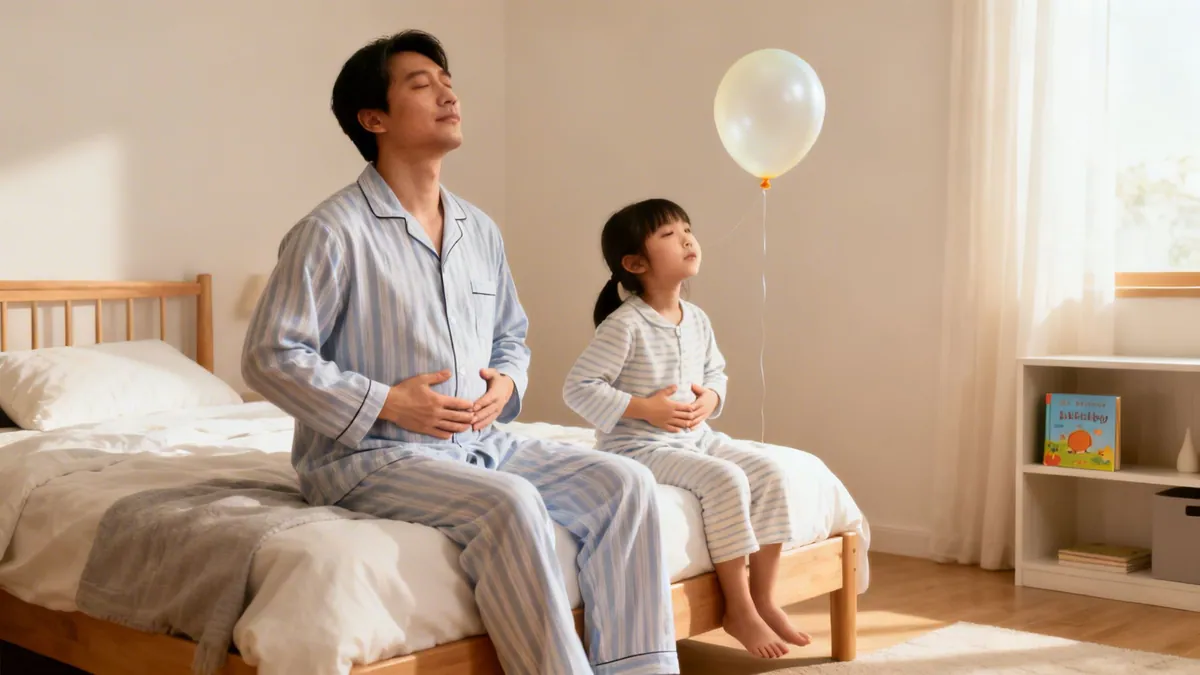
The real power of the belly breathing technique isn’t in doing it once in a while; it’s in making it a habit. When kids practice consistently, they build a deep-rooted skill for self-regulation that they can turn to automatically. The goal is to make it as natural as brushing their teeth.
By weaving these quick exercises into existing schedules, you give children small pockets of calm throughout their day. This practice can be proactive—building resilience before stress hits—and reactive, offering instant relief in a tough moment.
Bringing Belly Breathing into the Classroom
Classrooms are busy places, full of transitions and shifting energy levels. A consistent belly breathing technique practice can anchor the day, creating a more predictable and focused atmosphere for everyone. It doesn't take much time, just a little intention.
Here are a few moments where you can easily slip it in:
- Morning Meeting Kickstart: Start the day with just one minute of guided belly breathing. Practical Example: The teacher says, "Good morning, everyone! Let's start our day by waking up our bodies. Place a hand on your belly and let's take three slow breaths to get ready for a great day."
- Post-Recess Reset: The jump from playground energy to quiet work can be a challenge. Use "Balloon Belly" breathing to help the class collectively exhale the chaos and settle their bodies.
- Pre-Test Focus: Before a test or big assignment, lead the class through 3 to 5 deep belly breaths. This simple act can slow racing hearts, ease anxiety, and help students think more clearly.
By normalizing these brief pauses, you're not just managing classroom behavior; you're teaching a fundamental life skill. You're showing students that they have the power to manage their own energy and emotions.
Creating a Classroom Peace Corner
A designated "Peace Corner" or "Calm-Down Spot" gives students a safe, physical space to go when they need to practice their breathing skills. This isn’t a timeout for punishment. It’s a supportive spot for self-regulation.
Setting one up is simple:
- Find a Quiet Spot: Look for a small, low-traffic area in your classroom.
- Make it Comfy: Add a soft rug, a few cushions, or a beanbag chair.
- Stock It with Tools: Include "breathing buddies" (small stuffed animals), laminated cue cards ("Smell the Flower, Blow Out the Candle"), or a glitter jar for focus.
- Set Clear Expectations: Teach students that this is a place to go when they feel overwhelmed or upset. It’s a tool to help them reset before rejoining the group. Practical Example: A student who is visibly frustrated after a group activity can choose to go to the Peace Corner for two minutes to do "Breathing Buddy" breathing before re-engaging.
This small corner empowers students to take ownership of their emotional state. Knowing how to create these supportive environments is a key part of teaching mindfulness to children in a way that truly sticks.
Using Belly Breathing at Home
For parents, the belly breathing technique can transform challenging family moments and build deeper connection. It becomes a shared tool for navigating the inevitable ups and downs of life together.
Consider these opportunities to practice as a family:
- Bedtime Wind-Down: Lying in bed is the perfect time to practice with a breathing buddy on the tummy. A few minutes of quiet belly breathing can ease the transition to sleep, especially for kids whose minds race at night.
- Homework Frustration Breaker: When you see frustration building over a tricky math problem, pause everything. Say, "Let's take three dragon breaths together," and guide them through a slow inhale and a powerful "whoosh" exhale.
- Pre-Game Jitters: Before a soccer game, recital, or any big performance, find a quiet moment to breathe together. Practical Example: In the car on the way to the recital, the parent can say, "I see you have some butterflies in your tummy. Me too! Let's tell them to calm down. Let's do three 'flower breaths' together."
When you model this yourself during your own moments of stress, you send a powerful message: this is a tool for everyone in the family.