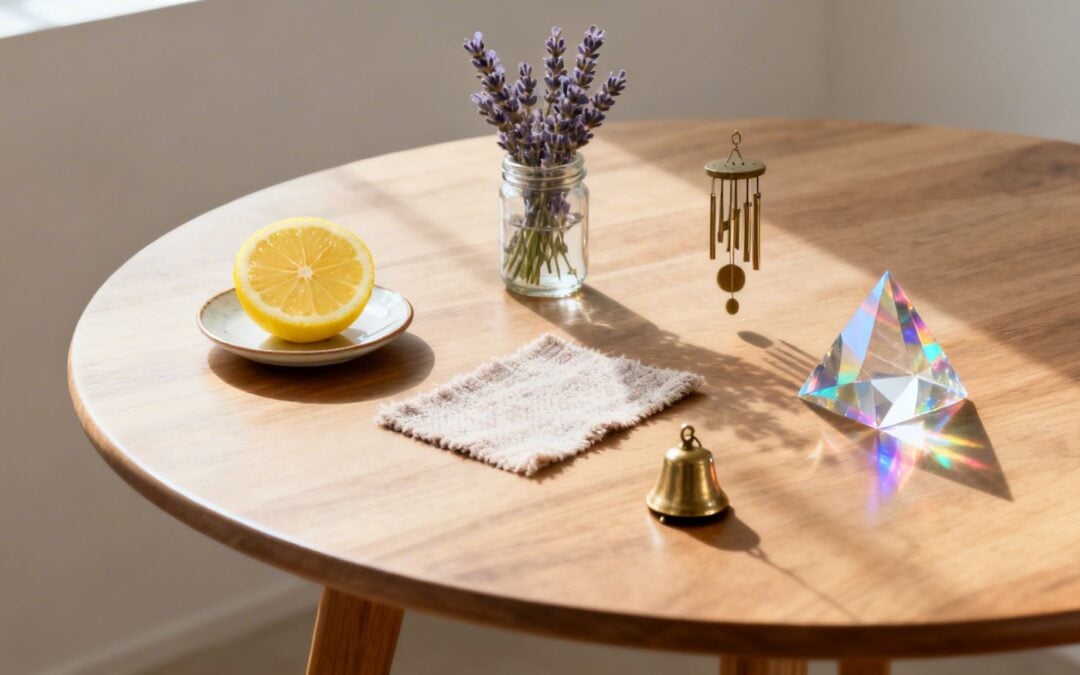
Engaging a child's five senses is more than just a fun classroom activity; it's a powerful gateway to social-emotional learning (SEL). When we guide students to intentionally see, hear, touch, taste, and smell, we help them build the foundational skills for self-awareness, self-regulation, and empathy. A well-designed 5 senses activity isn't just about sensory input. It's about processing that input to understand ourselves and our connections to others better.

For parents and educators, these activities are practical tools for creating moments of calm and deep learning. To fully grasp how sensory play can foster these skills, it's beneficial to first understand What Is Emotional Intelligence and its significance. This article moves beyond generic ideas to provide a curated roundup of five powerful, research-backed sensory experiences.

Each activity is designed for K-8 settings and homes, complete with step-by-step instructions, specific SEL connections, and practical tips for implementation. We'll explore how to turn simple sensory exploration into profound lessons in emotional intelligence, creating the kind of safe, connected environments where every child can thrive. You'll find actionable strategies to help students connect colors to feelings, sounds to gratitude, and textures to empathy.

1. Color Emotion Mapping (Sight)

Color Emotion Mapping is a visual sensory activity that helps individuals connect colors to their feelings. Participants choose colors that represent their current emotional state, creating a visual map of their internal world. This simple yet profound exercise makes it easier to talk about complex feelings, especially for those who struggle to find the right words. By focusing on the sense of sight, this 5 senses activity provides a concrete way to explore abstract emotions.
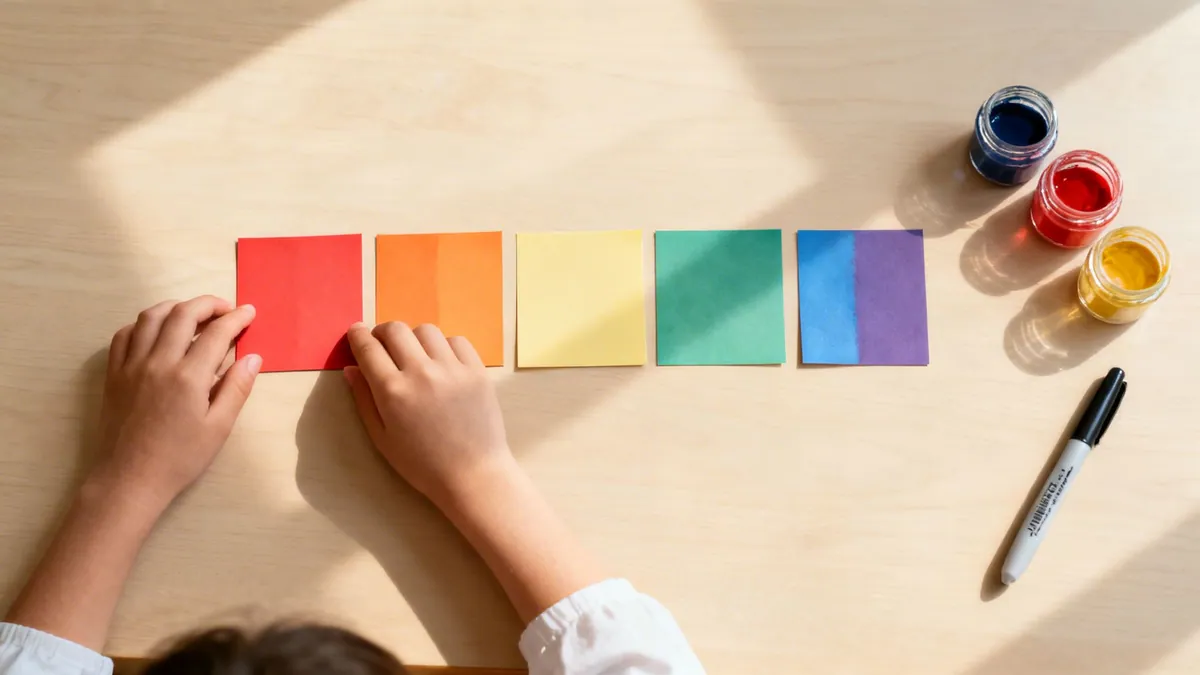
Child's hands arranging colorful paper squares in rainbow order on a wooden table with paints and marker.

Popularized by social-emotional learning (SEL) programs like the Zones of Regulation curriculum, the activity is grounded in color psychology. It gives students and adults a shared, non-verbal language for expressing how they feel, fostering greater self-awareness and empathy within a group.

How to Implement Color Emotion Mapping

This activity requires minimal materials and can be adapted for various ages and settings.

  • Suggested Time: 15-25 minutes
  • Appropriate Ages: Kindergarten through 8th Grade (and beyond)
  • Materials: Colored paper, markers, crayons, colored pencils, or even digital color palettes. A blank sheet of paper or a pre-drawn body outline for each participant.

Step-by-Step Directions:

  1. Introduce the Concept: Explain that colors can be connected to feelings. For example, a teacher could ask a K-2 class, "If your happiness was a color, what color would it be? What about feeling grumpy?" For older students (grades 6-8), you might ask, "What color represents feeling stressed? What color feels like calm?"
  2. Provide Materials: Give each participant a blank paper and access to a wide range of colors.
  3. Prompt for Reflection: Ask participants to quietly think about how they are feeling right now. They can think about their body, their thoughts, and their overall mood.
  4. Create the Map: Instruct them to choose colors that match their current feelings and draw or color on their paper. They can fill the whole page, draw abstract shapes, or color inside a body outline to show where they feel sensations. For example, a student might color their stomach red to show anxiety or their head blue to show sadness.
  5. Facilitate Sharing (Optional): Invite volunteers to share their color map. Use gentle, open-ended questions like, "Can you tell me about the colors you chose?" or "What does blue mean for you today?"

Key Insight: The goal is not to interpret the colors for the student but to create a safe space for them to assign their own meaning. Emphasize that there are no "wrong" colors for any emotion.

Actionable Tips for Educators and Parents

You can integrate Color Emotion Mapping into daily routines to build emotional literacy.

  • Classroom Check-In: Use it during morning meetings. A second-grade teacher could have a "Color of the Day" chart where students place a colored sticky note next to their name to show how they are starting their day. This gives the teacher a quick visual of the classroom's emotional climate.
  • Conflict Resolution: When students have a disagreement, a school counselor can use this activity to help them identify the feelings underneath the conflict. For example, two middle school friends in an argument might both use gray to represent feeling misunderstood, which can be a starting point for finding common ground.
  • Journaling Prompt: After creating a color map, provide a follow-up journal prompt: "Write about a time you felt this color before." or "What could help you move from this color to a different one?"
  • At-Home Temperature Check: A parent can keep a set of colored markers on the fridge. During a busy evening, they can ask their child, "Can you draw me a quick shape showing the color of your day?" This opens a low-pressure conversation about their experiences.

For a deeper look at how colors and feelings are discussed with children, this video offers a simple, engaging explanation.

2. Mindful Sound Listening & Gratitude Bells (Hearing)

Mindful Sound Listening is a guided auditory practice where participants focus their full attention on sounds, either from their immediate environment or a specific instrument like a singing bowl. This 5 senses activity trains the brain to stay in the present moment, sharpens listening skills, and promotes a state of calm. By concentrating on the sense of hearing, it helps individuals quiet internal chatter and regulate their nervous system.

Children meditating calmly in a classroom, led by a person playing a singing bowl.

This method is central to programs like the Mindfulness in Schools Project (MiSP) and Calm Classroom, which use sound as an anchor for attention. The predictable, resonant tone of a bell or bowl can signal a transition, reset a classroom's energy, and create psychological safety. It’s a powerful tool for building foundational self-regulation and focus, especially in busy school environments.

How to Implement Mindful Sound Listening

This auditory activity is highly adaptable and requires only a single sound-making tool to start.

  • Suggested Time: 2-10 minutes
  • Appropriate Ages: Kindergarten through 8th Grade (and beyond)
  • Materials: A singing bowl, a small bell, chimes, or a digital recording of one of these sounds.

Step-by-Step Directions:

  1. Introduce the Activity: Explain that you will be practicing listening with full attention. Say, "We're going to use our sense of hearing to listen to a special sound. Your only job is to listen until you can't hear the sound anymore."
  2. Prepare for Listening: Invite participants to find a comfortable but alert posture. They can sit upright in their chairs with their feet on the floor or lie down. They might close their eyes or look softly at the floor.
  3. Create the Sound: Ring the bell or play the singing bowl once, letting the sound resonate.
  4. Guide the Listening: Instruct participants to raise a hand quietly when they can no longer hear the sound. This helps them maintain focus.
  5. Facilitate Reflection (Optional): After the sound has completely faded, ask students to notice what they are feeling. You can invite them to share what the experience was like, what other subtle sounds they noticed, or what thoughts came up. For example, a student might share, "After the bell stopped, I heard the clock ticking and the fan humming."

Key Insight: The goal isn't silence of the mind but rather a gentle redirection of attention. If students report that their minds wandered, congratulate them for noticing. That act of noticing is mindfulness in action.

Actionable Tips for Educators and Parents

You can easily integrate sound-based mindfulness into daily routines to foster a calmer, more focused environment.

  • Signal Transitions: A first-grade teacher can ring a chime to signal the end of "center time" and the start of "clean-up time." The sound becomes a predictable, non-verbal cue that helps students switch tasks peacefully, replacing loud verbal reminders.
  • Start the Day: Use a gratitude bell during a morning meeting. A school counselor leading a small group could ring a bell, and each student could share one thing they are grateful for when it's their turn. This combines mindfulness with positive reflection.
  • Pre-Test Reset: Before a test or a challenging academic task, a fifth-grade teacher can lead a one-minute listening exercise with a singing bowl. This helps students settle their nerves and focus their minds for the work ahead.
  • Bedtime Routine: A parent can use a recording of a singing bowl on their phone as part of a bedtime routine. The child's task is to lie still and listen until the sound is gone, helping them wind down and prepare for sleep.

3. Texture Exploration & Tactile Empathy Building (Touch)

Texture Exploration is a hands-on activity where participants investigate various textures like smooth, rough, bumpy, and soft. By focusing on the sense of touch, this 5 senses activity builds sensory awareness and connects tactile input to emotions. The exercise helps individuals recognize that just as people have different comfort textures, they also have different emotional needs and sensitivities.

This activity is often used in occupational therapy and sensory-friendly classrooms to promote self-regulation and emotional understanding. It provides a concrete way to discuss abstract concepts like empathy and acceptance, creating a space where differences are explored with curiosity rather than judgment. For example, a student might use a 'texture bag' with a favorite soft fabric as a calming tool during a stressful test.

How to Implement Texture Exploration

This activity can be easily adapted for different age groups and requires simple, accessible materials.

  • Suggested Time: 20-30 minutes
  • Appropriate Ages: Kindergarten through 8th Grade
  • Materials: A collection of items with distinct textures (e.g., sandpaper, cotton balls, smooth stones, bubble wrap, corduroy, foil, sponges). Blindfolds or "mystery bags" are optional.

Step-by-Step Directions:

  1. Introduce the Concept: Explain that you will be exploring the sense of touch. Start with an open exploration, allowing participants to see and feel the different items.
  2. Guided Exploration: Ask participants to close their eyes or use a blindfold (if comfortable). Hand them one textured item at a time.
  3. Prompt for Description: Ask them to describe what they feel. Use sensory-focused questions like, "Is it rough or smooth? Soft or hard? Warm or cold?" For example, when feeling sandpaper, a student might say "It feels scratchy and bumpy."
  4. Connect to Feelings: Once they've described the texture, ask how it makes them feel. For instance, "Does this bumpy texture feel surprising? Does the soft one feel calming?" A student might say the soft cotton ball "feels like a fluffy cloud and makes me feel sleepy."
  5. Facilitate a Discussion: After exploring several textures, lead a group conversation about their experiences. Discuss how some people loved the rough texture while others preferred the smooth one, linking this to personal preferences and needs.

Key Insight: The main goal is to build a bridge between physical sensations and emotional responses. Emphasize that there is no "right" way to feel about a texture, which teaches acceptance of diverse perspectives.

Actionable Tips for Educators and Parents

You can integrate texture-based activities into daily routines to foster empathy and self-regulation.

  • Create a Texture Palette: A third-grade teacher could set up a "sensory station" with a 'texture palette' where students can go to touch different materials when they feel overwhelmed or need a brain break. This gives students a tangible self-regulation strategy.
  • Use Texture Metaphors: During conflict resolution, a school counselor can ask students to describe the situation using textures. A student might say, "Their words felt like sandpaper," helping them articulate the emotional impact in a new way.
  • Design 'Comfort Kits': Help students identify a personal "comfort texture" they can keep at their desk, like a smooth stone or a small piece of faux fur. This becomes a discreet calming tool during anxious moments. A parent can help a child create a similar kit at home for homework time.
  • Empathy Building Exercise: In an anti-bullying lesson, a fourth-grade teacher could have students pass around a piece of rough sandpaper and a smooth stone. Then, they can discuss which texture unkind words feel like and which texture kind words feel like, making the concept of emotional impact more concrete.

4. Mindful Tasting & Gratitude for Nourishment (Taste)

Mindful Tasting is a sensory activity that uses a small piece of food to anchor attention to the present moment. Participants slowly eat an item like a raisin or apple slice, focusing intently on the taste, texture, and aroma. This foundational mindfulness exercise turns the simple act of eating into a powerful 5 senses activity, building self-awareness and regulation skills. By slowing down, students learn to notice details they usually miss and develop a sense of gratitude for their food.

This practice is a cornerstone of established mindfulness programs like Mindfulness-Based Stress Reduction (MBSR) and is widely used in social-emotional learning (SEL) curricula. It provides students with a tangible tool to calm an anxious mind, focus their attention, and connect with their bodies in a positive way.

How to Implement Mindful Tasting

This activity requires very few materials and can be a quiet, calming experience for any group. Crucially, always check for food allergies and sensitivities beforehand.

  • Suggested Time: 5-15 minutes
  • Appropriate Ages: Kindergarten through 8th Grade (and beyond)
  • Materials: A small food item for each participant. Good options include a single raisin, a small piece of dark chocolate, a cranberry, a thin apple slice, or a pretzel.

Step-by-Step Directions:

  1. Introduce the Concept: Explain that you will be exploring a piece of food using all your senses, as if for the very first time. Frame it as a fun experiment to see what you can notice.
  2. Provide Materials: Give one food item to each participant. Ask them not to eat it yet.
  3. Guide the Sensory Exploration: Lead students through a slow, deliberate process using gentle prompts.
    • Sight: "Look at the item in your hand. Notice its color, its shape, and the tiny lines or wrinkles on its surface." (e.g., "Look at how the light shines on the raisin.")
    • Touch: "Feel its texture between your fingers. Is it rough, smooth, sticky, or hard?"
    • Sound: "Hold it up to your ear. Does it make a sound if you roll it between your fingers?"
    • Smell: "Bring it to your nose and take a slow breath in. What do you smell? Is it sweet, earthy, or something else?"
    • Taste: "Slowly place it in your mouth but don't chew yet. Notice the sensation on your tongue. Now, take one slow bite and notice the burst of flavor. Chew slowly and see how the taste and texture change."
  4. Facilitate Reflection: After everyone has finished, ask open-ended questions like, "What was that like for you?" or "Did you notice anything surprising about your raisin?"

Key Insight: The goal is not to rush but to experience each moment of eating. Remind students there is no right or wrong thing to notice; the practice is simply about paying attention. Offer a "dignified opt-out" where students can choose to just observe.

Actionable Tips for Educators and Parents

You can use Mindful Tasting to create moments of calm and build gratitude in various settings.

  • Classroom Transition: Use this activity to help students settle down after recess or before a test. A third-grade teacher could lead a three-minute mindful tasting with a small pretzel to help the class transition from a noisy lunchroom to quiet independent reading time.
  • Anxiety Regulation: A school counselor can guide an anxious student through a mindful chocolate tasting. The intense sensory focus on the melting chocolate can ground the student in the present, interrupting a cycle of worried thoughts.
  • Dinner Time Routine: At home, a parent can start a meal by mindfully eating the first bite. For example, with spaghetti, everyone can silently taste the first forkful, noticing the texture of the pasta and the tangy flavor of the sauce before starting their conversation.
  • Gratitude Practice: After the tasting, extend the reflection. A teacher could ask a class after eating an apple slice, "Let's thank the tree that grew the apple, the sun that made it sweet, and the farmer who picked it." This connects the simple act of eating to a larger system of nourishment.

5. Scent Journeys & Emotional Anchoring (Smell)

Scent Journeys & Emotional Anchoring is a guided sensory activity where individuals explore different scents to build olfactory awareness and create powerful connections between smell and emotional states. Because the olfactory system links directly to the brain's memory and emotion centers, this 5 senses activity uses scent as a potent tool for emotional regulation and creating psychological safety. Participants learn to use specific scents as portable self-regulation tools, helping them manage stress or anxiety in real-world situations.

A child's hand reaching for a patterned cloth next to a lavender, essential oil, and lemon on a white tray.

This approach is supported by neuroscience research on olfaction and emotion, as well as practices from trauma-informed care and mindfulness programs. It recognizes that scent can be an "emotional anchor," a sensory cue that helps ground a person in a feeling of calm or focus. For example, a student might learn to associate the smell of lavender with deep breathing exercises, creating a reliable shortcut to a calmer nervous system.

How to Implement Scent Journeys

This activity can be a calming group experience or a personalized tool for individual students. Always prioritize safety and be mindful of potential sensitivities.

  • Suggested Time: 10-20 minutes
  • Appropriate Ages: Kindergarten through 8th Grade
  • Materials: Cotton balls or fabric scraps, small containers, and a variety of mild, natural scents such as lemon peels, lavender buds, fresh mint leaves, or drops of vanilla extract.

Step-by-Step Directions:

  1. Introduce the Concept: Explain that our sense of smell is strongly connected to our memories and feelings. Ask, "Have you ever smelled something that reminded you of a person or a place, like cookies baking at home?"
  2. Prepare the Scents: Place a few drops of an essential oil or a small piece of the scented item (e.g., a mint leaf) onto a cotton ball and put it in a container. Prepare several different scents.
  3. Guide the Exploration: Pass one scent around at a time. Instruct participants to close their eyes, take a gentle sniff, and notice what thoughts, feelings, or sensations come up.
  4. Facilitate Discussion: Ask open-ended questions like, "What does this scent make you think of?" or "How does this smell make your body feel- energized, relaxed, or something else?" For example, smelling cinnamon, a student might say, "It reminds me of my grandma's house at Christmas and makes me feel warm."
  5. Create an Anchor (Optional): Guide students to choose a scent they find particularly calming or focusing. Pair the scent with a simple breathing exercise, creating a personal "scent anchor" for future use.

Key Insight: The power of this activity comes from personal association. Respect individual preferences and aversions, as a scent that is calming for one person may be overstimulating for another. Always offer the choice to opt out.

Actionable Tips for Educators and Parents

You can integrate scent-based regulation into daily routines to support emotional well-being.

  • Calm-Down Corner: A school counselor can stock a calm-down corner with a few approved scents (like lavender or chamomile) on cotton balls in sealed jars. Students can choose one to smell while practicing their coping strategies.
  • Focus Tool: During independent work, a third-grade teacher might use a diffuser with a drop of peppermint or lemon scent for a short period to help students feel more alert and focused.
  • Transition Support: A parent can use a consistent, pleasant scent during a transition that is often challenging, like getting ready for school. A spritz of a calming room spray can signal it's time to get dressed, creating a predictable and soothing morning ritual.
  • Personal Regulation Kit: Help students create their own portable scent anchor. A student who experiences anxiety before tests could carry a small cloth with a drop of their chosen calming scent (like lavender) to smell discreetly at their desk, helping to ground them in the moment. You can also use scented products like aromatic mixer melts at home to create a consistent calming or invigorating atmosphere.

5-Senses Mindful Activities Comparison

Activity Implementation complexity Resource requirements Expected outcomes Ideal use cases Key advantages
Color Emotion Mapping (Sight) Low — simple setup but needs guided reflection Low — colored paper, markers, paint Builds emotional vocabulary, visual records of feelings, nonverbal expression Morning meetings, counseling, conflict resolution, K–8 classrooms Inclusive for verbal-limited students, low-cost, supports tracking over time
Mindful Sound Listening & Gratitude Bells (Hearing) Low — brief scripted practice; needs quiet and framing Minimal — bells/singing bowls or simple sound objects Improves attention, calms classroom, trains active listening Transitions, before tests, grounding after conflicts Quickly settles energy, repeatable routine, supports self-regulation
Texture Exploration & Tactile Empathy Building (Touch) Moderate — requires trust-building, clear boundaries and facilitation Low–moderate — assorted textures, blindfolds/opt-out options Enhances tactile vocabulary, empathy, trust and sensory awareness Sensory breaks, trust-building activities, OT-informed SEL lessons Embodied learning, strong for kinesthetic learners, fosters acceptance
Mindful Tasting & Gratitude for Nourishment (Taste) Moderate — needs allergy checks, pacing, sensitive facilitation Low — small food items and planning for dietary needs Anchors attention, cultivates gratitude, reduces anxiety Mindfulness lessons, pre-testing calm, anxiety reduction exercises Evidence-based, memorable practice, builds gratitude and present-moment focus
Scent Journeys & Emotional Anchoring (Smell) Moderate — requires safety checks, sensitivity and cultural considerations Low — essential oils or scented items, diffusion control Creates emotional anchors, aids regulation and memory retrieval Individual regulation plans, trauma-informed settings, focus routines Strong neurological tie to emotion, highly personalizable, portable tools

Putting It All Together: Weaving Sensory SEL into Your Daily Routine

Throughout this guide, we've explored five distinct yet interconnected pathways for building social-emotional skills through sensory engagement. From mapping our feelings with Color Emotion Mapping to grounding ourselves with Mindful Sound Listening, each 5 senses activity offers a practical tool for K-8 students. We’ve seen how Texture Exploration can build tactile empathy, how Mindful Tasting cultivates gratitude, and how Scent Journeys can create powerful emotional anchors for self-regulation.

The true value of these practices, however, lies not in their occasional use but in their consistent integration into the fabric of your classroom or home. This isn't about adding another complex item to your already packed schedule. It’s about reframing moments you already have into powerful opportunities for connection, self-awareness, and growth.

Making Sensory SEL a Sustainable Habit

Integrating any new 5 senses activity successfully hinges on starting small and building momentum. The goal is to create a sustainable routine that becomes second nature for both you and your children or students.

Consider these practical starting points:

  • Transition Times: Use a gratitude bell or a brief Mindful Sound Listening exercise to signal the end of one activity and the beginning of another. This creates a moment of calm, helping students reset their focus instead of carrying chaotic energy into the next task.
  • Morning Meetings or Check-Ins: Begin the day with a Scent Journey. Pass around a cotton ball with a calming scent like lavender and ask students to share one word about how it makes them feel. This simple ritual starts the day with mindfulness and emotional sharing.
  • Snack or Lunch Time: Introduce Mindful Tasting once a week. Instead of a formal, lengthy exercise every day, choose one day to guide students through mindfully eating the first bite of their snack, noticing the texture, taste, and smell.
  • Art & Creative Writing: Weave Color Emotion Mapping directly into your existing art curriculum. When studying a painting, ask, "What emotions do you think the artist was feeling based on these color choices?" This connects art history to personal emotional expression.

Key Insight: The most effective implementation doesn't feel like a separate "SEL lesson." It feels like a natural part of how your group communicates, solves problems, and supports one another. A consistent, simple 5 senses activity done daily has a greater impact than a complex one done sporadically.

By embedding these sensory tools into daily routines, you create a shared language and a predictable structure for emotional exploration. Students learn that their feelings are valid and that they possess tangible strategies to manage them. This consistency builds a foundation of psychological safety, empowering them to take emotional risks, practice empathy, and build resilience. You are not just teaching them an activity; you are giving them lifelong skills for a more connected and self-aware existence.


Ready to build a more connected and compassionate school culture? For over two decades, Soul Shoppe has helped schools implement practical, student-centered tools that reduce conflict and build empathy, much like the sensory activities discussed. Explore our programs and see how we can help your students thrive at Soul Shoppe.